People in the audience at UC Santa Barbara’s Pollack Theater on the evening of Feb. 3 weren’t quite sure what to make of Michael Douglas clapping one hand against the other and then against his leg.
Until he said in his trademark New York accent, “That’s the Cossacks.”
He was answering a question from Natan Sharansky, the Soviet refusenik and chairman of the Jewish Agency for Israel, who had asked the renowned actor to share the story of his family’s Jewish journey. Douglas began in 1914 czarist Belarus, traced his grandfather’s immigration two years later to New York, where his father, Issur Danielovitch (Kirk Douglas), was born and raised Orthodox. Kirk Douglas had become secular by the time he and his wife, Diana, had Michael in 1944.
Michael Douglas, who identifies as a secular Jew, began to speak out publicly in support of Israel in June 2015 while on a trip to receive the Genesis Prize, an annual $1 million award from the Office of the Prime Minister of Israel, Genesis Philanthropy Group and the Jewish Agency. On that trip, Douglas called the anti-Israel Boycott, Divestment and Sanctions (BDS) movement “an ugly cancer.”
The Feb. 3 event featured a conversation between Sharansky and Douglas and was co-hosted by the Genesis Prize Foundation, Hillel International, the Jewish Agency and Santa Barbara Hillel. It was their third event in a joint weeklong national trip in which the pair discussed their Jewish backgrounds, concerns about intrafaith and interfaith inclusion, and about activism on college campuses. They also made visits to Brown and Stanford universities.
The discussion lasted about 40 minutes, plus 20 minutes of question-and-answer with students in the audience; it shifted between the two famous personalities’ own Jewish stories and comments on current issues, including the BDS movement and the landmark compromise in Israel to create a separate egalitarian prayer space at the Western Wall that had been announced the previous weekend.
“They realized that if the other side will be defeated, the wall will stop being a symbol for half the Jewish people,” Sharansky said of the decision by the Israeli government. “I believe that if we will succeed with this compromise, it’s a great place for addressing many other problems, [like the] condition of conversions.”
Sharansky said both the Women of the Wall — which has been fighting for more than 25 years for the right of women to wear prayer shawls and conduct services at the Wall, as men do — and the rabbis of the Wall, who have resisted change, have acted as heroes in this episode “because they had to make concessions.”
Douglas, a UC Santa Barbara alumnus, described himself as having been a “good hippie” in the 1960s, and as having been engaged in “some slight medical research” for glaucoma, jokingly referring to marijuana use.
“I felt I was part of a tribe,” Douglas said of being awarded the Genesis Prize last year. “As secular as I am, just being a part of that community and the values they represented meant a tremendous amount to me.”
At one point, Douglas asked everyone in the room who had been to Israel to raise their hands. Nearly everyone did.
Sharansky showed his blunt and often dark sense of humor when he responded to Douglas’ comment that he’s not sure “if it necessarily makes you a better Jew if you daven more than someone else.”
“You can try; it helps a lot,” Sharansky said, referring to prayers he had invented while imprisoned in the Soviet Union at a time when he didn’t know Hebrew.
The Israeli statesman also quipped toward the end of the evening: “I never in my life took so many selfies with Hollywood celebrities.”
Sharansky spoke of a “deep connection” between classical European anti-Semitism, “which was all based on demonization, delegitimization [and] double standards toward Jews,” and today’s anti-Semitism, which Sharansky said is based on those same three things, but now directed toward Israel.
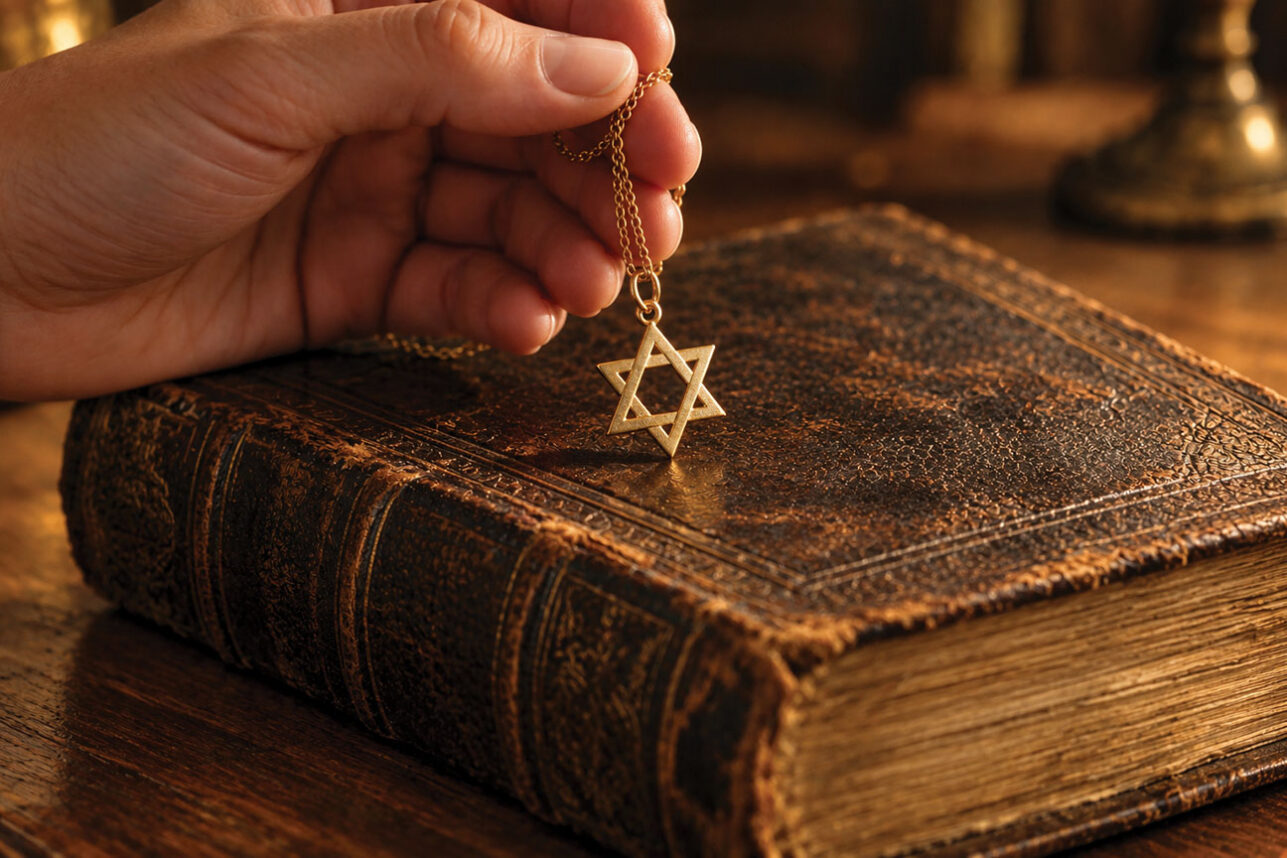
Douglas told of an experience in Europe in which his son, Dylan, was verbally assaulted at a hotel pool by a Swiss man who had spotted the boy’s Star of David necklace. He also described how, at their recent event at Brown University, Sharansky had tried without success to talk with anti-Israel protestors.
“Natan goes out and talks to people to try to find out what the issues are, and very quickly you find out they don’t know how to talk — they really don’t. They know how to protest,” Douglas said. “Israel is an apartheid state? How do you mean? That you’re going to compare Israel to South Africa before Nelson Mandela? I don’t think so.”