Editor’s note: Sign up for Dan’s new weekly newsletter and podcast, “Sanity Check,” at danschnur.substack.com. Politics … but calmer.
For the last few years, we have been talking about how the Hamas terrorist attacks has created a generation of October 8 Jews. Now as Israelis prepare to vote for their next leaders, it appears that they are about to face an October 6 election.
According to the calendar, Israelis will go to the polls almost precisely three weeks after the third anniversary of their country’s most painful day. But as the voting draws closer, Benjamin Netanyahu and his most prominent opponents seem to be running a campaign in which the Gaza war may not play a significant role in the outcome. Even while the candidates talk frequently about the war, their differences on Iran and its terrorist auxiliaries are largely tactical. As has been the case for much of the post-Intifada era, the choice on these issues largely comes down to either Netanyahu or the “Bibi-ism without Bibi” that it is now Gadi Eisenkot’s and Naftali Bennett’s turn to represent.
The most significant war-related factors in the voting may be Netanyahu’s preparation for the attacks and his stewardship after they occurred. But many Israelis will answer that question based more on their broader impression of the prime minister than on specific conclusions about his decisions on the war, since it’s not clear how much Eisenkot and Bennett would have done differently. Eisenkot asserts that he would have prioritized the hostages’ return over battlefield gains. Bennett criticizes Netanyahu’s relationship with Qatar. But otherwise, the debate over Netanyahu’s wartime strategies can be seen more as a litmus test than a vote-driver.
The result is a campaign in which national security issues rank highest in public opinion polls even if those matters will ultimately determine a smaller number of votes. Foreign policy and security are still the primary deciding factors for the country’s conservative majority. But among the approximately 40 percent of the electorate that now identifies as center and left, the economy and other domestic policy are now higher priorities.
The war is still certainly the backdrop for the elections. But while voting will take place on a decidedly and tragically post-Gaza national landscape, the outcome will likely be shaped more by factors that preceded the terrorist attacks than those that followed them. While Israel has been shaped and scarred by Hamas’ violence, the nation’s politics seem to have returned to a pre-war condition — albeit a more intense version. It now looks like the role of the ultra-Orthodox in Israeli society, the nation’s relationships with the U.S. and the rest of the world, and the rising levels of West Bank violence will drive many more votes than the more direct ramifications of October 7.
This dynamic does not work to Netanyahu’s benefit. His reliance on the ultra-conservative parties that are propping up his coalition leave him with little flexibility on any of these issues. While conservatives still safely outnumber moderates and liberals in the electorate, both of his primary opponents have the ability to reach into his supporter base by arguing for right-leaning but not as extreme alternatives on each of these matters.
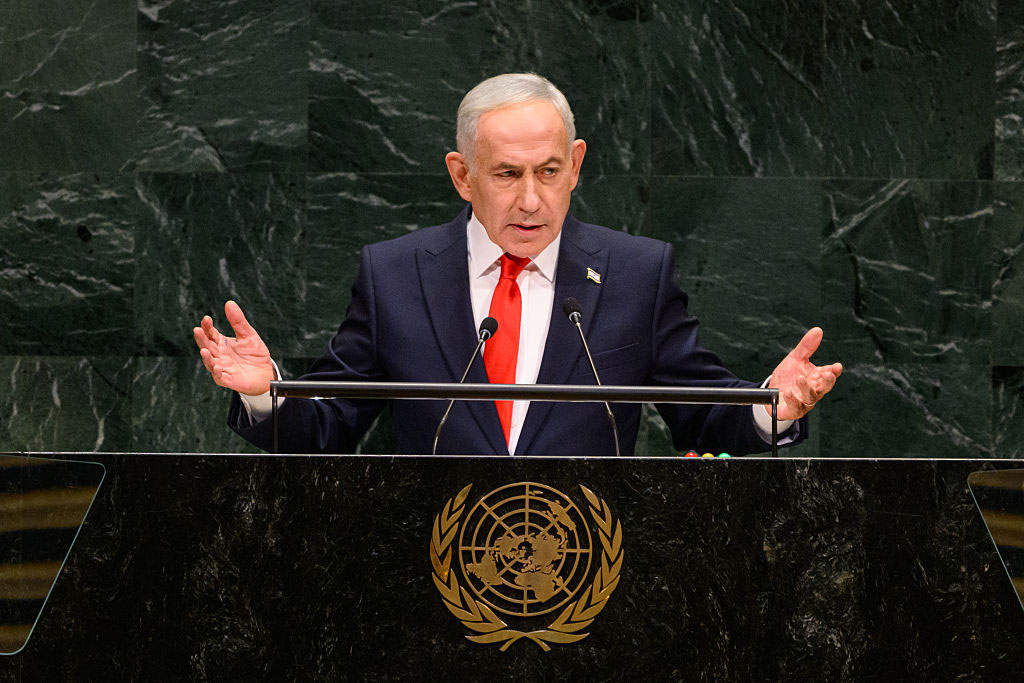
But if Bibi is unable to persuade enough Israelis to his side on the Haredi or West Bank settlements, he is the unparalleled master at rallying his country to stand together against their enemies. That’s what Netanyahu was doing in New York last week, when he used the United Nations General Assembly as a campaign stop to take on his fiercest international critics. The U.N. delegates in the audience were merely props: Netanyahu’s true audience were the voters back home in Israel, who he effectively reminded of his abilities to keep hostile adversaries at bay.
Zohran Mamdani is an even more helpful foil for Netanyahu. The New York mayor chose not to try to arrest the prime minister, as he had promised during his own campaign last year, nor to join the anti-Zionist rallies on the streets of his city. Those would have been even greater gifts to a Netanyahu re-election effort, but Mamdani’s animosity still remains an unintentional but invaluable political asset for Israel’s embattled leader.
Dan Schnur is the U.S. Politics Editor for the Jewish Journal. He teaches courses in politics, communications, and leadership at UC Berkeley, USC and Pepperdine. He hosts the monthly webinar “The Dan Schnur Political Report” for the Los Angeles World Affairs Council & Town Hall. Follow Dan’s work at www.danschnurpolitics.com