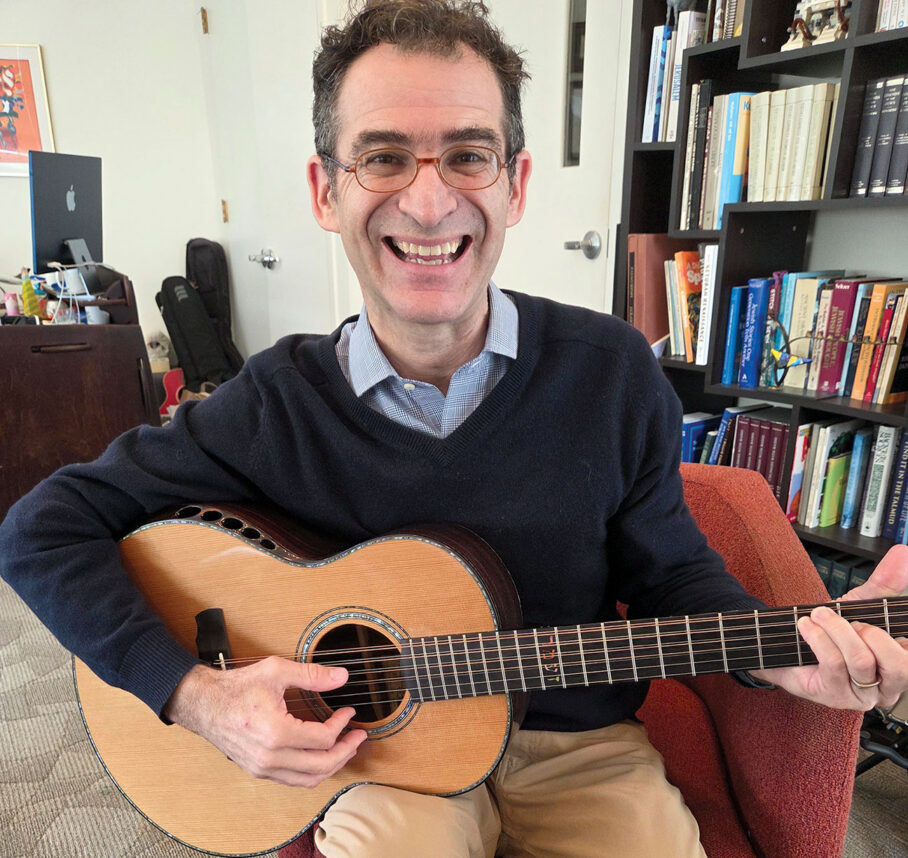
A Jewish tech entrepreneur who lived out of rental cars was shot and killed in a Las Vegas parking lot.
Neil Gandler, 42, was shot by two burglars on Dec. 29 while sleeping in a rented car in a gym lot during a failed robbery attempt, the Las Vegas Review-Journal reported.
A man and woman have been arrested in the killing and are facing charges of first-degree murder.
Gandler, a blogger and software entrepreneur living in Palo Alto, California, was in Las Vegas to attend the CES global consumer electronics trade show. He had been living out of rented cars for 10 years after rental prices skyrocketed in San Francisco after the tech boom of the early 2000s. He lived a mobile life and showered at 24 Hour Fitness gyms.
Gandler was active in the San Francisco Jewish community, where he attended adult education programs at the Reform Temple Emanuel, one of the country’s oldest synagogues. He became passionate about fostering dialogue between communities and began attending meetings of the Jewish-Palestinian Living Room Dialogue group in 2002. Gandler eventually attended a program organized through the dialogue group at Camp Tawonga in San Francisco, which brought together hundreds of Jews and Palestinians from over 50 towns in Israel.
“To me he was a really good Jew, and by that I mean he really took the first and last word of the Shema seriously,” Len Traubman, one of the heads of the Jewish-Palestinian Living Room Dialogue group, told JTA in a telephone interview. “He was a wonderful listener and authentic learner.”
Gandler also rode his bike everywhere to reduce his carbon footprint and spoke proudly about his modest lifestyle.
“He would ride his bicycle 10, 15 miles to come to a dialogue meeting,” Traubman said.
Kyle Staats, 27, and Megan Hippie, 19, were arrested Jan. 2 in conjunction with the case.
Gandler, a native of Brooklyn, New York, grew up on suburban Long Island before earning bachelor’s and master’s degrees at the University of Buffalo. He worked for Applied Signal Technology in California before getting an MBA at the University of Michigan. His application essay focused on Jewish-Palestinian relations.
“‘One’ to him didn’t just mean one people, it meant the whole planet,” Traubman said. “He was a really beautiful human being with an open spirit.”