Many New Yorkers, as the New York Times notes, are “baffled by the loyalty shown by Huma Abedin” to her transgressing spouse, Anthony Weiner. I suspect, however, that for many first generation immigrants such as myself, especially those of us with Asian and South Asian roots, she is much less of a puzzle. I recently participated as a faculty member in a leadership seminar for Asian Pacific academics at Cal Poly Pomona, where we discussed the challenging cultural nexus at which many of us stand as we negotiate between our identities as independent career-minded individuals with a strong sense of self and habits that were a dominant part of our identity, growing up as we did with parents and family members for whom gendered social hierarchies were a given and permeated all aspects of daily life.
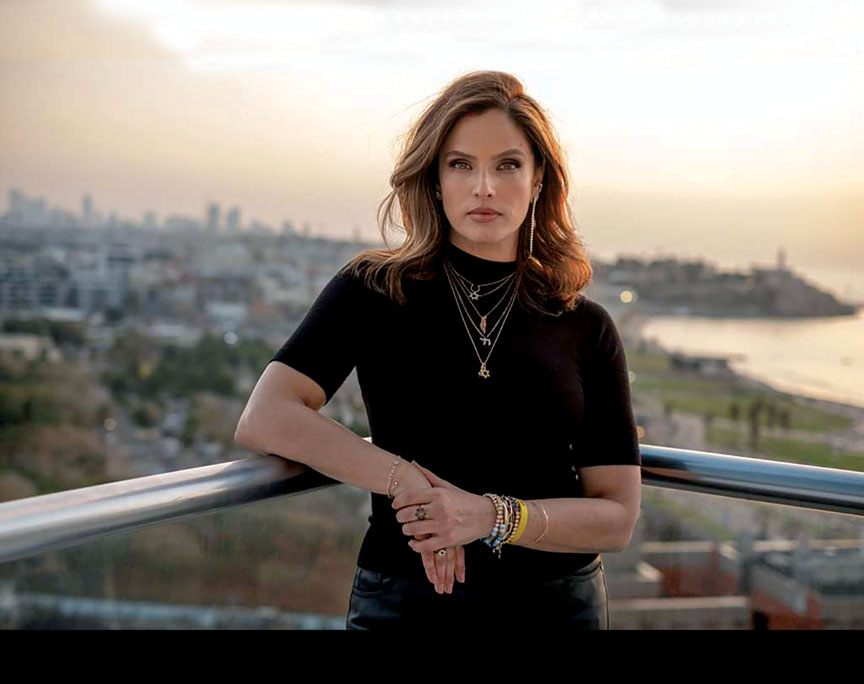
Huma’s cultural background may provide some clues to the behavior that many women in New York find baffling, especially because Huma is a woman who has had a notable career and held positions of political prominence nationally.
Though born in the US, Huma is a daughter of Muslim immigrants. Her father is of Indian origin, her mother Pakistani. Both her parents are educators and holders of doctorates from the University of Pennsylvania. They moved, when Huma was young, to Jeddah, Saudi Arabia, where she grew up, though she returned to the USA for her college education. Certainly, this combination of religious, social, cultural, and international circumstances have made Huma who she is. Precisely which aspects of these fused identities and cultural contexts shaped her is hard to say, but my own experience growing up within a community diverse in its faith, class, caste, and language provides a partial context for understanding Huma’s behavior, though I too, like many New Yorkers, find myself reluctant to endorse or approve of it.
Lest anyone think that my invocation of Huma’s upbringing and background are attempts to see her as playing out a purely subservient role as a Muslim woman from a South Asian background, let me say that I am pointing to something a great deal more complex. In fact, the line that separates dominance from subservience and authority from servitude is far harder to discern in Asian and South Asian cultures than one might think. And Huma is equally influenced, I am sure, by leaders such as Hillary Clinton.
[Related: The shandah factor: What makes Jewish sex scandals different?]
As a schoolgirl, when I visited my Muslim friend Nazra’s home, I interacted with her four mothers and thought nothing of it. The Muslim Marriage Act in India guides matrimonial practices among Muslims, and Muslim men are legally allowed four wives; the Christian Marriage Act and the Hindu Marriage Act does likewise for Christians and Hindus, respectively. Even as a child, I understood this difference among religious groups as normal. Even if Huma’s parents lived a married life such as Christians or Hindus might, could we perhaps understand Huma’s tolerance of her husband’s straying eye within this larger, deeply-held, and long-practiced cultural context that may not have dominated her upbringing but must surely have inflected it? Perhaps.
The impact of contexts, even ones which one might have rejected decisively, can continue to shape one’s behavior, as I have discovered on many occasions, much to my chagrin. As I watched Anthony Weiner’s news conference, I could neither take my eyes off Huma nor help but think that she was in a state of deep shock. Confident, ambitious, and career-driven though she might be, perhaps in this moment of unexpected and unprecedented crisis in her life, the cultural impulse to stand behind her man was instinctive.
As a woman who wishes to see my Asian and South Asian sisters break out of habits of automatic deference and subservience, I hope, like many New Yorkers, that time will allow Huma to see her husband’s serious problems as ones that she must not facilitate through repeated acts of forgiveness. Unlike many New Yorkers, however, I think that her behavior might be understood within the context of her complex cultural identity as an independent-minded and American-educated Muslim woman who has led a global life and whose upbringing has been both complex and complicated.
Molly Smith was born in Chenna, India. She earned her undergraduate and master’s degree in English from Madras Christian College, University of Madras, and her doctorate from Auburn University. She has held tenured faculty and administrative posts at St. Louis University, the University of Aberdeen in Scotland, Seton Hall University and Wheaton College, and served as the 11th president of Manhattanville College. Smith also serves on the board of trustees at Fairleigh Dickinson University and on the executive committee of the International Association of University Presidents (IAUP), where she leads an initiative to develop women as academic leaders globally; she is a representative to the United Nations from IAUP.