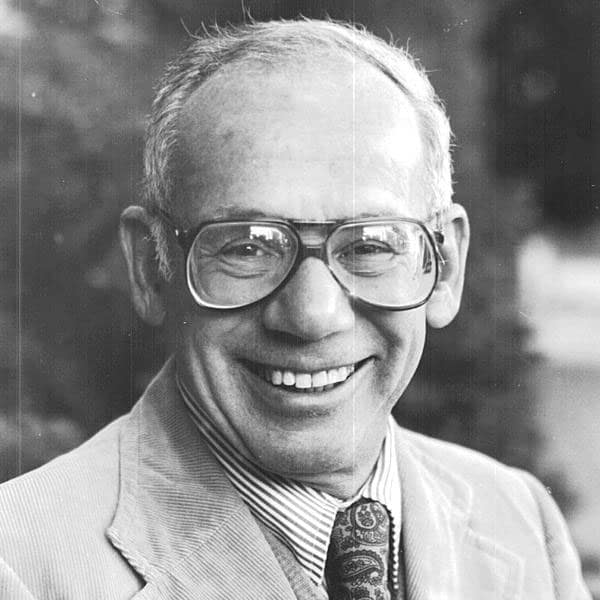
Ari Ephraim Rubin, vice chairman of the Jewish Defense League long led by his father, Irving (Irv) Rubin, died of a self-inflicted gunshot wound on July 20. He was 30.
Ari Rubin had been active since his youth in the militant JDL, which has long been rejected by mainstream Jewish organizations for its violent tactics, and he became vice chairman in 2006.
His death was ruled a suicide by the Los Angeles County coroner’s office, whose spokesman, Craig Harvey, said that a neighbor found Rubin in his car with the self-inflicted gunshot wound to his head.
The report was confirmed by Sgt. Marty Morrow of the Glendora police department, who said that foul play was ruled out, though no suicide note was found.
Local media did not pick up on the story because the family limited the announcement to a paid obituary in the Pasadena Star-News of July 25, while the coroner and police treated the case as a routine suicide.
Ari Rubin’s death continues the chain of violence that has ended the lives of the JDL leadership overall, and the Rubin family in particular.
Rabbi Meir Kahane, who founded JDL in 1968, was murdered in 1990 in New York by an Arab-American assassin. His son, Binyamin Zev Kahane, 34, was killed 10 years later, by Palestinian gunmen, while driving with his wife and five daughters to their home in a West Bank settlement.
Irv Rubin, Rabbi Kahane’s successor, was reported by officials to have committed suicide in 2002 in a Los Angeles federal detention center after cutting his throat with a jail-issued razor and then jumping or falling over a railing and plummeting to his death.
Rubin, 57, had been indicted and was awaiting trial for allegedly plotting to bomb a Culver City mosque and the offices of a California congressman of Lebanese descent.
Shelley Rubin, Irv’s wife, has consistently denied that her husband took his own life and filed a wrongful death suit against prison authorities.
In addition, Earl Krugel, who was indicted with Irv Rubin in the alleged bomb plot, was brutally murdered by a fellow prison inmate in 2005.
In reporting Ari Rubin’s death, the Jewish Defence League U.K. described his death as “another tragic loss for the Right Wing Jewish Leadership, first Rav Meir Kahane, then Binyamin Kahane. Irv Rubin and now his son. When will it end?”
In the obituary notice inserted by his family, Ari Rubin was described as a lifelong resident of Arcadia, who graduated with high academic honors from Pasadena City College and Cal Poly, Pomona.
“He shared his family’s passion and fearless advocacy of Jewish civil rights practically from birth,” the obit noted, and after his father’s death became responsible for JDL’s organizational strategies and development, while also serving as the group’s Web master.
In 2008, Ari visited Israel for the first time through the Birthright Israel program. He returned in 2010 to study at Aish HaTorah in Jerusalem, then “embracing the Orthodox Jewish lifestyle and striving to be a better Jewish man in the world.”
He is survived by his mother, Shelley, younger brother Kelman, and numerous uncles, aunts and cousins. Graveside services were held on July 24 at Sholom Memorial Park in Sylmar.
Ari Rubin leaves behind a different and weaker JDL than his father led. Although repeated attempts to reach a JDL spokesperson or family member were unsuccessful, two civil rights leaders, who have tracked, and strongly criticized, JDL over the years, believe the organization has fallen on lean days.
They attribute the decline to the death of Irv Rubin, which was followed by bitter internal splits and declining membership. While JDL claimed 13,000 to 15,000 members at one time — a figure considered vastly exaggerated by outside experts — it did receive some recognition in the 1970s and early 1980s, when its efforts on behalf of Jews trying to leave the Soviet Union elicited some support in the wider American Jewish community.
Abraham H. Foxman, national director of the Anti-Defamation League, told The Journal, “In recent years, JDL has become rather small and ineffective. Its rallies and protests have rarely attracted more than a dozen or so supporters.
“JDL and other Kahane offshoots in the U.S. that advocate similar Jewish nationalism (like the Jewish Defense Organization and the Jewish Task Force) are slightly more active, although their follow-through on planned events is also inconsistent. Meir Kahane’s ideology continues to have a following in extreme circles in Israel, but not under the JDL umbrella.”
Mark Potok, senior fellow with the Southern Poverty Law Center in Alabama, commented, “It’s been downhill since Irv Rubin died. I think [his successors] tried to look and perhaps be more moderate … but I don’t think they succeeded.”
On its Web site, JDL claims to have domestic chapters in Arizona, Los Angeles-San Diego, South Florida, Chicago, Louisiana, Michigan, South Carolina and Texas. A listing for New York contained the notice, “Our New York chapters are reforming. Please get in touch today if you’re interested in leadership or membership in New York and stay tuned for details coming soon.”
Beyond the United States, JDL lists chapters in Canada, Britain, Germany, France, Holland, Denmark, Sweden and South Africa. The Web sites of the German, French and British chapters showed enough activity to publish the obituary for Ari Rubin in their respective languages.