
How did the owner of the only kosher pizza restaurant in the Fairfax district make it through the last 15 months of the pandemic?
A healthy slice of imagination was crucial.
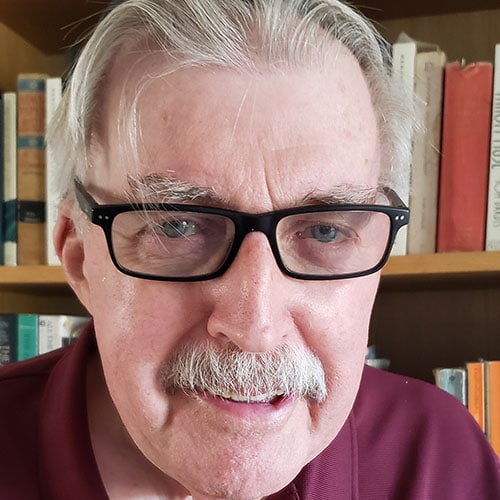
While some business operators were staring worriedly into the unknown, Darren Melamed—who purchased the bankrupt Kosher Nostra in 1991, renaming it Pizza World—did the opposite.
By remaining staunchly calm and making regular use of his creative side, he made it through a crisis that was debilitating for many others.
“At the beginning, [the pandemic] didn’t seem like much of a deal,” Melamed said with a shrug.
“I said, ‘So we have to close for two weeks.’”
“But then it was another month and another month. Still, I thought, ‘I am a responsible businessman. I have reserve money in my bank account for emergencies.’”
The pragmatic Melamed probably was among a minority of entrepreneurs who could say in the first quarter of 2020 that the encroaching darkness “didn’t faze me. It was a bad thing, but bad things happen [in business]. You have to expect the unexpected.”
Melamed said the federal government’s small business Paycheck Protection Program eased losses during the first two months. After that, it was all about his own ingenuity.
Within weeks, he had begun to reimagine his business in a way that would prove to be crucial in order to sustain it.
“I was the first restaurant to come up with this idea,” said Melamed, “to try to deliver to remote areas that do not have kosher restaurants.” That came at the end of March 2020. Later, he expanded, initiating deliveries to stars of the pandemic—first responders, healthcare heroes, and frontline workers.
Quick to share the credit, he notes that his myriad projects have been “funded by generous supporters.”
Remote deliveries opened the door to a series of creative community-based projects. His ability to think creatively and adapt quickly—with help from friends, he is quick to point out—has made the past year considerably more palatable than it might have been.
“It is not an exaggeration to call the [remote deliveries] idea a lifesaver,” he said. “During almost the entire pandemic, we are losing money. It is just a matter of lessening how much money you are going to lose.”
Delivering Pizza World’s menu across Southern California, however, required teammates.
“On my first trip,” Melamed said, “I partnered with La Gondola [in Beverly Hills] and Bibi’s Bakery [in Pico-Robertson]. We ventured on three different trips: San Diego, Irvine and Long Beach. We did about every two weeks to a different location. We were crazy busy.”
But this called for a strategy.
“You have to think outside of the box,” said Melamed, a father of six. “The three of us got together, and I started doing a ton of research. I researched where every single Chabad is, who is in charge, where all the Orthodox shuls are. Social media was very important in getting in touch with all of these people. Irvine did not have a kosher restaurant at the time, though they do now. San Diego does not have a kosher restaurant.”
“You have to think outside of the box,” said Melamed, a father of six.
The communal response “really was incredible. People were filling their freezers, making massive orders. Shortly, many people were saying they wanted to do what we were doing. But you can’t have seven restaurants going to Irvine. Otherwise, each one would make $20.”
The communal response “really was incredible. People were filling their freezers, making massive orders.
Melamed soon concluded it was more sensible to proceed alone. He ventured into Los Angeles neighborhoods such as Northridge, North Hollywood and Venice. “Everybody was so helpful, so nice,” he said.
In no time, other similar businesses emerged, modeling what Melamed had imagined. “It’s interesting,” he said. “You come up with a great idea, and just like everything else in this world, everybody wants to take that idea. You can’t put a patent on it.”
Meanwhile, today, Melamed, like most fellow entrepreneurs, is relieved that normalcy is almost here again.