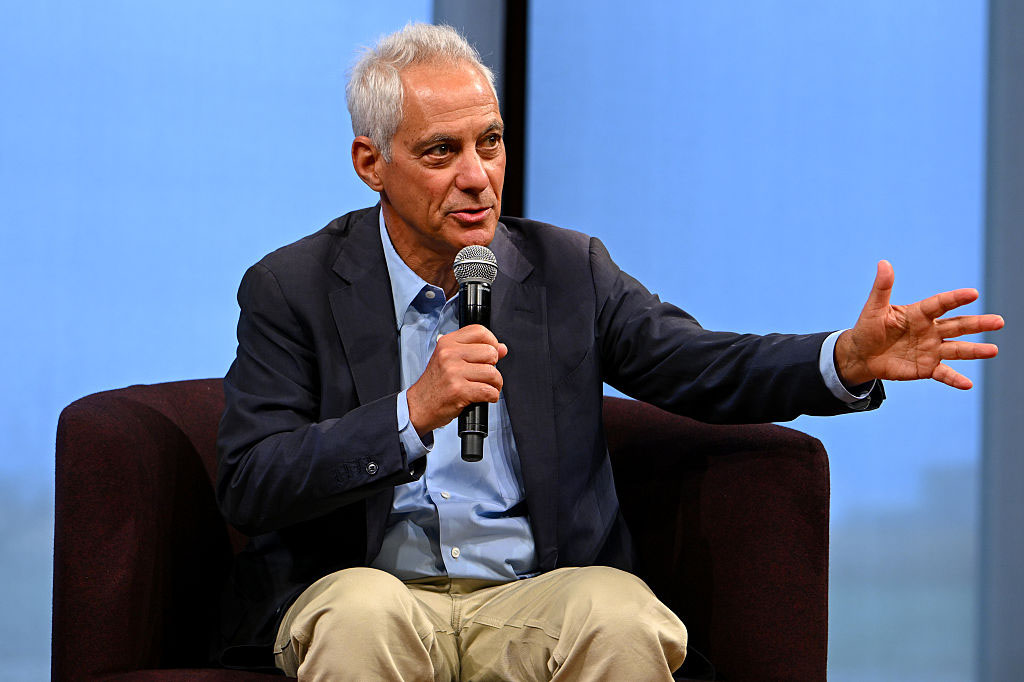
It’s been 70 years since the liberation of Auschwitz, but it’s essential to remember that the horrors of anti-Semitism live on, according to Consul General of Israel in Los Angeles David Siegel.
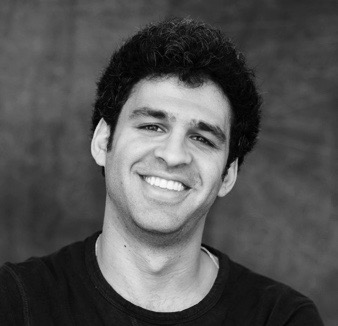
“This is not ancient history; it is right now,” Siegel said during a Jan. 27 speech. “So, words and remembrance without deeds are empty; they are hollow. Governments must stand up against anti-Semitism. They must prevent and act against Holocaust deniers and take on radical Islamist governments that endanger Jews and endanger society at large.”
Siegel spoke to a crowd of approximately 100 people who attended a Los Angeles Museum of the Holocaust (LAMOTH) event in honor of International Holocaust Remembrance Day. The date was designated by the United Nations General Assembly to recognize the anniversary of the liberation of the Auschwitz-Birkenau concentration camp.
Siegel’s remarks looked back in honor of all those who perished, paying tribute to the approximately 25 survivors and camp liberators in the audience, while looking forward to the future of world Jewry, particularly in light of the recent deadly shootings in France.
E. Randol “Randy” Schoenberg, LAMOTH president, was also one of the many speakers. He described Auschwitz as a “man-made hell.”
“I begin by saying how unfathomable Auschwitz and the Holocaust is, and, for me, being the president of the museum has also been a learning experience,” he said. “I think it’s natural for people who were not there to have a certain skepticism about the stories, to say that couldn’t have happened that way, that shouldn’t have happened that way, how could that have happened that way — and, it’s a process, I think, becoming comfortable enough with the facts to accept that [these] things happened.”
Commemoration was on the mind of community member Beth Kean, a third-generation Holocaust survivor, as she discussed her grandmother, a survivor who was interned at Ravensbruck. The United States Holocaust Memorial Museum website describes it as the “largest concentration camp system for women in the German Reich … second in size only to the women’s camp in Auschwitz-Birkenau.”
“My body became numb when I saw the numbers [of how many died at Ravensbruck], because I had no idea that they were so grim,” Kean said. “How in the world did my grandmother survive?”
The many survivors in attendance included Robert Geminder, who was 6 when he witnessed a mass shooting in Stanislawow, Poland, during the war. Today, he is a LAMOTH board member who hopes that Holocaust commemorations don’t fade with the passing of survivors.
“I am hoping 50 years from now, there will be something for the 120th anniversary, when all the survivors are gone, because that’s what is important — to make sure we keep the memory of those 6 million people alive and make sure they didn’t die for nothing. That’s what truly counts to me,” he said in an interview with the Journal. “That’s why I speak at this museum, that’s why I speak at the Museum of Tolerance — to make sure that the young people know what happened.”
Auschwitz survivors Helen Freeman and Elisabeth Mann also attended. Freeman recently inspired Milken Community Schools students to create a mural that was on display at the museum. There was artwork by Mann as well.
The event featured musical performances by students who are part of the LAMOTH Young Pianist Showcase and Musical Ambassadors program. Samara Hutman, the museum’s executive director, was in Poland at the time of the commemoration, visiting Auschwitz on behalf of LAMOTH; the museum’s director of community support, Samira Miller, read remarks on Hutman’s behalf.