Korach is a reminder of what happens when division, animosity and fear grab hold of a people. Korach is a reminder of how even the greatest of leaders, Moshe, can be pushed to the limit and almost overthrown, taken down by his own relative, with the very people he saved from slavery now coming to attack him. There are many midrashim about Korach and why he and his followers were swallowed up by the Earth, one of the big supernatural miracles sent by God in the Torah. We know that our tradition understands Korach and his followers to be illustrators of “an argument not for the sake of heaven,” as Pirke Avot teaches, namely that while his feelings may have been genuine, his tactics, tone and manner were completely uncivil, rude and used to shame Moses in public, one of the highest forms of insults one can inflict. In fact, the Talmud understands that shaming a person in public is “akin to death.” Korach comes to remind us that we all have the capacity to be overtaken by fear, by a sense that we have the only truth, by a sense that tearing down a person in public is the best way to handle a situation.
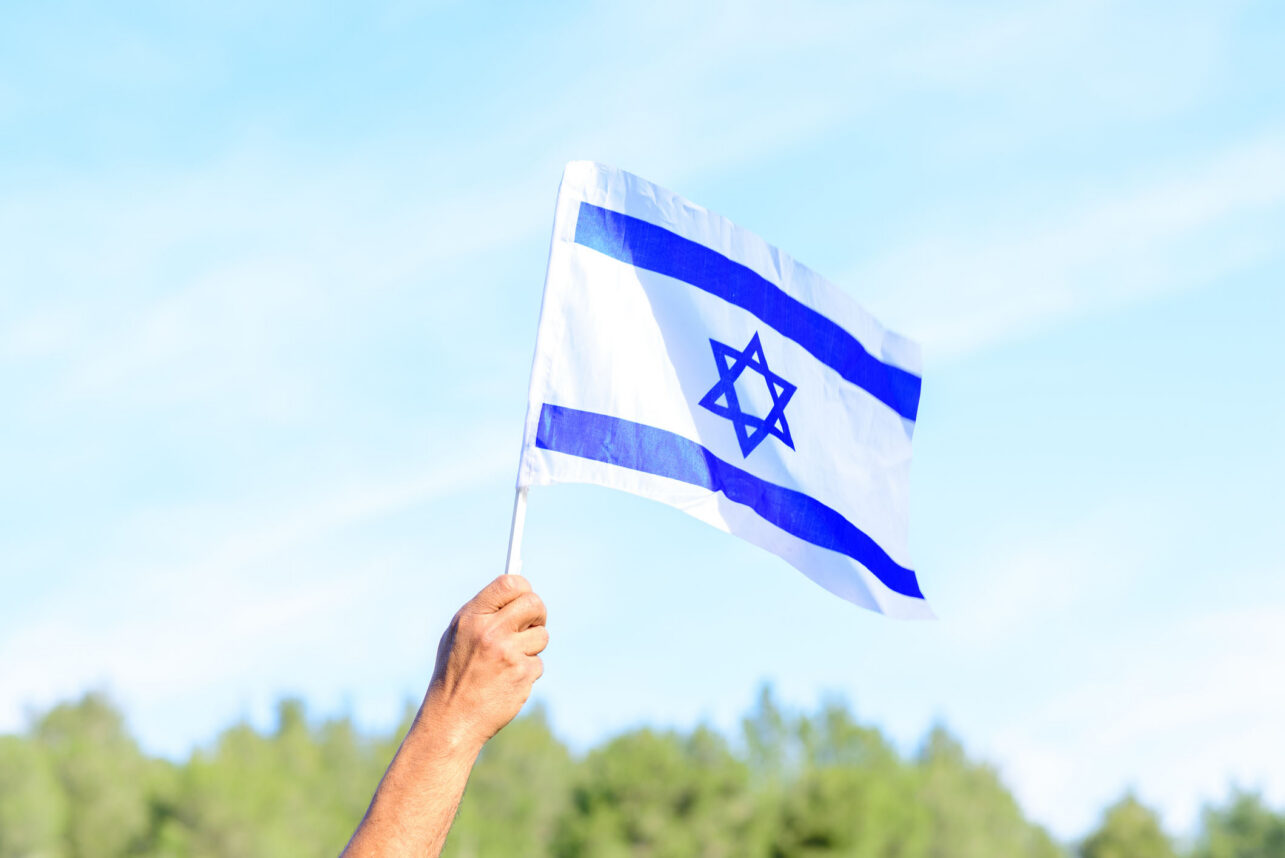
With this teaching on my heart, I am feeling that the spirit of Korach has taken over many in the American Jewish community, as the divisions, disagreements, public insults and hate-filled rhetoric that is our public discourse on Israel has soured relations, driven young people away and pitted Jew against Jew at a time when we need to be together. And I am not talking about the false unity of standing as one no matter what Israel does; that is false unity with no backbone. I am talking about a unity that allows us to debate at the highest level, the level of Hillel and Shammai, as we try to figure out how best to support and strengthen Israel’s hope for peace. We ought to be taking a look at the Israelis and see how vigorous their debate is, how open and honest their press is, how passionate they are, even in their disagreements. Is there hate and shaming in Israel too? Certainly. But, what is happening here in America has gone too far. There is no room for the variety of opinions that exist on a page of Talmud, there is no respect for divergent views, no caring about the heart and soul of our fellow Jewish brothers and sisters with whom we may disagree. This deep-seated lack of respect and tolerance is the spirit of Korach and we must stand against it.
The spirit of Korach was alive and well, from first-hand accounts and press reports, during parts of the Israel rally this past Sunday sponsored by the LA Jewish Federation, Board of Rabbis and Israeli Consulate. For full disclosure, I was not able to attend the rally. But within minutes of him finishing, I was deeply disturbed to learn that my friend and colleague, David Pine, West Coast Regional Director of Americans for Peace Now, an invited guest to speak from the dais, was booed, jeered, heckled and verbally attacked during the entire length of his speech. It was not that they were booing his message, but his very presence and the point of view he represents. The spirit of Korach took over the crowd, and they were only interested in drowning out a fellow Jew. Were they booing peace? Were they booing and jeering hope? Were they booing what a majority of Israelis understand: without a two-state solution, the State of Israel is in grave danger? I don’t know. I do know, from experience, that zealotry and single-mindedness sometimes prohibit us from honest evaluation, introspection and communication. Love of Israel takes many forms, many shapes, but if it is led by the spirit of Korach, then we should be watching out for the splitting Earth that may be coming underneath us.
There is midrash about why Korach’s lineage stops at Levi and doesn’t trace itself all the way back to Abraham, Isaac and Jacob. Because Jacob, the God wrestler, the one who understood nuance and transformation, is said to have prayed on his deathbed, “If any of my descendants turns out wicked, may my name not be associated with them. Such a person is not worthy of being called an Israelite.” (Num. R. 18:5) May we all find the strength, courage, love and compassion to listen to one another, respect one another, and especially, disagree with one another, without the derisiveness of Korach. May we be like his cousin, Aaron the Cohen, loving peace, pursuing peace and drawing each other near to Torah.
Shabbat shalom.
Rabbi Joshua Levine Grater is the spiritual leader of Pasadena Jewish Temple and Center in Pasadena, CA. He serves on the National Advisory Board of J-Street.