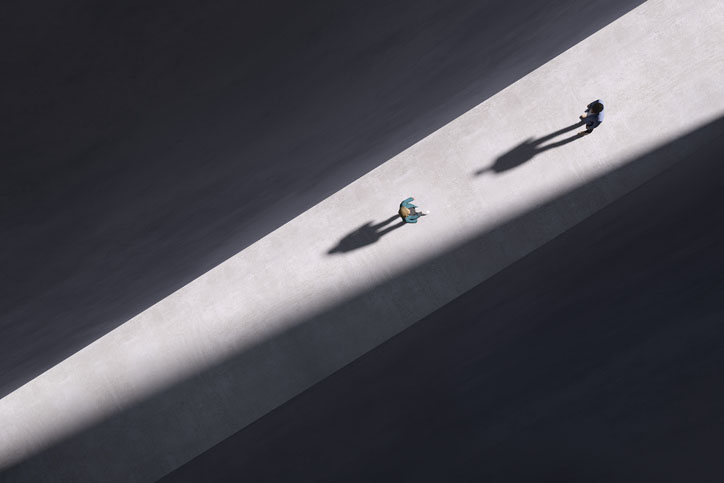
According to the Jewish calendar, the next three weeks are an intense period of mourning; a duration of time that marks the breaching of the walls of Jerusalem to the eventual destruction of the Temple. The time is described as “between the straits.”
The phrase “in the narrow places” comes from Lamentations 1:3. It’s a direct description of the People of Judah, now exiled, pursued even in the narrowest of places. When one hides between the straits, there is no running, no escape. Lamentations sheds light on the reality our people faced: the impossibility of hiding or keeping Jerusalem intact.
Spiritually, “between the straits” remains ever applicable. For anyone experiencing deep distress, mourning or despair, it often feels as if one cannot hide from their grief. There is no running away. There is a forced confrontation between the mourner and what they have lost.
Dr. Erica Brown, in her book In the Narrow Places; Daily Inspiration for the Three Weeks, explains: “During the Three Weeks and Tisha B’Av, we do not only bemoan a recurring past….when we sit on the floor and follow the haunting melody of Eikha, we pause at the second-to-last verse ‘Turn us to You, O Lord, and we shall be turned; renew our days as of old’ (Lam. 5:21). We close with a plea – take us back. Reconcile.” She reminds us of our eternal obligation and opportunity to reconcile our relationship with God, Israel, and the Jewish people.
For those who remain in narrow straits of mourning, the idea of “turning” briefly lifts the blindfold. It’s an instruction to turn towards a renewed connection and a reminder that one can reconcile a relationship, even with the deceased. A prayer to step out of narrow straits into an engaged, breathing rhythm between our soul and the soul of our loved one. Not hiding from grief but instead, maintaining a loving tie to the deceased, turning towards the future with the memory of the deceased inspiring each step. Turning is a spiritual decision to become reengaged in the world of the living.
May this narrow strait of time encourage us to turn—toward faith and toward life.
Shabbat Shalom
Rabbi Nicole Guzik is senior rabbi at Sinai Temple. She can be reached at her Facebook page at Rabbi Nicole Guzik or on Instagram @rabbiguzik. For more writings, visit Rabbi Guzik’s blog section from Sinai Temple’s website.