fbpx

July 17, 2025

Two Things Can Be True: A Social Worker’s Meditation on Duality, Disability, and Dignity

“Eilu v’Eilu Divrei Elokim Chayim” — “These and those are the words of the Living G-d.”
—Talmud, Eruvin 13b

As a clinician, licensed social worker, Orthodox Jewish woman, and disabled professional, I live in a world where two seemingly contradictory truths must often coexist—sometimes uneasily.

I can be highly educated and permanently disabled.
I can be a deeply competent, effective therapist, and unable to drive.
I can carry the strength of generations and still feel profoundly unseen.

In prior roles, I disclosed my disability and how it shapes my scheduling needs. Recently, following colleagues’ advice, I submitted cover letters to agencies emphasizing my clinical strengths and commitment to trauma-informed care, along with my need for remote accommodations under the Americans with Disabilities Act (ADA) due to a non-visible, permanent disability that prevents me from driving.

Initial responses were often enthusiastic. But then came the phone call:

“When can you come in to work in person?”
“As I mentioned in my cover letter, I don’t drive due to my disability.”
“But you’re a therapist — how can you not drive?”

This disbelief was not merely logistical. It revealed a deeper struggle to understand duality: how strength and limitation, visibility and invisibility, capacity and need can coexist in one person.

Psychology & Duality

In psychology, dialectics—the foundation of Dialectical Behavior Therapy (DBT) — teaches us that two opposing realities can be true simultaneously. We can accept ourselves and still desire growth. We can be effective and still need support.

We teach this to our clients every day. Yet society often fails to extend the same grace to its professionals.

Ableism thrives on binary thinking: you’re either “disabled” or “functional.” But disability is complex, dynamic, and often invisible, and it does not define the whole person. My disability does not diminish my empathy or clinical insight; if anything, it deepens them.

Sociology & Stigma

Disability often intersects with other identities to create double marginalization. As a visibly Orthodox Jewish woman, I am frequently judged before I even speak. Layered onto that is skepticism about my disability, forcing me to prove my worth in ways my non-disabled peers never must.

Disability often intersects with other identities to create double marginalization. As a visibly Orthodox Jewish woman, I am frequently judged before I even speak. Layered onto that is skepticism about my disability, forcing me to prove my worth in ways my non-disabled peers never must.

Erving Goffman described this as the “spoiled identity”—a stigma requiring constant impression management to fit into normative structures. Despite my credentials and experience, I face this challenge daily.

Anthropology & Culture

American professional culture idealizes the endlessly mobile, tireless, always-available provider—a modern myth of invulnerability. This clashes with the essence of healing: empathy, relationship, and humanity.

In contrast, many Indigenous and Eastern cultures honored disabled elders and healers as sources of wisdom, valuing lived experience rather than viewing disability as diminished capacity. Why has modern society lost this perspective?

Historical Memory & Jewish Legacy

History reminds us of great thinkers and leaders who lived with disabilities, often in silence:

  • Rabbi Yehuda HaNasi compiled the Mishnah while enduring chronic pain.
  • Helen Keller, deaf and blind from childhood, became a pioneering advocate and author.
  • Temple Grandin, living with autism, revolutionized animal science through her unique perspective.
  • Rabbi Dr. Abraham J. Twerski, zt”l, a renowned Hasidic rabbi, psychiatrist, and addiction specialist, openly spoke about his struggles with self-esteem and his experiences working with addicts, turning his personal challenges into a lifelong mission of healing and teaching. His legacy reminds us that vulnerability and leadership can powerfully coexist.
  • Within the Jewish community, Chava Willig Levy, a wheelchair user and writer, challenges communal assumptions about disability, marriage, and faith.

History reminds us of great thinkers and leaders who lived with disabilities, often in silence.

Their legacies endure not despite limitations but through them. Their disabilities did not disqualify them from leadership—they simply required accommodation and imagination.

Torah & Truth

Duality is woven into creation itself: “And there was evening, and there was morning…” (Bereishit 1:5). Light and darkness, joy and sorrow, strength and fragility are not opposites but partners in the human experience.

Moshe Rabbeinu, Judaism’s greatest leader, had a speech impediment and pleaded for relief. Hashem’s response was not to remove the limitation but to provide support: “Aharon, your brother… shall speak for you.” (Shemot 4:14–16) Leadership is not about perfection—it is about purpose.

The Torah commands: “Do not place a stumbling block before the blind.” (Vayikra 19:14) Our sages interpret this broadly: to avoid creating unnecessary barriers that hinder those already capable.

We ask our clients to accept complexity; now we must ask the same of our institutions.

Remote work, accessible supervision, and respect for disabilities—visible and invisible—are not acts of kindness. They are inalienable rights.

In a mental health landscape facing critical shortages, the solution is not to be gatekeepers based on outdated assumptions about who “looks like” a therapist or who can drive a car.

The solution is to embrace duality: to make space for clinicians who carry brilliance and brokenness, skill and struggle.

We are not anomalies—we are models of resilience, quietly showing that wholeness does not erase limits; it integrates them with dignity.


Ariel Rose Goldstein, LSW, LMSW, is a licensed trauma therapist and writer who integrates Jewish values with mental health and disability advocacy. She lives in New Jersey with her husband and is expecting their first child in early fall.

Two Things Can Be True: A Social Worker’s Meditation on Duality, Disability, and Dignity Read More »

From the Israel-Iran War to Texas Flooding, Jewish Camps are Stepping Up Amidst Adversity

Amid deep challenges at home and abroad — from the heartbreaking recent floods in Texas to the Israel-Iran war — Jewish camps are stepping up and building community.

On June 13th, with hundreds of camps in the process of welcoming nearly 200,000 young Jews, war broke out between Israel and Iran. Hundreds of Israeli shlichim supposed to work at camps were unable to leave the country. Israel trips were cancelled. Everything seemed uncertain.

Ten days later, 50 shlichim arrived in a bus to Ramah Day Camp in Nyack, the road flanked by cheering campers. An impromptu dance party kicked off. There were hugs, tears, and a sense of relief. It was a beautiful moment — one that shows how Jewish camp brings us together in ways that inspire creativity, joy, and community.

As the newly appointed CEO of Foundation for Jewish Camp, I’ve talked to everyone from college-aged counselors to camp directors about their feelings going into camp this summer — and how camp is going so far. Two main themes have emerged: First, that right now, people feel a loss of control. And second, that one thing we can control is showing up, being in community, and leaning into joy — exactly the kind of experience camp provides.

Young people of all backgrounds report feeling increasingly lonely. Depression and anxiety are on the rise, driven by screen addiction, lingering effects of the pandemic, and global turbulence. Between 2003 and 2022, American teens reduced their average time hanging out by nearly half. This isolation harms young people’s mental health. And it deprives them of connections they might otherwise lean on in tough times.

Jewish kids today face all of this — and then some. They’re growing up in a moment of rising antisemitism, toxic online culture, and polarization around Israel.

That’s where camp comes in. Last summer, a record nearly 190,000 young adult staff and campers came to Jewish summer camp. What we heard across every age group is that young Jews were desperate for a breather: to unwind and unpack their feelings in a supportive environment. Parents shared how camp helped their child “after a year in a school where he acutely felt like a minority.” Or gave their kid “an opportunity to live Jewishly out loud, at a time where we are otherwise more reserved about our customs.”

Young Jews have returned this summer because camp is providing something they urgently need in today’s environment. But the best sanctuaries must provide more than just shelter. They need to be a springboard that helps young people thrive, not just survive.

All signs suggest that individual and communal “thriving” gets supercharged at Jewish summer camp. A recent study by Stanford University and BeWell revealed that summer camp is the #1 community space where Jewish teens feel comfortable being their true selves. Camp creates lifelong friendships between North American and Israeli Jews: Last summer, there were 3,100 Israel staff and more than 1,000 Israeli campers at camp, and our data suggests they formed strong bonds with their North American peers. Beyond Jewish identity, camp also fosters social and emotional learning, including confidence and independence. 93% of families report that camp helped their child experience growth and try new things.

One of the silver linings to emerge from the turbulence of recent weeks is seeing just how many people recognize the importance of camp — and are willing to help it in times of need.

Within 72 hours of the war breaking out, as the timing of Israeli staff’s arrival remained unclear, FJC rallied more than 1,400 people who said they’d volunteer or work at a camp. They ranged in ages from 13 to 80. From Orthodox to not Jewish at all. Fiercely loyal camp alums who said they’d be willing to go not just to their camp, but to wherever they’re needed.

We saw the same swell of support as camps in Texas continue to grieve unimaginable loss after devastating floods. The impacted camps aren’t Jewish. But we are united by our shared belief that camp changes lives. Across the country, Jewish camps, leaders, alumni, and families mobilized to fundraise. Through direct support and emotional solidarity, the Jewish community acted out one of our faith’s highest values: to comfort those in pain, and aid those in distress.

This outpouring of generosity isn’t random. It is the product of the world that camps help create: one in which the joy of childhood summers feeds a lifetime of connection to Jewish identity, kindness and communal responsibility, and leadership.

Last summer, I visited a Jewish summer camp just as Shabbat was beginning. The setting sun cast a faint glow at the camp’s outdoor amphitheater, and a circle of teenage counselors-in-training stood arm in arm, singing quietly. A few had tears in their eyes. I asked one of them what she was thinking about. She told me that at school, she was the only Jew in her grade and often felt alone. At that moment, however, she felt connected. In community.

“Here, I can just be me,” she said.

What a gift for her, and for all of our community. Across North America, hundreds of Jewish day and overnight camps are giving young people what they need most amid global chaos: pride in their identity, a community that sees and values them, and the skills to lead with courage, care, and joy.


Jamie Simon is the CEO of Foundation for Jewish Camp, whose mission is to grow, support, and strengthen the Jewish camp movement, leveraging more than $15 million of philanthropic giving annually to scale programs and resources that benefit more than 300 Jewish day and overnight camps across North America. jewishcamp.org

From the Israel-Iran War to Texas Flooding, Jewish Camps are Stepping Up Amidst Adversity Read More »

Why These Rabbis Are Wrong About Zohran Mamdani

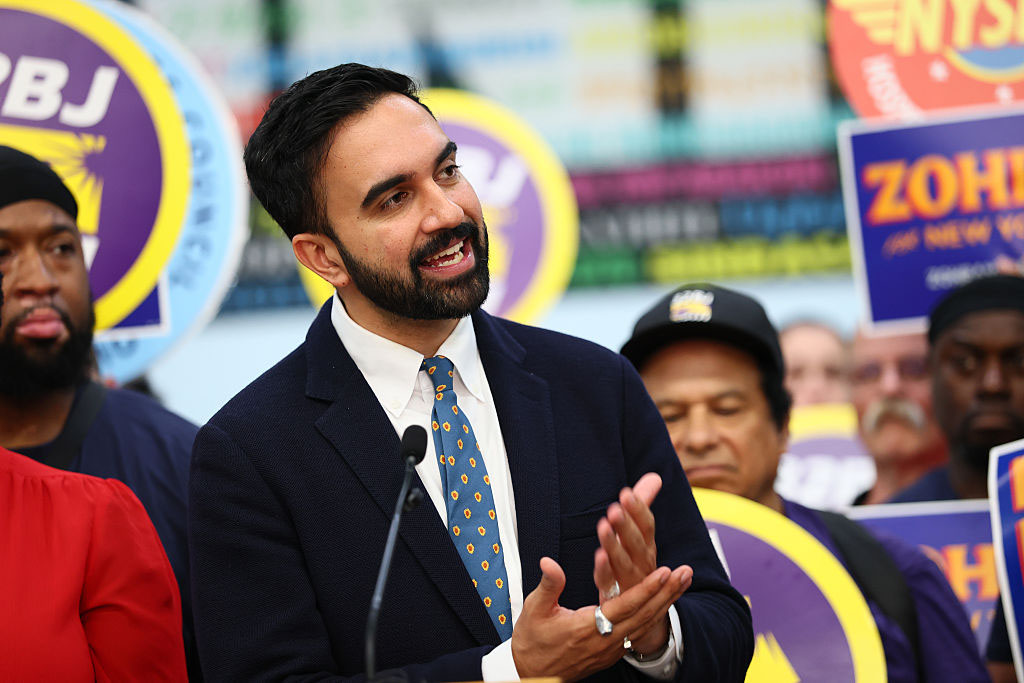
Recently, a group of rabbis published an open letter in the Times of Israel defending New York Assemblymember Zohran Mamdani and his run for city mayor. They claim that he represents “Jewish values” of justice and compassion and suggest that opposition to him stems from fear or ignorance.

They’re wrong, and dangerously so.

This isn’t about abstract disagreements over Israeli policy. It’s about Jewish safety, communal integrity, and the responsibility to stand with your own when it matters most. These rabbis have misunderstood the stakes, and in doing so, they’ve made a harmful mistake.

To begin with, Mamdani has repeatedly refused to disavow the slogan “Globalize the Intifada,” a rallying cry with deep roots in violence against Jews in Israel and around the world. The phrase has been shouted at rallies across the U.S. and openly embraced by anti-Israel extremists. The U.S. Holocaust Memorial Museum rightly called it “outrageous” and “deeply offensive to Holocaust survivors.” It does not signal a call for justice. Rather, it glorifies violent uprisings and echoes a long history of terror, not peace.

And yet, Mamdani refuses to say it’s wrong; he has said that they are not his words, but he nevertheless cannot bring himself to condemn the phrase, its users, and its deadly meaning.

That’s not justice. That’s moral evasion. And the rabbis who defend him should know better.

What makes this support even more baffling is that Mamdani is still a political newcomer. He has barely any legislative record to evaluate. He hasn’t passed meaningful legislation. He hasn’t built a long-term track record of cross-community work. His time in office has been short, and his resume, thin. When someone hasn’t truly worked and has no examples of communal cross aisle success, it’s hard to claim they’re someone you can work with.

And so we look to what he has produced: a trail of statementsinterviews, and public appearances that make his position toward Israel and toward Jews painfully clear. From championing BDS, to embracing slogans tied to antisemitic violence, to voting against recognizing Holocaust memory, his rhetoric and conduct speak louder than any policy memo.

Words matter—especially when they are all someone has to show.

The rabbis backing Mamdani argue that he listens to Jews, builds relationships, and is open to dialogue. That may be true. But it misses the more important point. Having a few Zoom calls or town halls with rabbis doesn’t make you an ally. Being in conversation doesn’t mean you’re protecting the community. These rabbis are mistaking proximity for protection and confusing their own access with actual safety.

This isn’t about whether Mamdani is personally polite to some Jews. It’s about his refusal to clearly denounce calls for violence and his repeated choices to undermine Jewish dignity in public life. Intentions aren’t enough. Policies and actions matter more.

Intentions aren’t enough. Policies and actions matter more.

Even more troubling is the rabbis’ implicit suggestion that their clerical status grants them moral authority over the rest of the community. That’s not just arrogant; it’s a betrayal of Jewish tradition itself.

As Rabbi Jonathan Sacks wrote: “Judaism is a conversation scored for many voices.” No one—not even a group of progressive rabbis—has a monopoly on truth. Rabbinic titles don’t override the lived experience, political instincts, or safety concerns of Jews across the spectrum. The letter isn’t just a defense of Mamdani. It’s an assertion of ideological power and a top-down attempt to dictate what “authentic” Jewish values are, as if dissent from their worldview is illegitimate or small-minded forcing these rabbis to be “enraged.”

But Jewish life has never worked that way. Our tradition prizes machloket l’shem shamayim—argument for the sake of heaven. It thrives on moral complexity, not clerical consensus.

One of the most revealing lines in the rabbis’ letter is this: “Being part of this movement and this win matters. It reminds us what it feels like to be in the majority.” But they are not the majority. And they know it.

National data repeatedly shows that the positions Mamdani champions—support for BDS, demonization of Israel, refusal to condemn antisemitic slogans—are deeply unpopular with most Americans. According to the Harvard CAPS-Harris Poll and recent Pew research, support for Israel remains strong across much of the country, while far-left calls to dismantle it remain fringe.

These rabbis are deliberately distorting reality and projecting their ideological bubble as if it reflects the broader Jewish or American consensus. It doesn’t. Pretending it does isn’t just dishonest. It’s dangerous.

What’s striking is how out of step these rabbis are with the broader Jewish community. Concern over Mamdani’s record has come from across the spectrum: Orthodox rabbis, mainstream institutions, Holocaust educators, and civic leaders alike. This isn’t a fringe panic. It’s a clear and measured red flag.

The rabbis try to shield their stance by invoking Rep. Jerry Nadler, who also refused to condemn Mamdani. But Nadler’s silence says more about the politics of appeasement than it does about moral clarity. It’s deeply disappointing to see a senior Jewish lawmaker, along with these rabbis, sidestep the obvious in a moment that demands firmness.

To dismiss this widespread concern as political paranoia is deeply patronizing. Jews know when a movement or public figure is hostile to them whether that hostility is loud or coded, explicit or artfully vague. Backing Mamdani might feel morally elevated to some. But it sends the wrong message: that Jewish safety must always come second to progressive acceptance and that Jews are only welcome when they stay quiet.

That’s not tikkun olam. That’s capitulation.

Rabbis have a sacred duty to defend their communities, not just align with the fashionable politics of the moment. Their defense of Mamdani reflects a fundamental misreading of Jewish history, Jewish vulnerability, and Jewish obligation. You don’t need to be a rabbi to see what’s happening. Mamdani has no track record of support for the Jewish community and his refusal to denounce antisemitic rhetoric speaks volumes. No amount of rabbinic framing can alter these truths.


Samuel J. Abrams is a professor of politics at Sarah Lawrence College and a senior fellow at the American Enterprise Institute.

Why These Rabbis Are Wrong About Zohran Mamdani Read More »

Rabbis of LA | Rabbi Noam Raucher Wants to Create a Safe Space for Jewish Men

Rabbi Noam Raucher is the executive vice president of the 96-year-old Federation of Jewish Men’s Clubs, whose central task is “to create space, opportunities and experiences by which men can find each other, bond and build relationships based on brotherhood.” His twin targets are Jewish men who are affiliated with synagogues and those who aren’t, which pretty much covers the world — as the Federation does, across America, Israel, Uganda and Western Europe. And while the Federation was born in the Conservative movement, Jewish men across the religious and nonreligious spectrum are recruited. Raucher, a native of Hamden, Connecticut, has been chief executive for the last two years and a Federation member for six years. He said that a good portion of his time is spent “searching for different ways we can engage men who are connected to the Jewish community. By that I mean white, cis gender men who are part of the community, GBTQIA+ men, who are considered marginalized and Jewish men of color. We’re also talking about men who are related to Jewish families, either by adoption and haven’t converted or because they married into a Jewish family, are raising Jewish children and need guidance for what it means to be a father of Jewish children. He leads the largest and oldest Jewish men’s organization in the world. “We see our place in the next 100 years as continuing in that role, being a space for all men connected to the Jewish community.”

While women’s clubs abound across the planet, men have never been known as joiners. And Rabbi Raucher’s efforts center on “trying to figure out ways the Federation can be more engaging, more expansive of experiences for all men connected to the Jewish community. No one Jewish is excluded.” A successful day is “when I get to know guys on a more personal level– beyond the leadership stuff, beyond my responsibilities, just kind of in a human way in terms of what we all are going through. Guys reach out to me from time to time over social media – some are connected to the organization, some not.  They see stuff I put out and reach out because they would like to talk.”

While it would seem obvious that his target audience would be men age 50 and under, he noted with a grin, “that is the aim of every Jewish organization.” As men get older, the relationships in our lives are what sustain us. We think, though — particularly in the stage where I am, the main age bracket, 55 and under — this is the type of stuff that really benefits us now that can make our lives so much more meaningful.” But men under 50 tend not to be joiners, and the Federation is trying to convince younger guys in my age bracket” to reverse their lifetime thinking.

But older, single men experience more loneliness than younger men. Married men typically have other things on their minds, responsibilities and commitments they must honor. Having a place where you can kind of process this stuff – a young married man who says this is not what he expected it to be. It’s harder. Maybe he’d rather be out with friends instead of his wife.

Raucher thinks the Federation could offer even more to the young, single guy. He says the minute you get married and start having kids, you get a reflection sent back to you. It’s different if you are single. They hear negative messages about how they are being marginalized, losing out to women. “We need a better echo chamber for young single men, where they can hear healthier messages and be seen for all the beauty they possess inside,” Rabbi Raucher said. “We articulate a voice men’s organizations might not do typically.” In Raucher’s view, society is demanding that men take time to become more self-aware, face their challenges and become more emotionally intelligent.

“We are trying to get men to realize,” he said, “that a men’s community is a great place to practice all of this stuff. On top of it, you gain the fringe benefits of having bonds with brothers who are going to be there for you. “We need a better echo chamber for young single men where they can hear healthier messages and be seen for all the beauty they possess inside,” Raucher said.  “We articulate a voice men’s organizations might not do typically.”

The Federation offers a setting where men can share with other guys going through the same thing, find new friends who offer solutions to common, nagging problems, and learn how to be better aware of your own self. It amounts, he says, to holding up a mirror to your conduct – which is “nothing but a benefit to all of us.”

Fast Takes with Rabbi Raucher

Jewish Journal: Your favorite Jewish food?

Rabbi Raucher: Challah.

J.J.: What is your favorite childhood memory?

RR: Fishing in the Pocono Mountains lakes with my family.

J.J.: Have you any unmet goals?

RR: Yes.

Rabbis of LA | Rabbi Noam Raucher Wants to Create a Safe Space for Jewish Men Read More »

UCLA Center for Israel Studies Names Director, Shabbat Tent, Juneteenth Shabbat, Kol Ami Gala

The UCLA Nazarian Center for Israel Studies has named Steven Zipperstein as its new director, effective July 1.

Zipperstein, a professor at UCLA, is a scholar of the legal history of Israel-Palestine. He teaches at UCLA in the Department of Public Policy, the Global Studies Inter-departmental Program within the UCLA International Institute, and the Henry Samueli School of Engineering and Applied Science.

Additionally, he is a visiting professor at Tel Aviv University Law School and a visiting lecturer at the Hertie School in Berlin. He is also the author of several peer-reviewed books, including “Zionism, Palestinian Nationalism and the Law: 1939-1948.”

Before joining UCLA, Zipperstein practiced law for 40 years in California, Washington D.C., New York and New Jersey.

“I am thrilled to join the UCLA Younes and Soraya Nazarian Center for Israel Studies as its new director,” Zipperstein said. “I look forward to serving the Center’s vibrant and diverse community of students, scholars and community members — on campus and throughout the U.S. and the world — and bringing you the highest quality programs and academic scholarship focusing on Israel in all its dimensions.

“I also want to thank my recent predecessors, interim director Professor Mark Kligman and former director Professor Dov Waxman, for all they have done to strengthen the Center and ensure its place as a top academic platform for Israel Studies in the United States and internationally.”

The UCLA Nazarian Center for Israel Studies promotes the study of modern Israel at UCLA and beyond. The center sponsors courses, generates and disseminates academic research, organizes public programs and hosts visiting scholars, writers and artists. The center also provides grants to faculty and students.


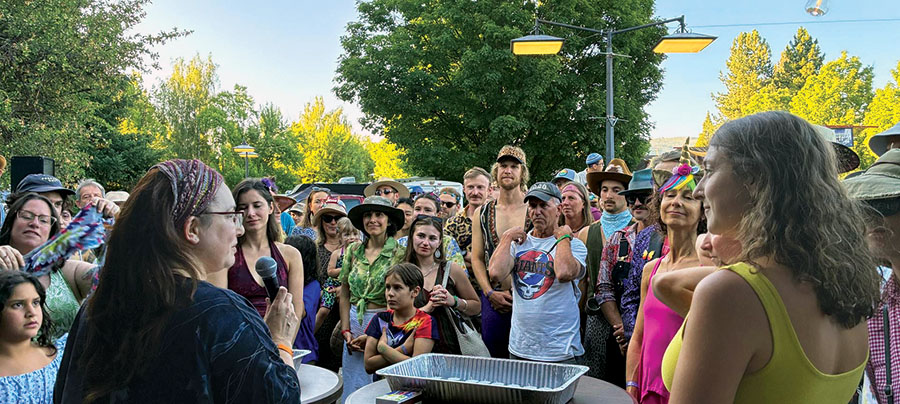
Rebbetzin Rachel Bookstein at this year’s High Sierra Music Festival Photo courtesy of Neshama

Rebbetzin Rachel Bookstein led a brief learning session before Shabbat candle lighting at High Sierra Music Festival. Rebbetzin Rachel was there over the Fourth of July weekend as part of Shabbat Tent, an initiative that gathers music festivalgoers for Shabbat services. It’s a place for spiritual nourishment and connection — a self-described “oasis of chill” — for attendees of music festivals.

In the past, Shabbat Tent has popped up at Phish Fest 8, Coachella, Lightning in a Bottle, Sundance Film Festival and Bonnaroo, among other large-scale music and arts gatherings.


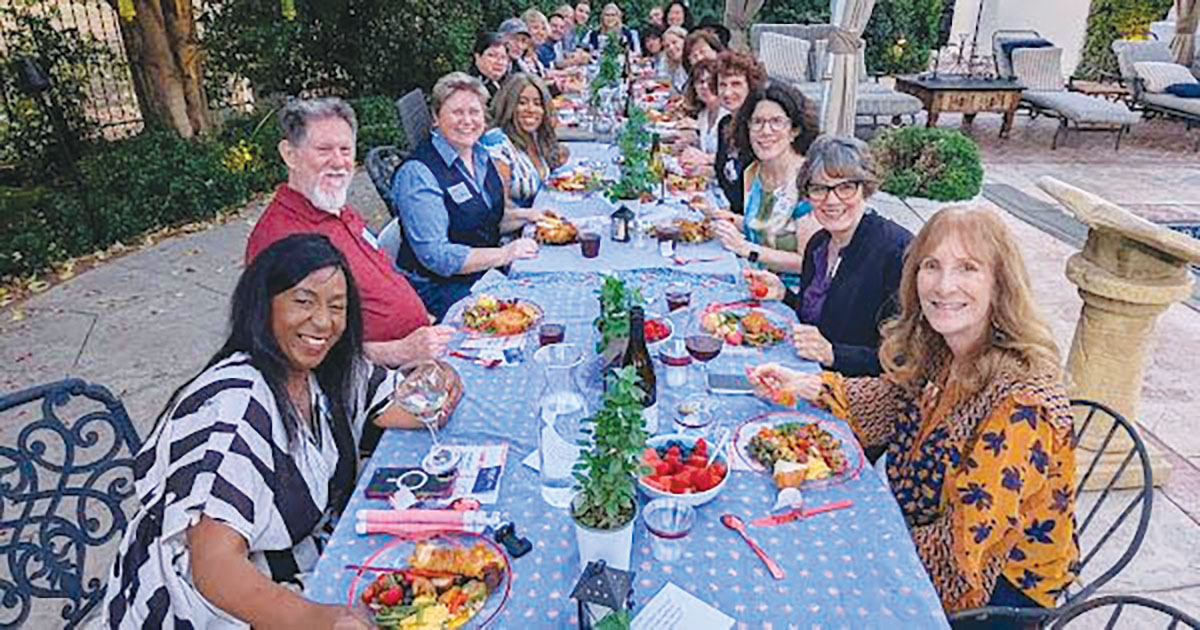
Challah and Soul held a festive dinner to mark Juneteenth last month. Courtesy of Challah and Soul

Last month, on June 20, Challah and Soul, in partnership with Connecting Cultures for Peace, held a Shabbat dinner in honor of Juneteenth. The organization was joined by poet Christian Nicole Davis, whose powerful piece, “I Do America,” was both inspiring and heartbreaking, according to those in attendance. While rooted in the Black American experience, her words resonated across communities — as guests reflected on the experiences of Jewish people, Native Americans and immigrants today.

To mark the occasion, Challah and Soul organizers set up tables with fresh herbs and bowls of red berries, traditional symbols of Juneteenth. The menu blended Black and Jewish culinary traditions — vegan collard greens, schnitzel fried chicken, red velvet cupcakes and peach cobbler. 

“It was a beautiful evening filled with honest conversation, shared stories, and deep connection,” a statement from Challah and Soul said.

The group — which connects Black and Jewish communities through food, education and storytelling — is planning on hosting another dinner before the end of summer. To stay in the loop with all the organization’s activities, follow them on Instagram @challahandsoul. 


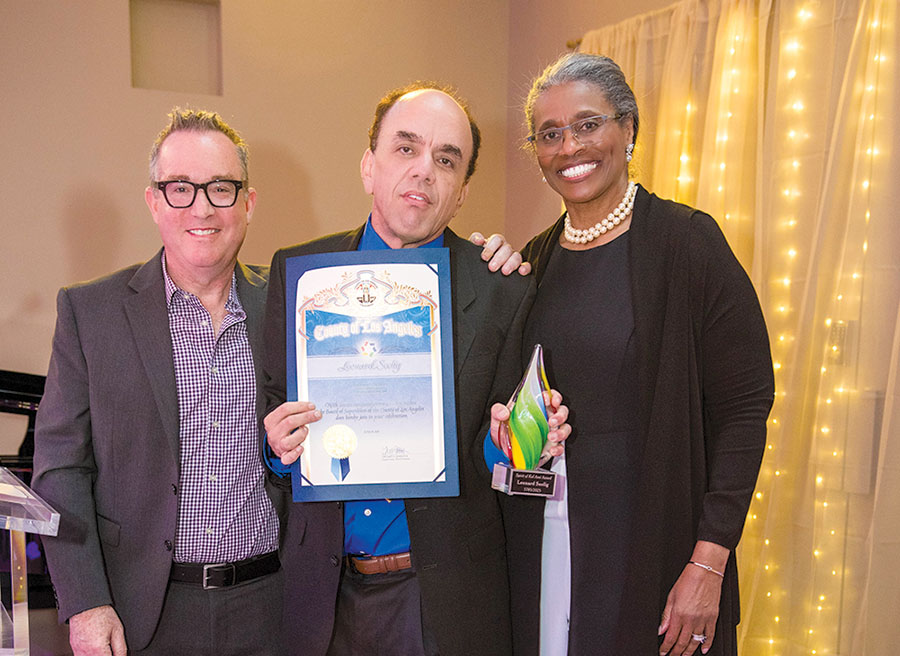
Leonard Seelig (center) was honored during Congre-gation Kol Ami’s recent gala Courtesy of Kol Ami, Justin Chayim

Congregation Kol Ami, one of the country’s most well-known LGBTQ synagogues, held its 33rd annual gala on June 29. The event honored past Kol Ami presidents with the John Altschul Leadership Award, named in honor and memory of Kol Ami’s inaugural president. 

Also honored was Kol Ami congregant Leonard Seelig, who was recognized with the Spirit of Kol Ami Award. Kol Ami feted Seelig for his exceptional volunteer work, including helping with Shabbat preparation and other events at the West Hollywood synagogue. Seelig, who works for Princess Cruises, is a passionate modern artist.

UCLA Center for Israel Studies Names Director, Shabbat Tent, Juneteenth Shabbat, Kol Ami Gala Read More »

You Must – A poem for Parsha Pinchas

You must offer up an ascent-offering as a fire-offering pleasing to God: 13 young bulls, two rams, and 14 one-year-old lambs; they must all be unblemished. ~ Numbers 29:13

On the fifteenth day of the seventh month
you must do nothing mundane, so if you
must operate a light switch or vehicle
do so with the flare of the Sabbath in mind

You must bring bulls and rams and lambs
for the offering. Nice ones. They get finicky
at the bulls and rams and lambs collection center
outside the Holy Temple, so no blemishes, please.

You must, on the second day, bring more
bulls and rams and lambs. They used the
ones you brought on the first day already.
More are needed. Still no blemishes, please.

Also, on the second day, raid the pantry,
grains are needed. If you don’t keep raw grains
Grape Nuts may do, but it depends on
who’s working that day.

On the third day, more unblemished (please)
bulls and rams and lambs are needed.
They go through them quick in here
and God is going for some kind of record.

Grains, too, of course. It’s the same on the
fourth and fifth days. If you’re running out of
bulls and rams and lambs, please keep this
in mind for next year.

On the sixth day, more of the same is needed
but add in a he-goat. You know what it did.
I think I forgot to mention you’ll also need to bring
a he-goat on all the other days. Sorry,

this is all new. Please bring the daily he-goats.
Now head into your booths and enjoy the wind
and the sky and the stars. Eat your fruit and
form your decorative chains. This is all required.

You must.


Rick Lupert, a poet, songleader and graphic designer, is the author of 29 books including “God Wrestler: A Poem for Every Torah Portion.” Visit him at www.JewishPoetry.net

You Must – A poem for Parsha Pinchas Read More »

A Bisl Torah — Between Narrow Straits

According to the Jewish calendar, the next three weeks are an intense period of mourning; a duration of time that marks the breaching of the walls of Jerusalem to the eventual destruction of the Temple. The time is described as “between the straits.”

The phrase “in the narrow places” comes from Lamentations 1:3. It’s a direct description of the People of Judah, now exiled, pursued even in the narrowest of places. When one hides between the straits, there is no running, no escape. Lamentations sheds light on the reality our people faced: the impossibility of hiding or keeping Jerusalem intact.

Spiritually, “between the straits” remains ever applicable. For anyone experiencing deep distress, mourning or despair, it often feels as if one cannot hide from their grief. There is no running away. There is a forced confrontation between the mourner and what they have lost.

Dr. Erica Brown, in her book In the Narrow Places; Daily Inspiration for the Three Weeks, explains: “During  the Three Weeks and Tisha B’Av, we do not only bemoan a recurring past….when we sit on the floor and follow the haunting melody of Eikha, we pause at the second-to-last verse ‘Turn us to You, O Lord, and we shall be turned; renew our days as of old’ (Lam. 5:21). We close with a plea – take us back. Reconcile.” She reminds us of our eternal obligation and opportunity to reconcile our relationship with God, Israel, and the Jewish people.

For those who remain in narrow straits of mourning, the idea of “turning” briefly lifts the blindfold. It’s an instruction to turn towards a renewed connection and a reminder that one can reconcile a relationship, even with the deceased. A prayer to step out of narrow straits into an engaged, breathing rhythm between our soul and the soul of our loved one. Not hiding from grief but instead, maintaining a loving tie to the deceased, turning towards the future with the memory of the deceased inspiring each step. Turning is a spiritual decision to become reengaged in the world of the living.

May this narrow strait of time encourage us to turn—toward faith and toward life.

Shabbat Shalom


Rabbi Nicole Guzik is senior rabbi at Sinai Temple. She can be reached at her Facebook page at Rabbi Nicole Guzik or on Instagram @rabbiguzik. For more writings, visit Rabbi Guzik’s blog section from Sinai Temple’s website.

A Bisl Torah — Between Narrow Straits Read More »

Two Peaceful Covenants

Societies are born from war
and cooperation it requires and creates,
with altruism at its core,
so the establishment of any nations and great states

arises from the sort of factors
we see described in Genesis fourteen before the Cov-
enant the narrative’s redactors
associate with war and altruism, not with love.

Altruism is quite vital,
creating force when Abraham in Salem—-meaning peace—
never claimed the warrior’s title
to booty, causing altruistically that war would cease.

Although warfare is a major source of social headache,
it led to endorsement of Abraham by Melchizedek
and the covenant of peace God gave to Phinehas, like the prize
whose source was deadly dynamite invented Nobel-wise.


Num. 25: 11-12 states, after Phinehas killed  an Israelite, a Simeonite, and the Midianite woman who seduced him Cozbi the daughter of Zur, that God makes the following statement:

פִּֽינְחָ֨ס בֶּן־אֶלְעָזָ֜ר בֶּן־אַהֲרֹ֣ן הַכֹּהֵ֗ן הֵשִׁ֤יב אֶת־חֲמָתִי֙ מֵעַ֣ל בְּנֵֽי־יִשְׂרָאֵ֔ל בְּקַנְא֥וֹ אֶת־קִנְאָתִ֖י בְּתוֹכָ֑ם וְלֹא־כִלִּ֥יתִי אֶת־בְּנֵֽי־יִשְׂרָאֵ֖ל בְּקִנְאָתִֽי׃
Phinehas, son of Eleazar son of Aaron the priest, has turned back My wrath from the Israelites by displaying among them his passion for Me, so that I did not wipe out the Israelite people in My passion.
לָכֵ֖ן אֱמֹ֑ר הִנְנִ֨י נֹתֵ֥ן ל֛וֹ אֶת־בְּרִיתִ֖י שָׁלֽוֹם׃
Say, therefore, ‘I grant him My pact of peace.

It occurred to me after rereading this poem with my granddaughter Ada, that Moses’ reluctance to circumcise one of his two sons, either Gershom or Eliezer, while leaving Midian, was motivated by an aversion to the violence associated with the act of removal of an infant’s foreskin.  This suggestion might be an explanation of the traditional belief that the prophet Elijah attends every ritual circumcision; Elijah is traditionally identified with Phinehas, whose violence was validated when God awarded him the covenant of peaceafter he had performed an act of violence that Moses had refused to perform either against an Israelite or a Midianite.

After hearing my hiddush, Ada suggested an innovative explanation for God’s decision not to appoint Moses head of the priestly dynasty, appointing his brother Aaron instead of him. Ada suggested that God may have thought that Moses’  reluctance firstly to perform ritual acts of violence such as the circumcision of his son that he neglected to do but was determinedly performed by his Midianite wife Zipporah,  and secondly the killing of two sinners which had to be performed by Phinehas, a priest, instead of by him, made Moses an unsuitable candidate for the position of leader of a priestly dynasty, since one of the main responsibilities of priests is the supervision of acts of violence: animal sacrifices.


Gershon Hepner is a poet who has written over 25,000 poems on subjects ranging from music to literature, politics to Torah. He grew up in England and moved to Los Angeles in 1976. Using his varied interests and experiences, he has authored dozens of papers in medical and academic journals, and authored “Legal Friction: Law, Narrative, and Identity Politics in Biblical Israel.” He can be reached at gershonhepner@gmail.com.

Two Peaceful Covenants Read More »

A Moment in Time: “All it Takes is One Piece”

Dear all,

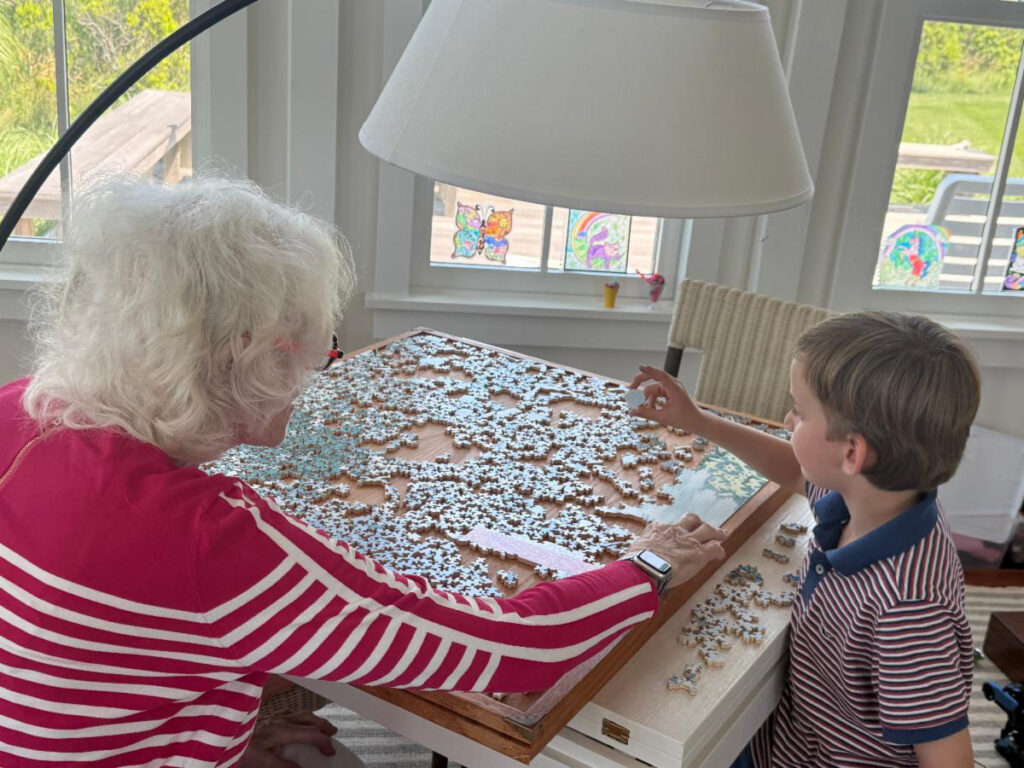
My mom and Eli were working on a puzzle together last week. In what seemed like an impossible task, they wondered how they could possibly complete it.

Then Eli lifted up one piece amidst the hundreds and attached it into its corresponding piece.

Mom and Eli smiled broadly. And they continued their quest.

Life can be frustrating at times. But one ray of sunshine, one smile, one simple accomplishment, one piece finding its mate …. can transform a difficult journey into an extraordinary moment in time.

Open your eyes. The moment is right there, waiting for you!

With love and shalom,

Rabbi Zach Shapiro

A Moment in Time: “All it Takes is One Piece” Read More »

Sephardic Torah from the Holy Land | Hamsa Israel Stories, Part 1

This almost didn’t happen. It had so much going against it – the ongoing war in Gaza, rockets from Yemen, and the recent missile war with Iran. The planned Maccabiah Games – cancelled. Many teen and Birthright groups – cancelled. Everyone told me to follow suit, to cancel my Sephardic Educational Center “Hamsa Israel” teen program. I decided not to pull the plug. The arrival date for our group was set for July 15, so I held out on canceling.

Now I write to you on July 15, on the train bound for Ben Gurion Airport, where Peni and I will meet our bus driver, our medic/security guard, and together we will greet our Hamsa Israel 2025 teenagers (and two counselors) arriving from Los Angeles, New York and Toronto.

Yes, this will be a smaller group than usual, as many parents felt shaky about it, and I totally get that. But I proudly salute the ten sets of parents who decided to send their kids – six boys and four girls – on what will be a three-week educational, spiritual and emotional experience in Israel.

From everything I do as a rabbi, Hamsa is where it all comes together. Teaching, sharing stories, developing young leaders, creating a deep bond with Israel, transmitting Sephardic heritage, encouraging questions and discussions – all of that, plus lifelong friendships.

I have been privileged to lead many of these trips, but this one will be special for me. It’s the first time I am not accompanying the group from LA, but meeting them at the airport – as an Israeli. It’s the first time I will be showing them the country I love so much, where I have such deep roots and so many experiences, but now am a permanent resident here.

This is also unique, because this brave young group of troopers are visiting Israel at a historic moment. We will show them all of Israel’s beauty and complexity, the fun together with the serious, the tragic moments since October 7 along with all of the triumphant and inspirational stories that moved Peni and I to finally make Aliyah.

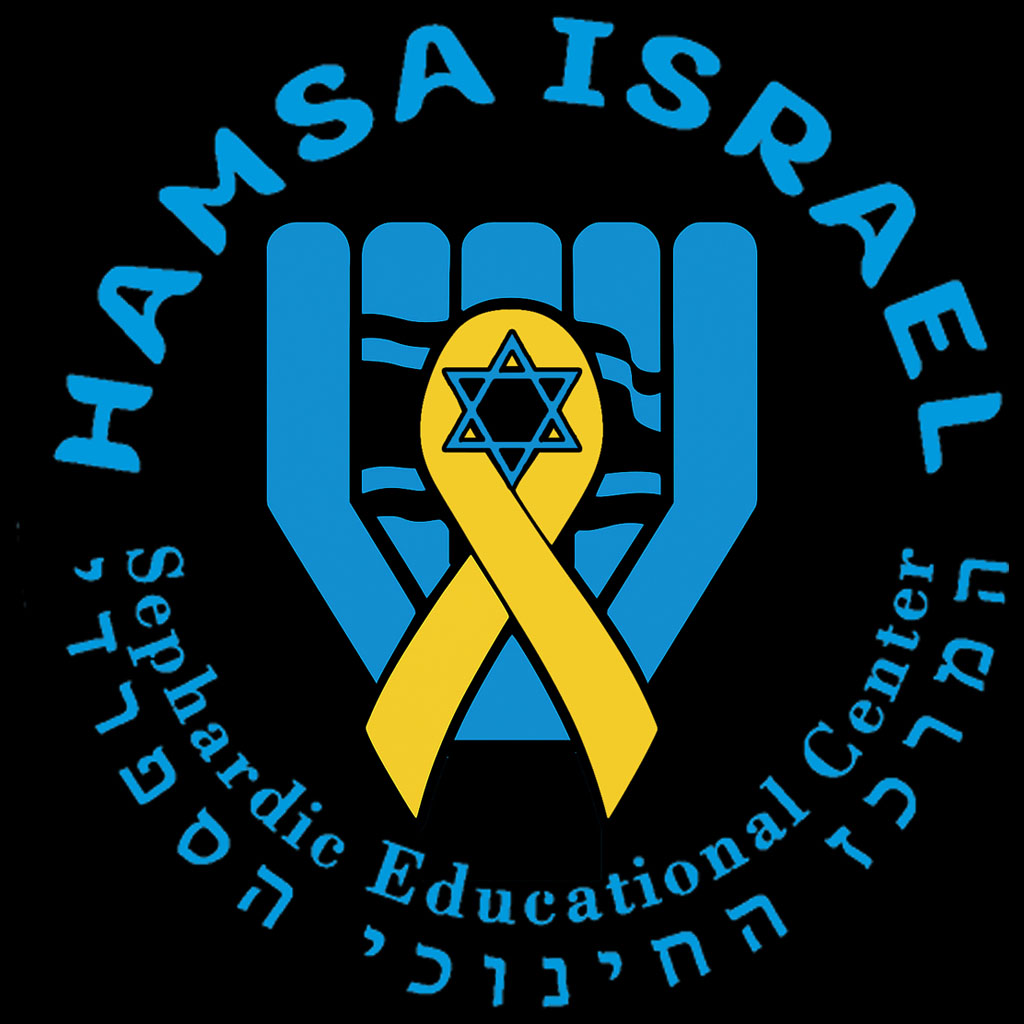
As a visual expression of the circumstances under which this trip is taking place, we have added the yellow ribbon hostage to our traditional Hamsa Israel logo.

We pray that by the end of the trip, that logo will no longer be relevant.

Update: I am now at the airport, the East Coast kids arrived, the Los Angelinos are landing in five minutes. Super cool kids, and so happy and excited to be in Israel.

The journey begins…

Shabbat Shalom


Rabbi Daniel Bouskila is the international director of the Sephardic Educational Center.

Sephardic Torah from the Holy Land | Hamsa Israel Stories, Part 1 Read More »