fbpx

July 17, 2025

The Heart of Cooking Healthy Green Rissoles

My Nana Aziza was in her late 20s when she and my grandfather landed in the ma’aborot (transit camps) of Israel. The nascent country was dealing with a large influx of Holocaust survivors, as well as refugees fleeing persecution in Arab lands. From 1949 to 1959, the government imposed Tzena, a policy of austerity and rationing, which resulted in food shortages.

In Iraq, my grandmother was the much adored and very spoiled daughter of Bu’ye, my great-grandfather Yosef Shamash. Along with his duties as keeper of the Tomb of Ezra, he had contracts to supply the British Army, who were in the south of Iraq protecting the interests of the British oil companies. But in Israel, she was a pragmatic young wife and mother, doing everything she needed to do to feed her young family.

As soon as my grandmother had a yard, she purchased a nanny goat for fresh milk and a laying chicken for fresh eggs. She also planted a vegetable garden filled with herbs, tomatoes, zucchini and butternut squash.

My grandfather became the headmaster of a school in Zichron Ya’akov. My mother laughingly recalls that every few weeks, my grandfather would show up for lunch with the supervisors from the Department of Education in tow. These clever men knew that my grandmother was a great cook, so they would time their inspections right before lunch time. Middle Eastern hospitality demanded that they be entertained with utmost courtesy and respect.

The beauty of Iraqi cooking is that simple, inexpensive ingredients are prepared in a delicious way and can be stretched to feed a crowd. My grandmother would take a pound of ground beef and mix it with Italian parsley and onion, encase it in semolina and cook it in a lemony tomato bone broth for a festive Kubbah Hamusta.

She would take a couple of eggs, sautéed onion, tomatoes, crumbled feta and a bit of flour and fry up a fluffy, savory Ajja (frittata).

Aruk, delicious, little golden fried green herb and potato patties, are another creative, healthy staple of the Iraqi kitchen. My grandmother always had them on hand as part of a light lunch, especially on Friday afternoons when everyone was hungry.

My mother is an inspirational cook and she is the master of healthy cooking. In her role as Nana Sue, she takes great pleasure in cooking for her grandchildren — pots of kubbah and rice, mushroom and potato filled burekas, cheese sambusak and baba tamar (date filled cookies), pad Thai and crispy fried wontons.

I love her updated, healthy version of Aruk which includes kale, Italian parsley, green scallion, minced garlic and sautéed onion. To make things even healthier, she finely grinds steel cut oatmeal in her KitchenAid to replace the traditional mashed potato to bind the rissoles. She even grates fresh turmeric for added antioxidants.

Like my grandmother before her, every Friday my mum has heaping platefuls of these green rissoles in her kitchen for her children and grandchildren to enjoy.

Rachel and I share the recipe with our own updates. We added baby spinach and caramelized sautéed leeks for added deliciousness. And we subbed potato starch and gluten-free panko for the oatmeal.

Awafi — to your good health.

—Sharon

The Mediterranean diet may be trending, but for my Moroccan mother, it was simply the way she cooked. Every meal she made was colorful, balanced and deeply nourishing.

 When we lived in Casablanca, my mother cooked three meals a day, every day. Meals seasoned with fresh ingredients and love. When we moved to America, everything changed, except her commitment to feeding us well. Despite working full-time, she still made dinner for us nearly every night.

It was the early ’70s and manufactured convenience foods were everywhere. With wide-eyed excitement, my brothers and I dove into this new world of TV dinners, frozen pies, Pop-Tarts and sugary breakfast cereals. My mother resisted the shortcuts, only making exceptions for jars of tomato sauce and frozen peas. Everything else was made from scratch. She kept us grounded with real food: soups full of vegetables and salads bursting with herbs and stews with meat, chicken or legumes. Preserved lemons and lemon juice added brightness to everything.

 Now that she’s no longer here, I find myself wishing I could tell her again and again how much respect I have for her. How deeply grateful I am for all she did for us.

What an incredible mother I had. How profoundly lucky I am to be her daughter.

With my own kids, I have tried to pass down that love for vegetables. None of them quite share my passion for beets, and Swiss chard hasn’t caught on either. But they’ve absorbed the bigger lesson — fresh food, thoughtfully prepared, will always taste like home.

 No matter where you’re born or how you were raised, one thing is certain — the more vegetables you place on the table, the more your family will learn to love them and expect them. But even more than the vegetables, it’s the love behind the meals that lingers the longest.

—Rachel

Green Rissoles 

Avocado oil, for frying 

1 large onion, finely chopped 

2 medium leeks, white and pale green parts only, finely chopped 

5 oz kale

5 oz baby spinach 

1 bunch Italian parsley

1/4 cup extra virgin olive oil 

1 cup potato starch

1/2 cup gluten free panko 

Salt & pepper 

1 tsp turmeric 

1 tsp granulated garlic powder

1 large egg 

Warm 1 tablespoon of avocado oil in a frying pan over medium heat. Add onions and sauté until caramelized. Set aside. 

Warm 1 tablespoon of avocado oil in a frying pan over medium heat. Add leeks and sauté until translucent and slightly golden. Set aside. 

Use a KitchenAid to finely chop the kale and parsley. 

Place kale, spinach, parsley, olive oil, sautéed onion and leek, potato starch, panko, salt and pepper, turmeric, garlic powder and egg in a large bowl. Mix all the ingredients until well combined.

Place the mixture into the refrigerator for one hour. 

Warm avocado oil in a frying pan over medium heat. Form mixture into 2-inch flat rissoles. Place in skillet and fry until golden brown, then flip and fry the other side. 

Rissoles can be stored in the refrigerator in an airtight container for up to five days. 

Serve hot or cold, with your favorite dipping sauce. 


Sharon Gomperts and Rachel Emquies Sheff have been friends since high school. The Sephardic Spice Girls project has grown from their collaboration on events for the Sephardic Educational Center in Jerusalem. Follow them
on Instagram @sephardicspicegirls and on Facebook at Sephardic Spice SEC Food. Website sephardicspicegirls.com/full-recipes.

The Heart of Cooking Healthy Green Rissoles Read More »

Table for Five: Pinchas

One verse, five voices. Edited by Nina Litvak and Salvador Litvak, the Accidental Talmudist

And the earth opened its mouth and swallowed them and Korah, when that assembly died, and when fire destroyed two hundred and fifty men, and they became a sign.

– Num. 26:10


Rabbi Eva Robbins 

Co-rabbi, N’vay Shalom; Faculty, AJRCA 

In the middle of a census, we have this statement which is a “repeat” of an event from an earlier parsha, Korach, that describes a rebellion led by Korach, Datan, Aviram and 250 men against Moses and Aaron. Their jealousy of these two men is apparent. Moses responds, “… It is Hashem Who sent me.” Of course, G-d’s punishment is swift. 

The Hebrew for census, “counting” the Israelites, is “S’u et Rosh,” “Lift the head,” the allusion to elevating the individual by accounting their importance in the collective. This is in stark contrast to the earth opening, from “below,” and the rebels being swallowed. It is a severe reminder for sure. Doubling/restatement is a literary tool in Torah. But this time the added word, at the end, is “neis,” translated here as a sign. It actually means something we lift (a banner), a test, and a miracle. Everyone is being reminded of the miraculous events G-d is capable of, including harsh punishments, as well as the failure of the rebels who didn’t pass the test of having faith in the Holy One. Korach was an incredibly wealthy man and Datan and Aviram were from the tribe of Reuven, the first born of Jacob’s children. These men felt they deserved to wield power and influence because of wealth and birth order. Torah teaches otherwise. It is often the youngest and most vulnerable that G-d chooses to lead. The qualities of character and values is pre-eminent for leadership. This is a lesson for America today. 


Rabbi Elazar Bergman

Founder, hiddentzaddik.com

Two (of many) interesting things about this verse. First, our sacred Torah interrupts a census (again) to tell us that some who ought to have been included aren’t because they died prematurely. Second, it tells us that a cryptic “they” became a sign. 

In Genesis 46:12, two of Yehuda’s sons aren’t counted. Here, The Korah group and the 250 incense-bringers are excluded. Both censuses precede a geographic and paradigmatic shift. In Genesis, a family moves to a foreign land, where it morphs into a nation. In Numbers, a homeless nation is on the threshold of entering the Land promised to its ancestors. 

But not everyone is able to participate in transformative change. Whether one understands the sin of Yehudah’s sons in a crude, superficial way or per the Arizal’s take, neither built a family. Thus, they were precluded from being nation builders. 

The cryptic “they” that became a sign are the copper fire pans used by the 250 incense-bringers. These pans were formed into copper plates that covered the Altar. What does the sign say? The sign says “stay in your lane.” The Korach group and incense-bringers were not riff-raff, God forbid. Although they were consummate tzaddikim and leaders, they were nonetheless subordinate to Moshe Rabbeinu. Inability to submit to a superior’s leadership, to be mutinous, is antithetical to establishing and administrating a nation as it begins to fulfill its manifest destiny in its Divinely given homeland. They needed to remain outside. Good Shabbos!


Rabbi Eliot Malomet 

Host of “Parasha Talk” on Youtube 

How did the earth “open its mouth and swallow them”? R. Yehuda and R. Nehemia debated this. The blunt, stern R. Yehuda said that each individual offender was swallowed up by his own individual sinkhole. The expansive, imaginative R. Nehemia argued that the offenders’ circular zone collapsed into a funnel-shaped depression, whorling all of them into the same subterranean cavern together. 

Rabbinic debates always convey a “deep” truth. What is the fitting punishment for the Korahite cohort? According to R. Yehuda, “every personal role deserves a personal hole.” Why? Because each individual collaborator contributes his or her own unique talent to the mob. Sloganeers sloganize; strategists plot; thugs brawl. While the charismatic leader ably harnesses each individual’s ugliness, each comrade deserves his or her own unique punishment. But according to R. Nehemia, “a mob-amiss deserves a collective abyss.” Why? Because in a mob, each pungent member dissolves his or her own identity for the sake of the whole, creating a community that is entirely unique in its foul repugnance. Since Korah’s objective was to create a collective, his entire horde belonged in the same subterranean penal ward. 

To R. Yehuda hell is to descend into your own personal pit, blaming yourself forever for stupidly believing the charlatan and swearing fealty to him. To R. Nehemia hell is to be flushed into a vortex of fellow believers and reside with them in an eternal sewer. Question: For the murderous mobs of irredeemable Jew-haters around the globe, which version is more appropriate?


Yehudit Garmaise 

Therapist Trainee at Chabad Treatment Center

If we are not alarmed by the plague that took 24,000 after an episode involving idolatry, lewdness and intermarriage, the Torah refers to other rebellious members of K’lal Yisrael who came to supernatural ends. Korach’s dramatic demise, we are now told, “became a sign.” “A sign of what?” we might ask. If we are to fear Hashem in our hearts, the plague, the earth’s opening that swallowed Korach, and the fire that took the lives of 250 men are powerful reminders of what has happened to Jews who forsake the Torah. 

Not only does this parsha recount the thousands who were punished for not obeying Hashem’s commandments, but the midrash tells us that Hashem had Korach’s punishment ready since the first erev Shabbat before Creation’s completion. Hashem had prepared the pi ha’aretz, the opening of the earth, “with the capacity to split and swallow the rebellious Korach and his crew when the time arrived to punish them. 

Korach, who rebelled and was punished, here serves as the foil of Pinchas, who fought for Hashem and was rewarded abundantly. Pinchas “diverted Hashem’s anger,” restrained the pestilence from b’nai Israel, and merited kahuna and the “covenant of peace.” Unlike Pinchas’ naysaying onlookers, we merit Divine protection when we witness Jews who “fulfill the commandments lavishly and learn Torah with passion,” and we “rouse to a similar ardor,” wrote the Lubavitcher Rebbe. May we allow ourselves to be inspired by Jews who express their pure souls, as we work to stay aligned with Hashem.


Rabbi Janet Madden

Malibu Jewish Center and Synagogue 

The fiery deaths of the 250 followers of Korach who offer incense in their firepans recall the fate of Nadav and Avihu and the mindful awe that is essential when approaching the sacred. 

Ironically, the men who aspire to perform priestly service are already individuals of power and influence — they are chieftains, chosen in the assembly, men of repute. Yet they reject the value of their roles, perhaps because, as Ibn Ezra and Ramban assert, these are the firstborn who, after the incident of the molten calf, were replaced by the Leviim. 

Whether motivated by zeal or envy, these men do not or can not value the importance of the roles they hold. They fail to perceive that communal service takes many forms. Aspiration can be holy, but we can also find holiness in appreciating our unique gifts, in finding meaning where we are, not where we wish to be or feel that we should be. Korach and his followers fail to discern that Divine service is not limited by or exclusive to any role. As Milton poignantly asserts in “On His Blindness,” “They also serve who only stand and wait.” 

Divinely-sent fire, the element of purification and destruction, incinerates the men. Their firepans, however, survive. They are repurposed into altar-plating that safeguards both sacred space and those who would encroach upon it. This tikkun is completed in 2 Chronicles 8:10, when Solomon appoints another 250 men as Temple prefects, human guardians of the people and of the sacred space.

Table for Five: Pinchas Read More »

Raising a Child the World Already Hates

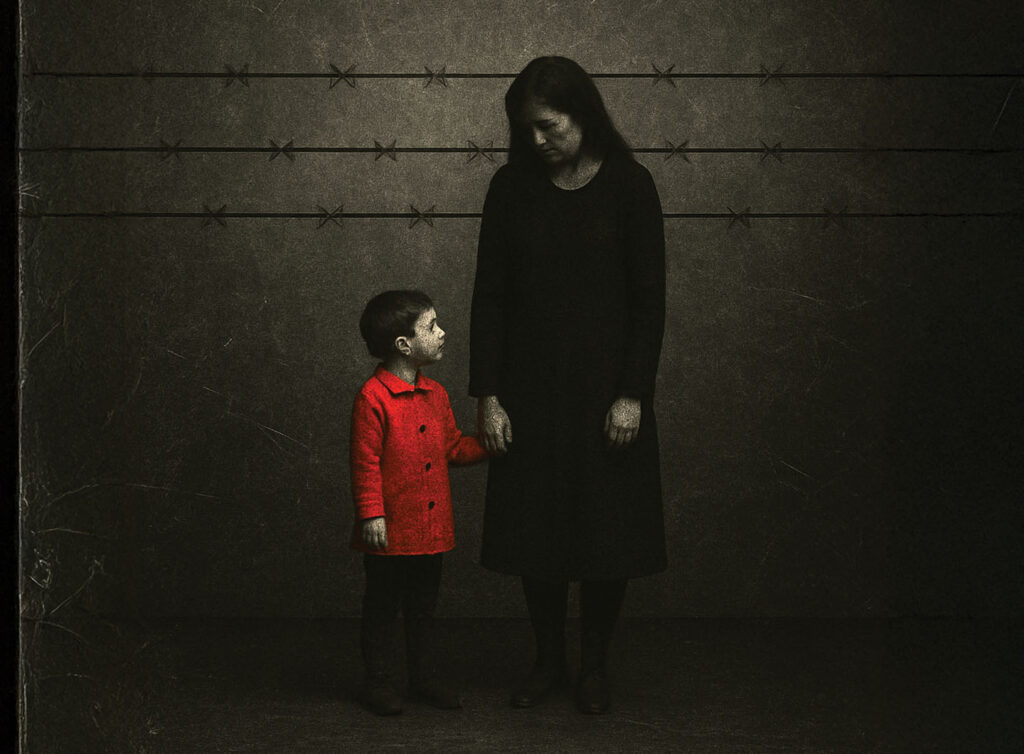
The Jewish trauma we thought was buried has come roaring back, four generations after the Holocaust.

It’s 2025. A Jewish mother holds her newborn close, marveling at the miracle in her arms. She can’t imagine anyone in the world wishing him harm. And yet, he is already hated, simply for being born a Jew.

This isn’t some distant relic from the past, the way many of us want to believe. It’s a fact of life today, shouted in protest chants on the streets of Western cities, smeared in graffiti, whispered on campuses, screamed from music festival stages. He can’t even track the shapes on his mobile yet, and already millions want him gone, whether by knife, bullet or ballistic missile.

This mother, like many modern Jews, sees herself as a citizen of the enlightened world. Her values are Western, liberal, humanistic. Her conscience is sharp and her empathy strong. But since Oct. 7, 2023, she has been in shock. Not just from the barbarity of the massacre, but from the global reaction. She expected solidarity, compassion, clarity. Instead, she found a flood of antisemitism rising just beneath the surface, waiting for its cue.

Trauma, personal or collective, reshapes us. Psychology has taught us how trauma gets passed down, how the pain of a war or a pogrom lives on in the stories and silences of the next generation.

Each of us is made up of two kinds of identity. One is external, largely beyond our control: our skin color, nationality, religion, birth order and how we were raised. The other is internal: shaped by our experiences, our interpretations, our awareness and the meaning we assign over time.

Two people can live through the same injury and carry it in opposite ways. One may turn it into a mission, a gift, a source of compassion. The other may be crushed by it, withdrawing from life, consumed by pain.

The same goes for war. Two soldiers, same battlefield, same horrors, can come out with entirely different stories. One says, “It gave my life meaning.” The other says, “It ended who I was.”

Trauma is never just about what happened. It’s what happened plus the meaning we give it. And that meaning is always shaped by what the people who raised us taught us, directly or not, about the world.

The original trauma that was never addressed will find its way back. Its trigger may be small or sudden, but it will come.

Every Jew — whether proudly Jewish, quietly assimilated or energetically post-Jewish — heard the voice of their ancestors on Oct. 7. The safe place cracked. The buried fears awakened. Our parents may have believed they were raising us in a new world, but the old story was only sleeping.

Every Jew — whether proudly Jewish, quietly assimilated or energetically post-Jewish — heard the voice of their ancestors on Oct. 7. The safe place cracked. The buried fears awakened. Our parents may have believed they were raising us in a new world, but the old story was only sleeping.

After the Holocaust, the lesson was clear: there is no truly safe place. Like Lot’s wife, everyone who looked back was frozen in salt. And yet, how can we not look back now?

The question is how to raise our children when their Jewish identity comes preloaded with a new trauma. How do we help them carry something they didn’t choose and can’t escape, when the world suddenly treats them as pariahs? How do we help them write a story for themselves that makes room for pain, but also offers meaning, strength, and pride?

And how do we keep a flicker of hope alive in them – that the world can still be good, that people can still be kind, even if they are not “ours”?

Here are three ideas.

1. Wear Your Name with Pride

The opposite of pride is shame. And where there’s shame, there’s hiding. It’s one thing to protect yourself publicly; it’s another to erase yourself privately. We want our children to live with their full selves.

Start with your own example. Talk about hard things. Let contradictions live in the open. Say “I’m proud to be Jewish,” when lighting candles in a place where you’re alone. Let them hear that.

As children grow, let them hear the deeper story. That now, more than ever, being Jewish can be a source of strength. That our history teaches us how to make meaning out of darkness. That our joy is tied to our sorrow, our identity forged in survival and stubborn love.

And yes, sometimes we feel shame. Not because we are guilty, but because we live among people who don’t understand. And when we feel that shame, we may hide parts of ourselves. That’s painful, but human. What matters is that we know why we do it, and that we don’t mistake safety for self-erasure.

Only people who show us unconditional love have earned access to all of who we are. Everyone else gets what we choose to share.

2. Make Room for Every Feeling, Even the Hardest Ones

Parents want to take away their children’s pain. It’s instinctive. But we must resist the urge to rush past difficult emotions. Feelings aren’t problems to solve. They are truths to witness.

When a child is angry, scared or sad, our job is not to correct the feeling or distract them out of it. Our job is to stay close, to help them name what they feel, to show them that nothing they feel is too much for us.

Because the child who feels understood learns how to manage emotion. The child who feels alone learns only how to survive.

We must remember: emotions are not threats. A child who is allowed to feel everything will grow into an adult who can face complexity. They’ll know how to separate what’s theirs from what isn’t. They’ll know how to ask for help. They’ll know how to listen.

We don’t need to protect our kids from fear or frustration. We need to sit beside them while they feel it and show them we are not afraid.

3. What We Don’t Face, They Will Inherit

If you carry shame about your Jewish identity, your child will sense it. Even if you never say a word. Especially if you never say a word.

That shame may have come from your parents, who absorbed it from theirs. A quiet disapproval of rituals. A mockery of old traditions. A sense that being too Jewish was somehow dangerous, low-class or embarrassing.

And then, one day, antisemitism shows up at work, or online, or in your child’s classroom. You respond with anger or fear, but also with confusion. That disowned part of you starts to shout. And instead of listening, you silence it again. You scold yourself. You tell yourself you’re better than those “other Jews” who caused this mess. You distance yourself from Israel. You whisper, “Not all Jews …” And your child sees it all.

Now imagine your child says they want to move to Israel and make Aliyah. Or asks questions about the conflict. How will you answer? What story will you tell?

You don’t have to give them certainty. But if your words carry shame, they will hear it.

You may not be able to give them peace. But you can give them truth.

The next time you ask yourself why your child has to grow up hated by strangers, why their Jewishness comes with a target on their back, remember this: we don’t get to choose the world we’re born into. But we do get to choose the story we tell about it.

You can’t sell your children a fairy tale. If you try, they’ll feel the cracks. Identity is a fragile puzzle. Your part is to lay the foundation, honestly and with love. Your part is to say, “Yes, this is hard,” and then stay beside them as they grow strong enough to carry it.

There are stories that must be rewritten. There are ghosts that must be named. If we don’t, they will live inside our children anyway, and they will call those ghosts “guilt,” or “rage” or “silence.”

A person without a home is a wanderer. A child without a rooted identity becomes a wanderer of the soul.

And if I may say something personal: I was born in Israel, the eighth generation of my family to live there. My Jewishness was not an idea or a burden — it was the water I swam in. I inherited it from generations of women and men who survived because of faith. Not belief in magic, but belief in meaning.

Faith tells a story. Sometimes, it’s the only thing that can quiet fear.

I believe no one truly wins in war. I also believe we have never known real peace. Some say we chose to raise children in the hardest place. Maybe. But for many of us, the hard place is the only place. It’s not despite. It’s because. It’s home.

And to my brothers and sisters in the Diaspora, your gaze matters. Your recognition matters. That connection — across oceans, across generations — is a kind of safety.

Hold that gaze for your own children. Not with pity. Not with apology. But with truth. Tell them: I see your pain, and I believe you can carry it.


Einat Nathan is a well-known parenting counselor, public speaker and bestselling author. A mother of 5, she lives in Tel Aviv.

Raising a Child the World Already Hates Read More »

Holocaust Annulment

It’s embarrassing to admit this, but every few days I pull up the Twitter/X account of the Trotskyist group I was long a member of, and see what they’re up to. A therapist would probably call this a form of rumination and advise me to stop, but having spent 25 years immersed in the party I believed was the last best hope for humanity, it’s beyond me to feel indifferent. Like a woman long and happily divorced, I still feel compelled to haunt my ex’s social media. I see my ex-comrades howling for a “free, red Palestine,” glance at their turgid articles proclaiming the urgent necessity of proletarian revolution, and I wonder yet again what I ever saw in them. But a few days later, I’m back. 

It’s the people I can’t get out of my system. These are men and women I worked with, joked with, sat through interminable meetings with, ate curry dinners with, shared my most cherished beliefs with. We knew the outside world thought we were crazy or horrible, and knowing that just brought us closer. A sign of approval from a particularly respected comrade, or a motion of censure — for many years, these were the things that filled me with pure euphoria, or total despair. 

So I compulsively search for signs of them on my former party’s postings. I genuinely don’t care about members I don’t know, the young people who came around the party after I quit in 2016. I’m looking for people whose homes I’ve visited and dogs I’ve petted, whose voices still resound in my mind. When I find one of them captured in a photo, my feelings are mixed. There’s some small satisfaction in having scratched my itch, but mostly I feel sad. 

The party contained some truly talented writers, organizers, speakers. Some were thought to have had dazzling careers ahead of them in physics or economics or other fields. They gave up these futures to toil in obscurity, ostensibly for the liberation of humanity but ultimately to champion terror. There’s a strange private sorrow that comes with knowing what these women and men could give to the world, and seeing what they are. “Oh, John,” I think. Or “Oh, Karen,” or Mark, or Kate. What are you still doing there, wasting your life in that cult? 

During one such cyberstalking, I spot a picture of a diminutive, bespectacled, elderly man I once loved dearly. I’ll call him Harry. He was born in a Displaced Persons camp shortly after World War II. He was a fluid writer, responsible for much of the party’s coverage of the Middle East. He was prone to exclaiming “Oy, gevalt!” at moments of excitement. Whatever his family’s Holocaust experience, he grew up fervently Jewish and Zionist. He once told me that as a young person first seeing “Fiddler on the Roof,” he completely supported Tevye’s decision to declare Chava dead after she married a gentile. 

But there he is, photographed at a small demonstration in defense of a communist “pro-Palestinian” protester, Michael Pröbsting, then being prosecuted in Austria. I do a quick google and learn that on Oct. 7, Pröbsting’s organization issued a leaflet calling to “support the heroic Palestinian resistance,” “expel the occupiers” and struggle “for the destruction of the Zionist state.”

Harry looks almost unchanged but with a few more gray hairs, and he is carrying a placard that reads: “This Austrian-born Jew says: Isn’t one genocide enough for you?” 

Oh, Harry, I think. How did you come to adopt such a vile, impervious-to-reality stance against your own people? And what attracted all the other Jews who filled our virulently anti-Zionist party — including, for all those years, and however ambivalent I was about my late-discovered Jewish identity, me? 

I will spend the latter part of my life trying to understand the first. I’m far from there, but I’m sure part of the answer lies in our society’s twisted obsession with victimhood. 

As a teenager, I identified, in a weird, narcissistic way, with Anne Frank. I’ve since learned this is very common; privileged Western girls often “see themselves” in Anne not so much because they relate to her life, as that they’re fascinated by, and a bit jealous of, the martyrdom conferred by her death. As the philosopher Tzvetan Todorov wrote, “no one wants to be a victim, but everyone wants to have been one.” Victimhood confers moral authority.  

As the philosopher Tzvetan Todorov wrote, “no one wants to be a victim, but everyone wants to have been one.” Victimhood confers moral authority.

So we get competing groups vying for top victim status, like a gruesome kind of football. Jews have generously—maybe too generously—agreed to give the coveted ball to other, more deserving, oppressed groups. 

And it seemed to work, kind of — but only if everyone drew the right lessons from the ultimate experience of victimhood, the Holocaust. The mass murder of the Jews was made to represent a universal warning about man’s inhumanity to man, rather than a hideous chapter of Jewish suffering. Banging on about Jewish victimhood arouses resentment, and threatens the modern conviction that Jews are oppressors. So we get the grotesque spectacle of people trying to deny the Jews their own suffering or, even more perversely, use it against them. 

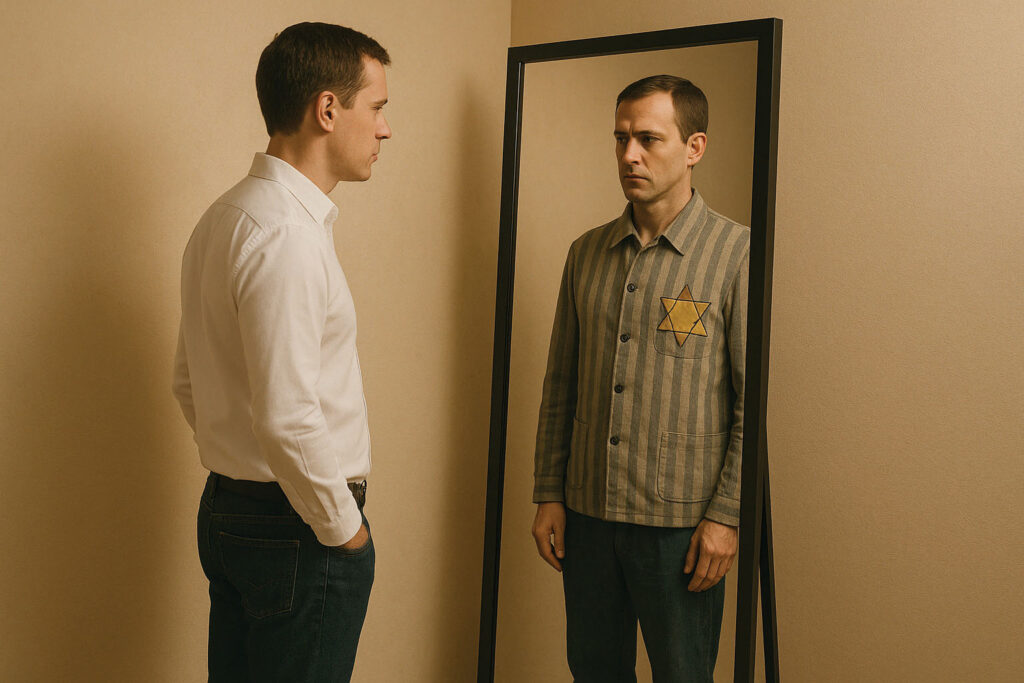
As I write this, I’m being bombarded on Twitter with messages telling me to stop killing babies, Epstein/Mossad innuendo, a “Hitler was right” meme, even an approving share of “Throw the Jew Down the Well.” Many of these messages come from people proclaiming their Jewishness. Like my ex-comrades, these Jews take particular pleasure in appropriating the most brutal reminders of Nazi savagery — “concentration camp,” “ghetto,” “genocide,” “Nazi” and, of course, “Holocaust” — to use against Israel, inflicting maximum pain on the Jewish people. And because they speak “As a Jew,” they can be assured of a warm welcome from the anti-Zionist tribe — until and unless they grow uneasy about their chosen tribe’s predilection for drawing horns and bloody fangs on prominent Jews, or the occasional swastika.

The great British novelist Howard Jacobson explains better than I possibly could how equating Zionist Jews with the Nazis is an attempt to retroactively “abrogate” the Holocaust, rendering it null and void. 

“Show that Jews intend a final solution on someone else,” he writes, “and we can fancy a retrospective justice to have been at work—the Jews being punished for a crime they were yet to commit. Call this Holocaust annulment.” The genocide of the Jews is turned morally inside out. The victims are transformed into the villains — making it not only appropriate, but righteous, to have another go at ridding the world of them.

“Show that Jews intend a final solution on someone else,” Howard Jacobson writes, “and we can fancy a retrospective justice to have been at work—the Jews being punished for a crime they were yet to commit.”

For generations, Westerners have hated Jews for reminding them of the monstrous crimes committed against them. Declaring the Jews guilty of those same horrors — hurling the charges, with sadistic glee, against the victims — is above all a way of casting off their own sense of guilt.

It was Hamas’ genius, Jacobson continues, to realize “how the drip, drip, drip of unremitting revilement in the western media and on western campuses had worn away [the Jews’] humanity. How sympathy had wearied and turned to scorn. How the west was of a mind to expunge its guilt.” 

The drip, drip, drip of revilement has become an Al-Aqsa Flood, and the dam is clearly not holding. 


Kathleen Hayes is the author of ”Antisemitism and the Left: A Memoir.”

Holocaust Annulment Read More »

Rosner’s Domain | A Clear Majority. But for What?

The headlines were unambiguous:

• “An Overwhelming Majority of Israelis Support a One-Phase Hostage Deal.”

• “Seventy Percent of the Israeli Public Back a Deal to Free All Hostages in Gaza in Exchange for Ending the War.”

Sounds decisive. The Israeli public wants a deal. A majority of Israelis prefer that it be executed in one phase. The numbers seem to indicate an overwhelming consensus. And yet, as is often the case in Israeli politics—and in war—it pays to scratch beneath the surface. Because when you do, the picture becomes less clear. More complicated. More human. And of course, frustrating for those of us who need or want to clearly understand Israeli reality.

One poll reported that 74% of Israelis support “the release of hostages in one phase and an end to the war.” But that phrasing carries a built-in ambiguity. It includes two components: one, the hostages are all released at once (a proposition not currently under discussion). Two, the war ends. You could say that in this case we get a two-for-one ticket. Two things that we all want: a release of all hostages, and the end to a long war. 

Not all Israelis though believe now is the time to end the war. What is a survey respondent to do if they support the first part—freeing all hostages at once – but oppose the second – ending the war prematurely? They face a dilemma. Forced into a “package deal,” some may say ‘yes’ because the hostage issue is paramount. Others might say ‘no’ because the believe the war must continue. Some may opt for ‘I don’t know’. Those weren’t the exact options offered in that poll, but you get the point. It’s a recurring theme in public surveys: the structure of the question heavily influences the answer. 

But we wish to know how Israelis feel about a hostage deal. We want to know what deal would be acceptable to them. So we looked at four recent polls that asked a question about the deal. In two of them, support for a deal that ends the war and brings home all the hostages is overwhelming—north of 70%. In the other two, support is still a majority, but a slimmer one—under 60%. Why the discrepancy?

Here’s a hypothesis: In the first two polls (Channel 12 and aChord), the question was about return of the hostages and an end to the war. Get the hostages, end the war. No other details – no word about what comes next, about who rules Gaza. In the second pair of polls, the wording made the outcome more explicit: there will be a hostage deal that ends the war and leaves Hamas in power. 

An abstract “end to the war” is easier to support than a concrete “Hamas stays in charge.”. This could explain the drop in support in the two latter polls. Saying yes to freeing hostages and stopping the war – two things almost everyone wants – is easier than saying yes to a trade-off: you get the hostages back, but you let Hamas survive. That’s a more bitter pill. Yes, it may be implied in any current end to the war that Hamas remains in power. But when it’s spelled out, people flinch.

The question of Hamas’ continued rule in Gaza is a sensitive one. A large majority of Israelis would much prefer that Hamas fall. But a majority also believes – at least at this moment – that toppling Hamas is not an achievable goal. In a June survey by JPPI, only 30% of Israelis said they believed that at the end of Israel’s ground operation in Gaza, “Hamas will cease to exist” in Gaza. That leaves a wide gap between what Israelis want, and what they believe can actually happen.

And we must add something that is usually only whispered: there is a huge gap between Jewish and Arab Israelis in how they respond to these questions. About nine in ten Arab Israelis support a deal that means Hamas remains in power. That doesn’t mean they support Hamas – many Arab Israelis detest Hamas – but it does reflect a clear prioritization: end the war, even if Hamas survives. Among Jewish Israelis, the trade-off is more divisive. When the question is specific, the Jewish public is split nearly evenly. Support for a deal barely edges out the opposition.

So where does this leave the government? PM Netanyahu claimed on Sunday that the polls are “engineered” by the opposition, or the media, to create the impression of support for any deal. The accusation is false, but he does have a point. By insisting on certain terms that currently (Tuesday) seem to make the deal less likely, does the government act against the will of the majority? Would a clear majority of Israelis support ending the war if it meant a significant IDF withdrawal from Gaza and Hamas remaining in power? Perhaps. But that majority would likely be narrower than what some polls seem to suggest. And among voters for the current governing coalition it might not be a majority at all.

The Israeli public may be ready for a deal. But like most things in Israel, support comes with conditions and caveats. The hostages are precious. A deal is complicated.

Something I wrote in Hebrew

Israelis seem less sensitive to cases of the IDF unintentionally harming uninvolved Palestinians in Gaza. Here’s what I wrote:

One can only hope that the shift in the Israeli sensitivity is a temporary one. There’s no fundamental reason to reject the idea that “Israel should aim to win, and strive to do so without harming innocent people.” That a significant portion of Israelis do not choose this option when asked about it – can be explained by their anxiety. Some of them fear that when they’re asked to “win without harming innocents,” what is actually meant is: “compromise on victory.” And that’s something they’re unwilling to do. This sentiment is understandable in light of the situation Israel is facing. And yet, it’s important to remember: societies enter dangerous territory when they choose to eliminate a value entirely, rather than manage the tension between competing values. Victory is important – fighting morally is important. That’s a tension we must live with.

A week’s numbers

Here’s one way to appreciate the impact of the Iran operation on Netanyahu’s standings. Surveys by aChord. 


A reader’s response

Dave Argos writes: “I was shocked to read the NYT report on how Netanyahu deliberatly prolonged the war in Gaza.” My response: “You’d be somewhat less shocked if you treat the facts as facts (and the report contains many valuable facts) while remembering that speculation and assumption are speculation and assumption (the report contains many of these too).


Shmuel Rosner is senior political editor. For more analysis of Israeli and international politics, visit Rosner’s Domain at jewishjournal.com/rosnersdomain.

Rosner’s Domain | A Clear Majority. But for What? Read More »

Sharia Socialism

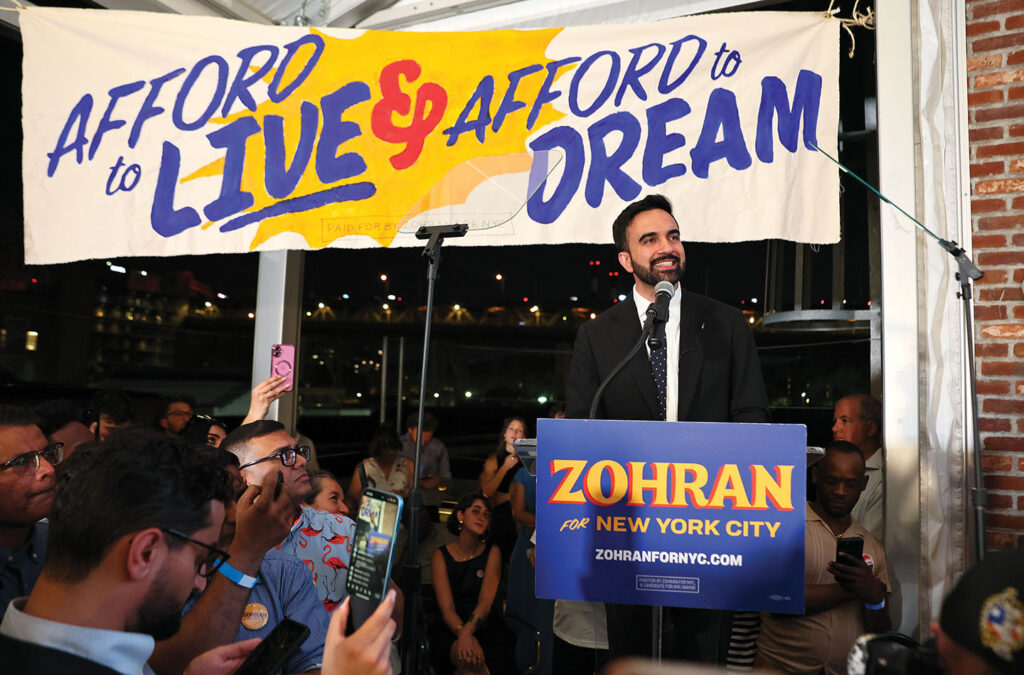
“The Democrats think we’re stupid,” a young black friend recently told me. “That we’ll embrace whatever insanity they’re pushing.” I had asked him what he thought of Zohran Mamdani, 33, who leads the NYC race for mayor by 10 points. 

“Dude, how hard is it to condemn a phrase — globalize the Intifada — that the entire world knows means ‘kill the Jews’?” 

For the first couple of weeks after the June primary, there was disbelief that the city with the largest number of Jews outside of Israel could elect an inexperienced young man who has questioned Israel’s right to exist, praised Al-Qaeda, promised to arrest Prime Minister Netanyahu, and believes that mocking Hanukkah is normal for a U.S. politician. 

As the polls continue to show Zohran in the lead, that disbelief quickly turned to anger. We well know his biggest voting block: millennials. Millennials, 29-44, are not well liked here. They scream lies at our kids in schools, lack basic manners and appear to believe that work — a job — is beneath them.

“Finally, a millennial who wants to work,” a friend recently quipped. “What’s not to like?” said another. “He’s going to give away — for free! — a  country that never existed.” 

A couple of summers ago, I had an intense discussion with a Democratic operative here about the future of the party. “It’s never returning to classical liberalism,” she said definitively. “It will keep radicalizing till it’s forced to shut down.” But of course she wasn’t fully taking into consideration the (uneducated) millennial vote, as well as older Gen-Zers.

This is not to say that every Democrat has bought into Sharia socialism. But what’s abundantly clear is that nearly every Democrat won’t cross that red-green line and condemn Zohran — even if this means the end of the Democratic Party.

Many of us called ourselves socialists for a week or so in high school. Then we learned that socialism has never worked in any city, state or country where it’s been tried. Moreover, anyone who lives here knows that NYC runs best on an energetic capitalism. When NYC is at its best, people from all backgrounds are inspired to excellence, in all fields. China destroyed much of that with COVID; four years later, stores are still closed on Madison Avenue and the city lacks incentive, let alone inspiration.

Perhaps the scariest part of the Zohran mystique is that he isn’t dumb. He knows the policies he’s espousing — from government-run grocery stores to defunding the police — don’t work: he knows it will destroy NYC. 

So why is he espousing all of this? Power, of course. Power to BDS Israel, to stop ICE from deporting terrorists, and to globalize the Intifada. Just as his brethren are doing in London, Paris, Sydney and Madrid.

After 9/11, we weren’t allowed to use the I-word. The fact that a large, well-funded group of Muslim terrorists flew planes into buildings here and in D.C. was just a coincidence. The Islamophobia charge follows every criticism of Zohran; we would be disappointed if it didn’t. 

Meanwhile, many of us have already made plans to leave (Shalom, Governor DeSantis). But we’re also really concerned about the Orthodox and Hasidic communities in Brooklyn who may not leave, no matter what. 

The keffiyehs here have already spit on us, called us “dirty Jews,” threw rocks and glass bottles at us, and thanked Allah for the ability to slaughter us. 

What will happen when there’s no NYPD to protect us?

Sure, this type of persecution has marked our history. But we also know that our grandparents would be horrified to learn that the Democratic Party, the party they helped to build, would turn on us so easily. At this point, the term Jewish Democrat is an oxymoron.

The truth is, the West is at an inflection point. Will it continue to submit, as Douglas Murray has put it, to a form of fascism that pretends to be a religion? Or will Zohran become the bridge too far — the Islamic zealot who forces the U.S. to finally say: Enough. 

Jews came to the U.S. with nothing and helped build this country into the great liberal democracy that it’s been. You can’t walk a block in NYC without seeing Jewish names on buildings. Zohran is running on destruction and racism, looking to London’s no-go zones and Pakistani rape gangs as the city’s future. Did I mention that he also wants to abolish prisons?

But sure, Islamophobia is the real problem here.


Karen Lehrman Bloch is editor in chief of White Rose Magazine. 

Sharia Socialism Read More »

Autopsy of the American Dream

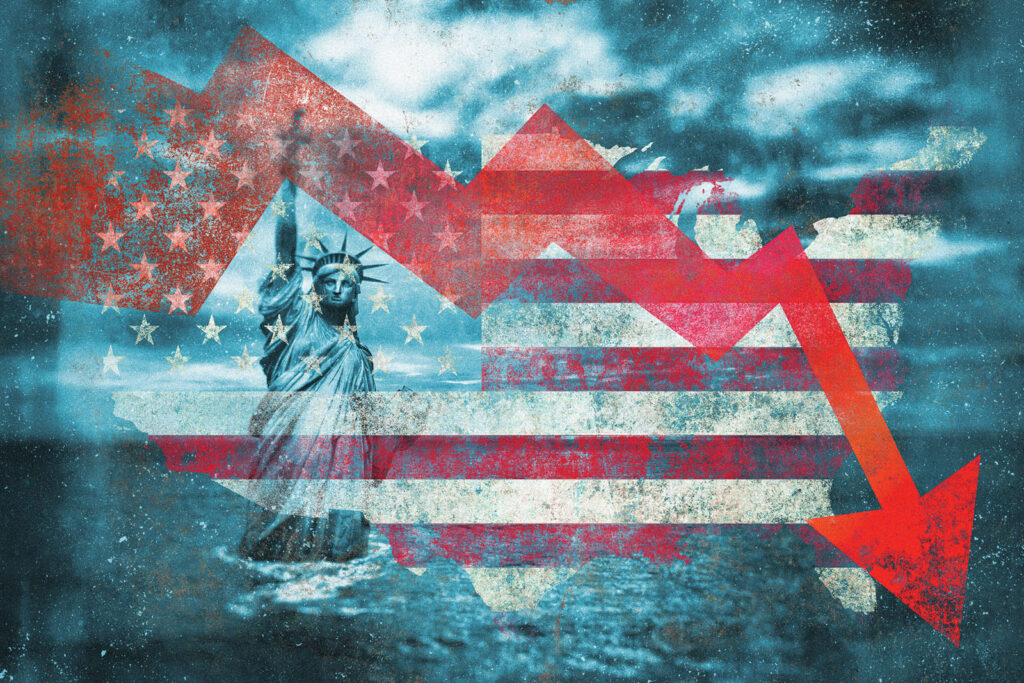
At some point in the near future, social scientists will try to understand how our nation has devolved from the post-war economic investment in a thriving middle class to a distinctly feudal society characterized by extreme wealth and extreme poverty — relics of our once-greatness exhumed to perform a post-mortem examination of how we got here in 50 short years. An autopsy of the American Dream will reveal not a single fatal wound, but death by a thousand cuts — policy choices, market trends, and shifting priorities that have favored capital over community, the wealthy over the many, and short-term gain over long-term security. 

There was a time when the American Dream held a beacon of promise to both native-born Americans and to immigrants seeking shelter and refuge from the horrors of global wars and poverty. For much of the 20th century, this dream was not just an aspiration but a tangible reality for millions of Americans. However, today this utopian vision of American possibility through hard work has virtually disappeared from the economic landscape. This is the autopsy of the American Dream, a careful dissection of the forces that have hollowed out America’s middle class—one policy, one market trend and one lost opportunity at a time. The golden era of the middle class began after World War II, fueled by strong unions, rising wages, affordable homeownership and robust government investment in education and infrastructure. The GI Bill opened college doors, the FHA and VA loans made homeownership accessible, and pensions promised security after years of company loyalty. 

Yet, foundations are only as strong as the society’s commitment to maintaining them. Over the past half-century, a cascade of decisions and shocks have chipped away at these pillars. There is a distinct irony in that many of today’s political leaders — the very individuals who benefited from postwar investments in affordable housing, publicly funded education, and expanding social safety nets — now champion policies that undermine the very structures that helped build their own prosperity. 

Homeownership

The American Dream has always revolved around homeownership. Yet over the past 50 years, homeownership has grown increasingly out of reach for the middle class in America and entirely out of reach in many high-cost regions absent familial support and equity transfer. Looking at the relationship between wages and housing costs, wages for most American workers have been stagnant since the 1970s, while home prices have far outpaced inflation. Whereas housing was traditionally viewed as shelter, housing became a lucrative asset class for Wall Street, pricing first-time buyers out of the market and into much longer, if not permanent rentership. In essence, homeownership, once the cornerstone of middle-class wealth-building, has become a barrier to intergenerational mobility and financial stagnation across the nation.

Education

For millions, the promise of education as a ladder to the middle class has been replaced by the reality of debt servitude. The contradiction is vivid: some leaders who themselves graduated from low-cost public universities or received generous grants and GI Bill support now argue against expanding access to affordable education for today’s youth. Since the 1980s, public and private university tuition has soared, far outstripping inflation and wage growth. Specifically, what once could be covered with a summer job now often requires tens of thousands in loans that are uniquely stripped of the constitutional right of bankruptcy ensuring that student loan debt will accrue over decades for those whose parents were unable to pay for their higher education. Americans now owe over $1.7 trillion in student loans, an amount of consumer debt behind only mortgages and far outpacing auto loans. Consequently, young adults delay homebuying, marriage, and starting families under the crushing weight of student loan payments. 

Perhaps nowhere is this shift clearer than in California’s University of California (UC) system. For decades, public universities in California — including the prestigious UC campuses — were tuition-free, opening the doors of higher education to generations of working- and middle-class students. This model was rooted in the belief that accessible education fueled economic growth and social mobility. Yet, over time, the landscape changed dramatically. What was once an engine of opportunity is now, for many, a barrier that stunts the prospects of a vibrant, upwardly mobile middle class.

The Collapse of the Pension-Funded Retirement

A secure retirement was once the reward for a lifetime of labor. Union-negotiated pensions offered workers predictable, stable incomes in their golden years. But the landscape has changed dramatically. Over recent decades, the shift from employer-funded pensions to 401(k) plans has transferred risk from companies to workers. Not every worker has access to a 401(k), and many cannot afford to contribute enough. Retirements now hinge on the performance of the stock market, leaving millions exposed to downturns at the worst possible moment of ageism and economic vulnerability. Further, with political gridlock and demographic pressures, even Social Security’s future feels uncertain for many seniors leaving them in peril wondering if they’ll ever be able to retire without having to sell their primary homes and liquidate their assets.

Healthcare

Nowhere is the American Dream’s unraveling more apparent than in healthcare, where costs and coverage have become a constant worry. Medical expenses have soared faster than incomes, making even those with insurance vulnerable to bankruptcy from illness or injury. Furthermore, the link between jobs and health insurance has weakened, with employers shifting more costs to workers or dropping coverage altogether. Despite the Affordable Care Act, tens of millions remain uninsured or are forced into high-deductible plans where healthcare is unaffordable when they need it most. Health insecurity has become a uniquely American anxiety, undermining both productivity and peace of mind — a rather lamentable, yet totally avoidable situation for a so-called first world nation.

Citizens United

The 2010 Supreme Court decision in Citizens United v. Federal Election Commission reshaped the American political landscape. By ruling that corporations and unions could spend unlimited amounts on political campaigns, the Court unleashed a torrent of money into politics. The result of this decision was a direct line to wealthy individuals and corporations gaining outsized influence in shaping policies, often at the expense of middle- and working-class interests. Moreover, big-money donors push agendas that block reforms on healthcare, education, housing and labor, stymieing efforts to address the very crises hollowing out the middle class. 

Stock Buybacks

Once considered a form of market manipulation, stock buybacks have been revived as a standard corporate practice since the 1980s. Companies use profits not to raise wages or invest in workers, but to buy back their own shares boosting stock prices and rewarding executives. The benefits of buybacks flow disproportionately to wealthy shareholders and corporate insiders, widening the gulf between the affluent and everyone else. In addition, money spent on buybacks is money not spent on innovation, job creation, or worker training which undercuts long-term economic health and mobility.

Autopsy Results

This autopsy of the American Dream might reveal the causes of its death as we understand it historically. However, in understanding the failed policies that led to its slow demise over time, we find the antidote to revivify its promises. Resurrecting the middle class represents the nation’s foremost challenge, and accomplishing this objective requires a concerted commitment and decisive action. For example, increasing allocations to initiatives such as the Low-Income Housing Tax Credit can improve housing affordability for working families. Expanding state and federal investment into higher education and improvements to public service loan forgiveness programs, alongside the restoration of bankruptcy protections for student loan debt, would further support graduates facing financial hardship and enhance overall educational accessibility. 

Retirement security may be bolstered by reinforcing Social Security benefits and encouraging employers to establish robust pension schemes. Universal healthcare can be advanced through measures such as broadening Medicaid eligibility or introducing public health insurance options for those without employer-sponsored coverage. Campaign finance reform might entail enforcing rigorous standards of transparency in political contributions and setting equitable limits on campaign expenditures, as evidenced by certain state-level legislation. Finally, facilitating homeownership could involve implementing first-time homebuyer assistance initiatives for teachers and other community heroes whose traditional middle-class status has been eroded over time and foreclosure prevention strategies to support families during periods of economic instability. Collectively, these focused interventions, underpinned by the dedication of policymakers and citizens, lay the foundation for the rejuvenation of the American middle class.


Lisa Ansell is the Associate Director of the USC Casden Institute and Lecturer of Hebrew Language at Hebrew Union College-Jewish Institute of Religion Los Angeles.

Autopsy of the American Dream Read More »