
Here’s an annual miracle that doesn’t get public comment: after a year of sporadic attendance at best, American Jews will show up for Rosh Hashanah in a massive wave. Thousands of people who don’t think of themselves as observant or religious will return to their sanctuaries and open themselves to what amounts to a pilgrimage festival in real-time. On Rosh Hashanah, Jews come home.
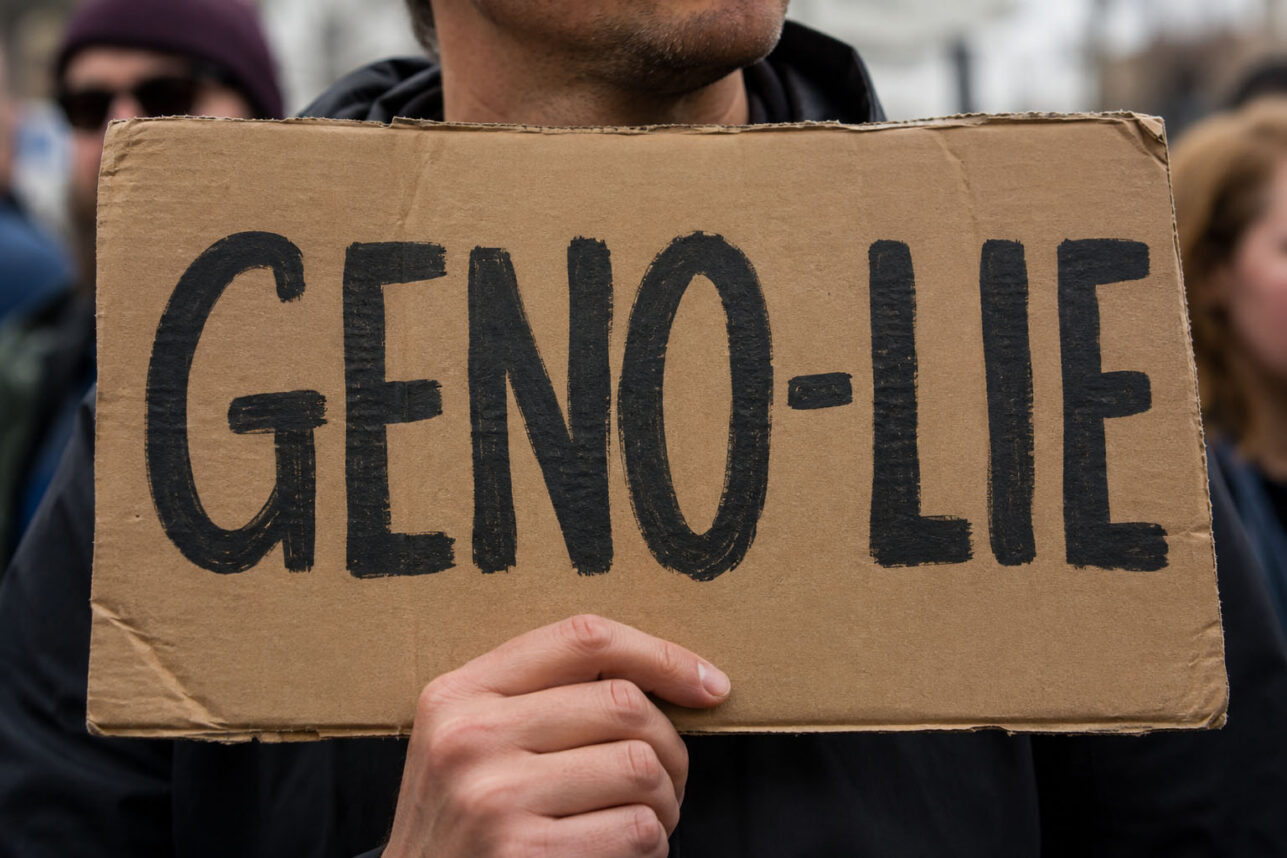
And with all that is going on in the world, there are even more pressing reasons to come together for the New Year. With rising antisemitism — from the left and right — and a world eager to forget the Israeli hostages still in captivity, with protesters intent on going beyond criticizing Israeli policies or military strategies in order to demonize Israel as pure evil, while creating a caricature of a “pro-Palestinian” movement that has put the civilians of Gaza directly in harm’s way, Jews have many reasons to come together in a safe and sacred space.
And yet, the question must be asked: Is there still room for faith in the midst of all this bloody and disappointing time? Or must the assurances of Judaism go the way of the horse and buggy, a charming relic of a simpler age? How can a sophisticated modern Jew integrate the pious promises of our tradition with the tragic and often painful reality of our world and our lives? Perhaps we can use these 10 days to reflect on these timeless and timely questions.
While we like to imagine that our problems are unique to our own time, we are not the first to see an unbridgeable gap between what is and what ought to be, and we are not the first to confront experiences that test our essence, searing our faith in the process. Perhaps that is what the Rambam was referring to when he asserted that the purpose of the shofar is to “rouse those who sleep in the bonds of time,” those of us trapped by the chutzpah of the present, who believe that our disappointment is without precedent.
In wrestling with the rift between reality and our ideals, Judaism retains a remarkable ability to assure its children that there are questions worth asking even when the answer eludes us, even when there may never be any final answer within human grasp. Surely, the questions of life and death, suffering and reward, our place in the cosmos and our obligations to our fellow human beings and to all living things, are among those questions that human beings have flung to heaven as much in accusation as out of a desire to hear an explanation. In reality, these questions are really burning arrows of anguish masquerading as theology.
Judaism, through story, deed and law, teaches that what really matters in such questions aren’t the questions at all, and certainly not the formulated answers. What matters in such things is the attitude of the one who is asking the question. What matters is an orientation of faithfulness, of Emunah.
Judaism, through story, deed and law, teaches that what really matters in such questions aren’t the questions at all, and certainly not the formulated answers. What matters in such things is the attitude of the one who is asking the question. What matters is an orientation of faithfulness, of Emunah.
For me, each Rosh Hashanah throws me back to an earlier stage of my life, when we went through what felt like a personal Akedah moment, when Isaac was strapped on the altar and Abraham risked losing his beloved son.
After 26 weeks of a difficult pregnancy, Elana, my wife, had to rush to the hospital in a desperate attempt to stop premature contractions that could have led to delivery. Babies at 26 weeks of delivery are in mortal danger due to their lack of development. Full term, for those who still think in terms of months, is 40 weeks. At 26 weeks, our twin babies, if they came out, would not have had a good chance to survive.
Elana and I drove to the hospital, accompanied by dear friends. The nurses put Elana in a hospital bed and injected her with terbutaline, a drug that relaxes the uterus. As we waited for her contractions to stop, Elana took a different course. She began to sweat heavily, her eyes rolled back, and she passed out before us. As the nurses jumped to bring her back to consciousness, they noticed that the heartbeat of one of the twins within her was fluctuating wildly, endangering both babies.
That was when the crisis began in earnest. Nurses and doctors appeared, as if from out of the air. Shouts of “Prep the OR.” were my only clue that we were about to be rushed into the operating room, that life and death hung in the balance. I recall that a nurse pushed me out the door and told me to wait, and when I next saw Elana, she was strapped to a portable bed, while nurses were running her into the operating room. I realized that they were going to do an emergency C-section. At 26 weeks!
As Elana disappeared behind the doors of the operating room, one kind nurse gave me surgical scrubs to dress in and then told me to wait. I sat on a plastic chair in the hallway, alone in the world, as nurses and doctors ran in and out of the surgical room. I didn’t know whether or not the operation had begun, and no one had any spare time to keep me informed.
I spent those terrifying minutes either rocking back and forth on that chair or pacing up and down the hallway. All the while, I was talking to God and crying. I pleaded with God on behalf of our babies, “dear God, they are so little, so innocent. Please let them live.” Even as I spoke, I knew at some level that God doesn’t pull strings in the universe, doesn’t cause cancer for some while assuring health for favored others. Such a God would be a monster, and such a God is certainly not in evidence in the world. Despite my conviction that God doesn’t act in that way, I still had the need to pray. So, I prayed.
Finally, they allowed me into the OR. Elana, looking pale and shaking both from terror and from cold, was strapped onto the operating table. Doctors had her on the table. And they picked up the scalpel, prepared to cut open my wife. Then they lifted their eyes to the screen of the monitor, and behold, the boy’s heart rate had stabilized. As they saw this salvation from the side, they realized that they didn’t have to raise a hand against Elana or do anything to her except to watch her for the night. We had been spared our own personal Akedah.
How had my faith helped me through that terrible night, an evening that I hope will be the worst night of my entire life? Was Judaism a source of comfort to me? Was God there with us as we prepared to offer our most precious gifts to the knife?
The questions I hurled up to God were not meant as conceptual inquiries. I was not operating in the mode of thought and analysis. That comes later, after the fact. My questions conveyed pleas, hopes, terror and rage, masquerading as dialogue. While the extremal clothing may have been words and discourse, the actual content — what I was seeking in my fear and my anguish—was beyond words. I was seeking belonging, rootedness and connection.
And in all life’s tests since, that holy chord offering belonging, purpose, and connection has pulled me through.
Judaism provided that. In my deepest terror, I never felt alone. Even in my fear, I could sense the nurturing love of my community, the connection to the Jewish people, our rootedness in the mitzvot, and the love and concern of God. I didn’t have answers, but I had Emunah, the ability to trust in faithfulness.
While we often mistake faith for mental assent to a list of verbal assertions (“I believe this, I believe that”), the Hebrew word Emunah doesn’t mean assent. It means trust. To have faith is to be able to trust. To trust in something beyond ourselves, to trust that we have the strength and the commitment to get through whatever comes. To trust that we are never alone.
Faith doesn’t mean expecting to get a better deal because of our piety. It certainly doesn’t mean expecting God to favor some people over other people as part of a bargain between a person and God. In fact, one Talmudic understanding of the Akedat Yitzchak is precisely that Abraham was given that final trial in order to show that he wasn’t trusting God as a quid pro quo, as a guarantee that God would take special care of him.
Just as faith does not mean expecting the universe to treat us better, so faith doesn’t mean lacking in human fears, doubts or feelings.
Faith, then, is not a matter of intellectual content or acumen; it is an attribute of trust, a sense of embeddedness and of connection.
We face existential tests all the time. Rabbinic tradition wisely observes that there is no creature whom the Holy Blessing One does not test. The great skill of the faithful is not that they can escape life’s hurts, disappointments and pains better than those who lack faith. The central gift of faith is simply the ability to absorb every encounter that comes to us as an engagement of our character and integrity.
To be able to retain a sense of belonging in something transcendent and eternal, to know that we are a people in covenant with God and linked across generations one to another is a great source of strength and of courage. The ability to tum over to God our need to control and to manipulate, even while doing all we can to assist God in bringing about a positive outcome, is the very core of Jewish faith.
In that regard, the prayer of Rabbi Eliezer from the second century is still very much our own:
“Do Your will, O God, in heaven above, and bestow tranquility of spirit on those who revere You below. And what is good in your sight, do.” (Berakhot 29)
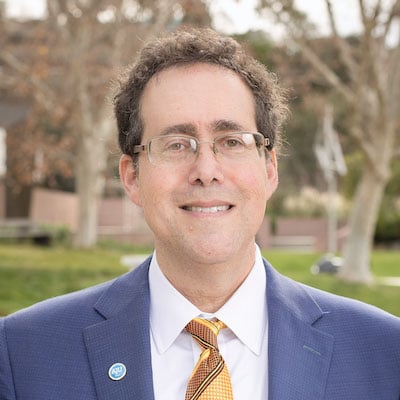
Rabbi Dr Bradley Shavit Artson (www.bradartson.com) holds the Abner and Roslyn Goldstine Dean’s Chair of the Ziegler School of Rabbinic Studies and is Vice President of American Jewish University in Los Angeles.