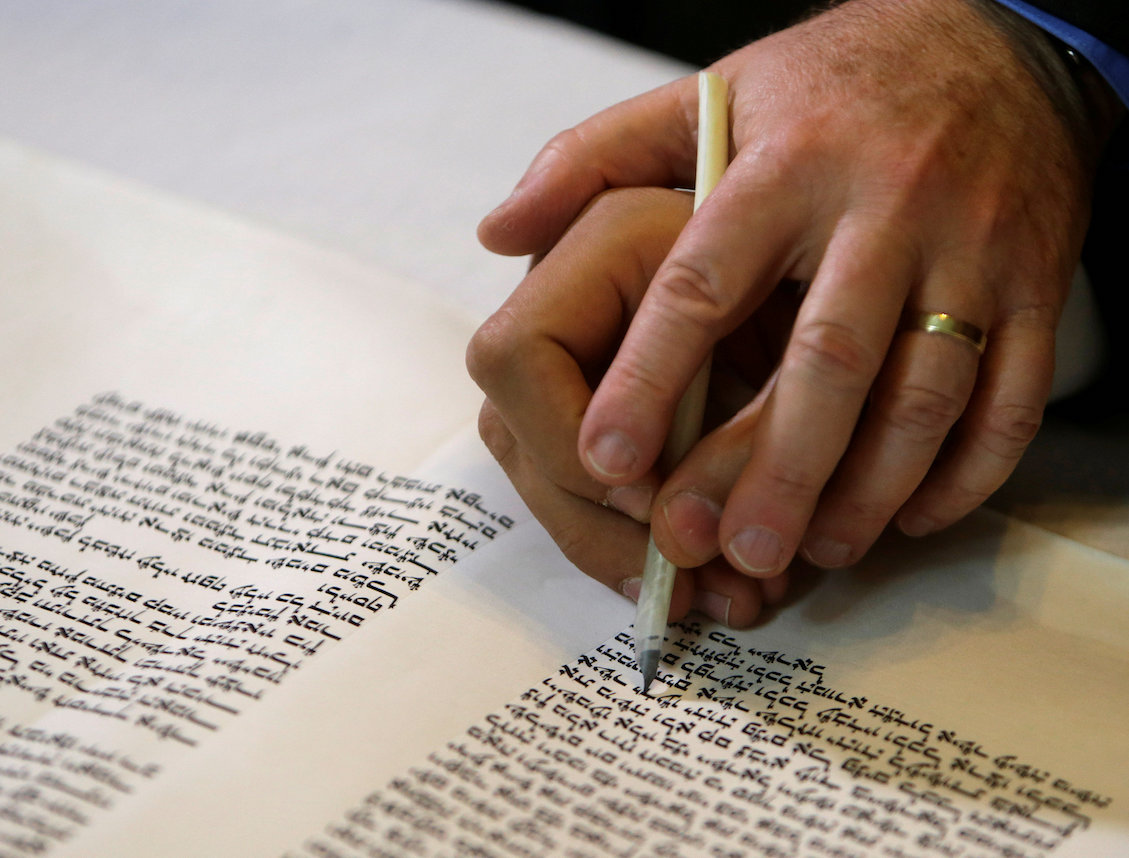
This week, as we enter the final months of the Jewish year, we begin to read the Book of Deuteronomy, the fifth and final book of the Torah. Deuteronomy is primarily devoted to Moses’ farewell address, which he delivered to the Jewish people shortly before his death and their entry into the Land of Israel. It records his words (Devarim, in Hebrew) of rebuke to the Jewish people over various incidents that took place during their 40 years of wandering in the desert, and the lessons they must learn from their mistakes.
There are, in fact, two intertwined and overlapping strata of content in Moses’ farewell address. The first comprises his exhortations to the Jewish people to remain loyal to God; the second is a review of much of the legal subject matter contained in the preceding four books. Although we might expect the first type of material to appear in a farewell address, why was it necessary to rephrase so much of the legal material that had been clearly stated before?
Another striking feature of Deuteronomy is its literary form. Unlike the preceding books, Moses now speaks in the first person. The phrase we have heard continuously in the preceding books—“And God spoke to Moses, saying…”—is almost entirely absent from Deuteronomy.
The Talmud (Megilah 31) teaches that although Moses transmitted the first four books from God verbatim and Deuteronomy “in his own name,” nevertheless, even in the latter case “the Divine Presence spoke from his mouth” (Zohar 3:232a). In other words, Deuteronomy is no less Divine than the first four books of the Torah, but whereas the first four books are God’s words transmitted directly by Moses, Deuteronomy is God’s words transmitted through Moses. But if this is the case, why the sudden change in literary form between the first four books and the final one?
The answer to both these questions hinges on the fact that this book is addressed to the generation that will enter the Land of Israel. The abrupt change in lifestyle—from a nation of nomads sustained by God’s supernatural protection into a nation of farmers who must work the land—called for a practical restatement of God’s hitherto abstract teachings. The generation of the desert had been nourished with miracles, beginning with the ten plagues and the Exodus from Egypt, through the Splitting of the Sea, to the revelation at Mount Sinai, the manna, the well of Miriam, and the protective Clouds of Glory. Their perspective on life had thus been elevated to a level quite above and beyond the ordinary; God’s normally invisible hand in nature had become a manifest reality for them. They were thus able to relate to the Torah in a concomitantly abstract, spiritual way, and that is how it was transmitted to them. All of this was about to change. God’s hand in the parameters of day-to-day life was about to become veiled in the garb of nature.
This transition was a natural and essential part of achieving God’s purpose on earth: to transform it into a spiritual place, in which not nature but God is understood to be the driving force. In order for the façade of nature to be torn away, humanity, led by the Jewish people, had to now invest itself into the natural order and, in that context, retain consciousness of God, revealing the infinite within the finite.
This is why it was necessary for the Book of Deuteronomy to be transmitted in the first person. By communicating the message of Deuteronomy via the voice of Moses, God was telling us that even while remaining faithful to the Torah’s objective truth, we must see its subjective relevance to every individual and in every generation. In this sense, the first-person narrative of Deuteronomy indicates not a lesser Divinity than the other four books but a greater one.
Thus, as we prepare to conclude the present Jewish year and embrace the coming year, the Book of Deuteronomy is a lesson in keeping the Torah alive and relevant, the means by which we can begin the yearly cycle of studying the Torah on a new level of understanding. By ensuring that the Torah remain eternally relevant, we can read it from an always deeper, fresher, newer perspective, and thereby continually deepen, freshen, and renew our relationship with God.
_______
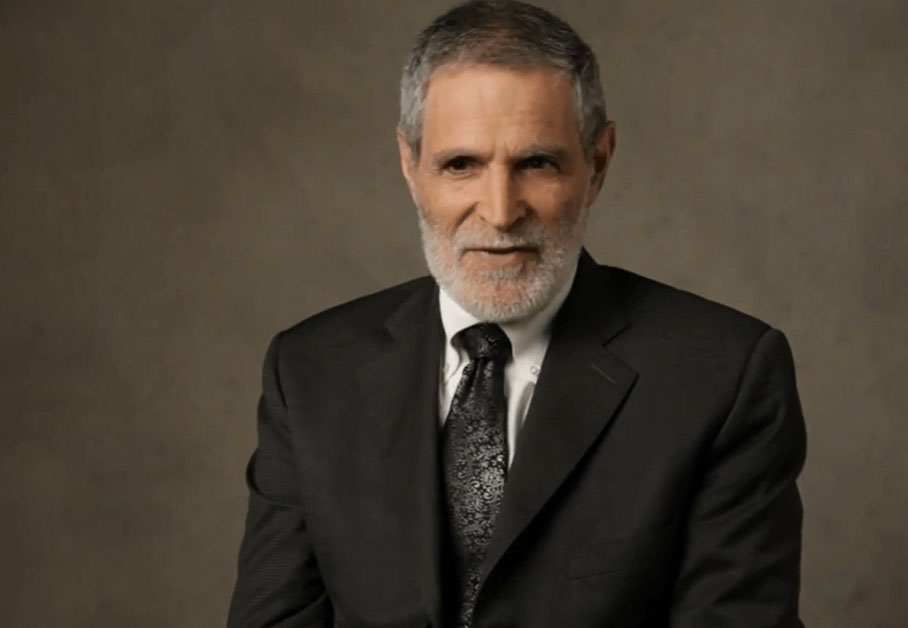
Rabbi Chaim N. Cunin is Director and General Editor of Chabad House Publications and Associate Rabbi at the Beverly Hills Jewish Community, which meets weekly at the Beverly Hills Hotel. For more information, visit BeverlyHillsJC.org.
Adapted from the newly-released Kehot Chumash, published by Chabad House Publications and based on the teachings of the Lubavitcher Rebbe, Rabbi Menachem M. Schneerson. Available online at www.kehot.com.