Is Israel going to New Elections?
Yesterday two events made early elections – possibly in May – much more likely. Event one: the police recommended to indict PM Netanyahu on bribery charges. Event two: The Supreme Court gave the government until mid-January to pass a military draft law (for which there is not majority support among current coalition members).
To make this possibility easier to asses we’re republishing the table of recent polls –with the most recent updates – and explaining the chances for success and failure of the parties. Follow the comments, look at the table.

1.
It’s early. We don’t yet know who is running and how. The most important decision will be made by former IDF Chief of Staff Benni Gantz. This table shows that he can get from 15 to 20 seats as a head of a standalone party, or close to 25 as the head of the Zionist Camp. With more seats he can dream about becoming the PM – with an independent party he can join all coalitions and get a significant portfolio (most likely, Defense). Looking at the current table, going alone makes more sense, as Netanyahu seems likely to have a majority for a coalition similar to the one he had until a few weeks ago.
2.
If Gantz runs alone, the Zionist Camp is in huge trouble. It will become insignificant even as an opposition party.
3.
Netanyahu can have a small yet coherent coalition without Gantz or Lapid. Or he can take one of them and have a very large coalition. Or he can take both and have a gigantic coalition (our table’s “centrist coalition” option includes Lapid but not Gantz). Such a coalition could get more than 80 seats in the Knesset. The question of course is whether it can also be functional.
Remember that Netanyahu did well this term with a small and coherent coalition.
4.
It’s important to remember that parties with 4-5 projected seats might not pass the electoral threshold. If, for example, Shas fails to get 4 seats (as some polls might predict, despite their average being close to 6 seats), coalition calculations become more complicated.
5.
Note that about 20 seats are going to new, unknown, barely established, never tried before parties (Levy Abekasis and Gantz). Clearly, Israelis are looking for something that doesn’t currently exist in their political universe (maybe: a way to beat Netanyahu).
6.
These polls were all taken before the police recommendation. Don’t be so sure that the recommendation will hurt Netanyahu. In fact, it could strengthen him. Especially so if rightwing voters feel that he needs their votes to win.
7.
Going to new elections over the draft bill can also be tricky. All in all, Haredis are not well liked by most Israelis, nor is IDF draft deferment. If the opposition gets a chance to convince the public that this is the most important issue on the agenda, the public might give it more votes. Surely, Netanyahu is going to argue that security is the important item, and that no one else has the needed experience to keep Israel safe.
8.
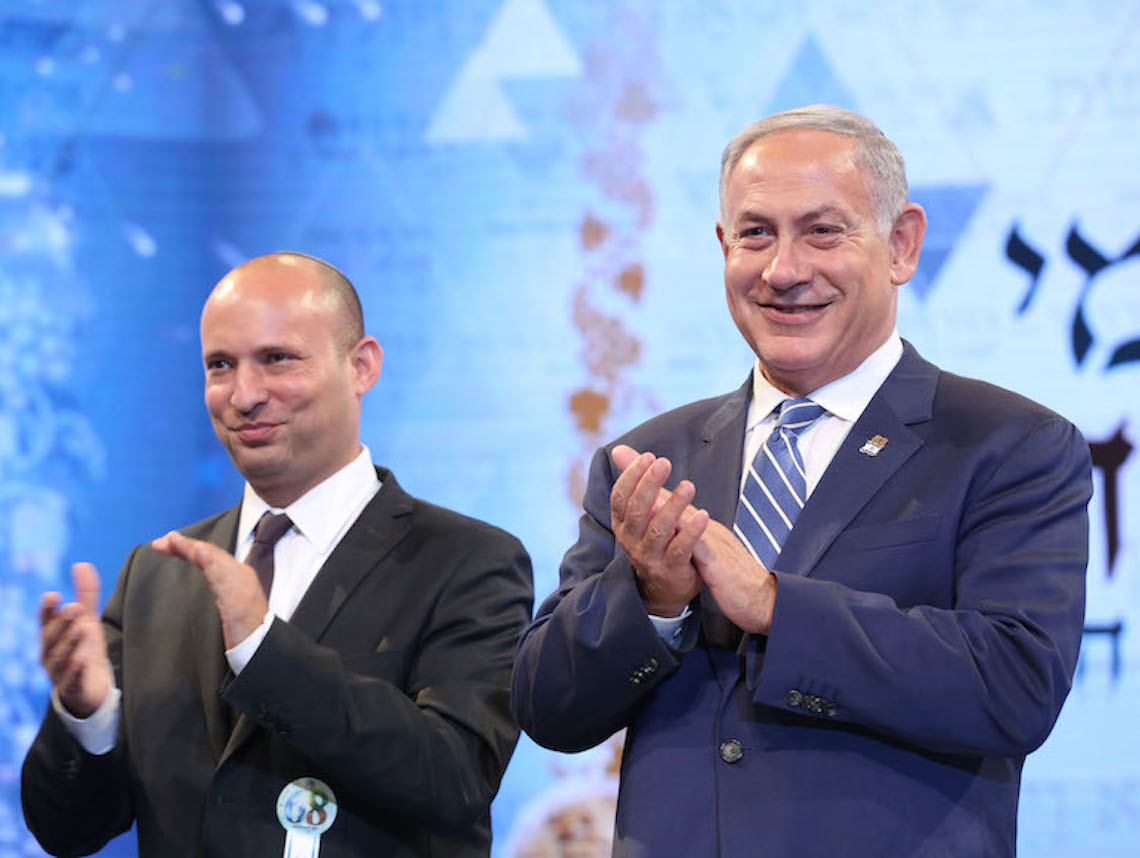
This isn’t necessarily a race for PM. Unless something dramatic changes, Netanyahu will be the next Prime Minister. I’d think about it as the race to be Defense Minister. Lieberman wants the position back – and will get it back only if he has enough seats. Bennet wants it badly, and with enough seats for the Jewish Home he can make it a condition. But there is also Gantz. If he gets many votes, Netanyahu can use him either to tame Lieberman’s/Bennet’s ambitions – or as Defense Minister in a coalition that begins with 45-50 seats (Likud + Gantz).
In other words: there is good chance that the race for Defense Minister will be much fiercer, crueler, bloodier and more interesting than the race for PM.