
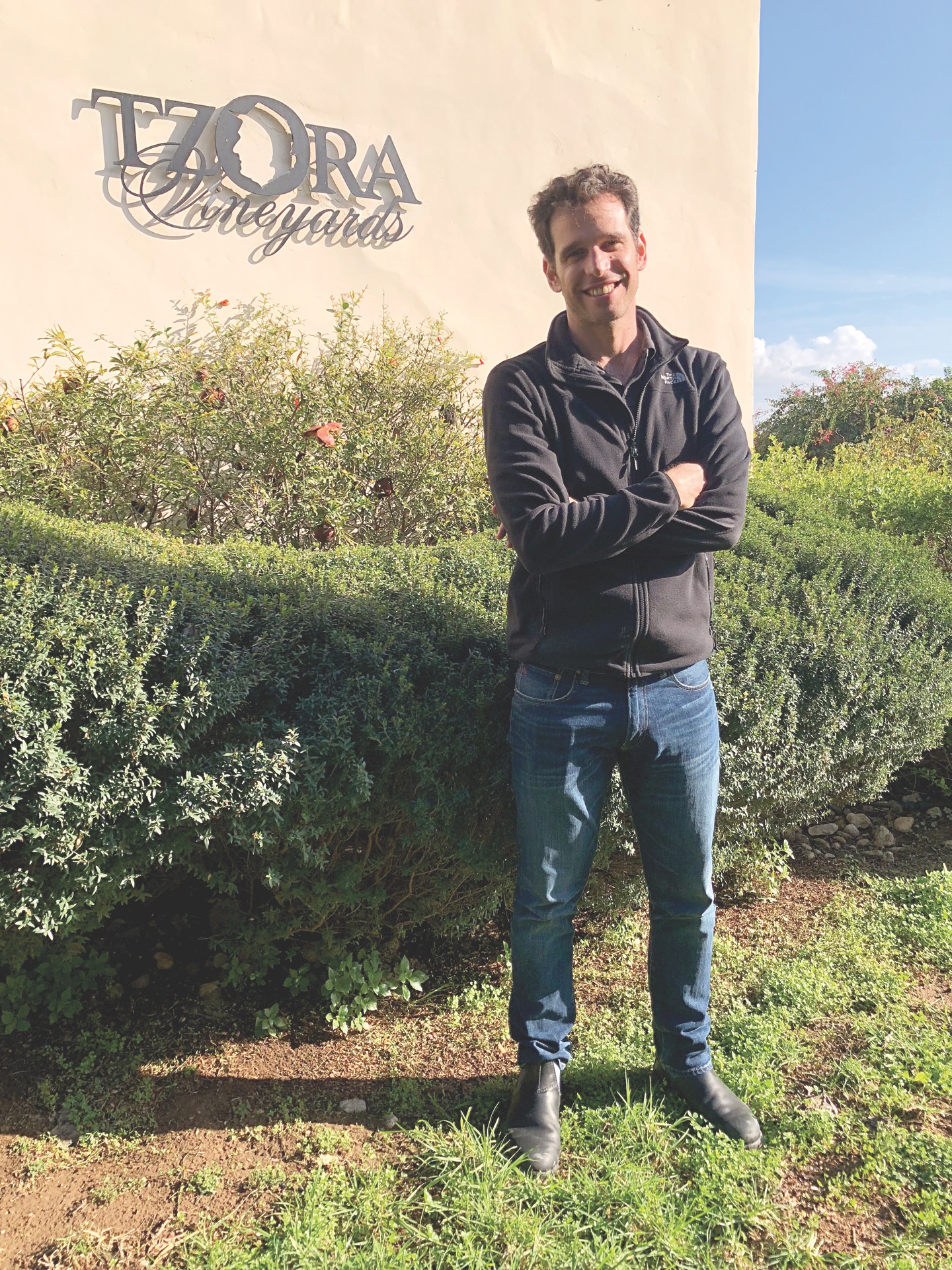
As a 22-year-old helicopter pilot in Israel’s air force, Eran Pick went to Germany for his annual simulation test, where he discovered something rather unexpected: Wine.
When his morning military duties concluded, Pick, now 43, spent his afternoons wandering the wineries of Germany’s Mosel region — best known for the sweet, aromatic Riesling grape — where he fell in love with the fruit lauded by Jewish scripture and blessed every Shabbat.
“Wine for me is about people and place,” Pick said from the tasting room at Israel’s Tzora Vineyards, based in the Judean Hills, where he serves as winemaker and general manager. In viticulture, place is everything; the French term terroir describes the way soil, topography and climate interact with one another to produce flavor — and is the essential raw ingredient needed for winemaking.
Pick’s passion for viticulture could not have found a more fitting home than Israel itself, a country defined so completely by the sacred magic of land. But although grapes have ancient roots in Israel — perhaps as far back as biblical times — Israeli wines have not generally been known for their excellence.
“Israeli wine doesn’t have a shelf in the wine store,” Pick said. “It’s on the kosher shelf, which is not where we want to be.”
Pick is part of a new generation of winemakers who are well trained and well traveled and working feverishly to distinguish Israeli wine as something special. Today, there are nearly 350 wineries in Israel, most of them small, boutique operations, contributing to an annual output of nearly 65 million bottles. An estimated 30 wineries are now producing what is considered “fine wine.” But Pick remains the only winemaker in Israel to bear the distinguished title “Master of Wine” conferred on only 368 people in the world.
After serving in the military, Pick earned his degree in viticulture and enology at UC Davis, and trained in some of the world’s great wine regions, including Napa, Sonoma, Barossa (Australia) and Bordeaux (France). Early in his career, he received a chance invitation to work at the illustrious Chateau Lafite Rothschild in France, established by passionate Zionist Edmond de Rothschild, who invested heavily in the State of Israel and established its modern winemaking. In 2006, Pick landed the job at Tzora, considered one of Israel’s emerging wineries, prized for its choice location in the Judean Hills near Jerusalem.
“Israeli wine doesn’t have a shelf in the wine store.” — Eran Pick
Pick is traditional in his tastes. He grows and blends classic grape varietals such as Syrah, Cabernet Sauvignon, Merlot and Petit Verdot, even as a growing number of Israeli vintners are looking to differentiate Israeli wine by cultivating indigenous grapes. In 2015, the Recanati winery made headlines when it unveiled a brand new white wine made from the Marawi grape, native to the West Bank and grown by Palestinians. A mix of fascination and controversy ensued; that same year, Europe announced new guidelines demanding products from the West Bank be labeled as such rather than “Made in Israel,” and Canada issued a similar edict. Still, Israeli oenologist Eliyashiv Drori, who works at Ariel University, has uncovered nearly 120 unique varietals that winemakers are eager to deploy in the landscape.
Pick has no interest in that pursuit. “I do not believe in that,” he said. “I believe we should produce world-class wines, which means for me using blends of varieties that grow well here. I want to make a great wine from the Judean Hills that characterizes the DNA of the Judean Hills.”
Pick’s focus on quality has served him well. In 2016, Wine Spectator named Tzora’s “Misty Hills” red (2013) the best wine in Israel; its 2014 white placed third. Tzora now produces around 100,000 bottles of wine each year, the vast majority of which are sold in Israel, with another 20 percent exported.
Although Pick is a passionate evangelist for Israeli wine, he confesses the holy grail he keeps in his cellar is a 2000 Chateau Lafite Rothschild, presented to him as a gift during the summer he worked there. Asked what occasion might merit drinking it, Pick laughed and said, “I’ll never open it.”