The 50th anniversary of the Six-Day War, which Israel fought against Jordan and other Arab states, is showing how much has changed in the Israel-Jordan relationship.
Since 1994, the two countries have had an official peace treaty, and over the years, security cooperation has deepened. Ties between their armies are close, and they share an interest in preventing unrest in the West Bank, which Israel has controlled since 1967.
Furthermore, Israeli intelligence officials say the security cooperation and intelligence sharing between Jordan and Israel are stronger than ever. They count this cooperation as one of the strongest weapons in Israel’s arsenal and say it is crucial for both countries’ stability.
At the same time, however, popular sentiment in Jordan against cooperation with Israel is rising. Last month, a delegation of sheikhs from various tribes visited Israel, where they met with President Reuven Rivlin, whose father was one of the first to translate the Quran, the Muslim holy book, from Arabic into Hebrew and was an Islamic scholar.
The sheikhs spent five days touring Israel and meeting religious figures. When they returned, they encountered an outcry against them and their visit to Israel in the mainstream media and on social media. That anger intensified after two incidents — the first, when Israeli troops shot and killed a Jordanian-Palestinian attacker after he stabbed an Israeli policeman; the second, when Israeli troops in September shot a Jordanian tourist who tried to carry out a knife attack.
“There is a clear increase in anger and support for anti-normalization,” said Mohammed Husainy, the director of the Identity Center in Jordan.
Anti-normalization means opposition to cooperation with Israel in any field. It is part of the Boycott, Divestment and Sanctions (BDS) movement that calls for a boycott of the Israeli government and Israeli citizens. For example, BDS has tried to prevent pop stars from giving concerts anywhere in Israel, not only in the West Bank.
After Israel and Jordan signed the peace treaty in 1994, Israeli tourists began to flock to Jordan, especially to Petra, one of the wonders of the world. Jordanians began to visit Israel, although mostly to see relatives in the West Bank and to pray at Al-Aqsa.
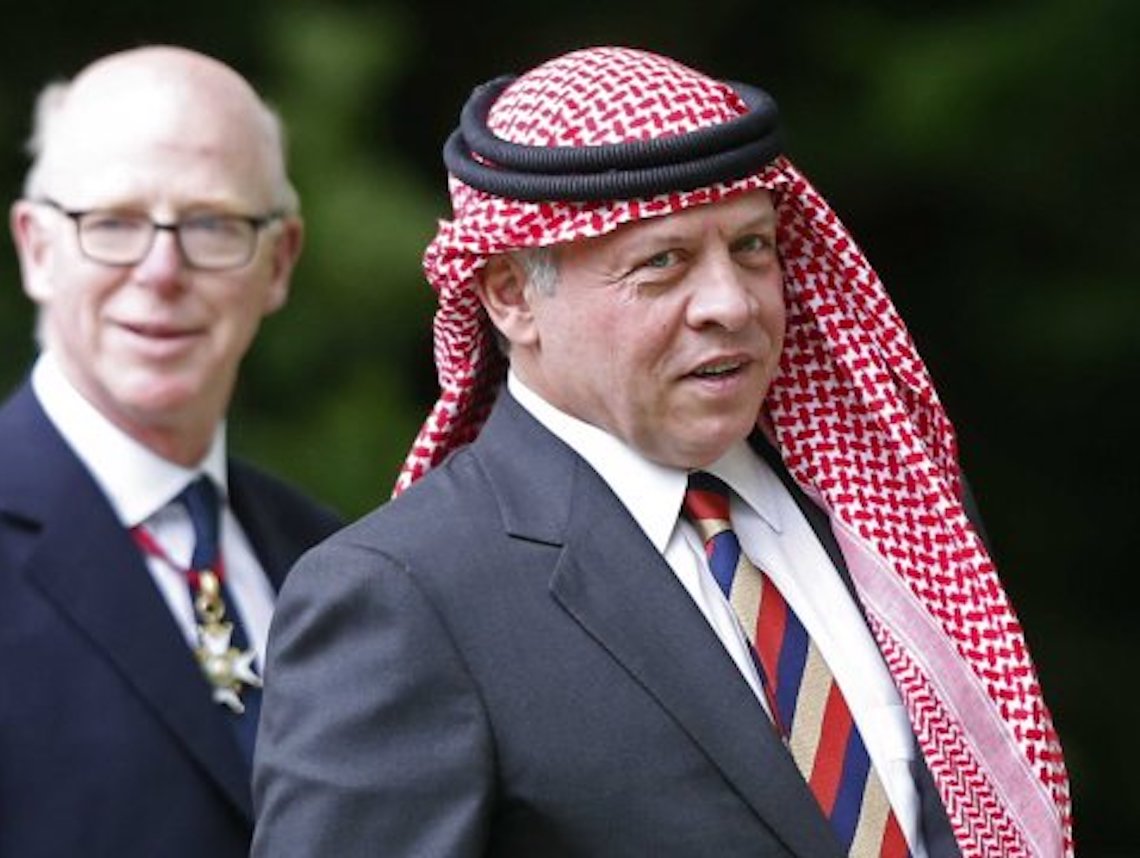
Some Israeli analysts say that King Abdullah allows the anti-Israel rhetoric as a way for Jordanians to blow off steam.
“The Jordanian regime maneuvers between its need to cooperate with Israel and to address the sentiment of the population,” said Eyal Zisser, a professor at Tel Aviv University. “They do allow anti-Israel rhetoric in the media and at the popular level whenever there is a small incident.”
The situation is similar to that of Egypt, the other country with which Israel has a formal peace treaty. Although security cooperation is close, most Egyptians are vehemently anti-Israel.
Egypt, Jordan and Israel have similar security concerns and all want to eliminate the terror threat from ISIS, which also has killed dozens of Egyptian police in the Sinai. All three countries see a nuclear Iran as a potential threat.
Most analysts say that in the long run, the common security interests will continue to overshadow the public anger at Israel.