It looks like that ISIS’ shrinking Caliphate may actually end in Iraq and Syria in the not too distant future. Tragically, that welcomed development however soon it occurs, won’t end the all-too-real threat of escalating terrorist attacks. New evidence indicates that the Manchester Concert homicide bomber met with ISIS operatives in Libya another failed state that could be the next terrorism central.
So why not a coalition of the willing to drain that swamp and be done with it. Without question, as Israel has proven killing large number of terrorists can make a big difference. And the elimination of thousands of well-trained and battle-hardened terrorists- be they ISIS, al Qaeda, al Shabab, etc; remains a key factor in turning the tide in the war against terrorism. Denying the terrorist groups of territory they control will rob the evil doers of the R&D centers and the cash to upgrade and expand their lethal crusades to bring down the world order.
But to be clear, ISIS, al Qaeda, and al Shabab terrorism will not end in a hail bullets.That’s because there is another battlefield in the global war that the terrorists are winning hands down: The Internet. With only a few bumps in the road, terrorists, their global support networks, their sophisticated media, propaganda, and recruitment campaigns have taken full advantage of civilization’s most powerful marketing tools to create and control an romanticized Islamist narrative that has gained them a virtual but all-too-real army of supporters on every continent.
Each year, the Simon Wiesenthal Center publishes its Digital Terrorism and Hate Report detailing the online terrorism tutorials, the tweets celebrating every “martyr” of every outrage, the glossy online magazines urging on the faithful to mow down, stab, shoot and blow up the infidels, crusaders(Christians) and sons of apes and pigs(Jews). We exposed the pressure cooker bomb recipe three months before it was used against innocents at The Boston Marathon. Over the last two years we warned social media companies that terrorists networks were embracing encryption, a tactic that has enabled suspects to go dark before they launched attacks. Some of the companies have refused to change their rules of usage and even refused to cooperate with authorities after atrocities were committed.
Our Digital Terrorism and Hate Report Card shows mixed grades in their commitment to degrade online capabilities of extremists. In the meantime, online recruitment for terrorist cells and lone wolves continued unabated. And sometimes, as in Stockholm, the perpetrators themselves boast of their killings on social media.
After the House of Commons, Manchester and London Bridge atrocities, in the United Kingdom, beleaguered British Prime Minister Theresa May has thrown down the gauntlet. On the eve of this week’s national elections, she is vowing to regulate online activity.
Internet companies and purveyors of encryption apps have only themselves to blame, as some firms refused to cooperate with authorities even after hundreds of innocent victims were murdered in the US, UK, and France.
As body counts continue to mount, counter arguments against government intervention ring more hollow. There is no freedom of speech or right to privacy for anyone launching, aiding, or abetting mass murder and mayhem. Will such measures push the extremists to the dark side of the Internet? Perhaps. And while that wholesale move may make it a bit more challenging for intelligence and police agencies to follow ISIS and its ilk, it would rob the terrorists of their most effective marketing platforms. We must put an end to the terrorists’ unchallenged sophisticated social media campaigns that continue to gain tens of thousands of young adherents in the UK, France, Germany, Canada, Australia, and the US.
To coopt similar action to 10 Downing Street by Capitol Hill, Social Media giants led by Facebook/Instagram, Google/YouTube, and Twitter, along with messaging Apps Telegram, WhatsApp, and Surespot, must immediately commit to unleash their unparalleled “big brother” and hi-tech prowess to degrade and eliminate the food chain of terrorism and hate from their midst.
If Silicon Valley fails to take effective action, terrorist onslaughts will continue and expand. And the era of the unfettered online golden goose could come to a screeching halt amidst Congressional hearings, legislation, and regulation.
The emotionally intense chef is a well-worn trope at this point. Gordon Ramsay’s outbursts are the stuff of legend — and ratings — while Anthony Bourdain, Gabrielle Hamilton and others share their internal struggles on the page and on screen. The public seems to delight in the sometimes mercurial antics of those engaged in the art and craft of making food.
Chef Jeremy Fox of Santa Monica’s Rustic Canyon has written a cookbook that adds to the body of literature, exploring the psyche of this particular genre of creative person. But drama for drama’s sake is not the primary goal of his book, “On Vegetables,” written with Los Angeles chef Noah Galuten. Fox’s raw honesty also blows apart all cliches associated with the myth of the tortured chef.
Fox’s story recounting the journey of “how I finally learned to unite my food and my brain,” as he writes, is the rare cookbook to bring me to tears. Still, above all, it is, indeed, a cookbook, not a self-help book.
“On Vegetables,” published in April (Phaidon), isn’t exactly what Fox, 40, thought he’d write when he got the contract seven years ago. He was still in the afterglow of the media attention he attracted at Ubuntu, the pioneering Michelin-starred, farm-to-table vegetarian restaurant in Napa. At that point, in 2010, he had left the restaurant, and his troubles were worsening.
“There was a time when everybody told me I was a really big deal,” Fox writes in the book’s introduction, a section he calls “Adulthood, Accolades & Anxiety.” “I was also miserable.”
He lays bare his struggles with anxiety and depression, as well as attention-deficit disorder that was diagnosed while he was a culinary student in Charleston, S.C. An unmanaged prescription drug regimen only made matters worse. The autobiographical portion of “On Vegetables” expands on a story Fox wrote for “Lucky Peach,” the cult favorite and recently folded print publication that retains a website.
Fox’s parents divorced when he was young. His father is from the Chicago area and his mother is from Chattanooga, Tenn., where her parents ran a pizzeria for 25 years. Growing up, he spent time in Philadelphia, Cleveland and Atlanta, where “we had a lot of family.”
“My sister had a bat mitzvah. I never had a bar mitzvah. By then, I was back and forth with my mom and my dad, so there wasn’t stability to focus on that,” he said. “I went to Hebrew school a little bit but we were not very religious.”
Major holidays were spent with his father’s parents, who had moved to Philadelphia. “I always wanted to build a sukkah but never did,” Fox said.
Now a father, he said he is exploring his Jewish roots — “something I think about as my daughter gets a little older.” His wife, Rachael, is the co-founder of Solstice Canyon, an artisanal almond butter company.
While Fox had no inkling of a food career until he saw the Stanley Tucci movie “Big Night” (1996), he credits his grandmother as an inspiration.
“My dad’s mom was a great cook,” he said. “She made slow-cooked veal tongue, chicken dumplings, sweet-and-sour meatballs. She cooked all the time. I don’t think she cooked from recipes.”
Even as a child, Fox said he knew that food was a unique family bonding opportunity. “Veal tongue felt cool because me and my grandfather would eat it, and everyone else thought it was gross,” he said. Otherwise, he was raised on a steady diet of fast food and pizza.
Fox’s emotional life and his cooking are inexorably intertwined. In the book, he describes his food at Ubuntu as “precise and exact … the polar opposite of my mental state, which was scattered and foggy. It was unhealthy and unsustainable.”
That’s not exactly a great match for a restaurant committed to the highest environmental and dietary principles. He eventually went from being Food & Wine magazine’s Best New Chef in 2008 to being broke and jobless in Los Angeles.
In February 2013, he found a new career home at Josh Loeb and Zoe Nathan’s acclaimed neighborhood restaurant, Rustic Canyon, where he realized that being out of the limelight and cooking in someone else’s kitchen was grounding and healing. His food became more down to earth and less fussy as he lost interest in applying dainty garnishes with tweezers, for instance. Therestaurant thrived, and he reined in his self-destructive emotional patterns. Nominations soon followed for James Beard Best Chefs awards.
As for continuing the personal narrative he began in “Lucky Peach,” “it felt good to finish the story. That definitely helps explain why the food is the way it is,” Fox said of “On Vegetables.”
“On Vegetables” isn’t “an over-stylized book,” Fox said. “There was no stylist or designer. [It was] just me, Noah and the photographer.” The cookbook has an earthy feel throughout, and even though he’s written a one-page chapter called “I Am Not a Vegetarian,” all of the 160 recipes are. (He’s a proponent of whole-plant, minimal-waste cooking.) He also dedicates pages to farmers at the Santa Monica Farmers Market who inspire him and help inform his menus at Rustic Canyon.
Fox has worked hard to reconnect the concept of food as nourishment with managing his mental health and, in turn, nurturing his creativity. Last month, he opened Tallula’s, a casual Mexican restaurant on Entrada Drive in Santa Monica, in partnership with Loeb and Nathan.
He hasn’t cooked overtly Jewish dishes at Rustic Canyon, but his grandmother’s spirit infuses his work with a hamish spirit.
“We use schmaltz to cook our chickens, for pan roasting. And making gribenes,” he said of fried chicken skins. “We’re always doing something with it.”
Here, Fox shares his recipe for a Sunday spread, including Poor Man’s Lox, which substitutes tomatoes for upscale smoked salmon. It’s an old family trick from the days before he had access to some of the country’s finest ingredients.
Poor Man’s Lox. Photo by Rick Poon
POOR MAN’S LOX
Adapted from “On Vegetables: Modern Recipes for the Home Kitchen” by Jeremy Fox.
This spread is inspired by a Sunday morning staple in my house growing up. In my Jewish household — and every other as far as I knew — lox and bagels were just what you ate on Sunday. But quite often we could not afford the steep price tag that real lox carried, so this assortment of toppings was the next best thing. The saltiness of the tomatoes made it pretty easy to close your eyes and imagine it was the real deal.
1 cup Horsey Goat (recipe follows)
6 Jun’s Focaccia (recipe follows), made without rosemary, halved across (like a bagel)
6 orange or red tomatoes, cored and very thinly sliced
Kosher salt
2 or 3 shallots, sliced
2 tablespoons drained capers
1 English cucumber, sliced
Fresh dill, to garnish
2 teaspoons white sesame seeds, lightly toasted
2 teaspoons poppy seeds
1 teaspoon flaxseeds
1 teaspoon sunflower seeds
Flaky sea salt
Prepare Horsey Goat; set aside.
Prepare Jun’s Focaccia; set aside.
Sprinkle the tomatoes with kosher salt. They should be nice and salty, but not inedible. Smear the goat cheese on half of each focaccia, and top with the salted tomatoes. Add the shallots, capers, cucumber and dill. Sprinkle with sesame, poppy, flax and sunflower seeds and finish with flaky sea salt.
Makes 6 servings.
HORSEY GOAT
8 ounces soft fresh goat cheese, at room temperature
2 tablespoons heavy (double) cream
2 ounces prepared horseradish
Kosher salt to taste
Using a silicone spatula, gently fold together the goat cheese, cream and horseradish until thoroughly combined. Season to taste with salt. Cover and refrigerate for up to 1 week.
Makes about 1/2 cup.
JUN’S FOCACCIA
1 1/4 cups water heated to 110 F, plus more as needed
1/2 cup plus 3 tablespoons olive oil, plus more as needed, and for greasing
3 tablespoons honey
4 1/3 cups all-purpose (plain) flour, plus more as needed
2 1/2 teaspoons kosher salt
1/2 teaspoon active dry (fast-action) yeast
Flaky sea salt
Freshly cracked black pepper
Fresh rosemary leaves
In a stand mixer fitted with the dough hook, combine the warm water, 3 tablespoons of the olive oil and the honey. Add the flour (this creates a barrier to keep the yeast from hitting water right away). Then add the salt and yeast and knead the dough on medium speed for 10 to 15 minutes. You’re looking for dough with a nice sheen and tacky, but not sticky, consistency; it should pull away neatly from the bowl. During the kneading, if you find that the dough is overly dry, add a touch more water. If it is too wet, add a little bit more flour.
Turn out the dough ball onto a lightly floured surface and roll it with your hands into a smooth, even ball.
Lightly coat a large bowl with olive oil and place the dough inside. Cover the bowl with plastic wrap and set it aside to proof at room temperature for 1 to 2 hours, or until the dough ball roughly doubles in size.
Preheat the oven to 400 F.
Punch down the dough and divide it into 6 portions of 5 ounces each. Lightly flour your work surface. Working with one dough piece at a time (keep the other pieces lightly covered with plastic wrap to prevent them from drying out.), roll it into a smooth, even ball. Pinch the bottom of the ball to seal it closed, being careful not to trap any big air pockets while rolling it. The texture of the dough should be smooth when rolled. Set the balls onto an 18-by-13-inch baking sheet coated with olive oil. Cover with plastic wrap and proof for another 20 minutes — the balls will increase slightly in size and become much more workable.
Set each dough ball onto a lightly oiled surface and, using the tips of your fingers, shape the dough into rounds while creating a dimpled pattern on top. (Those dimples will trap the oil and other condiments when you serve it.) As you shape the dough, it will get slightly wider in diameter, but don’t worry about trying to spread it out thin. Once you have a round shape with good dimples, you’re ready to go.
Pour the remaining 1/2 cup olive oil into an 18-by-13-inch rimmed baking sheet. Place the shaped focaccias on top and season with flaky salt, pepper and rosemary leaves.
Bake for about 5 minutes, then rotate the pan front to back and bake until the focaccias are light golden on the top and bottom, another 3 minutes. (If your oven isn’t large enough to fit all 6 breads at the same time, divide everything in half and bake in two batches.) If making in advance, you can warm them again in the oven at 350 F for about 2 minutes.
People in Jared Kushner’s ancestral town tend to speak very highly of President Donald Trump.
That’s generally the norm in the former Soviet Union. After all, Trump’s style goes over well in this part of the world — a survey conducted in November in Russia found that 45 percent of respondents said they would vote for Trump, compared to a four-percent approval rating for Hillary Clinton. Trump has promised to improve relations with Russia and has enjoyed high approval ratings throughout the region, with the exception of Ukraine and the Baltic countries.
But in Novogrudok — a picturesque city of 30,000 in western Belarus, about halfway between Minsk and Bialystok, Poland — Trump’s election is especially celebrated because it adds Kushner, the president’s son-in-law and key advisor, to the city’s short list of international success stories.
“Of course I am very proud that there is someone from Novogrudok in the White House,” said Boris Semyonov, a 57-year-old businessman, when asked about the subject last week in Lenin Square — a wide, clean space in the city center featuring a bust of the communist leader. “I am waiting for him to visit us.”
Yulia Silevskaya, a jurist in her twenties, said Kushner’s post “adds prestige” to her city.
Like many other locals, Semyonov and Silevskaya were familiar with Kushner’s name and his White House title; in addition to being married to Trump’s eldest daughter, Ivanka, Kushner is also a senior White House advisor.
But unlike many people — including residents of the United States — the citizens of Novogrudok had known about the Kushners long before the presidential election.
In Novogrudok, the Kushners are remembered and revered — not for their Trump connections or their sprawling real estate empire, nor for the scandal that engulfed Kushner’s father, Charles, or the recent allegations that he proposed a back channel for communication between the Trump administration and Russia.
Rather, the Kushners are known for the daring escape from the local ghetto in one of the most famous acts of Jewish resistance to the Nazis.
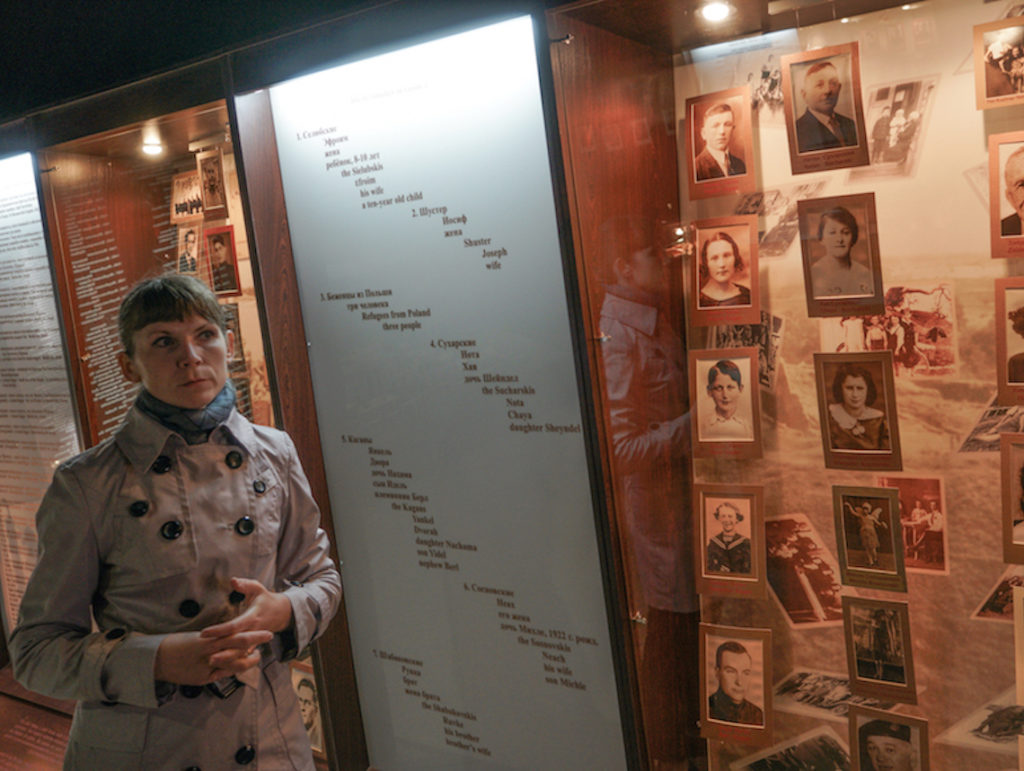
The Kushners’ story features prominently at Novogrudok’s humble Museum of Jewish Resistance. The two-room museum, which opened in 2007, features pictures of Kushner’s paternal family — his great-grandfather, Zaidel; his wife, Hinda; their daughter, Rae; and her two siblings. The museum also displays the bunk beds where the family was forced to sleep when the Germans rounded up the local Jews into the Novogrudok ghetto.
In addition to Novogrudok’s wartime Jewish population of 6,000 — about a quarter of its total population — the Nazis crammed an additional 24,000 Jews from neighboring towns into a ghetto that was built around around a courthouse.
“The Kushners were a well-off family that, before the war, owned several shops in the center, was known to many people here,” said Marina Yarashuk, director of the Museum of History and Regional Studies in Novogrudok, which operates the Jewish museum. “So it’s natural that they should feature in the display.”
But what really makes the Kushners’ story stand out, Yarashuk added, is how they stuck together through a remarkable escape. Their plan seemed doomed to fail, but ultimately enabled them to survive the Holocaust and fight the Nazis alongside Jewish partisans.
“It’s an amazing story,” Yarashuk said. “I’m glad that it’s now coming out, even if it’s only because everyone is so interested in Jared Kushner.”
The Kushners’ unlikely survival centers upon the actions of Rae Kushner – Jared’s steel-willed paternal grandmother, who was 16 when the Germans placed her with her parents, sister and brother in the ghetto.
Having survived at least five “selections” for murder by machine gun — including the one in which her mother was killed — Rae joined her brother in leading a daring escape through a tunnel that was dug underneath the heavily-guarded ghetto, which was surrounded by electric wire. Rae recalled her role in the escape — which included removing dirt, as well as obtaining work tools and information from non-Jews who had entered the ghetto with the Germans’ permission — in a two-hour interview she gave in 1982 to the Kean College of New Jersey Holocaust Resource Center.
In what became one of Belarus’ best-known Holocaust stories, Rae helped lead prisoners through the weeks-in-the-making escape tunnel, which was the longest of its kind in Nazi-occupied Europe and facilitated the biggest escape through a tunnel by Jews.
The diggers — who concealed the earth they removed inside double walls and attics — led 350 men and women to freedom through the tunnel and into the woods. There, the survivors joined the Bielski partisans — a group of some 1,000 Jews named after the three brothers who led them, and whose bravery was the subject of the 2008 film “Defiance.”
As organizers, Rae and her brother, Honie, had earned a spot among the first to crawl out — what was considered a far safer position than at the end of the line. But she gave up her prime position to be with her 54-year-old father and 15-year-old sister. “If we live, we live together. If we die, we die together,” she recalled in the interview.
That decision may have saved her life, as well as that of her sister and her father, who was so weakened by months of malnutrition that he needed his daughters to carry him. Rae’s brother, who was among the first to emerge, disappeared without a trace. He was never seen again.
Today, the tunnel — which was dug inside a barrack and is now the site of the museum — is commemorated by a red-pebble path that traces its 225-yard trajectory all the way to the exit point, which is today a hole that borders a car repair shop. The shop’s walls feature commemorative posters with pictures from an archaeological excavation conducted there 10 years ago.
The attention devoted to the Kushners and their escape — as well as the general awareness of the story among Novogrudok’s locals — are typical of the success of Holocaust education in Belarus, according to Yuri Dorn, a former leader of Belarus’ Jewish community of 15,000 people.
Whereas revisionism is a growing problem among Belarus’ neighbors, with the exception of Russia, “the Holocaust is taught elaborately in schools in Belarus, where museums and memorials are set up and maintained,” he said.
President Alexander Lukashenko’s undemocratic rule and police-state policies may be condemned internationally, Dorn added, “but when it comes to Holocaust education and commemoration, Belarus is a world leader.”
This is partly because during World War II, Nazis killed some 2.23 million people in Belarus — a quarter of its population, including many non-Jews, Dorn said — a number too great to ignore.
Even so, the Kushners’ story is proof to Semyonov, the businessman, that the suffering of Jews was particularly intense. “The occupation in Belarus was a national tragedy,” he said. “But no one suffered like the Jews.”
In Rae’s two-hour interview, which was archived by the U.S. Holocaust Memorial Museum, she recalled how she forced a farmer to lead her family into the woods, where they lived for months on food given to them by locals until they were discovered by the Bielski partisans, who had heard about the escape and sought out survivors in nearby villages. The Kushners lived in the woods for a year, keeping watch for German troops and helping maintain the partisans’ camp until liberation in May, 1945.
Rae then took her family to a refugee camp in Czechoslovakia and, later, to Italy. She married her husband, Joseph Berkowitz, also from the Novogrudok area, in Budapest. Since he was from a poor family, he took her better-known name.
They emigrated to the United States in 1949 and settled in Brooklyn, where they raised four children, including Jared’s father, Charles. Joseph Kushner got a job as a construction worker, but by the time of his death in 1985, he had built a real-estate empire comprising more than 4,000 apartments.
Charles Kushner has visited Novogrudok several times, and even received a tour of the museum in 2014, Yarashuk said. Rae Kushner visited at least once before her death. The family donated some funds toward the construction of the Jewish resistance museum, according to Tamara Vershitskaya, the museum’s former director, who declined to provide details.
“Clearly it was a very moving experience for him, but it was also very emotional for us,” said Yarashuk.
She added: “Around here, the Kushners are a big deal, with or without Trump.”
Despite a crowded field of stellar nominees, it’s not that surprising that Ben Platt, star of “Dear Evan Hansen,” is the favorite to win Best Actor in a musical when the Tony Awards are handed out on June 11.
He was practically born for the stage.
Consider his upbringing: His older brother, Jonah, has made it to Broadway and his father, Marc Platt, is a prolific Hollywood and Broadway producer. Family lore has it that musical theater CDs accompanied every Platt family car ride. Something from those “Les Misérables” and “Miss Saigon” soundtracks apparently took hold.
“At family get-togethers and simchas, we have been known to be called the ‘von Platt’ family,” said Julie Platt, a mother of three other children, referencing the singing von Trapp family from “The Sound of Music.” “Music is definitely an important and special part of our lives.”
The tagline of “Dear Evan Hansen” is “You will be found.” Through this much talked-about musical, Marc and Julie’s Platt’s fourth child hasn’t simply been found, he has arrived.
Ben Platt created the role of Evan, an awkward and isolated teenager who forges a connection with a grieving family based on a lie spread over social media. Directed by Michael Greif, who also helmed “Rent” and “Next to Normal,” “Dear Evan Hansen” features a score by the Oscar-winning “La La Land” team of Benj Pasek and Justin Paul. The show’s nine Tony nominations include best musical.
Rabbi David Wolpe of Sinai Temple, a friend of the Platts since their college days at the University of Pennsylvania 40 years ago, calls the family “the Jackson 5 of the Jewish world” but hastily adds “except with better values, and I would say they do more for the world.”
Marc Platt is an Oscar- and Tony Award-nominated producer of more than 40 films, including “Legally Blonde” and “La La Land,” and Broadway’s “Wicked,” “Three Days of Rain” and “If/Then.” (He also is nominated for a Tony this year as the producer of the play “Indecent.”) Julie Platt is one of the L.A. Jewish community’s most committed leaders and philanthropists, serving as chair of the board of The Jewish Federation of Greater Los Angeles and as a board member of Camp Ramah, among other organizations.
The foundation of Ben Platt’s Jewish identity was developed early. Like his siblings, Ben went to day school at Sinai and attended Camp Ramah. Values learned there are particularly helpful now, said Platt, who won rave reviews for playing the demanding role of Evan Hansen.
“It keeps me incredibly grounded during this time of insurmountable headiness, and provides a foundation of support and community that make this journey feel far more meaningful,” Platt, 23, said by email.“As a theater artist in particular, Judaism has cultivated a unique sense of empathy in me for which I am very grateful. Judaism encourages us to see beyond the surface to try to understand those who are different from us. This has afforded me the opportunity to better comprehend the character of Evan and the characters around him.”
Ben Platt has been with “Dear Evan Hansen” since its development more than three years ago, playing the role in productions at Arena Stage in Washington, D.C., off-Broadway’s Second Stage Theater and now Broadway.
https://www.youtube.com/watch?v=FzQLvS125WE
In addition to its box-office success and critical accolades, “Dear Evan Hansen” is resonating with young audiences and opening up conversations between parents and children about such issues as suicide, bullying and the dangers of social media. The musical’s fans often approach Platt to share intimate stories of their own experiences.
“He’s very aware of the fact that he has no professional role in this,” Julie Platt said. “He never wants anybody to think that he is more than the person imparting this role. He tries to be as empathic as he can possibly be.”
“Evan Hansen” is light years away from the 6-year-old Ben Platt who acted in and directed backyard plays and portrayed the prince in “Cinderella” at the Adderley School for the Performing Arts. In 2002, when the producers of a three-performance summer production of “The Music Man” at the Hollywood Bowl needed a boy to play opposite Eric McCormack and Kristin Chenoweth, they called Adderley. The school recommended Platt, who got “The Music Man” gig and followed it up in subsequent Bowl engagements of “Mame,” “Camelot” and, fittingly, “The Sound of Music.” As an 11-year-old, Platt appeared at the Ahmanson Theatre as part of a national tour of Tony Kushner’s and Jeanine Tesori’s “Caroline, or Change” that also took him to San Francisco.
“He was singularly focused on the joy he felt singing and performing,” Julie Platt said. “After the first two musicals at the Hollywood Bowl, I think we were sort of onto the fact that maybe he was really going to get to do this. It’s hard to know that when you’re that young, but we sure knew this was the thing he loved more than anything in the world, and he seemed to have the blessing of being very good at it.”
Ben Platt frequently encounters aspiring actors seeking advice.
“I love getting to hear that [‘Dear Evan Hansen’] inspires them to keep doing what they love,” he said. “Being that I myself am still very young, I feel that the only advice of value I can really offer is to encourage these actors to avoid trying to fit into preconceived molds and to invest their time and energy in discovering what sets them apart and makes them unique and unmatchable.”
He continued to act in high school. Ted Walch, a longtime drama director at Harvard-Westlake who had known the Platt siblings, tabbed Ben for a role in a school production of “Gypsy” when he was 8. Seven years later, when Ben was a student at the school, he performed in several plays and musicals, including “Our Town,” “Pippin,” “City of Angels” and “Into the Woods.” He also was a member of the campus improvisation group, The Scene Monkeys, which had been started by his brother Jonah.
And although he already had notched several professional theater credits by the time he came to high school, Platt was not simply the drama kid.
“He was an exceedingly good student across the board,” Walch said. “He was a very complete kid in high school, and although his gifts in the theater were obvious to one and all, it was also equally obvious to his teachers that he was gifted in the classroom.”
His high school roles ranged from a fop in “The Servant of Two Masters” to a father in “Our Town” to the title role in the musical “Pippin.” Max Sheldon, an actor-writer and fellow Harvard-Westlake alum, recalls working out a complicated dance sequence with Platt during their senior-year production of “Pippin.” Sheldon, who had the more extensive dance background, played the Leading Player to Platt’s Pippin.
From left: Max Sheldon and Ben Platt in Harvard Westlake’s production of “Pippin.” Photo courtesy of Christopher Michael Moore
“Among the many things I admire about him is that he is just kind of fearless when he dives into things,” said Sheldon, who has stayed friends with Platt since graduation as both actors relocated to New York. “Most people who didn’t have any dance background would walk into a room having to learn a dance number and would be scared out of their minds, but Ben said, ‘No, let’s figure this out. What do we do?’ He and I took care of each other and kind of built this number together and played on his strengths and played on my strengths and decided what was going to work best for us.”
“It was a magical moment that you don’t get to experience often,” Sheldon continued, “especially with people who are as talented as Ben and as commanding of space onstage as he is.”
Platt briefly enrolled at Columbia University but took a gap year after being cast in the film “Pitch Perfect.” Before he could return to school, he appeared in the Chicago production of “The Book of Mormon.” He later made his Broadway debut in that musical, playing the misfit and “Star Trek”-loving missionary, Elder Cunningham.
The Harvard-Westlake drama students were a tight-knit group and have remained close since graduating. Many of them have seen “Evan Hansen” multiple times, and Walch noted with satisfaction that when Platt received his caricature at the famed New York theater-district restaurant Sardi’s, several of his high school friends were there to share the moment. While Platt has been with “Dear Evan Hansen,” another Harvard-Westlake classmate and close friend, Beanie Feldstein, is performing up the street in the Tony-nominated revival of “Hello, Dolly!” On two-show days, Platt and Feldstein often meet between performances.
The knowledge that her son has a network of friends close by is comforting to Julie Platt, who, along with Marc, goes to New York for regular visits. The family gathered there for a Passover seder, which fell on a Monday. Ben participated but used a whiteboard to help conserve his voice.
Evan Hansen is a lonely, troubled and hugely vulnerable character. Asked to evaluate what it is like to watch her son’s character experience that kind of darkness, Julie Platt said, “Agony would be a good word.”
“It’s very difficult to watch Ben go to that place, and I cannot say that has lightened,” she said. “I’ve probably seen it more than 15 times, and each time with an equal amount of joy and dread.”
Wolpe can relate. Having seen Platt perform several times in recent years, the rabbi found “Evan Hansen” satisfying but also difficult to watch.
“The degree of the transformation, the totality with which he inhabited that character was stunning, and I kept reminding myself, ‘It’s OK, because he really does have good parents,’ ” Wolpe said. “I felt so bad for him in the show, and I seriously sat there saying, ‘But it’s OK, because Julie and Marc are really his parents. It’s really OK.’ ”
The Tony Awards ceremony will be televised on CBS at 8 p.m. June 11.
Name: Martin Storrow Age: 34 Best-known for: #First100Ways Little known fact: “I played cymbals in the school band. I was the disruptive person. At my mercy, a song could have a great or disastrous ending, depending on when I clashed the cymbals.”
From professional music to young adult engagement to projects of social good and activism, Martin Storrow, 34, approaches all aspects of his life creatively.
He co-founded #First100Ways, a campaign designed to mobilize people around small, positive actions they can take every day for 100 days to benefit a cause or an organization. Before that, he launched Keys for Refugees, a refugee-awareness campaign.
Storrow has worked for or volunteered with many Jewish organizations, including the American Jewish Joint Distribution Committee’s (JDC) Entwine program for young Jewish leaders and Moishe House, where he planned and coordinated retreats for young Jews.
What do you consider your life’s central purpose?
To use creativity for good. That’s what ties it all together. I’m happiest and feel most fulfilled — through music or social good — when I’m doing something that utilizes my creativity toward what feels like the greater good.
What did #First100Ways achieve, and what’s the next step now that the campaign has concluded?
The best thing about it was we ended up with this team of people, the combination of whom was so weird: artists and policymakers in [Washington] D.C., and advertising and media professionals and lawyers. All these people together in the room would have been the funniest little party you can imagine. We started with an email — “Does anyone want to do something?” A group of 15 people were at our core, with an outer team of 100 people, and we were able to build it together.
The biggest lesson was that perception plays such a huge part in our experience. [After the last election,] people around us were living in uncertainty and, in the face of that, we were able to create productivity in a way that was in its conception nonpartisan and inclusive. Our goal was to be progressive but never to be partisan. The goal now is to figure out a meaningful next step for our community of 7,000 active users.
How have Jewish values helped power or inspire your work or creativity?
I grew up with creativity as a Jewish value. We are a part of creation, and just as creation is responsible for us being here, creativity is at the core of Jewish life. It feels really natural that those two go together: being encouraged to question everything, not always as a deconstructive process but as a constructive process building toward new ways that things can be done.
How did you meet your fiancée?
This is a wonderful Jewish Journal question. I met Rachel Brandt, who works in advertising, at a Moishe House retreat in Northern California. She was not involved in anything Jewish at the time. And now her parents always tell me how happy they are that we met! She has constantly raised the bar, encouraging me to be my truest and best self. When I get a crazy idea for what I want to create, she’s the one who tells me to do it, let’s just do it. I don’t think I could have done any of these projects without a partner like her.
We owe a lot to the Jewish community. We’ve had a lot of great experiences because of the Jewish community. Local organizations like the Pico Union Project gave us opportunities to get involved, and JDC trips to places like Ethiopia, Turkey, Georgia and Cuba have enhanced and enriched our lives. We can see the world because people are generous. There’s a lot of generosity out there.
What’s the most important business lesson you’ve learned?
You can’t do it alone. I had a mentor early on who told me this but I had to live it in many iterations to learn it. It’s a wonderful thing when people can dream with you and help make your dreams reality. Having an awesome team, we accomplished something together we couldn’t have accomplished individually. Finding the right people is important.
How do you stay inspired when things get challenging?
I read a lot. And I’m always looking at how I can get my hands dirty with whatever’s happening in the world. The thing that keeps me inspired is knowing that it’s a rare day when someone is going to knock and say here’s how you can help. But I know that you don’t have to be an expert to help out. If I’m feeling uninspired, I think about where the needs might be.
If money were no object, which issue in the world would you devote your attention to?
That we could ensure that every single person on this planet had a home. It wouldn’t be that hard if we just decided to do it.
Which three songs and three Jewish values would you say are essential to you?
Songs: “A Hard Rain’s A-Gonna Fall,” which I listened to for the first two months of this year on repeat. Paul Simon’s “Graceland” — it’s not a very Jewy choice, but still. And “Landslide,” by Stevie Nicks. One of the first songs I ever learned on guitar, but no one sings it like she does.
What’s an interesting thing about you that most people don’t know?
I’m a secret writer. I have kept a journal for 13 years. It’s a Word document that is 1,300 pages long, single-spaced.
So, if you turned that into an autobiography, what would you title it?
“Just Make Up Your Mind Already: The Martin Storrow Story.”
Who would play you in the movie version of that autobiography?
Until Maya Angelou died, I had this dream that she was my spirit animal in some way. … She would have played me. I aspire to be the kind of person that Maya Angelou could have portrayed in a movie. But let’s not kid ourselves, probably Ben Stiller.
A Palestinian baby seriously injured in a car accident was breastfed by a Jewish nurse when he refused to take a bottle.
Nurse Ula Ostrowski-Zak nursed the nine-month-old boy throughout her shift at Hadassah Ein Kerem Hospital on Friday night, the Ynet news website reported.
The baby’s family had been in a head-on collision with a bus on Route 60 in the West Bank, killing the baby’s father and leaving his mother with a serious head injury. The baby was slightly injured and cried for seven hours in the emergency room while continuing to refuse a bottle, according to the report.
The baby’s aunts asked Ostrowski-Zak to help them find someone to nurse the boy and the nurse reportedly volunteered to do it herself. She nursed the baby five times during the next day. She then posted a request for help with nursing the baby on an Israeli Facebook page for nursing mothers and received many responses from women willing to come to the hospital, from as far away as Haifa, to help feed the baby until he is discharged.
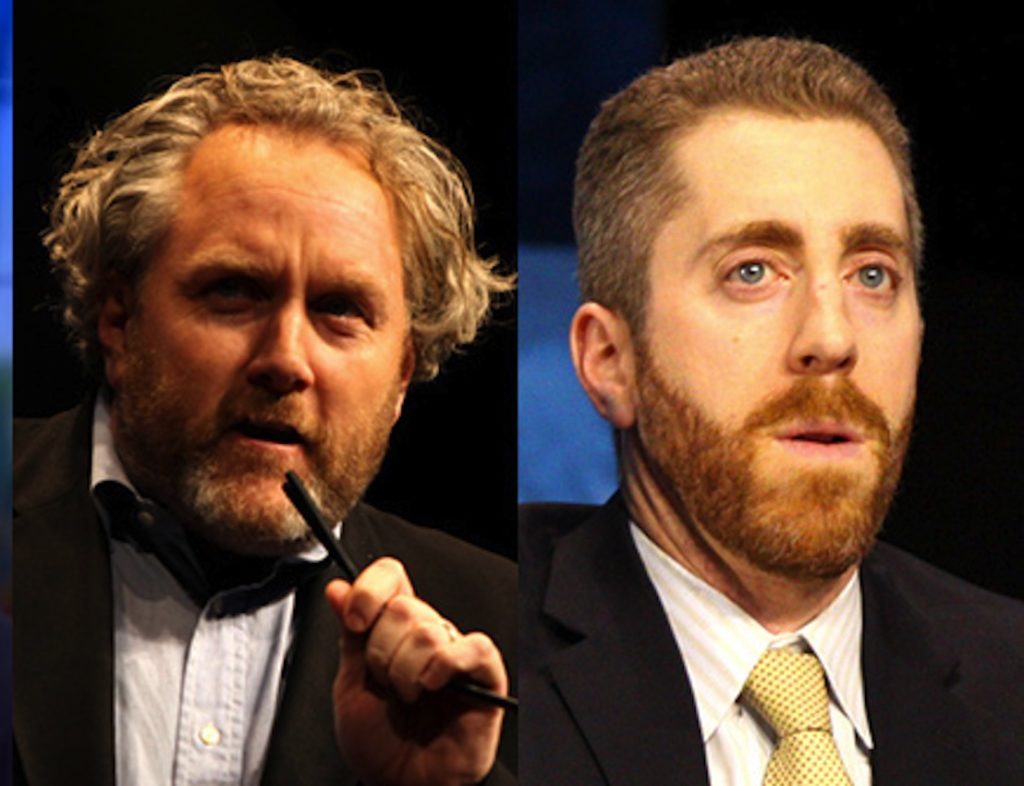
The day after President Donald Trump announced he was abrogating America’s commitment to the Paris accord on climate change, Breitbart News covered the momentous decision with this headline: “Ted Cruz Busts Elon Musk for Flying Private Jet While Lecturing Trump on Global Warming.”
The story explained nothing about Trump’s dumb move, and yet it explains everything. If you are trying to understand why Trump put a gun to his country’s head, threatened to shoot, then pulled the trigger, all you had to do was read that story.
From the actual words, you would have learned that Musk, the CEO of Tesla and several other companies, tweeted that in response to Trump’s decision, he was quitting the president’s advisory council.
“Am departing presidential councils,” Musk wrote. “Climate change is real. Leaving Paris is not good for America or the world.”
In response, Republican Sen. Ted Cruz of Texas tweeted, “CA billionaires pledge to never again fly private, will only fly commercial.”
Cruz was pointing out what he considered Musk’s hypocrisy in criticizing Trump’s decision while flying around the world on private jets, which uses considerably more carbon-based fuel than flying commercial jets.
Get it? Trump World’s website-of-record didn’t look at the implications of Trump’s move, its potential effect on the fight against climate change, on America’s standing in the world, or even on Trump’s domestic support. It just regurgitated a single tweet that tried to show Elon Musk is a hypocrite.
Breitbart’s entire report after Trump’s pullout was a pathetic game of gotcha over Elon Musk’s private jet.
Never mind that, on substance, Cruz is wrong. Musk advocates the importance of reducing mankind’s carbon footprint, and he has done more than almost any human to help achieve that, from creating a groundbreaking electric car to reducing the price of lithium batteries to developing solar roof tiles, pioneering new forms of public transportation, and on and on. Balance all this against the need to zoom about his low-carbon empire on a Gulfstream and he’s as big a hypocrite as an ER doctor who drinks too much caffeine in order to treat the wounded during a disaster. It may not be setting the best example, but people are dying.
The planet is dying, too, but that’s not what concerns Breitbart. The narrative it’s pushing isn’t that the Paris accord is wrong, or the effects of man-made climate change are overstated, or they’re not but here’s a better way to address it. Those positions would be suspect, but smart conservatives could present strong arguments on their behalf. Breitbart didn’t even bother to show that Trump was right.
All it did was stick out its tongue at Elon Musk. Why? Because the real enemy is not bad policy, but the elites. The know-it-alls. The people who may not be smarter and cooler than Breitbart’s readers, but those whom Breitbart’s readers think are smarter and cooler.
Trump doesn’t know a thing about climate change policy or the Paris accord, which was joined by President Barack Obama. He proved that with his claim that “the nonbinding Paris accords” impose “draconian financial and economic burdens” on the United States. Even the 28 percent of Americans who support his pullout understand that an agreement that is nonbinding can’t also be draconian. But Trump doesn’t care about reasons, and neither do they. He knows what his people want: to stick it to Obama. To thumb their noses at Obama’s supporters. To rub victory in the face of“the left” — even if “victory” means a more dangerous planet for their children and grandchildren.
That explains why Breitbart’s entire report after Trump’s pullout was a pathetic game of gotcha over Elon Musk’s private jet. Musk is one of “them” — an urban intellectual with an un-American-sounding name, the kind of guy who invariably gets in trouble when he flies his Dassault into some rural air strip — “You’re not from around here, are ya?” In other words, Musk fits to a T the profile of the kind of person fascist movements have targeted at least since Mussolini.
By the way, the same is true of Sadiq Khan, the London mayor whom Trump trolled after last week’s horrific terror attack on that city. Why, everyone wondered, would Trump pick a fight on demonstrably false pretenses with a mayor doing heroic work in crisis conditions? Because Khan is an urban intellectual with a nonnative-sounding name. Worse, a Muslim. The attack wasn’t against the facts, it was for Trump’s base.
And guess what website echoed Trump’s fake charge against the Muslim mayor, squeezing the lies between ads for erection pills, survival kits and $6.95 Confederate flags?
Trump’s grand policy promises are crumbling all around him.The Russian investigations are not cooling down, they are heating up. The men and women who serve him are busy with leaks and infighting. Senior officials in the State Department are resigning.
All Trump has left is the fervid base that cheered him on and got him where he is.And facts, truth and logic be damned, he will keep feeding them, because he knows what they want, and he knows whom they hate.
Rob Eshman is publisher and editor-in-chief of TRIBE Media Corp./Jewish Journal. Email
him at robe@jewishjournal.com. You can follow him on Instagram and Twitter @foodaism
and @RobEshman.
Parashat Beha’alotecha provides a nice break following Naso, which has 176 verses, making it the longest parsha in the Torah. But its importance is more than in providing a biblical breather — there is something unique about Beha’alotecha.
While it is shorter in content than its predecessor — only 136 verses — the number of topics in the Oral Law that are connected to this parsha, including Chanukah, is disproportionate. What can we make of this?
Rav Moshe Wolfson underscores Beha’alotecha’s arrival after Naso, which concerns the completion of the Mishkan (Tabernacle) and the duties of the different clans. Beha’alotecha picks up here, telling of the menorah in the Tabernacle, the consecration of the Levites, as well as how the Israelites complained and how Miriam and Aaron questioned Moses.
According to Rav Saadya Gaon, the Mishkan is a re-creation of the Sinai experience, an awesome and intense encounter with God. If that is the case, then the progression is perfect: If Naso is the Mishkan and the Mishkan is Sinai and Sinai is the giving of the Written Law (hence the great number of Torah verses in the parsha), then Beha’alotecha is the next step, literally, for sure, but also figuratively — Beha’alotecha is the presentation of the Oral Tradition.
This interpretation serves us well in explaining the opening, where Rashi notes Aaron’s pain in not taking part in the inauguration of the Mishkan. Beha’alotecha presents us immediately with the role that Aaron’s children will play — the lighting of the candles of the menorah. Rashi, using the Midrash, fills in the conversation and tells us that God says to Aaron with this lighting “your lot is greater.”
How is lighting the candles greater than any other role in the Mishkan? Perhaps the candles symbolize the continuous light of Torah, the continuous light of the tradition reaching beyond that which is written, and sharing a new message. The Oral Tradition still sheds new light.
Everything in the Torah must relate to us in some way. No matter how extreme or distant an episode may seem, there is a message that bears eternal truth for all generations.
Consider the episode in Beha’alotecha when the Israelites complain about the manna, the miracle bread that God delivered to the Jewish people while in the Wilderness. What can be learned from this?
How is lighting the candles greater than any other role in the Mishkan? Perhaps the candles symbolize the continuous light of Torah, the continuous light of the tradition reaching beyond that which is written, and sharing a new message.
According to our tradition, the manna mimicked the taste of whatever food the eater could imagine. If this is the case, why did the Israelites complain about having the manna day after day? Why not simply imagine a different food on each day of the week?
Let us present two unique approaches: First, the Kli Yakar, in his commentary on the Torah, says that in order for a food to taste like the food imagined, the imagination must be somewhere in one’s memory banks. So if the Israelites did not recall the taste of the other food, then no new imagination could be projected onto the manna.
Rav Shlomo Aviner takes a different approach and says that the Israelites were, in fact, able to taste any flavor in the world, but because all these tastes were so readily available, they became inured to the thrill of a new flavor. In a sense, the Jews missed the feeling of want.
These two different interpretations present us with a pair of take-home messages:
Kli Yakar reminds us that life is filled with the constant infusion of old memories. If we don’t fill our days with positive, memorable moments, then what stories shall fill the storybook of our lives when we are well on in our years?
And Rav Shlomo Aviner’s thoughts show us that even if one happens to live in a time of recession, when things certainly are not easy, one of the opportunities of such a situation is that once again one can feel what it means not to have everything at one’s fingertips.
Rabbi Shlomo Einhorn is rav and dean of Yeshivat Yavneh and the author of
“Judaism Alive” (Gefen Publishing, 2015).
The Jewish Journal asked movie-goers in Jerusalem for their thoughts on Israeli actress Gal Gadot, star of “Wonder Woman.” They were excited to respond.
Harvey Stein is a filmmaker and video journalist (he made aliyah in 2006), and has made many short videos for various websites. His feature documentary “A Third Way” (about Rabbi Menachem Froman and others) came out last year, and his new feature project, “Double Selfie,” going into production later this year, is a mockumentary set in Jerusalem. He can be reached at jerusalemnewyork@gmail.com.
One of the reasons I like superhero movies is because it’s always obvious whom to root for.
Let’s take Wonder Woman, because she’s killing it at the box office, and she has the added cachet of minority status, which makes her even more appealing: It’s a no-brainer to cheer for the beautiful woman with superhuman strength and unassailable moral clarity over the treacherous Ares, God of War, who seeks the destruction of humankind.
Simple plots with uncomplicated characters work just fine in fiction. In nonfiction, not so much.
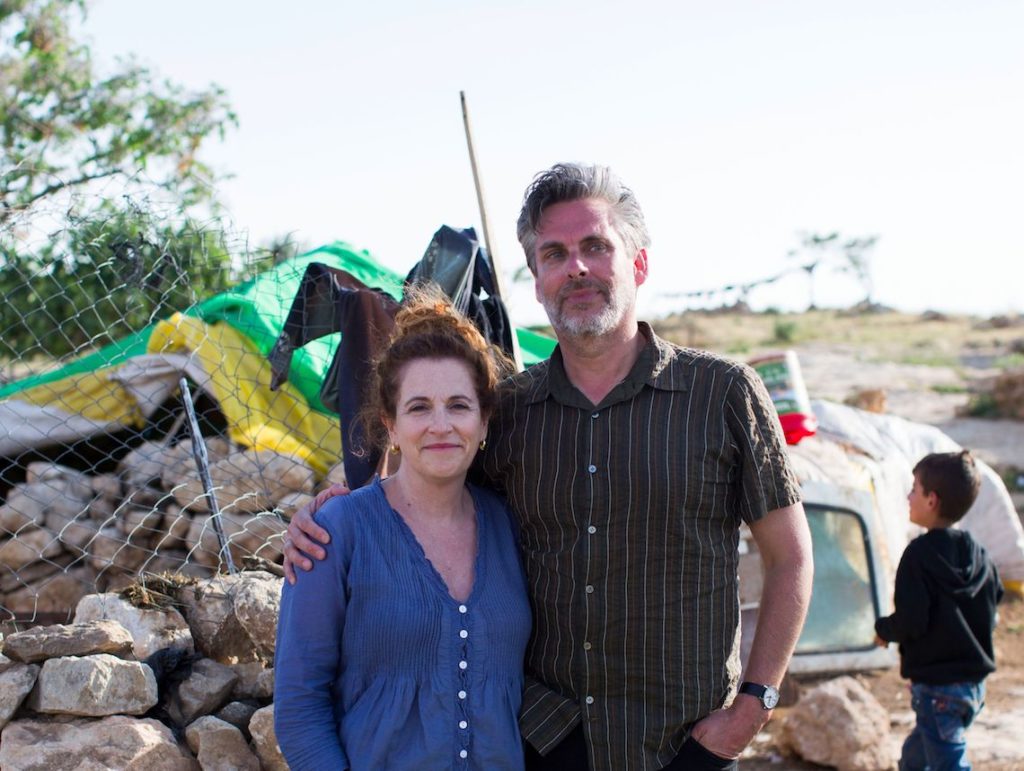
So perhaps it shouldn’t surprise us that two famous fiction writers, Michael Chabon and Ayelet Waldman, are failing to grasp the intricacies of the Israeli-Palestinian conflict.
The best-selling novelists, husband and wife, currently are on a press tour for a new book they edited, “Kingdom of Olives and Ash: Writers Confront the Occupation,” which, given the world-class pedigree of the contributors, would appear to be a marvelous book.
The problem is not the work itself but the way Waldman and Chabon are promoting it.In interviews, they have turned their brief tour of the West Bank into undeniable evidence that they’ve discovered the absolute truth of the conflict: It’s Israel’s fault. And they describe the situation in such shallow and simple terms, I half-wondered if “Kingdom” was a children’s book. (It’s not.)
The book is, in fact, a compilation of stories from assorted contributors, including Pulitzer Prize winners and a Nobel Laureate, that seeks to illuminate the lives of long-suffering Palestinians who have toiled under Israeli occupation for the last 50 years. It’s a noble endeavor. And the pair deserves credit for their good intentions. But the way these two seasoned storytellers are discussing their “findings” is so one-sided, bereft of nuance and oblivious to history, it made this pro-Palestinian American Jew cringe.
The story of the Waldman-Chabon book begins in 2014, when Waldman returned to Jerusalem, the place of her birth, after a long absence. “We couldn’t deal, like so many American Jews, with what it meant to go back,” she said last week during a live internet broadcast sponsored by the New Israel Fund. “We didn’t want to engage.”
But then Waldman was invited to attend the Jerusalem Writer’s Festival. Afterward, members of Breaking the Silence, an organization of former Israel Defense Forces soldiers seeking to expose and end the occupation, offered to show her around Hebron. There, she saw the impact of Israel’s occupation for the first time — poverty, oppression, injustice. Then she went to Tel Aviv, where she “had an amazing time, [and] got drunk every night.” She decided to do something about this unfair contrast.
She returned home to Berkeley and suggested to her husband that they take up the Palestinian cause through a writing project. “I thought he wouldn’t want to alienate his Jewish audience,” she said, somehow unaware that a majority of American Jews support a two-state solution. “To his credit, without hesitation, he said instantly, ‘Of course, yes, we’ll do this.’ ”
In the spring of 2016, they brought 29 of the world’s most eminent writers to visit — exclusively — the West Bank, East Jerusalem and even Gaza, if they pleased. Afterward, Chabon declared to the Forward that Israeli military occupation is “the most grievous injustice I have seen in my life.”
He should get out more.
Perhaps it shouldn’t surprise us that two famous fiction writers, Michael Chabon and Ayelet Waldman, are failing to grasp the intricacies of the Israeli-Palestinian conflict.
It’s disappointing when you discover that your literary heroes sometimes are myopic and obtuse. That they would spend far more time immersing themselves in the lives of one of their characters than they spent zipping through one of the most complex regions in the world is perplexing. But that hasn’t stopped Waldman and Chabon from casting themselves as daring literati, shining a light in Israel’s dark corners.
“As soon as you start asking questions,” Chabon said, “everything comes back to this massive bureaucracy that …exists only to remind Palestinian people that they are utterly subject to Israeli power. And the way that power demonstrates itself most effectively, demoralizingly, is not by dropping bombs, bulldozing houses, it’s the everyday tiny indignities to which Palestinians are subjected: What it takes for a Palestinian who needs dialysis to get dialysis, what it takes a Palestinian businessman … to arrange a meeting. The way the rules get changed so whimsically, [it’s] so clear it’s being done on purpose to demoralize, to dehumanize.”
Not everything Chabon says is untrue. I trust he saw “indignities.” But he fails to mention the indignity of total Arab-Palestinian rejection of a Jewish state since the Balfour Declaration, in 1917, and at least half a dozen times since then. For someone who’d be short a few novels without Jewish history, how conveniently he chooses to ignore it.
For “Kingdom” Chabon wrote about Sam Bahour, a Palestinian businessman he admires for persevering despite the odds, for “building this glass palace while missile strikes are occurring all around him.” That Israel experiences much the same thing is an irony apparently lost on him.
The conflict that has mystified and humbled generations of experts and world leaders is, for these two writers, superhero simple: Palestinians, good; Israeli government, evil.
But this is what happens when serious writers engage in conflict tourism. And it is unworthy of their gifts. What a shame to marry such weighty voices to a shortsighted conclusion. It gives their experience, and their book, a gravitas it hasn’t earned.
“This conflict is not a morality play where one side is all right and the other is all wrong,” American diplomat Dennis Ross said when I reached him by phone. Ross has worked on the Israeli-Palestinian conflict as an envoy, expert and direct negotiator serving the Reagan, Bush, Clinton and Obama administrations.
“When you demonize one side, you don’t make it easier for two sides to reconcile,” he said. “You make it harder.”