Police in Manchester, in northwestern England, say that arson attacks on two kosher restaurants are “anti-Semitic hate crimes.”
The attacks, which police say they believe are linked, took place in the north Manchester neighborhood of Prestwich within five days of each other, the latest on Tuesday, the London-based Jewish Chronicle reported.
On Friday night, two people threw a firebomb at the Taam restaurant in an attack caught on surveillance camera. The firebomb failed to ignite, leading one of the attackers to throw a stone through the establishment’s front window.
Early on Tuesday morning, unknown attackers forced open a window at the JS restaurant and poured in flammable liquid, which they ignited. The fire was put out after over an hour, causing no serious damage.
Police said they have increased patrols in the area.
Nikki Haley, the American ambassador to the United Nations, called the U.N. a “bully” against Israel, during a meeting with Israeli Prime Minister Benjamin Netanyahu in Jerusalem.
Netanyahu thanked the envoy for “standing up for Israel” in the U.N.
“You know, that’s all I’ve done, is tell the truth, and it’s kind of overwhelming at the reaction,” Haley said in response.
She called Israel-bashing at the U.N. “a habit.”
“It was something that we’re so used to doing,” she said. “And if there’s anything I have no patience for is bullies, and the U.N. was being such a bully to Israel, because they could.”
She added: “We’re starting to see a turn in New York. I think they know they can’t keep responding in the way they’ve been responding. They sense that the tone has changed.”
She said that some members of the Human Rights Council in Geneva, where she attended a meeting before arriving in Israel, were “embarrassed” by the council’s permanent Agenda Item Seven, which discusses “the human rights situation in Palestine and other occupied Arab territories,” and routinely singles out Israel for condemnation.
At the Human Rights Council meeting Tuesday, Haley said the U.S. is reconsidering its membership in the U.N. Human Rights Council, citing among other things bias against Israel.
“It’s hard to accept that this council has never considered a resolution on Venezuela and yet it adopted five biased resolutions in March against a single country – Israel,” Haley said Tuesday. “It is essential that this council address its chronic anti-Israel bias if it is to have any credibility.”
She also met Wednesday with Israel’s President Reuven Rivlin at his residence in Jerusalem.
Rivlin called Haley a “dear friend of Israel. We appreciate your strong stand on the world’s most important stage, in support of the security of the people and the State of Israel. With your support, we see the beginning of a new era. Israel is no longer alone at the U.N. Israel is no longer the U.N.’s punching bag.”
During her three-day visit to Israel, Haley is expected to fly over the country’s northern and southern borders in a helicopter, visit Tel Aviv and lay a wreath at Yad Vashem, Israel’s Holocaust memorial center. Haley’s visit to the Old City of Jerusalem and the Western Wall are being billed as “private and religious,” however, and she will not be accompanied by Israeli officials. President Trump, during his recent visit to holy sites in Jerusalem, was also unaccompanied by Israeli political leaders.
A St. Louis man accused of making eight bomb threats against Jewish institutions will plead guilty to cyberstalking charges.
Juan Thompson, 32, originally denied the charges in New York City federal court in April. Prosecutors said in a letter filed on Tuesday with the court that Thompson will enter a guilty plea when he appears in court on June 12, Reuters reported.
The cyberstalking charges are for eight threats against Jewish community centers and the Anti-Defamation League, which federal prosecutors say were “copycat” crimes during a wave of nearly 150 bomb threats to Jewish institutions during the first three months of this year. Nearly three weeks later after Thompson’s arrest, an Israeli-American teen wasarrested in Israel for allegedly making the bulk of the threats.
Thompson, who previously worked as a journalist for The Intercept news website, had denied the charges, saying said that he had no anti-Semitic beliefs and that he was being framed as a black man. Prosecutors allege that the JCC bomb threats were part of a larger plot to take revenge on an ex-girlfriend.
He wasarrestedMarch 3 for the threats, which carry a penalty of up to five years in prison and a fine up to $250,000. Bail had been denied at the time of his arrest.
The Federal Bureau of Investigation complaint says Thompson threatened institutions including the Anti-Defamation League, Jewish community centers in San Diego and New York City, schools in New York and Michigan, and a Jewish history museum in New York City.
Few events in Jewish history are as impactful on the character of the Jewish people in Israel and around the world as was the 1967 Israeli-Arab War that was fought exactly 50 years ago (June 5-11, 1967).
The Association of Reform Zionists of America (ARZA) has posted this week its considered Position Paper about that war on the occasion of this 50th Anniversary, and it can be read here:
Yaakov Katz is an Israeli journalist who currently serves as Editor-in-Chief of the Jerusalem Post. He previously served for close to a decade as the paper’s military reporter and defense analyst. In 2012-2013 he was a fellow at the Nieman Foundation for Journalism at Harvard University and is a faculty member at Harvard’s Extension School where he teaches an advanced course in journalism. Prior to taking up the role of Editor-in-Chief at The Jerusalem Post, Katz served as Senior Foreign Policy Advisor to Israel’s Minister of Education and Diaspora Affairs Naftali Bennett.
Let’s open this exchange with few impressive numbers mentioned early in your book (whose Hebrew version I am involved in publishing):
According to Jane’s, the British military trade publication, Israel is one of the world’s top six arms exporters. Weaponry alone constitutes about 10 percent of the country’s overall exports, and since 2007, Israel has exported about $6.5 billion annually in arms. In 2012, its 1,000 defense companies set a new record, exporting $7.5 billion worth of weaponry.
Despite its small size, Israel invests more than any other country in Research and Development (R&D)— about 4.5 percent of the country’s gross domestic product (GDP)— and continually tops lists as the world’s most innovative country. While Israel’s investment in R&D is impressive on its own, about 30 percent goes to products of a military nature. By comparison, only 2 percent of German R&D and 17 percent of US R&D is for the military.
Your book tells the story of a very important, yet often neglected, aspect of the Israeli success story – its innovative military industry. Our introductory question: what can the English-language readers of this book expect to find here? Beyond good stories and interesting facts, what does your narrative tell us about Israel and its nature?
Yours,
Shmuel
***
Dear Shmuel,
Thanks for the question and the opportunity.
The book provides readers with an until-now untold story of how Israel became the high-tech military superpower that it is today. A lot has been written in recent years about Israel’s start-up culture and entrepreneurship, and about the success stories they have produced (Waze, Mobileye, etc…), but most people do not know the stories behind Israel’s drones, satellites, tanks, cyber capabilities and other weapons that the IDF and Israel excel in developing – the stories of how all of this sophisticated weaponry was created.
The book highlights some of the key technologies that Israel excels at developing and then provides readers with the stories of how they were invented while looking not just at the inventors themselves – the IDF soldiers, officers or scientists – but also at the unique culture that exists in Israel which enabled this success.
Overall, the book is meant to provide readers with another piece of Israel’s fascinating story – how it went from a country without resources, money or people to an economic and military superpower. We provide the answers through the people who are highlighted in the book.
A tiny nation of just 8 million, Israel has learned to adapt to the changes in modern warfare and become the new prototype of a 21st century superpower not in size but in innovation. Part of this was earned through the many wars it has fought. Israel was the first western country to fight in the 50s and 60s against Soviet military machines in Egypt and Syria and the first western state to face bombings on its streets, years before terror struck in Paris, London, New York and Madrid.
With the threats constantly evolving, Israel has learned how to develop not just new tactics, but also the right technology that can quickly adapt to changing scenarios and battlefields. Its weapons can one day be used to prevent a lone terrorist from attacking a city bus and a day later to stop an armoured column invading from Egypt.
We found that Israel’s success is not because of the size of its military – which is, in fact, much smaller than the militaries of countries which surround it – but the result of a culture of innovation, the emphasis the military puts on improvisation and the IDF’s ability to adapt.
The culture is the result of several factors. One is the fact that few other countries in the world have been embroiled in conflict for as long or as intensively as Israel has. There is little margin for error when the enemy you are fighting is just a few minutes’ drive from your front door – when the terror groups along your borders regularly fire rockets at your homes and schools and send suicide bombers onto your buses.
The second characteristic is the informality you find in the IDF – the fact that there is complete disregard for the rank on one’s shoulders and that low-level soldiers feel free to speak their mind even in the presence of senior officers. Think about this for a moment: the Israeli military, an entity expected to entrench structure and discipline in its soldiers, does the exact opposite.
Even so, this is a key ingredient to creating a culture of innovation. While a culture of informality that lacks hierarchy may appear on the surface to endanger a country’s or an organization’s ability to engage in long-term strategic thinking, it actually has the opposite effect. Breaking down barriers creates an atmosphere that encourages and enables the free exchange of ideas. When officers of various ranks can engage at the same level and speak freely with one another, new ideas are fostered.
It is important to keep in mind that while Israel’s development of weaponry is revolutionizing modern warfare, it has not taken place in a vacuum but, rather, in the Middle East, possibly the world’s most volatile region. You see this with drones. Israel was the country that invented drones but was also the first country to be attacked by a drone being used by a terrorist organization (Hezbollah in 2006).
There is an arms race in the Middle East. This book is critical for understanding its far-reaching implications.
In How We Die, surgeon and author Sherwin Nuland wrote: “We die so that the world may continue to live. We have been given the miracle of life because trillions upon trillions of living things have prepared the way for us and then have died—in a sense for us. We die, in turn, so that others may live. The tragedy of a single individual becomes, in the balance of natural things, the triumph of ongoing life.”
One of Nuland’s aims was to disabuse his readers of the notion of death with dignity; he wanted to point out that in fact death is messily undignified. But as a rabbi who has worked as a hospice chaplain and who is currently working as a hospital chaplain, I find these words and thoughts beautiful, even inspirational. Although I am a well-schooled layperson in terms of the dying process and its toll on the body, the blessing of my work is that I am not confined to care only for the body.
I have attended three deaths in the past three days, and I’ve been pondering Nuland’s words as I encounter the mysterious and mystically liminal moments of life’s sacred portals: birth and death. I know and accept the facts: everything that lives, has ever lived and will ever live will die. This reality unfurls like a news crawl in the back of my brain while I am offering prayers and blessings for newborns and their parents; these words come always to the forefront of my mind as I attend a death.
The Personal Impact
But for a woman who is sobbing petitionary prayers in a hallway outside an ICU room as a rapid response team attempts to revive her husband or for a man who seems to physically shrink day by day as he sits at the bedside of his wife, clinging to hope that a test result that will lead to a miraculous reversal of her decline, the truth that life ends holds no beauty and is not assuaged by a sense of the universal.
The learning curve for those who put their faith in the human body (“He’s always been a fighter,” “She’s so incredibly strong”) or medical knowledge (“There must be something else you can do—another test—something?”) is excruciatingly steep. Even for those who accept that life is ending and for those who find comfort in prayer and ritual, there is profound shock in coming to the moment when the veils between the worlds thin and the irrevocable divide between life and death manifests.
In addition to the death itself, there are the after-shocks. Before the bereaved become mourners, in the first moments and hours when they are confronting the painful reality of loss, they are plunged into the business of death. The newly-bereaved must sign a release form for the body, observe a time limit that dictates how long they can stay with the body in the hospital room, make decisions about the disposition of the body, notify family and friends and answer questions about when and how death occurred and begin to make plans what comes next both for the deceased and for themselves. If the newly-bereaved are particularly unfortunate, they must also deal with learning that someone has posted the news of the death on facebook within minutes of being informed of the death, thus making public what has not yet had a chance to be communicated within the family.
Prayer is not enough
In these moments, prayer–no matter how beautiful, how sublimely profound, how potentially comforting–is not enough. Those of us who midwife the souls of the dying must transition to the things of olam ha zeh–this world. We must tend to the psycho-spiritual-emotional and physical needs of the living. It is not good enough to finish a Viddui, the final confession, and express our condolences. It is not good enough to ask the newly-bereaved “What can I do for you?” or “What do you need?” Shock and grief are paralytics. This is another liminality– the “sinking-in” time, the moments when families begin to grasp how this death has forever changed their lives. The time just after a death parallels the midrashic moment at the Sea of Reeds when G-d tells Moshe that there is a time for prayer and a time for action. The liminality of this time demands that clergy must wade into the swirling murkiness of shock and grief and position ourselves as comforters and guides, sometimes reassuring families that yes, their family member really is dead, sometimes simply standing by to bear witness to the tears, anger, endearments and reassurances that emerge.
The Role of Chaplain
Clergy cannot shelter behind prayerful words. What we can best offer is our calm and consistent presence, both spiritual and physical. Unless families request that we leave, we should stay with them until they and we discern that it is time for us to leave. Whether we are educating the family about the after-death care of their family member or listening to stories about the deceased or calling the mortuary on the family’s behalf or fetching tea or a blanket or waiting with the family until the mortuary transportation arrives or making sure that their parking is validated, what the newly-bereaved most need is to be cared for, to be reassured that for those of us who routinely deal with death and dying, the death of their family member is not commonplace. No matter the specific configurations and complications of their relationships, death changes things. Whether families self-identify as observant, religious, spiritual but not religious, or non-believers, they want and need to see the death of their family members as something more than a biological inevitability.
I have the same need. For me, attending deaths and tending to the needs of families offer uniquely sacred opportunities to connect with other humans, to witness the rawness that is unleashed from broken hearts, to come tantalizingly close to being as fully human as I am able to be, to be in awe again and again.
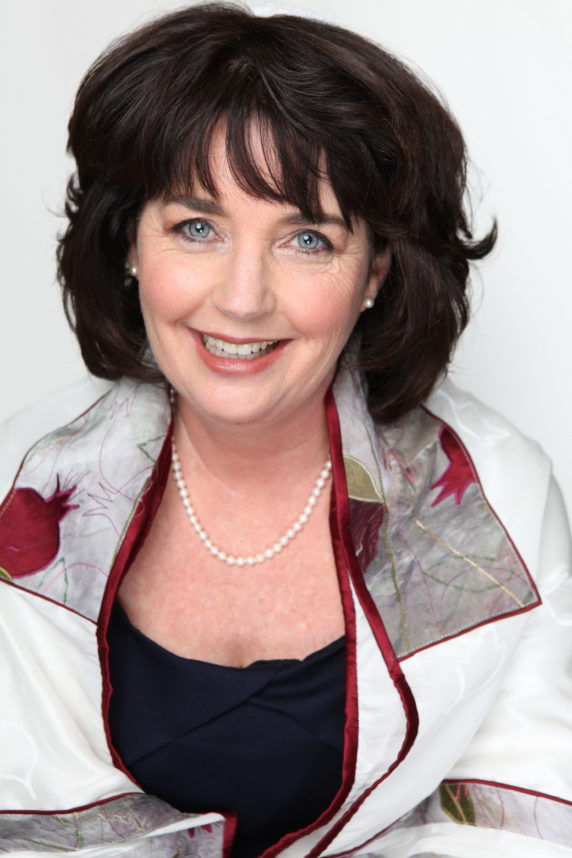
Rabbi Janet Madden PhD was ordained by The Academy for Jewish Religion-California. She serves as the rabbi of Temple Havurat Emet and Providence Saint John’s Health Center and has been a student of the Gamliel Institute.
Rabbi Janet Madden
___________
KAVOD v’NICHUM CONFERENCE
Registration for the 15th North American Chevrah Kadisha and Jewish Cemetery Conference, June 18-20, in San Rafael, California, is still open.
Our conference will have intensive workshops on Introduction to Taharah, Infection Control, Communicating about difficult Taharot, Modifying Taharah, Taharah Stories as well as exploring traditional Taharah liturgy, Navigating Taharah Liturgy – A Play, and Taharah liturgy in Maavar Yabbok.
We’ll have an exciting series of workshops on Jewish cemetery issues, including Green Cemeteries, Cremation, Perpetual Care Fund Investments, Record Keeping and Acquiring New Cemetery Property.
What’s different this year is an evolving theme – expanding the work of the Chevrah Kadisha and the Jewish Cemetery by encouraging conversation about end of life plans with the Conversation Project; end of life decision-making with Dr. Jessica Zitter, and communicating about how we die with Dr. Dawn Gross.
Consider a Sunday morning pre-conference field trip to Gan Yarok – an environmentally conscious Jewish Green Cemetery.
Sunday afternoon from 2-5, Sam Salkin, Executive Director of Sinai Memorial Chapel, will facilitate an intensive session on starting & managing a community funeral home. Let us know if you are interested in this session. Attendance is by advance reservation only.
Tuesday afternoon after the conference Sinai Memorial Chapel will facilitate a tour of Gan Shalom Cemetery, a Jewish cemetery with an interfaith section. Again, let us know if you are interested – Attendance by advance reservation only.
And there is an extension to the conference! Gamliel Institute students, and others by approval, can remain for an additional day to participate in the Gamliel Institute Day of Learning. We will have three extraordinary teachers presenting on a variety of texts and concepts that are of interest. This is a fantastic opportunity to study with some of the very best instructors in a small group setting during a twenty-four hour period. Students, contact us to RSVP; if you are not a Gamliel student, contact us to seek approval of the Dean to attend.
We have negotiated a great hotel rate with Embassy Suites by Hilton, but rooms are limited; please don’t wait to make your reservations. We also have home hospitality options – contact us for information or to request home hospitality. 410-733-3700, info@jewish-funerals.org
In 2017, Kavod v’Nichum and the Gamliel Institute are again sponsoring a six-part “Taste of Gamliel” webinar series. This year’s topic is From Here to Eternity: Jewish Views on Sickness and Dying.
Each 90 minute session is presented by a different scholar.
The June 25th session is being taught by Dr. Laurie Zoloth, well known author, teacher, and scholar.
Taste of Gamliel Webinars for this year are scheduled on January 22, February 19, March 19, April 23, May 21, and June 25. The instructors this year are: Dr. Dan Fendel, Rabbi Dayle Friedman, Rabbi Sara Paasche-Orlow, Rabbi Richard Address, Rabbi Elliot Dorff, and Dr. Laurie Zoloth.
This series of Webinar sessions is free, with a suggested minimum donation of $36 for all six sessions. These online sessions begin at 5 PM PDST (GMT-7); 8 PM EDST (GMT-4).
Those registered will be sent the information on how to connect to the sessions, and will also receive information on how to access the recordings of all six sessions.
Click the link to register and for more information. We’ll send you the directions to join the webinar no less than 12 hours before the session.
________________________
GAMLIEL INSTITUTE COURSES
LOOKING FORWARD: UPCOMING COURSE
Gamliel Institute will be offering course 2, Chevrah Kadisha:Taharah & Shmirah, online, afternoons/evenings, in the Fall semester starting September 5th, 2017.
CLASS SESSIONS
The course will meet on twelve Tuesdays (the day will be adjusted in those weeks with Jewish holidays during this course). There will be an orientation session on Monday, September 4th, 2017. Register or contact us for more information.
REGISTRATION
You can register for any Gamliel Institute course online at jewish-funerals.org/gamreg. A full description of all of the courses is found there.
Donations are always needed and most welcome to support the work of Kavod v’Nichum and the Gamliel Institute, helping us to bring you the conference, offer community trainings, provide scholarships to students, refurbish and update course materials, expand our teaching, support programs such as Taste of Gamliel, provide and add to online resources, encourage and support communities in establishing, training, and improving their Chevrah Kadisha, and assist with many other programs and activities.
You can donate online at http://jewish-funerals.org/gamliel-institute-financial-support or by snail mail to: either Kavod v’Nichum, or to The Gamliel Institute, c/o David Zinner, Executive Director, Kavod v’Nichum, 8112 Sea Water Path, Columbia, MD 21045. Kavod v’Nichum [and the Gamliel Institute] is a recognized and registered 501(c)(3) organizations, and donations may be tax-deductible to the full extent provided by law. Call 410-733-3700 if you have any questions or want to know more about supporting Kavod v’Nichum or the Gamliel Institute.
If you would like to receive the periodic Kavod v’Nichum Newsletter by email, or be added to the Kavod v’Nichum Chevrah Kadisha & Jewish Cemetery email discussion list, please be in touch and let us know at info@jewish-funerals.org.
You can also be sent an email link to the Expired And Inspired blog each week by sending a message requesting to be added to the distribution list to j.blair@jewish-funerals.org.
Be sure to check out the Kavod V’Nichum website at www.jewish-funerals.org, and for information on the Gamliel Institute and student work in this field also visit the Gamliel.Institute website.
If you have an idea for an entry you would like to submit to this blog, please be in touch. Email J.blair@jewish-funerals.org. We are always interested in original materials that would be of interest to our readers, relating to the broad topics surrounding the continuum of Jewish preparation, planning, rituals, rites, customs, practices, activities, and celebrations approaching the end of life, at the time of death, during the funeral, in the grief and mourning process, and in comforting those dying and those mourning, as well as the actions and work of those who address those needs, including those serving in Bikkur Cholim, Caring Committees, the Chevrah Kadisha, as Shomrim, funeral providers, in funeral homes and mortuaries, and operators and maintainers of cemeteries.