fbpx

ISIS explains why it’s not attacking Israel — yet

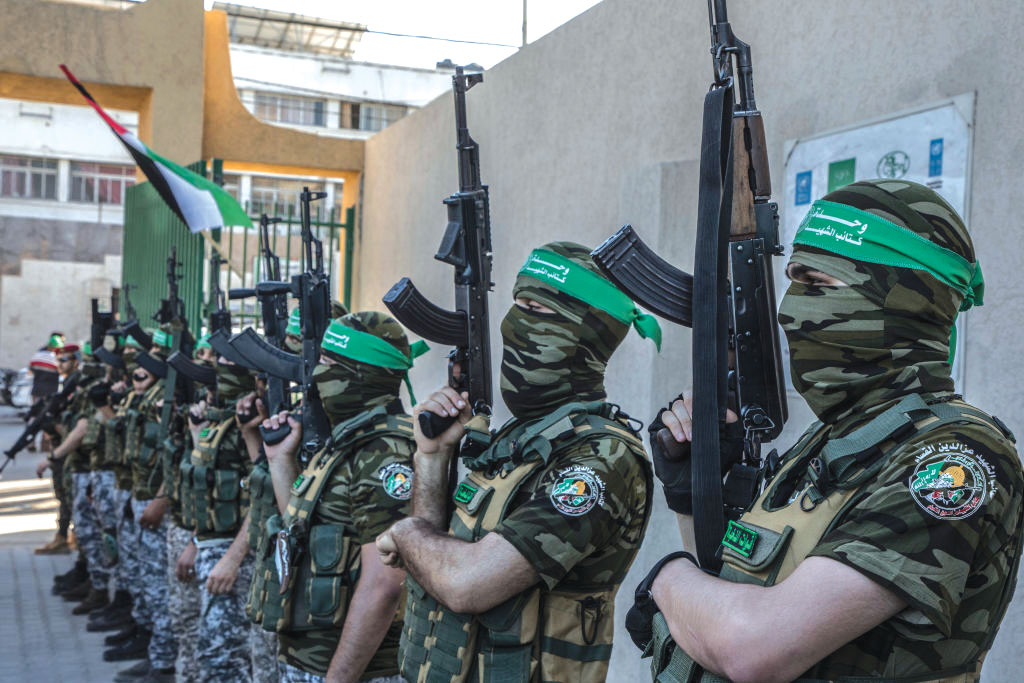
The Islamic State said in its weekly newspaper that it has not focused on attacking Israel because it does not believe the Palestinian cause is more significant than other issues affecting Muslims.
[additional-authors]
March 25, 2016

The Islamic State said in its weekly newspaper that it has not focused on attacking Israel because it does not believe the Palestinian cause is more significant than other issues affecting Muslims.

According to the Times of Israel, which cited a translation by the Middle East Media Research Institute, a March 15 article in ISIS’ al-Naba said, “If we look at the reality of the world today, we will find that it is completely ruled by polytheism and its laws, except for the regions where Allah made it possible for the Islamic State to establish the religion…. Therefore, jihad in Palestine is equal to jihad elsewhere.”

The article also criticized late secular Arab leaders, such as Egypt’s Gamal Abdel Nasser and Iraq’s Saddam Hussein, for pressing the belief that “Palestine is the Muslims’ primary cause.”

The article calls for jihadists to fight the “infidels” nearest to them, leaving the fight against Israel to the Muslim Palestinians.

The article argues that jihadis should focus first on toppling the Arab regimes, which it believes defend Israel, and only when that is accomplished should they approach “the borders of [the] Jew[ish] State and confront its army directly,” according to The Times of Israel.

But it notes that Muslims have a religious duty to bring Palestine back into the “house of Islam” and should send aid to Palestinians who are fighting Israel.

The article encourages those unable to travel to the Middle East to fight Israel to attack “the Jews and their allies wherever they find them, [by] killing them, destroying their property, and harming their interests in any way they can.”


Did you enjoy this article?
You'll love our roundtable.

Editor's Picks

Latest Articles

Post-Passover Pasta and Pizza

What carbs do you miss the most during Passover? Do you go for the sweet stuff, like cookies and cakes, or heartier items like breads and pasta?

Freedom, This Year

There is something deeply cyclical about Judaism and our holidays. We return to the same story—the same words, the same questions—but we are not the same people telling it. And that changes everything.

A Diary Amidst Division and the Fight for Freedom

Emma’s diary represents testimony of an America, and an American Jewish community, torn asunder during America’s strenuous effort to manifest its founding ideal of the equality of all people who were created in the image of God.

More than Names

On Yom HaShoah, we speak of six million who were murdered. But I also remember the nine million who lived. Nine million Jews who got up every morning, took their children to school, and strove every day to survive, because they believed in life.

Gratitude

Gratitude is greatly emphasized in much of Jewish observance, from blessings before and after meals, the celebration of holidays such as Passover, a festival that celebrates liberation from slavery, and in the psalms.

Freedom’s Unfinished Journey

The seder table itself is a model of radical welcome: we are told explicitly to invite the stranger, to make room for those who ask questions and for those who do not yet know how to ask.

Thoughts on Security

For students at Jewish schools, armed guards, security gates, and ID checks are now woven into the rhythm of daily life.

Can Playgrounds Defeat Antisemitism?

The playground in Jerusalem didn’t stop antisemitism, and renovating playgrounds in New York City is not likely to stop it there, either — because antisemitism in America today is not rooted in a lack of slides or swings.

More news and opinions than at a Shabbat dinner, right in your inbox.