This article first appeared on The Media Line.
Coexistence quietly continues in Jerusalem.
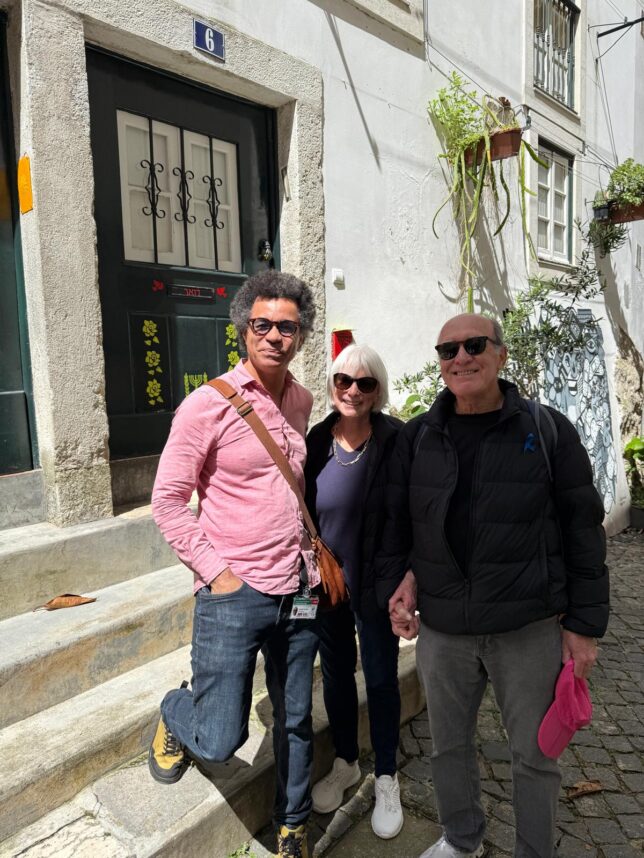
Ahmed Eid, an Arab, and Elchanan Fried, a Jew, admit that there are sometimes tensions between them. Fried is the Director of the Surgical ICU unit at Hadassah hospital on Mount Scopus, and Eid is the director of surgery. But the tensions have nothing to do with politics.
“We both have big egos,” Fried told The Media Line. “We often work on the same patients and we have to figure out how to do that.”
That is what happened recently when a 13-year-old Israeli arrived at Hadassah hospital on Mount Scopus, after he was stabbed by a 13-year-old Palestinian. The young Israeli was clinically dead and had no pulse. Both Fried and Eid saw the young patient.
“He had a small stab wound near his shoulder but that didn’t explain why he was in such bad condition,” Dr. Ahmed Eid, the head of the Department of Surgery told The Media Line. “I asked to turn him over to see if there was a wound there. Then blood started coming from this wound, and I understood that a major blood vessel was cut or injured.”
It was touch and go for a few days, but now the patient is out of danger and “spinning us around on his little finger,” as Fried said.
Eid and Fried (pronounced “eed” and “freed” — their names even rhyme) have an obvious affection for each other.
“I spend more time with him than I do with my wife,” Fried said laughing. “We’re good friends. He is a good man and an excellent physician. It’s a great honor to work with him.”
Both men have five children, and they occasionally socialize. Eid calls Fried “Elhi”, a nickname for Elchanan, and admits they have different political ideas.
“Maybe I and Elhi have contrary opinions about general policy – what we should do with the settlements and whether Israel should withdraw,” Eid told The Media Line. “I think we will have a big difference. But we don’t discuss this in our daily work, and we work very closely. We both work on the same patient.”
It is impossible to ignore politics in Israel. In 2002, a relative of Fried’s and a father of seven young children, Rabbi Elimelech Shapira, was killed in a West Bank shooting. The perpetrators have not been found.
Fried, who wears a skullcap showing he is religiously observant, says he checks his politics at the door. As the hospital is close to several large Palestinian villages, more than half of the patients are Arab. About a quarter of the medical staff is also Palestinian.
“There’s no difference whatsoever who the patient is,” Fried says emphatically. “A patient is a patient is a patient. What’s going on outside doesn’t cross the fence here in the hospital.”
Recently, some Israelis have called for doctors to withhold medical treatment from attackers. They argue that Israel should not expend precious resources on trying to save terrorists. Both doctors say they vehemently oppose adopting this idea.
In Hadassah Ein Karem several of the attackers are receiving treatment, although they are sometimes shackled to their beds and have armed guards posted at their door. Their families are not allowed to visit them.
Next to Hadassah Mount Scopus, Arab and Jewish students attend classes together at Hebrew University. While there have been some pro-Palestinian demonstrations at other universities, it has been quiet here. Yet some students say they feel the tension.
“Here on campus there haven’t been many problems but you can feel the tension,” Basel Sader, a Palestinian student from the east Jerusalem neighborhood of Beit Hanina told The Media Line. “When the Arab students come to university they have to cross through a lot of checkpoints.”
He said there has been a dramatic increase in security at the university.
“Since we’re Arabs for most of the people here we’re terrorists or potential terrorists,” he said. “That’s completely wrong. We’re here to study and go home.”
Jewish students say that while they feel safe on campus, they worry about the environment outside.
“We are surrounded by Arab villages and it is frightening,” Aviran Cohen told The Media Line. “We’ve had a lot of stabbings nearby. Inside there is a lot of security but outside, going to the bus, it is scary.”