Tazria-Metzora — She conceives / One who suffers (Leviticus 9:1–11:47)
Who am I
who has never given birth
who could never give birth
to weigh in on what a woman
should do or feel
when giving birth?
Once I saw men and women
separated by an acre of sand
fling off their clothes and
run into the ocean.
They were declared ritually clean after
and the rest of their lives together
commenced.
Another time
in fact, a handful of times
we had to shut the doors with
only one of us inside
to make sure the plague
stayed in one place.
Another time
but only once, my beloved
made another human being.
I helped with the paperwork
but not much else.
She is the creator.
I am the afflicted.
Rick Lupert, a poet, songleader and graphic designer, is the author of 29 books including “God Wrestler: A Poem for Every Torah Portion.” Visit him at www.JewishPoetry.net
The inaugural “BagelFest West” was held April 12 at Wilshire Boulevard Temple’s Audrey Irmas Pavilion.
Drawing over 1000 attendees from across the culinary, hospitality and media worlds, BagelFest West delivered a packed schedule of tastings, panels and competitions that showcased just how far the humble bagel has come.
Hundreds turn out to Wilshire Boulevard Temple’s Audrey Irmas Pavilion to enjoy the delights of BagelFest West. Courtesy of BagelFest
Approximately 15 bagel shops—including Hank’s Bagels, Rise Bagels and Boichik Bagels—participated in the event, which was co-organized by BagelUp, King Arthur Baking Company and Jewish Food Lab at Wilshire Boulevard Temple. On Sunday, the main event unfolded across both industry and public sessions, featuring immersive tastings and a dynamic lineup of panels exploring everything from ingredient sourcing and fermentation techniques to the evolving identity of the California bagel.
At the heart of the festival were the highly anticipated BagelFest West competitions, where participants went head-to-head across multiple categories in a spirited showdown, as well as a series of “Industry Talks,” including “The Key to the Perfect Bagel” and “From Toasted to Thriving.”
Bagel sellers from across the western part of the country—including Seattle’s Hey Bagel and the Carlsbad-based Inglorious Bagels—participated in the festival. There were sourdough bagels, garlic schmears and even a “Gefilte Fish Hillel Bagel Sandwich.”
Other participating shops included Bagel Boss, Daniel’s Bagels, Uncle Stevey’s Bagels, New Wave Bagel and Mission Bagel.
According to the event’s organizers, the participating shops represented “the best of the West Coast’s bagel boom, blending technical mastery with boundary-pushing creativity.”
BagelFest Founder Sam Silverman was working at a hedge fund before he became the self-described ‘bagel ambassador’ he is today. His journey began eating bagels from Dunkin Donuts in his hometown of Massachusetts. It wasn’t until he moved to New York City about a dozen years ago when he understood the care that goes into making a bagel.
“You don’t know what a real bagel is until you have one,” he said, “and my mission is to feed the world with a truly amazing bagel, so that minds can be open just like mine was.”
In 2019, he created BagelFest to celebrate the people, craft and culture behind bagel making. It began on the East Coast as the New York BagelFest, a trade and consumer show that brought increased visibility to the participating bagel shops, before coming to Los Angeles.
“I never thought we were going to do a BagelFest in L.A.,” Silverman said. “That seemed insane. If you told me that five years ago—no chance—but the amount that the scene and the talent has developed here has been beyond my imagination.”
A couple enjoys an iconic and sweet BagelFest West moment. Courtesy of BagelFest
The festival’s first year on the West Coast was a success. This past Sunday, bagel lovers turned out to sample the region’s best. Upon arrival, they were given a large cardboard box to use as a tray and accommodate their bagel samples as they walked around to the different booths. Additionally, they were given a BagelWest Passport, where they could rate each of the bagels for the competitions that were held.
Ultimately, Rise Bagels—based in Irvine—was named “Best of the West” bagel. Hank’s Bagels, which has multiple locations across the city, was runner-up, and the Costa Mesa based-Boil and Bake earned third place.
Judging the bagels were a group of “Breadheads,” including L.A.-based award-winning food stylist Aliza Sokolow and food blogger Beth Lee.
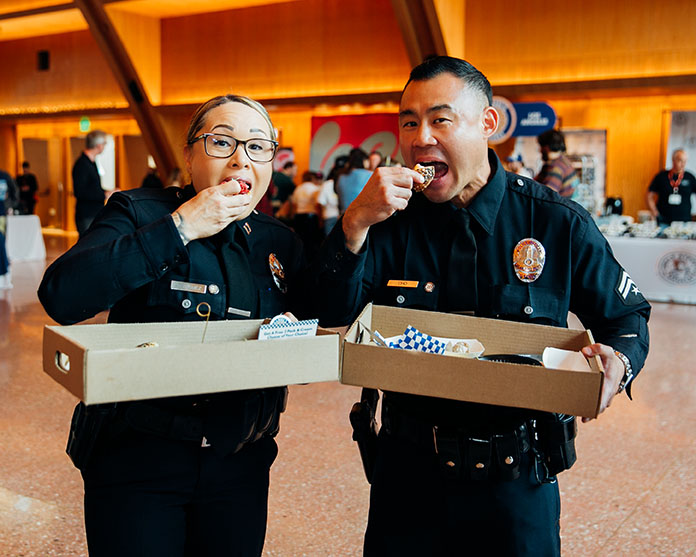
A pair of police officers enjoy some of the culinary deliciousness offered up at the inaugural BagelFest West. Courtesy of BagelFest
“Today, we recognized the best bagel makers West of the Rockies,” Silverman said. “This group was selected from scores of applicants, with only 16% making the cut. They were chosen not just for the quality of their food, but for their creativity, character, and contributions to their communities. They are trailblazers dispelling the myth that ‘it’s the water’ that makes bagels great and proving what has always been the truth: it’s the people, the talent and their dedication.”
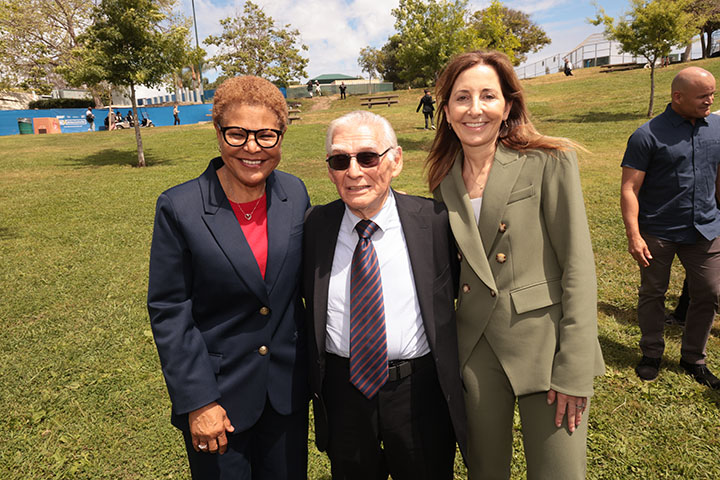
From left: Los Angeles Mayor Karen Bass, Holocaust survivor Henry Slucki and Holocaust Museum CEO Beth Kean at the museum’s Yom HaShoah commemoration, held April 12 in Pan Pacific Park. Slucki and his granddaughter, Jenna Perlmutter, participated in a multi-generational conversation as part of the program. Photo by Al Seib, Holocaust Museum LA (Al Seib / Al Seib Holocaust Museum LA)
In honor of Yom HaShoah, Holocaust Museum LA held its annual Holocaust Remembrance Day commemoration, honoring survivors and those who perished.
The theme of the event, held April 12 at Pan Pacific Park, was “Remembrance and Responsibility.”
Program participants included U.S. Rep. Laura Friedman; Beverly Hills Mayor Sharona Nazarian; Pasadena Jewish Temple and Center Rabbi Ratner; and survivor Henri Slucki as well as his granddaughter, Jenna Perlmutter, who appeared in conversation with CNN anchor Elex Michaelson. Additionally, violinist Ilana Kleiman performed.
I have been both the recipient of and deliverer of the words, “But it’s true!” A phrase attached to a litany of gossip regarding another human being. Just because the information may be fact, not fallacy, we think we’re in the right to spread the news.
Maimonides is clear. Even if the information is true, one who speaks disparagingly about another is guilty of lashon hara, evil speech. Maimonides cautions, in some ways, that it is worse to be on the receiving end, accepting one’s gossip with a listening ear. The Vilna Gaon goes a step further in warning that when we neglect to protect our mouths and ears from gossip, they are damaged in the process of lashon hara. Whether that is acclimating the lips to spew more harm or allowing the ears to grow lazy in their listening, our self-control is debilitated every time.
The soul’s strength is tested in more ways than one. We may not think we’re the ones who gossip. The “truth” feels like good enough reason to spread tales from one person to the next. But as we do, we hurt the subject of the gossip, the receiver, and ultimately, ourselves.
May the words we offer each other lift and elevate our spirits. Spreading words of love, creating worlds of peace.
Shabbat Shalom
Rabbi Nicole Guzik is senior rabbi at Sinai Temple. She can be reached at her Facebook page at Rabbi Nicole Guzik or on Instagram @rabbiguzik. For more writings, visit Rabbi Guzik’s blog section from Sinai Temple’s website.
On a recent trip to Muir Woods National Monument, our family stood before a fallen redwood that had lived for more than a thousand years.
Let that sink in…. A thousand years.
It’s almost impossible to comprehend. This one living being stood rooted while empires rose and fell, while languages were born and forgotten, while generations came and went.
Within its rings are not just markers of time, but witnesses to history—each layer a season, each scar a story.
Standing there, it’s easy to feel how brief our own lives are by comparison.
Fleeting. Fragile. A moment in time.
But perhaps that’s not the point.
Because while we do not measure our lives in centuries. The question is not how long we live, but how deeply we live—what we leave behind in the hearts of others.
The redwood endures not because it strives for forever, but because it grows faithfully – year by year.
So what would it mean for us to live that way?
To root ourselves in what matters.
To widen the circle of compassion and care.
To leave a soul-print that outlasts us.
Our days may be brief—but our impact doesn’t have to be.
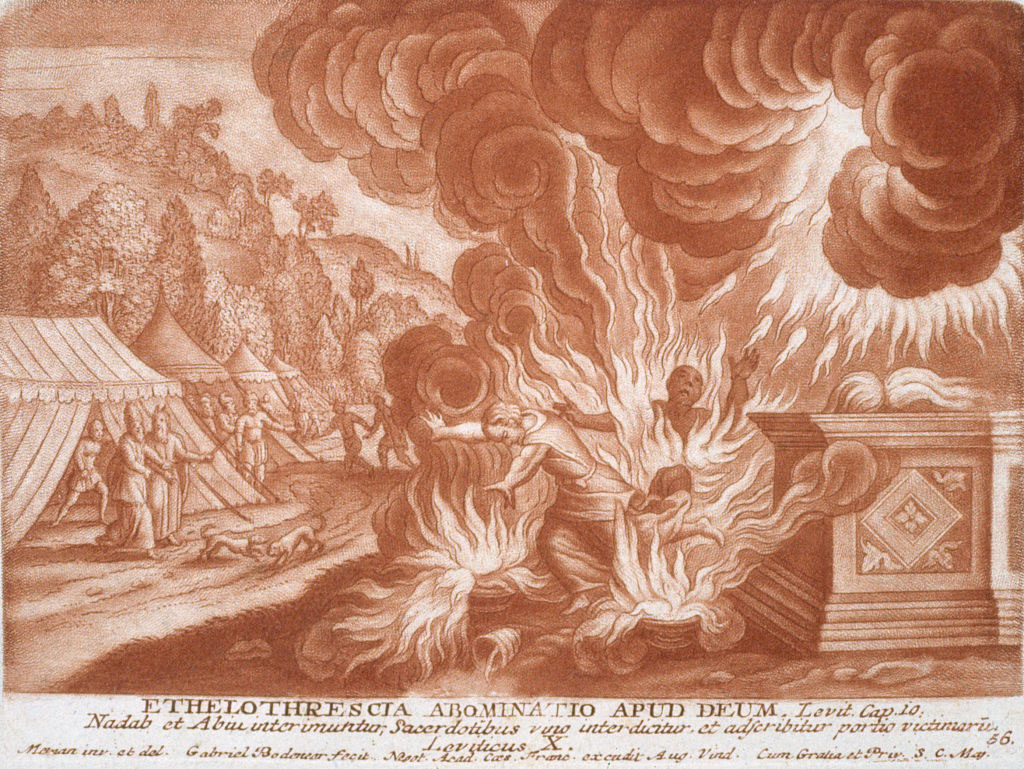
In Parashat Shemini, we’re told that Nadab and Abihu
each offered to God what the Torah cryptically describes as “alien fire,”
perhaps denoting Jews whom Shmuel Haqatan disparaged in a preview
of an unresolved debate that has proved to be disastrously dire,
prayerfully opposing followers of Jesus, whose views in this verse suggest
caused him to label as minim Jews whose beliefs he found distressing.
This word shares the letters that iterate Shemini, this link inspiring him to contest
in an addition to the Shemonah Esrei — Eighteen-Blessing — prayer, the right of renegades to any divine blessing.
Silence was the response of Aaron to his two sons’ divinely-directed deaths, perhaps because his grief
was as far beyond relief
as was fiery confusion caused by their alienated belief,
an ironical Aaronic aberration
preceding an abysmal error in the nation.
Ber. 28b-29a ascribes the composition of the blessing against minim, generally assumed to be Jewish Christians, to Shmuel HaQatan, a contemporary of Rabban Gamliel. BBer 28b-29a says that the reason Shmuel Haqatan was considered suitable for this task adam she-yodea letaken birkhat hatsedukim, someone who knows who to order to the blessings of (against) the Sadducees. Perhaps the reason he was considered suitable for this task is because of his statement in Avot 4:19:
שמואל הקטן אומר (משלי כד) בנפול אויבך אל תשמח ובכשלו אל יגל לבך פן יראה ה’ ורע בעיניו והשיב מעליואפו
Shmuel Haqatan says: “Do not rejoice when your enemy falls, and let not your heart be glad when your enemy stumbles; Lest God see it, and be displeased, and God turn away God’s wrath from your enemy.
This quotes Prov. 24:17-18, which is Shmuel Haqatan’s prooftext for what R. Shimon ben Elazar taught in the previous Mishnah: (Avot 4:18):
Rabbi Shimon ben Elazar taught “Do not placate your fellow in the moment of his anger; do not comfort him while his dead lies before him; do not question him [about the details] of his vow at the moment he makes it; and do not seek to see him at the time of his degradation.”
On the one hand Shmuel Haqatan was a suitable candidate for writing the Birkat HaMinim because he understood that while it is right that the Jewish Christians be castigated, he also realized that anyone who does castigate them should not rejoice in their downfall. In addition, the Birkat HaMinim is actually a fulfillment of the two verses in Proverbs that precede the one he quoted in Avot 4:19, since they follow the blessing for the tsaddiqim, exhorting the wicked people not to disturb them. I cite below these two verses, plus the two that Shmuel Haqatan quotes:
טו אַל-תֶּאֱרֹב רָשָׁע, לִנְוֵה צַדִּיק; אַל-תְּשַׁדֵּד רִבְצוֹ.
15 Lie not in wait, O wicked man, against the dwelling of the righteous, spoil not his resting-place;
טז כִּי שֶׁבַע, יִפּוֹל צַדִּיק וָקָם; וּרְשָׁעִים, יִכָּשְׁלוּ בְרָעָה.
16 For a righteous man falleth seven times, and riseth up again, but the wicked stumble under adversity.
יז בִּנְפֹל אויביך (אוֹיִבְךָ), אַל-תִּשְׂמָח; וּבִכָּשְׁלוֹ, אַל-יָגֵל לִבֶּךָ.
17 Rejoice not when thine enemy falleth, and let not thy heart be glad when he stumbleth;
יח פֶּן-יִרְאֶה יְהוָה, וְרַע בְּעֵינָיו; וְהֵשִׁיב מֵעָלָיו אַפּוֹ.
18 Lest the LORD see it, and it displease Him, and He turn away His wrath from him. {P}
Gershon Hepner is a poet who has written over 25,000 poems on subjects ranging from music to literature, politics to Torah. He grew up in England and moved to Los Angeles in 1976. Using his varied interests and experiences, he has authored dozens of papers in medical and academic journals, and authored “Legal Friction: Law, Narrative, and Identity Politics in Biblical Israel.” He can be reached at gershonhepner@gmail.com.
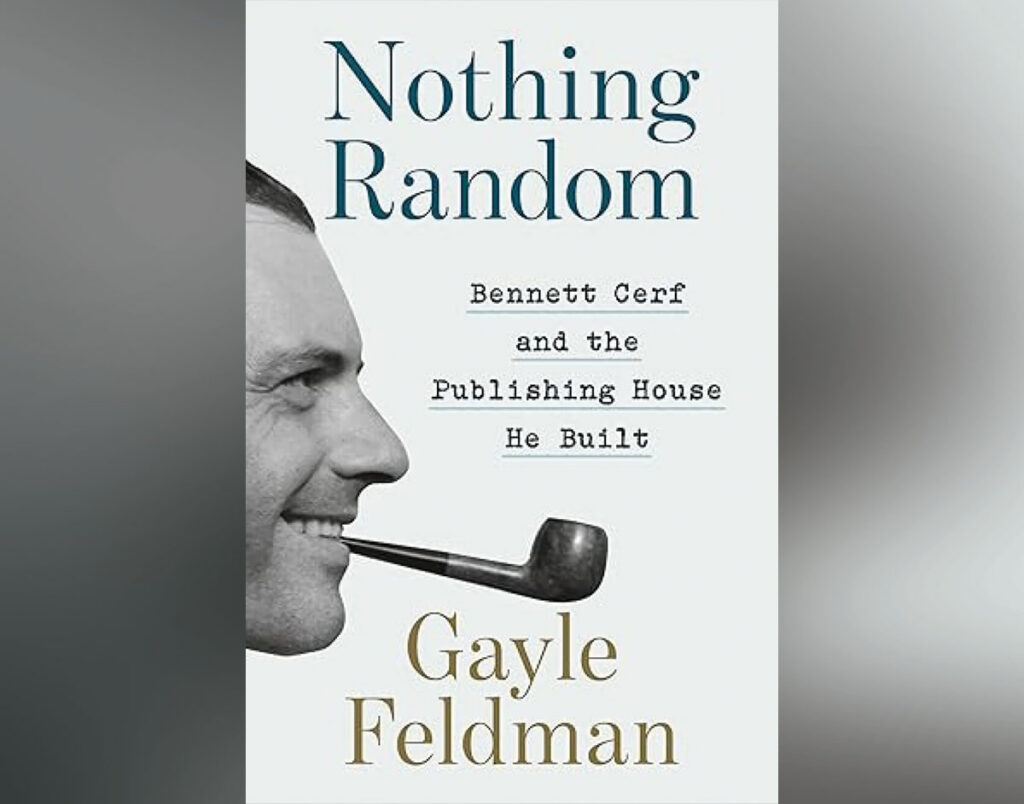
For those of a certain age, the name Bennett Cerf brings up fading memories of an owlish, avuncular man you’d see on reruns of “What’s My Line.” For many, that was all he was: funny, sophisticated and one of television’s first celebrities. In retrospect, he seems like an early incarnation of someone who was famous for being famous.
He was much more than that: As the publisher and co-founder of Random House, he was one of the most important figures in 20th-century culture and literature, publishing books by Robert Penn Warren, Gertrude Stein, W. H. Auden, Philip Roth, Ted Geisel (aka Dr. Seuss), William Faulkner and Ayn Rand, to name but a few. More importantly, Cerf and Random House took the U.S. Government to court over its classification of James Joyce’s “Ulysses” as obscene; their victory is considered a landmark First Amendment case.
In “Nothing Random: Bennett Cerf and the Publishing House He Built,” Gayle Feldman aims to present a complete portrait of Cerf; as she writes in the prologue, Cerf was “a paradox … the famous, fun loving, ultimately fleeting TV personality and the driven, dead-serious publisher-for-the ages.” She wants to give a full picture of “the only U.S. publisher ever to be a truly public man.”
And “Nothing Random” is a hefty biography; including acknowledgements, endnotes and an index, the book weighs in at a Robert Caro-linian 1,032 pages. But Cerf is such a fascinating character, and Feldman such a graceful writer, that your interest never flags.
Cerf was indefatigable, endlessly curious and the possessor of a massive Rolodex. He was a figure that spanned high and low culture; he published Pulitzer Prize-winning books while writing a series of joke books — 21, if we’re being precise. Cerf was an inveterate punster — the more they made you groan the better. You could call him the father of dad jokes.
He was not the kind of publisher that got involved in the granular work of a book; although he was a deep and sensitive reader, he was not someone who took a book apart, line by line. He loved authors and saw his job as having their backs and marketing their books as effectively as possible. The idea that literary quality could lead to “smash hits” was not universally held, but Feldman writes that Cerf “was speaking from instincts that made others liken him to a theater impresario or studio boss. Appreciating quality and popularity, he put great effort into popularizing.”
And he lived something of a charmed life. The most important thing, Feldman writes, “was never to be bored.” Cerf had an active social life outside of Random House.He was married, briefly, to actress Sylvia Sidney; his second wife, Phyllis (nicknamed “Thrup”) was the niece of Ginger Rogers. “Thrup” was the perfect partner, both at home and at work; she worked closely with Dr. Seuss and was the first publisher of Random’s children’s imprint, Beginner Books. To give you an idea of how well connected Cerf was, “Nothing Random” includes cameo appearances by Black Panther leader Eldridge Cleaver, an “interesting young producer” for daytime talk show host Mike Douglas, and future Fox News founder Roger Ailes. His social circle included members of the Algonquin Round Table, playwright Moss Hart and his wife, Kitty Carlisle, and the Marx Brothers. Edna Ferber said that the Cerfs gave “the nicest dinner parties in New York City.”
The book is filled with wonderful literary gossip and stories: A pugnacious John O’Hara trying to butter up a courtly but sozzled William Faulkner; the work behind the publication of “Atlas Shrugged” and Cerf’s unlikely friendship with the book’s author, Ayn Rand; and the time a newly signed author was invited to one of the Cerfs’ dinners. “The guest seemed perhaps 12 years old: short, terribly slim, with enormous eyes and a very high voice. [The butler] mounted the stairs in search of his mistress. ‘Mrs. Cerf, are you expecting a child for dinner?,’ he discretely enquired. [She] was puzzled, but Bennett overheard and responded, ‘Oh, that’s Truman Capote.’” And at a private lunch Cerf set up between Gertrude Stein and leading critic Alexander Woollcott Stein disagreed with the critic several times. “People don’t dispute Woollcott,” he informed her. “I’m not people,” came the reply. “I’m Gertrude Stein.”
There are also wonderful anecdotes about the famous in the Cerfs’ social circle, including the time when Cerf and George Gershwin sailed to Nassau, the Bahamas. At the hotel, Gershwin “banged out ‘Rhapsody in Blue’” at 7 a.m. to impress a girl he’d met and became “indignant” when the manager asked him to stop.
The other story Feldman wants to tell is how Cerf and other Jewish publishers including Alfred A. Knopf, Richard Simon and Max Schuster, Henry Guinzburg of Viking Press and Horace Liveright started to have their books on bookshelves beside the WASPy Duttons, Doubledays and Little, Browns. But that didn’t protect them from antisemitism – they still couldn’t belong to the Publisher’s Lunch Club, so they started the rival Book Table (much like Los Angeles’ Jewish bankers, merchants and studio moguls started the Hillcrest Country Club). Publishing was the kind of industry where a Jewish editor was advised to take a job at Harper and Row because “it’s a good time for Harper to have a Jewish editor.”
Cerf was not a religious man, but he was concerned about the safety of his Jewish authors in Europe, helping some of them emigrate to the U.S. A trip to mandatory Palestine in 1934 awakened his Jewish pride. While waiting to get a haircut at the King David Hotel in Jerusalem, he watched the barber who spoke German when a German was in his chair, French when a Frenchman took his place. When Cerf sat down, the barber spoke perfect English. When Cerf asked the barber’s nationality, he told him “I am a Jew.” Cerf “never forgot his joy ‘at the man saying [it] so proudly.’” Two years later, working with Time magazine, Cerf published “Jews in America,” a book he hoped would “squelch … a lot of the loose talk about ‘the Jewish problem.’”
Cerf’s Judaism only intersected with his business twice. In 1946, Random House was readying an anthology of modern poetry for publication, when he objected to “printing a single line” of the rabid antisemite Ezra Pound “in any new volume that bore [our] imprint,” a position that caused no small controversary. He also refused to publish Rand’s “The Fascist New Frontier,” a typically shrill tract that compared John F. Kennedy to Hitler.
Cerf was also an innovator in business. Random was one of the first publishers to take an active interest in selling the paperback reprint rights as well as film and TV rights. In 1959, it became one of the first publishers to become a publicly traded company, which gave the company a cash infusion to grow, including acquiring Knopf (the chapter on Alfred Knopf and his wife and parter Blanche is fascinating) and other imprints. It also led to Cerf selling Random House to RCA in 1965, a decision that he came to regret. He was forced out of the company he started in 1970, and died a year later
If “Nothing Random” flags as Cerf ages, the book’s epilogue turns elegiac. Feldman recounts Random House’s sale from one conglomerate to the next, until it is merged with Penguin to form Penguin Random House. She’s nostalgic for the time when publishing was a gentleman’s business and deals could be made on a handshake. Most damning, the chapter does not reference a single author, something Cerf would find unfathomable.
“Nothing Random” should appeal to readers interested in the publishing world and mid-century American culture, and a fitting memorial to its larger-than-life subject.
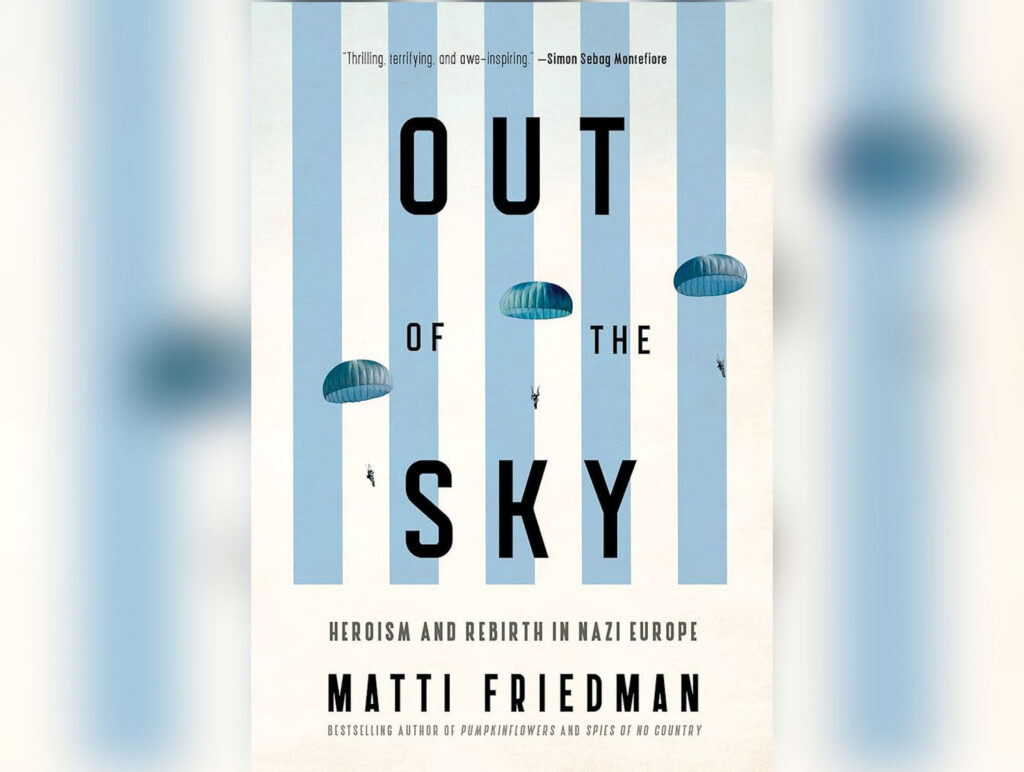
Hannah Senesh occupies a unique place in Israeli history and memory. Only 19 years old on the eve of World War II, she left her hometown of Budapest to build the land of Israel with her young Zionist peers. At 23, she made the inconceivable choice to parachute back into Nazi-occupied Europe. The mission ultimately failed in its stated purpose and resulted in Senesh’s execution. But it left the fledgling Jewish State with a national hero, whose poetry and diary entries still reverberate today. Senesh wasn’t alone, she was one among a small group of Jewish members of the yishuv who donned British army uniforms in an implausible bid to try to save Jewish lives from the German killing machine, often their own families included. A few of these figures, such as Enzo Sereni and Haviva Reik, also entered the national consciousness, with streets and settlements named in their honor. Others are less well-known. For a story that is this iconic, one would imagine that its details would be more or less widely understood. Yet as Matti Friedman demonstrates in his riveting new book “Out of the Sky,” one of Israel’s greatest legends is also riddled with mysteries and open questions.
The heroic operation was the result of a collaboration between the fledgling Jewish army, the Haganah and British intelligence. The idea, at least as the British understood it, was for a group of Jewish men and women, almost all of them recent refugees from Europe, to join the British army and leverage their skill in their native languages in order to assist British POWs and local resistance fighters behind enemy lines. On the Jewish end, motivations were more multifaceted. The Jewish conscripts sought British military training, which would help them when the time came for their own inevitable war of independence. Even more so, they desperately wanted to try to help the Jewish communities of Europe in some way. A total of 250 men and women were recruited to take part in this unusual mission, but only 37 of them completed the training. Of this number, 12 were captured and seven did not make it home.
Friedman lays out the extent to which this improbable mission, rooted in the loftiest ideals, never really had a chance of succeeding. Firstly, by the time it took place in 1944, most Jews in Europe had already been murdered. No allied powers, including the British commanders overseeing this secret mission, seemed to prioritize saving their lives. Even the safety of the Jewish volunteers was not viewed as urgent. Enzo Sereni, the brilliant Italian Labor Zionist and polymath, who Ben-Gurion tried to prevent from jumping because “there wasn’t another man like him,” was carelessly dropped atop a German army installation in Northern Italy.As Friedman notes in an interesting aside, the Mossad unit operating out of Istanbul at the time had been infiltrated by German double agents, who likely knew about the parachutists’ missions before they even landed.
A visitor could walk through the entire Hannah Senesh House in Sdot Yam — a beautifully renovated museum in the kibbutz where she lived for two years before setting out on her perilous mission — without seeing any mention of a seemingly important fact: that her mission was doomed from the start. Yet Friedman’s aim is not to diminish Senesh’s extraordinary bravery, or that of her fellow operatives. Rather, he seeks to understand their courage in a new light.
In recent years, Friedman has become one of the most compelling English-language chroniclers of Israeli history and society. What distinguishes his work — whether he is examining the brilliant letters of a young Israeli soldier on a Lebanese outpost or recounting Leonard Cohen’s sojourn in Israel after the Yom Kippur War — is his tendency to frame Israel’s turbulent history through a literary lens. While the canon of modern Hebrew wartime literature remains relatively sparse — perhaps because most writers keep their distance from the battlefield — Israel has never lacked for fighters with poetic souls in the state’s early years or today.
Throughout the book, Friedman explores the intellectual worlds of his unusually thoughtful protagonists, suggesting that “if they showed up at a military recruiting office now, they’d probably be turned away.” Senesh, the daughter of a well-known Hungarian-Jewish playwright, dreamed of following in her father’s footsteps and wrote poems of startling quality as early as age 15. Sereni held a Ph.D. in philosophy from the University of Rome. Friedman recounts how, in addition to having already written a novel and novella, he dreamed of writing a great Italian novel which would depict the conflicts and controversies of his time through the lens of his own Jewish family.
In this sense both Senesh and Sereni follow in the path of other great Zionist leaders, like Herzl and Jabotinsky, who began their careers as journalists and writers of fiction, eventually putting aside their universalistic literary ambitions for the more particularistic cause of Jewish sovereignty. Friedman makes the terrific observation that this is no coincidence: “To be a Zionist in 1944, or indeed at any point before the state of Israel is created, requires tremendous imagination, which is why the movement draws mainly the literary and the desperate.”
Part of the book’s premise is that the exquisite literary sensibilities of these proto-Israeli heroes helps explain why they made the jump. Friedman writes: “The parachutists aren’t commandos. They’re storytellers. They’ve been sent to write, with their lives, a Zionist story about the war – a story that will lead others not to despair but to action.” Senesh’s military achievements may have been miniscule – hardly any time passed from the beginning of her mission until her execution in a Hungarian prison, only three months before liberation.
Yet we remember Senesh because of her literary achievements: among them the diary she wrote vividly portraying her transition from a precocious, assimilated 13-year-old girl into a fervent Zionist activist. At every major juncture in her short life Senesh seemed to find the time to quickly craft a phenomenal poem. She handed her fellow fighter “blessed is the match consumed in kindling flame” right before entering occupied Hungary. Shortly before her execution she managed to pen a short lyric poem: “I gambled on what mattered most/The dice were cast. I lost.” While Senesh failed in saving other Jews, and even herself, she succeeded in her larger objective. As Friedman summarizes it: “The mission isn’t military, it’s literary, and she’s the best writer.”
In writing “Out of the Sky” — a book equally about a remarkable episode in history as it is the act of crafting and telling stories — Friedman certainly crafts his own. While many fascinating and heretofore little-known stories about Senesh and her fellow parachuters make it into the book, others do not. Friedman leans toward a portrait of Senesh as a clever, cosmopolitan European. He reminds us of her youth and her theatrical family. In her precocious diary entries, Zionism feels like a role she has chosen to play. He clearly admires her heroism but does not exaggerate it. Yet alternative accounts remain.
In his introduction to the first edition of Senesh’s collected writings, Abba Eban wrote, “all the definitions of giant courage come together in Senesh’s life.” Joel Palgi, another parachutist who followed a similar path to Senesh but inexplicably managed to survive, wrote about her in his memoirs as a force of nature, the undisputed leader of their group, fiercely admired by fellow resistance comrades as she transformed from a poet into a fighter. Even the Gestapo, in Palgi’s telling, were in awe of Senesh. He describes the sadistic prison warden who used to visit Senesh’s cell every day to argue about politics. Senesh’s mother Katherine, in her own memoir, describes the mesmerizing power Senesh held over guards and fellow prisoners alike. Children gravitated toward her, fellow prisoners drew strength from Senesh’s whispered encouragement, her Zionist education campaign, and her ingenious secret broadcasts from the window of her cell. One SS guard told Senesh, “I’ve never known a woman as brave as you.”
“Out of the Sky” does not contradict these remarkable testimonies, which contain a whiff of hagiography, though surely have some grounding in truth. It’s not really a book about superheroes, unusual people with uniquely phenomenal qualities who changed the course of history. Rather, it’s a book about regular people, highly intelligent and talented to be sure, who met the challenges of their age with bravery and foresight.What distinguished them as heroes was that they understood, both in their lives and their deaths, they could contribute to the writing of a story much larger than themselves.
Sarah Rindner is a writer and educator who lives in Israel. For more of her work, follow her on Substack: bookofbooks.substack.com
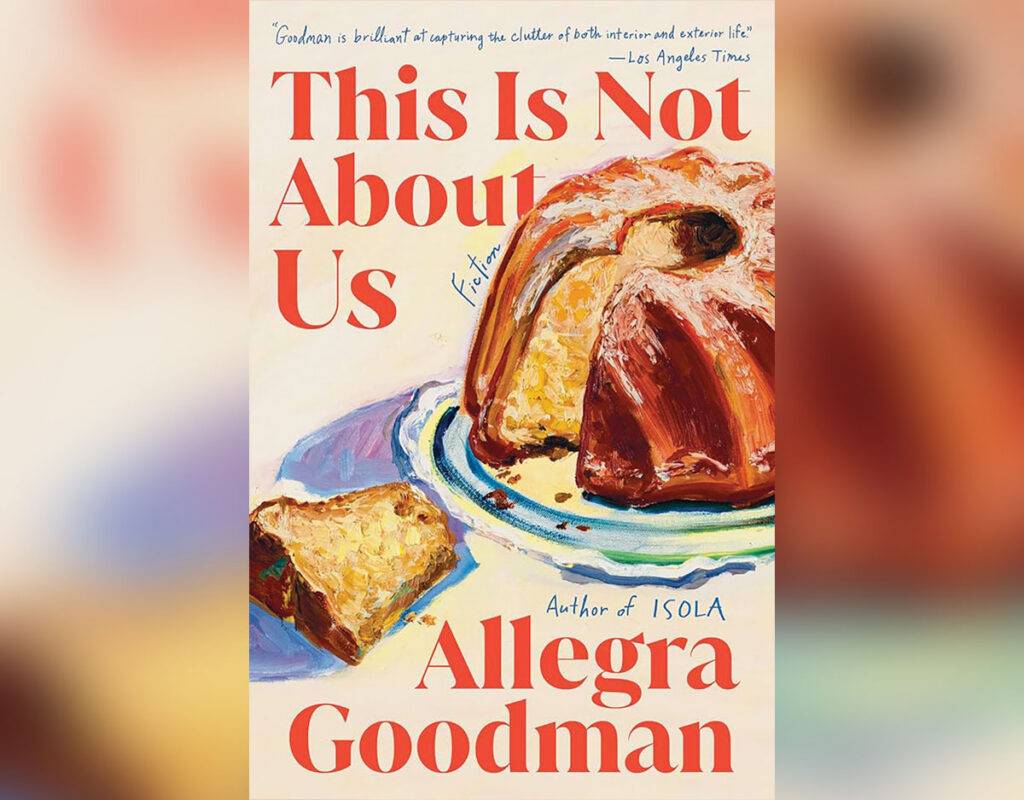
Allegra Goodman’s new book, “This Is Not About Us,” introduces us to three generations of the Rubenstein family, whose members deal with life’s problems and opportunities each in their own ways: divorce and midlife dating; parenting anxious or seemingly directionless children; adult sibling rivalries, surviving shared Jewish holidays; and feuding matriarchs.
The book is not a single narrative but a novel of interconnected stories, each laced with irony, poignancy and hilarity. In the opening story, “Apple Cake,” elderly sisters Helen and Sylvia dutifully visit their dying youngest sister, 74-year-old Jeanne, on home hospice in Boston. The nurses expect Jeanne to pass away within a few days, but she hangs on tenaciously and awkwardly, offering acerbic observations.
When Sylvia points out her latest beautiful floral arrangements, “Jeanne made a face. The flowers depressed her, especially those already wilting. When she looked at the mums, she felt she wasn’t dying fast enough.” When her sons ask about her final wishes, she tells one of them, “Stop pacing.”
As the family waits for Jeanne to make her final departure, Helen and Sylvia argue over cremation versus burial (Jeanne has given mixed signals), with Helen foisting an unwelcome visit from a rabbi to speak to Jeanne. But an even more ferocious duel erupts between the sisters: which of them bakes the better apple cake? Eighty-year-old Helen and 78-year-old Sylvia engage in a battle of flour, sugar and mixing bowls, each relentlessly baking at night and bringing sweets for the family the next day. Helen’s pecan bars can crack teeth and her brownies are quietly fobbed off on the help. Sylvia is the star baker, and her apple cake is devoured with gusto. The rivalry gets so out of hand that both sisters are made to promise not to bring homemade apple cake to the shiva house under any circumstances. They both agree. One breaks her promise. They stop speaking for years.
Many stories focus on timeless issues, such as relationships between and among parents and children, siblings, and marriage partners. Others focus on current issues, such as having to pivot professionally in midlife. In the story “$,” Steve is laid off after 25 years as a textbook editor and interviews with a tattooed, 20-something headhunter who specializes in “creatives.” Steve says, “I’m not sure I like being an adjective being turned into a noun.”
Several stories show how a contemporary Jewish family engages with Jewish ritual and practice. In the story “Redemption Song,” Jeanne’s sons Dan and Steve and their wives host Passover seders on consecutive evenings. Neither son enjoys the holiday because their father had been a survivor, “and he’d ruined the holiday because it meant so much to him.” Dan’s response has been to become a “control freak” about kashruth during Passover, though he is not kosher the rest of the year. Nor can he stand the progressive politics at Steve’s egalitarian seder, run by his wife, Andrea: “He hated off-road Judaism. The unscripted seder. The personal connection. Although he felt oppressed by the old rituals, he preferred them, which was why he brought his own Haggadah.”
Ironically, it is Dan and his wife, Melanie, who defer to their vegan daughter, Phoebe, and serve a plant-based moussaka for the seder meal, leaving everyone still hungry afterward. Phoebe also frets openly about cultural appropriation while others sing “Go down, Moses …” at her uncle and aunt’s house. This story is a tour de force, capturing the Jewish yearning to connect with tradition while also insisting on putting a modern political stamp on the Haggadah. It also touches on how children of survivors interpret and express their inherited trauma.
Another favorite story was “Nutcracker,” where Debra worries about the unforgiving standards at the dance academy where her two daughters, ages 12 and 16, are rehearsing for the annual “Nutcracker” performance. The academy is run by the aptly named Nastia, a tiny, fierce Russian cracking the whip and making the girls cry over the slightest error in form. Debra desperately wants to protect her girls from Nastia’s “abuse” (Nastia publicly yells at her older daughter, “No bread! Salad salad salad!”), yet her girls adamantly insist on staying at the academy and in the show. They find Nastia “thrilling — scary but awesome,” recognizing that they are being pushed toward excellence and willing to withstand even humiliation to shine on stage.
As a feminist, Debra thinks, “Mothering. Caregiving. It sucked resistance out of you. You woke up with a start and realized your daughters wanted to be princesses onstage — and you were financing gauze skirts and rhinestone crowns, even though you used to read them ‘Good Night Stories for Rebel Girls.’”
Goodman’s previous novels include “The Family Moscowitz,” which also focused on a multigenerational Jewish family, as well as
“Isola: A Novel”, “Sam” and “Kaaterskill Falls,” which explored life in a Jewish bungalow community in upstate New York during the 1970s. “This Is Not About Us” is a delightful, splendidly drawn book written in equal measure with profound insights about the human condition and the modern Jewish experience. It is a book I will be eager to read again.
Judy Gruen is the author of the memoir “Bylines and Blessings” and several other books, as well as a writing coach and editor, see more at judygruen.com
Frederick Biermann willnever forget that day in 1938. He was seven and a half years old, standing on his family’s veranda in an upscale neighborhood in Vienna, Austria. It was the perfect spot to watch the Anschluss parade. Thousands of people lined both sides of the street, waving flags and cheering as Adolf Hitler’s vehicle passed. He stood in an open Mercedes, saluting the crowd.
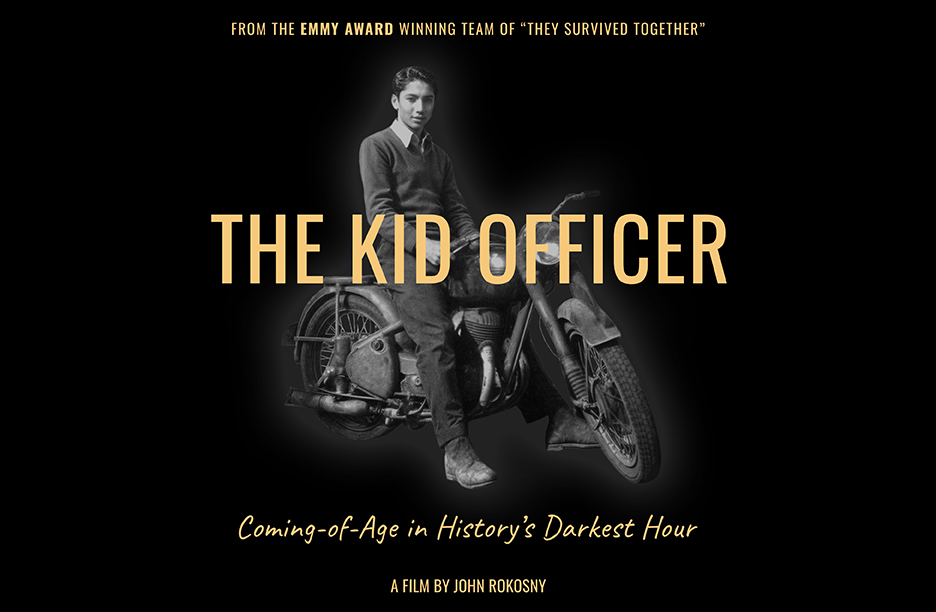
“It was all so exciting. It was like the Messiah had come. It looked like fun — I wanted to be part of it,” said Biermann in John Rokosny’s documentary, “The Kid Officer.”
The following morning, he discovered what it all really meant for him as a Jewish child. The blonde girl he usually walked to school with ignored him and passed right by him like he didn’t exist. Then at school, his teacher grabbed him by the arm and pushed him into a closet where the brooms were kept. She left him there until the end of the day, then opened the door and told him: “Get lost!”
Biermann stopped going to school after that, and life was never the same again.
Months later, the family left everything behind, just before Kristallnacht. Not wanting to arouse suspicion, they departed with only the clothes they were wearing. Biermann’s mother, Leah, used her jewelry to pay the ticket inspector in lieu of tickets as the family made their way to Paris. They remained there until they received immigration certificates to both America and Palestine — on the same day. They chose Palestine.
After eight months in Paris, the family boarded a ship, once again paying with the little jewelry they had left to secure a cabin at the bottom of the vessel.
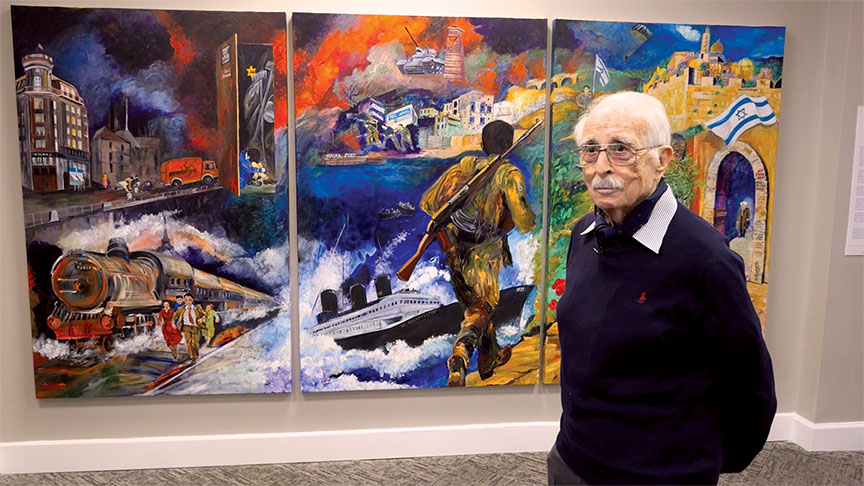
In the film, Biermann, now 95, reflects on his life, a coming-of-age story shaped by war and the challenges of starting over in a new country. He recalls his first best friend in Israel, an Arab boy named Zohair, and playing marbles with Hussein bin Talal al-Hashimi — a young Muslim boy who would, at 17, become King Hussein of Jordan. When he was 15, Biermann joined the Haganah, the primary Jewish defense force in pre-state Israel that evolved into the Israel Defense Forces. It was there that he met and befriended Ariel (Arik) Scheinerman.
Biermann recalled how he and Arik went to meet Prime Minister David Ben-Gurion in 1948. Ben-Gurion asked the two young men to adopt Hebrew last names. Biermann refused and chose to keep the name his father had given him. Scheinerman, however, changed his last name to Sharon. Years later, Ariel Sharon would serve as Israel’s prime minister from 2001 to 2006.
Biermann explained he decided to join the Haganah after witnessing how British soldiers turned away Jewish refugees. He said it was the first time he felt free. “I joined the underground and learned how to fight back.”
Biermann secretly trained while still living at home. During one British curfew search, he hid a machine gun beside his sister in bed, assuming soldiers would not disturb her. “They came into the apartment, looked around,” he said. “I got away with it.”
His parents discovered his involvement in November 1947, when he took part in the defense of Tal Amal — his first battle. Soon after, he joined the newly formed Israel Defense Forces, serving in the Carmeli Brigade.
On May 14, 1948, he listened from a foxhole in the Galilee as the State of Israel was declared. “I felt proud. I felt great,” he said. But the moment was brief. He went on to fight in multiple battles in northern Israel and was wounded at Mishmar Yarden.
Biermann’s remarkable story was unknown even to his family and friends. His three children had no idea what a fascinating life he had led. It wasn’t until his grandson began searching for a bar mitzvah project and his rabbi suggested he ask his grandfather about his life. So his grandson approached him, asking if he could share stories from his childhood — and that’s how the story began to unfold.
Rokosny first heard about Biermann through his work with the Shoah Foundation, after they saw his Emmy Award-winning documentary, “They Survived Together.” He and his partner, Adriette Redman, conducted about 80 interviews with Holocaust survivors over the past two and a half years.
Fred Biermann and John Rokosny
Speaking from his home on the Jersey Shore, Rokosny said that spending extended time with Biermann — who also lives in New Jersey — allowed them to meet often over the course of a year and a half, sharing meals, drinking coffee, and talking for hours. The stories that emerged, he said, were astonishing in both depth and detail.
“We started filming when he was 93, and I was amazed by his memory. I think that’s part of the military mindset he developed. He cares about what’s going on around him, about the people he’s with, and he really pays attention,” said Rokosny.
The 72-minute film includes archival material from prewar Vienna, illustrating the rich life Austrian Jews once enjoyed. There was a coffee house where Biermann’s parents would sit, enjoy coffee and cake, read the newspaper or meet friends. They went to the theater, socialized freely and no one wondered whether they were Jewish or Christian — they were simply Austrians.
Rokosny uses animation throughout the film to bring parts of the story to life. These sequences add a visual richness to the storytelling, helping to bridge gaps in the historical record and making Biermann’s recollections feel more vivid.
Biermann’s father, Marcus, was a captain in the Austrian army. His best friend was Professor Falkenberg.
“I called him uncle,” said Biermann. “The day after the Anschluss, he came over in a Nazi uniform. He was in charge of the entire area. He put a swastika on the door and his name on it so they would leave us alone.” Falkenberg’s wife, a close friend of Leah Biermann, would warn her when it was too dangerous to go outside and even offered to bring her anything she needed from the store.
As part of his research, Rokosny visited Vienna and saw the house where the family had once lived. It was still standing, having survived the war. The family had the right to reclaim it afterward, but Marcus refused. “I don’t want their blood money,” he said, even though the house was rightfully his. “Fred also went back, hoping to see his old apartment,” Rokosny said. “As he was riding the elevator up, a woman in the elevator looked at him and said, ‘Fred?’ It turned out she had been his babysitter. He asked her how she recognized him—he had left when he was eight, and now he was a grown man. She told him it was his eyes—they were exactly the same.”
Rokosny tried to trace Falkenberg’s fate but was unable to find out what had happened to him.
Biermann immigrated to New Jersey in 1952 with $1.25 in his pocket. He studied dentistry, got married and raised a family. He still lives there today.
After completing the film, Rokosny held a private screening for Biermann, who also attended the New York premiere, followed by a screening for his congregation in New Jersey. “He always gets very emotional,” Rokosny said. “At the end of the film, he’s in tears — hugging and kissing us. He is very grateful that we told his story.”
The Los Angeles premiere of the film will take place on Yom Ha’atzmaut (Israeli Independence Day), April 22, at Laemmle Town Center in Encino, followed by a Q&A with director and writer John Rokosny.
Another screening will be held on April 21 at the Museum of Tolerance.