fbpx

November 6, 2025

Rabbis of LA | Rabbi Elchanan Shoff’s Thirst for Knowledge

What sets Rabbi Elchanan Shoff apart from his colleagues and predecessors is his unquenchable desire to find out everything about everything. As a teacher for boys and girls at Valley Torah High School in Valley Village, Shoff has discovered a two-pronged approach that benefits both his students and himself.

“A lot of my job is teaching real material to boys and girls,” said the soft-spoken young rabbi, an LA native who grew up at Rabbi Daniel Lapin’s Shul on the Beach. This year, for example, he taught Tehillim (Psalms) to 10th grade girls. “I make sure I am not just recycling old material, but that I am getting into it myself,” Shoff said. “Much of what I prepare, I don’t wind up sharing with students if it is not at their study level. But it is a rich experience for me because I am trying to continue growing and learning on my own. What I am teaching, hopefully, is an overflow of that.”

The 40-year-old rabbi, a father of six who founded his own Orthodox shul (Beis Knesses) a decade ago in the Pico-Robertson neighborhood, takes an equally creative approach to his writing. He is the author of 10 religious books, some in Hebrew. “I am always sleuthing to find interesting Torah ideas from a tremendous variety of sources,” Rabbi Shoff said. How does he glean a fresh Torah-centric angle from ancient books that have been pored over by some of the brightest Jews ever born? Rabbi Shoff responded immediately: “I like to find things that are just not the average source, and then to research them all the way to the bottom,” he said. But how does he make it fresh? “I am not attempting to be incredibly original,” he said. “Rather, I want to uncover those books that were written and those interesting ideas. When I can link together something that was written in Izmir, Turkey, 250 years ago with something written a couple hundred years before in Poland, to see how all these things are connected, rich and exciting – that is very much my goal.” Those are the targets of his seforim (religious books) in Hebrew and English. “I want to show how rich, beautiful and varied the Torah is,” Rabbi Shoff said.

Trying to make each lesson sound as if it were freshly minted seems like a foolproof barrier against repetition or boredom. “I approach every class differently. I try to approach every student differently, tailoring it to him or her.” His finely tuned teaching philosophy makes boredom illegal. He believes — and tries to think about on an almost daily basis — that when he looks around the room, he thinks about students. “I think this child, even if displaying an obnoxious attitude sometimes, is someone’s whole life. In his or her family, if something goes wrong with that child, or were hurt or in danger, this would shake the foundations of their lives. This is a precious person who matters, is really special. I want my children’s teachers to think that way when they are teaching my children.”

Rabbi Shoff continued: “I really spend a lot of time seeing each student for who he or she is,” he said. “A quiet student, an outgoing student. I try to understand what is going on in their lives. I try to make sure they know that this is somebody who sees you and genuinely cares about you. For me, that orientation is the key for any success I have had with students.”

Where did he learn and master this intense and precise way of teaching? When he was 14 years old, Shoff went away, cross-country, to learn in a Queens, N.Y. yeshiva, Shaarei Torah, before transferring to Yeshiva Ateres Shmuel in Waterbury, Conn. when it opened two years later. “Meyer Yitzchok Fishman was my rebbe at the yeshiva in Waterbury,” Shoff said. “I learned with him almost daily for five years. To this day, I consider him my rabbi. He was the person who did this for me and my friends. He understood who we were. He was demanding but never judgmental, just accepted and loved us for who we were.”

Shoff said that while he has his own personality and methods, they are based on what he learned from Fishman and other educators. “You have to be passionate about what you are teaching,” he said. “You must have substance. Many teachers have those two elements. Without the human element, it is not a complete package. That is the hardest. Since students come from all different backgrounds, they present different challenges.

“That is the common denominator that motivates me most – being around the shul or any other area of Torah teaching. I want to know the name of every kid who comes into my shul. I want to know the people, to be connected to them and to their lives.” All growth, the rabbi maintains, is relationship-based. 

Perhaps surprisingly, Shoff did not think he would be a rabbi. “Until I was in a community in the yeshiva world where being a rabbi is considered an enormously idealistic, valued job, it was not something I had considered,” Shoff said. “Though my parents were very observant, in the world I would have been from, becoming a rabbi in the more Modern Orthodox world is unusual.” The “really talented,” he said, go into finance or business or law or medicine. In the yeshiva universe, the best and brightest stay in learning, become rabbis.

Fast Takes with Rabbi Shoff

Jewish Journal: What is your favorite music?

Rabbi Shoff: I love the last 40 or 50 years of Jewish music – the Miami Boys Choir, Mordechai ben David, Avroham Fri

J.J.: Best book you ever read, outside of the Torah?

RS: The Rambam. The best book in English is “Go My Son” by Chaim Shapiro.

J.J.: Favorite Jewish food?

RS: My bubbe’s matzah balls.

Rabbis of LA | Rabbi Elchanan Shoff’s Thirst for Knowledge Read More »

Holocaust Museum LA, Beit Issie Shapiro Galas Draw Local Leadership

Holocaust Museum LA (HMLA) honored philanthropist, entrepreneur and supermodel Cindy Crawford and Holocaust survivor Ella Mandel, who will be 99 next month, with the “Award of Courage” at the museum’s annual gala on Oct. 28 at the Beverly Wilshire Hotel.

Crawford and Mandel collaborated earlier this year when they posed for “Borrowed Spotlight,” a widely recognized awareness campaign exemplifying the strength of intergenerational advocacy. Crawford uses her platform to raise awareness about antisemitism, and Mandel shares her powerful testimony and messages of hope with students and museum visitors.

“I want to be a voice for light, love and acceptance — for seeing the humanity in one another,” Crawford said in accepting the award. “This museum, and survivors like Ella, remind us where hatred leads when we stop seeing each other as part of the same human story.”

Mandel, who lost her mother, father and two sisters in the Holocaust, said, “‘Never again’ is not just my promise — it must be yours, too. Together, we can make sure that the world remembers, and that the future is safer than the past.”

Jonah Platt, a podcaster, writer, producer and celebrated star of the Broadway classic, “Wicked,” received the inaugural Roz and Abner Goldstine Advocacy Award for his groundbreaking podcast, “Being Jewish with Jonah Platt,” and Marissa Lepor, granddaughter of Holocaust survivors and president of the 3G@HMLA board, received the Jona Goldrich Visionary Award.

“If we aren’t the stewards of survivors’ stories, who will be?” Lepor, managing director at The Sage Group, an investment bank specializing in consumer brands, said, in accepting the award. “If the second, third and fourth generations don’t persistently tell them, who will? The truth is, the burden doesn’t rest solely on descendants — it’s on all of us.”

The gala raised $1.3 million to support the museum’s education programs.

Currently under construction, the museum’s expanded campus — opening in June 2026 — will double its existing footprint and increase visitor capacity to 500,000 visitors annually, including 150,000 students. Permanent exhibits will utilize cutting-edge technology to preserve Holocaust survivor testimonies.


From left: Beit Issie Shapiro CEO Ahmir Lerner; Errol and Pat Fine; Jila Farahi; Soraya Nazarian, vice president of philanthropy at American Friends of Beit Issie Shapiro; and Uri Blackman, chair of American Friends of Beit Issie Shapiro West Coast. Photo by Orly Halevy

Nearly 300 guests gathered at Sinai Temple on Oct. 28 to celebrate Beit Issie Shapiro’s 45 years of groundbreaking work in the field of disabilities. The Israel-based organization, recognized globally for its innovative therapies and inclusive programs, marked the milestone with an emotional and inspiring evening honoring resilience, hope, and human potential.

The program, “Celebrating 45 years of Making the Impossible Possible,” featured a moving testimony from “D,” an IDF soldier who was severely injured in the Swords of Iron War, following Hamas’ Oct. 7 attack, while saving elderly Palestinian civilians under terrorist fire. After months of rehabilitation, Beit Issie’s “Tech for Heroes” program helped “D” regain independence through smart home technology tailored to his needs.

“Beit Issie took the time to really listen and understand my struggles in coming back home,” he said. “Together, we found solutions which have helped me regain independence and focus on being the father and husband I’ve always been.”

His wife received a standing ovation as she described the emotional toll of their journey and the comfort Beit Issie brought to their family. “Beit Issie made our home accessible, but beyond the practical help, they gave us something deeper—a sense of safety, calm, and warmth,” she said.

Community leaders in attendance included American Friends of Beit Issie Shapiro West Coast Chair Uri Blackman, and Rachel Bachar, community affairs director and wife of Consul General of Israel in Los Angeles Israel Bachar. Speaking about her daughter who has Down syndrome, Bachar praised the organization: “Something every parent of a child with disabilities learns quickly is that we cannot walk this road alone,” Bachar said. “Beit Issie creates an environment where children like my daughter can learn, build friendships and experience joy every single day.”

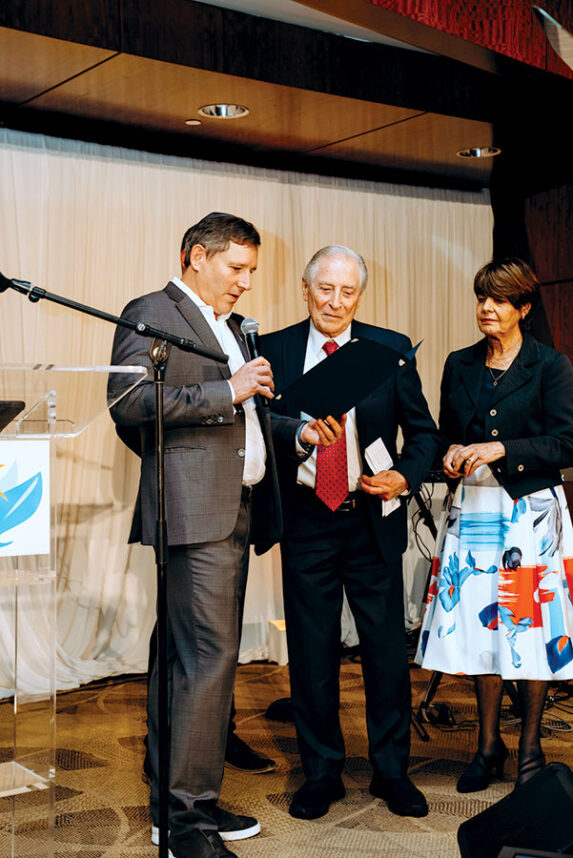
The evening was hosted by Israeli mentalist Aviv Dora, who captivated guests with his performance while highlighting Beit Issie’s global impact. Errol and Pat Fine were honored with the Lifetime of Hope Award, and Jila Farahi received the Visionary of Tomorrow Award for their leadership and dedication to advancing Beit Issie’s mission.

American Friends of Beit Issie Shapiro Board Chair Andrew Fine Presents an Award to Errol and Pat Fine. Courtesy of American Friends of Beit Issie Shapiro

Beit Issie Shapiro CEO Ahmir Lerner thanked supporters and emphasized the organization’s expanded mission since Oct. 7.

“The reality of war pushed us to do more,” Lerner said. “When the war began, we adapted our expertise in helping young children with disabilities speak with the help of technology for wounded soldiers who lost their ability to communicate. That’s how ‘Tech for Heroes’ was born, and it’s grown into a national program delivering smart, personalized solutions to those who need them most.”

By Ayala Or-El, Contributing Writer

Holocaust Museum LA, Beit Issie Shapiro Galas Draw Local Leadership Read More »

One Cannot Live by Law Alone

At the trials of the International Military Tribunal following World War II, many of the defendants argued their actions were legal. In Nazi Germany, Hitler was Germany’s highest authority; his command had the force of law. Following Hitler’s orders meant the defendants were following the laws of Germany. Joachim von Ribbentrop, Hitler’s Minister of Foreign Affairs, explained that “I was always loyal to Hitler, carried through his orders, differed frequently in opinion from him, had serious disputes with him, repeatedly tendered my resignation, but when Hitler gave an order, I always carried out his instructions in accordance with the principles of our authoritarian state.” These arguments became known as the “Nuremberg defense.” The defendants argued that if the laws of Germany sanctioned their actions, they had done nothing wrong.

These arguments were rejected by judges. They demanded that the defendants recognize their larger moral obligations and not hide behind German law.

Law is not identical to morality. One can create a system of laws and use them as tools of oppression, just as Nazi Germany did.

Legalized evil begins in the biblical city of Sodom.

The parallels between the stories of Sodom and the Flood jump out at the reader. Both involve the destruction of a civilization gone bad. In both stories, God saves an individual family from the destruction. In both stories, the survivor drinks too much and their children humiliate them. Linguistic plays reinforce these thematic parallels; several keywords such as ra “evil,” shachet “destruction,” and vayare, “and they saw,” are repeated in both stories.

Meir Sternberg, in his book “The Poetics of Biblical Narrative,” analyzes how the Tanakh often connects two narratives to make them sound like they repeat. He makes a compelling argument that the repetition of these “twice-told tales” is to force the reader to notice the differences.

Sodom and the Flood are twice-told tales. Perhaps the most important difference between them is that the Flood came first. With Sodom, one must realize that God had already destroyed the world because of injustice. So why did the people of Sodom ignore the lessons of the past?

After the Flood, God makes a covenant with Noah. As part of the covenant, murder is forbidden because man is created in the image of God. The Talmud expands on this and says Noah and his descendants received seven laws: establishing courts of judgment, and prohibitions against cursing God, idol worship, forbidden sexual relations, murder, robbery, and tearing a limb from a living animal.

The Talmud further discusses whether God also gave these laws to Adam. Rabbi Yehuda holds the fascinating opinion that Adam received only one commandment, not to worship idols. Rabbi Yehuda’s view raises an obvious question: If there were no commandments at the time, why was the generation of the Flood punished for their sins?

Rabbi Yehuda’s view assumes that man is bound by morality, with or without commands. Our moral intuitions should be authoritative enough. And that is why Adam didn’t need to be commanded.

Yet those moral intuitions failed during the Flood. Because of this, God establishes a covenant of law with Noah after the Flood.

Here we can see the crux of the difference between the Flood and Sodom: The people of Sodom live in an age of law, and are corrupt anyway. One can detect this in the Torah’s language. The text accuses the Flood generation of committing chamas, a general term for injustice. The people of Sodom are the first in the Tanakh to be referred to as having sinned and being sinners; the term “sin” implies the knowledge of a command. When Lot tries to protect his guests, the people of Sodom declare, “This one came to dwell here, and he now wants to act like a judge!” The people of Sodom know of laws and judges, but are evil anyway.

This verse inspires the following remark in the Talmud. “There were four judges in Sodom: Shakrai, (liar) and Shakrurai, (habitual liar) Zayfai, (forger) and Matzlei Dina, (perverter of justice).” Sodom’s judges were not at all like Lot; they simply reinforced the system of corruption.

Sodom had laws but no justice.

Law was the remedy for the sin of the Flood. Yet in Sodom, law fails; and the question is why this is so.

Law was the remedy for the sin of the Flood. Yet in Sodom, law fails; and the question is why this is so.

Here, we must note a strange discrepancy in the Jewish tradition. In the Torah, Sodom is the very epitome of evil. God declares that “the outcry against Sodom and Gomorrah is great, and their sin is very grave.” The Torah had previously noted that “the people of Sodom were exceedingly wicked and sinful against the Lord.” This is why God vows to destroy these cities. The evil of the city is on display when the angels visit Lot’s home. We are told the “men of the city, the men of Sodom, from young to old, every person from every corner” demanded Lot surrender his guests so they could rape them. Sodom is a city of monsters, without exception.

Yet in the Book of Ezekiel (16:49) we get a very different picture. It tells us, “Only this was the sin of your sister Sodom: arrogance. She and her daughters had plenty of bread and untroubled tranquility; yet she did not support the poor and the needy.”

Pirkei Avot offers a similar account. In it we read that “one who says: ‘mine is mine, and yours is yours’ … some say this is the attitude of Sodom.” In the Talmud, a court is empowered to compel people not to act “in the manner of Sodom,” and refuse to be flexible about the terms of a transaction when it has no cost or difficulty. Rav Aharon Lichtenstein offers one contemporary example of the “manner of Sodom”: “A person moves to a new apartment and throws the extra set of keys to his old apartment into the sewer rather than passing them on to the next tenant.”

These texts portray Sodom as callous and selfish. But that is a far cry from the depraved city described in the Torah.

But it is here that we have to bring the two questions together. Law fails in Sodom—not because law is useless, but because one cannot live on law alone. For law to be effective, one needs a society where people care for one another.

For law to be effective, one needs a society where people care for one another.

Sodom lost respect for the law after its people lost all sense of compassion. Ezekiel and Pirkei Avot are referring to the first stage in Sodom’s descent.

The Maharal of Prague explains:

“How great is the sin of one who insists on standing by the strict letter of the law in all matters.

Ultimately, this leads to many evils. For a person who refuses to yield in anything becomes so exacting that he eventually comes to outright theft and violence. At first, he merely refuses to forgo what is his, but in the end, when he sees something that he can plausibly claim as his in any way, he takes it by force. Once he becomes accustomed to this, he descends into violent wrongdoing.

….You can see this in the people of Sodom, whose defining trait was their refusal to yield. As our Sages taught (Avot 5), ‘Mine is mine, and yours is yours’—this is the trait of Sodom … One might ask: Was their only sin that they refused to yield? Surely, Scripture says (Genesis 13) that the people of Sodom were wicked and sinful in every way.

Rather, because they possessed this quality of refusing to yield, it led them to all the other corrupt traits.”

He adds:

 “Such behavior leads to destruction, for God built the world with kindness; therefore, the opposite of kindness—strict judgment without compassion—is the destruction of the world.”

 Sticking to the letter of the law drains humanity of compassion, and without compassion, law is useless. Kindness is part of the world’s DNA; without it, society falls apart.

The story of the Flood teaches that we need law to reinforce our values. The story of Sodom teaches us that law is only effective when a society has values.

One of the critical insights about democracy is that, much like law, it must be built on community. Without interpersonal connections, all the laws regarding who gets chosen to lead are useless. Alexis de Tocqueville, after visiting the United States and England in the 1830s, wrote that in “democratic countries the science of association is the mother of science; the progress of all the rest depends upon the progress it has made … If men are to remain civilized, or to become so, the art of associating together must grow and improve.”

 If we don’t care for each other, democracy won’t work. No matter how many laws we pass, we will fail to become civilized. Like the Nazis, we will become monsters who hide behind legalities.

This is the lesson of Sodom. One cannot live by law alone.


Rabbi Chaim Steinmetz is the Senior Rabbi of Congregation Kehilath Jeshurun in New York.  

One Cannot Live by Law Alone Read More »

The Crisis Hasn’t Passed; It’s Deepening

Jewish and Israeli students at UK universities hid their Magen Davids for fear they would be “targeted” on campus. In Paris, Jewish homes were again marked with Stars of David. And in New York, as antisemitic incidents surged across boroughs, a Jewish mother told me quietly, “I’m absolutely terrified.” Her voice shook not from panic but from exhaustion—the dread of raising children in a world that no longer feels safe for them and existential threats are now very real.

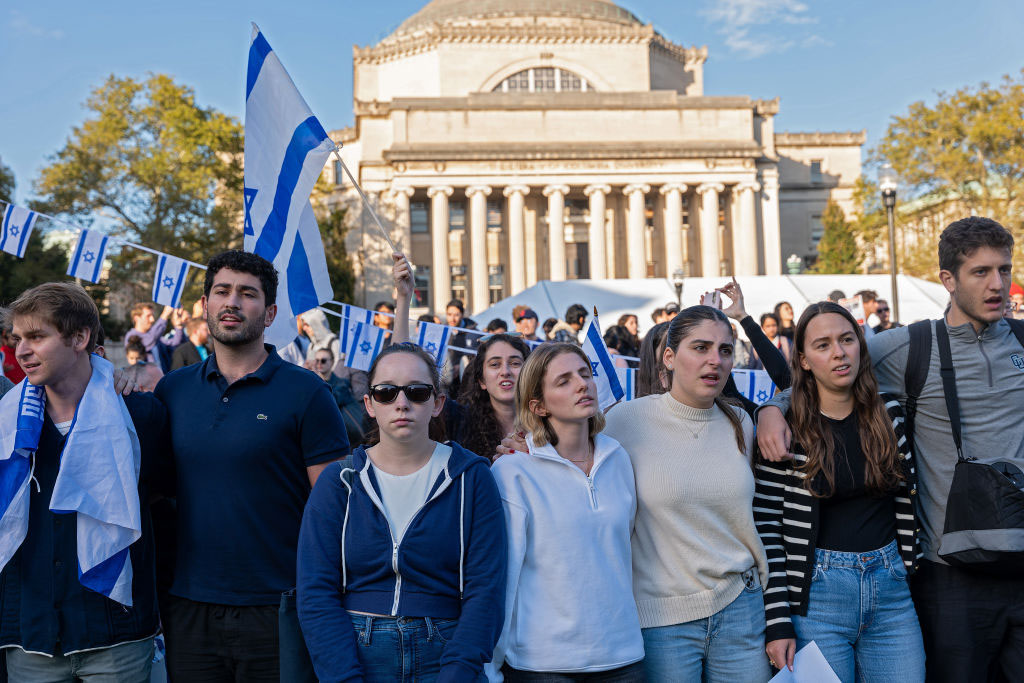
We as a Jewish community keep telling ourselves the storm will pass. The war will end. The protests will fade. The hate will quiet. But it hasn’t and it won’t. What began after Oct. 7 as a torrent of antisemitism has now settled into something worse: a steady, normalized hostility toward Jews, Israel and the moral legitimacy of Jewish peoplehood itself. We are not witnessing an emergency that is ending. We are living in one that is hardening and normalizing with now over one-third of American Jews having witnessed an incident of actual or threatened antisemitic violence in the past year; 14% have developed a plan should they need to flee the country.

In New York, Assemblyman and now New York City Mayor-elect Zohran Mamdani and his Democratic Socialist allies openly call Israel “genocidal” while smearing American Jews who support the Jewish state as complicit in mass murder framed in the language of justice and equity. Their slogans aren’t shouted from the margins; they are spoken in the chambers of power, echoed by activists who claim to be “anti-colonial” while justifying terrorism. What we’re seeing is not protest; it is political capture. The language of elimination has been normalized. Candidates are winning seats by turning Jewish self-defense into a moral crime. The party of Moynihan now tolerates members who accuse Israel of genocide and demand its dismantling.

And the rot is bipartisan. During his current, 2025 mayoral campaign, Republican hopeful Curtis Sliwa was confronted with a resurfaced 2018 video in which he railed against Orthodox Jews as “able-bodied men who study Torah and Talmud all day … make babies like there’s no tomorrow,” warning that they were “trying to take over your community lock, stock, and barrel.” It wasn’t whispered; it was broadcast. The lesson is clear: Antisemitism now cuts across party lines.

Across the Atlantic, the pattern is even clearer. In London, 35% of British Jews now feel unsafe in public—quadruple the number before Oct. 7—and antisemitic incidents remain near record highs. In Paris, Interior Minister Gérald Darmanin warned of the increasing dangers to Europe’s largest Jewish community with nearly 1,600 antisemitic incidents recorded in 2024, most linked to the war against Hamas. Soldiers again guard synagogues. This is not cyclical hatred. It is structural.

Yet our own institutions still behave as if the crisis is episodic. After Oct. 7 they scrambled—Zoom calls, task forces, “solidarity campaigns.” Then they drifted back to the familiar: statements, committees, incrementalism. When Jewish students begged for help on campus, most found those institutions absent. As former Harvard graduate student Shabbos Kestenbaum wrote in the New York Post, “When students needed them the most, so many were MIA.” He added, “Hundreds of millions of dollars went to the ADL and all these organizations to fight antisemitism, but antisemitism has only increased.” He’s right to suggest that “there needs to be an inquiry as to how these nonprofits raised so many millions annually,” for “if monoliths that shaped Jewish American life cannot reinvent themselves, they may end up running their course.”

Those lines capture a painful truth. The great Jewish organizations of the postwar era—federations, advocacy networks, defense agencies—were built for assimilation, not confrontation. They know how to convene; they don’t know how to fight. At Harvard, months passed before administrators condemned open calls for violence against Jews. National advocacy groups issued cautious statements instead of unified demands for accountability. The silence was deafening.

The Jewish community has no shortage of money or talent. What it lacks is moral clarity and strategic readiness. As I wrote in these pages last year, “Outside of the classroom, there are far too many clear-cut cases of demonstrated violence against Jews such as the mobs at Berkeley … or more insidious examples such as at my own Sarah Lawrence with faculty behaving in antisemitic ways, peddling anti-Jewish conspiracies.” I also warned that “The Hillel data tell a story of destruction. We must accept and confront this reality and take action; there is no ambiguity now about what has happened over the past academic year.” Those words, unfortunately, have proven to be true.

The Jewish community has no shortage of money or talent. What it lacks is moral clarity and strategic readiness.

Philanthropy still flows to buildings and banquets, to projects that reward prestige rather than protect people. Millions are spent on branding while Jewish teachers are doxxed, students bullied, and synagogues barricaded. That is not continuity; it is denial. Meanwhile, younger Jews are doing what our ancestors always did when institutions failed them: They are building their own. Grassroots defense networks, pop-up Shabbat communities, online education projects, and direct-donor campaigns are filling the void. They are nimble, morally direct and allergic to euphemism.

If the hate has globalized, so must our response. We need to act not like a comfortable diaspora but like a mature nation-people that takes threats seriously. That starts by empowering and backing our students and our children—the ones who are standing on the front lines of this fight. They are enduring the chants, the walkouts, the intimidation and the online mobs. They deserve protection and preparation, not platitudes. They must be equipped to hold the line with moral confidence, civic knowledge, and the unwavering sense that their community stands behind them.

“The Jewish community must stop standing on the sidelines of this crisis; it must lean in and take control and stop the erasure and manipulation of our history and our values,” I wrote last year. That must now become our collective creed. Empower our children with truth. Back them with resources. Teach them to answer lies with evidence and hate with resolve. Every school, campus, and youth movement should become a training ground in resilience and civic courage.

Every school, campus, and youth movement should become a training ground in resilience and civic courage.

Edmund Burke wrote that a society is a partnership among the living, the dead, and the unborn. The current custodians of American Jewish life have forgotten that covenant. They inherited a flourishing community and risk leaving a hollowed one. Renewal is not optional; it is the essence of Jewish survival. This is not only a Jewish struggle. It is a civic one. A society that cannot protect its Jewish citizens cannot protect pluralism at all. To defend Jewish dignity is to defend the democratic experiment itself.

The old guard blinked. The next generation cannot afford to this. The hate that animates Mamdani’s New York or the mobs of London and Paris will not disappear on its own. It will intensify until it meets resolve. That resolve must be communal, creative, and unapologetic and it must be taught, modeled, and transmitted. The hate must be called out for what it is with clarify and conviction and Park Avenue Synagogue Rabbi Elliott Cosgrove finally did just that along with other religious leaders. In response, we collectively must now build the infrastructure. Fund the organizers. Train the spokespeople. Guard the doors. Empower our children. Back the students. Teach them to hold the line. The just announced Anti-Defamation League’s Legal Action Network is a good start, but is only a start and one of many paths that must be laid out and then fortified.

The crisis is not ending, it’s settling in. The only answer to chronic hate is sustained strength. Jews cannot and do not wait for others to save them. We build. We renew. We endure. Now we begin again.


Samuel J. Abrams is a professor of politics at Sarah Lawrence College, a senior fellow at the American Enterprise Institute, and a scholar with the Sutherland Institute. 

The Crisis Hasn’t Passed; It’s Deepening Read More »

‘Don’t Feed the Lion’: A Much Needed Young Reader’s Novel Dealing with Antisemitism

Bianna Golodryga’s son came to her with a problem.

The Emmy-Award-winning CNN news anchor said her son’s world was rocked when a couple of high-profile celebrities made blatant antisemitic posts online.

“There were no real consequences or apologies by them,” Golodryga told The Journal. “My son is a big sports fan, and he was taken aback and asked, ‘why do they hate us?’”

She decided to see what resources his school had but there was no real response, and she realized there weren’t children’s books that dealt with antisemitism. After the Hamas attack on Oct. 7, 2023, she would text her friend Yonit Levi, news anchor for Israel’s Keshet 12.

They both realized there was a void they could fill as children.  She knew that her son and many other children get their news from social media and friends; her son had a sense of hero worship when it comes to celebrities and it can be difficult when they disappoint.

“We said, ‘let’s write the book we can’t find,’” Golodryga said. “It was ambitious. We’d never written a book and live 5,000 miles apart. It was a cathartic experience.”

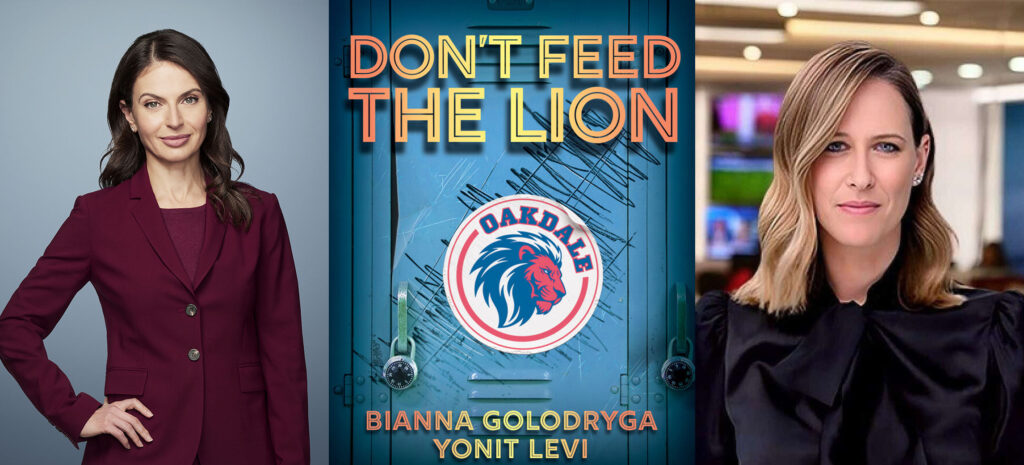
Based in New York, Golodryga would text Levi in Israel; they mapped put the plot and characters for their book “Don’t Feed the Lion.” The educational, entertaining and crisply written novel, geared to students eight to 12, is timely book that would make a great Hanukkah present.

Why The Book Will Hook You

“Don’t Feed the Lion” is about a young boy named Theo Kaplan, who plays soccer and getting ready for his bar mitzvah. He is confused when a video shows a player he idolizes, Wes Mitchell, makes a comment about Jews being untrustworthy, and also calls COVID a hoax.

Things get worse when a swastika is discovered on Theo’s gym locker at Oakdale Middle School, where is co-captain of the soccer team. Theo writes a letter to the principal demanding an investigation, but the head of the school wants to sweep it under the rug, saying if paperwork is filed, it could cost the soccer team a chance to play in the state tournament.

Annie gets bullied online and is told she is too sensitive and wouldn’t care if something happened against a different minority group. She’s called a “self-centered Yid.” But she has the chutzpah to clap back with some witty retorts.

Theo is pushed to his limit, and has to decide whether to fight with words or fists. The book gets its title from advice his grandpa gives him, not to feed the lion, meaning he should not let things overcome him and that he should feed his heart instead. For his bar mitzvah speech, Theo expands upon the meaning of “Don’t Feed the Lion.”

The book, with each chapter told from the perspective of a different character, including Theo, his younger sister, Annie and friend, Gabe, perfectly captures the voices and concerns of Jewish children. They speak with conviction, some anxiety and at times, humor.

As someone who studies history, Golodryga is aware there have been ebbs and flows when it comes to antisemitism. She said she knows of people who were afraid when ordering an Uber because their last name was identifiably Jewish or are worried about wearing a Magen David necklace. But she didn’t think it would get this pervasive so quickly.

Golodryga won the Emmy Award for Outstanding Morning Program for anchoring “Good Morning America” can be seen on “One World with Zain Asher and Bianna Golodryga” on CNN International.

While the book is not a panacea, Golodryga called it a resource that can help parents who may be unsure of how to react in a tense time, especially when there is an incentive to be quiet and ignore antisemitism.

“For so many kids, they don’t want attention, they just want to be like everyone else,” she said, adding that it is important to have allies. “As adults, it is incumbent upon us to give it the same sense of urgency as any other kind of hate. When you hear someone say something antisemitic, they heard it before from a friend or a child heard it from a parent.  When something is a five-alarm fire, I can understand how some people might think, well antisemitism is not that big a deal, there aren’t many resources for it, surely it can’t be that big of a deal.’’

“As adults, it is incumbent upon us to give it the same sense of urgency as any other kind of hate. When you hear someone say something antisemitic, they heard it before from a friend or a child heard it from a parent.”

It should be clear, she said, that excuses for antisemitism are unacceptable.

“Dismissing it because they say it’s due to the war or a government action, I think that’s a cop-out,” she said. “I came to this country as a Jewish political refugee from the Soviet Union where antisemitism was institutionalized on your library card and your driver’s license.”

In her acknowledgments, Golodryga thanks her parents, Vitaly and Zhana for bringing her to America. She was born in Moldova, then part of the Soviet Union.

In 2021, Golodryga spoke to Pakistan’s foreign minister Shah Mahmood Qureshi. The interview went viral because while she asked him about a ceasefire between Israel and Hamas. Qureshi said, ‘Israel is losing the media war, despite their connections.”

“What are their connections?” Golodryga asked.

“Deep pockets,” he said after a laugh.

“What does that mean?” she asked.

“Well, they’re very influential people,” he said. “They control media.”

Golodryga told him “I would call that an antisemitic remark.”

When asked if he should be condemning antisemitism around the world or Hamas shooting rockets, Qureshi said there was occupation, genocide, and war crimes so the extremists took advantage and there needed to be a two-state solution.

She told him that as a journalist, she was offended by his comment saying Israel controls the media.

“The onus is not on those who are being accused of things that aren’t true,” she said.

More recently, Golodryga conducted a heartfelt interview with the mothers of three released Gaza hostages. Naama Levy, who was seen with bloody sweatpants and being pulled by the hair by a terrorist on Oct. 7, Liri Albag, who tried to calm the terrorists down and Daniela Gilboa. The three were kidnapped from the Nahal Oz base and 15 of their fellow soldiers were killed by Hamas.

Levi has interviewed several presidents and recently interviewed former First Lady, Senator and Secretary of State Hillary Clinton in New York at the Temple Emanu-El Streicker Center for her podcast, “Unholy: Two Jews on The News,” which she hosts with The Guardian’s Jonathan Freedland.

On a different episode, they interviewed the parents of Hersh Goldberg Polin, who was kidnapped by Hamas from the Nova festival, held for about 11 months, murdered by Hamas. Levi asked his mother, Rachel, how she was doing as at the time, the release of the last 20 hostages was apparently about to happen.

Naturally, she said she had mixed emotions.

It is challenging and it is walking on a tight rope in high winds,” she told Levi.

She explained she felt different emotions at the same time, including joy and compassion for those to be released but also pain for her son, who was murdered.

Golodryga hopes the book can help parents examine ways to combat all types of hatred or bullying. She said there was a thought to name the book: “I think I Love You Talia Kaplan” based on a song that Theo’s grandpa Ezra wrote about his wife.

She said in the end, they thought the title might be a bit too specific and “Don’t Feed The Lion” was universal.

‘Don’t Feed the Lion’: A Much Needed Young Reader’s Novel Dealing with Antisemitism Read More »

And They Appeared- A poem for Parsha Vayera

Vayera — And He appeared (Genesis 18:1 – 22:24)

And They appeared, like magic
………..in the heat of the desert.

And They appeared, asking
………..for a sandwich.

And They appeared in the evil
………..of the salty town.

And They appeared, listening to
………..our pleas for mercy.

And They appeared in the dream
………..of the captor of the matriarch.

And They appeared in your own anger
………..in your own fury.

And They appeared on the television
………..in the mindless story arcs.

And They appeared in what connects
………..the shade and the sun.

And They appeared with six sheep
………..and some flour (but on different days).

and They appeared with laughter
………..after most of us would have
………..already left the mortal plane.

And They appeared in the line breaks
………..and in the spaces between the noise.

And They appeared in the rubble
………..of the people’s house.

And They appeared on a mountain
………..at just the right moment
………..as the knife was raised.

And They appeared – They always appear
………..before it’s too late.


Rick Lupert, a poet, songleader and graphic designer, is the author of 29 books including “God Wrestler: A Poem for Every Torah Portion.” Visit him at www.JewishPoetry.net

And They Appeared- A poem for Parsha Vayera Read More »

Yad Vashem Commemorating Kristallnacht and a Milestone for Its Book of Names

On November 9-10, 1938, the Nazi party and its supporters carried out a pogrom against Jews in Germany, destroying their homes, businesses, and synagogues. Now, 87 years later, Yad Vashem, the World Holocaust Remembrance Center in Israel, is holding an event called, “Spread the Light: Commemorating Kristallnacht in a Shattered World” on November 9.

“We are gathering in New York City to unite the community in remembrance of Kristallnacht and to stand against the rising tide of antisemitism,” said Beth Katznelson, national deputy director of philanthropy for the Yad Vashem USA Foundation. “It is more crucial than ever that people attend—to honor survivors, learn, and demonstrate that ‘Never Again Is Now.’”

“It is more crucial than ever that people attend—to honor survivors, learn, and demonstrate that ‘Never Again Is Now.’” – Beth Katznelson

The speakers at “Spread the Light” include Dani Dayan, chairman of Yad Vashem, Bret Stephens, a Pulitzer Prize-winning journalist, Bianna Golodryga, CNN’s senior global affairs analyst, and Ofir Akunis, Israeli consul general in New York. Los Angeles-based board members Yossie Hollander, an Israeli technology entrepreneur, and his wife Dana will be in attendance as well.

“[Yossie and Dana] have been among Yad Vashem’s most dedicated partners for over 25 years,” said Katznelson. “Their vision and generosity were instrumental in helping Yad Vashem reach the historic milestone of preserving the names of five million Holocaust victims and in advancing Echoes & Reflections, the leading Holocaust education program in the United States.”

Other board members that helped put the event together include Ariel Ackerman, Dalia Cohen, and Colin Halpern.

“Colin Halpern, a visionary businessman and longtime advocate for remembrance, transformed a personal encounter with Holocaust history into a lifelong mission to ensure that every victim’s story is remembered,” said Katznelson.

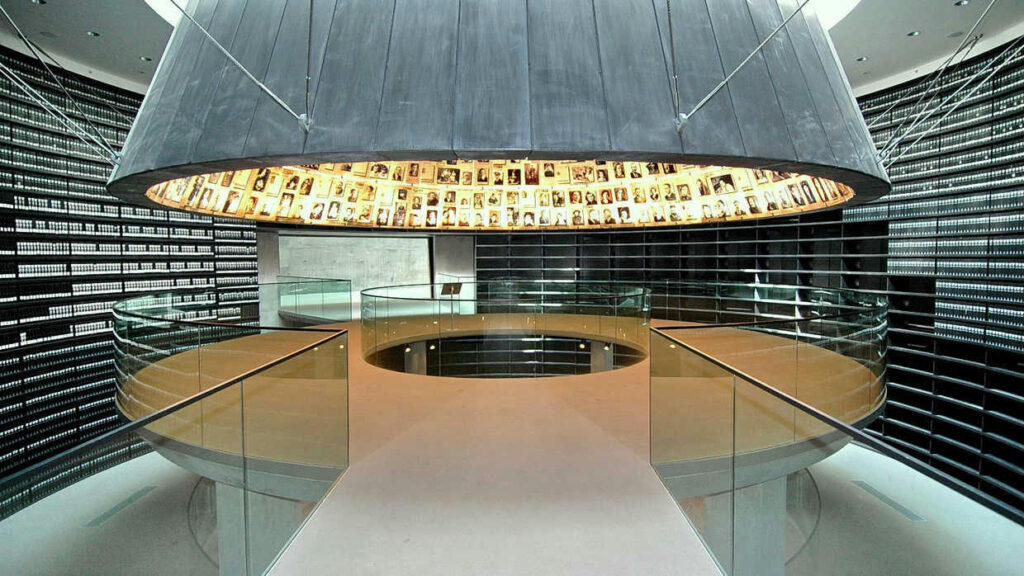
The event will highlight the museum’s Book of Names, which commemorates the memory of nearly five million men, women, and children who perished in the Holocaust. The pages, which are two meters high and one meter wide, include the names, birthplaces, and birthdates of the victims, and the places they were murdered. A gentle beam of light shines between each page.

“Each name, each person was an entire world, replete with memories, experiences and aspirations,” according to the museum. “Entire worlds take shape before our eyes, and the prewar lives of the victims and their fate during the Holocaust are revealed.”

At “Spread the Light,” Yad Vashem will offer an afternoon of reflection and hope, with a goal to honor history and strengthen the Jewish community’s commitment to combating antisemitism and hate. Thanks to the museum’s leaders and board members, its work and legacy are thriving at a crucial time.

Katznelson said, “Through their leadership, Yad Vashem continues to expand its global efforts in education, digital testimony, and remembrance initiatives to keep the legacy of the Holocaust relevant for generations to come.”

Yad Vashem Commemorating Kristallnacht and a Milestone for Its Book of Names Read More »

Hagar and the Hegira: A Historical View

Linking Jews to Muslims like the pork forbidden
to both, is the strange fact that calendars of both begin
with an exodus, to be of an oppression ridden,
the rationale of starting dates connecting Abraham’s contrasting  kin.

Israel’s first month recalls an exodus that was Israelite,
just as the Muslim calendar starts with the hegira,
when Muhammad escaped from the might
of Mecca, of which he first was less an admirer.

He fled to Medina; in Mecca, so we’re told, not treated right,
as Hagar was not, by her aged mistress abused.
Abuse by Sarah forced Hagar to escape
from Abram’s house in Canaan, which cannot now be excused
by lack of evidence such as a videotape.

The Torah’s language links Israel in Egypt to Hagar’s oppression,
Hagar oppressed, like Israelite slaves when Sarah oppressed her…
not only slavery Hagar’s profession,
but sexual servitude, like for King Ahasuerus in his harem… Esther.

Perhaps with some originality this poem states
that calendars of both Jews and Muslims are both based
on the release from oppression by the founders of their fates
which founders of their nations historically faced.


Gershon Hepner is a poet who has written over 25,000 poems on subjects ranging from music to literature, politics to Torah. He grew up in England and moved to Los Angeles in 1976. Using his varied interests and experiences, he has authored dozens of papers in medical and academic journals, and authored “Legal Friction: Law, Narrative, and Identity Politics in Biblical Israel.” He can be reached at gershonhepner@gmail.com.

Hagar and the Hegira: A Historical View Read More »

A Moment in Time: “In My Bones”

Dear all,

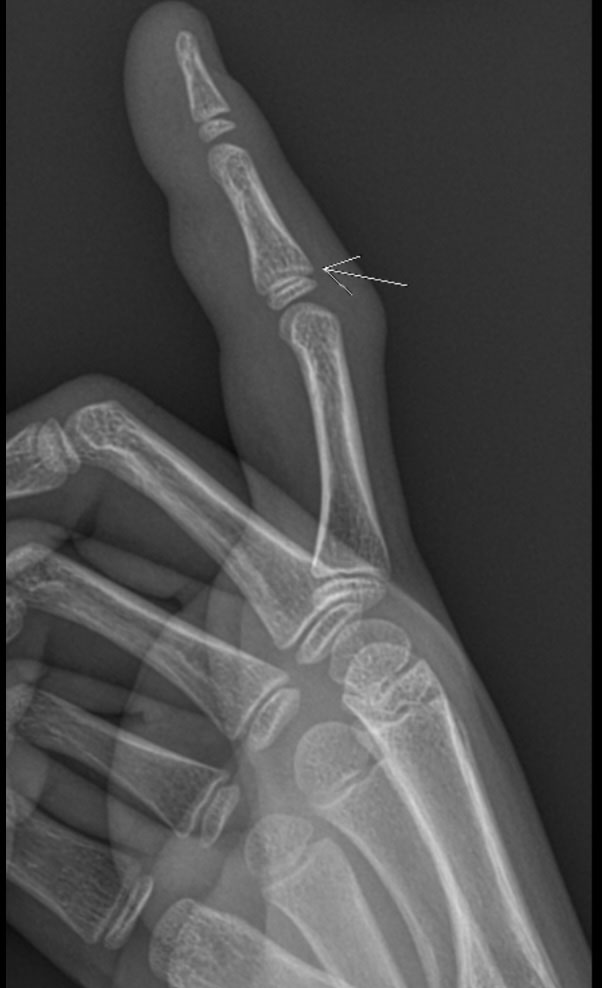
We had to get an x-ray of Eli’s hand this week. (He’s 100% fine!)

But as I watched his tiny fingers appear in shades of white and shadow, I was reminded of the Hebrew word for “bone”: etzem (עֶצֶם).

In Hebrew, etzem doesn’t just mean bone:

It means core.

It means essence.

It means true self.

It means identity — the part of you that is unshakable.

Our bones are what remain when everything else falls away.

They are what holds us up, what gives us shape, what endures.

So when we say, “I can feel it in my bones,” we’re not speaking about anatomy.

We’re speaking about the deepest place inside us — the place where our truth lives.

So I ask:

What is the etzem of you?

What are the values you hold so firmly that they shape your footsteps, your words, your way of being in the world?

What part of you is so essential, so true, that even when life gets loud, confusing, or painful — it remains?

Because here’s the beautiful part:

When we let that truest, deepest part of ourselves be seen —

when we live from our etzem —

the world in that moment in time does, in fact, become brighter, more honest, more whole.

May we have the courage to live from our bones.

From our essence.

From our etzem.

With love and shalom,

Rabbi Zachary R. Shapiro

A Moment in Time: “In My Bones” Read More »

A Bisl Torah — Spiritual Resilience

Resiliency is getting back up again after experiencing trauma or pain. Spiritual resilience is holding onto to one’s convictions and beliefs and even gaining new and deepened perspectives while facing challenges. Spiritual resilience doesn’t deny one’s hardship but rather, it allows the mind to learn, grow, and see a step beyond the ache.

One might describe Abraham as the ultimate holder of faith. He leaves everything he’s ever known to follow God. Unwavering in his commitment, he doesn’t understand how God could not provide him with a child. He cries out in despair and wonders why he of all people isn’t destined to have an heir. In response, God asks Abraham to look at the sky and count the stars, that he should be comforted knowing his heirs will number the stars in the sky. God wasn’t just reassuring Abraham that he might have a child; He was reminding Abraham, although it may be hard to see, there will be more to your story.

Sorrow is blinding. Disappointment masks what can be. These real emotions may stay stagnant for a very long time. However, our tradition reminds us there is a path forward, even while endured pain remains within. Our story is not yet over. New pages and chapters await.

May we have faith and the spiritual resilience to see what comes next.

Shabbat Shalom


Rabbi Nicole Guzik is senior rabbi at Sinai Temple. She can be reached at her Facebook page at Rabbi Nicole Guzik or on Instagram @rabbiguzik. For more writings, visit Rabbi Guzik’s blog section from Sinai Temple’s website.

A Bisl Torah — Spiritual Resilience Read More »