fbpx

September 10, 2025

Hamas’ Big Lies: Blaming Israel for Their Own Crimes

It’s been said many times before—but it bears repeating—that those who blame Israel alone for the lack of peace in the Middle East often rely on accusations that collapse under scrutiny. Yet far too many people accept these claims without taking the time to examine them. These accusations can be seductive. They’re repeated endlessly and delivered with apparent conviction, creating the illusion that they might be true.

Two of the most striking tactics behind these falsehoods are inversion—turning reality on its head—and projection—accusing others of the very wrongs you commit yourself. Together, they fuel much of today’s anti-Israel narrative.

Take the especially vile accusation that Israel is perpetrating genocide in Gaza. I hesitate even to repeat it because it is such an obscene falsehood.  The Jewish people actually experienced genocide in living memory. During the Holocaust, Adolf Hitler and the Nazi regime murdered six million Jews—half the world’s Jewish population at the time. This was not an unintended consequence of war; it was the explicit goal. If not for the extraordinary efforts and sacrifices of the Allies, the Nazis might have succeeded entirely. As the daughter of Holocaust survivors, I carry this history personally. My family was decimated: eighty of my relatives were murdered simply because they were Jewish.

To use the term “genocide” to describe Israel’s war with Hamas is not only factually false—it is deeply insulting to the memory of those who endured real genocide. The suffering in Gaza is real, and every innocent life lost is a tragedy. But context matters. This war began when Hamas launched a savage attack on October 7th, murdering approximately 1,200 people—babies, children, the elderly, entire families—and kidnapping 251 others into Gaza, where dozens remain in savage captivity. Israel’s military campaign is aimed at dismantling Hamas’ vast terrorist infrastructure, which is deliberately embedded within civilian areas. The number of casualties in Gaza, while tragic, does not meet the criteria for genocide under any credible legal or historical definition. Genocide requires an intent to destroy a people as a people. Israel’s objective is to end Hamas’ capacity to wage terror—not to destroy the Palestinian people.

Another frequent accusation is that Israel is an apartheid state. Under South African apartheid, the Black majority was denied the right to vote, excluded from political life, and subjected to a legally codified system of segregation. By contrast, Arab citizens of Israel—about 20% of the population—vote in national elections, serve in the Knesset, sit on the Supreme Court, and have full legal rights under Israeli law. Is there inequality in Israel? As in any society, yes. Is there conflict? Certainly. But a system of racial apartheid, as defined by international law, does not exist. Ironically, Hamas’ charter explicitly calls for a state with no Jews. Jews are forbidden from living in Gaza. That is exclusion based on ethnicity and religion—something far closer to apartheid than anything in Israel.

Projection is another favorite tactic. Hamas and its supporters often brand Israel as the “real terrorist.” Yet Hamas fighters filmed themselves on October 7th gleefully murdering civilians, burning homes, raping women, and kidnapping children. Their entire strategy is built on terror: launching rockets from civilian areas, storing weapons in hospitals, hiding among schools, and daring Israel to respond. When Israel defends itself, Hamas cries “terrorism,” projecting its own atrocities onto its enemy.

Words like “genocide,” “apartheid,” and “terrorism” have real meaning. They are not casual insults to be thrown around in a propaganda war. Misusing them not only slanders Israel but also insults the memory of the actual victims of genocide, those who suffered under real apartheid, and the countless lives shattered by genuine terrorism.

And so we return to the core truth: these are not random misunderstandings—they are deliberate, calculated lies. Hamas is not just guilty of the crimes it accuses Israel of; it is defined by them. Hamas is the terrorist, the oppressor, the advocate of apartheid, the racist that dreams of a land cleansed of Jews. In calling Israel what Hamas itself is, Hamas turns morality inside out, hoping the world will lose sight of the obvious. We cannot allow that inversion to stand. Seeing clearly—and saying so without fear—is the first step toward defending truth, justice, and any possible hope for peace.


Roz Rothstein is co-founder and CEO of StandWithUs, a 24 year-old international nonpartisan education organization that supports Israel and fights antisemitism 

Hamas’ Big Lies: Blaming Israel for Their Own Crimes Read More »
Rosner’s Domain | A Generation Remembers; A New One Forgets

Twenty-five years is a generation. In Israeli political life, it’s the span between Yizhak Rabin and Benjamin Netanyahu, between the Oslo Accords’ optimism and Oct. 7’s horror. Yet for many Israelis, the Second Intifada of the last generation isn’t history, it’s current affairs. The suicide bombers, the horrific butchery, the phone calls to make sure everyone got home safely. This September we mark 25 years since the start of that round of violence. It’s essential for understanding our current predicament. Because the political paradigms that dominate Israel today weren’t born on Oct. 7 — they were forged in September 2000.

What did we learn in four or five years of Intifada, depending on when one marks the point of ending? Israelis learned that hope is dangerous. Palestinians learned that violence is sometimes beneficial. Americans learned – on 9/11 – an important date for Israelis as well as Americans – that terrorism looks different when one sees it up close. 

The debate over the Intifada’s origins remains telling. Was it calculated by Yasser Arafat, who never intended peace? Or was it chaos he was forced to ride, like riding a tiger? Blaming it on Ariel Sharon’s Temple Mount visit, the departure point of this prolonged period, is like blaming the Titanic on the iceberg. The ship wasn’t built right. Israeli intelligence knew Palestinians were stockpiling weapons. And the more important question isn’t whether Arafat wanted the uprising, he probably did. The question is whether he had any plan for what came next. Based on the results, it seems he didn’t have any.

Arafat thought that he could not say “yes” at Camp David, when an attempt to reach a final status agreement was made. He also would not say “no.” Like some current leaders, he preferred evasion over leadership. 

What followed wasn’t just a violent conflict but also a profound ideological reengineering. The suicide bombings dissolved the psychological barrier between front lines and home front and the trauma recalibrated Israeli politics forever. When Prime Minister Ehud Barak declared there was “no partner for peace” he wasn’t leading public opinion, he was articulating a conclusion the public had reached. The Second Intifada became the political burial ground of the two-state camp in Israel.

Israel’s response was framed as an attempt at “searing Palestinian consciousness” – demonstrating terror’s futility through overwhelming force. Operation Defensive Shield and the security barrier gradually crushed the West Bank terror wave. But Palestinian consciousness didn’t change, and if it did, this didn’t last for more than the one generation that was detered. 

More importantly, the Intifada had unintended consequences. The weakening of Fatah, the Palestinian’s ruling party, created an opening for Hamas. Israel’s Gaza disengagement in 2005 was meant as a security measure, but Hamas claimed it as monumental victory for armed resistance. Palestinian voters, looking at Fatah’s failed strategy, concluded it was time for new management. When they voted in 2006, they basically said, “Well, secular nationalism got us misery, so let’s try religious fundamentalism.” Hamas’ victory and its ability to take over Gaza wasn’t a fluke – it was the logical outcome of everything since 2000.

So what lesson did we learn? Twenty-five years ago, Israel won every battle, controlled every road, reduced attacks to manageable levels. But today, the conflict is worse than ever. Twenty-five years ago, the Palestinians attempted every atrocity, deluded themselves in any possible way, damaged their claimed cause without hope for rapid resurrection. But we now must recognize that alteration of consciousness is generational. One generation remembers; the next one forgets. Israelis forgot how vicious their enemy can become. They relied on the long forgotten lesson learned in the Intifada and were proven spectacularly wrong. Palestinians forgot how vicious their enemy – us – can become under threat. Once again, their supposed success in massacre prompted their undoing.  

Twenty-five years later, we’re trapped between a one-state reality that threatens the Zionist enterprise and unilateral separation that has utterly failed.

Today, the line from the Second Intifada to Oct. 7 is clear. The more than 1,000 Israelis killed over four years of Intifada were tragically surpassed in a single day. The Intifada didn’t just kill people – it killed possibilities. Twenty-five years later, we’re trapped between a one-state reality that threatens the Zionist enterprise and unilateral separation that has utterly failed. The two-state solution has gone from inevitable to impossible. Sometimes you can fight a battle and end up exactly where you started, only with more graveyards and less hope. We didn’t just fail to learn from the Second Intifada – we learned all the wrong things. And now we’re paying the price, one anniversary at a time.

This article was written based on the preparations and consequent podcast conversation with two of Israel’s most cool headed analysts: Amos Harel of Haaretz, and Michael Milstein of the Dayan Center. The opinions expressed here are mine, but were highly informed and influenced by their wisdom. 

Something I wrote in Hebrew

Trump said the pro-Israel lobby had weakened. I tried to explain why:

Israel’s fans are still its supporters. In many districts, there are still those who will hint to members of Congress that supporting Israel is a basic condition for their support. But – suddenly, there is also the potential for harm. Israel is no longer an issue that most voters are indifferent to, and those who are not indifferent to it support Israel. Israel is now an issue that, of all the voters who are interested in it, some are interested in it for the opposite reason – they are angry with Israel, oppose Israel, even hate Israel… This greatly complicates the calculation for a member of Congress. If in the past the easy default was to support Israel – for some members of Congress the default has changed – to sit on the fence. And in some cases – to oppose Israel.

A week’s numbers

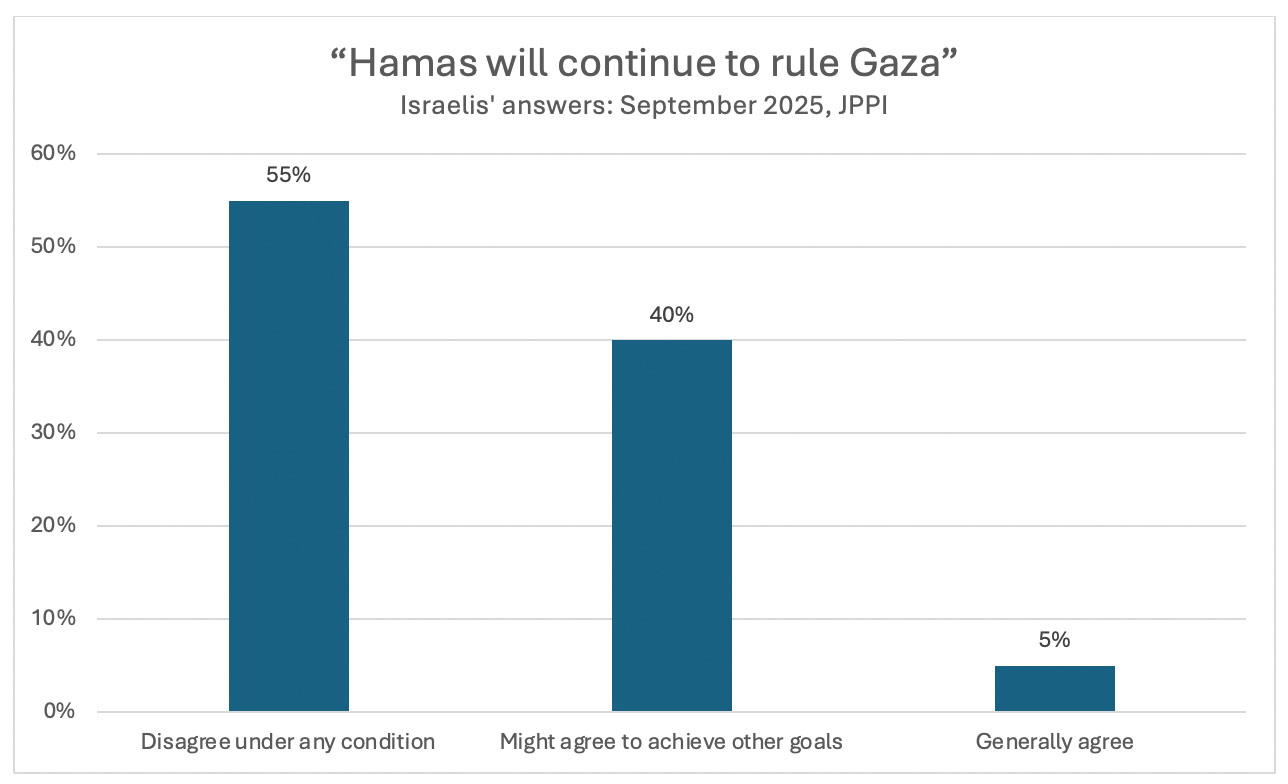
Yes, Israelis want the war to end. Yes, they want the hostages back. But not all terms would be acceptable to them.


A reader’s response

Ari F. sent a question: “Would you bet against the return of the current coalition after the next election?” Anwer: I don’t usually bet. I look at data. The current coalition doesn’t seem to currently have much chance of getting a majority. But… it’s not clear that the opposition, excluding the Arab parties, could get a majority either. This means we could find ourselves stuck with an interim government controlled by the current coalition until there’s another round of election. And if this rings a bell (hello, 2018), that’s no fault of mine. 


Shmuel Rosner is senior political editor. For more analysis of Israeli and international politics, visit Rosner’s Domain at jewishjournal.com/rosnersdomain.

Rosner’s Domain | A Generation Remembers; A New One Forgets Read More »

Welcome Back, Jewish and Pro-Israel Students. Here’s What to Expect.

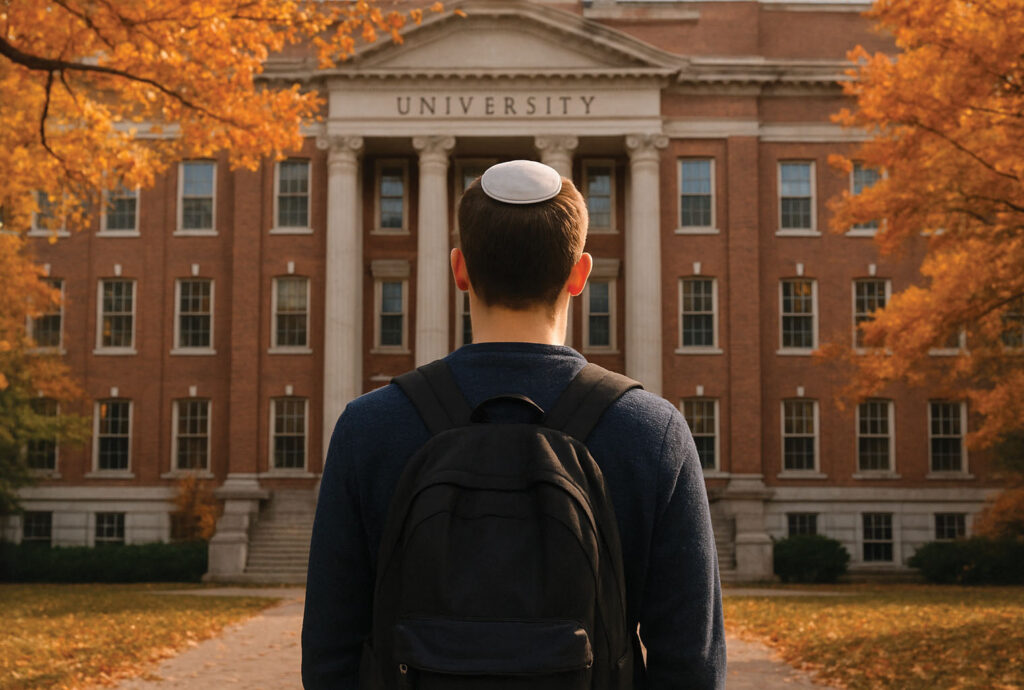
As a rising junior at UC Irvine, I’m often asked by new parents and teachers how to navigate life on American college campuses in light of the antisemitic tidal wave of the last two years.

For some of us, the summer was a welcome reprieve. In the months after Oct. 7, 2023, on campus after campus, Jewish students suffered unchecked discrimination, with administrative indifference and even legal culpability in some cases. 

Unsurprisingly, a spring 2025 poll conducted by the Israel on Campus Coalition (ICC) determined that 74% of Jewish college students believe that antisemitism is a serious problem on campus, and 87% of Jewish college students are concerned that anti-Israel protests and petitions to boycott the State of Israel lead to hate crimes and violence. 

It’s a multi-front battle; we aren’t just under assault from our classmates. Even faculties have been infiltrated by an anti-Jewish ideology, with nearly one-third of American Jewish college students surveyed by the American Jewish Committee feeling that faculty members have promoted antisemitism or fostered learning environments hostile to Jews. 

Campuses were paralyzed by massive encampments and protesters who harassed visibly Jewish students, and in some cases even shut down classes and other on-campus activities — such as commencement ceremonies — for a period of months. On my campus, members of the Jewish community, including myself, were targeted by the encampment organizers who had people follow us whenever we went near the encampment. This surveillance led to one of my close friends being assaulted when we tried to talk to the numerous people with no relation to the UCI campus who had gathered outside the encampment to support it. Yet all of this hatred and disruption is masked as “anti-Zionism” in an effort to claim that what these people are doing is morally right. 

Many people misunderstand Zionism. Zionism is the belief in Jewish self-determination in our own land, and it is an integral part of Jewish identity for the vast majority of Jews. These past two years of organized anti-Israel, anti-Zionist, and antisemitic harassment campaigns have made a vast majority of Jewish students and faculty feel openly excluded.

So, how will a combined student body of millions of undergraduate students marinated in an antisemitic miasma on social media receive its Jewish peers this fall? If the past is any indication, we should buckle up. 

We as Jews suffer 69% of all religiously-motivated hate crimes in the United States, according to the Federal Bureau of Investigation, while representing 2.4% of the population. Famous podcasters and music artists either deny the Holocaust or even say it was a good thing, selling Neo-Nazi paraphernalia. Even at the most recent mass shooting at a church in Minneapolis, the shooter had “6 million wasn’t enough” written on his holster. 

Yet through all of this, Jews are still excluded from campus areas that are meant to promote a safe space for students of all cultures. The intersectional narratives that dominate campus intellectual life, in disturbing parallels to the past, say that Jews cannot be recognized as victims because Jews “as a class” are “privileged.”  

The intersectional narratives that dominate campus intellectual life, in disturbing parallels to the past, say that Jews cannot be recognized as victims because Jews “as a class” are “privileged.” 

The late Rabbi Lord Jonathan Sacks z”l illustrated this phenomenon when he taught about the mutation of antisemitism. He showed that this very particular type of hate has evolved from attacking Jews for their peoplehood in ancient times, for their religion in the Middle Ages, for their “race” at the dawn of the modern era, and now for our statehood in this “postmodern” age.

In any conversation about today’s campus climate, it’s critical to make clear that the calls for Israel’s destruction that we hear are an inherently antisemitic act. The Jewish ethnic connection to Israel goes deep to the heart of our identity. 

As legal scholar Alyza Lewin puts it, “for the overwhelming majority of Jews, Zionism — the recognition that the Jews are a people indigenous to the land of Israel — is an integral component of how they define their Jewish identity.”

And yet, in our darkest hour, the last academic year showed Jewish students displaying tremendous courage and moral clarity. The bonds in the Jewish community have become unbreakable; we are weathering the storm together as is coded deep in our epigenetics. In our history as a people, we have learned the lesson time and again, but it bears repeating. When they attack, when the world turns against us, and when our equal status in society is revoked, our only way through is together. 

My message for Jewish students is this: We must make our voices heard when we find ourselves excluded, marginalized, or assaulted on or off campus. Take advantage of your campus resources and connect with other Jewish students. Never doubt our community will support you; no matter what, you will always find support from millions of Jews around the world. Above all, we must demand our seat at the table and in the classroom. The tide is turning, and together we will win.


Sevan Minassian-Godner is from Berkeley, California. He is a student at UC Irvine, majoring in political science with an emphasis on political theory and international relations. Sevan is the Vice President of Hillel at UCI, served as Pegisha chair for Chabad, and is on the board of his campus’s chapter of Alpha Epsilon Pi, the Jewish Fraternity. 

Welcome Back, Jewish and Pro-Israel Students. Here’s What to Expect. Read More »

Babette Pepaj: BakeBot, AI Recipes and Cupcakes with Apple Buttercream

Babette Pepaj’s mission is to inspire and connect people through food, technology and shared experiences. The founder of the BakeSpace.com community, Pepaj’s most recent endeavor is BakeBot.ai. The free AI-powered cooking assistant generates recipes, digitizes family favorites and suggests ingredient swaps.

“It helps you do everything from thinking about what foods you’re going to buy to seeing what’s in the fridge [and figuring] out what you can make with what you already have on hand,” Pepaj told the Journal. It can also walk you through preparing recipes in real time with its voice. “I don’t have to look at my screen or wash my hands continuously,” she said. “It just talks to me like a friend in the kitchen.”

Pepaj, who has been in the food space since launching BakeSpace in 2006, has seen the evolution of how home cooks share recipes over the years. “I had thought I saw it all until I saw AI and I was like, ‘Wow, this isn’t just about making a new recipe, this is about actually helping someone at the most important moment of cooking,”  she said.

For instance, if you accidentally put in the flour in the wrong order or need a substitution in the middle of cooking, you can ask how to fix it.

Social media has also had a huge influence on recipe discovery.

“It’s exciting to see all the different [viral recipes] on every single platform, so you can find your tribe no matter where you are and what type of food you’d like to make,” she said. “Then you can drill down [and] follow people and see what else they’ve made; it’s kind of like a living cookbook.”

It’s easy to collect screenshots or to bookmark recipes and ideas.

“I’ve saved a thousand recipes,” she said. “The problem is finding those recipes later, but luckily BakeBot can do that for you.” BakeBot also helps you rescue, modify or update any recipe. This is particularly important as we approach any holiday. “Lots of us have old recipe books [passed down through generations or] binders that have cutouts of recipes,” she said.

However, many of these recipes have faded or missing ingredients or instructions. For instance, it’s got the front but not the back of a recipe card or there is an ingredient in the instructions that is not listed in the ingredients list with a quantity.

If you are the person who has been making that recipe for years, it’s not a problem. But what about everyone else? “That was actually the inspiration for starting BakeBot; I went to Pinterest and I saw all these comments saying [this or that recipe is] missing this ingredient,” Pepaj said. “Because [community] recipes are user generated — they’re from home cooks — they’re not writing it like a professional cookbook author [who] makes sure that everything matches up.”

The magic of AI is it can look at a recipe, see if something’s missing and then be able to modify it. It’s also great for modifications (adapting it for a different number of servings) and substitutions.

“For example, you might have a recipe that’s [been] in your family and all of a sudden your sister-in-law is gluten free [or] maybe you became vegan,” she said. “You want to keep it within the same style, you want to make sure it has the same flavors.” She added, “When people are preparing … especially anything that’s holiday related, anything that’s truly memorable, anything that has history and tradition, you don’t want to mess up.”

Pepaj believes that AI is great at starting a conversation, so it can help you with whatever you are trying to achieve. “Are you trying to get a new recipe, are you trying to change something and modify it or are you trying to learn something?” she said.  Once you open up and you say something like, ‘Hey, I’m really nervous …  I want to impress my mother-in-law. What can I do to really kick this out of the park?’ it can guide you to a solution.

When Pepaj asked BakeBot.ai for recipe ideas for the upcoming holiday, it gave her several ideas, including one for Rosh Hashanah cupcakes with apple butter cream. BakeBot’s recipe is below.

Try out at Bakebot.ai and explore Bakespace.com.

Rosh Hashanah Cupcakes with Apple Buttercream

Prep Time: 20 Minutes

Cook Time: 20 Minutes

Serves 12


Ingredients

1 1/2 cups all-purpose flour

1 1/2  tsp baking powder

1 tsp ground cinnamon

1/2  tsp ground ginger

1/4 tsp salt

3/4 cup honey

1/2 cup granulated sugar

2 large eggs

1/2 cup vegetable oil

1/2 cup unsweetened applesauce

1 tsp vanilla extract

1/2 cup milk

1/2 cup unsalted butter, softened (for frosting)

2 cups powdered sugar (for frosting)

1/4 cup apple butter (for frosting)

1 1/2 Tbsp milk (for frosting)

Extra honey (for drizzling)

Instructions

1. Preheat the oven to 350°F (175°C). Line a 12-cup muffin tin with paper liners.

2. In a medium bowl, whisk flour, baking powder, cinnamon, ginger and salt.

  1. In a large bowl, whisk honey, sugar, eggs, oil, applesauce and vanilla until smooth.
  1. Add dry ingredients to wet ingredients in two additions, alternating with milk, mixing until just combined.
  1. Divide batter evenly among cupcake liners, filling about 2/3 full.
  1. Bake for 18-20 minutes, or until a toothpick inserted in the center comes out clean.
  1. Cool cupcakes completely before frosting.
  1. For frosting: Beat butter until creamy. Add powdered sugar, apple butter, and 1 tbsp milk. Beat until fluffy, adding more milk if needed for consistency.
  1. Pipe or spread frosting onto cooled cupcakes. Drizzle with honey before serving.

 Note: You can make the cupcakes a day ahead and frost before serving for the best texture.


Debra Eckerling is a writer for the Jewish Journal and the host of “Taste Buds with Deb.Subscribe on YouTube or your favorite podcast platform. Email Debra: tastebuds@jewishjournal.com.

Babette Pepaj: BakeBot, AI Recipes and Cupcakes with Apple Buttercream Read More »

Atonement Is Good for Your Health

The High Holy Days and Penitential Period are upon us, marking the beginning of the Jewish New Year, highlighted by Rosh Hashanah and Yom Kippur, our Day of Atonement. As a practicing psychiatrist for more than a half century who has always emphasized a holistic approach to treatment, I can tell you that atoning is good for your health.

Those who’ve been through Alcoholics or Narcotics Anonymous know that Steps 8 and 9 of their 12-Step Programs are about taking responsibility and making amends. But the nature of atonement in the Jewish religion goes farther than that. Instead of just admitting and apologizing for your transgressions, you are trying to heal a fractured relationship to the betterment of the person you wronged, as well as yourself. 

The concept for my book “The Myth of Aging” was to create an encyclopedic collection of information vital to physical, mental and emotional health, something that doesn’t currently exist in a single volume. The concept of atonement is covered extensively in any number of the book’s chapters, thanks to the notion of the need to accept responsibility for one’s past behaviors in order to change and improve them. The Hebrew term Teshuvah, after all, means repentance, something a person must do in order to atone and then start the year fresh. So, as our Day of Atonement approaches, let’s look at the prescriptions for why taking ownership of actions that may have done harm to others is important for your overall well-being.

Lift the burden: Mistreating someone in any shape or form can lead to guilt, remorse and even shame, any combination of which can become a heavy burden. You can end up doing more damage to yourself than the person you wronged. Atoning for that action is the surest way to address any harm you have caused which may well have resulted in harm boomeranging back upon you. Making things right removes that weight from your shoulders.

Forgive yourself: Taking the proper steps to atone for a wrong you have done that has adversely affected another human being is the surest way to forgive yourself. You can’t do that until you acknowledge and rectify your action. In the process you are retraining your psyche not to repeat the same kind of behavior in the future, strengthening your own self-respect and allowing you to recognize the person who stares back in the mirror.

Become a better version of you: Having the courage to admit you were wrong and atone helps you move forward from a personal development standpoint. We may stop growing physically, so to speak, but we never stop growing emotionally. Doing wrong is the surest way to stunt your emotional growth which has dire ramifications for your happiness and self-fulfillment. Alternatively, you can enhance both of those by ensuring that your personal growth remains unencumbered by behavioral indiscretions.

Reduce anxiety and depression: Carrying guilt and regret is a recipe for encouraging anxiety and depression. I never prescribe antidepressants in my practice, because they only mask the underlying causation. So often that causation lies in the need to atone for bad acts going back any number of years. My prescription for these patients, instead of drugs, is to take ownership of what they’ve done by repairing the damage inflicted on others and, thus, themselves. 

Relationship building: Bad acts committed against another can sever a long-time relationship or friendship. If life is currency, then our friends and loved ones are the bills with the highest denomination, and should be treated that way. Nothing is more detrimental to your mental and emotional health than burning bridges, instead of building them. But take solace in the fact you can do everything in your power to rebuild them through atonement.

Practice empathy: In my practice over the years, I’ve probably asked some version of the question “How did that make you feel?” more than any other. When a patient admits something they did continues to fester inside them, I offer the prescription of feeling empathy, to ask themselves how they would feel if someone had done to them what they did to someone else. It’s a kind of role playing exercise, and the point of it is to motivate them to take corrective action as a result.

Set an example: The fact that “treat others the way you want to be treated” is a cliché makes it no less important to practice. The same holds true for “be the adult in the room.” So many sins committed against others often feel juvenile in nature. I have asked patients to stand outside themselves to gauge how others see them. I fully believe we are at our best when we act as if the whole world was watching and seek to set an example to be emulated instead of reviled. I can’t help you fix yourself until you fix what you’ve done to someone else. 

Which brings me to the physical toll the need to atone can have on you comes in. 

“Whether it’s a simple spat with your spouse or long-held resentment toward a family member or friend, unresolved conflict can go deeper than you may realize — it may be affecting your physical health,” an article on the Johns Hopkins Medicine website has reported. “The good news: Studies have found that the act of forgiveness can reap huge rewards for your health, lowering the risk of heart attack; improving cholesterol levels and sleep; and reducing pain, blood pressure and levels of anxiety, depression and stress. And research points to an increase in the forgiveness-health connection as you age.” 

Your heart will thank you for making proper amends and so will your immune system. Atonement can’t change what you’ve done, but it can reduce the adverse physical effects caused by holding the guilt and regret in. I have had innumerable patients over the years who come to me riddled by physical maladies as much as psychological ones. And, often, helping them deal with what’s plaguing their minds has a demonstrative effect on. healing their bodies.

When I sat down to write “The Myth of Aging,” I searched out the most common stressors and offered curated prescriptions for how to deal with over 40 of them in everyday life, including the need for atonement. In that respect, the only thing I can advise beyond not committing a sin against man in the first place is to atone for it as quickly as possible. With the Day of Atonement nearly upon us, this is the perfect time to make that commitment and spend every day as if it were the first of the New Year. 


Dr. Arnold Gilberg’s book THE MYTH OF AGING: A Prescription for Emotional and Physical Well-Being will be published on Jan. 13, 2026 by Post Hill Press. It is available for preorder now.

Atonement Is Good for Your Health Read More »

Pilgrims and the Parsha

When the English Puritan William Bradford fled from religious persecution at the hand of King James I aboard the Mayflower and landed, with his fellow Pilgrims, on the shores of New England in 1620, he reflected on his experience in a way that would mark the American project from its very beginning as being inspired by the Hebrew Bible. 

Bradford, who would serve as Governor of the Plymouth Colony intermittently for roughly 30 years, would even study Hebrew late in life. He wrote how “I have a longing desire to see with my own eyes something of that ancient language and holy tongue in which the Law and oracles of God were written; and in which God and angels spoke to the holy patriarchs of old time; and what names were given to things from the creation … My aim and desire is to see how the words and phrases lay in the holy text.”

Most striking about Bradford’s affinity for the Bible for those who hear the weekly parsha in synagogue is how Bradford drew explicitly from the Book of Deuteronomy in expressing the covenantal character of what would become, eventually, the United States. 

In conveying the sense of fear and uncertainty of his fellow early settlers, Bradford wrote in his journal that “what could they see but a hideous and desolate wilderness, full of wild beasts and wild men— and what multitudes there might be of them they knew not. Neither could they, as it were, go up to the top of Pisgah to view from this wilderness a more goodly country to feed their hopes; for which way soever they turned their eyes (save upward to the heavens) they could have little solace or content in respect of any outward objects.” 

The “Pisgah” mountaintop that Bradford wished he could ascend to is a reference to Deuteronomy’s third chapter. In it, God allows Moses, who had been punished from entering the Promised Land, to view it from a height, and take in its glory and splendor as comfort and consolation. “Go up to the summit of Pisgah and gaze about, to the west, the north, the south, and the east. Look at it well,” God instructs. And then, God continues his directive to Moses, “Give Joshua his instructions, and imbue him with strength and courage, for he shall go across at the head of this people, and he shall allot to them the land that you may only see.” 

Moses, in other words, though himself anxious and uncertain over how his people will fare in the future, is given reassurance from his new vantage point that the Divine promise of flourishing in this new land for opportunity will eventually be fulfilled. It is this comfort of Moses that Bradford longed to experience.

 Later in his journal, Bradford senses that the story that he is beginning will be one passed down for generations. He reflected “May not and ought not the children of these fathers rightly say: ‘Our fathers were Englishmen which came over this great ocean, and were ready to perish in this wilderness; but they cried unto the Lord, and He heard their voice and looked on their adversity.’” 

In this he is paraphrasing Deuteronomy’s 26th chapter’s text that the Israelites were to recite upon presenting their first fruits to the priests in the Temple. It is a passage which subsequently became part of the Passover Haggadah. “My father was a fugitive Aramean. He went down to Egypt with meager numbers and sojourned there; but there he became a great and very populous nation. The Egyptians dealt harshly with us and oppressed us; they imposed heavy labor upon us. We cried to the Lord, the God of our ancestors, and the Lord heard our plea and saw our adversity, our misery, and our oppression.” 

Bradford understood that to build a sustained community, devoted to obedience to God’s law and the maintaining of a just and prosperous society, the ability to successfully transmit communal values from generation to generation was key.

He then, citing Psalms, expressed gratitude for the Pilgrims’ endeavor, even amidst the challenges facing them: “Let them therefore praise the Lord, because He is good: and his mercies endure forever,” a verse Jews recite in their prayers daily.

Ten years later, the Puritan John Winthrop, who served as Governor of the Massachusetts Bay Colony, would articulate a Jewishly-inspired vision as well. He invited his fellow settlers to “enter into a covenant” with God and to “follow the counsel of Micah, to do justly, to love mercy and to walk humbly with our God.” By abiding by their desire to build a society modelled after that of ancient Israel “The Lord will be our God, and delight to dwell among us, as his own people, and will command a blessing upon us in all our ways.” 

As the late British Chief Rabbi Lord Jonathan Sacks noted, this Hebraic strand of America has been a throughline throughout our nation’s history. “American presidents speak of Divine Providence and the sovereignty of God. They refer to covenant and the moral bonds by which societies are sustained,” Sacks wrote. “The liberty of which they speak is biblical rather than libertarian: a matter less of rights than responsibilities, not the freedom to do what one likes, but the freedom to do what one ought, thus contributing to the common good. The ‘American story’ is essentially that which Moshe articulated at the end of his life [in Deuteronomy]. America is the promised land to which successive generations of immigrants have come to find freedom from oppression and build, in John Winthrop’s famous phrase, ‘a city upon a hill.’”

The Pilgrims and Puritans understood then what all readers of the parsha understand now — that the Hebrew Bible, as Moses puts it in Deuteronomy 4:6, “is your wisdom and understanding in the eyes of the nations.” By abiding by its values, we can inspire others to say, “surely this great nation is a wise and understanding people.”


Rabbi Dr. Stuart Halpern is Senior Adviser to the Provost of Yeshiva University and Deputy Director of Y.U.’s Straus Center for Torah and Western Thought. His books include “The Promise of Liberty: A Passover Haggada,” which examines the Exodus story’s impact on the United States, “Esther in America,” “Gleanings: Reflections on Ruth” and “Proclaim Liberty Throughout the Land: The Hebrew Bible in the United States.”

Pilgrims and the Parsha Read More »

The Moral Imperative to Restore Constitutional Bankruptcy Protections to Student Loan Debt

Education has long served as a thread connecting aspiration to opportunity for generations of Americans. Yet the promise of upward mobility that higher education has traditionally provided has become increasingly broken by the suffocating burden of student loan debt—an albatross that millions of borrowers are obligated to carry for decades, often with little hope of relief. 

Student loan debt is unlike virtually all other forms of consumer debt in one critical respect: It is largely ineligible for discharge through bankruptcy. This modern reality stands in stark contrast to the broad bankruptcy protections that shield individuals from the lifelong consequences of insurmountable debts. The time has come to recognize the moral imperative to restore bankruptcy protections to student loan debt — not only as an immediate matter of fairness and justice, but as an essential step toward a more equitable and prosperous society.

For most of American history, bankruptcy laws provided a safety net for those overwhelmed by debt, including higher education loans. In fact, the right to declare bankruptcy is stated in the Constitution before the right of a country to coin currency or even raise an army. This changed gradually, beginning in the late 1970s, as policymakers, erroneously concerned about potential abuse, began to chip away at these protections. In 1976, Congress first restricted the discharge of federal student loans through bankruptcy, requiring a waiting period. Over the ensuing decades, this waiting period was extended and, in 2005, the Bankruptcy Abuse Prevention and Consumer Protection Act effectively eliminated bankruptcy discharge for nearly all student loans, including private loans, except in cases of “undue hardship” — a standard so stringent that relief is rarely granted. The result is that today, close to 2 trillion dollars in student loan debt hangs over the heads of American borrowers. This debt is, for most, an inescapable obligation, regardless of circumstances or personal catastrophe.

At the heart of bankruptcy law lies the principle of a “fresh start”: individuals who find themselves crushed by unmanageable debt, whether from medical expenses, credit cards, or failed businesses, may seek relief and begin anew. Student loan borrowers are the glaring exception to this rule. This discrepancy is unjust on its face. Why should a person who borrows to pay for gambling debts be able to discharge their debt, while someone who borrows to gain an education cannot? Denying bankruptcy protections to student loan borrowers violates the principle of equal treatment under the law and perpetuates a system in which financial ruin is codified based on the loan’s origin, rather than the borrower’s circumstance.

Critics of bankruptcy protections often invoke the issue of personal responsibility and “moral hazard.” Borrowers, they argue, should be held accountable for their choices. Yet personal responsibility is a two-way street. The social contract between citizen and state ought to guarantee that, when misfortune strikes — whether through illness, unemployment, or economic downturn — individuals are not condemned to perpetual penury. The bankruptcy system is designed not to reward irresponsibility, but to distinguish between bad faith and honest misfortune. In simplest terms, to strip one class of borrowers of this option is to hold them to an impossible standard, and to betray the foundational ideals of compassion and fairness.

Student loans are often marketed as a “pathway to opportunity,” but for millions, they become a generational shackle. Parents and even grandparents co-sign loans or borrow on behalf of younger family members, risking their own financial futures. When bankruptcy protections are denied, entire families may be drawn into a cycle of indebtedness that forecloses on the promise of upward mobility. Restoring bankruptcy rights to student loans is, at its core, a matter of intergenerational justice: It is a recognition that the pursuit of education should not lead to a lifetime of financial despair.

Student loans are often marketed as a “pathway to opportunity,” but for millions, they become a generational shackle.

The numbers paint a bleak picture. Over 43 million Americans carry student loan debt, and the average balance continues to climb. Borrowers who default or are unable to pay often face wage garnishment, ruined credit, lost professional licenses, and, in some states, even the loss of driver’s licenses. These consequences extend far beyond the borrower, undermining entire communities, depressing economic activity, and exacerbating racial and economic disparities. 

A particularly troubling aspect of the student debt crisis is the mounting burden faced by Americans over the age of 50. Once considered a problem for the young, student debt now haunts people approaching retirement and those long past their college years. Many in this age group are repaying loans for their own education, while a growing number have taken on debt to help children or grandchildren attend college. As a result, the number of Americans over 50 with student loan debt has ballooned in recent years, with balances sometimes stretching well into six figures. For these older borrowers, the consequences are especially dire. Many are forced to delay retirement, drain their savings, or even continue working into their seventies just to keep up with payments. Some face the garnishment of Social Security benefits — a lifeline meant to support Americans in old age — as a result of defaulting on student loans. The psychological toll is immense: Instead of looking forward to a secure retirement, many live with persistent anxiety and are trapped in a cycle of debt that, absent bankruptcy protections, may never be broken.

The effects are especially severe for borrowers from marginalized backgrounds. First-generation college students, people of color, and those who attend for-profit institutions are disproportionately likely to struggle with repayment. For these groups, the absence of bankruptcy protection transforms student loans from a stepping stone to a stumbling block.

Opponents of reform claim that restoring bankruptcy rights would open the floodgates to abuse. Yet, bankruptcy is neither easy nor consequence-free; it carries significant social and financial stigma, and remains a last resort for most. Evidence from before the 2005 reforms shows that rates of student loan discharge via bankruptcy were extremely low, and comparable to other forms of unsecured debt. Some argue that lenders, taxpayers, or the government would face unsustainable losses if bankruptcy protections were reinstated. But a humane bankruptcy system is designed precisely to balance the needs of creditors against the reality that some debts cannot, and will not, ever be paid. Moreover, the human cost of financial ruin—on health, families, and communities—is far greater than the theoretical risk to the lending system.

Allowing borrowers the option of bankruptcy does not mean opening the door to recklessness. Rather, it provides a critical safety valve for those who—through no fault of their own—cannot repay their debts. It restores agency, hope, and the possibility of redemption. A more compassionate bankruptcy regime would not only relieve individual suffering, but also enhance economic vitality. Freed from unpayable debt, former borrowers would be able to start families, buy homes, invest in their communities, and pursue entrepreneurial ambitions — all of which have multiplying effects on the holistic health and sustainability of our communities.

We must not allow the pursuit of knowledge to become a life sentence of debt. The time has come to reclaim bankruptcy protections for student loan debt, and in so doing, to reaffirm the values of empathy, equity, and opportunity that lie at the heart of the American dream.


Lisa Ansell is the Associate Director of the USC Casden Institute and Lecturer of Hebrew Language at Hebrew Union College-Jewish Institute of Religion Los Angeles.

The Moral Imperative to Restore Constitutional Bankruptcy Protections to Student Loan Debt Read More »

Charlie Kirk Shot Dead: Jewish Leaders Call for Prayers and End to Political Violence

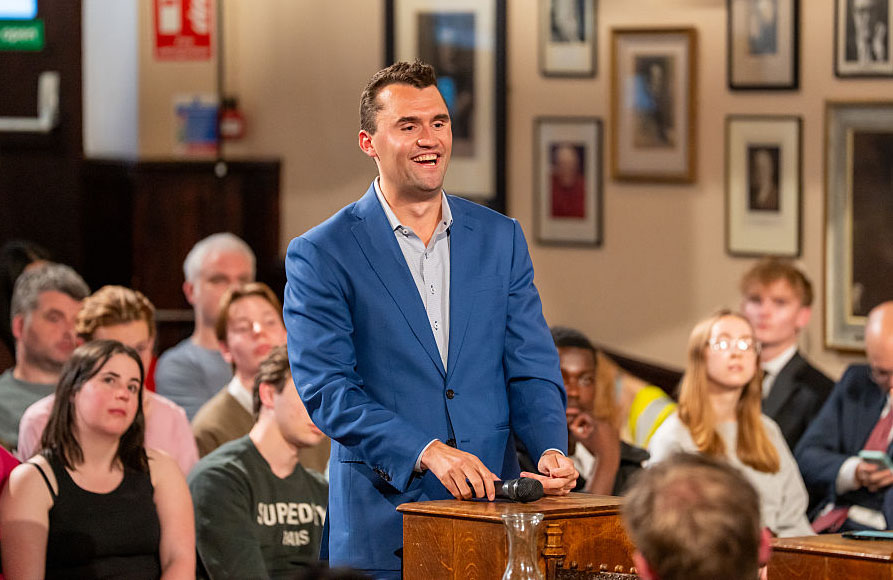
Israeli and pro-Israeli U.S. Jews were among those expressing concern after Charlie Kirk, the 31-year-old conservative activist who founded Turning Point USA and emerged as a leading voice of the pro-Trump right, was shot Wednesday during an appearance in Utah.

Kirk was confirmed to have been killed about two hours after the shooting, which occurred around midday as Kirk launched into remarks for his “American Comeback” campus tour at Utah Valley University in Orem.

Video from the scene showed a single gunshot striking Kirk in the head or neck, causing panic among attendees. He was rushed to a nearby hospital. The FBI said it was assisting in the investigation.

Prominent politicians from both political parties quickly condemned the violence. President Donald Trump, who has counted Kirk as one of his most loyal surrogates, called him “a great guy” and urged supporters to “pray for Charlie.” Utah Sen. Mike Lee and Gov. Spencer Cox also issued statements of support. California gov. Gavin Newsom posted on X:, “The attack on Charlie Kirk is disgusting, vile, and reprehensible. In the United States of America, we must reject political violence in EVERY form.”

Israeli leaders and Jewish activists, some of whom have developed relationships with Kirk through his pro-Israel activism, also reacted with alarm. Israeli Prime Minister Benjamin Netanyahu posted on X: “Praying for @charliekirk11.”

Amichai Chikli, Israel’s minister of Diaspora affairs, wrote: “Praying for Charlie.”

And Shabbos Kestenbaum, a right-wing American Jewish activist, urged his followers: “Please stop what you’re doing and pray for our friend Charlie Kirk. Many in the Jewish community are reciting chapters from the Book of Psalms, and I ask you do the same. Something is deeply broken in America. The political violence must END. GOD HELP AMERICA.”

Kirk founded Turning Point USA in 2012 while still a teenager. The organization has grown into a powerful platform for conservative youth activism, hosting major conferences and expanding into high schools and churches. Kirk became a regular commentator on Fox News and other right-wing outlets, building a reputation as an outspoken critic of higher education, liberal policies and what he calls “woke culture.”

Kirk’s Turning Point USA has maintained ties with pro-Israel organizations and regularly hosts pro-Israel speakers at its conferences. Kirk himself has traveled to Israel and praised Trump’s policies there, including the 2018 U.S. embassy move to Jerusalem.

This is a developing story.

Charlie Kirk Shot Dead: Jewish Leaders Call for Prayers and End to Political Violence Read More »

Six Jews Were Murdered in Cold Blood: I Blame You

These were not soldiers. They were not “legitimate targets.” They were regular human beings, murdered because they were Jews. And yet even in the face of these murders, the same narrative persists, the one that excuses or explains away Jewish blood when it’s spilled.

And because of your tacit or overt support for Hamas and their radical Islamist ilk, I also blame you for the deaths of innocent Gazans.

I never went to college. That’s not a boast or a lament, just a fact. There are disadvantages to skipping higher education, but one advantage stands out: I wasn’t spoon-fed the ideological gruel that passes for wisdom on so many campuses. Chief among these doctrines is the crude formula: downtrodden = virtuous, successful = damned. That lens has warped the thinking of artists, journalists, intellectuals—and much of the music industry I’ve spent my life in.

I’ll resist naming names here, but rock stars and rock star-wannabes love to strike the pose of rebellion, casting themselves as tribunes of the oppressed. The irony is they do this while signing contracts worth millions, living in mansions, and gracing the covers of magazines. I remember one moment when the hypocrisy became impossible to ignore. Epic Records held a gathering in New York for their artists and management. Cyndi Lauper was there, warm and magnetic, just as you’d expect. And off to the side stood a new band, perpetually aggrieved, their very name suggesting they were outside the machine.

But there we were, all of us, in Sony’s skyscraper on Madison Avenue, surrounded by lawyers and executives. If you’re on the 30th floor of Sony’s headquarters, you are definitely part of the machine. That’s when I understood how deep the theatrics run. Image is fine—every artist has one. The problem comes when image hardens into ideology. And especially when that ideology is weaponized against Israel, and therefore against the Jewish people.

This “oppressor versus oppressed” binary makes Israel automatically the villain. The narrative requires it: Israel strong, Hamas weak. Once you’ve accepted that framing, the facts no longer matter. And here is where the human cost comes in. I have seen the images from Gaza—children torn apart, families buried. The kind of horror no parent, no human being, should ever have to witness. Anyone who claims those lives don’t matter has cut away their own humanity.

Yet, to see those deaths and leap to the word “genocide” is to compound the tragedy with a lie. When you declare that Zionists are Nazis, you are saying my mother, my late father and sister, my other siblings, my wife, my children, my grandchildren—you are calling nearly everyone I know and love a Nazi. You may revel in the irony of calling Jews Nazis. To you it feels clever. To me, it is sickening. It shows your ignorance, your gullibility, and your malice.

Because I’ve seen the other images too; the ones you never mention. October 7th. Hamas slaughtering, raping, burning people alive. Hostages dragged into tunnels, some barely alive, others fully murdered. And still, marches in Western capitals waving Hamas flags, demanding ceasefire before a single hostage was freed. Hamas is not a liberation movement. It is a death cult steeped in radical Islamist ideology that seeks not peace, but the eradication of Israel and the murder of Jews. That day, as today, showed us exactly what we are up against.

And here is the brutal irony: supporting Hamas does not “save” Gaza—it destroys it. Every rocket fired from a schoolyard, every tunnel dug beneath a hospital, every hostage still held prevents any chance of rebuilding. Gaza cannot be restored so long as Hamas remains, because Hamas thrives on ruin. It needs suffering as its currency. Those who excuse or endorse it are not allies of the Palestinian people. They are accomplices in ensuring that the rubble remains rubble.

And here is the brutal irony: supporting Hamas does not “save” Gaza—it destroys it. Every rocket fired from a schoolyard, every tunnel dug beneath a hospital, every hostage still held prevents any chance of rebuilding. Gaza cannot be restored so long as Hamas remains, because Hamas thrives on ruin. 

Imagine it closer to home. Imagine America waking up to the relative equivalent of 40,000 people slaughtered in a single day. Thousands raped, thousands kidnapped. Imagine, as in Israel, there is no one you know who isn’t personally affected by the tragedy. The killers camped just twenty minutes away. What would you demand your government do? Sit idle? Hold hands and sing? Or fight, however terrible the images on TikTok might look?

This is what the oppressor-versus-oppressed ideology erases. It flattens complexity. It demands you pick the weakest-looking figure and assign them all the virtue. But weakness and virtue are not synonyms. And strength does not equal cruelty.

What’s more, the very people pushing this binary don’t live by it. They talk about colonization while living on Native American land. They talk about privilege while sipping cocktails beside their pools. They rage at Israel from the safety of their bedrooms. If they truly believed their own slogans, they’d hand over the deed to their property tomorrow. They don’t. That gap—that hypocrisy—is not an oversight. It’s the whole point.

I can forgive ignorance. I can forgive not knowing. What I can’t forgive is the willful blindness of those who do know better but cling to slogans anyway. Because slogans are easy. They cost nothing. They make you look righteous on social media while absolving you of any real sacrifice. That’s not justice. It’s performance.

And when performance masquerades as justice, while Jewish bodies are burned, while Palestinian children are buried, while Hamas laughs and feeds their faces in the tunnels. That is not just hypocrisy. It is nothing less than a betrayal of humanity.


Peter Himmelman is a Grammy and Emmy nominated performer, songwriter, film composer, visual artist and award-winning author. 

Six Jews Were Murdered in Cold Blood: I Blame You Read More »

The Unfunny Trials of Graham Linehan

Graham Linehan seemed to have it made. The Irish comedian had created some of the most successful sitcoms in British history, including “Father Ted” and “The IT Crowd.” He’d received five BAFTA Awards. In 2018 he announced that plans for a musical based on “Father Ted” — a show sure to be wildly popular — were in the works. In Britain and Ireland he was considered a national treasure.

And then in 2018, after months of mulling and wondering, “Am I missing something?” he tweeted concerns about “the transgender issue.” 

His career imploded. The “Father Ted” musical was canceled. Director jobs and comedy appearances were withdrawn amid charges he was a bigot. Almost none of his colleagues defended him. He was repeatedly banned from Twitter and sued. He resorted to hiding his car out of fear it would be repossessed. The backlash was so intense and stressful, his marriage ended. Last year he moved — or fled — to the U.S., where he’s found it’s still possible to do comedy. 

But he refused to stop speaking out about “transgenderism.” He’d seen a dead rat and the message “KILL TERFS TRANS POWER” slapped onto a Vancouver rape crisis center that wanted to remain woman-only. He saw a generation of gay kids being told they’re actually straight but in the wrong bodies, and that they need drugs and surgeries to cure their “problem.” He saw hulking men participate in sports against teenage girls, and women bombarded with violent threats for expressing support for J.K. Rowling. He has a daughter, he says, and a mum, and he used to have a wife. And he knew he couldn’t remain silent. 

Last week Linehan flew back to the U.K. to appear in court on charges related to a scrap between him and a young “transwoman” among his alleged crimes being “misgendering,” referring to his antagonist with male pronouns. On arrival at Heathrow airport, he was met by five policemen who told him he was under arrest for three tweets. As Linehan wrote, “In a country where pedophiles escape prison, where knife crime is out of control, the state had mobilized five armed officers to arrest a comedy writer for these three posts (and no, I promise you, I am not making this up).” 

Linehan was placed in a cell and interrogated, until a nurse checking his blood pressure found it was dangerously high and he was rushed to an emergency room. He was finally offered release on bail on condition that he not go on Twitter/X: that is, that he agree to a legal gag order.

The censorship, double standards and two-tier policing in Britain today are glaring. Thirty people are arrested every day for speech offenses, including tweets, cartoons and reposts, but they’re almost only ever on one side of the political aisle — the one the Labour government deems “right-wing.”  

The censorship, double standards and two-tier policing in Britain today are glaring. Thirty people are arrested every day for speech offenses, including tweets, cartoons and reposts, but they’re almost only ever on one side of the political aisle — the one the Labour government deems “right-wing.” 

Linehan tweets that if a man refuses to leave a woman-only space and police don’t help, the man should be punched in the balls, and he’s arrested; while Ian Bristow, an elected Liberal Democratic politician, tweets a meme of a pointed gun and the words “SHUT THE F— UP TERF” and faces no consequences. 

Lucy Connolly posted, and quickly deleted, an admittedly vile tweet after three little girls were slaughtered by someone believed to be a migrant, and is sentenced to 31 months in prison; while Ricky Jones, an elected Labour politician, told a crowd, “We need to cut all their throats,” referring to anti-migration protesters, and was found not guilty. 

As for British Jews, just this week the police refused to let the Campaign Against Antisemitism protest on Sept. 7 outside the headquarters of the BBC; while the police had no problem issuing a permit to the Palestine Solidarity Campaign to hold a much larger demonstration ten days later at the exact same location. The BBC headquarters is, in fact, the starting point for many if not most of the proto-pogroms that have rampaged through London week after week. Yet when Jews wanted to protest the BBC spreading Hamas propaganda, the location was suddenly “unsuitable.” 

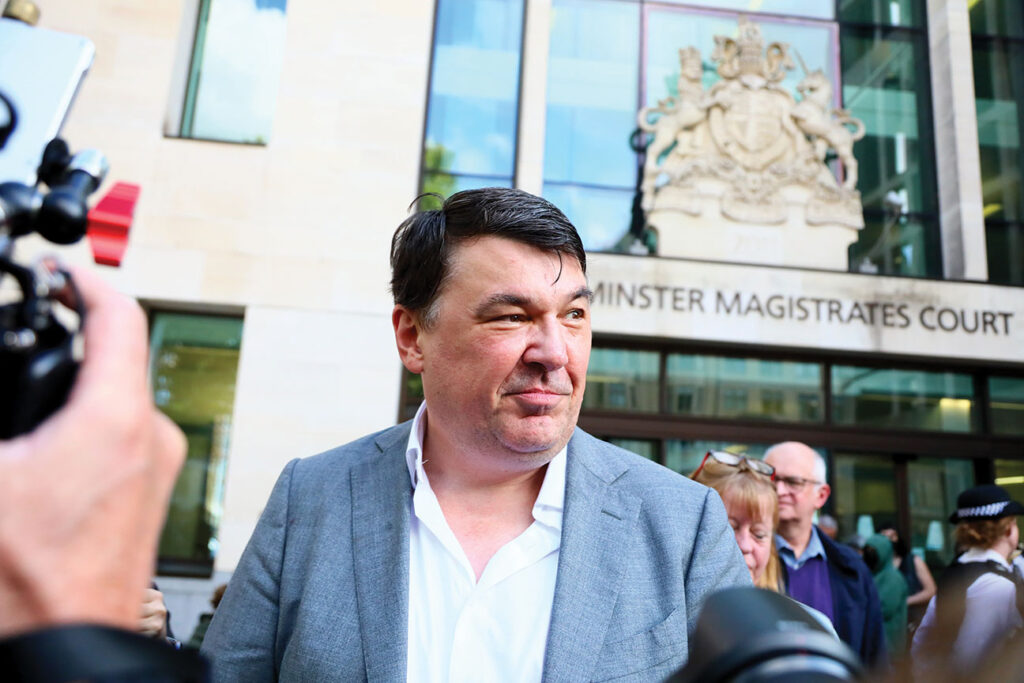
May Linehan’s arrest for wrongthink mark the beginning of the end of this blatantly unfair and outrageous farce. Certainly he has the spirit for facing it down. He showed up in front of the courthouse for his trial wearing a sign that read, “There’s no such thing as a ‘Transgender Child’” on one side, and “Keep Men Out of Women’s Sports” on the other. He not only has every right to express these views, but he is right, and ever larger numbers of people know it. 

On the podcast “Triggernometry,” Konstantin Kisin asked Linehan why, out of all the terrible things happening in the world, he’s focused on the issue of “transgenderism.” Linehan responded that even in conservative spaces, people don’t seem to understand how key this issue is. 

“This is the door that unlocks everything else,” he said. “If half the population can dominate the other half and take big slices of the pie, that over a hundred years after the suffragettes we’ve worked out (I know it’s a dread word, but) how to create equity between men and women, and suddenly there’s a group of men that are grabbing bits of this pie …” 

The assault on women’s rights has only been possible by turning material reality upside down and demanding society go along with it. Seemingly overnight, a woman was not what everyone knew she was, but a category open to any man who claimed to “feel” like a woman, whether or not he had any surgery (the vast majority don’t). Not only that, but these “transwomen” were to be regarded as far more oppressed and vulnerable than women, who were demoted as “ciswomen” or “vagina-havers.” It was now a criminal offense to say that these newly anointed women were, in fact, men. The ruin of Linehan’s career and life were intended to, and did, demonstrate what would happen to those who refused to go along.

But the spell seems to be breaking, and it’s thanks to the courage of Linehan, and Rowling, and Helen Joyce, and Abigail Shrier here in the States, and nurse Amy Hamm in Canada and so many others who faced down the mob and refused to parrot the lies. 

Still there’s a long way to go. Lesbians are still kicked out of Pride parades and threatened for refusing to accept men in their dating pool. Public schools still barrage kids with gender-woo, forcing them to ask themselves whether they’re transgender, nonbinary, genderqueer or pansexual. Once-reputable media still refer to “transgender” people according to their chosen pronouns, resulting in such marvels of reportage as “she exposed her penis.” Parents still take their children to gender clinics for puberty blockers and cross-sex hormones for playing with toys “wrong” for their sex.

Someday, and I hope it is soon, everyone will pretend that they never agreed with any of this. And Graham Linehan and so many other brave men and women may finally receive the homage they are due.


Kathleen Hayes is the author of ”Antisemitism and the Left: A Memoir.”

The Unfunny Trials of Graham Linehan Read More »