fbpx

April 3, 2025

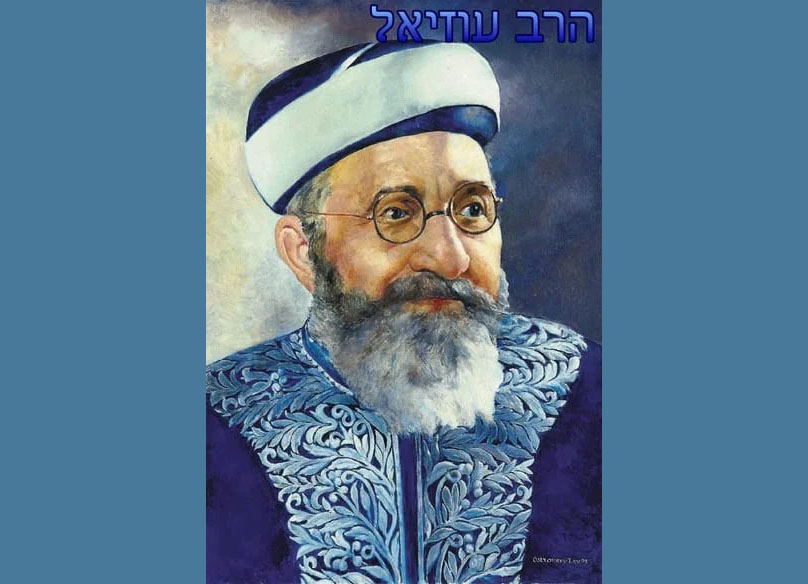
Sephardic Torah from the Holy Land | Rabbi Uziel’s Mah Nishtanah

“Mah Nishtanah?” Why is this night different?

According to Rabbi Uziel, on all other nights we take our Jewish identity as a given, but tonight, we must explore the meaning of our Jewish identity by asking what it is that makes being Jewish so special, indeed so different than all other faiths.

“It is this question” says Rabbi Uziel, “that must occupy us the night of Passover around the table. All of the symbols of the Seder – the foods, the customs, the texts – are not here to represent themselves as individual ideas or concepts, rather they all point to the much larger issue of what it means to be a Jew. Mah Nishtanah is less a question about what makes this night different, but more a question about what makes us different as Jews.”

Imagine that. A Passover question asking us to actually contemplate – with pride – what makes us different as Jews.

“Why would Passover, of all holidays, be the night when we engage in the Mah Nishtanah of being Jewish?” asked Rabbi Uziel. 

“Because Passover represents the birth of Judaism” says Rabbi Uziel. “It’s the night when we engage in our roots and origins, not only to study our past, but also to contemplate our present, and our future.”

This year we sit down to a Seder with Israel still fighting Hamas terrorists, hostages still being held in Gaza, Jewish college students not feeling safe, and hatred of Israel and antisemitism being normalized in the streets all over the world. It’s an easy time for the younger generation to check out of being Jewish.

In the face of all of this, Rabbi Uziel challenges us to ask our kids at the Seder what it is about Judaism that makes them proud of being Jewish? Why, despite all of these difficulties, would they stay Jewish?

In his infinite brilliance and wisdom, Rabbi Uziel takes the two most familiar Passover words – Mah Nishtanah – and uses them as a launching pad to transform the Seder from a set of rituals to a symposium exploring the meaning of Jewish identity. 

Mah Nishtanah? What makes Judaism so unique and special to the younger generation? Asking them this question, and listening to their diverse range of answers, are what makes this night truly different from all other nights.

Shabbat Shalom


Rabbi Daniel Bouskila is the international director of the Sephardic Educational Center.

Sephardic Torah from the Holy Land | Rabbi Uziel’s Mah Nishtanah Read More »

The Brothers Abelson Since 1946: Dennis Danziger’s Family Drama Resonates Beyond Its Jewish Roots

The Electric Lodge Theater in Venice was packed on the final day of the production, March 2, following 13 successful performances. Filling a theater in Los Angeles—a city where people typically flock to the cinema rather than live theater—is quite an accomplishment.

Playwright Dennis Danziger wrote his play back in the day, after he arrived in Los Angeles in the hopes to write comic for TV, which he did for about a decade. Then in 1979, his friend, a screenwriter invited him to lunch at Canter’s and asked him what story he has to tell.

“So I told him this story about a Thanksgiving weekend I had with my parents in 1977 when I was 26 years-old and he said, “ok. Go home and start writing.”

What started as a fleeting anecdote shared with a friend at Canter’s deli in Los Angeles eventually blossomed into a full-fledged play after decades of rewrites.

 “I came back to it ten years ago and started working on it in earnest, I knew there was a story there, I knew it was a pivotal moment in my life with my parents and I knew it needed to be recorded.”

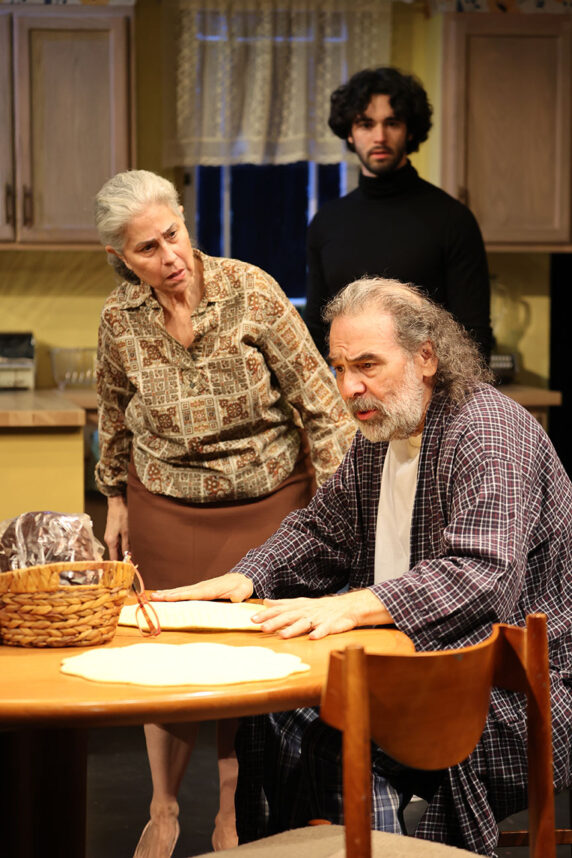
The play centers on three characters, Benny (Jonah Robinson) a 26-year-old and his parents, Isaac (Rick Zieff) and mother, Miriam (Wendy Hammers). Benny is called home by his mother, who is desperate for help. Her husband has been unraveling emotionally after selling his business, The Abelson Since 1946.

“He lives in his bathrobe,” Miriam tells her son. “Doesn’t go out. Repeats the same mishegoss like a broken record.”

Miriam decided to leave her husband, if only for a month and go to Florida on a vacation and she hopes that Benny will take care of his dad.

Now the question is if Benny will agree to leave his not very successful job as a cartoonist in NY and move back home. It’s clear that the relationship between father and son are not the greatest. Isaac keeps writing him checks to help Benny stay afloat and doesn’t think much of his sons’ career path, he is also not happy with his choice of catholic girls.

Wendy Hammers (Miriam), Rick Zieff (Isaac) and Jonah R Robinson (their son, Benny). Photo credit: Sofia Ricci

The story is more than just a family drama—it is a reflection of the tension between cultural tradition and modernity. As Isaac, a World War II veteran, clings to the stability he worked his entire life to build, Benny embraces risk and artistic freedom, much to his father’s frustration.

“I grew up Orthodox in Texas and it was a struggle because I was a good student and athlete,” said Danziger. “There was a struggle between being a normal American and then I’d go home and it was very traditional Jewish—unlike any of my friends – even my Jewish friends. It was always a struggle for me, am I Jewish, American, where do I land?”

Most of his stories as a result, said Danziger, has that struggle, a man struggling with where he lands within his religion and culture.

Denziger was a teacher in LAUSD for 24 years, with the first two at Crenshaw and 12 years at Palisades Charter high school and the last 10 at Dumas. He taught playwright at the Skirball and he is also an author who published a few books, including ‘A Short History of a Tall Jew’ and ‘Daddy, The Diary of an Expectant Father’.

His bio page also reveals that he is a board member and volunteer for POPS the club, a non-profit he co-founded to support teenagers with incarcerate loved ones.

Danziger reflected on the reactions of audiences, noting that people from all walks of life find themselves moved by the universal themes explored in the play.

“I had one former student, one who’s Latina, who wrote me a letter afterwards saying that each act of the play was part of her family’s life story,” said Danziger. “I had an African American student whose mom, sitting in front of me at the end of the play, turned to me and said, ‘That’s the only family I know.’”

The play, though rooted in Jewish tradition, resonates far beyond its cultural context. “People think it’s a Jewish family play, but I just think of it as a family play,” he said.

When asked what his parents would have said about the play if they were alive today, Danziger laughed and said: “I think my mother would’ve seen herself in the play because, at a certain time after the children were grown, she really needed more freedom. I think she would’ve appreciated it and would’ve felt seen. I think my father, who was often angry, would’ve been angry. But in the end, because it really is a love story to him, he may’ve recognized how much I loved him, even though it was never expressed because of money problems, personal problems, or living with an uncle who had physical problems. Watching the play may’ve been shocking to them, but in the end, I think they would’ve been happy.”

The play was directed masterfully by director Mathew Levitt who had been working with Danziger on plays previously. The three actors did a phenomenal job portraying a family dynamics as long-held grievances rise to the surface. Zieff’s portrayal of Isaac as a disheveled, emotionally broken man, who hit his forehead in frustration and anguish is very believable and so is Hammers’s portrayal of Miriam from her line delivery to her body language. At the start of the play, she is doing crosswords and then picking up a speck of dirt from the floor, then throwing it in the trash – It feels like we are right there in the kitchen with her.

 “One night, a man came out afterwards, I didn’t know him, a tall man in his 40s wearing a yarmulke, and he introduced himself, shook my hand and said, “Yeshar Koach” (good job in Yiddish),” said Danziger. “And I thought, “Thanks. I hadn’t heard that since I was a kid. I thought it was a nice end to that evening.”

The Brothers Abelson Since 1946: Dennis Danziger’s Family Drama Resonates Beyond Its Jewish Roots Read More »

My Media Journey on Icon of the Seas

From TV screens to magazine pages and multiple reels, I had the incredible opportunity to showcase Royal Caribbean’s Icon of the Seas across multiple platforms. Whether it was sharing my insights on The Jet Set TV, REACH TV, filming a hooping video on board or seeing my work in print in Pasadena Magazine, covering inaugural Icon of the Seas cruise was an honor. I worked for Royal Caribbean on Rhapsody of the Seas as Youth Staff decades ago and I loved it.

Royal Caribbean debuts its newest ship, Icon of the Seas

A huge thank you to The Jet Set TV and hosts Nikki Noya & Bobby Laurie for featuring my take on Icon of the Seas. This article is a celebration of the media moments that brought this ship’s story to life.

Thank you to the INCREDIBLE & ICONIC production team — Option A Group, Lisa Williams, Sam Harris, Jason Mangini and Patrick Gruss for this amazing segment.

KTLA TV Los Angeles: Live from LA Travel Show Feb 2024 about Icon of the Seas

See more of my Iconic adventures in these videos:

What an honor to have two print stories in Pasadena Magazine in the May and June 2024 issue

What an honor to have two print stories in Pasadena Magazine in the May and June 2024 issue. Read my bio on the contributor page and enjoy my 2-page story about the brand new Royal Caribbean ship, Icon of the Seas. “Whatever Floats Your Boat” online and “Pesto Takes Flight” online! I loved sharing my travel stories in Pasadena Magazine.

Pasadena Magazine: in print and online: Whatever Floats Your Boat

Embarking on my journey in Miami, Florida aboard the Icon of the Seas was not just an adventure; it was a homecoming. Having previously worked at Royal Caribbean on the Rhapsody of the Seas sailing through the Caribbean islands, stepping back on board felt like returning to a familiar embrace, albeit one that had evolved into something grander and more extraordinary.

With eight distinct neighborhoods, there was something for everyone, from relaxing on Chill Island’s seven pools and nine whirlpools providing the perfect spot for leisurely afternoons in the sun, to strolling the shops at the two-story Royal Promenade, or exploring Thrill Island’s Category 6 waterpark with heart-pounding thrills for the more adventurous souls with six waterslides including Frightening Bolt, Pressure Drop and Hurricane Hunter. Daredevils like me could walk the plank at Crown’s Edge, dangling 154 feet above the sea, scramble up the Adrenaline Peak rock climbing wall, surf the flow rider or putt-putt on the Lost Dunes mini-golf course.

Evening entertainment included singing along with Dueling Pianos or Spotlight karaoke, and mesmerizing performances with traditional Broadway-style shows in the Royal Theater as well as graceful figure skaters at Absolute Zero and the spellbinding Olympic high divers in the water-filled AquaTheater.

In the heart of the ship lay Central Park, a lush oasis with over 30,000 plants offering a peaceful respite and plenty of dining options, like the beloved Bubbles bar, the first walk up champagne bar, and Izumi sushi and hibachi restaurant. You could even take an interior balcony room that overlooks the vibrant tapestry of greenery which is 5 decks high.

The ship caters to diverse interests of passengers of all ages. For multigenerational groups, whether it was grandparents seeking adventure, parents looking for relaxation, or children eager to explore, everyone could find what they were looking for in the activities and the over 40 locations to eat and drink. Make sure that the specialty milkshake bar, Desserted, is on your list. It was my favorite.

But it wasn’t just the onboard activities that impressed me. The attention to detail and innovation in every aspect of the ship’s design were truly remarkable. Swim & Tonic, the first swim-up bar at sea, allowed guests to enjoy their favorite cocktails without ever leaving the refreshing embrace of the pool. And for those seeking ultimate relaxation, the adults-only Hideaway area boasted the first suspended infinity pool at sea, offering breathtaking views and a sense of serenity unlike any other. Every feature was designed to enhance the guest experience and create lasting memories.

Every journey aboard the Icon of the Seas will include a Perfect Day at the tropical oasis and Royal Caribbean private island Coco Cay in the Bahamas—with pristine beaches, crystal-clear waters, and a host of excursions and activities, including Tailspin waterslides at Thrill Waterpark, lounging in a hammock beneath swaying palm trees at Oasis Lagoon, snorkeling among colorful coral reefs or enjoying the bar and music at the brand new adults-only area, Hideaway Beach.

The Surfside neighborhood onboard caters specifically to families with young children, offering specialty restaurants like Lemon Post with cocktails for adults and mocktails for kids as well as a bright carousel and child-friendly slide to create cherished memories amidst the excitement of the high seas.

The Icon of the Seas has twenty-eight types of accommodations from cozy cabins to luxurious suites so there is something to suit every taste and budget. I was particularly enamored with the Ultimate Family Townhouse, a three-story suite, complete with its own multi-level indoor slide, a wrap-around balcony with a private whirlpool, white picket fence and room to sleep 8. In the suite as you walk up the staircase, each stair makes a different musical sound, I might want that to turn that off but other than that it is bright, welcoming and unique.

But perhaps the most extraordinary aspect of the Icon of the Seas is its sheer size, larger than an aircraft carrier and the largest ship at sea which is also 24% more energy efficient than required standards today. It is the first ship for Royal Caribbean that can be powered by liquefied natural gas (LNG) and produces 93% of its fresh water. Despite its size, with many lounges full of cozy corners to listen to music, dine, and relax, you can find your favorite spot to watch the waves and hang with friends, new and old.

As I reflect on my time aboard the Icon of the Seas, I am filled with gratitude for the opportunity to revisit my roots in the cruise industry and witness firsthand how far it has come. It was more than just a voyage; it was a celebration of innovation and excellence that left me in awe. I carry with me the memories of a lifetime spent at sea and the promise of future adventures yet to come.

Lisa Niver is the author of the award-winning memoir, Brave-ish: One Breakup, Six Continents and Feeling Fearless After Fifty. Niver is an award-winning travel expert who sailed the seven seas working for Princess Cruises, Royal Caribbean and Renaissance for seven years and she loved being back on board learning about the newest ship for Pasadena Magazine.

Royal Caribbean debuts its newest ship, Icon of the Seas

Hula Hooping on the ICON of the SEAS

YES I did Hula Hoop on the ICON of the SEAS!

I loved being on the newest largest ship and it was so much fun to see it with my hoop.

Icon of the Seas segment

Reach TV: Lisa Niver on WHERE NEXT? with Kelly Blanco

Readers Digest: This Flight Attendant’s Hack Will Help You Navigate Your Next Stay

This tip would also work well on cruise ships. In early 2024, I sailed on the brand-new Royal Caribbean ship Icon of the Seas. It’s huge—like, bigger than an aircraft carrier huge. I once headed out of my cabin confidently in the wrong direction all the way down the hall, which, unfortunately for me, did not lead to the elevator. Then I remembered my secret cruise tip: Watch the room numbers. I paid attention to which room number was closest to the elevator.

Walk The Plank on ICON of the Seas at Crown’s Edge!

Would you #WalkThePlank at Crown’s Edge? I did 50 Dares before 50 and hanging 154 feet above the ocean definitely is going on my 60 by 60 list! It feels like part ropes course, part zip line and 100% #THRILL! You can swing over the sea day or night right next to Adrenaline Peak rock climbing, Lost Dunes mini golf and near the FlowRider and Category 6 waterpark–all part of Thrill Island on the brand new #Iconic @RoyalCaribbean #IconoftheSeas

Parade at the Royal Promenade on the ICON of the Seas! Get this party started

Let’s get this #party started in the two story Royal Promenade by The Pearl with a #parade. There are floor to ceiling ocean views and more than 15 restaurants and bars including Dueling Pianos, 1400 Lobby Bar and YUM! Giovanni’s Pizza!

Absolutely incredible diving in the AquaDome on ICON of the Seas

Absolutely incredible diving in the AquaDome. I loved the show! WOW! The Icon of the Seas is full of iconic moments from the different entertainment theaters with top athletes to the many different thrills, ways to chill and places to enjoy music, food, drinks.

Ready for high dives, lights, robots, water ballet and intense music? Meet me in the Aqua Theater

Absolute Zero Skating show on Icon of the Seas

When you are on #vacation, do you like to see #shows? On the Icon of the Seas, you can watch #Broadway style shows in the Royal Theater, High #diving in the AquaTheater and top #skaters at Absolute Zero! I saw shows on ice and in the water in the same night! Here are some skating moments for YOU!

Ready to explore on Icon of the Seas?

Ready to explore on Icon of the Seas? There are nine whirlpools, eight neighborhoods, seven pools, six waterslides and over 40 places to sip and savor! Where will you begin? I LOVE all the statues and art.

Fireworks for Sailaway! Icon of the Seas

I always love to watch sailaway. It is one of my favorite things about cruising. AND! I love fireworks. So this combo was FANTASTIC! The Icon of the Seas knows how to start the #PARTY! INSTAGRAM 

My photo shoot onboard Icon of the Seas


Tweet from Pasadena Magazine about my print story about Icon of the Seas


My Media Journey on Icon of the Seas Read More »

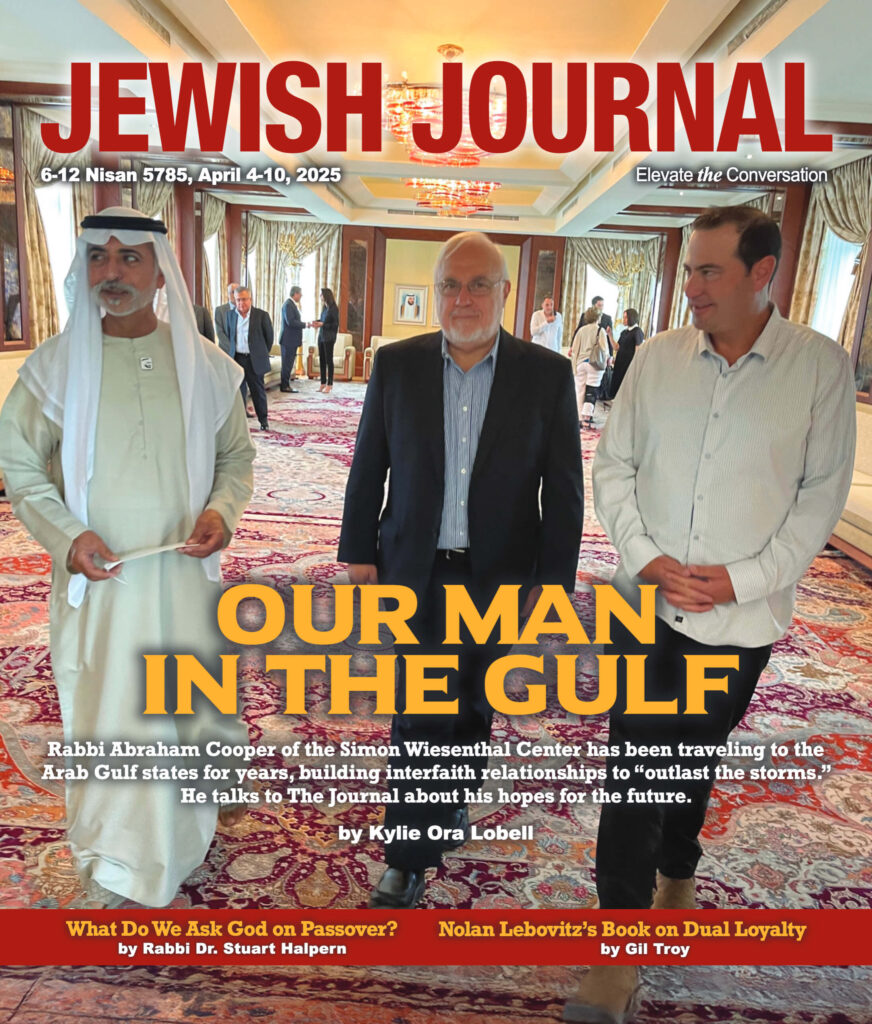
Print Issue: Our Man in the Gulf | April 4, 2025

CLICK HERE FOR FULLSCREEN VERSION

Print Issue: Our Man in the Gulf | April 4, 2025 Read More »

Rabbis of LA | Rabbi Lebhar Bridges the Moroccan and Ashkenazi Worlds

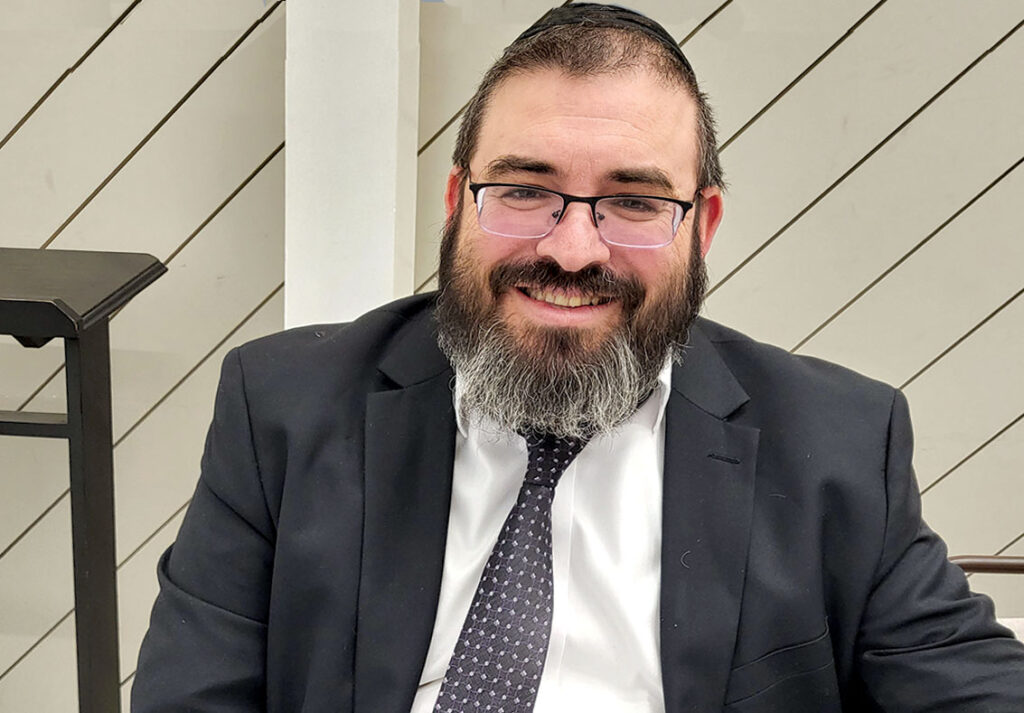
Rabbi Mordechai Lebhar, the rosh kollel at LINK in Pico-Robertson, understands that the term “rosh kollel” — leader of committed learners — may intimidate some Jews. But LINK, he said, is an outreach kollel. “It doesn’t matter if you are minimally observant, not observant at all or observant,” he said. “Everyone is welcome in the kollel.  Everyone has an opportunity to learn and become observant on their comfort level.” 

A veteran of 15 years at LINK following five years in Toronto in his native Canada, Rabbi Lebhar refers to his students as his colleagues and as scholars. They spend their days together, 9:30 a.m. to 5:45 p.m. 

While deeply committed to his family’s Moroccan traditions, Rabbi Lebhar opens the community gates as wide as possible.

“Torah in Los Angeles is not the same way Torah was 20 years ago, when LINK started,” he said. “Our kollel took the shape of really servicing the community for people who are engaged.” The LINK kollel, he emphasized, is there for all. A kollel can be any size, from several to many learners, from the minimally engaged whose hands may need to be held to the more advanced who want learning in their daily lives even if they already know how to learn.

Getting back to the question of what a rosh kollel is, he explained, depends on the kollel. “If it’s a strictly learning kollel, the job of a rosh kollel is to be a mentor to the people learning, to decide the curriculum they are learning, to provide sources, to give periodic lectures on what they are learning,” he said. “The scholars themselves also give lectures,” and can be an inspiration for others in the class.

With modest but unmistakable pride, Rabbi Lebhar told The Journal “I was brought up in the North American community of Montreal. But I lean on the Moroccan traditions and heritage to enhance my service to Hashem through our prayer, through our unique liturgy and our unique songs, and unique tradition of honoring the prophets. But at the same time it is all aligned with the rest of the Torah world because the basis is all the same.”

As for keeping Moroccan traditions alive in an Ashkenazi world, “I would say the meat-and-potatoes are the same, but the spices are a little bit different,” he said. “The reality is that what unites the Jewish people is the Torah.” 

That declaration led Rabbi Lebhar into one of his favorite memories. “I always mention that I remember when I was a young yeshiva bochur, I was learning a certain sefer from the Chief Rabbi of Morocco, Rabbi Yedidyah Monsonego. He quotes, left and right, different Ashkenazim left and right, and Rabbi Moshe Feinstein. Now what does the Chief Rabbi of Morocco, who never stepped foot in America, know about Reb Moshe Feinstein? They are speaking the exact same language, Talmudic Hebrew. They are communicating so that they have everything in common. 

“So Rabbi Monsonego might not have much in common with his neighbor across the street, but he will have much more in common with Reb Moshe Feinstein because they are learning the same texts, and they are learning the same way. And they are totally engaged.” 

How aware are Rabbi Lebhar’s students of his Moroccan background? “Very,” he. said. “I am very passionate about it, and the passion rubs off.” While they may not share his Moroccan background they are his colleagues “because they are great Torah scholars in their own right. We learn together. I happen to be the one who is responsible for coordinating the learning. But I look at them as my peers, as my colleagues. And we are in a job together.”

Many of the sources they are learning are from Moroccan rabbis. For example, he said “the Ohr Hachhayim Hakkadosh [The Holy One] was Moroccan. Just as I learned a lot of Ashkenazic sources, they learned Sephardic sources as well. It’s all the same Torah. I engage a lot in that, and they know that is my passion. Some in the kollel have the passion of different rabbanim.  So we all learn from each other.” But there is no doubt about who influenced Rabbi Lebhar. “I absorbed how I learn,” he said, “from my great rabbanim who are a combination of great Ashkenazim and great Moroccan rabbanim.”

While his primary commitment is to teach Torah, “Morocco is a niche of mine that I hope I am filling. It complements whatever we are doing in the kollel because I am able to gain energy — and the sources are all the same.” How would Rabbi Lebhar’s colleagues/students know about his Moroccan background? In the usual way. “We spend most of the day together in the same room,” he said. “Our families know each other well. So you learn about the other person.” He is that rare Sephardic Jew who is so fluent in Yiddish he could give a class in the language.

Growing up in Montreal, he said the only difference between Morocco and Montreal is that “the earth in Montreal is a bit colder during certain parts of the year. Besides that, Montreal is more Moroccan than Morocco. I grew up in that bubble as if I were in Morocco.”

Rabbi Lebhar believes “I had the best of both worlds. I was blessed to learn in prestigious Ashkenazi institutions. I was able to glean a lot of positive communal life from Montreal, and that inspired me to continue and promote that with the Torah scholars of Morocco. Every Moroccan will tell you they have a lineage of Tzaddikim, as I do.”

Rabbi Lebhar’s almost daily podcast: https://podcasts.apple.com/us/podcast/magen-avot-halacha-parasha-by-rabbi-lebhar/id1497356865

Fast Takes with Rabbi Lebhar   

Jewish Journal: What is your favorite childhood memory?

Rabbi Lebhar: Memuna – a Moroccan tradition. After Pesach is over, we go from house to house. In Montreal, it was out of this world.

J.J.: The single happiest moment of your life?

RL: Getting married. Very close second is grandchildren.

J.J.  What do you do to relax?

RL: My whole day is relaxing. I love what I do.

Rabbis of LA | Rabbi Lebhar Bridges the Moroccan and Ashkenazi Worlds Read More »

Proud Americans, Good Jews: Embracing Dual Loyalty

Dual Loyalty – ouch! It may be the most sensitive of Jew-hating charges in America. It effectively accuses Jews not of balancing two loyalties, but of lacking significant loyalty to America, the land they should love. So many Jews have done so much to fit in – changing our names, breaking our noses, abandoning our traditions – while contributing so much to America. From Broadway to Hollywood, from Harvard to Stanford, from “America the Beautiful” to “Somewhere over the Rainbow,” from DC and Marvel comic books to Facebook, from Philip Roth to Betty Friedan, from Louis Brandeis to Henry Kissinger, from Ruth Bader Ginsburg to Steven Spielberg, and from Antony Blinken to Jared Kushner, we keep proving our love of America – while making great contributions to the Great Republic. 

Yet too many fellow Americans don’t trust us. An ADL study in June 2024 found that 51% of Americans believe American Jews have “dual loyalty” to Israel. Students ask me how to respond to charges from people claiming to support the Palestinians, of being more loyal to Israel than to America. And Donald Trump’s claims that Jewish Democrats aren’t loyal to Israel or, more recently, that Senator Charles Schumer “is a Palestinian … He’s not Jewish anymore,” also resurrected this long-standing, versatile, oh-so-insidious charge – with a twist. Now, we have non-Jews policing the Jews, but always with tests of allegiance, doubts that Jews are trustworthy, accusations that we’re not really American, no matter how ardent our pledges.

This Jew-hating trope has a long and multinational pedigree. It exposes Jew-hatred as the “longest hatred,” and the most plastic hatred – endlessly moldable, artificial, and occasionally toxic. “Dual loyalty” charges originally had medieval Christians and Muslims calling Jews heretical tricksters. As nationalism arose, haters shifted, questioning Jews’ patriotism from country to country. This shapeshifting slur fits what should be our new definition of Jew-hatred: an obsessive dislike of individual Jews, the Jewish community, Jewish tradition and values, and the Jewish State, which exaggerates the Jews’ or Jewish entity’s significance and wickedness. 

Traditionally, dual loyalty didn’t just question the individual Jew’s reliability or integrity – it treated “the Jews” as particularly deceitful and dangerous. The dual loyalty charge resonated in medieval Europe and Enlightenment France, in British-dominated Iraq and Nazi Germany. The libel often united Far Right and Far Left in shared Jew-hatred: even when “the Jews” look like “us” and sound like “us,” they just aren’t loyal to “us.”

And, tragically, just as Zionism didn’t end antisemitism, it gave new life to the dual loyalty charge. Now, with most diaspora Jews proudly loyal to Israel too – 80% of American Jews call themselves “pro-Israel” – Zionism seemed to validate the dual loyalty charge. AIPAC became “the Jewish lobby,” overstuffing into one putrid three-word framing many traditional antisemitic tropes about Jewish power, chicanery and disloyalty. When African Americans fought South Africa’s apartheid regime with particular passion, suggesting their deep attachment to the land in southern Africa, I never heard one accused of “dual loyalty.” Similarly, I never heard that slur launched against proud Irish Americans like John F. Kennedy and Ronald Reagan, or proud Italian Americans like Frank Sinatra or Lady Gaga.  

In our sick historic moment, when Hamas supporters who burn the American flag try saddling American flag-waving Jews with this charge, at a time when facts don’t count, and American Jews feel targeted even by close friends and role models, my friend Rabbi Nolan Lebovitz offers a defiant, courageous, countercultural response. Embrace the charge, he insists. Of course Jews have dual loyalty, he argues – because that’s a good thing. 

On one level, it’s an argument profound in its simplicity: what healthy personality doesn’t have not just dual loyalties, but multiple ones? These days we all juggle different identities and, yes, loyalties. Somehow, it’s okay to be a gay Catholic feminist with a Marin County vibe or a Black Baptist man with a Southern California sensibility, but American Jews and Zionists have their juggling licenses denied. Others speak of “identity” – and that’s celebrated. With Jews, identity becomes a competing “loyalty” – and that’s condemned.

It’s fascinating how this widespread and often quite benign phenomenon carries such a toxic charge. It reflects Jew-haters’ animus – what’s normal among others become demonized when those obsessive bigots target the Jews – and especially Zionists. But that sting also reflects a long-standing fragility in American Jewish identity that preceded Oct. 7 and is now magnified.

The dual loyalty charge is a guided drone striking at the heart of American Jewish identity and American Jewish aspirations.  America’s great gift was this red-white-and-blue invitation to fit in – how dare we stand out, and how painful it is to be called out for standing out!

America’s great gift was this red-white-and-blue invitation to fit in – how dare we stand out, and how painful it is to be called out for standing out!

Reb Nolan, being Reb Nolan, goes much deeper. His learned analysis combines the Biblical literacy of a great rabbi with the historical sensibility of a great scholar, peppered with the boldness of a great leader. 

Fed up with American Jewish apologetics, Lebovitz leans into the charge. He celebrates his loyalty to the Jewish people, to Israel – and to America. He writes: “I am a Jew grateful to have been born and raised here in America. I pledge allegiance to our flag of the United States of America. I also recognize my shared connection with Jews everywhere. The Jewish people is my ancestry, and it’s my extended family. As part of the Jewish people, I maintain a loyalty to the Jewish state, the State of Israel.”

“I am a Jew grateful to have been born and raised here in America. I pledge allegiance to our flag of the United States of America. I also recognize my shared connection with Jews everywhere. The Jewish people is my ancestry, and it’s my extended family.“

Doubling down on this analysis – and his deep uncomplicated love of America and Israel – Lebovitz crusades for dual loyalty. By (to use woke-speak) privileging and centering our Americanism and our Judaism, we make a powerful choice. He elevates those two identities “above all other identities, such as political leaning, gender orientation, sexual preference, and socioeconomic class. For American Jews, this reorientation applies to our American identity as well as our Jewish identity.” 

In a highly partisan, achievement-enslaved American Jewish community, this may be Lebovitz’s most challenging, countercultural, argument. Many American Jews keep downgrading their Americanism, Judaism and Zionism in favor of all kinds of other identities: as one student told me: “My mother would be angrier if I married a Trump supporter than a non-Jew – and she’s a rabbi.” Lebovitz is correct to call them out – and to understand that welcoming them back home to the blue and the white intertwined with the red, white and blue is essential for our future, while mutually reinforcing their identity journeys.

Many American Jews keep downgrading their Americanism, Judaism and Zionism in favor of all kinds of other identities.

Lebovitz builds his argument on a bold foundation. First, he calls out the Tikkun Olam Jews who essentially took the idea of Christian charity and put a kippah on it. He’s all for advancing justice. But Democrats must stop confusing their party’s changing liberal agenda with our enduring Jewish tradition and sense of peoplehood. 

“We must continue Tikkun Olam programming,” he writes, “but we now see that it provides a false sense of belonging to a greater universal effort — while frequently diminishing the particular nature of the Jewish people and the unique bonds Jews share with one another.”

This subversive insight should reorient American Jewry. Rather than pivoting our identity around getting ahead or helping others – neither of which he objects to – Lebovitz insists: “Our defining American Jewish mission must be to cultivate our sense of peoplehood.” In these perilous times, “We must see our fellow Jews as our family, as our priority.”

This insight is particularly important because Lebovitz fears that this new burst of American antisemitism reflects America’s “decline.” Buttressed by thoughtful opening chapters tracing historical patterns that began with the Bible, he admits: “As Jews, we don’t like to discuss it, but we all know that previous diasporas have come to an end.” While still believing in “the promise of America,” Lebovitz wants to raise a generation of proud American Jews ready to defend America’s best self without sacrificing their souls, bending over backwards, apologizing incessantly, or anguishing around the clock.

In short, Lebovitz wants to restore, renew and reenergize American Zionism. In his first two chapters, he critiques Jew-hatred, and assesses patterns of diaspora Jewish life charted in the Bible and still shaping our historical rhythms and destiny. He identifies six cycles in each diaspora’s life, starting with Joseph and the children of Israel in Egypt: “entrance, adaptation, success, new treatment, explosion, and aftermath.”

The third chapter of this short, punchy, accessible book describes the Jewish “double helix,” the “interdependent relationship between Jews in Israel and Jews in America.” That’s why ultimately, as I wrote when he asked me to blurb his book, “recognizing that loyalty to America and the Jewish people ‘means a loyalty to Israel’ shapes his illuminating, inspiring, much-needed, deeply Zionist, conclusion: ‘For us, the most significant preparation is required within.’” Echoing Theodor Herzl, summarizing the founder of the formal Zionist movement’s insight, Lebovitz notes: “A sense of our peoplehood will lead one to Zionism, and Zionism will steer one toward our critical value of Jewish peoplehood.”

This reorientation updates the vision of the U.S. Supreme Court Justice and Zionist leader Louis Brandeis. Because America and Israel share values, interests, and, sigh, many challenges today, being proud Jews makes American Jews better Americans. “True,” Lebovitz admits, “we can be loyal American patriots without loyalty to Israel. However, the concept of a singular devout nationalist loyalty serves us no more.” 

The result is a clear, proud, unapologetic, Ani Ma’amin – I believe: “American Jews today should all live as American and Israeli — as global Jews of a single people. I am proudly loyal to America. I am proudly loyal to Israel.”

Similarly, I argue in my new book, “To Resist the Academic Intifada: Letters to My Students on Defending the Zionist Dream,” that Americanism, liberalism, and Zionism rhyme much more than they clash. True, you ultimately must choose one home address – and readers can feel Lebovitz’s love of America occasionally colliding with his yearning for Israeli life. But, like most American Jews, Lebovitz has made his peace with his life choice. He works on strengthening both America and Israel, both his American patriotic identity and his Jewish/Zionist identity.

With that in mind, American Jewry’s agenda should be clear: “a commitment to supporting Israel, fighting Jew-hatred, and reestablishing moral clarity.” And this can be achieved by visiting Israel more often, learning Hebrew, standing tall as Jews even when it’s uncomfortable, and teaching our children how to be tough, proud Jews by setting examples for them.

The existentialist philosopher Jean-Paul Sartre was wrong – as was much of the American Jewish establishment: The Antisemite doesn’t make the Jew. Instead, Lebovitz shows, the Jew makes the Jew. That’s why devoting too much of our Jewish identities, our Jewish energies and, yes, our Jewish institutions and budgets to fighting Jewish hatred is doubly distressing. First, it’s futile: “Just as the heart cannot resolve heart disease, Jews cannot resolve Jew-hatred.” Second, it distracts us from our main mission, which involves building up ourselves, our traditions, our people, and our homeland.

American Jewry is at a tricky historical moment. The explosion of antisemitism feels like The Great Betrayal, a break with much of the progress Jews and non-Jews have made, especially since the Holocaust. And the so-called “Surge” in Jewish identity opens up great possibilities – while risking the danger of creating “Oct. 8” Jews only defined by our haters. As a leading congregational rabbi, Nolan Lebovitz has been navigating these tricky currents since Oct. 7. His book builds on some of the lessons many have learned, without forgetting that the most valuable identity building blocks for us, individually and communally, both predate and transcend the Hamas horrors.

So, yes, he calls for a new generation of tough Jews, calling out the by now well-established American Jewish obsession with “trying to shield” Jewish children from “bitter” realities – as Jews, as Americans, as emerging adults. And he bravely calls out the blindspots in both parties, and both extremes along Americans’ increasingly all-or-nothing political spectrum. We must condemn the antisemitism of the Right – which takes out hatred against “the Jews” on individual Jews. And we must condemn the antisemitism of the Left – which takes out hatred against Israel, the Jewish State, on individual Jews. 

Lebovitz also worries about the ongoing legacy of President Barack Obama’s coolness to Israel. Obama “meddled within the organizational structure of the Jewish community,” by propping up J Street, which fully intended “to distance American Israel policy away from the wishes of Israel.” This led to even more fracturing of the Jewish community’s organizational and political consensus around Israel. More disturbing was his engagement with Iran’s “pro-terror” Jew-hating regime. This further polarized the Jewish community – and blunted America’s moral standing. Other factors, such as the spread of DEI programs branding “Israel as a colonialist power” and the charged debate around Donald Trump, weakened and confused American Jewry long before the horrors of Oct. 7. “Sixteen years of Obama, Trump, and Biden have wedged the American Jewish community into an unpopular middle in a political system in which nobody caters to the moderate middle any longer,” he warns. 

Indeed, these are tricky times, with American Jews worried about their country, their homeland, their neighbors, their children. But building a community of Oct.  8 Jews is not the answer – that will keep us reactive and dancing to the haters’ drums. Fortunately, American Jewry is blessed with leaders, thinkers and role models like Rabbi Nolan Lebovitz, who don’t let others define us or our agenda. By embracing his spiritual, political and ideological vision, and following his example, American Jews will embrace Zionism, rebuild Israel, revitalize America, and save themselves.


Professor Gil Troy, a Senior Fellow in Zionist Thought at the JPPI, the Jewish People Policy Institute, the Global ThinkTank of the Jewish People, is an American presidential historian. His latest books, “To Resist the Academic Intifada: Letters to My Students on Defending the Zionist Dream” and “The Essential Guide to October 7th and its Aftermath” were just published.
Proud Americans, Good Jews: Embracing Dual Loyalty Read More »

Noa Tishby Announces ‘Voices of Oct. 7’ College Tour

“In the arc of Jewish history, we were born in the Golden Age,” Noa Tishby told a packed audience at the 92nd St Y in New York City. “We had freedoms, relative safety. And after 2,000 years we had sovereignty in our ancestral homeland. Of course, the state of Israel was attacked as soon as it was established, and we have known only too well the tragedies of war and terror. But broadly speaking, for Israelis and for Jews in the diaspora, we felt accepted in the world.”

It was the launch event for Tishby’s “Voices of October 7th” college tour. Freed hostage Moran Stella Yanai and Nova survivor Noam Ben David joined her on stage after her opening remarks.

“After 75 years, we became comfortable,” Tishby continued. “Oct. 7 jolted us from a deep sleep. We rediscovered in our own lifetimes the traumas of the Jewish experience that many Jews so wanted to believe were confined to history. Once again, we had to face what it means when bloodthirsty antisemites descend on our towns and on our villages with the single-minded purpose of killing as many Jews as they possibly can. Once again, images of Jews who have been beaten, starved, and tortured. 

“And on our streets and on our campuses, we see colleagues, classmates, and teachers celebrating or justifying those deaths because you know, context. We will never forget what happened on that day. But we are still trying to make sense of everything that has happened since.”

Through Eighteen, Tishby’s new institute to combat antisemitism and inspire Jewish pride, the three proud Israeli women have spoken at the University of Pennsylvania on March 31, and will be at Ohio State University on April 1, University of Michigan on April 2, and University of Texas on April 3. 

“Noam and Moran stand before us today, not as victims, but as survivors — resilient, unbreakable, determined to tell the world what happened. Now it’s our turn to listen.”

In the emotional discussion that followed, Moran and Noam talked about how hard it was to face not just the reality of the war — but the denial that came immediately Hamas’ attacks. “The world is confusing, but some things must be clear,” said Tishby. “Hamas is the Palestinian branch of the Muslim Brotherhood. They want to impose extreme Islamist rule and establish a caliphate, not over this or that piece of land, but over the entire Middle East and beyond. And they’re backed and inspired by the Iranian regime that wants to export its own Islamic revolution. They do it with terrorism.

“Hamas is a terrorist organization. That is true, even if some media companies can’t actually say that Hamas is a terrorist organization. But terrorism is not a goal in and of itself. It’s a means to an end. And the goal of Hamas’ terrorism isn’t liberation. It’s subjugation. Subjugation of anyone who doesn’t think the same way that they do. Subjugation of all women, of Jews, of Christians, of LGBTQ+ people, and of anyone who dissents.

“This is imperialism. This is colonialism. Israel is not the colonialist entity in the region. The Islamic Republic of Iran and their proxies are the true imperialists of the Middle East. But in the West, we struggle to take that threat seriously.

“We should never be afraid to call out bad ideas. A woman being the property of a man is a bad idea. Forcing rape victims to marry their rapists is a bad idea. Sentencing gay people to death is a bad idea. Chopping hands, stoning, honor killings — those are bad ideas. By any rational measure, war with Israel has been a disaster for anyone who’s tried it. So here’s a better idea. Try peace.

“We the Jewish people have survived for thousands of years because we recognize reality and we adapt to it, guided by our values. But we’re under no illusions about the world around us. The Western values, rights, and freedoms that we hold to be self-evident are under attack by the bad, mad and dangerous ideas of Hamas, of the Muslim brotherhood, of the Islamic Republic of Iran, and their useful idiots here in the West.”

“We make no apologies for stating clearly that our ideas must be defended and that their ideas must be defeated. It is a war. We must win. And we will.”


Karen Lehrman Bloch is editor in chief of White Rose Magazine. 

Noa Tishby Announces ‘Voices of Oct. 7’ College Tour Read More »

Black-Jewish Alliance to be Celebrated at ‘Soulful Seder’

Before the start of Pesach, while people will be busy with the laborious process of cleaning chametz out of their homes, the Los Angeles bridge-building nonprofit Challah and Soul will be doing something a little different: It will be holding its inaugural “Soulful Seder,” a unique, pre-Passover experience for members of the Black and Jewish communities.

“When we are out in the Black and Jewish community, what we hear most is, ‘If we have so much in common, how come it is still ‘your story’ and ‘my story’? When do we start writing ‘our story’? The ‘Soulful Seder’ is when we start!” Shonda Walkowitz, co-founder of Challah and Soul, said in a recent Zoom interview.

The seder, open to everyone, is expected to draw approximately 200 attendees, including African-American Jews, elected officials and community leaders. 

It is taking place April 8 at the Skirball Cultural Center, from 6-9 p.m.

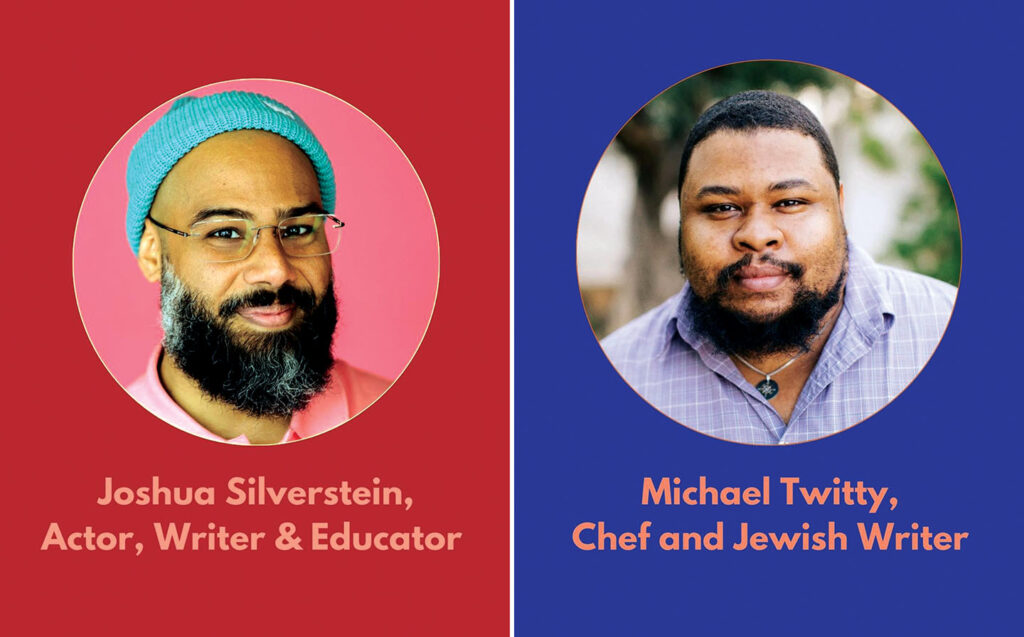
Speakers include soul food scholar and culinary historian Adrian Miller; actor, writer and educator Joshua Silverstein; and chef and Jewish writer Michael Twitty. 

Silverstein, who identifies as Black and Jewish, will be leading the seder’s attendees in a Haggadah-making workshop. 

In a phone interview, Silverstein said participants will use the 15 sections of the Passover Haggadah — kadesh, urchatz, karpas, etc. — as jumping-off points for writing prompts and other forms of creative reflection on the legacies of Black and Jewish resilience and the contemporary lessons that can be learned from the Exodus story.

“What’s so exciting about this experience is that we want people to go home and use this as a template for their own personal lives,” Silverstein told The Journal. “This is hopefully a way that people can talk about their cultural touchstones in their own families… The Haggadah is a beautiful way to be able to have these conversations, to talk about liberation, talk about freedom, to talk about, you know, Exodus, to talk about oppression.”

”The Haggadah is a beautiful way to be able to have these conversations, to talk about liberation, talk about freedom, to talk about, you know, Exodus, to talk about oppression.” – Joshua Silverstein

Twitty, a celebrity chef and an African-American Jew, will be guiding attendees through an exploration of what the event’s description calls the “theology of soul food.” 

Because the seder is happening several days before the start of Passover — Pesach begins this year on the evening of April 12 — bread will be served. The Skirball’s executive chef is preparing a menu that “blends traditional Black and Jewish cuisines,” the event’s organizers said.

“We are going to have challah, because we’re Challah and Soul,” Judi Leib, co-founder of Challah and Soul and a four-decade veteran of the food service industry, told the Journal. “As Jews, we want to cram as much bread as we can into our bodies until sundown on the 12th, right?”

Leib and Walkowitz, the founding duo behind Challah and Soul, were brought together by Hadassah of Southern California in 2021. The original plan was to hold a one-off luncheon, connecting Black and Jewish moms. The more they shared the idea with other people, however, the more they saw the enthusiasm for it. Thus, they founded the organization to reignite the alliance of Blacks and Jews through food, storytelling and education.

For Silverstein, a DEI consultant at Jewish theater and storytelling organization The Braid, working at the intersection of the Black and Jewish communities is familiar territory. Jewish on his father’s side, Silverstein said there can be reluctance in the Black community to become advocates for Jews, even at tension-filled moments such as the one experienced post-Oct. 7. This is because a Black community member, in being there for another group that’s experiencing discrimination or marginalization, might worry about what they’re forfeiting in the process, he said.

Nowadays, the instinct for self-preservation – or self-protection – might be getting in the way of Jews and Blacks working more closely as allies, he said, despite there being moments throughout history, including during the Civil Rights Movement, when the communities have come together.

“Whenever you have oppression,” Silverstein said, “there is that defense mechanism and that reaction of ‘I’ve had to protect myself for so long that I don’t want strangers coming in, because what if I lose, you know, what makes me sacred?’”

The idea of letting the stranger in, opening your heart to an ally from outside of the community, can be likened to the act during the seder of setting aside an extra cup of wine and opening the door to the prophet Elijah. 

In the context of Passover, Elijah is viewed as a symbol of hope, redemption and the coming of the Messiah’s arrival on earth—perhaps with that would be the more universal acknowledgement that our similarities transcend our differences.

“Race is a construct, so how do we get back to, ‘We are one?’ How do how do we get to that bridge and see the commonalities while celebrating the differences?” Silverstein said. “That’s the endgame.”

To learn more about ‘Soulful Seder,’ visit challahandsoul.org 

Black-Jewish Alliance to be Celebrated at ‘Soulful Seder’ Read More »

The Many Joys of Matzah Making

Every springtime, the sun shines brightest in Rabbi Aron Teleshevsky’s professional life during the month between Purim and Passover.

On those days when he and his Chabad Youth team climb into the Gilberg Family Matzah Factory truck, they deliver happiness to more than 2800 Jewish children at more than 50 Greater Los Angeles locations.

This program originally was based in Westwood for about 30 years, and Rabbi Teleshevsky has been piloting the truck across the community for 12 years. 

Not only do the students — ages 5 to 12 — learn the art of matzah making, they are entertained with a short play about the story of The Exodus.

The children are transported back to Egypt 3350 years ago. They are encouraged to use their imaginations and sound effects, pretending they are slaves to the Pharaoh.

Rabbi Teleshevsky is co-director of Chabad of Playa Del Rey with his wife Mushka, and they are the parents of eight still-young children.

In the rabbi’s own words:

“Enter Moshe chasing his sheep in nearby Midian. Participants get to watch an interaction of Moshe at the burning bush speaking to Hashem. They see Hashem charge Moshe with asking Pharaoh to ‘Let my people go!’

“Moshe gets the students involved. Shouts of ‘Let my people go!’  can be heard echoing in the hallways of many schools in Los Angeles. 

“Pharaoh is brought up to the front wearing his Pharaoh costume. The children scream ‘Let my people go!’ over and over, and Pharaoh says ‘No! No! No!

“Meanwhile, water is turned into blood while frogs are jumping all over the place. Every time, the children are enamored by a replay of some of the plagues. 

“When Pharaoh finally lets the Jewish people go, the students are whisked to the next part of the program where they have to rush to make their matzah. 

“Wheat stalks are distributed. Kernels are separated and ground into fresh flour. We learn that the flour we use needs to be only kosher for Passover. 

“Next, a ‘flour girl’ and a ‘water boy’ are called up from the crowd. They help pour the ingredients, and the 18-minute timer starts. We must finish this process within 18 minutes or the dough will begin to rise! 

 “The children are brought to brown paper covered tables sprinkled with flour, rolling pins and Hole Dockers where they roll out their matzahs nice and flat, put holes in them and bring them quickly to the waiting oven.  Phew! We made it! the matzahs are baked crispy and yum for the kids to enjoy as a precursor to the incredible holiday of Passover.”

Rabbi Teleshevsky described the scene as a permanent memory: Covered in baking flour, the children walk away wearing their matzah aprons, hats and very big smiles.

The Many Joys of Matzah Making Read More »

Campus Watch April 3, 2025

UCLA Indefinitely Bans SJP

UCLA has issued a preliminary ban for the campus Students for Justice in Palestine (SJP) chapter and a preliminary four-year suspension for the Graduate Students for Justice in Palestine (GSJP) chapter on March 28.

Back in February, Chancellor Julio Frenk announced that the two student groups were suspended after “individuals affiliated with the student groups harassed Mr. Sures and members of his family outside his home” and that “individuals vandalized the Sures home by applying red-colored handprints to the outer walls of the home and hung banners on the property’s hedges.” The Los Angeles Times reported that the student groups can appeal the decision, which has not yet been finalized. Additionally, the Times noted that the sanctions “do not prevent them from protesting on campus. As a public institution, limited parts of UCLA’s grounds are open to anybody to demonstrate at most times of day. But the moves prevent the organizations from registering for campus event space, applying for student activities funds and otherwise representing themselves as UCLA organizations.”

The university said in a statement, “UCLA is committed to fostering an environment where all students can live and learn freely and peacefully … We will continue to uphold our policies to ensure UCLA remains a safe and respectful learning environment for all members of our Bruin community.”

Katrina Armstrong Resigns as Columbia President

Katrina Armstrong resigned from her position as president of Columbia University on March 28.

The university announced that Armstrong will be leading the Irving Medical Center at the university; Claire Shipman, the co-chair of the university’s Board of Trustees, will be taking over as the interim president. Armstrong’s resignation comes after reports from The Free Press and Washington Free Beacon came out stating that Armstrong told faculty members privately that the agreement with the Trump administration’s demands to address campus antisemitism wouldn’t change much on campus; per the reports, Armstrong told faculty that there would be no ban on masking or change in admissions procedures despite both being demands from the administration. Provost Angela Olinto also reportedly told faculty that the school’s Middle East, South Asian and African Studies department would not be under an “academic receivership” for five years despite that also being a demand from the administration. The agreement was part of an effort to begin talks for the administration to restore $400 million in funding to Columbia.

“Dr. Armstrong accepted the role of interim president at a time of great uncertainty for the University and worked tirelessly to promote the interests of our community,” Board of Trustees Chair David Greenwald said in a statement. “Katrina has always given her heart and soul to Columbia. We appreciate her service and look forward to her continued contributions to the University.”

New Columbia President Reportedly Referred to Congressional Hearings on Campus Antisemitism “Nonsense”

Claire Shipman, the new interim president of Columbia University, reportedly referred to the congressional hearings on campus antisemitism as being “nonsense.”

According to Fox News and The New York Post, Shipman wrote in a Dec. 2023 text message to then-University President Minouche Shafik that a New York Times article stating at the time that the school handled anti-Israel protests better than other Ivy League universities “heavily inoculates us for a while from the capital [sic] hill nonsense and threat.” The purported text was discovered in a 325-page House Committee on Education and the Workforce report in October. She also reportedly wrote in a text to Shafik at the time that “we should think about unsuspending the groups before semester starts to take the wind out of that,” referring to anti-Israel groups that the committee report claimed violated university policy with the protests. A university spokesperson told Fox News, “We are focused on doing what is right and honoring our commitments to create a Columbia community where students are safe and able to flourish.”

Cornell Student Involved in Anti-Israel Protests Self-Deports

Momodou Taal, an Africana doctoral studies student at Cornell University and a dual citizen of the United Kingdom and Gambia, announced on March 31 that he has left the United States after his student visa was revoked.

CNN had previously reported that Taal had posted “Glory to the resistance!” on X as well as “colonised peoples have the right to resist by any means necessary” and that Taal was suspended twice by the university in 2024 after he allegedly took part in “disruptive protest activities.” “Given what we have seen across the United States, I have lost faith that a favourable ruling from the courts would guarantee my personal safety and ability to express my beliefs,” Taal wrote in a statement posted to X on March 31, adding that “the repression of Palestinian solidarity is now being used to wage a wholesale attack on any form of expression that challenges oppressive and exploitative relations in the US.”

Campus Watch April 3, 2025 Read More »