fbpx

April 3, 2025

Freedom, Truth and Beauty: the Law Set Us Free (thoughts before Passover)

 

Freedom,  Beauty and Truth  – Comments before Passover (coinciding with Torah portion VaYikra)

Passover is our holiday of freedom. Our tradition provides a wonderful insight on the nature of freedom through a play on words.

We find this wordplay in the Talmud, based on Exodus 31:16.  That verse describes Moses coming down from Mt. Sinai with the Tablets of the Law. The verse tells us that that the tablets were the “act of God, and the writing was the writing of God, engraved on the tablets.”

The Hebrew for “engraved on the tablets” in this verse is “harut al ha-luchot”. In the Talmud, tractate Eiruvin 54a, Rabbi Acha bar Ya’akov says, “Don’t read it as “harut” – “engraved on the tablets” – but rather read “heirut” – “freedom” (the two words are spelled the same in biblical Hebrew, which does not record vowels).

Rabbi Acha’s reading of the verse in the Bible, changes “the writing is engraved on the tablets” to “the writing is freedom on the tablets.”

The writing stands for the law of God, so put philosophically, Rabbi Acha’s statement would read, “The law will set you free.”

This interpretation becomes even deeper when we look at Proverbs chapter 3:3, “Let kindness and truth never leave you . . . write them on the tablet of your heart.”

Through our tradition’s granting of great liberty in interpreting the Bible, the word “writing” becomes “law of God,” engraved becomes “freedom” and tablet becomes “heart”. We are left with this interpretation:  The of law is freedom on the heart, the law on your heart will set you free.

Let’s add another step. In our blessing over the reading of the Torah, we thank God for giving us a Torat Emet, a Teaching of Truth – and this truth will set us free.

Law is truth, engraved on our hearts, and the law/truth will set us free.

How can the law as truth set us free?

Think of the word “discipline,” from the Latin word for student. Discipline can refer to body of teaching, as in discipline of law. Discipline can also mean rigorous adherence to conduct that serves some vision, a disciplined person, as in a disciplined athlete.

In this sense, the key to freedom is discipline, which is a requirement for knowing the truth. A disciple, one who follows a discipline, knows the truth, because they train in the truth, and that training in truth sets you free. One of the words in the book of Proverbs for a discipline is actually the word “Torah.”  “If you train in  Torah, you will know the truth, and the truth will set you free.”

The essential questions for Rabbi Acha in the Talmud “how does the law, as a discipline, set us free? Free from what? What truth is discovered in following a discipline?”

This question makes us inquire into the nature of freedom, an inquiry that Passover, our Festival of Freedom, calls us to do. There are at least two ideas of freedom that we work with. One idea is freedom as liberty; the liberty, in general, to do as you please, as long as you don’t actually cause harm to others. Freedom as liberty is enshrined in our Constitution. We are free to speak, to assemble, to write what we please, as long as we follow the law and don’t harm others.

Spiritual freedom, as opposed to political liberty, cuts entirely in the other direction. Freedom, as law and discipleship, does not have to do with rights, but with duties. Freedom in law and discipleship removes the inner impediments that keep us from following a discipline. Spiritual freedom means overcoming the resistance to act rightly.

The truth that one knows from discipline is a tough concept. In every discipline there are a set of laws, you might say, that you have to follow to acquire mastery. An excellent metaphor is dance. The mastery of dance sets the body free of its inherent limitations. A disciplined dancer can exemplify beautiful freedom.

As I am somewhat of a cultural plebe, when I think of great dance, I don’t think of the ballet, I think of the Lindy Hop. I can watch this little segment from the odd film “Hellzapopin” endless times:

https://www.youtube.com/watch?v=qkthxBsIeGQ&list=RDqkthxBsIeGQ#t=5

The dancers look free, exuberant, almost defying the clutch of earth’s gravity. Achieving that freedom in dance takes endless sessions of practice and rehearsal. Anyone who has mastered any physical discipline knows of the hours and hours it takes to free the body from its awkwardness and birth it into beauty. In general, beauty occurs in nature, but is achieved by human beings, achieved mostly through some mixture of will, skill, grace and suffering. Once you experience that mixture, through great discipline and mastery, you will come to know a truth that will set you free. You will experience what it is like, at least for a moment, like a bird on the wire, to be free.

Liberty is focused on other people not interfering with what I have a right to do, even though it may upset them. Spiritual freedom is focused on the self, the inner freedom to follow a law or discipline that will guide you to create beauty from your life, releasing it from the resistance and impediments within.

From a spiritual perspective, I focus on freedom as law. Laws of kindness, laws of thinking, laws of truth.

If you truly want to be free, follow the teaching of truth.


טז וְהַלֻּחֹת מַעֲשֵׂה אֱלֹהִים הֵמָּה וְהַמִּכְתָּב מִכְתַּב אֱלֹהִים הוּא חָרוּת עַל־הַלֻּחֹת:

Freedom, Truth and Beauty: the Law Set Us Free (thoughts before Passover) Read More »

The Six Months Before Yom Kippur Ramble – A poem for Parsha Vayikra

If a person sinned by transgressing one of the passive commandments of God, but he does not know for sure, he is considered guilty, and he will bear the consequences of his transgression. ~ Leviticus 5:17

I’m pleased to have the opportunity to get back to
my sins and guilt, what with Yom Kippur a mere
six-and-a-half months away, it’s never too soon.

Usually, we don’t begin the proceedings until
the month of Elul when the remindening begins.
(My apologies to the proofreader who, for sure

is going to contact me about my invented word
remindening. My further apologies to my friend
the cantor who lives in Phoenix, although

by the time you read this, that could change,
who is sometimes thrown off by where I choose
to break my lines. As I once said, once you break

a line, its mother will never forgive you.)
Why is this poem in tercets, anyway? Do I think
I’m making higher art by using tercets?

Go ahead and look up tercets if you need to.
Thanks to the technology that is bringing this to you
I won’t need to wait before I continue. Look! I’ve continued!

These are just some of my sins; my guilt laid out
on all the electronic platforms, and in certain regions
in print, for all to see and tsk tsk me about.

I’m willing to bear the consequences of my transgressions –
intentional or otherwise. I’m willing to sprinkle the un-oiled flour.
I don’t think I can use frankincense for this, so put it away.

I hear I’ll need an unblemished ram. (That’s the only kind
allowed in today’s political climate.) It’s cool. That was
my high school’s mascot. As an alum, I think I get a free one.


Rick Lupert, a poet, songleader and graphic designer, is the author of 28 books including “God Wrestler: A Poem for Every Torah Portion.” Visit him at www.JewishPoetry.net

The Six Months Before Yom Kippur Ramble – A poem for Parsha Vayikra Read More »

Golda Project Holds Book Launch, WIZO’s Luncheon Celebrates Arts

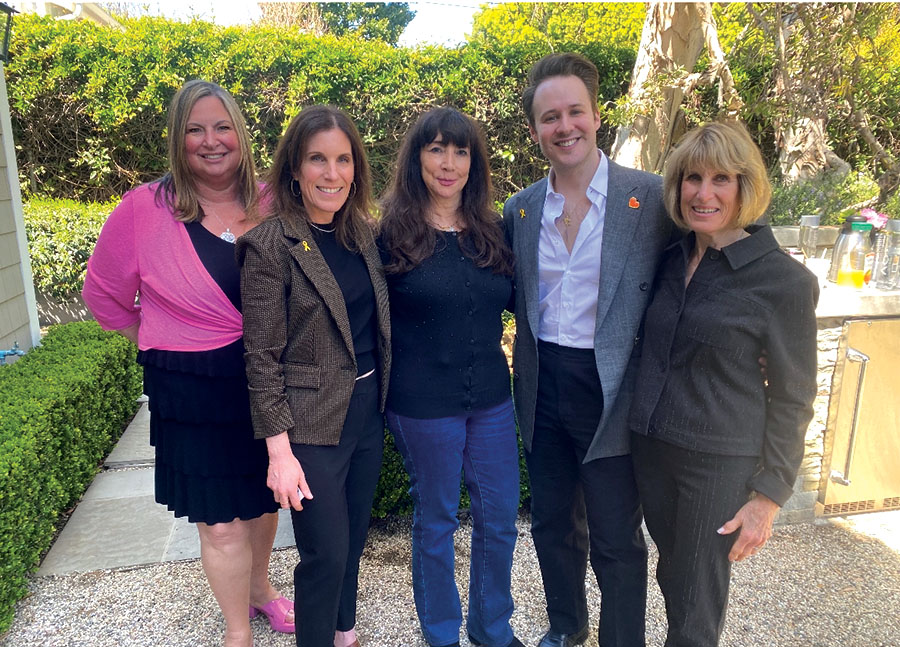
Author and educator Ben Freeman participated in a launch event for his latest book, “The Jews: An Indigenous People,” during an intimate gathering at a private home. 

Zionist women’s empowerment organization The Golda Project organized the March 21 event, held on a Friday a few hours before the start of Shabbat.

Among those in attendance at the dialogue and brunch was Gina Raphael, whose nascent organization, The Golda Project, organized the program along with Holocaust Museum LA. The Holocaust museum’s executive director, Beth Kean, along with Jordanna Gessler, the museum’s chief impact officer, turned out.

Female Zionist leaders comprised the majority of those who came to support Freeman and the work of The Golda Project. Among them were Alissa Bernstein, a recent contributor to the anthology “Young Zionist Voices” and assistant director at American Jewish Committee Los Angeles, as well as event co-chairs Shana Glassman and Harris. 

Harris hosted the event in the backyard of her Brentwood home, where attendees sipped on coffee and noshed on pastries, fruit and baked goods as Freeman discussed his book, which he likened to a deep dive into 3,000 years of Jewish connection to the land of Israel, with the event’s co-chair and moderator, Lauryn Harris.

“There is an enormous amount of evidence for our Jewish story,” Freeman said. “It’s real, and we have to teach it as real.”

The Golda Project was co-conceived by Raphael and Glassman in late 2024. The group seeks to empower Jewish women and their allies to become leaders in the Los Angeles community and in Israel while supporting these goal-oriented women in their personal and professional pursuits. The organization is named after Golda Meir, Israel’s first and only female prime minister.

“The Golda Project is incredibly important to me,” Raphael told the Journal. “It’s very exciting to be able to lead women and encourage women to do new and better things. And the power of women coming together is unbelievable, and we have to encourage the older generation, the younger generations, and all these women to come together and make real change. That’s the power of being a Jewish woman.”

Next up for The Golda Project is an April 7 bridal shower in celebration of Shir Siegel, daughter of released hostages Aviva and Keith, as well as an April 23 “Golda’s Book Club” event in Beverly Hills with Rebbetzin Olivia Schwartz. 

Raphael, who day-to-day runs her family-owned Mickey Fine Pharmacy in Beverly Hills, has long been active with pro-Israel philanthropy and advocacy. Speaking to The Journal, she said she’s been gratified by the quick growth of the organization. More and more women are getting involved with the organization, Raphael said, because they see it as an opportunity to express their passion and commitment to Israel.

For more details on the organization, visit thegoldaproject.net


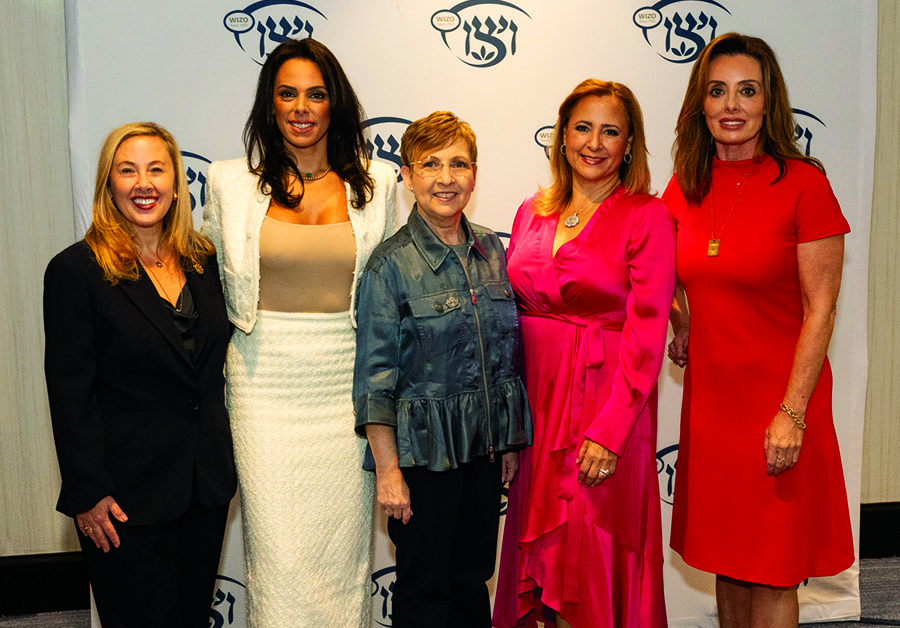
Attendees of WIZO California’s recent Spring Luncheon.
Photo courtesy of WIZO California

On March 25 in Beverly Hills, WIZO California held a sold-out Spring Luncheon, uniting a vibrant community to explore the deep connection between Zionism and the arts. 

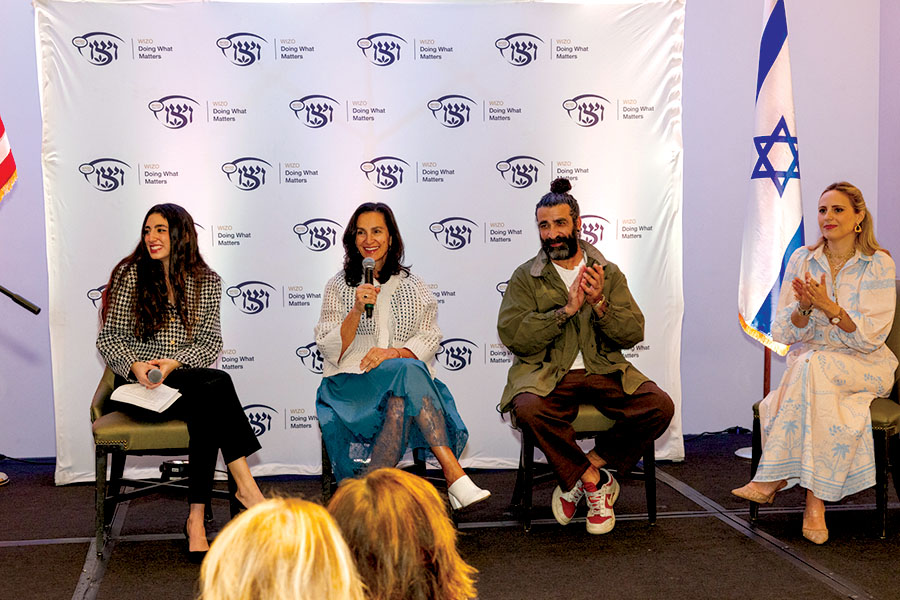
The celebratory event featured a discussion with acclaimed Israeli artist Tomer Peretz, renowned jewelry designer Rachie Shnay, and esteemed gallerist Shula Nazarian, with activist Yasmeen Ohebsion moderating. Through engaging conversation, guests gained valuable insight into how art preserves Jewish identity, strengthens Zionist values, and serves as a powerful tool for advocacy.

From left: Activist Yasmeen Ohebsion, gallerist Shula Nazarian, Israeli artist Tomer Peretz and jewelry designer Rachie Shnay participate in a panel discussion during WIZO California’s recent Spring Luncheon. Photo courtesy of WIZO California

More than just a cultural gathering, the luncheon raised critical funds for WIZO’s life-changing programs, which support women, children, and families in Israel. Founded in 1920, WIZO is Israel’s second-largest provider of social services after the government, operating childcare centers, domestic violence shelters, vocational training programs, and more to empower those in need.

For over a century, WIZO has been a driving force for change, strengthening Israel through philanthropy, education, and activism. The Spring Luncheon highlighted the collective power of Los Angeles’ Jewish community, showcasing how creativity and action can make a lasting impact.

Golda Project Holds Book Launch, WIZO’s Luncheon Celebrates Arts Read More »

Comedian Mike Glazer Stands Up to an Antisemitic Heckler

Mike Glazer is standing on stage, performing comedy in Sioux Falls, South Dakota. It seems like a normal road gig – the Los Angeles-based Jewish comic had done plenty of them before – until suddenly, a heckler starts spouting hate.

“Jew pig” a man says.

“Did you call me a Jew pig?” Glazer asks.

“Yeah, I did,” the man replies.

“Alright buddy. I think that you should probably go,” Glazer says.

“We are. I’m order the Lyft right now Jew f—k,” the man retorts.

“Why don’t you order it out there?”

“F—k you Jew,” the man says.

Glazer says, “F—k you buddy” back to him, and the man replies, “We support Donald Trump in this country buddy. F—k you Jew lover.”

“I feel like I’m in my Instagram right now,” Glazer tells the audience. “This is so crazy. Wow. You never see them IRL (in real life). And then once you do, you’re like, oh, yeah, that’s about what I thought.”

Glazer then posted the interaction to his Instagram, stating, “I never expected this heckle.” The video racked up millions of views.

“One of my major takeaways is how fortunate I was to have the wit, amplification (a microphone), and an audience surrounding me to protect me in that moment,” the comedian told the Journal. “What has weighed on me is thinking about the people in this country who don’t have all of those things shielding them in a political and cultural climate that has empowered fear and hate.”

What bothered Glazer was the fact that this man can remain anonymous.

“This clip of me will go viral, but that man will go about his life unnoticed and unchecked for his hate.”

“This clip of me will go viral, but that man will go about his life unnoticed and unchecked for his hate,” he said. “That has been a sobering lesson for me.”

The comedian has received his fair share of support from fans and friends; however, antisemites have also targeted him. He posted it on Reddit, and an onslaught of hate followed.

“My clip reached 7 million views, at which point the moderators had to disable the comments because Nazis filled them with hate speech and death threats,” Glazer said. “The moderators wrote me a message explaining that it was too much to handle, so they had to lock the post for everyone’s protection. Many people commented that I handled the situation well, but most called it a staged event and threatened to find my family.”

The hate didn’t stop there. After Kanye West went on his antisemitic rant on X and made a Super Bowl commercial for his swastika shirt, Glazer posted a video making fun of him. Kanye downloaded the video and reposted it as part of his antisemitic meltdown.

“It’s no coincidence that Kanye West shared my joke, and the Nazis quickly arrived in my comments,” said Glazer. “These celebrities are the faces that give permission to the faceless online, and now in public, to verbally attack and potentially incite violence against anyone they hate.”

He was formerly a Kanye fan; now, of course, he won’t forgive the rapper for his hateful behavior.

“I loved Kanye until he became who he is today,” Glazer said. “I also have zero tolerance for people who say that he is unwell or brainwashed by the Kardashians. If he needs help, I hope he gets it — but that doesn’t excuse creating swastika shirts and chains. He’s a monster. His posting my joke has only led racists to my social media, calling me a k-ke, and threatening to ‘burn down my synagogue.’”

Glazer had experienced antisemitism in the past. When he was 16 years old and at a party, everyone spit on him while doing the heil Hitler salute.

“After that incident, it has mostly been people who weren’t intentionally being antisemitic or were trying to joke with me,” he said. “I can easily roll with that. It’s important to call out that I love hanging out with other comics, being funny and talking trash on stage and off. It’s how we communicate and show love for one another. Everyone’s doing their best. But now I’m being called a ‘Jew pig’ from 20 feet away. We are in a country normalizing full-blown Nazism.”

While the hate online and off is pervasive, thankfully, Glazer has received love as well – which gives him hope.

“People have flooded my social media with support and their own heartbreaking stories,” he said. “It’s heartwarming and shows that we can fight back and change the world when we band together.”

Comedian Mike Glazer Stands Up to an Antisemitic Heckler Read More »

A Bisl Torah~Lingering Chametz

As Pesach begins on a Saturday evening, Jewish laws surrounding the holiday are more confusing than usual. While we usually check for chametz on the evening prior to the Seder, this year, we will perform the ritual almost two days before Passover officially begins. Technically, while chametz will mostly be rid from our homes, we can eat chametz on Shabbat morning. This means that some chametz will remain and is even permissible after the formal “burning” on Friday morning.

The amended ritual is a reminder of the spiritual reality many of us carry during Passover and throughout our lives. Chametz symbolizes that which is “holding us back” from being our most authentic selves. As we rid our refrigerators and couch cushions of crumbs, we are meant to also rid our souls of excessive hubris, misplaced anger, and petty arguments. But even as we vow to eliminate these negative traits, just like pesky crumbs, it feels impossible to completely rid ourselves of everything. Just like this year with the chametz that carries over on Shabbat morning, we most likely have some spiritual chametz lingering within.

A change in ritual allows for an extended inspection and introspection. Many of us are overzealous in our cleaning and scrubbing. This year, may we be just as meticulous in the cleansing of our souls.

Shabbat Shalom and an early Chag Sameach.


Rabbi Nicole Guzik is senior rabbi at Sinai Temple. She can be reached at her Facebook page at Rabbi Nicole Guzik or on Instagram @rabbiguzik. For more writings, visit Rabbi Guzik’s blog section from Sinai Temple’s website.

A Bisl Torah~Lingering Chametz Read More »

The Tragedy of Ethiopian Jewry

I didn’t want to go.

A few months ago, I was invited to join a Rabbinic mission to Ethiopia.  I hesitated and procrastinated, hoping they would just send the mission without me. But I had been invited by dear friends, and it finally reached the point when I couldn’t refuse any longer. So muttering under my breath that I was too busy to leave work for a week, I boarded a plane for Addis Ababa.

Now, I’m embarrassed that I hesitated. This trip has changed my life.

Ethiopian Jewry has long stood at the periphery, isolated from the rest of the Jewish world. When outside Jews connected with them, Rabbis were often the first to support them. In the early 1500s, Rabbi David ibn Zimra was asked to judge the lineage of an Ethiopian Jewish woman who had been sold into slavery and bought by one of the members of the Cairo community. He ruled definitively that the woman was Jewish, a descendant of one of the Ten Lost Tribes. In 1864, Rabbi Azriel Hildesheimer wrote a passionate plea calling for financial support for and political advocacy on behalf of the Jews of Abyssinia (today’s Ethiopia). In 1921, Rabbi Abraham Isaac Kook called for Jews around the world to accept upon themselves “…a sacred duty …to generously contribute donations for the welfare of the Jews in Ethiopia, to support the relocation of their young people to Jewish centers in the Diaspora and the Land of Israel, and to assist in every aspect of their material and spiritual revival.” A 1973 responsa by the new Chief Rabbi, Ovadiah Yoseph, ruled that Ethiopian Jews are to be accepted fully as Jews. The door was now open for immigration to Israel.

When Menachem Begin was elected Prime Minister of Israel in 1977, he turned to the Mossad and said: “Bring me the Jews of Ethiopia.” Finally, they could come home.

A series of dramatic rescue operations commenced. In Operation Brothers, the Mossad bought and operated a Red Sea resort during the day, and used its beach to smuggle Ethiopian Jewish refugees at night. In Operation Moses, the IDF and the CIA airlifted thousands of refugees from Sudan to Belgium and on to Israel. In 1991, Operation Solomon, which took place during a Civil war in Ethiopia, brought over 14,000 Jews to Israel in one day.

But then everything changed. There was a feeling of “mission accomplished,” even though tens of thousands of Jews remained in Ethiopia. Many of those left behind were the Falash Mura, whose families had converted to Christianity. Even though Rabbi Ovadiah Yoseph had affirmed the Jewish status of the Falash Mura, politicians and bureaucrats, deterred by the high cost of absorbing Ethiopian immigrants, balked at bringing them to Israel. Right now, many have been stranded in Ethiopia for years, waiting for the final approval on their applications.

Once again, Ethiopian Jews are on the periphery, largely forgotten by the Jewish world.

One champion, Joe Feit, took up their cause. A partner in a prestigious law firm, he left his job decades ago to focus on Ethiopian Jewry full time; he has been very active with the SSEJ, the Struggle to Save Ethiopian Jewry, an organization founded by his son Jeremy. Together with his other children and a small band of activists (including the late Elie Wiesel and Joe Lieberman), Feit has advocated and fundraised for the Ethiopian Jews who remained behind.

What the SSEJ has accomplished is nothing short of remarkable. At their compounds in Gondar and Addis Ababa, the SSEJ provides food, medical care, and supplementary Jewish education. These programs have saved many lives, and the community is extremely grateful; several of them have named their baby boys “Joefeit.”

Since 1991, some 50,000 Ethiopian Jews have immigrated to Israel. Now, some 13,000 remain, supported by the SSEJ.

It is those remaining Jews that we visited on our rabbinic mission. And the conditions they live in are disturbing.

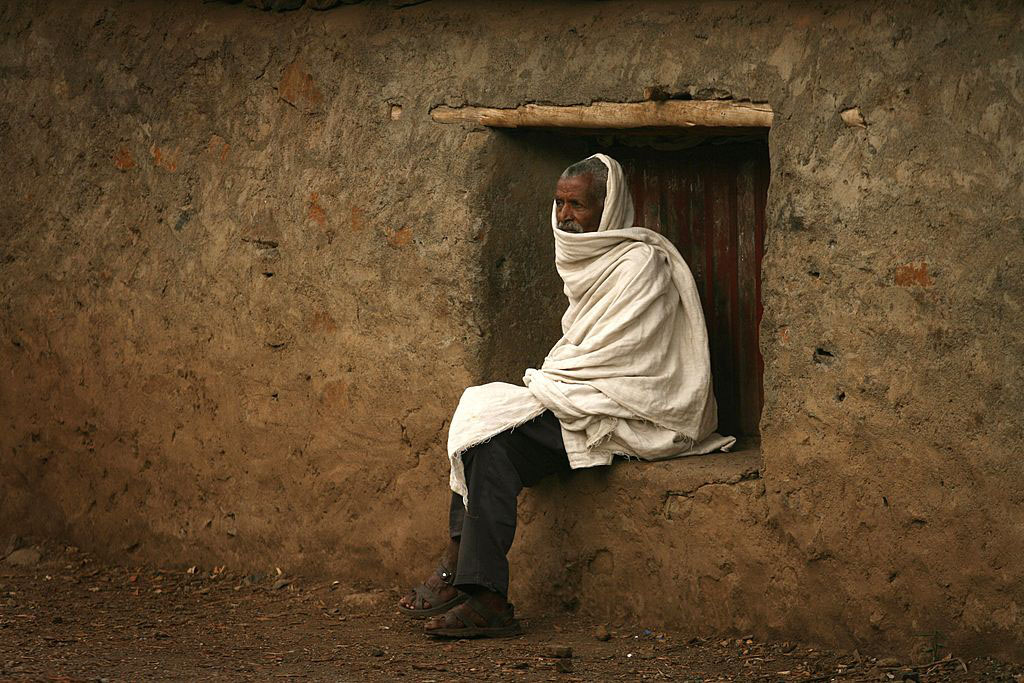
In Gondar and Addis Ababa, we went to visit people who live in tiny mud huts with corrugated aluminum roofs. In one, a family of 5 was living in an 80 square foot space; they utilized a shared kitchen and outhouse in the courtyard.

One of the Rabbis asked the woman who lived there what her family gets to eat. Our interpreter refused to translate the question; he said it would be too painful for her to talk about how little she and her family eat.

The situation of Ethiopian Jews has been desperate for a long time; and this year it is worse. Budget shortfalls have forced SSEJ to cut its food program for four and five-year-olds and regular grain distributions to families. At different points in our visit, several community members told us how they simply cannot continue their lives this way. The poverty is excruciating.

It was difficult to witness all of this. But what truly broke my heart was how lonely the Jews of Ethiopia are.

The first morning we were in Gondar, we joined the community for morning services. By the time services were over, nearly 4,000 people had packed into the compound to see us, overflowing from the synagogue into several nearby rooms. It was the first time in a long time that a delegation had come to see them. They have been forgotten.

After the services, we were approached by an unending line of people who handed us pictures of their relatives in Israel. It was pictures of their parents, children, and siblings; pictures of young soldiers and elderly mothers. In some instances, they have been waiting for decades to be reunited with their relatives; but they are stuck in a Kafkaesque bureaucratic limbo, unable to enter Israel. A child in Ethiopia might qualify to be reunited with a parent in Israel; but if the process moves too slowly (as it almost always does) and the parent dies, the child then no longer qualifies.

Ethiopian Jews have always had a profound love for Israel. When we met with the community council in Gondar, they presented us with a letter, written in idiomatic English, detailing their communal challenges. The final paragraph spoke of their longing to go to Israel:

We request you to quicken our journey to the Holy Land and contact us with our families there. Please enable us to stop weeping. With respect to this, we beg you to discuss with the concerned body and make it practical, as our creator promised to contact the far distant area people… We, by the name of God, beg you to make it practical.

We hope to be in Israel by next year.

In Gondar and Addis Ababa, they dream fervently of “next year in Jerusalem.” Their passion for Israel is extraordinary. But the very country they love has left them behind.

This makes no sense. Israel can use all the help it can get; and the Ethiopian community has demonstrated exceptional devotion to Israel. Young Ethiopian soldiers are overrepresented in commando units, and are prized for their courage; in the current war, the Ethiopian community has sustained, proportionally, twice as many casualties as the general public.

There are so many other young Jews like these soldiers languishing in mud huts in Gondar and Addis Ababa. Why would we want to shut the door in their faces?

This must change. The Jews of Ethiopia are our family. And since October 7th, we have learned how much family matters.

One of our meetings was with Sisai, a young man in his twenties who is one of the Gondar community’s religious leaders. He spoke passionately of how he has his Jewish lineage documented, yet still has to wait for a chance to apply for Aliyah. He remarked offhand that Jews will never achieve redemption unless we care for each other.

That is a fitting Pesach thought. Not just because it is about redemption; but because it is the very story the Tanakh tells about the Exodus.

The brothers throw Joseph into a pit, and then sell him into slavery. He cries out to them, but they don’t listen. As a result, they are exiled to Egypt. Three other siblings, Moses, Aaron, and Miriam, support and care for each other; and together, they bring the Jews out of Egypt.

The equation is clear. Fighting siblings end up in exile; loving siblings bring about redemption.

And this has been true through history. The internal strife of the Second Temple ended in exile; in 1948, the unparalleled support of Jews around the world resulted in the creation of the State of Israel.

Right now, we have a choice to make: will we be there for our Jewish brothers and sisters in Ethiopia?

They are crying out to us for help. It would be a tragedy of biblical proportions if we miss the call again.


Rabbi Chaim Steinmetz is the Senior Rabbi of Congregation Kehilath Jeshurun in New York.

The Tragedy of Ethiopian Jewry Read More »

A Moment in Time: “Blessed are You when You Enter, and Blessed are You when You Depart”

Dear all,

I captured this photo last week out the window of my airplane. (For the non av geeks, not to worry – all planes were exactly where they were supposed to be!)

One plane was coming. The other was going.

I was reminded of a Hebrew blessing: “Barach atah b’vo-echa. U-varuch atah b’tzetecha. Blessed are you when you enter. And blessed are you when you depart.“

Imagine, just imagine if we carry the honor and responsibility of being a blessing wherever we go. And more – if we bestow blessings upon others. Especially in our day, in this critical era when there is so much taxing our hearts, there is still so much we can do:

What minds can we inspire?

What light can we offer?

What hugs can we extend?

What hands can we hold?

What souls can we touch?

Yes – in all of our comings and goings, we have opportunities in any given moment in time to bless and to be blessed.

With love and shalom,

Rabbi Zach Shapiro

A Moment in Time: “Blessed are You when You Enter, and Blessed are You when You Depart” Read More »

Zusha Goldin: Behind the Camera, Beyond Hate – A Mission for Unity

The first thing that hits you about Zusha Goldin is his optimistic, easygoing nature – one imagines that that’s how his clients look so comfortable in his clicks, resulting in some unbelievable portrait shots of them.

Left to right: Montana Tucker, Zusha Goldin.

But his talent for photography is not the only thing that defines him, young-but-rooted Zusha uses his camera for a cause close to his heart, that of developing and offering young Jews a world-stage to showcase their artistic talent, and for fighting antisemitism.

Zusha’s tryst with photography

Operating out of Los Angeles and New York City, Zusha is the youngest of 10 siblings, born and raised in an ultra-orthodox close-knitted Jewish family in Brooklyn, New York. 

Right to left: Brett Gelman, Emmanuelle Chriqui, myself, and Kenny Hamilton. Photos by Tom Shohat.

Zusha’s tryst with photography also has a little sibling-story behind it, having begun with a camera bought by his siblings, which he would often dabble with as a child.

That grew into shooting his friends and family for fun, and developed his passion for photography – something he was, in any case, “always interested in”.

Additionally, he “would make short skits which he would act in, edit, direct, write, and film”. At around 18 years of age he decided to pursue portrait photography professionally, and there was no going back for him after that.

Chasing his childhood dream to move to Los Angeles, on March 1st, 2020 Zusha moved across the country to Los Angeles, California to transition from the community life in Brooklyn, to life in the city of stars.

Building his portfolio in LA

An optimist fuelled by realism, Zusha believes that having visions is the first step towards success, but success itself only comes to you with the discipline of setting and meeting deadlines, and daily actionables that you adhere to.

In alignment with his philosophy, the building up of his career too was a well-thought out approach which he followed through step-by-step. 

He needed to build a portfolio to get work, but as an unknown photographer in LA how did he begin?

He says, “Every creative knows that to build in the building stage of your brand, you must do free work to build a portfolio. I did lots and lots of free work.”

Combining this with his superior networking skills he perfected his craft, and did social media content creation full-time. This brought him amazing opportunities, and gave him a playing field which was all his to play in and own.

Before he knew it he was servicing high-end clients such as top talent in the industry and CEOs and executives all around the southern California area. 

During this time, he photographed some of the biggest Hollywood stars – from Sydney Sweeney to Selena Gomez, Ben Stiller to Courtney Cox. 

In this time – nearly 4 and a half years – Zusha had built not just his career, but a base which he could not have guessed then, would soon come in handy in more ways than one.

The birth of ‘AAA’

Zusha had earlier described his relationship with religion as being ‘complicated’, but the tragedy of October 7th and the massive vitriol against Jews on social media and elsewhere evoke the proud Jew in him.

He reflected that October 7th had prompted most Jews to clearly pick a side, and the sides emerging in the Jewish community were – of ‘good’, apologetic Jews, and of proud ones, who refused to bow down in silence to the hatred.

“I was like, ‘This is unacceptable,’” he says. “Because if I’m feeling this way, what about all the thousands Jewish teenagers all around the world who are 15-years-old and are receiving these comments?”

He adds a word of caution, clarifying his stand, that AAA was formed with the aim to “raise awareness about the global [rise of] antisemitism, normalize celebrities, especially non-Jewish celebrities, standing up against antisemitism and de-politicizing standing up against Jew hatred. It shouldn’t be political to combat any form of hate.”

That’s when Zusha strategized to stand up and give back to the community that made him him. And thus, ‘Artists Against Anti-Semistism’ (AAA) was born. He tapped into his network to bring together celebrities to speak up against anti-semitism.

Left to right: Moran Atias, Zusha Goldin.

Of course, this wasn’t easy, with some Hollywood A-listers telling him outright that he may be right, but standing up for his cause could cost them a lot.

“I’ve had a few A-list celebrities tell me to my face, ‘I support you, but I don’t think it’s smart for me to do this right now,’” he said.

Yet, Zusha, who in his own words, “perseveres with real grit, tenacity, persistence and the ability to not self-reject and not take “no” for an answer” eventually built brick-by-brick, a list of actors and influencers to support his cause, and what’s today known as ‘AAA’.

Zusha’s work so far and future plans

Zusha’s first exhibit launched in Los Angeles with sponsorship from Jews Talk Justice and his second, ‘Comments for Peace’ launched in Manhattan in November last year, alongside his nonprofit ‘Artists For Unity’. 

The exhibit was attended by a crowd of changemakers and industry leaders of the likes of those of the likes of Ginnifer Goodwin (Once Upon a Time), Tiffany Haddish (The Afterparty), Paul Walter Hauser (Fantastic Four: First Steps), Julianna Margulies (The Good Wife), Debra Messing (Will & Grace), and others, posing for shots with anti-semitic comments from social media.

The event which had over 170+ people in attendance also saw actress and comic Natalie Friedman and Jacob Wallach (founder of a social media agency) also co-hosted a Q/A with Zusha about combating antisemitism in Hollywood and on social media.

Two weeks later ‘Comments for Peace’ was brought to Miami in an event in ‘At Basel’ hosted by NellysList.

Zusha will now be displaying at a 2-day event at Columbia University in early April, and hopes to bring the exhibitions to Tel Aviv, and parts of Europe.

Also in the pipeline is a “third very different new style exhibit in spring highlighting Jewish pride combining the future of Jewish continuity with celebrities”

Ultimately, Zusha is powered by the vision to give grants to young Jewish creatives to empower their storytelling, and with his zeal for photography and his cause, there really seems to be nothing that can stop him from getting there very soon.

Zusha Goldin: Behind the Camera, Beyond Hate – A Mission for Unity Read More »

“What Is Truth?” Asked Pontius Pilate

“What is truth?” asked Pontius
Pilate,
of its use not conscious.
File it
away where you won’t find
it when
you need it, out of mind
again.
Truth does not come out
in the wash,
unless whitewashed by doubt,
sheer bosh.

Whenever truth is stained
by falsity,
deception
from it cannot be drained,
subjected to
inspection,
and rulers who’ve disdained
distress due to
objection
to lies, fail to regain
respect and
reelection
by subjects who complain,
delivered by
direction
of what relieves their pain:
political correction.


I recalled this poem on 3/29/25, reading the interpretation of Barukh HaLevi Epstein, in his commentary called Torah Temimah, of Exod. 40:31:


וְרָחֲצ֣וּ מִמֶּ֔נּוּ מֹשֶׁ֖ה וְאַהֲרֹ֣ן וּבָנָ֑יו אֶת־יְדֵיהֶ֖ם וְאֶת־רַגְלֵיהֶֽם׃
From it (the laver) Moses and Aaron and his sons would wash their hands and feet:
בְּבֹאָ֞ם אֶל־אֹ֣הֶל מוֹעֵ֗ד וּבְקׇרְבָתָ֛ם אֶל־הַמִּזְבֵּ֖חַ יִרְחָ֑צוּ כַּאֲשֶׁ֛ר צִוָּ֥ה יְהֹוָ֖ה אֶת־מֹשֶֽׁה׃ {ס}

They washed when they entered the Tent of Meeting and when they approached the altar—as יהוה had commanded Moses.


The Torah Temimah suggests that this verse tells us that Moses, Aaron, and Aaron’s two sons, Eliezer and Ithamar, washed their hand in the laver, and that they did this to atone for the sin that allegedly caused the death of Aaron’s oldest sons, Nadab and Abihu, whose death was due to their failure to wash their hands before helping to inaugurate the tabernacle.

Linda Hepner sent me this:

Reading your endnote and then the title, it occurs to me that the washing of hands implies a serious attempt to atone for murder, as you say reflected later in the Christian story by Pontius Pilate who by washing his own hands was attempting to atone for his responsibility for the death of Jesus. It leaves one to wonder if the surviving family of Moses and Aaron felt guilty for the two brothers who were killed. It does imply at least some sense of responsibility towards one’s fellow man.  In ‘Macbeth’, Shakespeare uses this device in Lady Macbeth’s madness scene, even though it was not she who actually committed the deed.


Gershon Hepner is a poet who has written over 25,000 poems on subjects ranging from music to literature, politics to Torah. He grew up in England and moved to Los Angeles in 1976. Using his varied interests and experiences, he has authored dozens of papers in medical and academic journals, and authored “Legal Friction: Law, Narrative, and Identity Politics in Biblical Israel.” He can be reached at gershonhepner@gmail.com.

“What Is Truth?” Asked Pontius Pilate Read More »

Chef Beejhy Barhany: “Gursha,” Ethiopian Jewish Food and Ethiopian Matzah

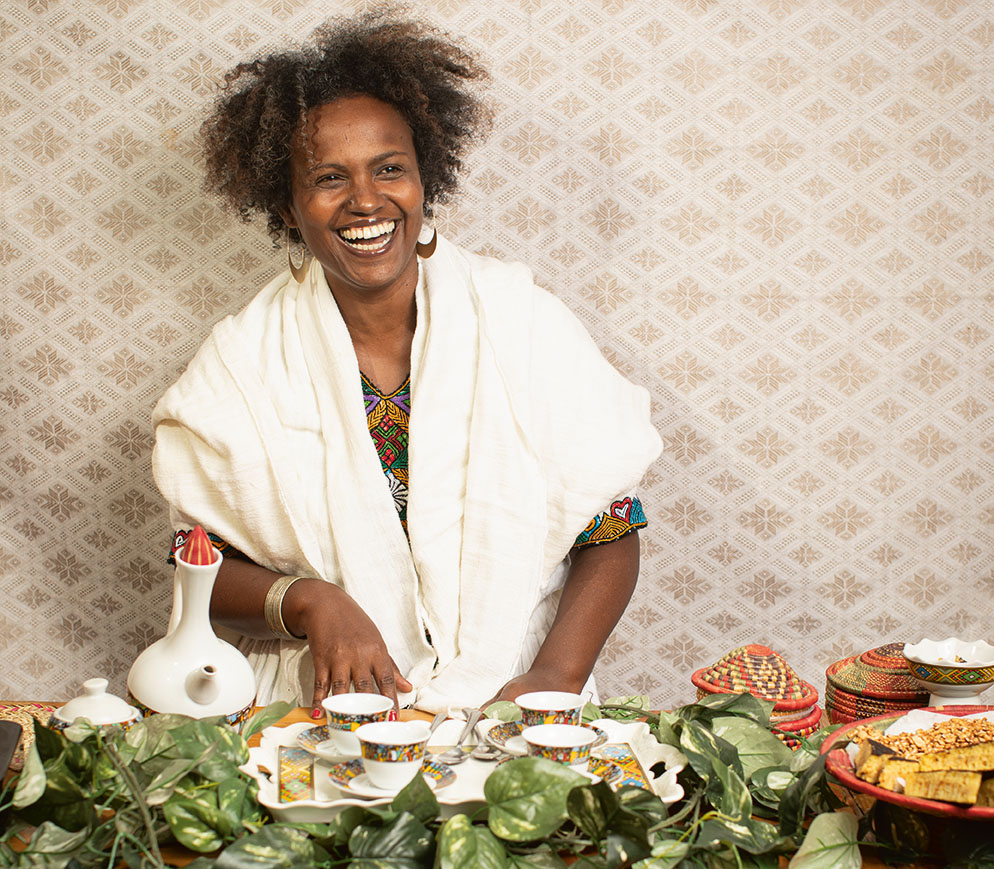
“Ethiopian Jewish food is just a little bit of everything,” Beejhy Barhany, the founding owner and executive chef of Tsion Cafe, an Ethiopian and Israeli restaurant, told the Journal. “It’s an array of an abundance of flavors … packed with nutrients.”

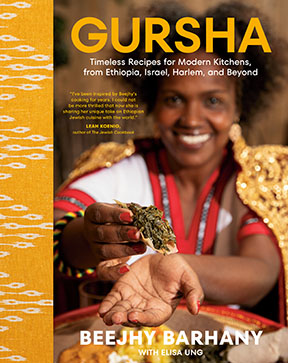
Born in Ethiopia, Barhany was raised mostly in Israel, before moving to New York in 2001. Her new cookbook, “Gursha” is a celebration of Ethiopian Jewish (Beta Israel) cuisine. It features more than 100 recipes, along with stories and traditions, from the places she has lived: Ethiopia, Sudan, Israel, and Harlem.

Barhany called herself a “wandering Jew” that celebrates Jewish diversity and inclusion via food.

“I encompass a lot of heritages and cultures and what have you, and that is actually showcased on the menu [and] in the cookbook,” she said.

The recipes in “Gursha,” which is is loosely translated as “mouthful” or “the act of feeding one another,” range from traditional dishes (Doro Wot, Shakshuka, Legamat [Sudanese doughnuts]) to ones that Barhany created (Berbere Fried Fish, Injera Fish Taco, Queen of Sheba Chocolate Cardamom Cake). Just in time for Passover, her recipe for Ethiopian Matzah is below.

A staple of Ethiopian food, she explained, is injera flatbread. It uses a fermented starter, like sourdough bread, is enjoyed with just about everything.

“Injera bread basically is your plate and your utensil to grab the different stews,” she said. This is true whether you are enjoying vegetarian fare – “We have a lot of vegetables stews going from braised, collard greens to cabbage with turmeric, carrots and potatoes to beets and okra and pumpkin,” she said – or delicious meat dishes.

“Doro, which are traditional national Ethiopian dishes, is very hearty,” Barhany said. “It’s chicken with hard boiled egg, and is aromatic, spicy and delicious.”

Barhany said her love for food started with experiencing the amazing aromas, while still in her mother’s belly; it continued with her upbringing.

“[It’s all part of] being born to an ancient Ethiopian Jewish community that adheres to ancient practices – hospitality, feeding one another [and] nurturing one another,” she said. “Cooking food …  is [such] a given, I wanted to open a place, Tsion Cafe, to introduce the rich flavors, aromas and textures of Ethiopian Jewish food.”

Tsion, which has been open for 10 years, is now completely vegan and kosher.

Barhany said her favorite dishes often depend on the mood, the weather and the flavor.

“Sometimes, when it’s a cold day, I crave delicious pumpkin stew with sweet potato, it’s a little bit spicy,” she said. “Yet when spring comes, [I] want a nice, refreshing collard green or kale braise on the injera bread with the lentil stew.”

For the base of traditional stews, or as a marinade, Barhany recommends making kulet.

“The berbere is the backbone of Ethiopian cuisine, and then in order to make that kulet, you need a lot of berbere: onion, garlic and ginger,” she said. “You let it simmer for a long while – I’m talking about an hour or two – and you have a big batch.”

She added, “You can put it in the fridge, and then [when you want to] make a delicious red lentil stew, for example, you take a couple of spoons, put it in a pot and add some water and lentils and voila!”

Barhany believes food is a wonderful tool to bring people together, as well as to engage and learn about each other’s cultures.

“Once you are open to tasting a particular group of flavors and dishes, I think you will have a better understanding [of one another],” she said. “I would say my offering is to have food as a medium of peace, harmony, and understanding and respect.”

The next time you are a visitor to someone’s table or have a new guest coming to yours, Barhany recommends trying new flavors.

“Bring a new dish to your Passover table, to your Thanksgiving table, to any table in order to celebrate the mosaic of Peoplehood and their deliciousness of food,” she said.

Learn more at TsionCafe.com. Follow @BeejhysGursha and @TsionCafe on Instagram.

For the full conversation, listen to the podcast:

Watch the interview:

YA FASSIKAH KITA / NAY WURENAH KICHA

Ethiopian Matzah

Feel free to use just one type of teff flour in this special Ethiopian matzah that is suitable for Passover because it does not rise, leaven or ferment. My grandmother made it every morning during Passover, mixing the batter right after she woke up and serving the matzah for breakfast. My family adhered so strictly to Jewish law that they ate it plain or with flaxseed: Less stringent eaters may enjoy it with Niter Kibbeh.

Makes 3 to 4 large matzahs

½ cup (115 grams) ivory teff flour

½ cup (115 grams) brown teff flour

1 teaspoon fine sea salt

2 cups (480 grams) lukewarm water

1 tablespoon vegetable oil (omit if using a nonstick pan)

In a large bowl, use your hands to combine the teff flours, salt, and lukewarm water, breaking up clumps of flour, until smooth.

Warm a 12-inch skillet over high heat. If the skillet does not have a nonstick coating, add the oil and swirl to coat the pan.

Pour 1 cup batter into the center of the pan and use the bottom of a ladle to spread it over the surface of the pan. Cook until dry on top, about 3 minutes. Push a wide spatula underneath the matzah, and carefully flip it over. Reduce the heat to medium-low and cook until the matzah is completely cooked through, about 3 minutes. Repeat with the remaining batter. Serve immediately.

From “Gursha: Timeless Recipes for Modern Kitchens, from Ethiopia, Israel, Harlem, and Beyond” © 2025 by Tevletz Barhany-John. Excerpted by permission of Alfred A. Knopf, a division of Penguin Random House LLC. All rights reserved. No part of this excerpt may be reproduced or reprinted without permission in writing from the publisher.


Debra Eckerling is a writer for the Jewish Journal and the host of “Taste Buds with Deb.Subscribe on YouTube or your favorite podcast platform. Email Debra: tastebuds@jewishjournal.com.

Chef Beejhy Barhany: “Gursha,” Ethiopian Jewish Food and Ethiopian Matzah Read More »