fbpx

December 11, 2024

AMCHA Announces Anti-Zionist Faculty University Barometer

The AMCHA Initiative announced on Dec. 11 that the organization has developed an “Anti-Zionist Faculty Barometer” ranking more than 700 universities and colleges on a 0-5 system, with a “5” (extreme) being the worst ranking.

Universities with the 5 rating included Columbia University, UCLA, UC Berkeley, UC Davis, UC Santa Barbara, UC Irvine, Stanford University, Yale University and Georgetown University. Among those with a 4 (severe) rating were CSU Long Beach, Sonoma State University, Occidental College and the University of Virginia. Harvard University, Massachusetts Institute of Technology and Tufts University headlined schools with a 3 (significant) rating; DePaul University and George Washington University were included in the 2s (moderate). Vanderbilt University and Carnegie Mellon University were in the 1 (minimal) and 0 (negligible) rankings.

The factors went behind each ranking included the number faculty members at the schools who boycott Israel, if the campus has a Faculty for Justice in Palestine (FJP) chapter and how active that chapter has been on campus and the number of anti-Israel statements issued by university statements. In September, AMCHA published a report finding that FJP was “pivotal” in the rise of campus antisemitism since the Oct. 7, 2023 massacre.

“While much attention has been paid to the antisemitic behavior of anti-Zionist students and student groups and the inability or unwillingness of school leaders to address it, the enormous influence of anti-Zionist faculty on campus climate is often overlooked because much of it happens away from public view.” –  Tammi Rossman-Benjamin

“While much attention has been paid to the antisemitic behavior of anti-Zionist students and student groups and the inability or unwillingness of school leaders to address it, the enormous influence of anti-Zionist faculty on campus climate is often overlooked because much of it happens away from public view, in classrooms and conference halls, at faculty and academic senate meetings, and via internal communications,” AMCHA Director Tammi Rossman-Benjamin said in a statement. “However, our research indicates faculty might be the most determinative variable when it comes to attacks on Jewish students.”

AMCHA Announces Anti-Zionist Faculty University Barometer Read More »

The Sabbath and the Psalmist’s Challenge

When we lean back and thank God for the food we just ate, the last thing we want to do is lie. Yet, at the conclusion of Grace After Meals, the traditional text, citing Psalm 37, instructs us to recite “I have been young, and am now old, but I have never seen a righteous man abandoned or his children seeking bread.” On what planet, one can’t help but ask, might a person saying this with a straight face live? After all, the suffering of the righteous has long been endemic to life on Earth. And evildoers hardly ever seem to get their just desserts. 

The Psalmist, hallelujah, was no naive nitwit. In countless other verses, including in the very same chapter, the speaker acknowledges the sad reality that “I have seen the wicked in great power, spreading himself like a leafy tree in its native soil.” 

Then why the purposeful seeming-delusion about divine justice?

Perhaps, suggests the Bible scholar Jon D. Levenson in his new book “Israel’s Day of Light and Joy: The Origin, Development, and Enduring Meaning of the Jewish Sabbath,” the verse is meant to offer us the opportunity to straddle two states of reality. There is the ideal and the real. The former is the realization of our values, our spiritual and societal aspirations made manifest. The latter is our lived reality. Of course, we have all seen or experienced tragic, inexplicable suffering. But the purposeful aspiration for an ultimate and blissful alternative is the audacious hope we hold on to in our prayers, amidst the tribulations in our own time. 

This tension between two possible worlds is reflected in the nature of the Bible’s description of creation itself. There is Genesis’ description of a world that God saw all He had made and it was “very good” (1:31). In this world, there is order and distinction, flourishing serenity. Yet, lived reality soon offers a lesson in chaos. Forbidden fruit is consumed. Foreign deities are worshiped. A society steeped in violence results in a cleansing flood. Quotidian life with all its injustices and mythical Eden stand, forever more, on non-intersecting tracks. 

This duality is mirrored in what Levenson refers to as “the enchanted world of the Sabbath and the workaday reality of the other six days of the week.” Sunday through Friday constitutes the messy cacophony of toil, disappointment, oppression, accomplishment, injustice, loss and love that is our lives. Shabbat is a taste of an Edenic existence, “a taste of the World to Come,” as one traditional Shabbat song puts it. It is the “palace in time,” to use Rabbi Abraham Joshua Heschel’s famous phrasing, places us in that parallel, peaceful and just mode of being. “It is no surprise,” writes Levenson, “that the day that consummated creation came to serve as a template for the era when all history would, in turn, reach its consummation.”

As the late Senator Joseph Lieberman (D-Conn.) put it in his own reflection on Shabbat’s spiritual potential, “the Sabbath forces us to pull away our eyes from the digital flow and rejoin the natural world,” perhaps even the perfect, primordial one and future blissful one, in which righteousness reigns and evil is defeated. “The genius of the Sabbath lies in the way it restricts us from certain activities, and, thereby, frees us to experience others, including conversations – big ones with God and less grand ones with family and friends.”

Writing in “To Heal a Fractured World,” Rabbi Lord Jonathan Sacks shared an insight into our verse in Psalms. Perhaps, fittingly, he had originally heard it over the Shabbat table at one such conversation with friends. “I cherished an interpretation Mo Feuerstein offered (he had heard it, I think, from Rabbi Joseph Soloveitchik) of one of the most difficult lines in the Bible: ‘I was young and now am old, yet I have never seen the righteous forsaken or their children begging for bread’ (Ps. 37:25). Edmund Blunden, the World War I poet, wrote an ironic commentary on it:

‘I have been young, and now am not too old; And I have seen the righteous forsaken, his health, his honour and his quality taken. This is not what we were formally told.’ The verb ‘seen’ [ra’iti] in this verse, said Feuerstein, is to be understood in the same sense as in the book of Esther: ‘How can I bear to see [ra’iti] disaster fall on my people?’ (Esther 8:6). ‘To see’ here means ‘to stand still and watch’. The verse should thus be translated, ‘I was young and now am old, but I never merely stood still and watched while the righteous was forsaken or his children begged for bread.’”

Our aspiration for a return to God’s, and humanity’s, Edenic state is, then, no passive prayer. Shabbat’s unplugging is, rather, an opportunity to recharge. It presents us with the tiniest taste meant to inspire our bridging of those parallel tracks. Through our actions and our kindnesses, we merit the reality of our violent, vacillating days finally matching our prayed-for Godly and “very good” ones.


Rabbi Dr. Stuart Halpern is Senior Adviser to the Provost of Yeshiva University and Deputy Director of Y.U.’s Straus Center for Torah and Western Thought. His books include “The Promise of Liberty: A Passover Haggada,” which examines the Exodus story’s impact on the United States, “Esther in America,” “Gleanings: Reflections on Ruth” and “Proclaim Liberty Throughout the Land: The Hebrew Bible in the United States.”

The Sabbath and the Psalmist’s Challenge Read More »

Syria: On Celebration and Caution

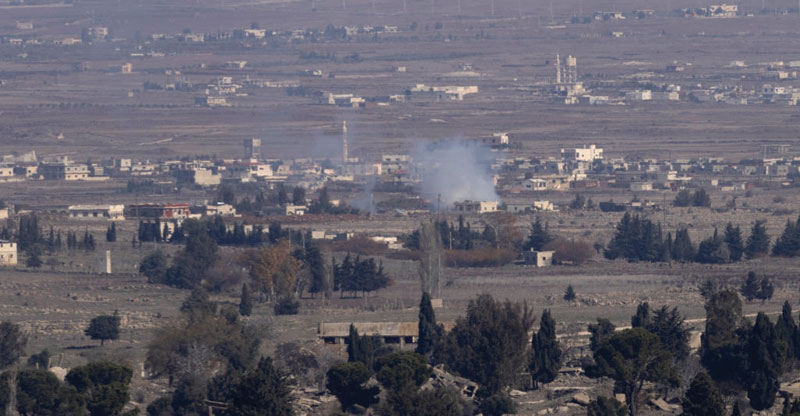
Israel has no reason to take credit for the sudden dramatic fall of the Bashar al-Assad regime in Syria. It shouldn’t create the impression that what happened — “a direct result of the strikes we inflicted on Iran and Hezbollah” — is the implementation of an Israeli plan. Israel did not initiate, support, or show particular interest in Assad’s overthrow. In fact, if Israeli leaders had a button to press that would topple Assad, and choosing not to press it would keep him in power, it is entirely plausible to suspect they wouldn’t press it. This isn’t an accusation; it’s a realistic appraisal of what likely would have occurred. The leaders probably wouldn’t have pressed that button, because there is no certainty that a Syria without Assad will be better for Israel. Therefore, all celebrations are retrospective. We’ve stumbled into the party and decided to partake of the free wine.

Indeed, the turn of events in Syria came, in part, due to other processes in the region. Israel’s strikes on Hezbollah certainly contributed to it. But so did the fact that Russia is too busy in Ukraine, which has nothing to do with Israel. And so did the election of Donald Trump as U.S. President, which required Iran to tread cautiously, and that too has nothing to do with Israel. And so did pure luck, which always plays a role in surprise attacks of the type we saw in Syria. That no one predicted the Syrian army’s collapse is almost trivial: It was unexpected. Nothing that happened in Syria in recent years suggested such a rapid event could occur.

If Israel wants to celebrate the fall of Assad for domestic political reasons, or boost its deterrence, or just to feel good — let it celebrate. As long as it doesn’t start believing in its own celebrations. Did Iran suffer another blow? Absolutely. Is that a reason to party? Here the answer gets complicated. Yes, if it leads Iran to reconsider its reckless behavior in the region. No, if it leads Iran to a decision to accelerate its nuclear program. A defeated enemy is one to celebrate over. A wounded enemy is a dangerous one. A wounded Iran, after Gaza, Lebanon, and Syria, might feel it needs to issue a resounding response. If that happens, Assad’s fall will be just a detail in a much more significant development.

A defeated enemy is one to celebrate over. A wounded enemy is a dangerous one. A wounded Iran, after Gaza, Lebanon, and Syria, might feel it needs to issue a resounding response. If that happens, Assad’s fall will be just a detail in a much more significant development.

Besides, whether Iran was hit is not the only question that determines if celebration is due. Alongside it stands the question of the day after in Syria. One possibility: a functioning, orderly state under Sunni control. This is the convenient option that seems less likely, at least in the short term. 

Another possibility: a functioning but very hostile and extreme state. A state looking for conflict. That means more war, on a border that was mostly quiet. A third possibility, perhaps the most likely based on past experience: chaos, factional warfare, the absence of central authority. A Libyan scenario. An Iraqi scenario. A Somali scenario. A Lebanese scenario. A Yemeni scenario. In such a case, Israel will need to ensure only one thing – that the chaos does not spill over into its territory. Easy to say, not always easy to do. And this scenario might be compounded by the potential destabilization of the Syrian-Jordanian border, or the westward advance of forces through the Syrian-Iraqi border, among other unpleasant surprises.

And here’s another half-concern: The Turks have grown stronger. This is not good news. True, Turkey is not a bitter and dangerous enemy like Iran, but it is also not in Israel’s interest for Turkey to grow stronger. Its potential influence inside Syria brings it closer to Israel’s border. Recent experience shows that the Turks have no difficulty supporting violent, extremist groups like Hamas in Gaza. 

The conclusion is neither pessimistic nor optimistic. It is cautious. Something Israel had nothing to do with happened in the Middle East. A murderous dictator suddenly fell from power. One can rejoice that this is the fate of dictators. One can simultaneously note that this particular dictator held on for many years, following his father who also lasted many years. The average tenure of a Roman emperor was about a decade. Bashar al-Assad was the Caesar of Syria for almost a quarter century. Longer than Tiberius. Longer than Hadrian. Longer than Marcus Aurelius. It is possible that after him, a long civil war will arise, then a new Caesar will emerge, and a new dynasty will begin. It is possible that after him, there will be no more Syria. Israel has some ability to influence the outcome, but it will be limited. 

Just as it failed to engineer Lebanon, the Palestinian Authority, or Gaza, Israel will not be able to reengineer Syria. But it can still celebrate. One must hope that it can.

Something I wrote in Hebrew

When IDF spokesman Daniel Hagari criticized proposed legislation protecting intel leakers, I wrote this:

The IDF spokesman was rightly reprimanded by the IDF Chief of Staff. An IDF spokesman should not publicly criticize legislative proposals … [but] he was treated as if he had set some unprecedented historical precedent. Of course, this is not the case. The spokesman did what Israeli officers have been doing since the establishment of the state… The IDF may not be a “small and wise army,” but it is certainly a small and talkative one. This has several significant drawbacks … this also has advantages and substantial reasons. The IDF is not a professional mercenary army. Its symbiosis with Israeli society is embedded in its culture. It is an army of the people in a substantive sense. And this is not necessarily a bad thing.

A week’s numbers

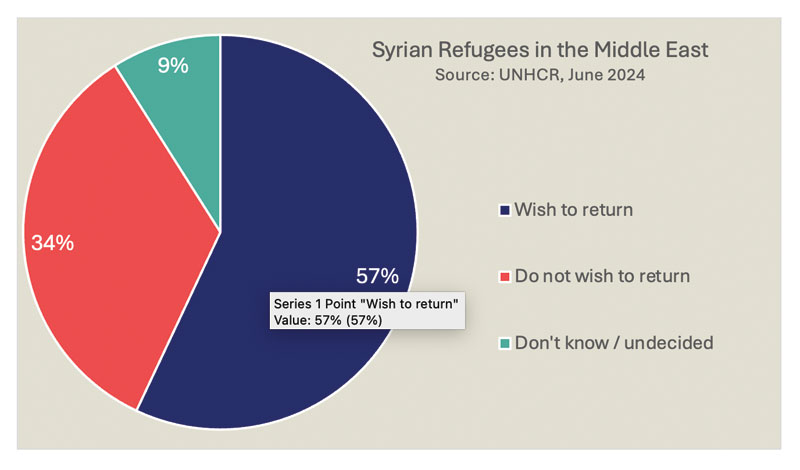
Circumstances changed. Will attitudes change?

A reader’s response

Noah Slutzky writes: “I was appalled to read your last week’s article on [‘Voluntary Migration’ in] Gaza. A Jewish State must be Jewishly ethical.” My response: If only we agreed on the meaning of “Jewishly ethical” life would be simpler.


Shmuel Rosner is senior political editor. For more analysis of Israeli and international politics, visit Rosner’s Domain at jewishjournal.com/rosnersdomain.

Syria: On Celebration and Caution Read More »

Yuliya Patsay: “Until the Last Pickle,” Family and Sirniki

“Until the Last Pickle: A Memoir in 18 Recipes” by Yuliya Patsay began as a project to collect family recipes. When the pandemic hit, Patsay started asking deeper questions about the stories and celebrations that went along with them. The result for this Soviet-born, San Francisco-raised storyteller was a celebration of her past and a legacy for the future.

“What this has been about for me is looking at the values that I was raised with – and that came from the former Soviet Union – and what do we want to carry forward in this country and with the next generation,” Patsay told the Journal. “I think one of the biggest, most positive values is the commitment to being with your family and to really spending that time together.

“The other value that you cannot get away from is hospitality,” she continued. “Any time that I go to my family’s house or that anybody comes to my house, hospitality is just baked into everything that we do; we will always offer you a beverage, make you a snack, you know, make you something special.”

The first two recipes Patsay collected were her grandmother’s blinchiki, which is crepes, and her dad’s borscht, a popular Ukrainian soup with beets and cabbage and potatoes.

She also asked them questions like, ‘Where did you learn to cook?’ ‘How did you first start making this?’ and ‘What’s your favorite thing to cook?’

“As I did that, I realized I wanted to talk about my relationship to having grown up in the former Soviet Union and then immigrating to the United States, to San Francisco,” she said. “[It was] a gigantic culture shock, particularly in terms of the food.”

Patsay admitted that, as a child in the former Soviet Union, she wasn’t a tremendous fan of a lot of the foods she ate.

“I didn’t know that it was like Russian food or Eastern European food; it was just food to me,” she said. “I didn’t really gain an appreciation for this type of food until I became a young adult.”

When she started collecting these recipes for the book, Patsay realized what she was really curious about was: ‘Why do we eat the way that we do? Why do we celebrate the way that we do?’

There was a nostalgia of having certain foods at every holiday meal and family gathering. For instance, mashed potatoes and pickled herring were non-negotiable; they were always on the table.

“We celebrate every single birthday, every single wedding anniversary, every single major American holiday, major Jewish holiday, and some former Soviet holidays together,” she said. “So it’s a lot of togetherness and a lot of food.”

In her home, Patsay is more of a sous chef; her husband does almost all the cooking.

“I’ll chop the things, I’ll peel the things, I’ll go to the store and buy the things, but please don’t make me actually fry the things because I’m going to just mess it up,” she said.

One of her favorite, easy recipes is from her mother-in-law. It’s called Sirniki, but is basically fried cheese.

“That’s a hit in the house, especially with the kids,” she said. “It comes with apples, zucchini … and you use farmer’s cheese or cottage cheese … some flour, some eggs, some baking soda, salt and vanilla, sugar is optional, but we usually put sugar in it; sometimes people put raisins in it as well.”

She added, “You grate these things together, you mix it up, you fry them and they become these little very fragrant, delicious little balls of fried cheesy dough.”

The recipe for Sirniki is below.

The other thing that’s baked into the book – and the book’s title – is hospitality.

“A section of my book is called “procurement for the proletariat,” which is all about how we acquired food in the Soviet Union which was tricky,” Patsay said. “As we were going through this, my dad was helping me with a glossary of terms about the pantry and how there’s this untouchable supply in your pantry that you need to have at all times.”

However, he said, if the party’s really going, you feed people until the last pickle.

“That became the title because … it was really about the ethos of hospitality,” she said. “If the party’s really going, you just cut up the last thing in your pantry to contribute to that effort.”

Learn more at YuliyaPatsay.com and subscribe to her Buckle Up Bubelah substack.

For the full conversation, listen to the podcast:

Yelena’s Sneaky Сырники Sirniki

Makes 25 Sirniki, enough for Grandma to feed two children and have enough left over for Mom and Dad, so no one gets mad.

2 granny smith apples (peeled)

2 medium zucchini (peeled)

1 lb farmer’s cheese or cottage cheese

flour (amount and type depends on the type of cheese you are using, if using cottage cheese you can use farina, if using farmer’s cheese, start with ½ a cup of flour and add as needed)

2 eggs

½ tsp baking soda

½ tsp salt

1 tsp vanilla

1-2 tbsp sugar (optional)

Optional: raisins, other dried fruit

Vegetable oil and butter for frying

Finely grate apples and zucchini, and squeeze out the juice.

Combine apples and zucchini with farmer’s cheese, eggs, baking soda, salt, vanilla, sugar, and any optional dried fruit like raisins.

Gradually mix in flour until the batter resembles wet dough.

Use a spoon to scoop the batter directly onto a hot pan greased with vegetable oil and a bit of butter, and fry on both sides.

Serve with jam, sour cream, honey, or your favorite sweet toppings.


Debra Eckerling is a writer for the Jewish Journal and the host of “Taste Buds with Deb.Subscribe on YouTube or your favorite podcast platform. Email Debra: tastebuds@jewishjournal.com.

Yuliya Patsay: “Until the Last Pickle,” Family and Sirniki Read More »

Reimagining Jewish Stories: LMU’s Unique Class Explores Drama and Cultural Legacy

Loyola Marymount University (LMU) Professor Dana Resnick’s class, “Jewish Spirit in Drama,” suggests a sentimentalism familiar to anyone reared on Jewish shows like “Fiddler on the Roof” or “Funny Girl.” For her students, however, the class is less a deep dive into the work of Streisand and Topol and more a study in Jewish innovation, artistryand renewal.

The course, which Resnick took over this semester, is informed by her background in live theater and directing. In practical terms, this translates to the students taking inspiration not only from Yiddish playwrights and American-Jewish screenwriters, but from somewhat more unconventional sources.

“I approached the class from less of a historian’s perspective and more as a question of where Jewish spirit and performance intersect,” Resnick, who has taught at LMU for 13 years, said.

Professor Dana Resnick

“For the first half of the semester, we read some plays and watched some films where Judaism in different contexts was the subject matter. Then, for the two projects we did this semester, we found material not already dramatized in a performance, and asked [ourselves] how we could reinterpret the traditional stories or contemporary articles in dramatic pieces.”

The traditional stories and contemporary articles in question refer to PJ Jewish children’s books and articles from The Jewish Journal’s Oct. 25 issue, “My Letter to Candice Owens” by Dennis Prager and “The Art of Jewish Resilience” by Monica Osborne. Students congregated in groups of twos and threes to choose a story from both the magazine and the children’s storybooks, ranging from the fable of Yosef Mokir Shabbos, a poor man who finds a pearl in a fish’s belly, to the true story of the American girl who in 1922 became the first girl be a bat mitzvah. Over four classes, the students reimagined the source material into performances that would feel timely and pertinent, changing placenames and dates but keeping the themes intact and exploring their deeper meanings.

For this semester’s two major projects, some groups created short films, while others performed live in front of the class. One notable project was a filmed dating show, based on an article in The Journal about matchmaking. Each took inspiration from a wide swath of sources, from the story about a children’s blanket which, over time, gets replaced with so many patches it becomes something else entirely (a dramatization of Theseus’ Paradox), to a Jewish ghost story that Resnick’s students reimagined as a play about a family camping trip in California, incorporating the original story as a spooky campfire tale.

“Jewish Spirit in Drama” is itself part of a wider series of classes LMU — a Jesuit college — offers about how different cultures’ interpret drama. For some of Resnick’s students, who come from various religious and ethnic backgrounds, this is the first time they are interacting with Jewish texts and fables.

“The students are really learning about the culture of Judaism through the storytelling, from The Jewish Journal and the children’s books to the variety of plays,” Resnick said. “They figure out where they connect and how the stories resonate with their own lives, morals, and ethics. They respond really well to this approach.”

Louise Lipsey, a Senior Theatre major and LMU Hillel President, concurred.

“Taking this class has been such a rewarding and eye-opening experience,” she said. “Before, I had only read one Jewish play in my life, so being able to explore and learn from so many different Jewish stories across diverse forms of media has been transformative. I also love seeing my classmates build a genuine connection with Judaism in a fun and engaging way. Humanizing and learning about Judaism feels especially important in today’s climate.”

The students are not the only ones engaging meaningfully with Jewish culture through the course. Resnick created The Jewish Journal and children’s fables’ assignments after finding articles at temple and in her children’s own library collection. Throughout the semester, she’s been revisiting old stories from her childhood and unearthing new ones through both her students and her son and daughter, age 7 and 10 respectively, who are beginning to explore their Jewish identity. After her daughter decided she wanted to have a bat mitzvah, the Resnicks joined a synagogue — where Resnick first spotted The Jewish Journal issue she would later put on her syllabus.

Resnick said the inspiration for the course comes not merely from events in her own life, but also from LMU’s academic mission.

“The school, she said, “really centers around education of the whole self and a deeper understanding of who you are and where you come from, but also of the world and where other people come from. So we can have open discourse in classes and deep conversations from an academic and pedagogical perspective.”

Resnick is presenting a new play, “E=MC2: The Einsteins Meet Charlie Chaplin, by Boise Thomas, at the Electric Lodge in Venice. The play centers on the historic dinner between Albert and Elsa Einstein and Charlie Chaplin in 1933, when Einstein was marked for assassination by the newly elected Adolf Hitler, and Chaplin and Elsa joined forces to convince him to leave Germany. The timing is pertinent: In the wake of a volatile election cycle and a sharp uptick in antisemitism and other racially charged crimes, Resnick feels it is important now more than ever to find the common thread running between history and contemporary events.

“I think things happen for a reason,” Resnick said. “I think there was a reason why I was asked to teach this class and to direct this play at the same time that my children are exploring their own relationship with Judaism, which also encourages me to take a deeper look at my own culture and faith. Things happen like this, and it feels like it was meant to be.”

Reimagining Jewish Stories: LMU’s Unique Class Explores Drama and Cultural Legacy Read More »

Simon Etehad Takes the Helm as President of FIDF Western Region

The FIDF (Friends of the Israel Defense Forces) has undeniably had a profound impact on Simon Etehad’s life. He met his wife, Malissa, at an FIDF Young Leadership event in 2007; the couple now has four children.

An attorney and the founder of Etehad Law, he joined the FIDF nearly 20 years ago and has remained actively involved ever since. On August 12, during a regular board of directors meeting, he was unanimously elected as the new president of the board for the FIDF Western Region.

In a statement sent to the Journal following the announcement, Etehad wrote: “I bleed blue and white, and I humbly took on this role. For more than 20 years, I have devoted myself to the Friends of the Israel Defense Forces (FIDF) and our brave soldiers. Having spent nearly a decade growing up in Israel, the State of Israel and our beloved soldiers have always held a special place in my heart.”

“Having spent nearly a decade growing up in Israel, the State of Israel and our beloved soldiers have always held a special place in my heart.”

This was a perfect opportunity to sit down with Etehad for a conversation about the FIDF and learn more about him and his plans for the organization.

Jewish Journal: “I heard you mentioned wanting to continue your father’s legacy. Could you tell me a bit about him?”

Simon Etehad: “My father, may he rest in peace, was born in Iran in 1929, before the establishment of the modern State of Israel. My father dedicated his life to helping people, both Jews and non-Jews, and of course, the State of Israel. He was a true Zionist, even in Iran, a Muslim country that considered Jews as ‘Najest,’ a ritually unclean person. My father was an incredibly proud Jew who zealously defended the State of Israel. May his memory and legacy be a blessing.”

JJ: “As a busy attorney, how do you plan to balance running your business with your new role as president of the FIDF Western Region Board?”

SE: “I have learned that in life, you never have time, you make time. My wife, my four kids, my community and my clients are very important to me. It took me almost 2 months to accept the request to consider the role of President of the FIDF Western Region Board. This was not a decision I took lightly, but I did make the decision knowing that I could make a difference, especially now, when Israel is at war from at least 10 fronts. (Iran, Iraq, Hamas, Hezbollah, Judea and Samaria, Yemen, cyberattacks and terrorists coming from the border of both Egypt and Jordan).  So, ‘Never Again’ is now, and we all need to make time to help the only Jewish State on planet earth.”

JJ: “The FIDF also played a role in your personal life—you met your wife there.”

SE: “In 2007, while attending an FIDF Young Leadership event, we met while trying to get into the party. She had no idea that I was involved with the FIDF, and she tried “helping me” get into the event. That, as we say, was the beginning of the end (obviously in a good way)!  Since then, we have gone on a few FIDF Missions to Israel, and she has always stood by my side.  By profession she is a pharmacist, so she knows that my drug of choice is helping the IDF. I have been accused of having blue and white blood.  My wife has always opened our home to our soldiers, and she has been very generous in allowing me to spend the necessary time to help the FIDF.”

JJ: “With so many organizations currently raising funds for Israel, especially in the past year, has it become more challenging to raise money for the FIDF?”

SE: “No question, nowadays, it is very challenging to raise money.  However, FIDF is the sole official organization authorized to collect charitable donations on behalf of the soldiers of the Israel Defense Forces across the United States, as designated by the IDF Chief of Staff. And you cannot find a better cause these days.  It should be noted that soldiers using donated gear could potentially face disciplinary actions.”

JJ: “When the war broke out, many were alarmed to learn that the IDF lacked adequate gear. In response, the community quickly rallied to raise funds for bulletproof vests and other essentials. While I understand that the FIDF primarily provides funds rather than gear, I would love to hear your thoughts on this situation.”

SE: “The Friends of the Israel Defense Forces (FIDF) is a non-political, non-military organization that provides for the wellbeing of the soldiers of the Israel Defense Forces (IDF), veterans, and family members. The FIDF champions the courageous men and women of the IDF and cares for their needs through transformational opportunities and support. By alleviating the daily stresses and burdens faced by these soldiers, the FIDF enables these soldiers to carry out their duties with peace of mind.

FIDF cannot provide military gear, and truth be told, IDF lacked the ability to achieve passing adequacy with the gear they had. I know that many people have raised funds to buy military equipment.  However, for security reasons, I do not believe that to be wise.”

JJ: “What are your main goals in your new position as president?”

SE: “In my new role as President, I will continue pursuing one of my life’s greatest passions: spreading love and support for our soldiers and uniting our community to help those who defend the world’s only Jewish state. My goals include spreading awareness of our IDF soldiers’ importance and morality; raising awareness of FIDF’s mission and how it supports soldiers and their families; increasing fundraising efforts across our community; and strengthening connections between our youth and soldiers, including launching a teen FIDF group, hosting young professional events, and creating forums where the younger generation can meet and support our soldiers.”

Simon Etehad Takes the Helm as President of FIDF Western Region Read More »

Campus Watch December 11, 2024

Man Attacks Northern CA Elementary School, Wanted “Child Sacrifices” Over “Genocide” Against Palestinians

A man shot and injured two kindergarteners at a Christian school in Butte County, CA because he reportedly wanted “child sacrifices” in response to the United States’s involvement in the ongoing war “genocide” against Palestinians.

According to Patch, the shooter, identified as 56-year-old Glenn Litton, targeted the Feather River School of Seventh-day Adventists on Dec. 4 after using an alias to deceive the school into thinking he wanted to enroll his grandson. Litton was found dead from a self-inflicted gunshot wound by the time police arrived to the scene. Police say that have found writings from Litton stating: “Countermeasures involving child executions has now been imposed at the Seventh-day Adventist school in California, United States, by the International Alliance, I, Lt. Glenn Litton of the alliance, carried out countermeasures in necessitated response to America’s involvement in genocide and oppression of Palestinians along with attacks towards Yemen.” Law enforcement has yet to confirm the existence of an “International Alliance” group.

The two victims were critically wounded and are believed to have a long recovery time from the gunshot wounds. Litton had a lengthy criminal rap sheet and was not a legal gun owner.

UMich Jewish Regent’s Home, Wife’s Car Vandalized

The home of University of Michigan Regent Jordan Acker, who is Jewish, was vandalized on Dec. 9, as was his wife’s car.

According to Jewish Insider (JI) and The Detroit News, “divest” and “Free Palestine” were spray-painted on the car. A mason jar was also thrown through the home’s window and a foul smell emitted from the jar. In June, graffiti stating “Free Palestine” and “Divest Now” was found outside of Acker’s law office.

“This keeps happening to my family because I’m Jewish,” Acker told JI. “There are other, more prominent, regents on this board who do not face this type of targeted harassment, and the reason they do not is because they are not Jewish.”

Palestinian Activist’s UCSF Speech Moved to Zoom After Receiving Threats Calling Him a “Zionist ‘Traitor’”

Ahmed Alkhatib, who describes himself as a “pro-Palestine, pro-Peace, anti-Hamas, anti-occupation” activist, announced in a post on X that part of his Nov. 18 speaking event at UC San Francisco (UCSF) was moved to Zoom after receiving threats from people who called him a “Zionist ‘traitor.’”

“Some in the ‘pro-Palestine’ community at the school, who are medical professionals and researchers with supposed critical thinking skills, ignored the entirety of my publications, statements, public stances, and clearly pro-Palestine, anti-occupation ethos to claim I am a Zionist “traitor” – simply because I’ve been vehemently anti-Hamas and a proponent of mutual empathy, humanity, and peace,” wrote Alkhatib, who is originally from Gaza. “My Instagram was bombarded with threats, pro-Hamas slogans, pro-resistance symbols, insults, and attacks, claiming that I have no right to speak about the war in Gaza or the broader conflict. We had to move part of the event to Zoom to avoid security risks to myself and others and had to have a police presence to secure the space.” He concluded his lengthy post by thanking “the UCSF community for hosting me and not bowing down to intellectual thuggery.”

MIT Bars Anti-Israel Magazine from Campus Distribution

The Massachusetts Institute of Technology (MIT) has shut down distribution of a student magazine called Written Revolution after the school expressed concerns an article published in the magazine could be taken as a call to violence.

According to The College Fix, the article, authored by the magazine’s editor Prahlad Iyengar, urged anti-Israel activists to “begin wreaking havoc” and featured images containing Popular Front for the Liberation of Palestine (PFLP) symbols; the United States has designated the PFLP as a terror organization. The Washington Examiner noted that the article also featured an image urging “intifada everywhere.” “The article makes several troubling statements that could be interpreted as a call for more violent or destructive forms of protest at MIT,” the school wrote in an email to Written Revolution. “Numerous community members have expressed concern for their safety and well-being after learning of your article.” As such, MIT told the student publication that it must cease distribution on campus or else “remove all affiliation from MIT.” Iyengar is also facing disciplinary measures.

Per InsideHigherEd, Iyengar has claimed that his piece was not a call to violence but to get people to think “of ways to connect to the community, and we should be thinking of ways that really subvert state power—because, to me, strategic pacifism is effectively an admission that the state should have a monopoly over violence.”

Campus Watch December 11, 2024 Read More »

Brian Thompson, Jews, and the Left’s ‘Legitimate Targets’

Almost immediately after UnitedHealthcare CEO Brian Thompson was assassinated in New York City, some celebrations erupted online. The loudest voices came from segments of the American left.

One user on TikTok saw the shooting as a promising sign of rising class consciousness in America. “I feel hopeful today.” 

On X, a user wrote, “I hope the UHC CEO shooter is never identified and goes on to become a hero of American folklore for hundreds of years.”

And then there was former Washington Post columnist Taylor Lorenz, who posted an image of a different healthcare CEO, Kim A. Keck of Blue Cross Blue Shield — an apparent suggestion to any would-be assassins out there: here’s your next target. 

Was Brian Thompson a good person? I won’t presume to judge. He was certainly an extremely wealthy person. He was a CEO, and a CEO in a problematic industry at that — one which is financially incentivized to maximize profit by minimizing claims paid. UnitedHealthcare in particular has a claim denial rate well above the industry average, raising serious concerns.

This is all that many people needed to know before condoning his murder. He was a willing participant in a system they deemed evil. He did not devise that system, but neither did he dismantle it. Worse, he profited from it greatly. 

Most of the people celebrating his death are not true revolutionaries. If the heads started rolling in the streets as they once did in France, many of these individuals would find that they would have no stomach for it. Nor would they much like what comes after. They want to watch TikToks about revolution, but they are not truly interested in heading to the barricades. 

This play-acting is possible for them because the stakes are so low. The hatred they spew against elites like Brian Thompson will never be turned back against them. They are thus free to set as many fires as they like, knowing that their own yards will never burn. In this sense, these posts are a perfect depiction of the very privilege such individuals claim to abhor. 

Jews, however, have no such privilege. When chronically online radicals embrace violence, there are offline consequences for Jews — consequences that the comrade cosplayers can hardly fathom. 

For instance, when online radicals in America embraced Osama bin Laden, as they did last November, they did so knowing that they would likely never be the targets of Islamist terror. 

When they handed out pamphlets on campus praising Yahya Sinwar, as they did at Sarah Lawrence College last month, they did so knowing that no one they love will ever be kidnapped or slaughtered by a Hamas invader. 

When they made worshipful icons of the paragliders that descended on the Nova music festival in Re’im, they did so with the faith that their own community would most likely never transform into a bloody battlefield before their eyes. 

They also know that they will likely never become a “legitimate target” in the eyes of their fellow Americans. But Jews have experienced precisely this, a phenomenon immortalized by the image of a keffiyeh-covered student at Columbia University standing with a sign pointing to Jewish students that read: “Al-Qassam’s Next Targets.”

It was easy for the left to morally justify the murder of Brian Thompson on account of their feelings about the insurance industry. How much easier would it be to justify the murder of Jews on account of their being Zionist, or Zionist-adjacent?

It was easy for the left to morally justify the murder of Brian Thompson on account of their feelings about the insurance industry. How much easier would it be to justify the murder of Jews on account of their being Zionist, or Zionist-adjacent? 

After all, Zionism is, according to the left, a racist, exploitative, genocidal ideology. Once this has been “established,” what synagogue, community leader, or NGO executive is off limits for America’s new vigilantes? 

In the last election, Democrats ran as the party of law and order and democracy, framing Trump as a threat to both. This is, in large part, why Jews showed up for Kamala. We would prefer that this country not dissolve into violent chaos —certainly not for the entertainment of pseudo-radicals on TikTok as they doomscroll our nation toward oblivion. 

But an American left that embraces vigilante executions is a political movement that has abandoned any pretenses of caring about democracy.

And so, this Shabbat, as we utter the prayer for the welfare of the United States, we should perhaps do so with special urgency. 

This tradition goes back many centuries, and while it is a reflection of patriotism, it is no less a reflection of a hard-earned knowledge: when societies crumble, violent antisemitism is never far off.


Matthew Schultz is a Jewish Journal columnist and rabbinical student at Hebrew College. He is the author of the essay collection “What Came Before” (Tupelo, 2020) and lives in Boston and Jerusalem. 

Brian Thompson, Jews, and the Left’s ‘Legitimate Targets’ Read More »

The Eternal Genocide

With the inevitability of winter succeeding fall, Amnesty International’s most recent self-described “landmark” report concludes that Israel is committing genocide against the Palestinians in Gaza. As Tablet Magazine’s The Scroll comments, Amnesty’s conclusion may be shocking only “to one or two people still laboring under the belief that words mean things.” 

Amnesty’s stance is established in the very first line of its report. “On 7 October 2023, Israel embarked on a military offensive on the occupied Gaza Strip (Gaza) of unprecedented magnitude, scale and duration,” they inform the reader, the worst one-day slaughter of Jews since the Holocaust, in their own country, not being worth a mention. To be sure, after exhaustively detailing Israel’s alleged war crimes, they do mention that on the above morning, Hamas and other armed groups attacked Israeli “civilian and military targets.” (Palestinians are men, women and children; Israelis are “targets.”) But the report’s prevailing tale is of war-crazed Zionists on a rampage, slaughtering Palestinian babies for the sheer pleasure of it.

Never mind that the casualty statistics cited by the Hamas-controlled Gaza Ministry of Health are trustworthy only to those who believe in the tooth fairy; and that their figure doesn’t even claim to include the 17,000 or so terrorists the IDF believes have been killed; and that despite the Gazan people’s undeniable suffering and deaths in the war, its population actually increased 2% in 2024 according to the CIA World Factbook; and that many of the Palestinians killed would be alive today if Hamas didn’t position themselves in and under schools, mosques and hospitals; and that Israel has taken steps to minimize civilian casualties which are unprecedented in warfare — ignore all that, and the inconvenient fact still remains that international law defines “genocide” as the “intentional destruction of a national, ethnic, racial, or religious group, in whole or in part.” It does not apply to people killed, however tragically, as the inevitable consequence of war.

Amnesty gets around this by determining, like Humpty Dumpty, that words mean what they choose them to mean. They pronounce the previous, universally established and accepted legal definition “overly cramped,” as if complaining about a hotel room. This standard interpretation of international jurisprudence “would effectively preclude a finding of genocide in the context of an armed conflict.” They prefer to redefine “genocide” to mean “whatever the Jews are doing.”

It apparently occurs to no one in Amnesty to ask: What kind of “genocide” is it when the victimized population steadily increases, year after year, over the course of more than half a century? Because the “genocide” charge against Israel has been made, at regular intervals, for nearly 60 years. It originated in the Soviet Union, the progressive world’s onetime beloved homeland. The “genocide!” cry rose from the Soviet media in the summer of 1967, after Israel committed the crime of defeating the Soviet Union’s Arab client states. Israeli Defense Minister Moshe Dayan was declared a “pupil of Hitler” and world Zionism a racist, criminal conspiracy. Soviet pseudo-historians and other ideologues generated what late historian Robert Wistrich called “a tsunami” of shrill anti-Zionist propaganda and aimed it at the West.

It apparently occurs to no one in Amnesty to ask: What kind of “genocide” is it when the victimized population steadily increases, year after year, over the course of more than half a century? 

American and European leftists in thrall to the Soviet Union — even those who said they hated the regime in the Kremlin — couldn’t write newspaper articles, placards and speeches with the new party line fast enough. They declared Zionism the greatest evil on the planet and Israel the perpetrator of the bloodiest crimes in history. Eventually, their stenciled placards grew weather-beaten and yellowed and had to be replaced. Otherwise, the generation of 1967 could have bequeathed those perennially fashionable “Zionism=Genocide” signs to their children, grandchildren and, soon, great-grandchildren to use in protests against Israel. 

The “genocide” accusation would quiet for a while, to reemerge anytime Israel acted to defend itself. The 1982 war in Lebanon inspired a new spree of “genocide” charges from East Germany, that bulwark of freedom, and countless Western leftist groups including the Trotskyist organization I once belonged to. The Soviet Union’s collapse did nothing to stem the anti-Zionism Moscow had propagated; if anything, Western leftists consoled themselves for the death of communism by deeming Palestinianism the next righteous cause. The pupils carried on without the master. They condemned Zionism with the fervor of a Pravda editorial, becoming increasingly frenzied with the post-9/11 wars against jihadism.

It really should have occurred to some of those denouncing Israel’s “genocide” — year after year, decade after decade — that something about this eternal, oddly ineffectual genocide doesn’t add up. And yet I know from experience that it doesn’t. To these men and women, every time they raise their voices in outrage, it just “feels true” that Israel is committing genocide — just as throughout history, millions of people thought it “feels true” that Jews were murdering Christian children, poisoning wells, plotting global conquest, contaminating Aryan blood, bringing down capitalism, and controlling world capitalism.

Amnesty is smugly certain they’re on the “right side of history.” But if they knew anything about history, they’d see how they’re dealers in the libel that never dies.

I’m sure — I’m fairly certain — Amnesty’s supporters would, if pressed, condemn the recent synagogue burning in Australia, the public parks defaced with swastikas, the ongoing physical assaults on Jews on Western city streets. As good liberals, I imagine they disapprove of physical violence against religious minorities. But by declaring Israel a nation of genocidal baby-killers for defending itself — against a group actually openly committed to genocide, which actually killed babies, children, men and women for the sheer pleasure of it and boasted about their deeds — they guarantee that others will act on their message. To an ever-growing number of people, Israel, and the demonic group known as “Zionists,” and anyone who seems like they might be Jewish, is a legitimate “target.” Amnesty is smugly certain they’re on the “right side of history.” But if they knew anything about history, they’d see how they’re dealers in the libel that never dies.


Kathleen Hayes is the author of ”Antisemitism and the Left: A Memoir.”

The Eternal Genocide Read More »

A Musician’s Unlikely Journey to Creating Soulful Jewish Music

Musician Yosef Gutman Levitt has had an unusual journey. He grew up on a farm in South Africa, where he developed a deep appreciation for jazz. Then, he came to America to study at the prestigious Berklee College of Music, played bass guitar in New York’s jazz circuit and ended up producing 100 pieces of music for “The Oprah Winfrey Show.” He became a baal teshuva, decided to put down his instrument and go into coding. For the next decade, he developed a technology company that was acquired by GoDaddy, and he moved to Israel.

Now, Gutman Levitt has returned to his musical roots with his new album “River of Eden,” which weaves together contemporary composition with nigunim, or wordless Jewish melodies. The record company Soul Song – which helps artists create their “soul song” – put out the album, which was recorded in Jerusalem and features multi-instrumentalist Peter Broderick, Yonathan Avishai (piano), Itay Sher (nylon-string guitar) and Yoed Nir (cello). The music is full of depth and touches the soul with songs like “The Open Door,” “The Old City” and “Reflection.”

The Jewish Journal caught up with Gutman-Levitt to discuss his life and his impressive new work. Answers have been edited for clarity. 

Jewish Journal: Why did you decide to release this album?

Yosef Gutman-Levitt: I’m particularly interested in bringing music with Jewish character and Jewish depth into certain categories of music that are typically devoid of such a voice. Contemporary classical and jazz, in particular, require a specific level of instrumental integrity and credibility, a certain sound spectrum and other delicate musical characteristics that typically haven’t been adopted or nourished by Jewish musicians on a large scale. It’s exciting to me to put a Hasidic Jewish voice into these places where it’s missing. 

JJ: How did you become a baal teshuva? 

YGL: It all started one night on the F train from Manhattan to Park Slope in Brooklyn. I was questioning my commitment to improvised music. Things weren’t easy, breakthrough moments were rare and success was limited. A group of young Israelis on the train asked me for directions to Coney Island. Hearing my South African accent, they asked if I was Jewish. They were from Ra’anana, a town in Israel known for its South African community, so they were familiar with the accent. They invited me to join them for late-night karaoke and hummus. I declined, but when I tried to exit at my stop on Seventh Avenue and 9th Street, a moment’s hesitation left me on the wrong side of the closing doors. I guess I was going with them after all.

That night, around 2:30 a.m., with my bass guitar and leather jacket, I found myself in Flatbush. It was my first time seeing a religious area. During the evening, I was introduced to an elderly woman with penetrating gray eyes. She looked at me and asked in Hebrew, “Who is Yosef?” At the time, I went by Gary and hadn’t heard my Hebrew name in years. When I acknowledged that was me, she asked if I had tefillin. When I said no, she told me I should get them, because they would bring me good luck.

The next day, I called my mom in South Africa and asked her to send my tefillin. I began laying tefillin every morning at 7 o’clock, eventually made my way on a Birthright trip to Israel, and through discovering a small, warm Jewish community and the beauty of Shabbat, my perspective started shifting away from jazz toward things of greater importance that would become the foundation of my new life.

JJ: What does your everyday life look like now?

YGL: My daily life in Jerusalem centers around family, prayer and music. Each morning begins with helping prepare my children for school. One of the day’s highlights is sharing morning coffee with my wife while listening to the Tanya. After that, I head to shul for prayers with a minyan, followed by kollel studies. My afternoons are dedicated to a blend of musical work and community service. While I’ve primarily been focused on creating and producing music from home, I’m looking to expand my touring activities in the coming months and years. When I do tour, I envision it as a family journey, possibly taking shorter tours that allow us to explore different parts of the world together, remaining open to Divine providence wherever we go.

JJ: What kind of feeling do you hope people get from your music?

YGL: I hope listeners play my music all day long in their homes. I aim to provide the right spectrum that allows people to simply be, instead of paying attention to what’s happening in the music itself. Each piece and each album are meant to take someone somewhere, like a journey. For listeners who are deeply connected to Jewish growth, I hope the music serves as an accompaniment to their lives, something that stays out of the way.

JJ: How does being a musician help you carry out your mission in this world? 

YGL: Being a musician presents a profound opportunity to impact others. The Admor HaZaken, Rabbi Schneur Zalman of Liadi, says that music is the quill of the soul. If music is made honestly, it can reach other people in a deep way. Things that leave from the heart can enter the heart of another. Therefore, music helps me impact others, both Jews and non-Jews alike. It’s a vector for deep messages and connections. It lets us skip the complexity of thoughts and speech and move in a deeper, more inner way that unifies, brings one together and brings delight.

“Being a musician presents a profound opportunity to impact others.”

“River of Eden” is available on all major streaming platforms via http://orcd.co/riverofeden. Physical copies and high-quality digital downloads can be purchased through yosefgutman.bandcamp.com.

A Musician’s Unlikely Journey to Creating Soulful Jewish Music Read More »