fbpx

December 11, 2024

Jewish Subjects Get Top Nominations for the 2025 Golden Globes

The nominations for the 82nd Golden Globe Awards were announced on Monday morning, and there are dozens of Jewish connections.

Three films with Jewish subjects are nominated for Best Motion Picture – Drama: “The Brutalist” which follows a Holocaust survivor in post-World War II America; “A Complete Unknown” about Jewish singer-songwriter Bob Dylan; and “September 5,” about ABC Sports coverage of the terror attacks against the Israeli Olympic Team at the 1972 Summer Olympics in Munich.

“A Real Pain”

Jewish actor, writer and producer Jesse Eisenberg is nominated for three Golden Globes— all for his film, “A Real Pain.” The film is about two Jewish cousins who travel to Poland for a Holocaust history tour and their contend with their own Jewish identities. Eisenberg produced the film which is nominated for Best Motion Picture – Musical or Comedy. He is also nominated for his lead performance as an actor, and for Best Screenplay. He was previously nominated for a Golden Globe for his starring role as Mark Zuckerberg in the 2010 film, “The Social Network.” In total, “A Real Pain” is nominated for four Golden Globes. 

Joining actor Eisenberg in the category of Best Performance by a Male Actor in a Motion Picture Musical or Comedy is Jewish actor Gabriel LaBelle. In “Saturday Night,” LaBelle plays the Jewish writer and producer of “Saturday Night Live,” Lorne Michaels (who was born Lorne David Lipowitz). 

Also nominated for Best Motion Picture – Musical or Comedy is the film “Emilia Pérez.”  Without spoiling too much, a part of the film takes place in Israel. “Emilia Pérez” leads the Golden Globe field with ten total nominations. 

“The Brutalist”

Jewish actor Adrien Brody is nominated for Best Performance by a Male Actor in a Motion Picture – Drama for his lead role as Hungarian-Jewish Holocaust survivor László Tóth in “The Brutalist.” Brody’s only other Golden Globe nomination was also for playing a Holocaust survivor in the film “The Pianist” as composer Władysław Szpilman. “The Brutalist” is nominated for seven total Golden Globes. 

“A Complete Unknown”

In the same category, actor Timothée Chalamet is nominated for his role as Bob Dylan in “A Complete Unknown.” The film is nominated for three total Golden Globes.

Actress Kate Winslet is nominated for two acting Golden Globes — one of which is for her dramatic lead role in the film “Lee.” Winslet plays Lee Miller, a Vogue Magazine photojournalist who documented the horrors at the Buchenwald and Dachau concentration camps. Winslet also executive produced the film. 

“By photographing people and situations, [Miller] of course has to look down into the image, which gave her the opportunity to always step inside and be with those voiceless victims, be in those train carriages full of corpses, and to be utterly present so that she could visually represent those voiceless victims whose stories may otherwise never have been told,” Winslet said at a screening of “Lee” at the Museum of Tolerance in last September. When Miller’s son Tony met Winslet for the first time, he told her, “I have hoped that you might play my mother since I saw you in ‘Sense and Sensibility.’”

Jewish actor Jeremy Strong is nominated for Best Performance by a Male Actor in a Supporting Role in Any Motion Picture for his role as lawyer Roy Cohn in the Donald Trump biopic, “The Apprentice.” Previously, Strong was nominated twice for his acting role on the HBO series “Succession,” winning once for his role in season three. 

“Nobody Wants This,” the Netflix show about the romantic relationship between a rabbi and agnostic woman, is nominated for Best Television Series – Musical or Comedy. Creator Erin Foster and Showrunner Jenni Konner are both Jewish. 

San Fernando Valley native and Jewish actress Mikey Madison is nominated for Best Performance by a Female Actor in a Motion Picture – Musical or Comedy, for her starring role in “Anora” — a film about a Russian stripper in Brooklyn.

Jewish composer Hans Zimmer is nominated for Best Original Score for “Dune: Part Two.” This is Zimmer’s 15th Golden Globe nomination. He won three times for Best Original Score for “The Lion King” (1994), “Gladiator” and “Dune.” 

Jewish Actor Jake Gyllenhaal is nominated for Best Performance by a Male Actor in a Television Series – Drama for his role in “Presumed Innocent.” This is his third Golden Globe nomination, having been nominated in the past for acting in the films “Love & Other Drugs” and “Nightcrawler.” 

Jewish Actor Adam Brody is nominated for a Golden Globe for the first time for his starring role as Rabbi Noah Roklov in the Netflix series “Nobody Wants This.” In the same category, Jewish actor Jason Segel received his first Golden Globe nomination for his starring role as therapist Jimmy Laird in the Apple TV+ series “Shrinking.” 

Jewish comedian and actress Hannah Einbinder is nominated for the third time for a Golden Globe for her role as Ava Daniels on the Max series, “Hacks.” This year she is nominated for Best Supporting Actress on Television. 

Jewish actor Harrison Ford is nominated for Best Performance by a Male Actor in a Supporting Role on Television for his role as Dr. Paul Rhoades on “Shrinking.” It’s Ford’s fifth acting Golden Globe nomination. He won the Cecil B. DeMille Award at 2002 Golden Globes ceremony.  Also nominated for Best Male Actor in a Supporting Role on Television is Jewish actor Ebon Moss-Bachrach is nominated for his role as Richie Jerimovich on the Hulu series “The Bear.” Moss-Bachrach was nominated for a Golden Globe for the same role during the show’s first season. This year, “The Bear” has five total Golden Globe nominations —the most for any television series.

Comedians Adam Sandler (“Adam Sandler: Love You”) and Seth Meyers (“Seth Meyers: Dad Man Walking”) were both nominated for Best Performance in Stand-Up Comedy on Television. Previously at the Golden Globes, Sandler was nominated for Best Actor for his lead role in  “Punch-Drunk Love.” Meyers hosted the 75th Golden Globe Awards in 2018. 

The 82nd Golden Globe Awards Ceremony will take place at The Beverly Hilton in Beverly Hills on January 5, 2025. The show will air on CBS and Paramount+ and will be hosted by comedian Nikki Glaser.

Jewish Subjects Get Top Nominations for the 2025 Golden Globes Read More »

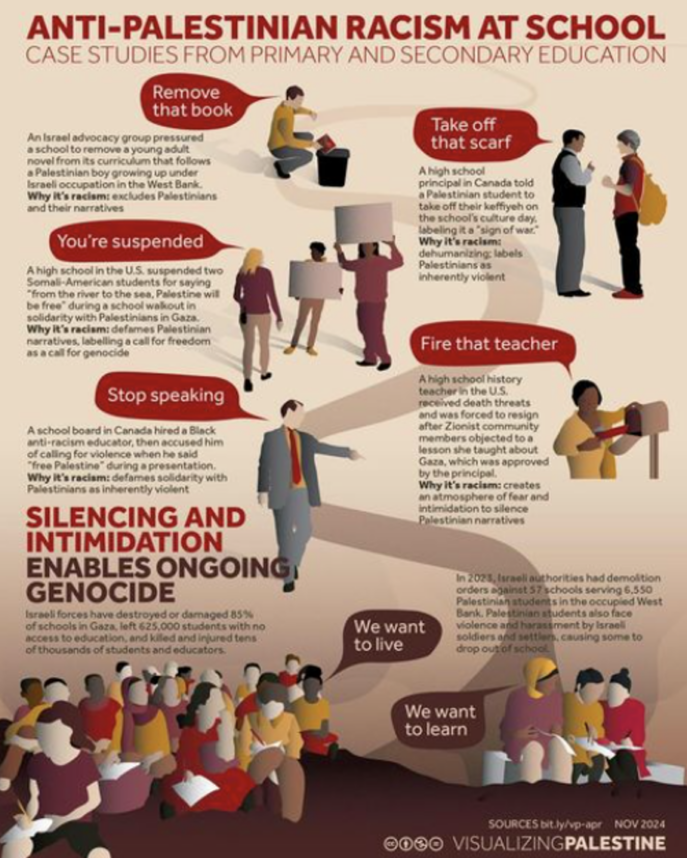
The Campaign to Get ‘Anti-Palestinian Racism’ Into K-12 Has Begun

Back in July, we at the Jewish Institute for Liberal Values warned that efforts to include “Anti-Palestinian Racism,” a toxic mix of anti-Israel rhetoric and “anti-racist” teachings, in staff, teacher and student training and curriculum, would be “coming soon to a school near you.” Within weeks it began showing up in U.S. institutions. And now, five months later, anti-Israel ideologues have mounted a full court press to spread this noxious ideology.

Anti-Palestinian Racism (APR), its proponents claim, is the erasure, silencing, defaming or stereotyping of Palestinians and their allies. This is done in various ways – the definition of APR is incredibly, and purposefully, broad. One can commit an APR offence, for example, by denying the “Nakba” (the “catastrophe” of Palestinian exodus after Israel’s creation). If one wishes to acknowledge the multiple reasons Palestinians left Israel in 1948 and challenge claims of ethnic cleansing, that would be considered Anti-Palestinian Racism. 

One can commit such an offense by “justifying violence against Palestinians” or by “rationalizing the use of violence against Palestinians” (by, say, arguing that Israel has a right to self-defense or that military operations to rescue hostages are warranted) and by “equating the oppressed with the oppressors” (by criticizing Hamas and the strategic use of terror and violence within the Palestinian national movement). 

And such an offense can be committed by denying Palestinian indigeneity to the land and rejecting the “right of return” for Palestinian refugees. 

In short, any narrative of the Israel-Palestinian conflict that is not presented completely in line with these anti-Israel claims is APR. Any narrative which recognizes Jewish indigeneity, the legitimacy of Israel’s creation, and its right to self-defense, is APR. Any narrative of the conflict that deviates from the idea that Israel is a racist, settler-colonial state, is APR. Indeed, “denying the settler-colonization of Palestine” qualifies as APR. 

And proponents of APR don’t just stop at advancing a broad definition; the victims of APR are defined broadly too. One does not need to be Palestinian to be a victim of APR, merely an “ally.” In fact, surveys of those who say they have been impacted by APR show that the majority of respondents are not Palestinians.

How did such a dogmatic formulation of APR gain so much traction so quickly?

The first step was to make the term “Anti-Palestinian Racism” kosher, so that it would appeal to activists and administrators sensitive to claims of systemic racism and devoted to “anti-racist” training. In fact, the Arab-Canadian Lawyers Association (ACLA), which developed the “Anti-Palestinian Racism” framework, is  explicit that this was the rationale behind naming the term APR.

Dania Majid, president and founder of ACLA, said that the term “Anti-Palestinian Racism” was chosen because “the oppression of Palestinians is one of settler colonialism and manifests itself in the crimes of apartheid which are both racist systems that privileges one group over another … there is much work, learning and solidarity happening with our allies resisting anti-Black racism and anti-Indigenous racism as well as other forms of discrimination and we need to be working together.”

Majid stated “We decided to use ‘Anti-Palestinian Racism’ as a term because we knew … that people would understand what racism meant” and that “when you put a charge of racism to an institution … those institutions already have policies in place or some sort of mechanism where they have to respond and engage with an affected party who is claiming racism in their institutions.”

In other words, APR is designed to hit all the right buzzwords to attract antiracism activists and to ensure that APR is included among the litany of racisms society should fight. By using the term “racism,” even though “Palestinian” is not a race, proponents of APR can ensure that activists support the effort and that institutions will take their claims of racism seriously.

The second step was to activate those institutional mechanisms by claiming APR in K-12 schools. The Council on American-Islamic Relations has brought Title VI complaints of Anti-Palestinian Racism against the Berkeley Unified School District and the Santa Clara Unified School District. The Department of Education’s Office of Civil Rights must now investigate these claims. Along with the investigations are demands that K-12 schools incorporate trainings for school faculty and staff, as stated in CAIR’s Title VI Complaint Letter: “The training can be included as a section to the professional development training staff attends a few times a year. The training should also include coverage of tactics commonly used against pro-Palestine movements” and “adopt educational materials on Palestine by reputable groups such as Teach for Palestine and remove anti-Palestine resources from school websites and curricula.” 

In practice, this means removing resources that present anything that deviates from their anti-Israel narrative.

The third step was to galvanize activist groups to amplify the claim that APR is a problem in K-12 schools and demand schools implement curricula changes and training sessions. Leading the charge is the newly formed Institute for the Understanding of Anti-Palestinian Racism (IUAPR), dedicated to “researching, educating and advocating on the impact of Anti-Palestinian racism on individuals and communities across all sectors of society.”

The individuals behind IUAPR include Merrie Najimy, past president of the Massachusetts Teachers Association and founder of MTA Rank and File for Palestine, a group that has claimed that “Israel is committing a Palestinian holocaust.” Najimy has claimed that Israel’s military action in Gaza is “beyond genocide” and at an IUAPR webinar in August, Najimy had the following to say: “We have people from all different classes and backgrounds seeing their own struggles within Palestine. We’re talking about collective liberation, solidarity. While people who are aligned with the Israeli narrative are talking about their own narrative, their own struggle, in isolation with the rest of the struggle.”  

Najimy also took part in the MTA webinar on “anti-Palestinian racism” which drew criticism for its participants’ engagement in antisemitic tropes — for example, a speaker argued that Jewish organizations wield money, power and influence to stifle criticism of Israel and purposefully use manufactured claims of antisemitism to stop people teaching about Palestine. Another founder of IUAPR is Dr. Jess Ghannam who had been an executive committee member of “Al-Awda: The Palestinian Right of Return Coalition.”

Al-Awda believes that “the Palestinian Arab people, regardless of their religious affiliation, are indigenous to Palestine. Therefore, they are entitled to live anywhere in Palestine which encompasses present-day “Israel,” the West Bank and Gaza Strip.” It believes in “the fundamental, inalienable, historical, legal, individual and collective rights of all Palestinian refugees to return to their original towns, villages and lands anywhere in Palestine from which they were expelled.”

APR is created and broadly defined so that it can apply to many situations and people other than Palestinians, and the solution in each case just so happens to be to train educators and students to adopt an anti-Israel, anti-Zionist narrative. The conclusion that IUAPR itself draws is predictable:

“We recommend institutions raise awareness of anti-Palestinian racism and include it in their diversity, equity, and inclusion programs and anti-racist efforts. To effectively counter the targeting of Palestinian civil rights, institutions should implement Title VI and investigate claims of anti-Palestinian racism (APR) without bias, ensuring accountability for any discrimination or denial of civil rights.”

IUAPR’s goal is to incorporate APR trainings into all sectors of civil society but its primary target for the moment seems to be K-12 schools. IUAPR is planning another study to look at the impact of APR on children and young adults. In recent weeks, there appears to be a coordinated campaign from activists within education publicizing the issue of APR in K-12 schools. The call to address the “problem” of APR in schools has been taken up by more K-12 activists who see education as a conduit for their own political objectives.

Back in July, we at the Jewish Institute for Liberal Values warned that efforts to include “Anti-Palestinian Racism,” a toxic mix of anti-Israel rhetoric and “anti-racist” teachings, in staff, teacher and student training and curriculum, would be “coming soon to a school near you.”

And it just might work. People shy away from being labeled “racist” and want to fight problems of racism where they see them. This is why Majid’s strategy of naming arguments against a particular Palestinian narrative of the Israel-Palestinian conflict racism is so clever — it makes it hard to argue against. But we must. If adopted, APR will make genuine debate, discussion and education of the Israel-Palestinian conflict untenable. It will serve to only further isolate Jews from the public square. We need to ignore the benign-sounding name and push back against the mendacious framing of “Anti-Palestinian Racism.”


Mika Hackner is the Senior Research Associate at The Jewish Institute for Liberal Values.

The Campaign to Get ‘Anti-Palestinian Racism’ Into K-12 Has Begun Read More »

Suddenly, a New Middle East

When last week’s version of this column was published, the most conspicuous news story in the Middle East was the nascent ceasefire between Israel and Hezbollah. That seems like much more than seven days ago. 

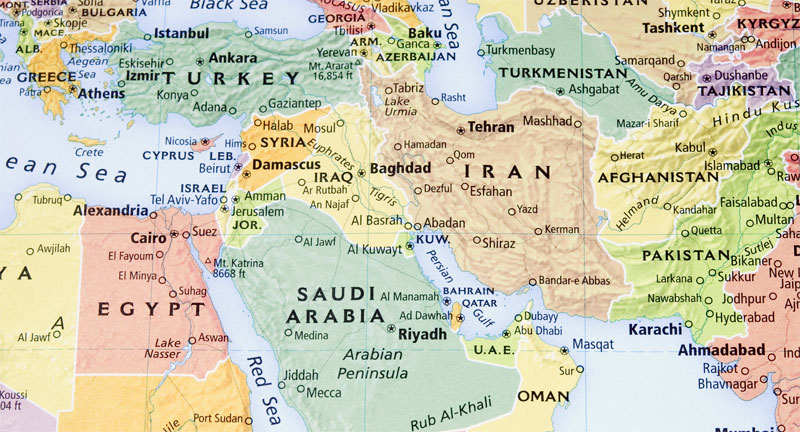
At this time last week, rebel troops in Syria had just taken control of the city of Aleppo and exposed potential weaknesses in the regime of Bashar Al-Assad. But now, Assad has fled his country for sanctuary in Moscow, the insurgents have assumed control of the country, and the face of the Middle East has changed more dramatically than we have seen since Saddam Hussein was overthrown in Iraq more than 20 years ago. Both Russia’s and Iran’s reputations as regional power players have been damaged and the emerging power vacuum carries incalculable repercussions for Israel, the Middle East and the world.

Both Russia’s and Iran’s reputations as regional power players have been damaged and the emerging power vacuum carries incalculable repercussions for Israel, the Middle East and the world.

It’s impossible to predict in these early and volatile days what sort of relationship will develop between the Jewish state and the multi-headed coalition that may now rule Syria. The Hayat Tahrir al-Sham (HTS) organization, which led the uprising, has its roots in Al-Qaeda and is classified as a terrorist group by both the United States and the United Nations. But while Turkey, HTS’ biggest supporter, is certainly no friend of Israel, President Recep Tayyip Erdogan has exhibited a greater willingness to engage with the international community than Iran’s mullahs. Israeli leaders have voiced optimism about their ability to work with secular members of the insurgents’ coalition, most notably the Kurds and Druze, who appear to be more tolerant of Israel’s existence than either Assad or his backers in Tehran.

Syria may end up devolving into several regional factions, all competing for power with different agendas and different allies and enemies. Less likely but still possible would be for them to form some type of unified national governing structure, although such an arrangement would almost certainly struggle with similar internal rivalries and disagreements. But even if the animus toward Israel does remain, Syria will no longer have the unity or the firepower to represent the type of threat that has been the case throughout the Assad dynasty and for many years before. (Weakened and divided enemies are still enemies, but potentially less menacing ones.)

The new Syria will no longer be the reliable ally to Iran as it has been under Assad. The so-called Axis of Resistance that Iran’s leaders built to support and protect their interests, primarily their aggression toward Israel, is in shambles. Lebanon is a failed state, and its destroyer Hezbollah is now reeling under Israeli attacks. Syria’s transformation means it will no longer provide easy access for Iranian weapons to Hezbollah, and Hamas, the Houthis and West Bank Palestinian resisters will be more isolated as well. The Middle East is still definitely not safe for Jews or the Jewish state, but it is much less perilous than has been the case for some time.

The even bigger question is how Iran responds to its newly vulnerable status. To be clear, the ayatollah now has no clothes. Stripped of protection from proxy terrorist organizations and puppet states, Iran has never been more exposed. This may motivate its leaders to accelerate its push for nuclear capability, knowing that their conventional weapons’ arsenal can no longer protect them. It may also convince them to move more aggressively toward a rapprochement with Saudi Arabia. Their negotiations with the Saudis last year yielded only small amounts of progress but China, who facilitated those talks, is eager for a larger footprint in the Middle East and would be happy to encourage further conversation. 

A true Saudi-Iran alliance is the one possible outcome that could put the Jewish state in much greater danger. Israel can’t afford for Iran to strike that deal first. So Israel’s own discussions with Saudi Arabia must now take on an added level of urgency.  Since last Oct. 7, the two countries have been gridlocked over the question of a Palestinian state. The impetus for Israel to break that logjam is now much greater than it was only one week ago.


Dan Schnur is the U.S. Politics Editor for the Jewish Journal. He teaches courses in politics, communications, and leadership at UC Berkeley, USC and Pepperdine. He hosts the monthly webinar “The Dan Schnur Political Report” for the Los Angeles World Affairs Council & Town Hall. Follow Dan’s work at www.danschnurpolitics.com.

Suddenly, a New Middle East Read More »