fbpx

May 25, 2023

Rabbis of LA | Rabbi Refael Cohen: A World Traveler Settles in L.A.

When Rabbi Refael Cohen first saw Sephardic Temple Tifereth Israel, he felt a kinship with the over 100-year-old congregation. “Wow,” he thought, “this could be the place for me!” 

That’s quite a statement, especially since he’s traveled to “almost all of the Sephardic communities around the world.” So after 25 years of circling the globe, the 51-year-old Cohen, his wife, Michal and their four children settled in last June at the sprawling temple at the intersection of Wilshire Boulevard and Warner in Westwood.

This is not his first American congregation. In addition to serving communities in Tucuman and Córdoba, Argentina and in Cali, Colombia, he also spent a year in Cherry Hill, NJ. There have been numerous working trips to Israel. 

Cohen’s parents are from Iran, and he grew up in the religious community of B’nai B’rak. “I am an Israeli,” he says  proudly. In Israel, he studied law and was a leader at Jerusalem’s prestigious Shehebar Sephardic Center in the Old City, where he served as executive director, training rabbis and placing them around the world. “I had a fabulous, fabulous experience,” he enthusiastically noted,  pointing out the importance of  working with (Shehebar’s founding) Rabbi Kassim  and having the chance to “travel and be in contact with Sephardic communities all over the world.” He was sent to Bogota, Columbia, where he opened a kollel where none of his students were religious. But, he said with a smile, “they loved being there, and they loved to study.”

“I am very much focused on growing the Sephardic Temple. My slogan is Make the Sephardic Temple Greater Again.” 

But now, he says, “my habitat is between Manning and Warner. I am not interested in the inner workings of other communities. I am very much focused on growing the Sephardic Temple. My slogan is Make the Sephardic Temple Greater Again.”

Before Cohen arrived, he said, “the Sephardic Temple was an unbelievable community, and then they suffered a decrease of members. Original members disappeared.”

He does not know exactly why this happened. “I asked everyone – Turks, Greeks, Persians —where are their children? They disappeared. No one could give me accurate information.”

His assessment of the Persian community was equally frank. “They are “not making enough effort. There is a core group coming that is supportive, giving and doing, but it is not enough.” 

Did Cohen have specific targets when he landed in Westwood? “Yes, I am very goal-oriented. My goal is to increase the number of people who want to be part of the Sephardic Temple, an active part. Another goal is to infuse more concepts of Torah and Judaism to the people.”

How will he know if he is succeeding? The rabbi rejected the notion that a head-count is an appropriate yardstick. “Forget numbers,” he said. “This is not just to help members. We are not a football club.”

What counts as success is “to transmit teaching.” 

He pulled out his phone and found a  What’s App link for an example.

“Dear Rabbi Cohen, I don’t know how to thank you. I don’t have the words. You have done so much for me and my family. We are so blessed. Beyond words. I never have been so lucky in my life to go to a rabbi with a problem, and he made a miracle. You entered our congregation with an open heart, and you have shown us what a true rabbi is.”

He scrolled to another What’s App note: “Thank you for my miracle.”

After the notes were read aloud, Rabbi Cohen responded, “I felt my way to be is for the people.” 

To get an idea of Rabbi Cohen’s commitment to his congregation, earlier this year, he was scheduled to return to Israel to be with his family, and expected to stay until after Yom Ha’atzmaut. 

However, he also is a mohel, and Rabbi Cohen had promised a friend that he would be present for his grandson’s brit milah. 

The rabbi did not keep track of the date. When his friend contacted him to say the brit milah would be the day before Yom Ha’atzamaut, the Rabbi asked how he knew. Because the mother-to-be would have a C-section, he was told.

Instantly, the rabbi spun into action. “Took me two hours to cancel all programs in Israel and to be back here on time,” he said with a smile.

“For me, the friendship, the appreciation of people in the community, is huge.”

Fast Takes with Rabbi Cohen

Jewish Journal: What is your favorite Jewish food?

Rabbi Cohen: “It’s Persian: Eggplant with sauce and rice.”

JJ: What is your favorite music?

Rabbi Cohen: “Classical – I like Bach.”

JJ: What is your favorite time of year?

Rabbi Cohen: “Springtime.”

Rabbis of LA | Rabbi Refael Cohen: A World Traveler Settles in L.A. Read More »

A Bisl Torah – A Renewal Ceremony

We are just hours away from the holiday of Shavuot, the festival in which we commemorate the giving of Torah at Har Sinai. The image of Shavuot as a betrothal between the Jewish people and God is most compelling. Jewish weddings begin with the signing of the ketubah, the marriage contract. In this case, the ketubah is the Torah. While witnesses do not sign anything on the holiday itself, we stand as the Ten Commandments are read from the Torah, testifying to its receival and reaffirm our commitment to God and the Jewish people.

If you will, a modern-day renewal ceremony. In the few I have attended, partners recommit themselves to each other, often writing and sharing vows. A ritual that publicly proclaims the meaning embedded within the relationship and intention to move forward through life together. Shavuot is perhaps, one of the least celebrated Jewish holidays. The holiday is associated with cheesecake and learning. Both essential elements. But what could be more important than taking time over the holiday to determine, how do I renew my relationship with God? And how do I recommit myself to the Jewish people? In otherwise, how do I choose Jewish this year?

Conversion candidates stand before a Beit Din and declare their eternal connection to the Jewish faith and the people and land of Israel. On Shavuot, each year, Jews should engage in this annual opportunity. This year, will you choose to join a synagogue and develop stronger ties to a Jewish community? Will you take a Torah class to further your Jewish education? Will you engage in a series of mitzvot, finding ways to serve as a messenger of God? What does your renewal ceremony entail so that God hears and sees your continued loyalty and devotion?

May your Shavuot be filled with a reconnection to the Holy One and a renewed desire to join the Jewish people.

Chag Sameach and Shabbat Shalom


Rabbi Nicole Guzik is a rabbi at Sinai Temple. She can be reached at her Facebook page at Rabbi Nicole Guzik or on Instagram @rabbiguzik. For more writings, visit Rabbi Guzik’s blog section from Sinai Temple’s website.

A Bisl Torah – A Renewal Ceremony Read More »

A Moment in Time: “If You Could Add an 11th Commandment, What Would it Be?”

Dear all,

Thursday evening begins the Festival of Shavuot, during which we celebrate the gift of Jewish learning. According to our tradition, the process of learning began at Mt. Sinai, where Moses received the Ten Divine Words (often referred to as the Ten Commandments – though, as you will see, the first is not actually a commandment – but more a statement):

  1. I am God
  2. You shall have no other gods before Me
  3. You shall not take God’s name in vain
  4. Remember/ Keep Shabbat
  5. Honor your parent(s)
  6. You shall not murder
  7. You shall not commit adultery
  8. You shall not steal
  9. You shall not bear false witness against your neighbor
  10. You shall not covet

We can certainly discuss at great length which of these ten resonate more and which resonate less.

But as we enter this Festival of deep thinking, I ask you to take a moment in time to consider: If you were to add one additional commandment (or statement), one piece of wisdom that you believe is central to the betterment of our world, what would it be?

Now, take that 11th (which becomes YOUR Torah/ truth) and make a difference!

With love and shalom.

Rabbi Zach Shapiro

A Moment in Time: “If You Could Add an 11th Commandment, What Would it Be?” Read More »

Table for Five: Shavuot Edition

One verse, five voices. Edited by Salvador Litvak, the Accidental Talmudist

Moses came and summoned the elders of Israel and placed before them all these words that the Lord had commanded him. And all the people replied in unison and said, “All that the Lord has spoken we shall do!,” and Moses took the words of the people back to the Lord.

– Ex. 19:7-8 Torah reading for Shavuot


Cantor Michelle Bider Stone
Temple Beth Am, Los Angeles

Shavuot is one of the three pilgrimage holidays in the Torah, along with Passover and Sukkot. Like Passover and Sukkot, it is an agricultural holiday. Unlike the other two, the Torah does not connect it to any historical event. The Torah has no knowledge of Shavuot being associated with the giving of the Torah on Mt. Sinai. This significance was added centuries later by the rabbis. 

In fact, the Torah provides no holidays or mitzvot requiring us to commemorate Torah revelation. We have daily and weekly rituals, not to mention Passover, to remember the exodus from Egypt. Shouldn’t the Torah make sure we give the same attention, if not more, to the gift of Torah? Rav Menachem Leibtag posits that the Torah may implicitly be sending a message that the revelation of Torah at Mt. Sinai shouldn’t be a historical event to be remembered, but rather something to be experienced continuously. Every generation should feel as though God speaks directly to them. And not just once, but every single day. This is what the rabbis achieved when they connected Shavuot to Mt. Sinai. We are asked to go beyond remembering history. On Shavuot, we try to experience the giving of Torah firsthand. To feel as though we, ourselves, are standing at Sinai and are part of the ongoing process of revelation. Torah is given to us again, anew. When we study and interpret text, we become active participants in the dialogue of our tradition, adding our voices to the chain.


Rabbi Pinchas Winston
Thirtysix.org

Amazingly, Torah is accessible, and we are meant to become very familiar with it, to learn it relentlessly in pursuit of Ultimate Truth. Torah is all we should really need, as the Talmud says, “Had the Jewish nation not sinned, they would have only received the five books of the Torah, and the Book of Joshua which deals with the division of Eretz Yisroel.” 

The Talmud is saying that had the Jewish people not sinned with the golden calf, we would only have needed the Five Books of Moses and the Book of Joshua. This is because there is more than one level of Torah, something called Toras Atzilus, the level of Torah for the Messianic Era. It was the level we were about to receive after saying, “All that the Lord has spoken we shall do!” That was the level of the first tablets that Moses broke. Toras Beriyah is the level of Torah we presently live by, which contains 613 mitzvos and which has spawned countless other works to explain how to properly fulfill them. 

Toras Atzilus emanates from a higher spiritual realm where only two mitzvos are necessary: I am God your God, and There can be no other gods besides Me, the first two Ten Commandments. What happened to the other 611? They’re still there, just incorporated in these two primary mitzvos. On this level of consciousness, they do not need to be itemized since a person will automatically do them by fulfilling these two mitzvos.


Rabbi Benjamin Blech
Professor of Talmud, Yeshiva University

Of all the meetings between Moses and God this may be the most remarkable – as well as the most incomprehensible. 

The Israelites had just made a commitment. They agreed to fully accept the Torah. “And Moses took the words of the people back to the Lord.” I can just picture in my mind the joy with which Moses shared the good news with the Almighty. But it simply doesn’t make sense. Did Moses actually have to inform God what happened? Did God have to hear the news secondhand? Our comprehension of the Almighty assumes His total knowledge of everything that happens here on earth. He sees all, He hears all, He knows all. 

Why did Moses have to make sure that the Almighty finally found out that the Jews unanimously voted “yes”? 

Obviously, we have misread the text. Moses did not come to *inform* the Lord; he came to *rejoice* with Him. Prior to this moment there had been many miracles — miracles performed by God. The splitting of the sea as well as the previous 10 plagues were acts that defied laws of nature. But godly miracles are only called miracles because they are beyond human capabilities. A much greater miracle, one that deserves true awe and respect, is a superhuman act achieved by human beings — people with freedom of will whose commitment, vision and dedication permit them to demonstrate personal greatness. THAT was the greatest miracle of Sinai — and the one we hope someday to replicate: a wholly unified nation choosing to live by the values of Torah.


Kylie Ora Lobell
Community Editor, Jewish Journal

The more I follow the Torah, the happier I am. It’s just a fact. As much as I try to resist it (I’m looking at you, yetzer hara), I’ve learned that following the commandments as closely as I can has resulted in me having a much more joyful and fulfilling life. I grew up without any religion and became an atheist when I was 12. I didn’t believe in God and thought that I was in control of everything and that there was no bigger plan for me. But when my boyfriend (now husband) Daniel took me to a Chabad for Friday night dinner, everything changed, and it led me down the path to conversion. But even after I dipped in the mikvah and officially became a Jew, my Jewish journey didn’t stop there. Every year, I make goals to take on more and more – learn how to pray in Hebrew, study the Torah every week, focus on shalom bayit – and the more I do, the better I feel. The better my life gets. The Jewish people were resistant to the Torah at first. They didn’t recognize that the Torah was the ultimate guidebook for life, the ultimate truth. Their yetzer haras took over. But once they did realize the holy power of the Torah, their attitudes changed. They accepted the Torah. They accepted God in their lives. This Shavuot, I encourage you to accept the Torah all over again and rededicate yourself to living Jewishly. You’ll see the monumentally positive effect it has on your life. 


Rabbi Scott N. Bolton
Congregation Or Zarua 

In unison they sang! Not uniformly. A dilemma in our time is moral absolutism; more people are becoming fundamentalists. Some believe their moral outlooks are the only ones that matter. However, revelation and religion, from a human point of view, are best perceived, deciphered, and understood as having multiple facets of divinity, godliness and pathways “back to the mountaintop.” 

But, wait, did not God’s voice go out and kill the idolaters?! Rabbi Tanhuma said of the voice that Exodus reports — “The Lord has spoken” — that it went out with two frequencies. One shook, vibrated and destroyed the idolaters and their nations. The other was compassionate, covenantal and instructive. 

And what about Tractate Shabbat that describes God holding Mt. Sinai over our heads? “If you will not accept Torah, here will be your grave!” One could learn from such texts to be a moral bully. But it’s an exhortation about a good and righteous way forward; there’s no license to start missionary work at airports and in the subways. For sure there’s no license to kill. The midrash in Shemot Rabbah goes on to say that each and every soul receives Torah according to his or her own koach, strength. What a Jew does to bring the holiness of Torah into action and to create a world of holiness is their business. While the how and why might differ, we are unified in those endeavors.

Table for Five: Shavuot Edition Read More »

Rosner’s Domain | Ultra-Orthodoxy, Tel Aviv Style

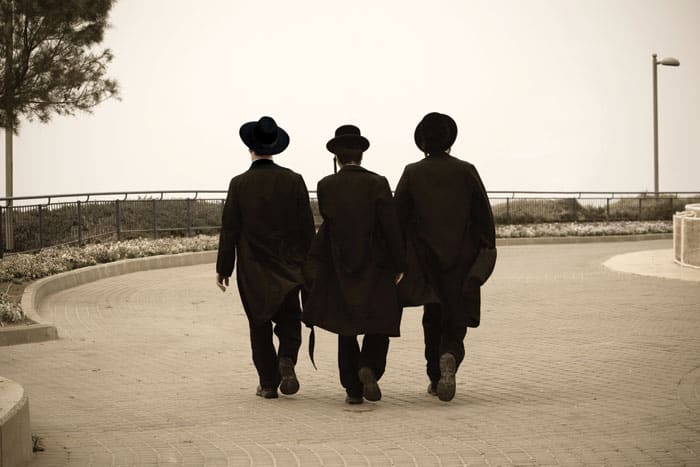
On the street where I live in Tel Aviv there is a yeshiva. Young guys in black hats walk around, visit the playground, drag suitcases on wheels, delight us with great singing on holidays. As far as I can see, there is no tension between the neighbors, yeshiva youngsters and mostly secular residents. And yet, whenever I pass by it in the last few months, I look to the sides to see if protesters have already come, if the yeshiva has already been targeted.

There is no reason to protest against the yeshiva, or to harass its students — except one: The growing desire of many Israelis for separation. This is evident in a battle that is taking place against another yeshiva in Tel Aviv, Ma’ale Eliyahu. City Hall decided to reexamine the approval given to the yeshiva to erect a larger building. Protesters against the yeshiva makes themselves visible. There is a campaign for and against, in which the main arguments can be summarized as follows:

On the one hand, Tel Aviv is open to everyone, and it’s a pluralistic city, so why not let a yeshiva operate and flourish without interruption?

On the other hand, Tel Aviv is mostly secular and liberal, and religious-Orthodox leaders, who would not accept secular/liberal institutions in their own residential areas, should not expect too much hospitality in Tel Aviv.

This is a debate similar in nature to another, very familiar debate: Whether and to what extent democracy should allow the expression of extreme ideas that undermine democracy itself. In the US, where unrestricted freedom of speech is the norm, racists or anarchists are tolerated. In Israel, as in many other democracies, the norm is different. Israel is a democracy that has chosen to prevent, at least in theory, the flourishing of ideas that undermine democracy. It follows the concept of defensive democracy. True — a defensive democracy limits the freedom of expression, which is the lifeblood of democracy. But sometimes (proponents of defensive democracy say) one has to balance different values to reach a stable equilibrium. Freedom of expression can be prevented if or when it threatens democracy itself (and hence, in the long run, threatens free expression itself).

Back to Tel Aviv: supporters of the yeshiva make the argument of freedom; opponents of the yeshiva make the argument of defensiveness. Both claims are colored by the politics of the last few months, the politics of separation. The yeshiva was established decades ago, and no one seemed to care, but now its presence is becoming an issue. The yeshiva is a victim of a tense situation. 

Who’s right and who’s wrong? This is not an easy question. On the one hand, it is easy to sympathize with yeshiva students who did not sin. On the other hand, it is impossible to expect that Tel Aviv will happily host an institution whose founders’ intention is to alter the city’s character and spirit. Then again, how can we call the city pluralistic if it does not allow a peaceful Torah study? Then again, why can’t seculars behave like the Orthodox and strive to have a cohesive public sphere?

The argument made by yeshiva proponents is problematic: They want Tel Aviv to be open to everyone, while their neighborhoods, and even their cities, will not be open to everyone.

In the Orthodox community, influencers and leaders rose up to defend the Yeshiva. But ask yourself: Would they accept a pride parade in Haredi El’ad? Would they allow the establishment of a school for atheism in Beitar Elit? Would they allow anti-religious activists establish a community in Ofra? The answers are no, no and no. They would not agree. Thus, the argument made by yeshiva proponents is problematic: They want Tel Aviv to be open to everyone, while their neighborhoods, and even their cities, will not be open to everyone.

And in Tel Aviv, which was indeed always open to everyone, new winds are blowing. To sum them up: there is a growing feeling that perhaps it is time for the liberal sector to become, well, a true well-defined and well-defended sector. Maybe Tel Aviv should also be ultra-Orthodox in its own way. To be a city that is a little less ideologically diverse, a little more oriented to the needs of those who identify with the basic values of the majority of its residents. And of course, it is complex when it comes to a large, central city, which is not homogenous at the moment. But the strategic goal is important. 

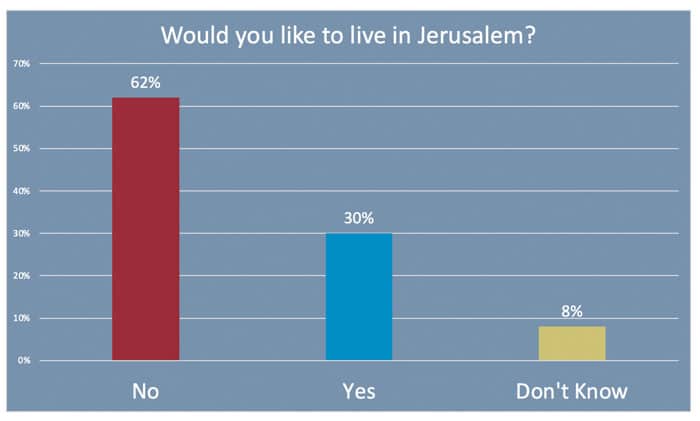
Consciously or unconsciously, this is what is reflected in the battle over the yeshiva in Tel Aviv. The aspiration for a trend of fences and separation. In recent polls, a large majority of Israeli seculars say they do not want to live with ultra-Orthodox groups in the same neighborhood. In all, about 60% of Israeli Jews believe that separate neighborhoods for secular, religious and ultra-orthodox are preferable to mixed neighborhoods.

There’s a short distance from neighborhoods to cities. And if the space is separated, maybe there’s no reason for a conservative yeshiva, whose stated goal is “strengthening spirituality and values in the city”, to have a place in the heart of Tel Aviv.

Something I wrote in Hebrew

Here’s what I wrote as I criticized and also tried to explain why an Israeli TV anchor didn’t said that Haredim are “blood suckers” (because of their budgetary demands):

Israeli Jews have lost their sensitivity to antisemitism. They shout “antisemitism” when it suits them, when someone criticizes them or Israel, rightly or wrongly, but they no longer have a real sensitivity to this phenomenon. Life in a majority Jewish state has worn out their senses. The Zionist rhetoric has worn out their senses. This should also be said: At the heart of the Zionist idea nestles a rejection of the old Jew, and there is also the internalization of negative feelings and negative stereotypes concerning him … almost naturally, it is attached to the Jews whose appearance is the most diasporic — that is, the ultra-Orthodox.

A week’s numbers

Jerusalem is important, it is also poor, conservative, and complicated. Not all Israelis see these features as a plus.

A reader’s response:

Deborah Levy asks: I just heard that Israel has a two-year budget rather than annual budget, is that normal?

Answer: Normal for Israel. It is a trick aimed at stabilizing the political system (passing a budget is a political obstacle for all governments). 


Shmuel Rosner is senior political editor. For more analysis of Israeli and international politics, visit Rosner’s Domain at jewishjournal.com/rosnersdomain.

Rosner’s Domain | Ultra-Orthodoxy, Tel Aviv Style Read More »

What Choice Do I Have?

Recently I said to my doctor, “I feel like I’m getting so old. I feel tired a lot. And my elbows look like shriveled lemons.”  

In my 20s and 30s, I was pain-free 95% of the time. The 5% pain was from over-exercising or falling off barstools after 2 a.m. I had an occasional ache or pain in my forties and fifties, but it was generally gone the next day. But the 60-and-up crowd was quick to share with me what hurt them. And keeps hurting them.

I’d hear, “Getting old is not for sissies. Thank God I’m retired, or I wouldn’t have time to visit all my doctors.”  And, “Who is the most popular person in a retirement home? The person that can still drive at night.” 

I’d hear, “Getting old is not for sissies. Thank God I’m retired, or I wouldn’t have time to visit all my doctors.”  

And, “Who is the most popular person in a retirement home? The person that can still drive at night.” 

The stories were sometimes sad and occasionally funny. One woman told me she busted a rib sitting on the toilet. Another said he had a stroke biting into a Fuji apple. A few weeks before his death, my grandfather said, “I’m stiff everywhere except the one part I wish still was.” 

I heard their complaints, but because I was still years away, most of what they said did not compute. I thought, in their situation, I’d be a fighter. Yet, they all seemed resigned to living with whatever they had. I’d hear “What choice do I have?” 

When entering my sixth decade, like an old Ford, I was told I had a leaky hose and one my valves started wearing out. Doctors questioned me about how many times I get up at night. The painful snap of their rubber glove became commonplace. My doctor got mad when I joked, “Can’t we do the glove thing at the park where there’s a nice breeze?” Little by little I began racking up aches, pains, and ailments. I’m quickly closing in on my very own medicine cabinet. 

It now takes at least 30 minutes to fill my oversized pill cases. Each pill has possible side effects that are potentially worse than the actual disease. Amazingly, not one of my medications cures a thing except for the CEO of Pfizer’s need to one day retire in a 30,000 square foot home overlooking the ocean in Maui. And that is as the dolphins wave hello to him on their way to get sushi. 

I’m now being treated for an amalgam of different things: high blood pressure, high cholesterol, cataracts, possibly glaucoma, lower back pain, tinnitus, and atrial fibrillation. The good news is that I have no dental problems because I have no original God-given pearly whites. 

To try counterbalancing, I’m a vegan, don’t smoke, drink, or use recreational drugs. My plantar fasciitis keeps me from chasing any woman but my wife. And she’s relatively easy to catch since tearing her meniscus. I exercise seven days a week. My treadmill is not an expensive coat hanger. I use it. I also ride my Peloton and lift light weights because of bulging discs and popping L4 and L5 vertebrae. I walk everywhere I can. I meditate and pray. And I fight like heck to keep off the 50 pounds I lost over a decade ago. 

With all of this, I’m in better shape than many of my friends. But because some of these ailments are more serious than others, I listen to my doctors and never miss taking my pills. Here it is, “What choice do I have?” There, I said it.  Like an old car, you fix it until you can’t fix it anymore. 

I refuse to throw in the warm towel which I need to help me with my dry eyes. I will not give up. I will do whatever I have to do. I owe it to my friends, family, and my Creator. I owe it to everyone that shares in this great life of mine. And it’s not one-sided. If I am able, hopefully, I will be there for them. Like they’ve been there for me. If you want to go to hell, then you need to dwell on what’s wrong. 

But helping others takes your mind off you and your swollen feet.  

Gotta go.  It’s nappy nap time. After all, what choice do I have?


Mark Schiff is a comedian, actor and writer, and host of the ‘You Don’t Know Schiff’ podcast. His new book is “Why Not? Lessons on Comedy, Courage and Chutzpah.”

What Choice Do I Have? Read More »

On the Ropes in Yoga Class

I recently returned to practicing Iyengar yoga, and immediately realized how much I had missed it. Both Iyengar studios I had frequented for years closed due to skyrocketing rents, so I performed my downward dogs and triangle poses from the mat in my small home office with Zoom instructors and videos. These are great Hatha-style workouts, but Iyengar classes are much longer — usually an hour-and-a-half — and involve frequent restaging of your mat with bolsters, blankets, bricks, straps, and even ropes. It’s a gantza megillah, and I didn’t have the space, the equipment, or the patience to try to do it from home.

During my first class as a prodigal Iyengar returnee, my new instructor, Chris, announced that we were going into a half handstand. I wondered: Could I still do it after so long without practice? 

During my first class as a prodigal Iyengar returnee, my new instructor, Chris, announced that we were going into a half handstand. I wondered: Could I still do it after so long without practice? Without overthinking it, within a few seconds I had braced my hands on the floor and planted my feet against the wall about three feet from the ground. Chris suggested improvements to my form and I adjusted accordingly. I was surprised and rather amazed that I could get my body into a 90-degree angle like that. All my yoga practices — even from home — had kept me strong. 

Yoga is associated with Buddhism, but plenty of religious Jews are devoted practitioners. At the beginning of an Iyengar class there is an incantation to an ancient sage who is considered “the father of yoga.” This mantra is sort of like their “Barochu” before Shachrit, and I sit quietly until the brief Sanskrit prayer is over. For many, yoga is as much a spiritual practice as a physical one. This got me thinking: Can you really separate the physical from the spiritual? As long as we are living in this temporal existence, I don’t think so. 

There are many things I love about yoga — all kinds of yoga. After each class I can take my powered-up stamina and the spiritual benefits and plug them into my Jewish life. For example, yoga emphasizes intention, integrity of form, purposeful breathing, and accepting the limits of what we can do in each practice. (By the way, the word for breath in Hebrew, nishama, is nearly identical to the word for soul—neshama.) It’s about opening up channels of energy and growing in strength and flexibility. It’s never about competition with anyone else, and certainly never about how glamorous your workout clothes are. I also like the folks I meet in yoga class. They’re like the people you meet on a mountain trail — friendly, unhurried, focused on being in the moment. The hurly-burly of our workaday life can wait.     

I find some things in yoga almost hilarious, such as having to look at the dozen framed photos of B.K.S. Iyengar, the originator of this style of yoga, all over the room. He looks to be about 85 in these photos, and in each one he is contorting himself into some impossibly wild tangle of arms and legs, an Indian Gumby. His expression is calm. Just another day with your feet wrapped up around your ears. All my instructors claim that each yoga position is good for something: the adrenals, the heart, the kidneys, the brain, etc. I believe them. Mr. Iyengar lived to be 95, and I imagine that one day after standing on his head for an hour or two he simply laid down on his mat in a final, permanently restorative shivasana pose. I’ve heard Mr. Iyengar cured his own minor illnesses by standing on his head for at least forty minutes each day — just a word to the wise.   

I also find it funny that I am taking the same class as paragons of yoga strength and endurance who can hold a perfect, full headstand or hang from their knees from a pair of ropes for 10x minutes at a time. Do I even belong here? Yes I do. I remind myself that this isn’t a competition; it’s about working for my personal best with intention, focus, breath, and a sense of humor, to strengthen body and spirit.


Judy Gruen’s most recent book is “The Skeptic and the Rabbi: Falling in Love With Faith.”  

On the Ropes in Yoga Class Read More »

Excitement Fades. Meaning Doesn’t.

It was the spring of 2010. I was a junior in college, and I’d just found out that I was going to be interning at “The Daily Show with Jon Stewart” my fall semester. It was my dream come true. I jumped up and down and shouted “Yes!” over and over. I told all my family and friends, who were so proud of me. I’d worked hard and it’d paid off. I did it. I felt invincible.

I couldn’t wait for the internship to start. I figured this was probably how my meteoric rise in television would begin. I’d become a famous TV writer or something of the sort.

The first day at “The Daily Show,” I went in with a big smile on my face and a willingness to do whatever it took to get ahead. 

Quickly, I learned that meant schlepping heavy groceries from the nearby gourmet market back to the studio, cutting bagels for the writers and logging and transcribing tapes all day. 

My smile quickly faded as the reality set in. I was doing menial tasks for no pay and learning very little about how television actually worked. I became anxious about having to go to work and depressed that the internship hadn’t turned out like I expected. I felt isolated because I was a public university student surrounded by Ivy Leaguers. I didn’t know how to “play the game” you had to take part in if you were in show business. I floundered.

And I had no God to turn to, no faith to rely on. When the excitement faded, I had nothing to hold onto, no grounding at all. 

Back then, I was an avowed atheist. I thought that everything was in my control; if something went wrong, it was my fault. If my life wasn’t good, it was because I’d put myself into that position.

I never thought, “Maybe this internship isn’t working out because I’m not meant to work in television” or “It’s OK that things are bad right now, because there could be a light at the end of this tunnel.” 

It was an absolutely miserable semester. There were a few exciting moments, like when Jon Stewart said hello to me in the kitchen, and when I got to seat audience members, who were thrilled to be there. But overall, I dreaded being there and couldn’t wait for it to end. 

When it was over, I celebrated, ironically enough, just like I did when I got the internship. 

And just a few weeks later, I went to a comedy show on a dark winter night in Brooklyn, and I saw a cute man talking about how he had interned at “The Colbert Report” and hated it. 

“No way,” I said. “I interned at ‘The Daily Show’ and hated it too.”

“I could never admit this to anyone, because everyone else seemed to love it,” he said. 

“It’s such a relief to be able to say it out loud, right?” 

“Yes,” he said, smiling at me.

The man’s name was Daniel, and I liked him immediately. Now, 13 years later, he’s my husband. 

Today, I believe in God. I’m an observant Jew. I can see that God was at that internship every step of the way, crafting my story and helping me create a beautiful life for myself. 

If I hadn’t gotten that internship and hated it, I never would have met Daniel. I probably wouldn’t have converted to Judaism. We wouldn’t have two amazing little girls. I wouldn’t have this joyous, wonderful life.  

This Shavuot, I’m thankful I found God, as well as the Torah, my guidebook. It teaches me that God is in control, and to trust in Him that everything is for the best.

Surface level excitement is not always what it seems. When it goes away, what am I left with? These days, it’s real meaning: my values, my belief in God and my love for my family and friends.

Since “The Daily Show,” I’ve had many exciting career moments in my life, but all of them faded. Surface level excitement is not always what it seems. When it goes away, what am I left with? 

These days, it’s real meaning: my values, my belief in God and my love for my family and friends. That’s what I turn to at the end of the day. That’s what truly matters in life. 

That’s what makes life worth living. 

How has the Torah changed your life? Email me at KylieOl@JewishJournal.com.


Kylie Ora Lobell is the Community Editor of the Jewish Journal.

Excitement Fades. Meaning Doesn’t. Read More »

David Wolpe: Fearless Rabbi

“Life is so much more interesting when you say yes,” Max Webb Senior Rabbi at Sinai Temple David Wolpe told me on a recent Zoom call. Indeed, I’ve known Wolpe, who is retiring this month, for most of the 26 years that he’s been at Sinai, and I can attest to his affinity for saying yes.

If I called him mid-week and told him I have a great speaker in town that I can bring to Sinai for Shabbat, he’d say “sure.” If I called him from a recording of a rap-reggae song about Jewish unity and asked him if he’d join us as a background singer, he’d say, “why not?” If I called him at the last minute for an article on Kabbala for OLAM magazine, he’d jump right in.

Many years ago, during the Second Intifada, while Israel was reeling from suicide bombings and its streets were virtually empty, he called me about an emergency solidarity trip to Israel. Within a week or two, he was leading a large group to Israel to show support.    

This embracing of opportunities applies also to his intellect.

I recall being at a Shabbat lunch a few years ago in Pico-Robertson, when the subject came up about the tendency of some rabbis to quote only their favorite rabbinic source during their sermons. I happily interjected and told them I had recently heard a sermon that quoted the Kotzker rebbe, Rav Soloveitchik, Abraham Joshua Heschel, the Lubavitcher rebbe and perhaps a few philosophers or poets whose names I forgot. When they asked who it was, I told them it was a Conservative rabbi named David Wolpe.

“I learn from anyone who has something to teach,” Wolpe told me. “If you have Torah to teach, I’m willing to learn.”

He called me once from the road after attending a small memorial in honor of my father, just to tell me that he was deeply moved by the words of a Haredi rabbi who spoke that night.

This intellectual openness landed him in hot water many years ago, when he suggested during a Passover sermon that based on academic scholarship the Exodus story may not have happened as it says in the Bible. This came across as heresy to many of his synagogue members, and it caused enough of a stir that the Los Angeles Times ran a story on its front page.

In a statement to the Journal at the time, Wolpe clarified his point that doubts about the literal veracity of the Bible doesn’t mean a Jew is no longer obligated to follow the tradition.

“The point of the sermon,” he told me on our call, “was actually that I celebrate Passover exactly the same way, no matter what the historians say.”

Looking back on the controversy, Wolpe regrets not better preparing his congregation for the sermon. He used that lesson a few years ago when he gave a series of classes to prepare his community for his acceptance of gay marriage.

“I learned my lesson from the Exodus,” he said. “You have to prepare people. If they’re upset, they’re still upset, but you have to give them a chance to know what your approach is before you talk about your approach.”

Wolpe has had a tendency to tackle sensitive subjects. He has weighed in more than once, for example, on the delicate issue of division between Persian and Ashkenazi Jews in his congregation. He has passionately urged both sides to put unity first and engage in communal exchange and friendships. With so many more things in common now between the groups, he believes much progress has been made.

He took heat from some fellow rabbis a few years ago when he wrote a piece in the Journal titled, “Why I Keep Politics Off the Pulpit.”

He took heat from some fellow rabbis a few years ago when he wrote a piece in the Journal titled, “Why I Keep Politics Off the Pulpit.”

Responding to a letter from his critics, Wolpe wrote, among other things, that “Politics and campaigns are inherently divisive, and never more than now.” While acknowledging that every rabbi should preach values, the rabbi noted that values are not policies. “This past Shabbat,” he wrote, “I spoke about Judaism and the sin of racism. But policies to combat racism are a more complex matter.”

I’ve never heard him say this, but my hunch is that Wolpe finds politics not just divisive but repetitive and impersonal. He prefers to challenge his flock with more difficult stuff—like becoming better humans. 

To confront the post-COVID phenomenon of Jews preferring to follow services on Zoom rather than show up in person, Wolpe gave an impassioned sermon that would have been relevant in most synagogues. He called on his flock to “stop being observers and start being participants … and be a community again like we have been for thousands of years.”

He reminded them that a synagogue is not called a Bet Tefilla, a house of prayer, but a Bet Knesset, a house of gathering, and that “without gathering, there is no community.”

“We have arranged the world to maximize our individuality and minimize our community, and we know…that the single most important thing in terms of your mental health are relationships.”

In the wake of the loneliness and mental health crisis that has spread throughout the country, in a recent sermon he doubled down on the value of nurturing communal relationships: “We have arranged the world to maximize our individuality and minimize our community, and we know…that the single most important thing in terms of your mental health are relationships.”

His words brought to mind a recent essay in The New York Times by Brad Stulberg, which cited redwood trees. These trees may stretch some 200 feet into the air, but they run only six to 12 feet deep. “Instead of growing down,” Stulberg wrote, “they grow out, extending dozens of feet to each side, enmeshing themselves with the roots of their neighbors. This is why we never see a lone redwood: They can survive only in a grove, bound together in obligation.”

This is an apt description of Wolpe’s ideal for a community—bound together in obligation. If you’re getting too comfortable in your living room on Saturday mornings watching services on Zoom, the rabbi will challenge you to leave your comfort zone and show up for your community—because they need you and you need them. 

Wolpe’s penchant for dealing with how we treat one another is rooted in the one thing he says he hates the most.

“I’ve always had a deep, visceral hatred of unkindness,” he says.

I recall a comment he made to me years ago at a shiva while someone was speaking about the departed. He noticed a man whose head was buried in a book, oblivious to the speaker, and he told me how much that bothered him. He must have seen it as a sign of unkindness, however subtle and indirect.

This sensitivity to unkindness may also connect to why he keeps politics out of the pulpit. It’s easy to complain about Trump and Bibi and Biden and Newsom and others at a Shabbat table, but a lot harder to work on improving our relationships.

It’s no surprise, then, that one of his fondest memories of his years at Sinai, in addition to the Friday Night Live events he ran for many years with Craig Taubman, was hosting the Dalai Lama, who famously once said, “My religion is kindness.” As Wolpe recalls, “Basically his message was, be better Jews. He was like, I don’t want you to be Buddhist. I want you to be better.”

The notion of “being better” has fueled Wolpe’s drive in anything he’s touched. In one of his final sermons, he weighed in on the fool’s gold of material riches.

“If you know your self-worth, if you really know it, then you know it isn’t measured in dollars,” he said. “The sages of our tradition never thought that being poor was being worthless or being rich was being worthy but I have had members of the community in my office crying because they couldn’t afford a big bar mitzvah or bat mitzvah for their children or a big wedding and they thought their children would be devastated and they felt ashamed and these are kind people, smart people, good people but they have bought into this idea that your self-worth is to the right of a dollar sign.”

He added: “They’re terrified at how they will be seen by other people in the community if they don’t have the right venue or the right food or the right flowers. Now I have nothing against Jews doing well. I actually want Jews to do very well because wealth in this world is power and Jews in a dangerous world need power.

“But the poets and teachers and sages and rabbis that I have quoted to you from this bima for the last quarter century, almost none of them was rich. It didn’t make them less worthy. It didn’t matter. So my first reminder to you is simply this. Don’t be deceived and don’t be led astray. Being worth less is not being worthless.”

In trying to better understand Wolpe’s affinity for weighing in on delicate subjects, I asked him where he thinks it comes from. He credits his late father, also a rabbi: “I learned from my father the blessing of being even-keeled,” he said. “A sense that everything will be fine.”

His two battles with life-threatening illnesses have surely contributed to his positive disposition. This perspective has enabled him to deal with crises without engendering fear and alarmism. “This is a problem, we must do better, but it’s not the end of the world” is how I would characterize the Wolpe way.

We saw this in recent months when Wolpe weighed in on the situation in Israel. One week, he gave a sermon that had nothing to do with politics. He reminded his community that they’ll never see on the evening news what has made Israel such a miraculous accomplishment: the arts, the music, the food, the multicultural rainbow, the innovation, the vibrancy, the people.

A few weeks later, however, he made an exception to his “no politics” rule and gave a hard-nosed address on the potential dangers of the judicial reforms as they were initially proposed. But instead of leaving it there, once again he challenged his flock to get into the weeds and study the issue before getting into arguments.

Helping the Jewish community argue with more dignity may turn out to be Wolpe’s essential legacy. There’s almost a contradiction between fearlessness and dignity. The fearless are often assumed to be loud and aggressive; the dignified are often assumed to be polite and reticent. Wolpe has managed to marry both. He will confront raging storms and say the most difficult things without losing either his cool or his decency.

He will confront raging storms and say the most difficult things without losing either his cool or his decency.

While his focus for the past 26 years has been his beloved Sinai Temple, the digital revolution has helped his wisdom spread far and wide. All his sermons are available online. He has been writing for years a brief weekly gem, many of which are collected in a book titled, “Floating Takes Faith.” He’ll even share the occasional thought-provoking and inspirational insight on Twitter.

There’s rarely been a time in his adult life when he hasn’t been working on a book. One of his early books, “Why Be Jewish?” has become a classic introduction to the Jewish faith. Among others, he has written books about grieving, faith, the power of speech and silence, and the flawed and complex King David.

Perhaps his most poignant example of fearlessness is how he has written and spoken about God, at a time when the very idea of a Creator can engender not just skepticism but apathy. For Jewish leaders who prefer to focus on more easily relevant missions like repairing the world and Jewish peoplehood, discussion of God is generally seen as a needless complication.

Wolpe welcomes that complication. Going against the grain, he has put God at the heart of his books and sermons. Reviewing his “Healer of Shattered Hearts: A Jewish View of God,” Publishers Weekly called it “A profound, often lyrical rethinking of Jewish faith…wrestling with the problem of widespread evil and suffering . . . Wolpe concludes that belief in God is an existential choice.” 

Part of Wolpe’s fearlessness is that he admits his weaknesses. “I’m not always a socially attuned person,” he says. “I live in my head and I live in books. There are times when I didn’t respond to someone the way they wanted or needed, and I regret that, too, even though that’s just me.”

As he said that, an anecdote occurred to him.

“It’s funny. It happened this morning,” he said. “There’s an old woman with her caretaker who sometimes comes and sits on the stone steps, and I was coming back from minyan and she said something to me and I said, you know, thank you and whatever, whatever.

“After I walked halfway up the path I realized I had completely neglected her caretaker, as if she didn’t exist. So I walked back down and I thanked her caretaker for taking such good care of her. But another person wouldn’t have neglected the caretaker in the first place. They would have seen that there were two people there.”

One reason Wolpe feels so optimistic about the future of Sinai Temple is that his successors, the married couple Rabbis Nicole Guzik and Erez Sherman, have built a reputation at Sinai for their community work.

One reason Wolpe feels so optimistic about the future of Sinai Temple is that his successors, the married couple Rabbis Nicole Guzik and Erez Sherman, have built a reputation at Sinai for their community work.

“Their focus is community building, and they’re better at that than I am,” Wolpe says. “I think it’s going to be a tremendous thing for the synagogue to have that as the core, you know, of their rabbinate.”

As he prepares for his next chapter, Wolpe will be in high demand. He will teach at Harvard Divinity School for a year, and has already accepted a rabbinic fellowship position with the Anti-Defamation League and a senior advisor role with Maimonides Fund. He also has taken on the role of Jewish Future Pledge’s 18,000th “Chai Pledge Ambassador,” where people commit to donate at least 50% of their charitable giving to support the Jewish people and/or the State of Israel. 

In the meantime, he will be honored at a gala dinner at Sinai Temple on June 4, along with former Executive Director Howard Lesner.

Given his continued immersion with Jewish issues, I asked the rabbi what he felt was most missing in the Jewish world today. He said, simply, that he wished “there was more mainstream Jewish wisdom in the public sphere.”

I don’t know if it was intended or not, but I can’t think of anyone better suited to inject more mainstream Jewish wisdom in the public sphere than the man I was speaking to.

Especially when that man is a fearless rabbi who embraces difficult subjects and loves to say yes.

David Wolpe: Fearless Rabbi Read More »

Author Robbie Samuels: “Croissants vs Bagels,” Food Analogies & Networking

“Croissants vs Bagels” by Robbie Samuels is not a cookbook. It’s a business book with a powerful food analogy. What could be better?

Samuels, whose TEDx is called, “Hate networking? Stop bageling and be the croissant!” is a speaker, virtual producer and event design consultant.

“At a networking event or reception, people tend to stand in these clusters … that are impossible to break into,” Samuels told the Journal. “That’s the bagel.”

If someone in that circle shifts their body language to make space for others to join, it becomes more like a croissant.

“For open body language, croissants vs bagels is a great metaphor,” Samuels said. “It’s sticky like jam. It’s memorable.”

So what is it about food that makes it the perfect metaphor?

“Food is nourishment,” he said. “It’s community, connection and social memories.”

When you think about moments in time and cherished memories, there’s usually a meal involved.

“It’s the whole Jewish thing,” Samuels said. “‘They tried to kill us, we survived, let’s eat.’ So there’s a context in which we bring people together.”

For years Samuels hosted dinner parties, related to conferences, whether or not he was attending.

“If it was in my area, I would host it for speakers I knew coming in,” he said.  “Meeting with people and gathering over meals was a big part of my life.”

When the pandemic hit, he had to find new ways to nourish those connections.

Eating together in person is not the same as online; the former in theatrical, the latter is cinematic. However they both inspire community and relationship development.

“I do have rules for Zoom,” Samuels said. “I say, first date rules apply. If you would eat it in front of me on a first date, you can eat it in front of me on Zoom.”

If an online meeting happens during lunch, go ahead and bring some snacks.

“We can have a little nosh together,” he said.

Zoom friendly foods include finger foods, fruit, apples, nuts are all acceptable to eat online. Spaghetti, not so much.

While bagels are in that gray area – it depends what you put on them – Samuels’ favorite food, burritos, would also be a no-go for Zoom.

“I once went to the Mission District in San Francisco, and I had this amazing burrito,” he said. “I spent the next 4 days trying to find it, [eating] burritos for lunch and dinner. … I ate a lot of really good burritos and I never got sick of them.”

For years, Samuels ended his bio with, “I love Burritos,” as a conversation starter, point of connection and a hint.

“I spoke for 11 years before someone [took my cue and] served burritos,” he said.

People caught on to the bagel analogy right away.

“I’ve been brought into leadership conferences and summits. and they’ll serve bagels and croissants,” Samuels said.

Samuels added that being raised Jewish in New York might have had something to do with his love of bagels. One of his new favorite bagel recipes is below.

In early notes, Samuels had it as croissants vs donuts. However, since people rarely have to choose between those two, he changed “donut” to “bagel.”

“Also, bagels are hard,” he said. “The whole idea of [bagels] being hard to break into, whereas donuts crumble at first touch.”

All this talk of food left one question for Samuels. When does his book on burritos come out?

Learn more about Robbie Samuels.

For the full conversation, listen to the podcast:

Watch the interview:/p>

bhofack2/Getty Images

Egg on Toast, Bagel Edition


This is Robbie’s version of the bagel moats he mentioned during the conversation.

1 bagel

2 eggs

1 Tbsp water or milk

Fillings (to taste) can include:

Shredded cheese

Onion, chopped

Broccoli, chopped

Preheat the oven to 375°F.

Slice a bagel in half. Cut a slit in the bagel and push the innards to the side, creating a moat.

In a small bowl, beat to 2 eggs, add water and milk. Combine. Mix in “fillings.”

Fill both bagel halves with the egg mixtures.

Place on a lined baking sheet. Bake for 25 mins or until the egg mixture is cooked.

Alternative cooking option: Preheat the air fryer. Cook at 350°F for about 10 minutes or until the egg mixture is cooked.


Debra Eckerling is a writer for the Jewish Journal and the host of “Taste Buds with Deb.” Subscribe on YouTube or your favorite podcast platform. Email Debra: tastebuds@jewishjournal.com.

Author Robbie Samuels: “Croissants vs Bagels,” Food Analogies & Networking Read More »