Erika Jacoby met Ursula Martens in 2017 at Jacoby’s Valley Village home for a dialogue sponsored by the Journal. Martens, a childhood member of Hitler Youth then 88 years old, had agreed to meet a survivor, and Jacoby, an 89-year-old former Auschwitz inmate, had agreed to be that person.
The conversation had gone well; Jacoby had rolled up her sleeve to show Martens her concentration camp tattoo. Now, nearly two years later, the Righteous Conversations Project had invited the women for a second meeting at Harvard-Westlake Upper School in Studio City. When Jacoby invited me to the event, I immediately agreed to attend. I was helping her write the sequel to her memoir, “I Held the Sun in My Hands,” and I was intrigued.
“It seems to me that Ursula didn’t open up to her feelings then, and I doubt she’ll do it now,” Jacoby told me, explaining that her German counterpart’s emotions were repressed. “I feel that she’s had trouble healing from the experience.”
For Erika Jacoby, it’s all about healing. Living in the San Fernando Valley for the past 60-plus years, she has dedicated her life to healing herself and others as a clinical social worker. This has sometimes included survivors and their children.
For many, healing from the Shoah has been a very slow process. It was certainly slow for her, Jacoby told me, explaining that she rarely spoke of her past when she first arrived in the United States. Like many other survivors, she felt that no one could relate to her story, and perhaps that no one wanted to hear it. Many have gone to their graves revealing almost nothing of their pasts, she said.
Like many other survivors, Erika Jacoby felt that no one could relate to her story, and perhaps that no one wanted to hear it.
This resonated for me. It meant my mother, Phyllis, wasn’t the only one who had buried memories of her experience in the Holocaust. Perhaps it meant that I wasn’t the only oldest son bent on digging them up, and maybe not the only one who didn’t know how.
Coincidentally, while Jacoby and her husband, Uzi, also a survivor, were raising three children on Albers Street, my parents were raising three children five blocks away on Addison Street, in a similar ranch house with nearly identical backyards with a black-bottom pools. Yet, unlike the Jacoby family, where the past began to come into the light, the Fields family was avoiding a healing process. Instead, we were playing a game with one another.
I told Jacoby about the college paper I wrote titled “Changing the Subject,” which is what my family did whenever the Holocaust came up in conversation. Let’s move on. Let’s not deal with it. Mom’s going to break down if we talk about that.
When I brought home the paper over winter break to show my sister, my mother found it on my desk. She could be a nudnik that way. I was angry that she had read my work, but I forgave her when she finally sat me down and opened up about her past.
It was very difficult for her, of course. She stumbled often. It was also difficult for me to finally hear her story in its entirety, grim and tragic as I had suspected it was. But her words came as a relief, too. On many levels, it healed us both.
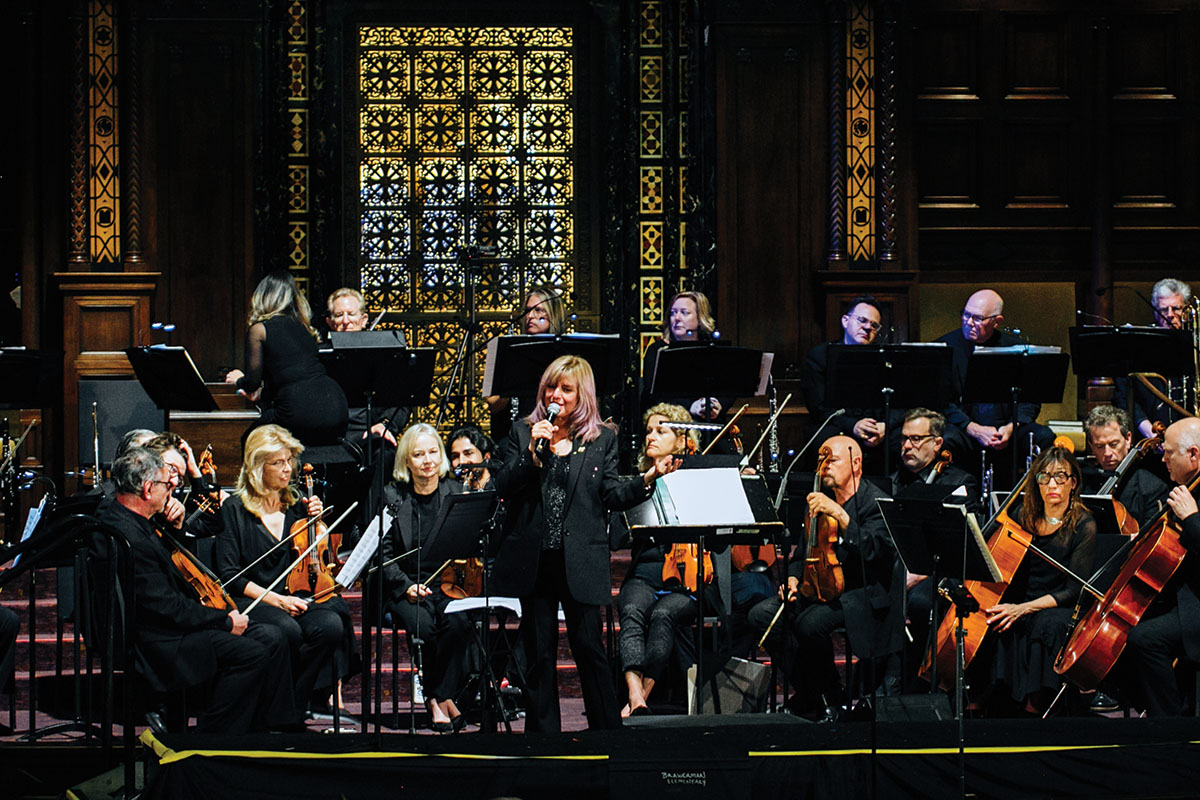
With this as my personal backstory, I arrived at Harvard-Westake in the pouring rain to see the reprise of the Jacoby-Martens conversation. Nine hundred students filed into the vast auditorium. A gifted student moderator introduced the program. Not more than a few moments in, Jacoby was pleased to see her prediction about Martens proved wrong.
In fact, it was Martens’ day to heal. She didn’t stick to the facts this time. Instead, she cried. “It took me a long time to make peace with myself,” she told the audience. “I blame myself, too, because I believed what Hitler told us …”
The Martens family did Hitler’s bidding willingly, “with all of our hearts,” Martens continued. Hitler was a father figure, and when he died, the whole world came crashing down. “It’s taken me this long to process what I felt I had done, just like anybody else who had actually killed a person, ” she said of the guilt she now feels.
“I’m very moved,” Jacoby said. “This is the first time I’ve seen Ursula crying — allowing herself her feelings. Now I see that she is an ordinary human being like the rest of us.” And then, turning to Martens, she continued, “I’m glad that you cried.”
Jacoby talked about her own healing. It started the day after she was liberated from Langenbielau, the Nazi labor camp, by the Soviet army. Brandishing sticks, she and other inmates broke into the homes from which the Germans had fled.
“We destroyed things,” Jacoby explained, describing how she entered the home of the owner of the factory where she had worked. “I was ripping paintings on the walls, and I broke all the porcelain that I could see.
“When you’re angry, one doesn’t ask permission for anything. You do what you have to do to release. So the day after I was liberated, that’s what I did. I destroyed. And after the day was over, I sat down and cried.”
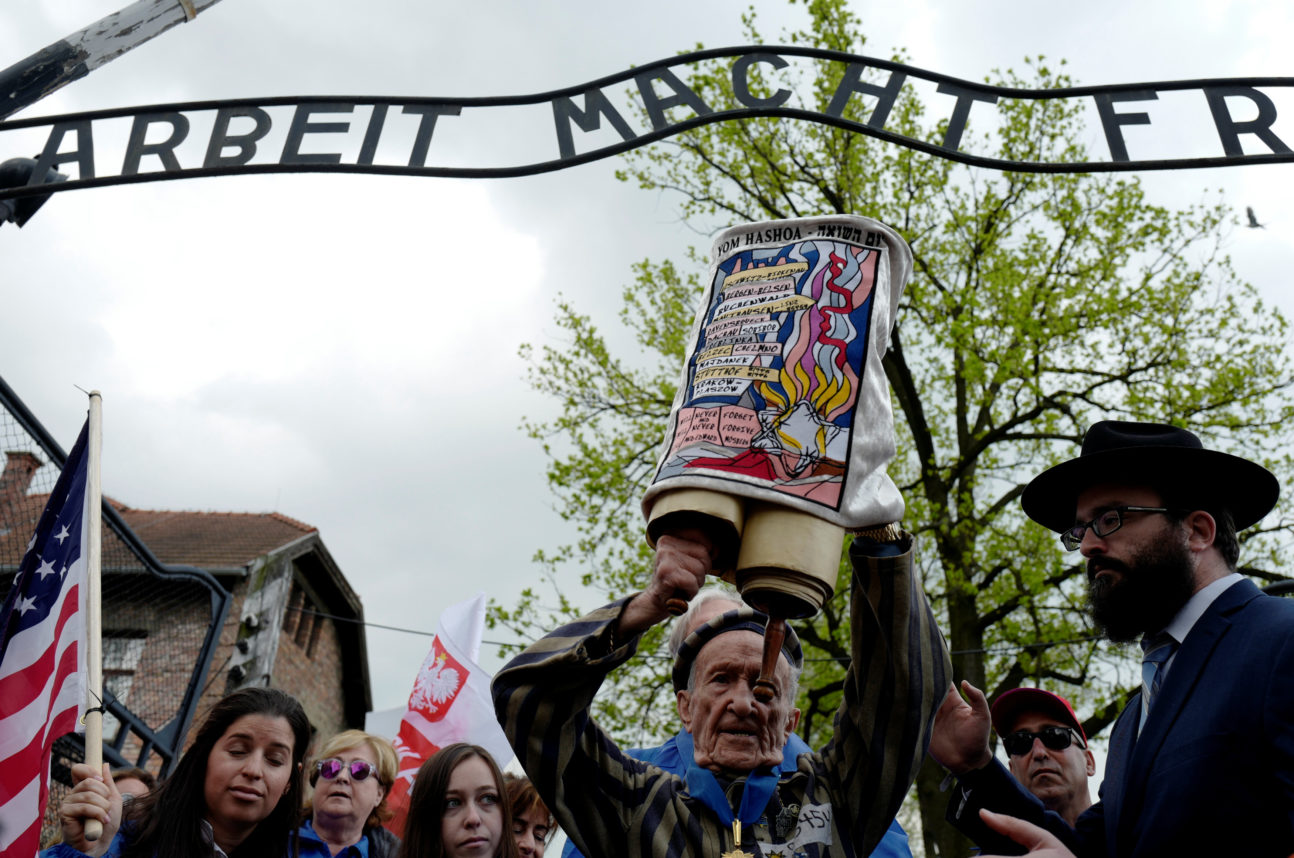
Jacoby, who believes that healing is a process that never ends, and has worked hard on healing herself for decades. But one challenge kept evading her; She had not been able to feel anger about her experience in Auschwitz. So she returned to the camp in Poland three times, making the trek all the way from Los Angeles. But no anger — or tears — ever came.
Ultimately, she transformed the sadness and anger she knew was there into creativity and helping others. “I became a therapist because how else can I live today if I don’t try to repair the world?” she asked, adding that a second motivating factor in her work as a therapist wasn’t discovered until later. “I was trying to repair the lives of my clients without realizing I was repairing my own,” she said.
There are many ways to heal, and everyone heals at their own pace. But, eventually, healing happens. If Erika Jacoby and Phyllis Fields and Ursula Martens could heal, perhaps that means that we all can heal — survivors, the children of survivors … everyone. On this Yom HaShoah, let’s all be open to healing.
Los Angeles-based storyteller Scott Fields, a veteran screenwriter, ad copywriter and nonfiction author, has worked on marketing initiatives for Jewish organizations across Southern California.