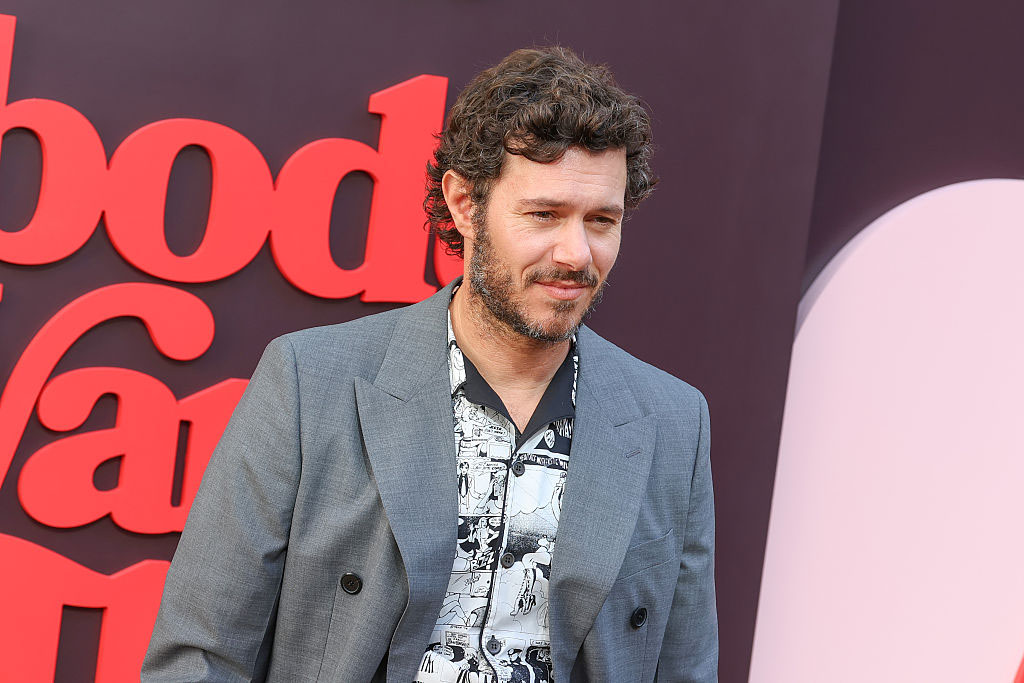
Irv Weintraub, chief operating officer of the William Morris Agency, talks about his distaste for business travel, the philanthropic flipside of Hollywood excess and why Jews in entertainment don’t support Israel.
The Jewish Journal: What’s the best thing about your job?
Irv Weintraub: I never know what I’m going to end up doing during the day. And the personalities of people in the business are certainly ‘interesting.’ What I also love is that mostly everybody I deal with has a good soul.
JJ: Mostly everybody?
IW: There’s always going to be the occasional people who are self-centered. People tend to get jaded about what they are and what they do, how they contribute to society at large. That’s why we encourage people to get involved with their community, so they can get some perspective.
JJ: Because there’s egocentrism in entertainment?
IW: It’s all about what your character is. If you have a real firm grounding in values, I think that you can still deal in this business and draw upon those. Sometimes people don’t want to leave that last dollar on the table.
JJ: How have you found time to raise a family?
IW: It was one of the many reasons for taking the [WMA] job. If you want to be good at your job, you have to put in the time. There’s no free pass. My second year in public accounting, I was out of town for 13 weeks. To be on the road and then living in hotels out of suitcases is not glamorous. I don’t care where you’re going.
JJ: Were they nice hotels at least?
IW: No. There aren’t many nice hotels in Midland-Odessa, Texas.
JJ: How do you rationalize the excess of Hollywood, how people in entertainment have three Ferraris at home, and yet there are nearly 80,000 homeless people sleeping on the streets of Los Angeles?
IW: I drive a very nice car. I’m part of the culture you’re talking about. But people who know me also know that I’m not only charitable financially, but give time. I can think of some of the people you might be talking about — and I know that they are very charitable — they just don’t want it known. That’s part of the dilemma that Hollywood faces. If your ego needs that build up, you’re gonna publicize the fact ‘I give to all these organizations.’ Look how many people give anonymously — they don’t need that.
JJ: Isn’t ego publicized in where you live and the car that you drive?
IW: I don’t think the Torah says you have to live a poor life. I think what it says is, you have to do something to improve the world in which we live. For me, it’s always been — can I look myself in the mirror and feel like I’m doing the right thing?
JJ: Why do people think Jews run Hollywood?
IW: I’m not sure I want to answer that question.
JJ: Do you think it’s true?
IW: There’s no question that there are very prominent people involved in this business who are Jews. There are also people who are not Jews. For a long time this was a business where successful people happened to be Jewish.
JJ: You make it sound circumstantial.
IW: I’m not a historian; if you look at people who are in significant positions in the business, the percentage of Jews is probably higher than what you see in the general population of Los Angeles and probably the country. Whether it’s heritage or skill set, or the needs that this business has, people tend to gravitate to maybe where their skills match. Is it something unique in the Jewish heritage that Jews are more creative? I don’t know.
JJ: What does it actually mean to be a Jew in Hollywood?
IW: When I have reached out to people in the Jewish community in Hollywood and talked to them about Jewish causes, they’ve been very receptive. If you were to look at the giving record in [The Jewish] Federation, you would not see some of the most prominent Jews in Hollywood on the list of the most prominent temples today like you did 30 and 40 years ago. I think there are myriad causes that people feel are very important today and may not have existed then.
JJ: Why do you think Hollywood is less inclined to ‘give Jewish’ nowadays?
IW: We have one thing that’s not happening now that happened then, which was the memory of the Holocaust. We are 50-plus years removed. The urgency that existed then doesn’t exist today. The Federation campaign did better with Lou Wasserman — people didn’t tell him no. There isn’t that iconic person like Lou who is willing to be identified publicly with their Judaism.
JJ: How would you characterize Hollywood’s attitude toward Israel?
IW: There are many in Hollywood who don’t want to be identified with the complexities that surround the state of Israel. It’s more difficult for them to say ‘I support what Israel is doing,’ if you look at press that’s come around with regard to the Palestinian situation.
JJ: Why doesn’t it bother you?
IW: I have a better understanding of what’s going on. I think the portrayal at times — in papers in the U.S. and around the world — can be viewed as anti-Semitic. Only with knowledge can you respond to that.
This interview was edited for space and content.