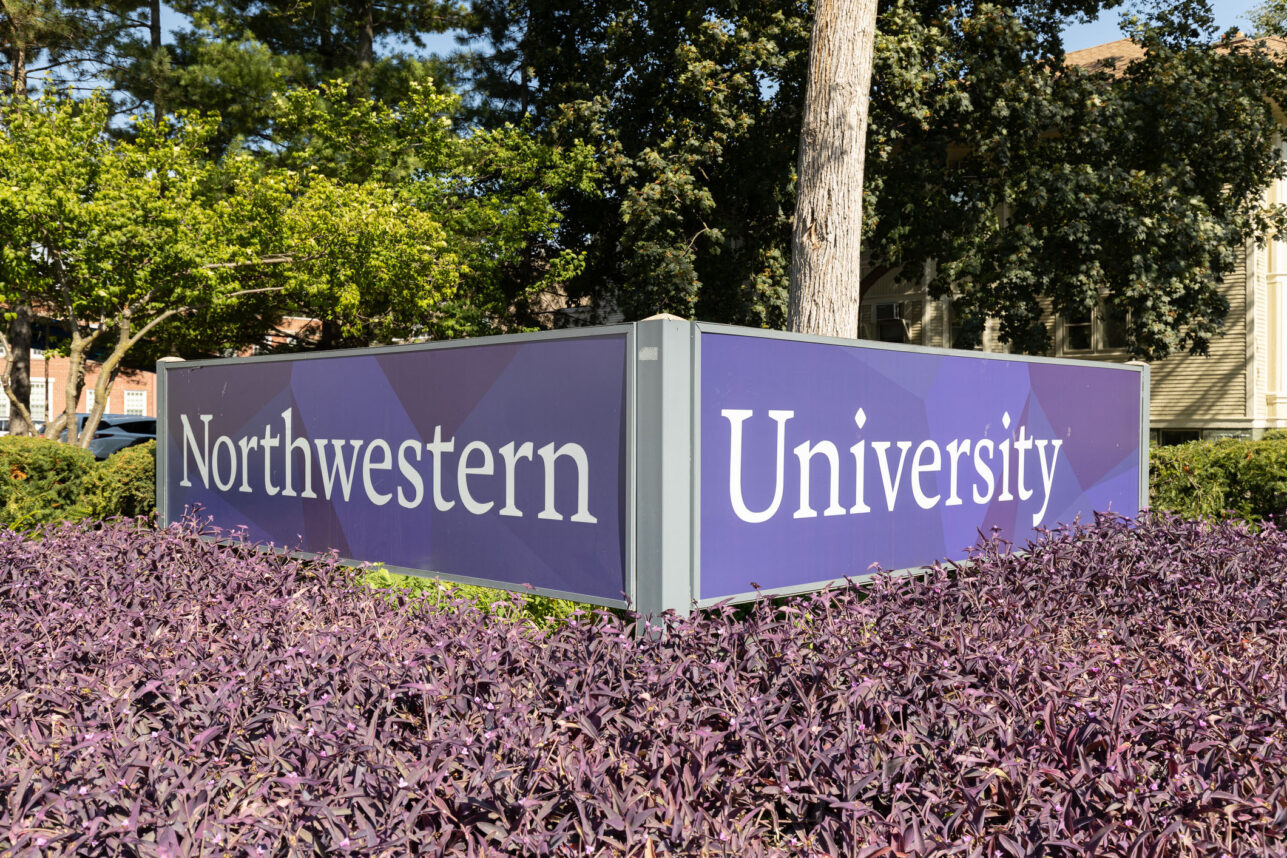

Shahid Hussain, a man who pleaded guilty to drawing swastikas and other Nazi symbols on numerous signs throughout the Northwestern University campus on January 30, 2026, was sentenced to seven years in prison.
According to the Cook County State’s Attorney’s Office, the 43-year-old drew the hateful symbols and then gave a Nazi salute, which was captured on surveillance videos. He was located on February 12 and admitted to the crime, and pled guilty to two counts of hate crime, and one count of institutional vandalism, which are class 2 felony offenses.
“Acts of hate and intimidation have no place in our communities,” said State’s Attorney Eileen Burke. “This guilty plea and prison sentence demonstrate that we will hold individuals accountable for crimes intended to intimidate and spread hate in our communities.”
“Acts of hate and intimidation have no place in our communities.” – Eileen Burke
Hussain, who is not affiliated with Northwestern, had prior hate crime and institutional vandalism convictions on his record involving incidents at several synagogues, a Jewish day school, and a kosher bakery. He painted a yellow swastika on a synagogue in the 2900 block of West Devon Avenue in West Rogers Park, and another swastika was seen near the Hanna Sacks Bais Yaakov High School, which is in the 3000 block of West Devon. At the time, Hussain was on parole for cases involving forgery and burglary.
When the latest string of hate symbols was discovered, a student posted a photo to Fizz, a social media site. The university immediately launched an investigation.
In February, after Hussain was arrested and charged, Ilan Nevo, a Jewish student, told The Daily Northwestern that seeing the symbols made him think of his grandfather, a Holocaust survivor who was able to escape from Nazi Germany.
“He escaped from that, and then he came here, and now I’m sitting here, and I’m looking at that… It didn’t make me feel any fear. It just made me kind of sad that this is what it has come to.”
Another student, Callie Berthold, told the paper, “Seeing symbols around campus popping up with specifically hateful language and symbolism toward Jewish people … it hits, and it hurts as a Jewish student.”
She continued, “People know that hate has no place on our campus, and it’s just ridiculous at this point that it’s still coming up.”