Anyone mildly familiar with “Star Trek” may recall that the character Spock—half-alien, half-human—struggles to purge his emotions and embrace the logical, detached disposition of the ” title=”letter” target=”_blank”>letter, posted on the Web site of Americans for Peace Now, actor Leonard Nimoy, who played “Spock” in the original television series and films, has released a statement voicing his support for an Israeli-Palestinian two-state solution.
In the letter, Nimoy calls for “a secure, democratic Israel as the Jewish State alongside an independent Palestinian state.”
Drawing a parallel between a Star Trek episode entitled “Let That Be Your Last Battlefield” and the Israeli-Palestinian conflict, Nimoy writes:
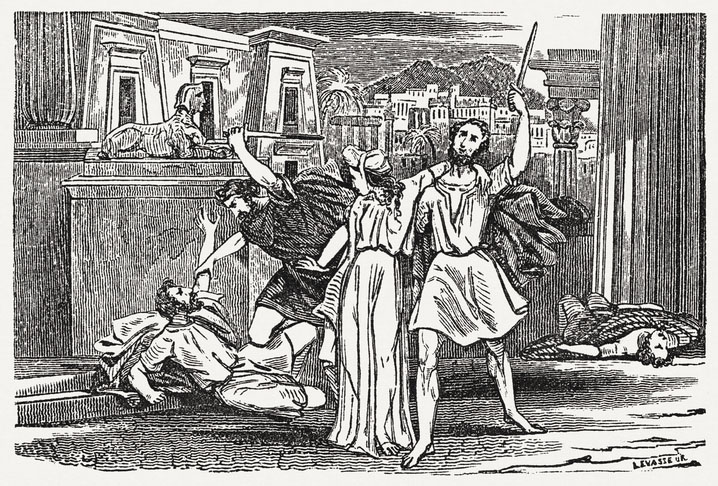
Two men, half black, half white, are the last survivors of their peoples who have been at war with each other for thousands of years, yet the Enterprise crew could find no differences separating these two raging men.
But the antagonists were keenly aware of their differences—one man was white on the right side, the other was black on the right side. And they were prepared to battle to the death to defend the memory of their people who died from the atrocities committed by the other.
The story was a myth, of course, and by invoking it I don’t mean to belittle the very real issues that divide Israelis and Palestinians. What I do mean to suggest is that the time for recriminations is over. Assigning blame over all other priorities is self-defeating. Myth can be a snare. The two sides need our help to evade the snare and search for a way to compromise.
Interesting point, though I’m surprised Nimoy didn’t reference his own character when drawing this parallel, since the argument between logic and emotion is a consistent theme in the Israeli-Palestinian conflict.
While we can’t really know for sure whether or not Spock would have supported a two-state solution, Nimoy hints that Vulcan logic plays a clear role. In the letter, he signs off with, “Dare I say it? It’s the logical thing to do.”