fbpx

Paper Butterflies for Yom HaShoah

[additional-authors]
May 2, 2019

Butterflies have become a poignant symbol of the Holocaust, particularly of the 1.5 million children who perished. One reason the insects have assumed such a role in Yom HaShoah remembrances is Pavel Friedmann’s poem “The Butterfly,” which he wrote in 1942 at Terezin concentration camp, a couple of years before he died at Auschwitz. The butterfly represents freedom, and the young Friedmann lamented in the final words of the poem:

That butterfly was the last one.

Butterflies don’t live in here,

In the ghetto.

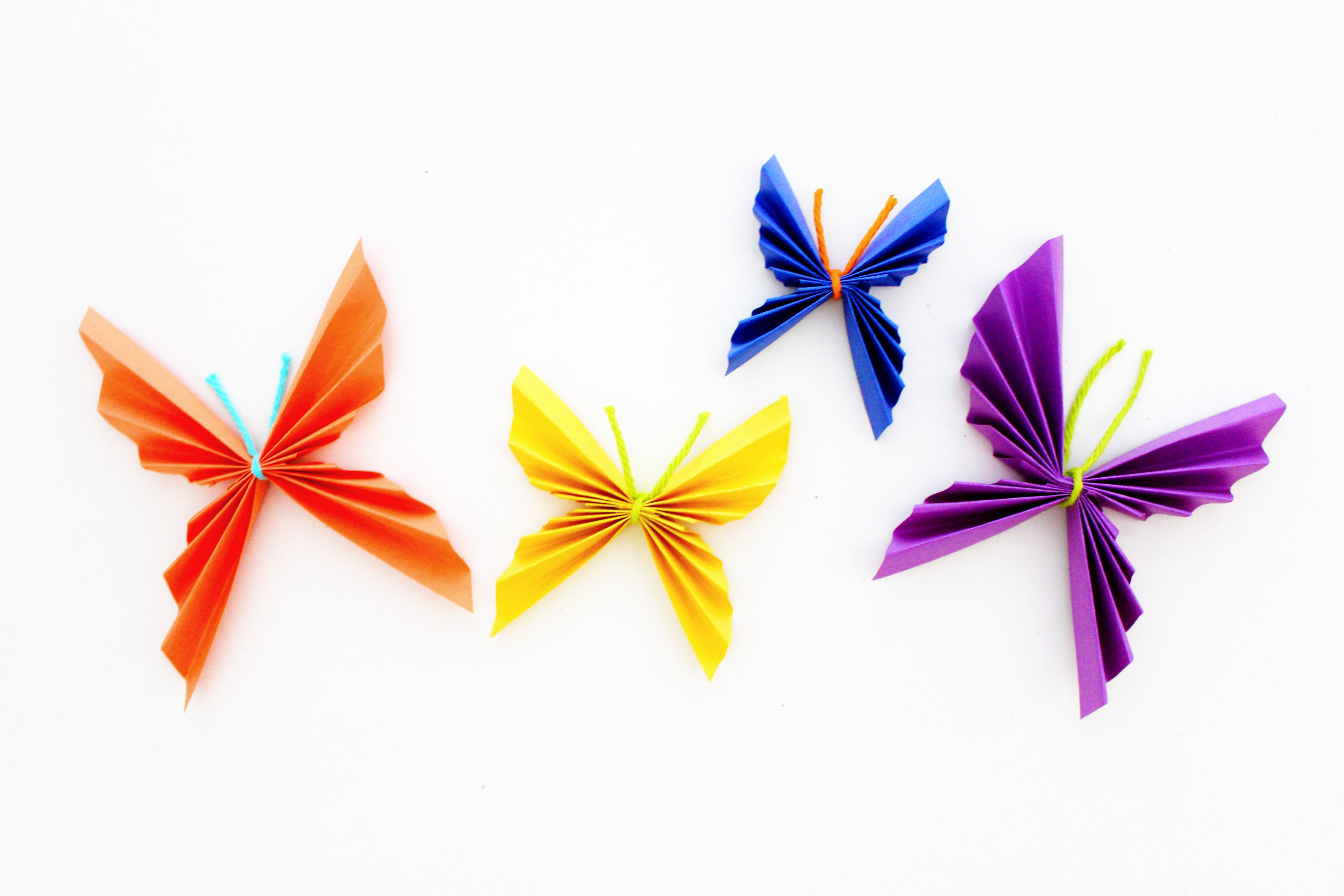
In the spirit of the Butterfly Project of the Holocaust Museum Houston, in which kids from all over the world handmade butterflies to memorialize the children who died, here’s a project to make your own butterflies.

What you’ll need:
Colored paper
Scissors
String or yarn

1.

1. Cut two triangles out of colored paper, with one triangle a little shorter than the other. The triangles should be isosceles, meaning two of the sides are equal in length. Try to make the shapes narrower, which will allow for more folds and a fuller butterfly.

2.

2. Accordion fold both triangles, folding the paper at half-inch intervals. They don’t have to be exact, so just eyeball them.
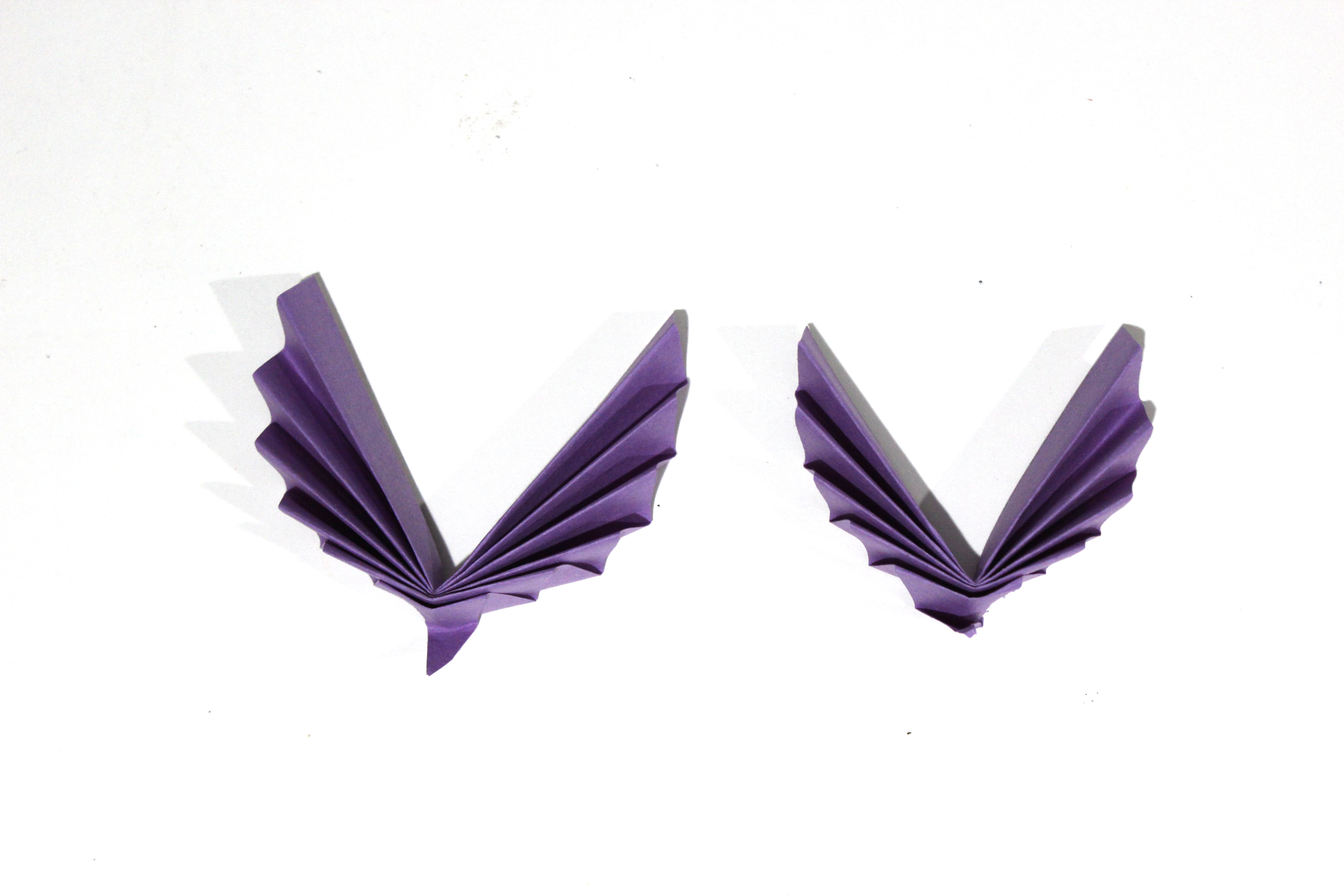
3.

3. Bend the accordion-folded triangles in half, toward the longer ends of the triangle. Now they look like wings.

4.

4. Line up the two wing pieces, positioning the bends in the center. Place the larger piece on top and the smaller one below it. Tie a piece of string or yarn around the middle to secure the two pieces together. Cut off excess string, and you’re left with the butterfly’s antenna. Spread the folds out to expand the butterfly wings.


Jonathan Fong is the author of “Flowers That Wow” and “Parties That Wow,” and host of “Style With a Smile” on YouTube. You can see more of his do-it-yourself projects at jonathanfongstyle.com.


Did you enjoy this article?
You'll love our roundtable.

Editor's Picks

Latest Articles

Post-Passover Pasta and Pizza

What carbs do you miss the most during Passover? Do you go for the sweet stuff, like cookies and cakes, or heartier items like breads and pasta?

Freedom, This Year

There is something deeply cyclical about Judaism and our holidays. We return to the same story—the same words, the same questions—but we are not the same people telling it. And that changes everything.

A Diary Amidst Division and the Fight for Freedom

Emma’s diary represents testimony of an America, and an American Jewish community, torn asunder during America’s strenuous effort to manifest its founding ideal of the equality of all people who were created in the image of God.

More than Names

On Yom HaShoah, we speak of six million who were murdered. But I also remember the nine million who lived. Nine million Jews who got up every morning, took their children to school, and strove every day to survive, because they believed in life.

Gratitude

Gratitude is greatly emphasized in much of Jewish observance, from blessings before and after meals, the celebration of holidays such as Passover, a festival that celebrates liberation from slavery, and in the psalms.

Freedom’s Unfinished Journey

The seder table itself is a model of radical welcome: we are told explicitly to invite the stranger, to make room for those who ask questions and for those who do not yet know how to ask.

Thoughts on Security

For students at Jewish schools, armed guards, security gates, and ID checks are now woven into the rhythm of daily life.

Can Playgrounds Defeat Antisemitism?

The playground in Jerusalem didn’t stop antisemitism, and renovating playgrounds in New York City is not likely to stop it there, either — because antisemitism in America today is not rooted in a lack of slides or swings.

More news and opinions than at a Shabbat dinner, right in your inbox.