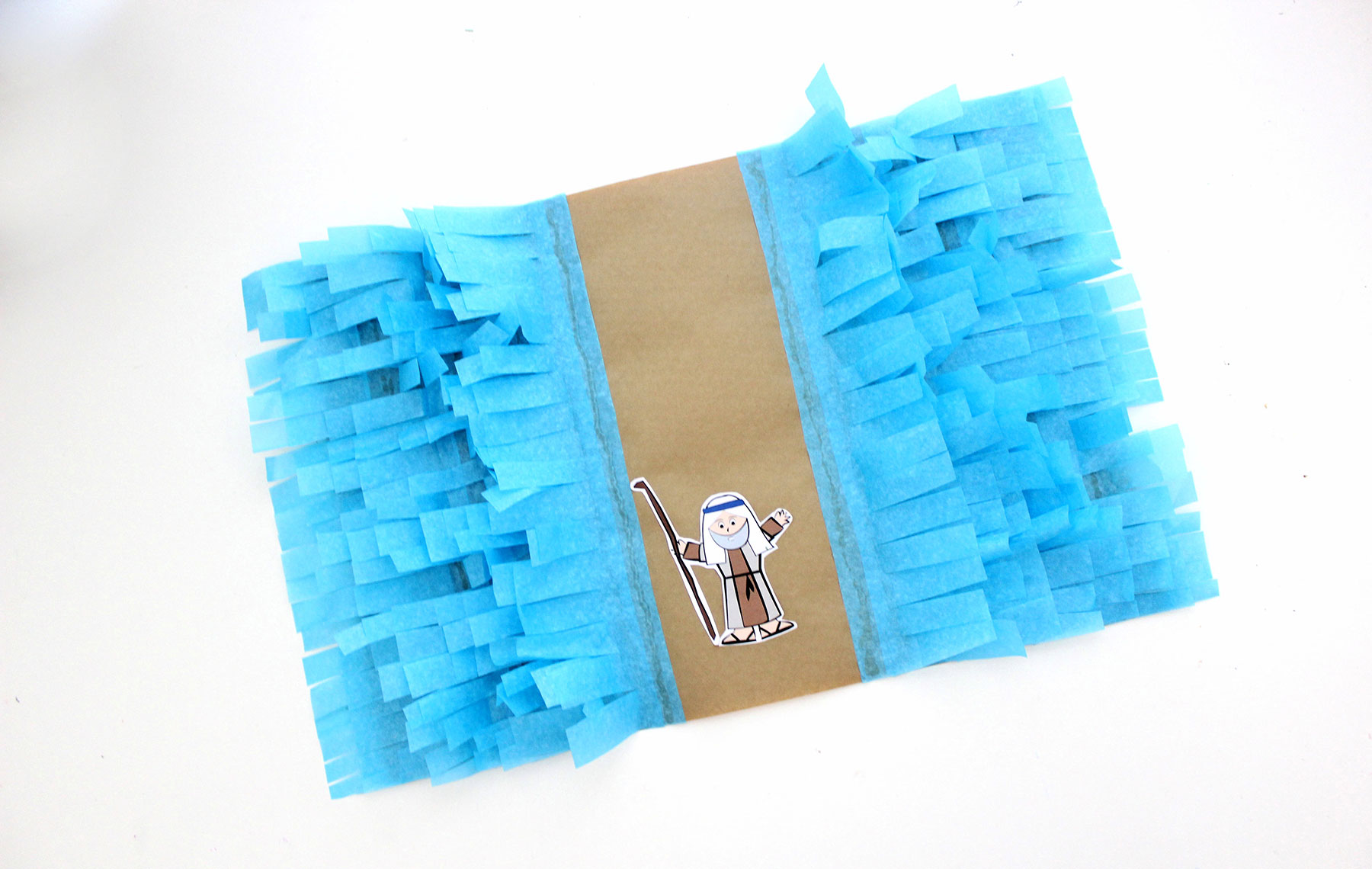
Moses’ parting of the Red Sea? That was a miracle. Getting kids to put down their cellphones and actually engage in the Exodus story during Passover? Now, that’s a modern-day miracle. And with these fun and easy-to-make placemats, kids can re-create this pivotal event while helping to decorate the seder table.

1. Trim a piece of brown-colored butcher or construction paper to about 12 by 18 inches. You can also recycle brown paper grocery bags.
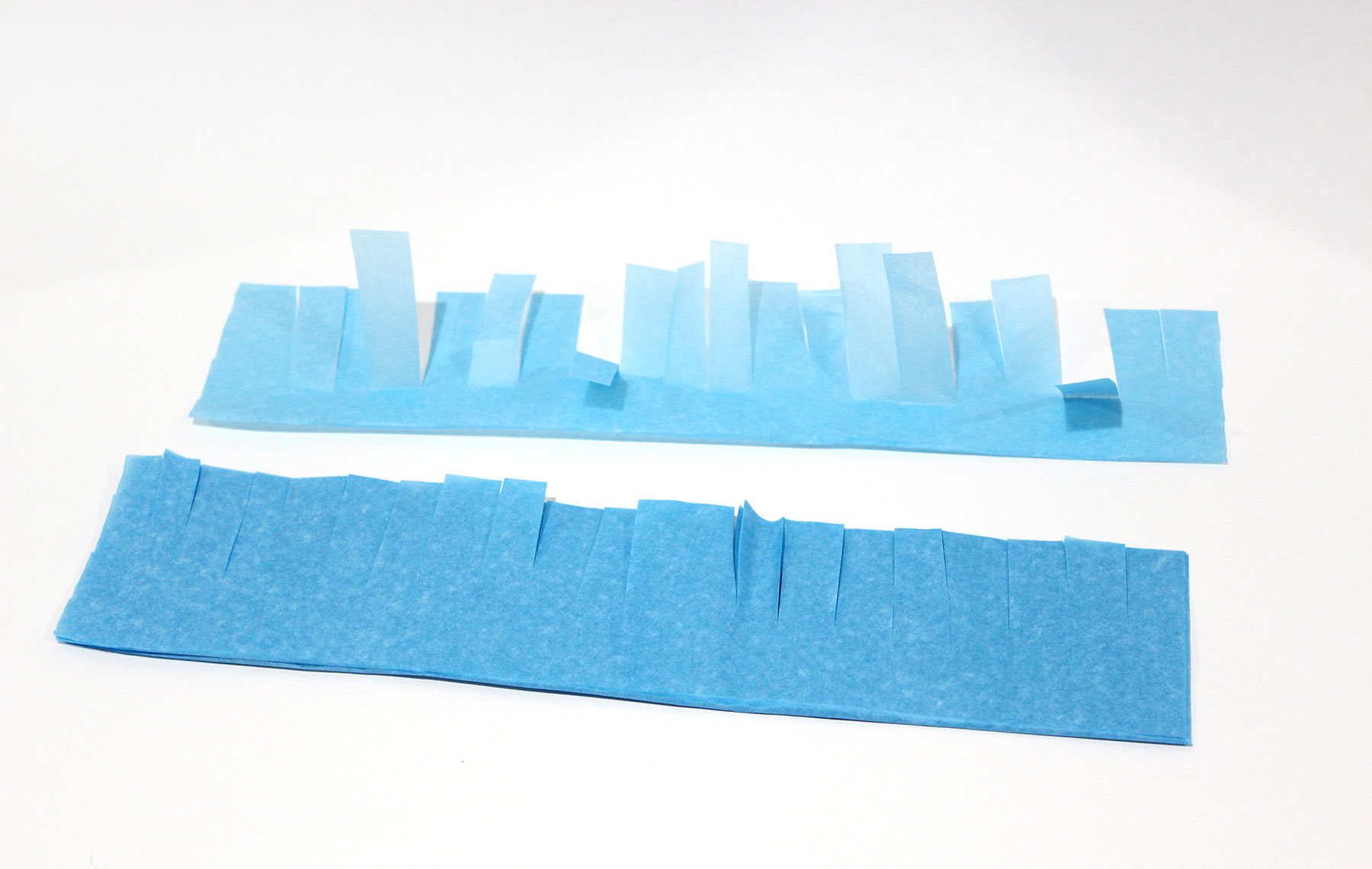
2. Cut blue tissue paper into 3-by-12-inch strips. Cut slits about every half inch, crosswise along the strips, making sure you don’t cut all the way through the paper. Fold back some of the cuts to fluff up the strips.
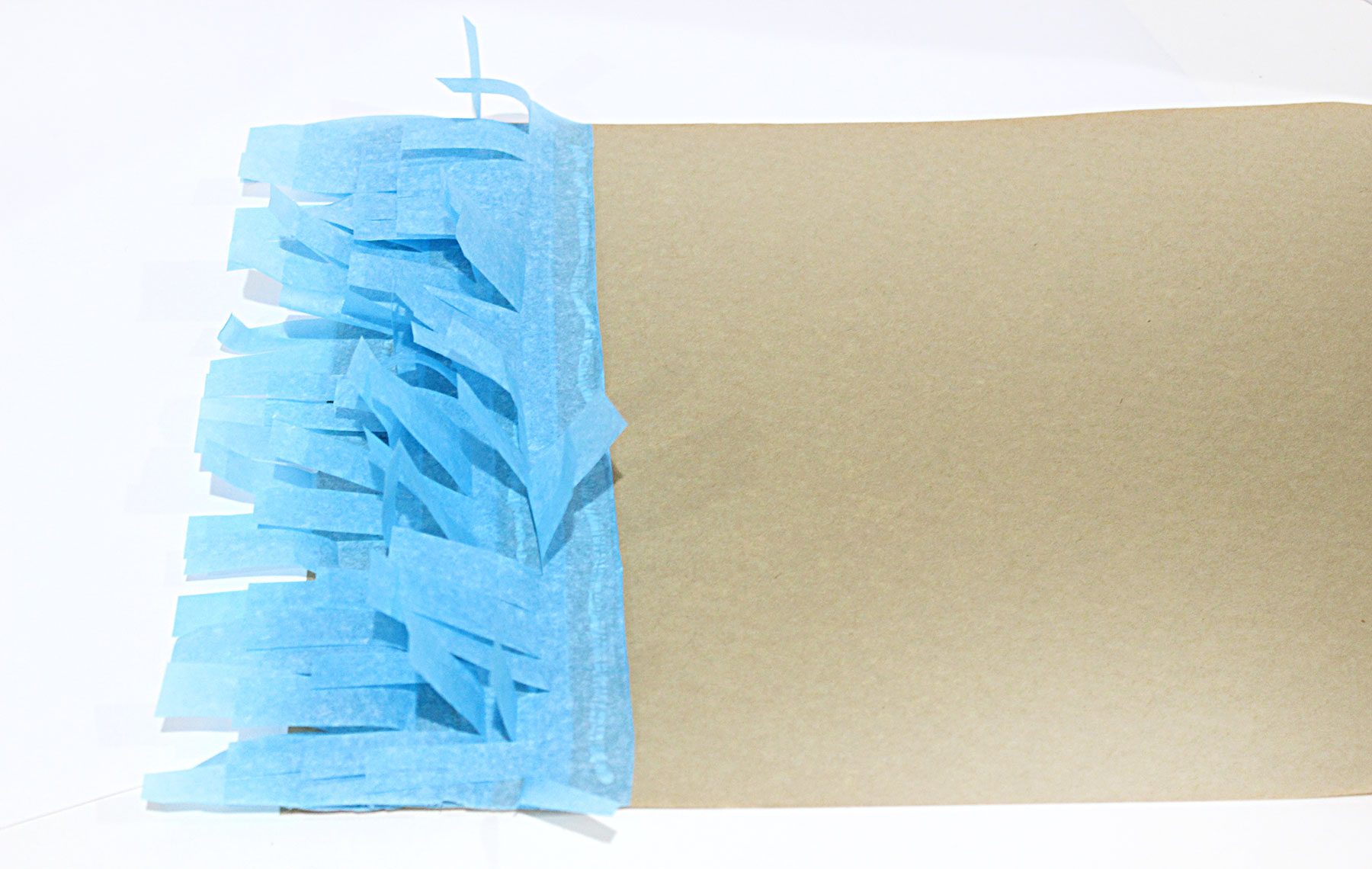
3. Glue the tissue paper strips vertically to the left and right sides of the butcher paper. Position the paper so that the slits face outward toward the sides so the “water” is parted from the middle and going outward. Overlap the strips as you go. I glued eight strips to both sides of the placemat.

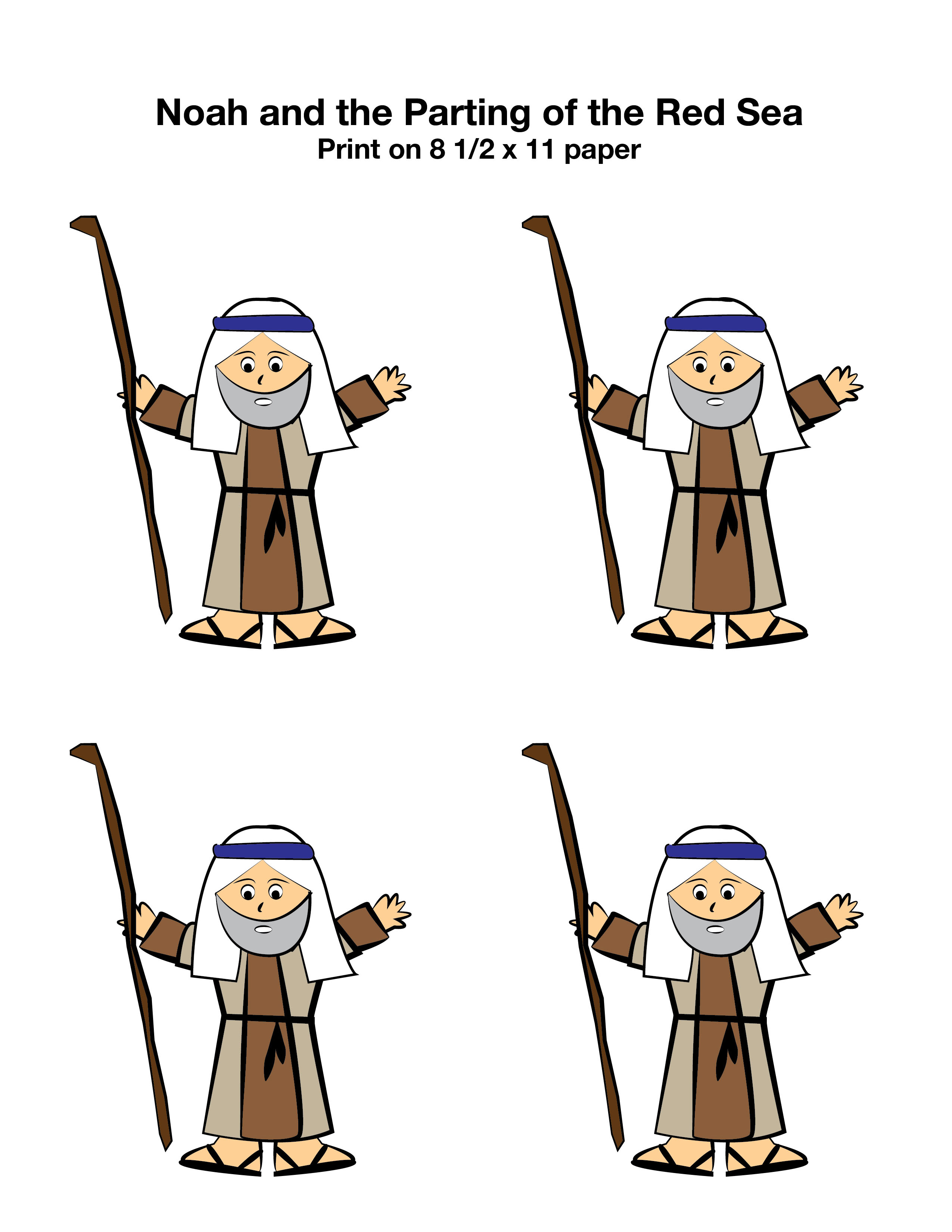
4. Download the image of Moses from this tutorial here and cut it out. (Eagle-eyed crafters may recognize the picture as the one I drew for the Jonah and the Whale tissue holder — but with a staff.) Glue Moses to the placemat and fluff up the tissue paper once more.
Jonathan Fong is the author of “Flowers That Wow” and “Parties That Wow,” and host of “Style With a Smile” on YouTube. You can see more of his do-it-yourself projects at jonathanfongstyle.com.