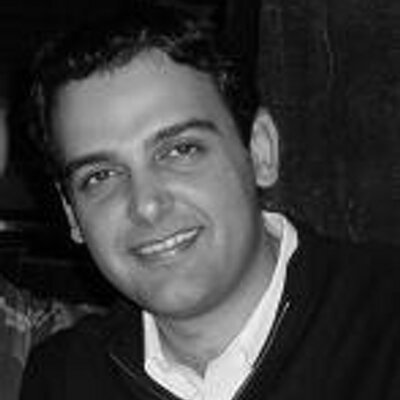
Almost 30 years ago, Parvaneh Doustan Sarraf began teaching Judaism and Torah studies in Iran, becoming one of that community’s first women to join a profession long dominated by men. Since then, she’s taught a multitude of young students about the joys of Judaism at Jewish schools both in Iran and, currently, in New York. She especially sought to enlighten Iranian Jewish women on the importance of their personal involvement in Jewish rituals. Sarraf has authored numerous books and articles about Judaism, and has been widely acclaimed for her teaching.
Last week, she was among three Iranian Jewish women honored with the Shamsi Hekmat Achievement Award by the Iranian Jewish Women’s Organization of Southern California.
The Jewish Journal: Men in Iran had the more dominant role in teaching Judaism and participating in Jewish rituals. What motivated you to get involved in this profession?
Parvaneh Doustan Sarraf: I was encouraged to embrace Judaism at a young age from my family. Both my parents were educated in Torah studies, my father was community leader [in Iran] who had built a synagogue, and was also a chazan [cantor]. I loved teaching tremendously because at a young age I had had a strong influence of Jewish studies at home and knew many of the prayers by heart. When my father recited prayers such as the prayer of Eliyah the Prophet on Saturday nights, I memorized these prayers. One of my dreams as a child was to be able to open the Tanakh and understand it without referring to a dictionary. Today this dream has 99 percent come true for me.
JJ: What difficulties did you encounter when trying to educate women and in the community, and even yourself, given that a woman’s exposure to Jewish studies was limited?
PDS: When I went to synagogue the women did not do anything, but I memorized these prayers and read them. Little by little when I began to understand the Torah and haftarah, it was painful for me to see this half of the Iranian Jewish community not being able to understand these texts. It was even more difficult for me to see that Iranian Jewish men did not understand the true meanings of the Torah while living in that Islamic culture. Therefore, as a result, I decided that I had to first learn about these prayers and traditions. Unfortunately, I was the first woman to express a woman’s perspective of the Torah in our community. I was telling our women that the Torah was not just about Moses, but there were important women like Hannah [the prophet], whose prayer is one of the most beautiful.
JJ: Have the views of Iranian Jews on Judaism changed radically since their immigration to the United States?
PDS: Undoubtedly, this society which we live in has influenced our lives here. Sometimes the place you live in can have either a negative or positive effect on you. When we arrived here, not only did the environment affect us but our community itself discovered that religion had a positive role in our lives. In the past we automatically envisioned an older man with a beard speaking about religion, but now we have a different perspective — that there can be others who can make speeches and talk about our religion.
JJ: Do you believe more women in the Iranian Jewish community will be pursuing careers in teaching Judaism and becoming rabbis in the near future?
PDS: I believe that one who teaches in this holy profession [must] have a true desire to do so. I see many young women becoming educated but unfortunately not to become Hebrew teachers. This [is] because our community does not have a history of women teaching in this area; we don’t really have people encouraging women in the community to become Hebrew teachers. And unfortunately many of us, in the back of [our] minds, still have the old Orthodox thinking that women should not be involved in this profession. Women in our community are interested in learning about Judaism, but overall I don’t see an interest among them in becoming teachers and rabbis.















 More news and opinions than at a Shabbat dinner, right in your inbox.