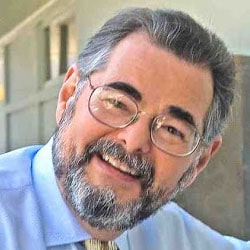
Jack Miles is a man of many accomplishments; he’s probably best known as “God’s biographer.”
Miles, a former Jesuit priest, is the recipient of the Pulitzer Prize and a MacArthur Fellowship, better known as a “genius grant.” He studied at the Pontifical Gregorian University in Rome and Hebrew University in Jerusalem, and he earned his doctorate in Near Eastern languages at Harvard University. Miles served as the longtime book editor of the Los Angeles Times and a member of the newspaper’s editorial board, and today he is distinguished professor emeritus of English and religious studies at UC Irvine. He is the editor of “The Norton Anthology of World Religions” and has written widely on the intersection of religion and world affairs.
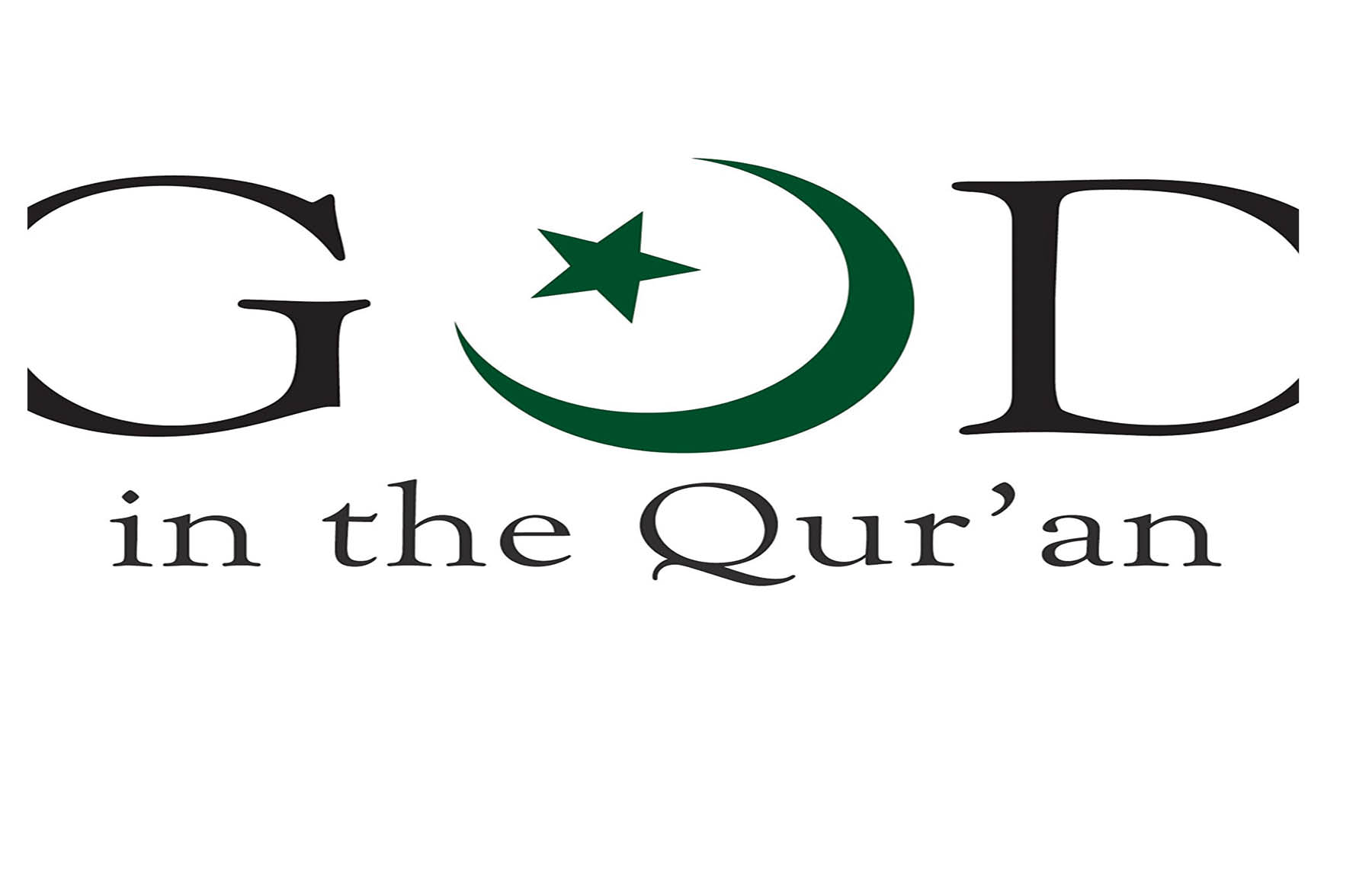
Among his best-known publications is “God: A Biography,” which signaled the start of his remarkable quest to write the life story of God. The first book focused on the Hebrew Bible and pondered the divinity that we call HaShem, among many other names and titles. Next came “Christ: A Crisis in the Life of God,” and now Miles has completed “God in the Qur’an” (Knopf). Taken together, these three books can be regarded as a trilogy, and the newest book represents the crowning achievement of his life’s work.
“Miles always and only seeks to explain and illuminate, and never to convince or convert.”
Islam is the third great religion to embrace the idea of monotheism, and the Quran itself has much to say about Judaism and Christianity. Miles acknowledges that his readership is “crowded with unbelievers” and that Jewish and Christian believers may be inclined to embrace the classic Christian argument against the Quran: “What’s true is not new, and what’s new is not true.” But he makes a principled appeal to his readers to engage in “a modest exercise in literary appreciation” and to “temporarily suspend their disbelief while together we attempt an engagement with God as the central character of the Qur’an.”
Miles is fully aware that he is writing a book about Islam at yet another moment in history when the Western world and the Islamic world are in conflict. To inoculate his readers against their own misconceptions about Muslims, he opens his book with two blood-spattered passages of scripture, not from the Quran but from the Hebrew Bible and the Christian Bible.
“I acknowledge that there are passages in the Qur’an … that a terrorist could use to justify murder, even mass murder,” he writes. “My hope, however, is that by beginning as I have with comparable passages from the Bible, I have created a structure of plausibility for my claim that it would be a mistake — in our historical context, a horrendous, self-defeating mistake — to regard any and every Muslim as a terrorist-in-waiting simply because he or she honors the Qur’an as sacred scripture.”
Miles finds himself forced to correct our fundamental misunderstandings from the outset and throughout his fascinating book. For example, the Quran does not consist of what Muhammad says about Allah; rather, it is Allah “who — through the Angel Gabriel speaks the Qur’an from its first word to its last.” As another example, Miles uses the conventional Arabic word “Allah,” but he points out that “I could as easily call Him ‘God,’ ” which is the English translation of the Arabic word. Allah, as Miles explains, is a cognate of the Hebrew word that we find in the Tanakh as “Elohim.” This is not merely an issue of vocabulary, as Miles argues, but rather a point of commonality between Judaism and Islam: “As names, Allah, Yahweh and Elohim do all refer to the same being.”
Yet Miles is not trying to blur the sharp theological distinctions among the three monotheisms. The Quran honors Christians and Jews as “the People of the Book,” of course, but “[w]hat Allah, as the author and the speaker of the Qur’an, therefore requires of Jews and Christians is that they should acknowledge that they have lost or adulterated what God revealed to them; and, accordingly, that they should acknowledge their need of Muhammad as the messenger bringing at last Allah’s final and definitive message to them as to all of mankind.”
Still, the Quran depicts a cast of characters that is deeply familiar to any reader of the Torah — Adam and Eve, Cain and Abel, Abraham, Jacob, Joseph and Moses. Jesus and Mary, too, figure crucially in the Quran, although Miles devotes far more attention to the Jewish scriptures. At each point of comparison, however, Miles shows us how the biblical account is restated and reinterpreted in the Quran to make the point that Allah’s goal is the correction of error. “Allah takes a crucial set of the major figures in the earlier scriptures … and recasts them all as prophets sent by Allah to warn their respective peoples of the punishment that will befall them unless they worship Him alone,” Miles explains.
Thus, for example, Pharaoh is shown in the Quran to undergo a conversion just before his death by drowning in the Red Sea: “I believe that there is no god except Him in Whom the children of Israel believe, and I am a Muslim.” Abraham and his first-born son, Ishmael, are credited in the Quran with the building of the Ka’aba, the surpassing pilgrimage site of Islam, and prayer in the Islamic world is to be offered in its direction. “Jews turned toward Jerusalem — Zion, the City of David — when they prayed,” Miles writes. “Christian churches were oriented toward the sunrise, a symbol of Christ’s resurrection…. But Allah was now taking Muhammad in a new direction.”
Miles always and only seeks to explain and illuminate, and never to convince or convert. But he does issue an urgent appeal to the higher angels of our nature, and what’s at stake is nothing less than life or death.
“[W]e don’t want to be perpetually on guard that the guy next door may kill us if we don’t kill him first, and we don’t want him to be perpetually on guard against us out of the same ugly fear,” Miles concludes. “So, let’s instead get to know him well enough to live with him in peace; and if that means getting to know his scriptures and his God, let’s take the time to do that too.”
To which I say: Amen and Selah.
Jonathan Kirsch, author and publishing attorney, is the book editor of the Jewish Journal.