fbpx

December 5, 2018

Marc Lamont Hill Appears to Accuse Israel of ‘Poisoning’ Palestinian Water

Marc Lamont Hill, who was recently fired from CNN for calling for a “free Palestine from the river to the sea,” appears to be accusing Israel of poisoning the water of Palestinians in a video.

In a video from the U.S. Campaign for Palestinian Rights (USCPR) conference on Sept. 28, Hill says that Palestinians were “collectively punished” in 1948 and 1967.

“I can’t just think about political prisoners here in the states, I have to think about political prisoners in Palestine,” Hill said, “and I have to ask questions about what the face of those prisoners look like, and what legitimate resistance looks like.”

Hill adds that people who struggle tend to favor a “civil rights tradition” that “romanticizes nonviolence.”

“How can you romanticize nonviolence when you have a state that is at all moments waging war against you, against your bodies, poisoning your water, limiting your access to water, locking up your children, killing them,” Hill said. “We can’t romanticize resistance.”

In June 2016, Palestinian Authority President Mahmoud Abbas accused “certain rabbis in Israel” of telling “their government that our water should be poisoned in order to have Palestinians killed.” He later walked it back after facing criticism of using an anti-Semitic blood libel.

Hill continues, “So for me, part of the challenge is when we start saying we should overcome and holding hands and sit-ins, which is an important and indispensable strategy, I would never disrespect that strategy. We just can’t fetishize that strategy. We can’t fetishize that here in the states.”

Hill proceeds to call the “hands up, don’t shoot” protest against the 2014 shooting of Michael Brown as “problematic”

“This ain’t the posture I want to have against a violent state,” Hill said, adding that he would prefer to go “Leila Khaled-style,” an apparent reference to the convicted terrorist who was involved in both an airplane hijacking and an attempted airplane hijacking.

Hill then says, “Yeah I’m probably fired right now.”

Simon Wiesenthal Center Associate Dean Rabbi Abraham Cooper said in a statement sent to the Journal, “Marc Lamont Hill apologized for his Jordan to the Sea/ Palestine Will be Free statement capping his outrageous UN speech. While he is at it, he can apologize for repeating the canard that Israel poisoned Palestinian drinking water, his justification for Palestinian violence and terrorism, his relationship with [Louis] Farrakhan, and perhaps rethinking his vision of one ‘secular’ Arab-majority state in the Holy Land. “

“Can this Temple University educator point to an Israeli neighbor’s treatment of minorities—Syria perhaps, Egypt, Jordan, worth emulating?” Cooper added. “Don’t think so. And by the way, Palestinian Authority is committed to a Judenrein Holy Land.”

Roz Rothstein, co-founder and CEO of StandWithUs, said in a statement to the Journal, “Hill has made his views very clear at the UN and at anti-Israel conferences. His apology failed to address the fact that he tried to shield Palestinian groups from accountability for terrorism against Israelis.”

“We are grateful that CNN parted ways with him due to his extremist and dangerous views and that Temple University leaders have condemned his rhetoric,” Rothstein added.

When asked for comment by the Journal, a spokesperson for Temple University pointed to the university president’s Friday statement distancing themselves from Hill’s “free Palestine” comments but recognizing his right to free speech.

Patrick O’Connor, the chairman of the university’s board, told the Philadelphia Inquirer on Friday that Hill would have been fired “immediately” if Temple were a private university; however, Hill is a tenured professor. O’Connor told the Inquirer that the university’s legal staff will “look at what remedies we have.”

Hill has apologized for his “free Palestine” comments.

Hill and the USCPR did not respond to the Journal’s requests for comment as of publication time.

H/T: SJP Leaks

Marc Lamont Hill Appears to Accuse Israel of ‘Poisoning’ Palestinian Water Read More »

Rosner's Domain Podcast

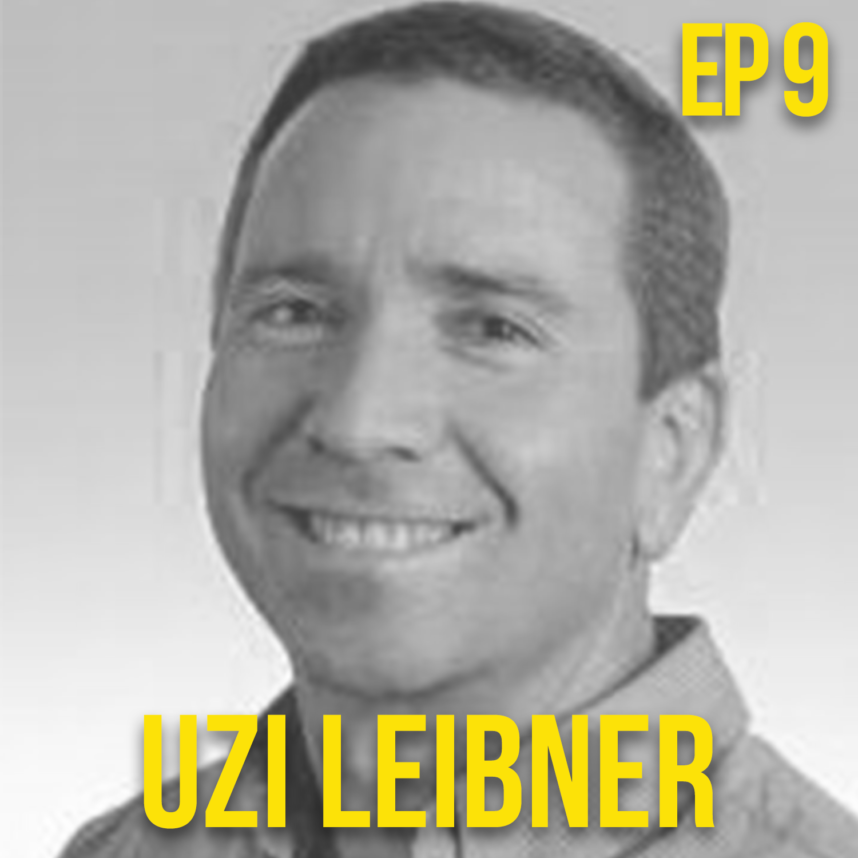
Uzi Leibner: Is Hanukkah a religious holiday or a national one?

On this special Hanukkah episode, Shmuel Rosner and guest Uzi Leibner discuss the history behind the holiday.
Uzi Leibner is a senior lecturer and head of the Classical Archaeology Division at the Institute of Archaeology. His research focuses on theory and practice of archaeological surveys, ancient Galilee, rural settlements and ancient synagogues and art.
Uzi Leibner
Follow Shmuel Rosner on Twitter.

Uzi Leibner: Is Hanukkah a religious holiday or a national one? Read More »

Birthright Students and Israel: The Story the L.A. Times Missed

In the last year, 40,000 students from around the world, 80 percent from North America, participated in Birthright Israel trips. Last summer, 12 of them, members of the group If Not Now, staged a walkout on two Birthright trips. It was planned in advance. They signed up with the agenda of walking out, sharing the story on social media and creating controversy. Now, some five months later, the Los Angeles Times took the bait. In a front-page story, “Young American Jews spark Birthright Debate” (Dec. 5), they played up what they called a small movement among American Jews to protest Israeli policies by leaving Birthright. The Times did not tell the reader that this was far from a small movement. Rather it’s a sliver; some 12 students out of 40,000, just .0003 percent.

Yes, this group does have a few supporters, but this is not news. Ever since Israel was established 70 years ago, there has been an element of the Jewish community on the far-left opposed to its policies. In the 1970s, Breira and the New Jewish Agenda emerged, criticizing Israel’s policies when PLO terror was at its height. They were followed by Peace Now and others. If Not Now is just the latest incarnation of this political philosophy. It is carrying on the same ideas that have been championed by its ideological predecessors for decades. It’s old news.

Instead of turning to campus rabbis, leaders and professionals on the ground to give the Times more perspective, the writer seeks the viewpoints of community rabbis with little campus involvement. The Times highlights the views of Rabbi Sharon Brous, known for her criticism of Israel. The reporter also doesn’t explore the other criticisms of Birthright that I and others have, namely its refusal to give balance to the program by visiting Jewish settlements beyond the Green Line. Clearly, this seems more like agenda journalism than real reporting.

With a little gumshoe, the reporter could have discovered the biggest challenge facing Jewish students today. One of the leading campus professionals in the United States, Rebbetzin Rivkah Slonim, of Rohr Chabad Center for Jewish Student Life in Binghamton, N.Y.,  recently described the real threat of BDS: Jewish students who are “Bored, Disinterested and Satisfied.” Growing up with little Jewish education and weakening ties to Jewish community, feeling little motivation from outside threats of anti-Semitism or causes like the plight of Soviet Jewry to rally around, today’s students are increasingly disengaging from Jewish life. According to Slonim, the actual challenge is reconnecting these students to Judaism.

Campus rabbis and Birthright organizers say that there is a marked change among students today from those of 10 years ago. Then, they had a modicum of Jewish knowledge and were active in the community. Today’s students, says Rabbi Hirschy Zarchi at Harvard Chabad, come knowing almost nothing. Some feel sympathy for what they perceive are the victims, in this case, the “weak” Palestinians versus the “powerful” Israelis, but that percentage is not large. The real issue is that Israel and Judaism is not important to many Jewish students. One of the great successes of Birthright is that it has, in many cases, ignited that bond.

Assigning a reporter known for her excellent coverage of local news on such a complicated and nuanced story, the connection of American Jews to Israel, is clearly a major mistake. Inexperienced and lacking a depth on the real issue, the reporter and the Times has done all of us a major disservice. It’s absurd to claim that 12 students out of 40,000 walking out over a trip to Israel is sparking a major debate or signals a shift in the attitudes of American Jews toward Israel. There have always been students critical of Israel—that is not news. The real news is the disengagement of Jews from Judaism and Israel because of the lack of Jewish education and the strategies like Birthright that are changing that trend. Which the Times never even tried to discover.


Rabbi David Eliezrie, a former campus rabbi, is the president of the Rabbinical Council of Orange County. His email is rabbi@ocjewish.com.


Birthright Students and Israel: The Story the L.A. Times Missed Read More »

What’s Happening: Clippers, Concerts, Movies and Ugly Sweaters

FRI DEC 7

Dr. Dee

A Motown Shabbat
The soulful sounds of Motown reverberate inside the Kehillat Israel sanctuary on Hanukkah Shabbat. Dr. Dee and the BYTHAX Gospel Ensemble along with Chris Hardin and his Motown band will be joined by Cantors Shira Fox and Sarah Fortman, and the rabbis and cantors of the Reconstructionist synagogue. 7 p.m. Free. Kehillat Israel, 16019 W. Sunset Blvd., Pacific Palisades. (310) 459-2328.

Sara Berman’s Closet
While many women might dream of a bigger closet and more clothes, Sara Berman had different tastes. After her 38-year marriage ended, the 60-year-old Berman moved from Tel Aviv into a Greenwich Village studio apartment. Drastically reducing her wardrobe, she wore only white the last 24 years of her life. Visit “Sara Berman’s Closet,” an exhibit by artists Maira Kalman and Alex Kalman. Tuesdays through Sundays, noon-5 p.m. Through March 10. Included with museum admission. $12 adults, $9 seniors, $7 kids 2-12. Skirball Cultural Center, 2701 N. Sepulveda Blvd., Los Angeles. (310) 440-4500.

SAT DEC 8

Build A Better World
At PJ Library’s monthly Build a Better World event, families spend the morning creating a variety of edible art projects. Storytime and a special mitzvah project follow. 11 a.m.–12:30 p.m. Free. Echo Park Library, 1410 W. Temple St., Los Angeles. RSVP to MFritzen@jewshla.org.

Ugly Hanukkah Sweater Party
The Ugly Hanukkah Sweater Party will be exactly as advertised, so grab an ugly holiday sweater and your cell phone camera. Snacks, drinks and a DJ. Men and women, 21 to 29 only. 7 p.m. $15. Valley Beth Shalom, 15739 Ventura Blvd., Encino. (818) 788-6000.  

Clippers Salute Jews
The Los Angeles Clippers honor their Jewish fans on Jewish Heritage Night when they host the Miami Heat. Fans who order tickets online using the promo code “JEWISH,” will receive a free Jewish Heritage T-shirt and an opportunity to watch pre-game warmups before the doors open to the general public. Ticket prices start at $19. 7:30 p.m. Staples Center, 111 Figueroa St., Los Angeles. For questions, contact Sky Regan, (213) 204-2919 or sregan@clippers.com.

Intimate Voices” Cantors’ Concert
An all-star cantorial lineup from across Southern California, and featuring four instrumentalists, brings diverse talents to the “Cantors Concert: Intimate Voices, Music of Jewish Spirit.” Cantors include Kerith Spencer-Shapiro (University Synagogue, Brentwood), Chayim Frenkel (Kehillat Israel, Pacific Palisades), David Reinwald (Temple Beth Sholom, Santa Ana), Jennifer Bern-Vogel (Emanuel El, Redlands) and Rebekah Mirsky (B’nai Horin, Rancho Park). Juval Porat (Beth Chayim Chadashim, Mid-City) hosts. 7 p.m. hors d’oeuvres, drinks and desserts. 8 p.m. concert. $36–$100. Beth Chayim Chadashim, 6090 W. Pico Blvd., Los Angeles. (323) 931-7023.

“A Serious Man”
The Coen Brothers’ 1960s-set film “A Serious Man,” about a beleaguered physics instructor (played by Michael Stuhlbarg), returns to Los Feliz nine years following its release. The instructor’s wife is leaving him for another man, his jobless brother has moved in, his bar mitzvah-age son owes money to a pot dealer, his chances for promotion are being blocked, and three rabbis are offering conflicting advice. 11:59 p.m. Tickets, $11 early bird to $63 for series. Vista Theatre, 4473 Sunset Drive, Los Angeles. (323) 660-6639.

SUN DEC 9

“The Hanukkah Monologues 2.0”
Socialize and be entertained at “The Hanukkah Monologues 2.0: Heroes, Miracles & Lights in the Dark” at Temple Beth Am. Noshing, schmoozing and live performances crafted by community members. 7–9 p.m. $18 general admission, $15 for Beth Am members. Temple Beth Am, 1039 S. La Cienega Blvd., Los Angeles. (310) 652-7353.

Ola Bilinska in Concert
Acclaimed as a vocalist across her native Poland, Ola Bilinska demonstrates how and why she is dedicated to preserving Yiddish culture as she breathes life into popular and obscure Polish melodies in concert at the Pico-Union Project. 7 p.m., doors. 8 p.m., program. Free. Reservations required at picounionproject.org/ola. Pico Union Project, 1153 Valencia St., Los Angeles. (213) 915-0084.

Jewish Camp Fair 
At its Jewish Camp Fair, Temple Isaiah hosts representatives from camps across Southern California. Over coffee and bagels, parents can inquire about a broad variety of summer camps ranging from traditional to camps specializing in such interests as art, sports, and crafts. Camp applications will be available. 9:30 a.m.– noon. Free. Temple Isaiah, 10345 W. Pico Blvd., Los Angeles. (310) 277-2772.

Festival of Jewish Music
The Jewish Youth Orchestra, Kol HaEmek, cantors and other musical acts perform at the 11th annual Festival of Jewish Music at the Pasadena Jewish Temple and Center. A reception with hors d’oeuvres follows. 3 p.m. $10, children .12 and younger; $12, adults; $36, family. Pasadena Jewish Temple and Center, 1434 N. Altadena Drive, Pasadena. Tickets: jewishsgpv.org. (626) 445-0810.

“Hershel and Hanukkah Goblins”
Goblins are attempting to prevent Hanukkah but Hershel is determined to stop them in “Hershel and the Hanukkah Goblins,” a klezmer music concert and singalong for all ages. Narrated by actor Fred Savage. Candle-lighting follows the concert, and sufganiyot will be served. 4–7 p.m. Free. Wilshire Boulevard Temple, 3663 Wilshire Blvd., Los Angeles. (213) 388-2401.

TUE DEC 11

Ron Prosor

Dialogue With an Ambassador
Ron Prosor, who has served as Israel’s permanent representative to the United Nations and as ambassador to Great Britain, speaks with Rabbi David Woznica on a range of topics, including issues that unify — and divide — Israel and the Diaspora, Israel’s relations with the United States, and the ambassador’s perspective on the countries of Europe. An AIPAC club member dinner follows the program. 6:15 p.m., registration; 7 p.m., program; 8 p.m., dinner. Tickets $18 in advance at aipac.secure.force.com; $25 at the door. Stephen S. Wise Temple, 15500 Stephen Wise Drive, Los Angeles. (888) 380-9473. For AIPAC information: socalevents@aipac.org or (323) 937-1184.

MON DEC 10

“The Catcher Was a Spy”
The story of a Major League Baseball catcher who was an American spy during World War II may sound like something out of a screenwriter’s imagination, but “The Catcher Was a Spy” is a true story based on the life of Moe Berg. The film screens at Kehillat Ma’arav. Ben Lewin, the film’s director, and Judi Levine, its co-producer, will do a Q-and-A after the screening. 7 p.m. Donation: $5. Kehilla Ma’arav, 1715 21st St., Santa Monica. (310) 829-0566.  

WED DEC 12 

Spiritual Seminar 
Assessing and responding to spiritual distress is the goal of five spiritual care and education seminars scheduled over two days at the Academy for Jewish Religion, California. Wednesday: “Finding Love in Lamentation” with Chaplain Blake Arnall (9 a.m.); “Numbering Our Days: Assessing and Responding to the Spiritual Distress of Aging” with Chaplain Muriel Dance (10:45 a.m.); “The Hebrew Bible as a Road Map for Coping With Life, Loss and Distress” with author Jacob Zighelboim (7 p.m.). Thursday: “Cancer: Journey or Pilgrimage” with Chaplain Michael Eselun (9 a.m.); “Let Us Not Forget the Caregiver” with Rabbi-Cantor Eva Robbins (10:45 a.m.). Free. Third floor, UCLA Hillel, 574 Hilgard Ave., Los Angeles. RSVP to info@ajrca.edu. UCLA parking lot No. 2, $12 daily.  (213) 884-4133.

THU DEC  13

American Divide on Israel/Palestine
Arab-American Shibley Telhami, author and Anwar Sadat professor for peace and development at the University of Maryland, delivers the eighth annual Professor Gerald B. Bubis Lecture at Valley Beth Shalom: “The American Political Divide on Israel/Palestine — What the Midterm Elections Tell Us.” Telhami’s books include “The World Through Arab Eyes” and “The Peace Puzzle.” Afterward, he speaks with Rabbi Ed Feinstein of VBS. 7:30 p.m. Free. RSVP requested at (323) 934-3480 or apnwest@peacenow.org. Valley Beth Shalom, 15739 Ventura Blvd., Encino.  


Have an event coming up? Send your information two weeks prior to the event to ryant@jewishjournal.com for consideration. For groups staging an event that requires an RSVP, please submit details about the event the week before the RSVP deadline.

What’s Happening: Clippers, Concerts, Movies and Ugly Sweaters Read More »

A Biography of Islam’s God

Jack Miles is a man of many accomplishments; he’s probably best known as “God’s biographer.”

Miles, a former Jesuit priest, is the recipient of the Pulitzer Prize and a MacArthur Fellowship, better known as a “genius grant.” He studied at the Pontifical Gregorian University in Rome and Hebrew University in Jerusalem, and he earned his doctorate in Near Eastern languages at Harvard University. Miles served as the longtime book editor of the Los Angeles Times and a member of the newspaper’s editorial board, and today he is distinguished professor emeritus of English and religious studies at UC Irvine. He is the editor of “The Norton Anthology of World Religions” and has written widely on the intersection of religion and world affairs.

Among his best-known publications is “God: A Biography,” which signaled the start of his remarkable quest to write the life story of God. The first book focused on the Hebrew Bible and pondered the divinity that we call HaShem, among many other names and titles. Next came “Christ: A Crisis in the Life of God,” and now Miles has completed “God in the Qur’an” (Knopf). Taken together, these three books can be regarded as a trilogy, and the newest book represents the crowning achievement of his life’s work.

“Miles always and only seeks to explain and illuminate, and never to convince or convert.”

Islam is the third great religion to embrace the idea of monotheism, and the Quran itself has much to say about Judaism and Christianity. Miles acknowledges that his readership is “crowded with unbelievers” and that Jewish and Christian believers may be inclined to embrace the classic Christian argument against the Quran: “What’s true is not new, and what’s new is not true.” But he makes a principled appeal to his readers to engage in “a modest exercise in literary appreciation” and to “temporarily suspend their disbelief while together we attempt an engagement with God as the central character of the Qur’an.”

Miles is fully aware that he is writing a book about Islam at yet another moment in history when the Western world and the Islamic world are in conflict. To inoculate his readers against their own misconceptions about Muslims, he opens his book with two blood-spattered passages of scripture, not from the Quran but from the Hebrew Bible and the Christian Bible.

“I acknowledge that there are passages in the Qur’an … that a terrorist could use to justify murder, even mass murder,” he writes. “My hope, however, is that by beginning as I have with comparable passages from the Bible, I have created a structure of plausibility for my claim that it would be a mistake — in our historical context, a horrendous, self-defeating mistake — to regard any and every Muslim as a terrorist-in-waiting simply because he or she honors the Qur’an as sacred scripture.”

Miles finds himself forced to correct our fundamental misunderstandings from the outset and throughout his fascinating book. For example, the Quran does not consist of what Muhammad says about Allah; rather, it is Allah “who — through the Angel Gabriel speaks the Qur’an from its first word to its last.” As another example, Miles uses the conventional Arabic word “Allah,” but he points out that “I could as easily call Him ‘God,’ ” which is the English translation of the Arabic word. Allah, as Miles explains, is a cognate of the Hebrew word that we find in the Tanakh as “Elohim.” This is not merely an issue of vocabulary, as Miles argues, but rather a point of commonality between Judaism and Islam: “As names, Allah, Yahweh and Elohim do all refer to the same being.”

Yet Miles is not trying to blur the sharp theological distinctions among the three monotheisms. The Quran honors Christians and Jews as “the People of the Book,” of course, but “[w]hat Allah, as the author and the speaker of the Qur’an, therefore requires of Jews and Christians is that they should acknowledge that they have lost or adulterated what God revealed to them; and, accordingly, that they should acknowledge their need of Muhammad as the messenger bringing at last Allah’s final and definitive message to them as to all of mankind.”

Still, the Quran depicts a cast of characters that is deeply familiar to any reader of the Torah — Adam and Eve, Cain and Abel, Abraham, Jacob, Joseph and Moses. Jesus and Mary, too, figure crucially in the Quran, although Miles devotes far more attention to the Jewish scriptures. At each point of comparison, however, Miles shows us how the biblical account is restated and reinterpreted in the Quran to make the point that Allah’s goal is the correction of error. “Allah takes a crucial set of the major figures in the earlier scriptures … and recasts them all as prophets sent by Allah to warn their respective peoples of the punishment that will befall them unless they worship Him alone,” Miles explains.

Thus, for example, Pharaoh is shown in the Quran to undergo a conversion just before his death by drowning in the Red Sea: “I believe that there is no god except Him in Whom the children of Israel believe, and I am a Muslim.” Abraham and his first-born son, Ishmael, are credited in the Quran with the building of the Ka’aba, the surpassing pilgrimage site of Islam, and prayer in the Islamic world is to be offered in its direction. “Jews turned toward Jerusalem — Zion, the City of David — when they prayed,” Miles writes. “Christian churches were oriented toward the sunrise, a symbol of Christ’s resurrection…. But Allah was now taking Muhammad in a new direction.”
Miles always and only seeks to explain and illuminate, and never to convince or convert. But he does issue an urgent appeal to the higher angels of our nature, and what’s at stake is nothing less than life or death.

“[W]e don’t want to be perpetually on guard that the guy next door may kill us if we don’t kill him first, and we don’t want him to be perpetually on guard against us out of the same ugly fear,” Miles concludes. “So, let’s instead get to know him well enough to live with him in peace; and if that means getting to know his scriptures and his God, let’s take the time to do that too.”

To which I say: Amen and Selah.


Jonathan Kirsch, author and publishing attorney, is the book editor of the Jewish Journal.

A Biography of Islam’s God Read More »

Fire Coverage, Jews and Intermarriage and Gun Violence

Fire Coverage
Thank you for your coverage of the recent fires in Northern and Southern California. I am struck by how good we humans are at helping one another during times of emergency. It is heartwarming to hear about friends and neighbors reaching out.

In the past few years, we have experienced unprecedented fires and mudslides along the entire West Coast of the U.S. and Canada. Scientists have been predicting hotter, drier, windier times for years. Now is the time to face this long-term risk with the same zeal and gusto we muster for immediate danger.  The cost of burning fossil fuels, it turns out, is higher than we pay at the pump. With a carbon tax, a policy supported by conservative and liberal economists, we can begin to pay the accurate price while shifting to a healthier, renewable economy.

Israel has done exactly this with water by charging the true price from the outset; this has fostered technological innovation, efficiency and economic growth. Just as Jewish leaders stepped forward during the civil rights movement, I invite you to join me in supporting a carbon tax to ultimately preserve our homes, our camps, our natural spaces and our families.
Judy Berlfein, Encinitas

Jews and Intermarriage
My friend, Israel scholar Gil Troy, shouldn’t go unchallenged when he makes gratuitously false comments about American Jewry (“Jews and Intermarriage: A Love-Fate Relationship,” Nov. 30). In last week’s story, he quoted an unnamed Israeli friend as saying that all that Israelis require of American Jews is that they “stay Jewish.” Clearly, Israelis want political and philanthropic support and access to American culture and society.

Furthermore, in his critique of American Jews, Troy correctly contends that communities can define boundaries yet he fails to note that the issue of boundaries is a major debate in Israeli society where more than 9 in 10 Israelis are not Charedim, and 1 in 5 are not Jews. Boundaries are challenged whenever an Israeli soldier killed in battle cannot be buried in a Jewish cemetery, or when Israelis cannot marry at home. Defining Israel as a Jewish state without mentioning minority rights and thereby alienating its Druze and Arab citizens as well as many Jews is also a boundary issue.

In the same issue of the Journal, Rabbi Seth Farber in a column pressed the Israeli government to expand its boundaries of approved rabbis for conversion (“Chief Rabbinate’s List Has Glaring Omissions,” Nov. 30). The Chief Rabbinate has dissed not only Conservative and Reform rabbis but most of our revered Orthodox rabbis with their current list. Divorce and marriage will soon follow.

We have the right to expect more insight from Troy and more from the Journal.
Michael Berenbaum, via email

Gil Troy responds:

My friend and role model, scholar Michael Berenbaum, in seeking to correct me, proved my point.

First, some context: I have written extensively about the need for American Jews and all Israelis to have a robust, multidimensional partnership based on mutual respect and mutual interest — and am in the minority that believes it still exists.  I have also written about — and campaign for — full equality in Israel among all our citizens. So Berenbaum and I are in complete agreement on both points ideologically. 

I would, however, respectfully caution that his letter reflects “whataboutism.”  I write about intermarriage and boundaries within American Jewry. He responds: What about Israel’s boundary issues? Hmm. What kind of mutual relationship and shared learning does that approach foster?

Yes, Israel has its own boundary issues — although phenomena like citizenship, taxation and military service impose a definitional clarity that Jews not living in a sovereign Jewish state obviously lack.

But speaking, as I was, about intermarriage, it’s true — not “gratuitously false”: Given that 98 percent of Israeli Jews marry Jews, most, religious or not, cannot fathom the stratospheric intermarriage rates among their American Jewish brothers and sisters. That’s why I quoted my Israeli friend, to illustrate the point that “Most Israelis can’t understand this modern Masada, this mass act of communal suicide.”

Berenbaum’s outrage illustrates my broader point: that “intermarriage has become the third rail of Jewish politics” — and that “this hair-trigger issue requires more conversation, not less.”

I look forward to continuing that conversation in person and in print with Berenbaum, who has long been one of our community’s most courageous, creative and cherished thinkers on so many issues, and has taught me so much.

Common Sense About Gun Violence
Ben Shapiro asks, “Can anything stop the madness of gun violence?” (“We All Care About Gun Violence, but There’s No Easy Solution,” Nov. 16).

The answer is an unequivocal “Yes!” International comparisons of gun violence show that civilians shooting other civilians is not an inevitable part of life.

How? Restrict magazine size, semiautomatic weapons, the number of guns a person can own, ammunition sales; ban military-style assault weapons; and require mandatory trigger locks.

There should be more aggressive laws regarding temporary removal of guns from the hands of those who are angry or mentally ill.

This must be done by Jews, as part of our God given role of tikkun olam.
Daniel FinkBeverly Hills

Who Is the Real Threat Against Liberties?
Although I usually agree with the sentiments expressed by columnist Karen Lehrman Bloch, she missed the mark when she targeted “leftists who are obsessed with taking away our liberties” (“My Day With Conservative Ideas,” Nov. 30).

Hard to know what she’s referring to when, from my perspective, it’s the “rightists” who are the ones whose aim it is to impose their ideologies on the rest us: for example, to prevent women from making decisions about their own bodies, to require my child to sit while a Christian prayer is recited in school, to prevent loving, gay couples from marrying each other or adopting a child, to strive to restrict voting access to minorities whose voting habits they don’t like, and to restrict my “liberty” to attend a concert, movie, shopping mall or synagogue without the realistic fear of  a mass shooting because they refuse to budge one iota toward effective background checks, restrictions on access to guns for those who have demonstrated violent behavior (such as domestic abusers), and limit the scourge of military-type assault weapons from our streets.

What we need is understanding that there needs to be a balance between maintaining an orderly and ethical society with minimal infringement on individual liberties.
John F. Beckmann, Sherman Oaks

Rabbi Wolpe at CUFI Celebration
On Nov. 29, two friends and I attended “A Night to Honor Israel,” presented by Christians United for Israel (CUFI) at a charming mission-style church in Echo Park.

Many young, Latino families, waving Israeli and American flags, filled the sanctuary, and after a pastor sang our national anthem, Hatikvah” was movingly performed by a female cantor, joined by the congregation singing from a big-screen displayed transliteration. This was followed by a “prayer fiesta.” 

When featured speaker Rabbi David Wolpe told stories about his beloved father and the Holocaust, there wasn’t a dry eye in the house. Wolpe exuded wisdom and warmth, and when he told the congregation how much Israel needs their support, there was a passionate standing ovation.

Some Jews are still suspicious of Christian Zionists, but I’ve never met one who talks much about Armageddon, and CUFI has a rule against proselytizing. They sincerely believe the re-establishment of the Jewish State is a miracle, a gift from God to his chosen people, and in my experience, they just want to feel close to Jews.
Rueben Gordon, via email


Your turnDon’t be shy. Send your letters to letters@jewishjournal.com. Letters should be no more than 200 words and must include a valid name and city. The Journal reserves the right to edit all letters.

Fire Coverage, Jews and Intermarriage and Gun Violence Read More »

Fleck Keeps Plucking New Musical Endeavors From Banjo

Bela Fleck, the banjo virtuoso, continues to take the instrument most closely identified with country and bluegrass into musical realms never before explored. And the following he has built from his musical dexterity and artistic curiosity keeps him busy.

When asked what he’s been working on, Fleck reels off a dizzying list of projects: a recently completed tour with eclectic bassist Edgar Meyer; several solo concerts in the next few months (one at Carnegie Hall); shows with jazz pianist Chick Corea in the spring; completion of a live recording with Malian kora player Toumani Diabaté; shows performing his banjo concertos with classical orchestras; and periodic appearances with his wife, clawhammer banjo player Abigail Washburn — in California this month and around the country throughout 2019.

So how did a nice Jewish boy from New York City’s Upper West Side become not only a banjo player, but a banjo player in such great demand?

Fleck laughs when asked that question and has a ready answer. He fell in love with the instrument after hearing the theme to “The Beverly Hillbillies,” by the legendary guitar-and-banjo duo Flatt & Scruggs. Fleck was less interested in “the story of a man named Jed” than the picking of Earl Scruggs. “It blew me away,” he said. “I was 4 or 5 years old, and I had no idea what it was. I didn’t have any cultural point of view of what it was. It was just a sound. It jumped out and grabbed me.” From then on, he said, he was “an activated banjo person.”

“People are either banjo people or they’re not,” Fleck said, “but if you’re banjo people, you have to hear Earl Scruggs. … And whenever you hear that sound, you’re happy.” 

Banjo person or not, it took a few years before Fleck actually picked up the instrument.

 “I ended up learning all about the banjo and loved everything about it, but I always thought it was a lot more to it and you could do anything with it.” 

“I never told anyone I wanted a banjo,” he said. “In fact, I never thought anyone could play one. It sounded so impossible to actually play. It would take incredible conceit to believe you could actually make the sounds that Earl Scruggs made.”

He asked his mother for a guitar, but it wasn’t until he was 15 that he got his first banjo. A bit of serendipity put the instrument in his hands. His grandfather — part of the family that owned the famed Junior’s restaurant in Brooklyn — had retired to Peekskill, N.Y. Coming across a five-string banjo at a garage sale, he picked it up, figuring that “Bela likes guitar, maybe he’ll want the banjo.”

When Fleck went to visit his grandfather and spotted the instrument waiting for him, it was “like hearing the sound of the angels singing,” he said. “I was so excited. Nobody knew how passionate I was about the banjo. I have no idea how that happened.” Not only that, but on the  ride back home, a man asked Fleck about the banjo and whether it was in tune. Fleck had no idea, so the gentleman tuned it up and showed him a few licks — unknowingly giving the teenager a boost toward his future course in life. 

Oddly enough, Fleck wasn’t all that interested in bluegrass or country, the music with which the banjo is most often associated. His musical tastes were similar to those of most 1970s teenagers, and the Beatles, the Grateful Dead, John McLaughlin, Ravi Shankar and Miles Davis were among his favorites.

“All of those things made me excited about what I could do with the banjo,” he said. “I took it very seriously. I ended up learning all about it and loved everything about it, including the bluegrass side, but I always thought there was a lot more to it and you could do anything with it.”

His musical pursuit was so unusual, however, that he often had to deal with laughter from people when he would begin to play. 

 Fleck discovered that playing Led Zeppelin’s “Stairway to Heaven” on the banjo was a great icebreaker, and he started adapting more songs for the instrument’s singular sound.  Hearing the tune “Spain” by Return to Forever — the all-star group led by Corea — sent him off looking for jazz that “had a rhythmic push to it.” He realized that any music with “the intensity of bluegrass and quick, short notes” would work.

Fleck said his family thought his choice was “kind of odd.” His mother wanted him to go to college (“so I’d have something to fall back on”), but when it was time for him to start applying to schools, she was pregnant with his step-brother (his father, who is not Jewish, left when he was a child). “They had a new baby, so they really couldn’t focus on me,” he said. He added that he didn’t mean that remark as a slight — both his mother and stepfather worked for New York City’s school system — but by the time they asked him about college, it was too late. Besides, he says, “there was never any choice for me. I was already in all different kinds of groups.”

Fleck’s desire to expand the banjo’s repertoire took him from New York to Kentucky, where he worked with musicians associated with banjo legend J.D. Crowe — “I thought that some of his traditional genius would rub off onto me” — and to numerous other places, musicians and influences around the world. “I wanted to be able to do it all,” he said.

Fleck and Washburn live in Nashville with their two children.

Asked if he sees his path as continuing to introduce the banjo into all sorts of 21st-century music, he responded: “That means exploring its African roots as well as exploring any modern place that I like. … I have to be learning new musical ideas, influences and sequences” to take on a particular musical project. He said he wants to “put the banjo in front of people” while also seeing what he can further discover from the instrument itself — “doing these studies from the banjo’s perspective and learning about the music from the inside.” 

Fleck said that when he was growing up his family was not very observant. He has fond memories of going to temple as a child and celebrating Passover and Hanukkah, but his Judaism never went much deeper than those experiences. His mother has “rediscovered her Jewish roots,” he said, and she sent him a menorah to use while on tour. As for his own children, “It’s sort of hard for me to push it on them, because their mother is not Jewish,” he said. But I think it’s an important part of their heritage, and I’m proud to be who I am and I want them to be proud of who they are.”

Fleck Keeps Plucking New Musical Endeavors From Banjo Read More »

Love in Later Life in ‘The Second Time Around’

A senior living residence with its quota of kvetching, aching and wheelchair-bound septuagenarians and octogenarians, is generally not the setting for an offbeat romantic film. However, an exception is “The Second Time Around,” a Canadian import, brought to life by Katherine Mitchell (Linda Thorson) and Isaac Shapiro (Stuart Margolin).

Katherine is a genteel gentile, vivacious and white-haired, while Isaac, a former tailor, is a balding, grumpy Jewish man. Both are in their 70s. Isaac lost his wife several years earlier, while Katherine is a newly bereaved widow with a broken hip. Her two daughters are sympathetic to her loss but too busy with their own jobs and complex marital issues to take care of their mother.

As fate would have it, Katherine and Isaac are assigned to the same dining room table but largely ignore each other. Eventually though, they discover a mutual devotion to classical music, particularly opera, and are fond of Giuseppe Verdi’s “La Traviata.”

Through their musical bond, the couple gradually learn to appreciate each other’s qualities and, after the necessary misunderstandings, fall in love. Their love blooms in the film’s funniest scene, centering on the home’s annual dance, which is divided into three segments.

In the first scene, the elderly women dig out their best dresses, carefully apply makeup, fuss with their hair and preen in front of the mirrors. In the following scene, the gentlemen follow suit, carefully arranging remaining strands of hair on balding pates, applying after-shave lotion, selecting neckties and preening in front of the mirror. It all pays off in the third scene, where the wheelchair-bound residents perform their own choreographed dance, and even Katherine gingerly tries a few steps with the gallant Isaac.

The film’s final scene depicts the fulfillment of Katherine’s dream as the happy couple jet off to the La Scala Opera House in Milan for a glorious performance of “La Traviata.”

It is perhaps a changing sign of the times that the film doesn’t include a single mention or observation on the romance between a gentile and a Jew. The theme, which might include fierce opposition to the match on the part of parents and other relatives, used to be a frequent plotline in American plays and movies, including the 1920s stage hit “Abie’s Irish Rose” and Woody Allen’s screen roles in “Annie Hall” and “Crimes and Misdemeanors.”

“Katherine is a genteel gentile, vivacious and white-haired, while Isaac, a former tailor, is a balding, grumpy, Jewish man.. “

The Journal spoke with director Leon Marr and lead actor Margolin, both of whom said the theme of an interfaith conflict in the movie was never even considered.

Marr, 70, is the son of a Jewish father and Catholic mother. “I inherited guilt from both sides,” he quipped. Although his father had a background in rabbinical studies, Marr was raised in his mother’s faith. “We always maintained good relations with both sides of the family,” he said.

In writing the screenplay for “The Second Time Around,” Marr modeled the character of Isaac Shapiro after his own father, a Russian-born tailor who settled in Canada.

He began writing the script 10 years ago under the title “Winter Love,” and finally shot the film last year in 14 days.

Born in Davenport, Iowa, Margolin, 78, has made a name for himself as an actor, director, screenwriter, songwriter and musician. He won Emmy Awards for supporting actor two years running for his role as Evelyn “Angel” Martin in “The Rockford Files.” 

Over his illustrious career (32 movies and 125 television shows), he has played only two Jewish characters — both on stage: Nat in “I’m Not Rappaport” and the Sid Caesar-like Max Prince in Neil Simon’s “Laughter on the 23rd Floor.”

His grandparents originally emigrated from Russia but Margolin was raised in what he called “liberal and artistic” Dallas. However, he was perhaps able to channel some of Isaac Shapiro’s quirks thanks to his family’s background.

Said Margolin, thanks to his grandparents, he learned just enough Yiddish “to order a sandwich in a deli.”


“The Second Time Around” opens Dec. 14 at Laemmle’s Town Center 5, 17200 Ventura Blvd., Encino. (310) 478-3846.

Love in Later Life in ‘The Second Time Around’ Read More »

‘Son of Hamas,’ MDA, Survivors and Teens

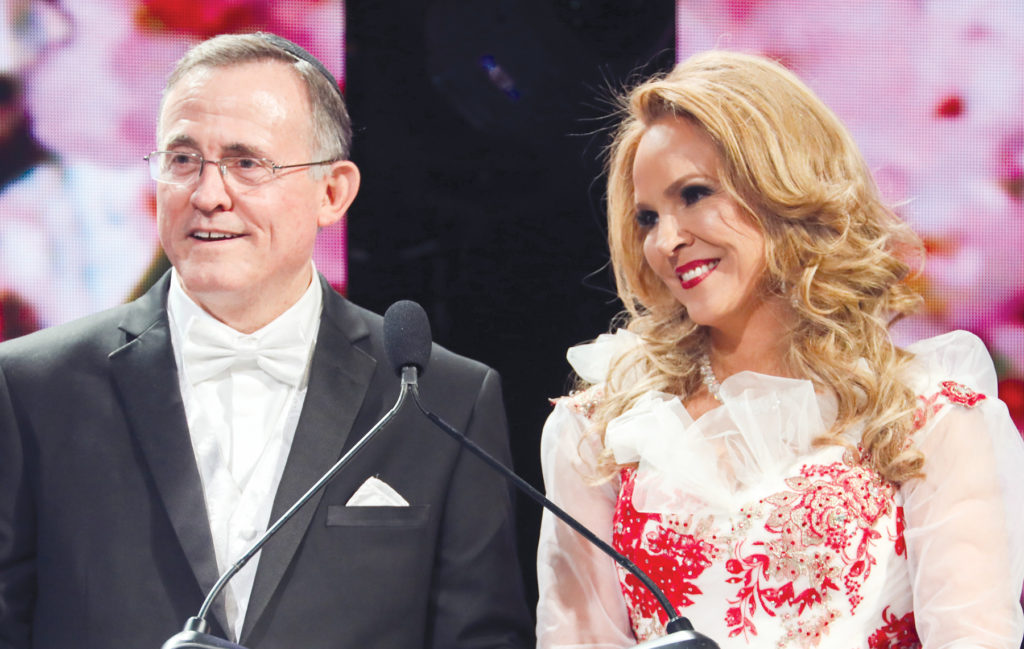
The sixth annual Red Star Ball held by American Friends of Magen David Adom (AFMDA) honored Magen David Adom’s paramedic heroes along with Steven Mizel, who was named Humanitarian of the Year; Jacqueline Goldman, who received the Lifetime Achievement Award; and Ruthi and Elliot Kahn, who were honored with the Next Generation Leadership Award.

The Oct. 30 evening event at the Beverly Hilton featured performances by singer Gladys Knight, comedian Andrew “Dice” Clay and Israeli musician Ninet Tayeb.

Local philanthropists Dina and Fred Leeds chaired the star-studded gathering.

AFMDA raises funds and awareness for Magen David Adom, Israel’s national emergency medical, disaster, ambulance and blood bank service. The organization describes itself as “the largest supporter of MDA worldwide.”

Magen David Adom is not a government agency but is the only group mandated by the Israeli government to provide first-responder, life-saving services. The organization relies on the support of groups like AFMDA.


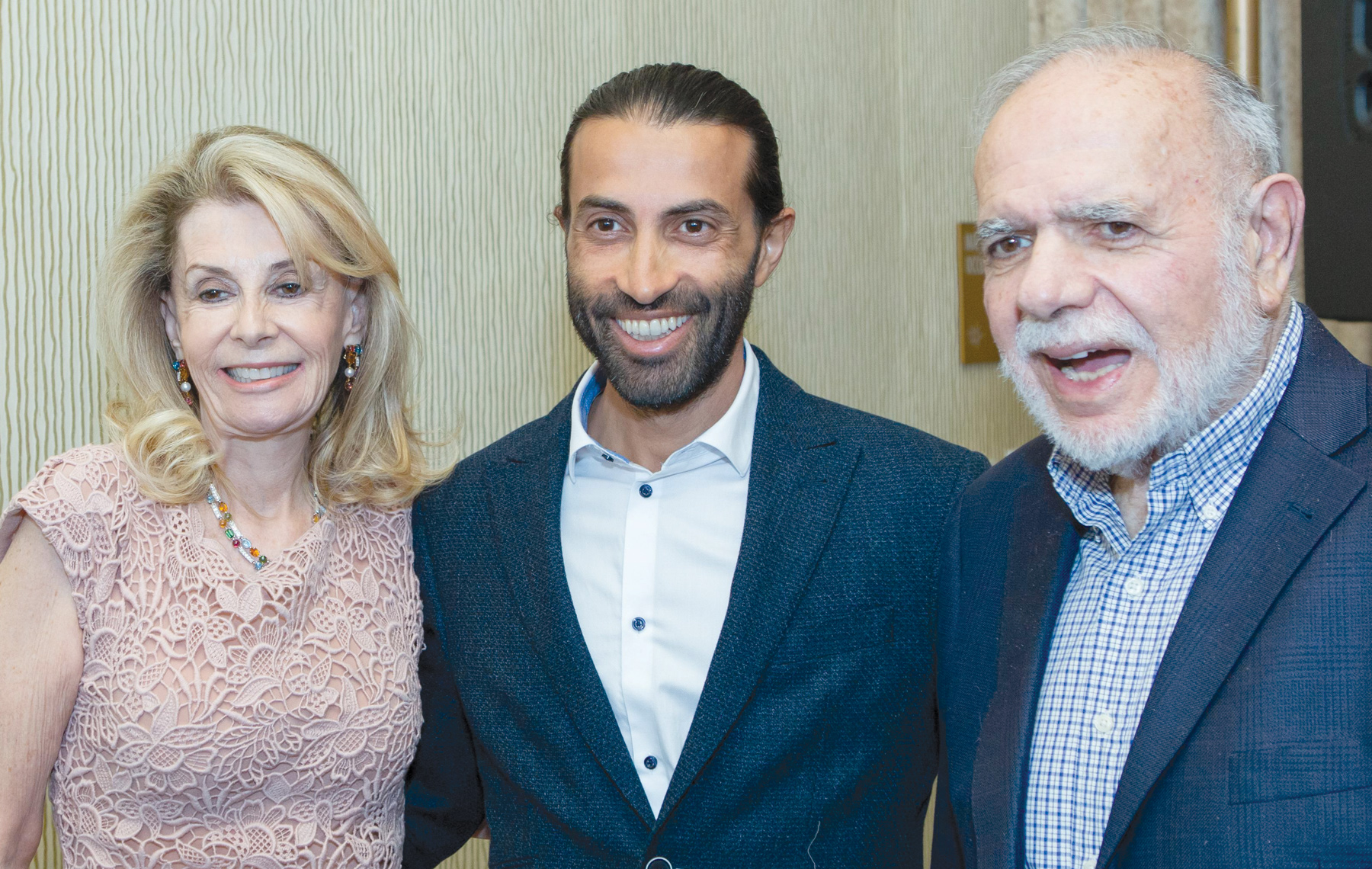
“Son of Hamas” Mosab Hassan Yousef (center) with Jewish National Fund supporters Judy and Bud Levin. Photo courtesy of Jewish National Fund

Mosab Hassan Yousef, the son of a senior Hamas leader, headlined the annual Jewish National Fund (JNF) breakfast on Nov. 27 at the Beverly Hilton. Yousef spoke about the dramatic trajectory of his life — from the rejection of his father, Hassan Yousef, to helping Shin Bet, Israel’s security agency, fight terrorism.

“Being here is not a choice I made yesterday,” Yousef, 40, said onstage in the hotel ballroom, surrounded by posters of David Ben-Gurion, Golda Meir, Menachem Begin and Theodor Herzl. “It is the collective choices of my journey.”

Hamas supports the creation of a Palestinian state and the destruction of Israel. 

“They don’t care about Palestinian people,” said Yousef, author of the 2010 autobiography “Son of Hamas.” “They have a cause — a Palestinian state.”

He added: “They call it Palestinian resistance. I have a better word for it: anti-Semitism.” 

As a result of leaving Hamas behind, Yousef said he no longer is in touch with his family. 

Also speaking at the breakfast was Louis Rosenberg, executive director of the JNF, Los Angeles chapter, who said the organization had raised $548 million of the $1 billion goal of its decadelong initiative, the “One Billion Dollar Roadmap.”

JNF National Campaign Director Sharon Freedman said the organization’s Los Angeles chapter was one of its fastest-growing communities in the United States. 

JNF operates a number of initiatives in Israel, including serving people with special needs; planting trees and creating green spaces; and developing Galilee and the Negev into centers of agriculture, tourism and technology.


From left: ETTA Board President Kam Babaoff, honorees Bill Prady, Dena and Joel Bess and Jacob Katz and ETTA Executive Director Michael Held. Photo by John Solano

ETTA, a provider of services for Southern California adults with special needs, held its 25th-anniversary gala on Nov. 28 at the Beverly Hilton.

About 750 supporters, guests, clients and friends attended the event hosted by actress, writer and activist Mayim Bialik.

Honorees included Bill Prady, co-creator and executive producer of “The Big Bang Theory,” with the Visionary Award; Dena and Joel Bess with the Community Champions Award; and Jacob Katz, who has been involved with ETTA since its founding, with the Hendeles Youth Leadership 

Attendees included ETTA Board President Kam Babaoff and ETTA Executive Director Michael Held. 


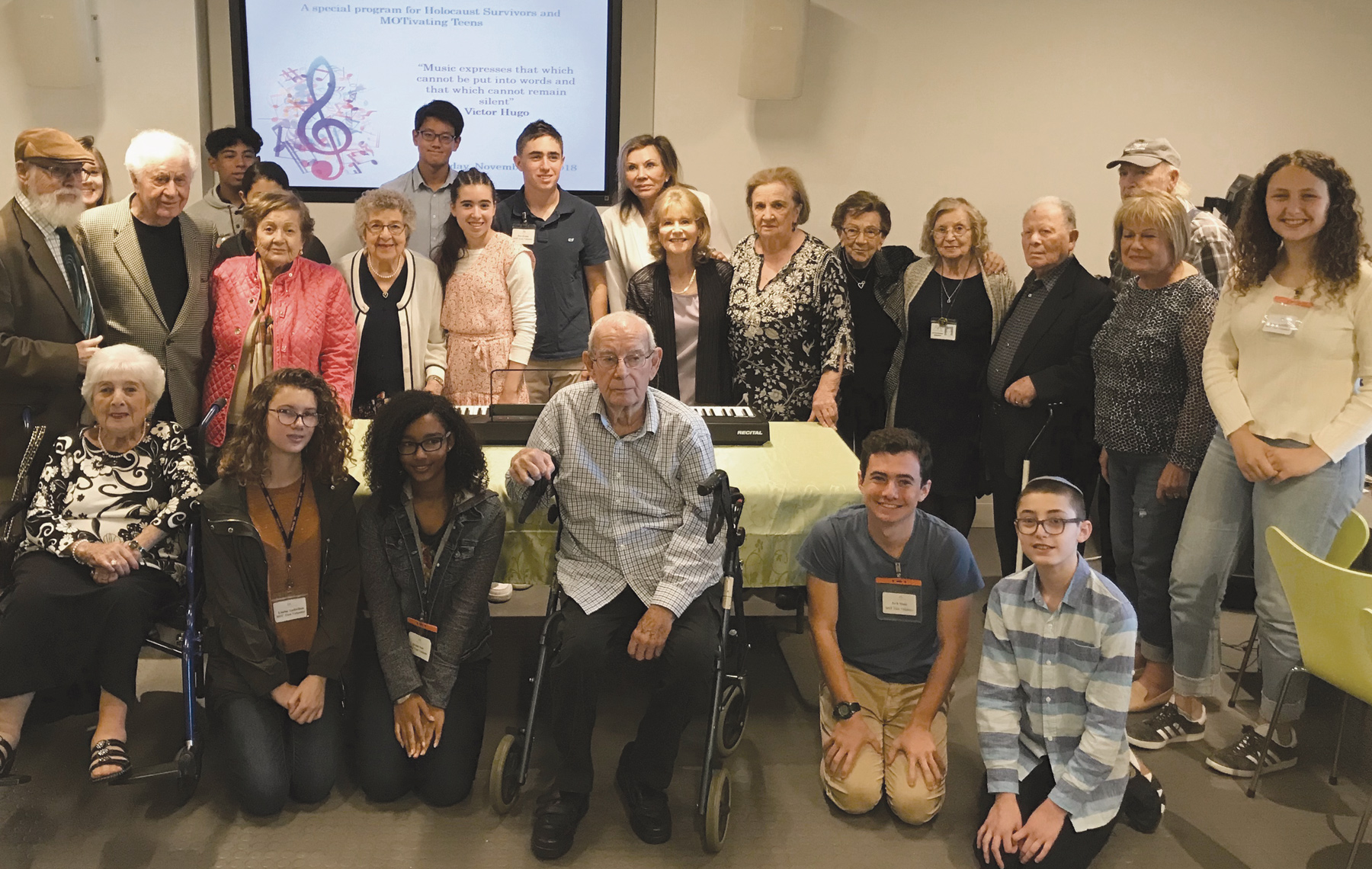
Holocaust survivors and MOTivating Teen Volunteers shared their love of music at a Nov. 11 event. Photo by Seyeon Kim

The Green Room at the Museum of Tolerance (MOT) was filled to capacity on Nov. 11, when 18 Holocaust survivors, including their family members and caregivers, shared an afternoon of memory, music and refreshments with 15 MOTivating Teen Volunteers. 

Holocaust survivor Jack Lewin and his wife, Regina, came with their caregiver. 

“My heart grows with happiness to see so many young people,” Jack Lewin said. “It was the most beautiful thing we achieved — to be able to get so many young people here.”

The afternoon was planned by teen siblings and volunteers Rex and Gracie Evans with the support and guidance of MOT Director of Museum Volunteer Services Elana Samuels. Since Samuels created the MOTivating Teen Volunteer Program in 2008 to encourage teens to learn from history and to promote tolerance and respect, 300 teens have participated.

Rex started volunteering at the museum in the fall of 2017 and soon began organizing intergenerational programs that foster dialogue and understanding between survivors and teens, the first of which was held in March. He and Gracie already had started planning the music-themed November event when Rex received the Julie Beren Platt Teen Innovation Grant from The Jewish Federation of Greater Los Angeles this fall.

The idea for the music theme came from Gracie. “I tried to think of something prevalent in the survivors’ lives that is still widely appreciated today,” she said. “Naturally, music came to mind and since my brother and I have been playing classical piano ever since we were young, I thought a mini concert would be the perfect way to spark reciprocal conversations between survivors and teens.”

“Elana and I spent many hours planning and discussing different ideas for the program, and it worked out really well,” Rex said. “My sister performed ‘Fantasia’ by Mozart and I played an étude by Chopin on the keyboard. Another teen, Cashio Woo, played the violin. Elana also projected songs on YouTube to sing along to, and we brought percussion instruments for everyone to play. The accordions were a hit!”

Samuels said seeing the Holocaust survivors and teens actively engaging and listening to one another was heartwarming. 

“The impact of [the teens’] relationships with the Holocaust survivors is transformative,” she said. “They are not just learning about history — they are touching history.”

— Debra Eckerling, Contributing Writer


Want to be in Movers & Shakers?Send us your highlights, events, honors and simchas.
Email ryant@jewishjournal.com.

‘Son of Hamas,’ MDA, Survivors and Teens Read More »

A Sumptuous Taste of a Sephardic Hanukkah

As I entered the Beverly Hills home of Rachel Emquies Sheff and her husband, Neil Sheff, on a recent Sunday morning, the warm welcome of my hosts and the sights, sounds and aromas that surrounded me left no doubt that I was about to be enveloped in the serene preparations for a memorable Sephardic celebration.

Scents of frying oil and orange zest tickled my nose. The beautifully decorated home’s intricate mezuzahs and hamsas, and a bowl of lemons next to several Ladino cookbooks caught my eye. I could feel Rachel’s and Neil’s excitement for the upcoming evening.

Rachel and Neil would be welcoming at least 30 people into their home to celebrate the first night of Hanukkah. Rachel had 20 pounds of peeled potatoes soaking for her latkes, trays labeled for her outpouring of food offerings, several menorahs ready for lighting, and different batches of dough waiting to be fried into Sephardic pastries. 

While staying out of her way, Neil, chair and former executive director of the Sephardic Educational Center (SEC) in Los Angeles, helped get things in order while also sharing bite-size bits of history about L.A.’s Ladino and Sephardic communities.

The couple are Ladino and Sephardic and integrate their cultures through food during the holidays. She maintains the SEC’s food page on Facebook, which she had recently updated with posts of her Ladino and Sephardic doughnut recipes.

Rachel was born in Casablanca, Morocco, and moved with her family to the United States when she was 8 years old. One of the things that kept her family connected to their culture was her mother’s cooking.

“Basically cumin, paprika and ginger were always used, though my mom never cooked with much cinnamon because we were influenced with more Spanish culture,” Rachel said, adding that lemons, tomatoes and oranges were always imperative elements of their Moroccan and Spanish dishes. 

“She was an incredible cook and picked it up from her mother,” Rachel said. “Now my oldest is an incredible cook, and I think because we are a family where we’re all about the food, my kids are always helping out in the kitchen. My oldest is even pursuing a career in food, learning the restaurant business.”

For the party, Rachel was preparing three simple variations of doughnuts: burmuelos — fried Turkish dough balls with a spongelike texture; sfenj — a puffy fritter popular in Morocco and North Africa; and rosquitas — dense, Spanish-influenced pastries that Rachel admitted were her favorite. 

(From Left) Sfenj, Burmuelos, and Rosquitas doughnuts rest in Rachel Emquies Sheff’s Beverly Hills Home waiting to be eaten by her family. Photo by Erin Ben-Moche

“It’s interesting its origins,” she said. “It’s amazing to me how one thing influenced that. You may not know what sufganiyot is but you might know [French] beignets or burmuelos. It’s very interesting to find out ‘Oh, you guys do the same things and you’re not even Jewish.’ It’s all different takes on a similar thing.”

While forming her doughnuts, Rachel stopped to think about how her mother, her inspiration, would do each step before moving on to the next. Each recipe was so ingrained in her memory that she would use it as a suggestion rather than a necessity. 

Rachel said that, like music, food is a global language bringing people together. As her parents have gotten older, she has been cooking more for them and further appreciating how recipes ignite memories from long ago. 

“All my girlfriends, we are super cooks and we are sharing recipes,” she said, “and thought we should start a Facebook page for all our members (at the SEC). It’s not a huge following but people really like it. I try to give food history in each post. Like, who made it in my family and what occasion I ate it at. And people tell me, ‘Oh my gosh, I haven’t had this since I was a little girl.’ And they are super excited because I reminded them of their memories. That’s really what food is — memories. Links to your life in every bite.” 

As the smell of sweet doughnuts filled the kitchen, Rachel continued to drop dollops of dough balls into the hot oil. Each doughnut, once fried, got a bath in a light, sweet syrup. (Ladino and Sephardic doughnuts tend to be lighter than the heavy challahesque density of sufganiyot.) 

Rachel’s rosquitas recipe is one she grew up eating and is made with orange juice and orange rind, and is dunked in a lemon syrup.

Rosquitas can be a little tricky to make if the dough is too sticky, Rachel explained as she added a little more flour. 

“It’s been a year since I’ve made rosquitas. … My mother did it better, but they’re very nice. It’s sticky but it’s so therapeutic. It makes you feel good. You are creating something. You get the result and everyone enjoys it.” 

Sheff’s tip: When frying, put a carrot in your oil to make it light and to help keep the oil from burning your treats. 

Burmuelos
Adapted from “The Sephardic Cooks (Come Con Gana)” by the Sisterhood of Congregation Or Ve Shalom in Atlanta.

1/2 cup water
1 teaspoon instant yeast
3 cups flour
1 egg
Pinch of salt 

Mix 1/2 cup of water with 1 teaspoon of instant yeast. Let sit till it is foamy. Then mix with 3 cups flour, 1 egg, 1 1/2 cups of warm water and a pinch of salt. 

Mix to form a sticky, wet dough.

Cover and let rise for two hours. With a spoon or small ice cream scoop, drop dough into hot oil. They will puff up and rise to the top quickly. If they don’t, the oil is not hot enough.

For the syrup, mix 1 cup sugar, 3 tablespoons of honey and 1 /2 cup water in a sauce pan. Bring to a boil until thick.

Pour over burmuelos. 

Serve hot. 

Sheff’s tip: If you need to make ahead, make only the day of, and warm up in oven and then pour hot syrup over warm burmuelos. Don’t make them the day before because they get oily quickly. Best result is to serve right after frying. 

Sfenj (Moroccan Doughnuts)
3 cups flour
2 teaspoons yeast
1 teaspoon salt
1 1/4 cup warm water
Dissolve yeast into 1/4 cup warm water.
Mix together flour and salt.

Mix together 1 cup warm water, yeast mixture and flour mixture by hand until well blended. (Dough will be extremely wet and sticky.)

Cover with plastic and a kitchen towel.

Let sit 2 hours. 

Prepare a bowl of water to dip your hands in. When oil is hot, dip your hands in the water and very quickly grab a golf-ball-size piece of dough, poke a hole in it, and drop it into the oil. (If you take too long, the dough will stick to your hands.) Be careful not to drip any water from your hands into the oil, as it could splatter and burn you. 

Sheff’s tip: Sfenj are freeform and not very pretty, so you will get odd shapes with all kinds of ridges and bubbles on them. 

Rosquitas (Ladino Doughnuts)
3 eggs
1/2 cup sugar
1/2 cup oil
1/2 cup orange juice
Pinch of salt
Rind of 1 orange
1/2 tablespoon baking powder

Mix all ingredients and then start adding flour until you form a nice dough, not too firm and not too sticky. Makes about 4-5 cups.

Let rise 2-3 hours.

Take a golf-ball-size piece of dough, form it into a rope about 2 inches long, and pinch the ends together to make a circle/doughnut shape. Place on a cookie sheet. When you have formed all the doughnuts, start dropping them into hot oil. Watch closely and flip to make each side golden brown. Place on a wire rack.

Make a syrup of 1 cup sugar, 1/3 cup water, and a piece of lemon rind. 

When sugar has dissolved and starts to thicken, take off heat and gently dip the rosquitas into the syrup with two forks, through the center, trying not to pierce them.

 Pile on a platter and wait a bit to dry.

Sheff’s tip: “Rosquitas are denser and doughier then a typical doughnut. They can keep for a few days after frying. My mother made these for us year-round, not just for Hanukkah.

A Sumptuous Taste of a Sephardic Hanukkah Read More »