fbpx

December 5, 2018

ADL Calls on U.S. Embassy to Denounce Anti-Semitism in Qatari Book Fair

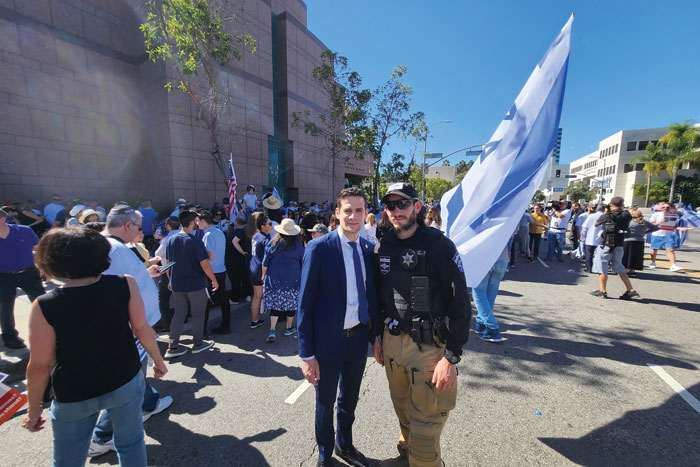
The Anti-Defamation League (ADL) is calling on the United States embassy in Qatar to denounce the anti-Semitism in books that are being featured at a Qatari book fair.

In a letter to William Grant, the embassy’s top diplomat, ADL CEO Jonathan Greenblatt wrote that the Doha International Book Fair, which began on Nov. 30 and ends on Dec. 10, “continues to promote egregiously anti-Semitic books in its content.”

“Some obviously anti-Semitic sample book titles in the book fair’s online catalog this year include one titled Lies Spread by the Jews, another called Talmud of Secrets: Facts Exposing the Jewish Schemes to Control the World, and a third entitled The History of the Al-Aqsa Mosque, the History of the Corruption of the Jews, and the Demise of their Entity,” Greenblatt wrote. “Other anti-Semitic titles promoted on the book fair’s website this year include an Arabic version of Ku Klux Klan alumnus David Duke’s anti-Semitic tract exaggerating and slandering Jewish influence in the United States as well as multiple editions of Henry Ford’s ‘The International Jew,’ which teaches as historical fact the seminal anti-Semitic hoax ‘The Protocols of the Elders of Zion.’”

Greenblatt also noted that the book fair has previously “provided a platform to noted anti-Semitic hate preachers,” such as a cleric who called for Israelis to be attacked with knives.

Because the U.S. embassy is participating in the book fair, as it has been for several years, Greenblatt urged Grant to use his position to expunge such content from the book fair.

“I ask that use your contacts with the book fair’s governmental organizers – and with the Qatari government more broadly – to ensure as soon as possible that this sort of hatred is no longer propagated at an event that boasts of the participation of the U.S. Embassy,” Greenblatt concluded.

The Qatari government has also reportedly provided financial support for terror groups like Hamas, al-Qaeda and ISIS.

The embassy did not respond to the Journal’s request for comment at publication time.

ADL Calls on U.S. Embassy to Denounce Anti-Semitism in Qatari Book Fair Read More »

Nachshon Minyan Gets Into the Hanukkah Spirit

“No Fortnite dances and no flossing!” joked one of the young adults running the Nachshon Minyan Hanukkah Celebration’s dreidel game table, where half a dozen tween boys were going head to head. Although, judging by the little gold and silver foil discs that littered the table, they were more interested in eating the gelt than gambling with it.

The boys were among some 150 congregants who turned out for the annual event on Nov. 30 at the San Fernando Valley Arts & Cultural Center in Tarzana, about half of them kids.

Louis Lovit, 81, who was there with his wife and a family friend, had no argument with the makeup of the crowd. “I think it’s a kids’ holiday,” said the Calabasas resident who studies Torah with Nachshon Minyan’s Rabbi Judy Greenfeld. In fact, for him, the best part of the holiday is being around all the kids — on this night with the youngest members of the nondenominational San Fernando Valley congregation, and another night soon with his grandchildren.

“I mean look,” said Lovit, lifting the handmade, laminated placemat on the table before him. There was a different one at every seat, each made by a child in Nachshon’s religious school. This one happened to feature a colorful collage menorah. Lovit flipped it over to reveal the name “Harrison” on the back, scrawled in marker along with a happy face.

“It’s beautiful,” he said. “And Harrison’s happy.”

In addition to the dreidel game, there was plenty of activity at tables where kids were decorating their own wooden dreidels and frosting dreidel- and Jewish-star-shaped sugar cookies. Grown-ups had activities to indulge in too, including a raffle and a small boutique where they could buy Hanukkah gifts, ranging from animal-print sweaters to chocolate bark that a bat mitzvah student had made and was selling to benefit breast cancer research for her mitzvah project.

After a dinner of latkes with applesauce and sour cream as well as jelly doughnuts, a dozen kids took the stage to sing traditional and not-so-traditional Hanukkah songs. “I’m Spending Hanukkah in Santa Monica,” Tom Lehrer’s catchy ditty featuring lyrics such as, “Amid the California flora I’ll be lighting my menorah,” was a crowd favorite.

“Stay positive. Be grateful for whatever you get. Just focus on spending time with your friends and family.” — Sophia Goldstein, 9

Amid the party atmosphere, Greenfeld wanted to give congregants something to think about in the coming days, beyond presents, brisket and stuff. So before the evening wrapped up, she shared a story.

There once was a student. And the student said to the rabbi, “What is a Jewish person’s mission in the world?” And the rabbi said, “A Jew is to be a lamplighter on the streets of the world.” 

The student said, “Rabbi, I don’t see any lamps.”
And the rabbi said, “Well, that’s because you are not yet a lamplighter.”
“Well, how does one become a Lamplighter?”
The rabbi’s response?
“One must first begin with oneself.”

Greenfeld proceeded to explain the job of lamplighters in 19th-century London: lighting the gas street lamps so residents could venture out after dark unafraid. And she likened the shamash to these lamplighters. 

“I ask us all to be Jewish lamplighters this year,” Greenfeld said. “See where you can bring light into the world.”

And how to do this?

“A mitzvah is a lamp,” Greenfeld said. “When you see a person who has faults and you accept them and you draw them in, and you rejoice in the miracle of being alive; well, then you can see all kinds of lamps and all kinds of possibilities. … A Jewish person puts their selfish needs aside and goes around and lights up the souls of others with the light of what they learn from the Torah and from the people around them.”

The focus on people was not lost on even the youngest congregants. “I do love the presents,” said Sophia Goldstein, 9, of Sherman Oaks. But she said if she were given a choice between presents and spending time with her family, she would definitely choose the latter. “That’s what’s really important,” she said.

“Stay positive,” she added. “Be grateful for whatever you get. Just focus on spending time with your friends and family.” 

Nachshon Minyan Gets Into the Hanukkah Spirit Read More »

Moishe House Explores ‘Little Shtetls’ of Jewish Learning

Moishe House, a program for Jewish young adults that has been growing steadily throughout the United States and internationally since its inception nearly 13 years ago, is now grappling with a key question: How far should it go in providing concrete definitions and setting requirements for the content of its peer-led Jewish learning programs while still empowering its young leaders, in their 20s and early 30s, to be bold and creative in how they engage with that content? 

At a “Jewish Education Summit” held Nov. 6-8 at its headquarters in The Hive at Leichtag Commons in Encinitas in northern San Diego County, Moishe House invited Jewish academics and educators to explore the extent to which its learning activities should incorporate Judaism’s core texts or ideas in order to be considered a proper Jewish education.

“We’re all asking the same question: For young adults in 2018, what does it mean to live a Jewish life? What does it mean to craft Jewish learning and own your own Jewish experience?” said Rabbi Brad Greenstein, senior director of Jewish learning at Moishe House.

Since January 2006, when it started opening Moishe Houses that support Jewish young adults who live together and host Jewish programming for their friends and community, the nonprofit organization has grown to more than 110 houses in 27 countries (including six in Los Angeles, one in Orange County and two in San Diego County), according to its website. It also provides support for leaders of peer-led retreats and a program called Moishe House Without Walls. Last  May, Moishe House said that during the previous year more than 50,000 young adult Jews were active participants in its programs, which drew a total annual attendance of more than 200,000.

“Moishe House is interesting because they are committed to democratizing Jewish education by bringing it to people’s living rooms,” said Miriam Heller Stern, national director of the School of Education and associate professor at Hebrew Union College-Jewish Institute of Religion. “Anyone can teach, sit with the text and make sense of it. It’s a reflection of the American zeitgeist but comes into tension with traditional beliefs about how much one needs to know to access those texts.” 

Summit participants included representatives of educational organizations such as The Pardes Institute of Jewish Studies, the Shalom Hartman Institute and Mechon Hadar; the community-service organization Repair the World; and Moishe House funders such as the Jim Joseph Foundation and the William Davidson Foundation. (In addition to reporting on the event for the Journal, I was invited to participate in the discussions.)

“We have to rethink that assumption of what education has to look like. … a formal structure to teach what used to be learned through living.” — Miriam Heller Stern

The sessions reflected diverse perspectives on Jewish education.

“Seeing spiritual homelessness and social isolation, you solve for ‘belonging,’ ” said speaker Casper ter Kuile, executive director and director of possibility for the Impact Lab at The On Being Project, and co-host of the Harry Potter and the Sacred Text podcast. Ter Kuile, who is not Jewish, brings together leaders in the emerging field of secular and sacred community innovation. He talked about unbundling and remixing traditional religious practice through several lenses. For instance, the Catholic Church used to be a full-service institution helping people to be “hatched, matched and dispatched,” he quipped, but is now experiencing a loss of popularity as people find other communities to serve their religious needs.

On the summit’s second day, Orly Michaeli, founder of the women’s spirituality retreat Wominyan, asked how Jewish educators should define “Jewish text.” Michaeli, who grew up in Guatemala, said that text is a measure of Jewish content for Judaism in the U.S., whereas in Latin America, Jewish content is derived from a sense of peoplehood centered on community and tradition. 

Stern, in her address, noted that for the last 150 years “school was synonymous with Jewish education.” Before that, she said, Jewish life was learned by living in the shtetl, where people had no choice but to live Jewishly. 

“We have to rethink that assumption of what education has to look like and be structured,” Stern said. “How do we teach the next generation to be Jewish if we don’t live in the enclave and learn by doing because everyone else was? [We need] a formal structure to teach what used to be learned through living.”

Moishe House, Stern said, was “creating little modern shtetls” that to an extent were duplicating this way of learning.

While much of the summit was involved in discussions of text and theory, Aaron Henne, founder of the Jewish theater company Theatre Dybbuk, led a session that encouraged participants’ physical movement. Groups read textual accounts of the Lilith story and then used their bodies to create “snapshots” representing the story’s narrative ideas. 

A conversation led by Yehudah Webster, director of B’nai Mitzvah Campaign, an innovative bar/bat mitzvah tutoring company in New York City, focused on where bias meets Jewish education. 

“We’re oriented in a particular norm which doesn’t allow for multiplicity of experiences,” Webster said. Educators should acknowledge that others’ Jewish experiences may be very different from their own, he added, and he challenged those present to raise the visibility of untold narratives — stories coming from Sephardic Jews, Jews of color, LGBTQ Jews, etc. — in a largely “Ashkenormative” Jewish conversation. 

Meanwhile, Greenstein said he was strategizing with Moishe House’s Resident Support team about “what it could look like for residents to create their own holistic Jewish learning plan from the very beginning of their Moishe House experience.” 

“The question I kept coming up with was ‘For what, to what end [are these learning experiences intended]?’ ” Greenstein said. “[At Moishe House] we put a lot of power and decision-making into the educators’ own hands. … The question remains, though: Is text necessary for Jewish education? Do you need a specific anchor that comes from a canonical part of the tradition to be counted as Jewish education? We learned that the realm of Torah is so expansive, but as it continues to expand we’re drawn back to that initial anchor, back to the traditional canonical texts. The question is, how do we make them come alive?”

After the summit concluded, Greenstein summed up the experience.

“We are all engaged in similar work,” he said. “We want Judaism to thrive. If Moishe House can be a catalyst for a Jewish life that’s dynamic and alive, then we’ve done our job.” 

Moishe House Explores ‘Little Shtetls’ of Jewish Learning Read More »

The Impossible Story – Conclusion: The Enhanced Video and Audio Shows a Homicide


Link to full series

TRIGGER WARNING: This article includes video and audio of someone’s last moments


What does the evidence actually reveal, and why isn’t it being talked about?

The Independent Review Board (IRB) report on the death of Baltimore Police Detective Sean Suiter describes what happens at exactly 4:36:10pm on the video and the audio. It concludes that these two things could not have happened at the same time, so the audio and video timestamps must be out-of-sync.

By the time the IRB was contracted to investigate the case, there were two prevailing theories. Both involved Suiter running into a vacant lot before shots were fired. In one theory, he shot himself; in the other, his gun was taken by a stranger and used against him.

The IRB seemed to have accepted that one of these theories had to be true instead of following what the evidence revealed. Its suicide conclusion is based on eliminating certain homicide possibilities without considering all of them.

This article proposes that instead of starting from a theory, we start from the evidence. Let’s accept that the video and audio of 4:36:10pm happened as the records indicated, simultaneously. 


What happened at 4:36:10pm on the video?

The IRB report described the 4:36:10pm moment on the video as follows, largely relying on the recollections of Suiter’s partner that day, Detective David Bomenka:

At 4:36:10 p.m., Suiter ran towards the vacant lot and out of view of the Bennett Place Video and Detective Bomenka. As Detective Suiter disappeared from view, Detective Bomenka observed Suiter beginning to unholster his weapon with his right hand. Just prior to that, Suiter waved at Bomenka; the purpose of this gesture was unclear. Bomenka interpreted the wave to signify that something was happening in the vacant lot. 

Here is that moment on the close-up of the surveillance video provided by the Baltimore Police Department (BPD), which is quite blurry. Suiter is the black figure standing and then moving behind the white van, in the yellow circle (which was inserted by BPD):


The last article in this series discussed how to read the timestamps on this video. It also discussed a challenge in viewing it. Once Suiter moves just to the left of the van, he is much harder to make out. There is an obviously smudged area, a “dead zone” (circled in red in the picture below):


There is actually unreported activity in the smudged area. It is much easier to see when the video is enhanced, as first indicated by crime journalist Amelia McDonell-Parry. Here is the 4:36:10pm moment in played back in a high-contrast, slo-motion close-up:


At the moment at which the IRB says that Suiter “ran towards the vacant lot and out of view,”  he actually bent forward suddenly – “to half his height,” as McDonell-Parry wrote. He does fall out of view on screen, behind the parked car.

Here is a video screen grab of the cursor moving slowly back and forth over that moment. Follow the top of Suiter’s head:


In BPD’s version of the video, it appears that Suiter runs after he falls. Actually, that is not Suiter. In the enhanced close-up of the video, you can see a figure that looks like a black shadow, coming from further back in the dead zone, near the cross street, just after Suiter falls. The path of the running figure is indicated by the white arrow:


Now, watch the close-up, slow-motion video again, looking for the running figure. This time, the video is provided on loop:


From a distance and at regular speed, the running figure merges into Suiter’s collapse, giving the impression that Suiter is seen running into the lot. The running figure is also not Bomenka, who is the white figure to his left; more on that shortly. The smudge over the dead zone greatly obscures what is going on.

McDonell-Parry also identified this figure, which appears to the left of the van, facing Suiter when he collapses:


Like the running figure, this figure has a human-like shape, it enters and leaves the frame, and it moves.


What happens at 4:36:10pm on the audio?

Meanwhile, also at exactly 4:36:10pm, dispatch audio reports say that Suiter made his final call, as reported by the IRB. Here is that audio, provided by BPD:


The IRB had an interesting take on this audio:


The radio transmitted an unintelligible sound. Some law enforcement personnel who know Suiter believe it was his voice. A loud sound then occurs, which may or may not be a gunshot. The radio signal then went dead. This radio transmission occurred at 4:36:10 p.m. according to transmission records, the same moment the Bennett Place Video shows Suiter running into the lot. The video and radio timing mechanisms, however, are not synchronized to the second.


Without pointing to any justification, the IRB states that the audio and video are out of sync. The IRB’s entire take on the audio evidence is odd. The report confirms that the call came from Suiter’s radio. It confirms that Suiter was shot around that time. But the sound on the radio “may or may not be a gunshot”?

Later, the report adds, “If there is one thing that is ‘clear’ about this transmission, it is that nothing in this transmission is clear.” If there is one that is clear, it is that the IRB did not want to deal with the significance of this radio transmission. It complicated its entire theory.


Putting the audio and video together 

Here is the close-up video overplayed with the full audio call, synched up as closely as possible to 4:36:10pm on the video. As a reminder, we don’t have the audio for anything before or after, only the sounds that Suiter recorded:


And here it is in close-up, slo-motion (where the difference between Suiter and the running figure is clearer):


The conclusion proposed here is that someone shot at Suiter just before 4:36:10pm, causing him suddenly to either duck down or collapse. The other possibility could be that someone stepped forward with a gun, so he ducked. His collapse is quite sudden though.

He then initiated a radio call that captured another shot fired, by someone. He was fatally injured before he could record any other shots.

This conclusion could explain several things: 

  • It could explain Suiter’s very sudden falling motion out of view. Shots were fired in his direction.
  • It could explain why, just as Suiter suddenly fell, there were shots on the radio.
  • It could explain why Suiter was said to be found still gripping his radio in his hand.

Earlier in this series, I questioned the evidence that Suiter was still gripping his radio when he was found dying. I had spoken with four different forensic and medical experts who said that someone who shot himself in the head, from an upright position, would lose the ability to grip with his hand. If Suiter was already ducking bullets or shot at that moment, then it is believable that the radio would still be in his hand. He could’ve made the call from a prone or falling position.

Who was shooting at Suiter? Where was Bomenka?

Bomenka is a pale white figure in the video, as identified by the IRB.  Here is BPD’s video of Suiter walking with Bomenka before the shooting. Bomenka is visible when they separate:


But when Bomenka is in the dead zone, before and after Suiter’s shooting, he is truly  ghost-like. Here he is minutes before the shooting, standing near the corner of the building at Schroeder:


You can see him better in motion:


At 4:36:10pm, Bomenka told investigators that he was standing at that corner, watching Suiter wave at him then run into the lot. On the video of the shooting, he only appears clearly there seconds before and after Suiter collapses. The video gets especially blurry during the collapse, just as the dark figure runs in front of Bomenka.

If Bomenka was at that corner at 4:36:10pm, he would have had a clear view of Suiter’s collapse at 4:36:10pm. He told the investigators that he did not see anything. Bomenka also denied that he saw other people at the scene when Suiter was shot.  As I wrote in the Baltimore Brew, there is another video of the scene that was confiscated and has not been released. It could provide clarity.

It’s not clear from the video exactly who was shooting at Suiter around 4:36:10pm. Bomenka appears to have been 60 to 70 feet away just before and after Suiter’s collapse. This article’s conclusion is just that someone fired at him. That said, the close-up, slo-motion, synched up video-plus-audio is suggestive of a more specific story. Follow the dark figures.  Here it is, once again:


Could the IRB be right that the video and audio are off-sync?

The IRB only goes so far as to suggest that the audio and video are off-sync enough to make its suicide theory work but not enough to disrupt the rest of its narrative. The IRB’s version of events would put the video earlier than the audio by around ten to twenty seconds.

There are valid reasons to question the video and audio timestamps. A footnote in the IRB report states that BPD determined that the timestamp shown on the video screen is off by 11 hours and 4 minutes.  A flat 11 hours would make more sense, given daylight savings time.

However, the video’s timestamp, as recalibrated by BPD, does line up with other evidence. It lines up with the timestamps on stills from body-worn camera (BWC) footage of responders, as included in the IRB report. As discussed in the previous article in this series, a patrol officer’s car pulls up outside of the vacant lot just seconds before his BWC camera shows him approaching the lot. If the surveillance video were ten or more seconds earlier than what BPD determined, then the BWC would also have to be off-sync by that much.

The surveillance video also lines up with certain dispatch calls, as downloaded last year from Broadcastify and the public scanner. So there is no independent reason to question BPD’s timestamp for the surveillance video.


But wasn’t Suiter shot with his own weapon?

It has been a common assumption that Suiter was shot with his own weapon. It has also been a common assumption that no other weapons were used at the scene. Then-Commissioner Kevin Davis announced these findings one week after Suiter’s fatal shooting, but the evidence does not offer conclusive proof.

The third article in this series consulted with several ballistics experts who called into question these early determinations. A process called “shooting scene reconstruction” was used to match Suiter’s gun to a bullet discovered at the scene, which is not an exact science.

That article additionally deconstructs the alleged discovery of the fatal bullet. After federal and local agents had combed the plot for four days, somehow, a team of BPD investigators knew exactly where to dig a small hole for the fatal bullet while WBAL’s cameras were rolling. (The IRB reports states that investigators knew where to look because of the autopsy’s assessment of gunshot trajectory. Suiter was said to be shot in the right side of his head, so it’s unclear how the investigators landed exactly on that location.)

The IRB seemed to have agreed that the ballistics evidence was insufficient to link Suiter’s gun to his death, so it conducted an additional forensic test. Suiter’s gun was found to have his DNA in the barrel, the report noted:

The most plausible explanation for the presence of Suiter’s DNA inside of the barrel of his gun is that blood from Suiter’s head was expelled into the barrel milliseconds after the fatal contact wound shot. If there had been pre- existing DNA of Suiter’s inside the barrel, it was likely expelled or destroyed by the firing of three grooved bullets through a tight barrel, coupled with the heat and gases produced by the firing.

There haven’t been many scientific tests to conclusively prove that DNA inside of a barrel can match guns to victims, but one of them clearly states that DNA will persist in the barrel of a gun after shots are fired in the majority of cases. Indeed, this study appeared at the top of the google results for “DNA found in the barrel of a gun.”

The IRB ran an additional forensic test to prove that the DNA in the barrel could have only come from Suiter’s gunshot wound:

The forensics lab tested two service weapons, which had been used by two officers for several years. These officers were responsible for cleaning their own guns pursuant to department protocol, but they did not clean the guns immediately before the test. The forensic lab fired three shots from each weapon (the same number of shots that were fired from Suiter’s service weapon). There was no DNA profile developed after swabbing the barrels of these weapons. Specifically, no DNA of either of the officers was found in the barrels of their service weapons.

The forensic lab concluded that Suiter’s DNA found in the barrel of his service weapon almost certainly had to come from blood exiting his head after the fatal shot was fired. 

An ad hoc test on two guns hardly meets the “Daubert Standard” for a credible forensic science with a standard potential rate of error.

Even if the IRB’s test were conclusive, any determination about the ballistics in this case also has to take into account the poor handling of the evidence and crime scene. As the IRB report notes, Suiter’s gun was put in the trunk of a patrol car, unsecured, before it could be photographed at the scene  by the Crime Unit (CU). There was no chain of evidence on its handling until it was brought to the Evidence Control Unit.

Also, the surveillance videos shows Bomenka visiting Suiter’s dying body almost two minutes before any other officers responded to the scene, as discussed in the previous article. The IRB carefully avoided mentioning this moment in its report. Bomenka even blocked a car from passing by the vacant lot. This is more suspicious if we consider the possibility of one or more other people at the scene.

If all of that doesn’t complicate things enough, local journalist Media WatchDog pointed out where CU ended up marking Suiter’s body, after he was taken away from the scene to the hospital. The markings are nowhere near where Suiter’s body appears on BWC.

All of this is to say that the presence of DNA in the barrel of Suiter’s gun is suggestive but not conclusive that Suiter was shot with his own weapon, and the poor maintenance of evidence and the crime scene makes the ballistics-related evidence unreliable.

Moreover, the conclusion outlined in this article does not preclude the possibility that Suiter’s gun was used on him at some point. It just proposes that the first shots fired didn’t come from his gun, unless someone else had it in their possession. (Contrary to media reports from earlier this year, he is never shown holding his gun on the video. It only shows up under him when patrol officers arrive.)

Could this conclusion be compatible with the homicide-by-stranger theory?

Theoretically, if we believe that the audio and video timestamps documented by BPD are accurate, some parts of the stranger theory could still be true. Suiter and Bomenka could have been staking out a drug dealer who surprised and shot at Suiter.

The tide has been shifting back from suicide to homicide-by-stranger in media lately, with new information putting a dent in the IRB’s suicide conclusion. This shift has been aided by WMAR news, Kevin Davis, the team supporting the Suiter family, and possibly someone in the State’s Attorney’s Office.

Many of the BPD officials who pushed the suicide theory in leaks to media have left the department since the GTTF trials earlier this year. They no longer have center stage. Even WBAL’s Jayne Miller, who repeatedly and prominently reported during the last year that the evidence “leans to” suicide, has recently been suggesting otherwise.

The biggest problem with the homicide-by-stranger theory is that it fails to explain the obvious and extensive cover-up around this case, since day one. If Suiter truly died in the line-of-duty, there would be nothing to hide. I have pointed to possible cover-up in the previous articles in this series, as well as here and here. It includes the following:

  • Bomenka’s refusal to share any information at all with investigators on the scene, as well as his changing stories over the interviews that followed.
  • The omission from public records and the IRB report of Bomenka’s 911 call, on which a dispatch report says he claimed to be “off-duty.”
  • The other missing audio and video evidence.
  • The video evidence of least one other person at the shooting scene, unaccounted for.
  • The indications that the video was manipulated to hide that evidence.
  • The highly staged and suspicious bullet discovery.
  • Davis’ numerous efforts to direct the narrative aggressively away from what Suiter had scheduled the next day – a meeting with federal prosectors and grand jury testimony in a Gun Trace Task Force related case – despite the feds’ repeated implications that it was important.
  • The leaking of false information by high-ranking officials to media about the video, Suiter’s state of mind, and more.
  • The IRB report’s dancing around Bomenka’s activities, including his early visit to the crime scene.
  • The IRB report’s presentation of second- or third-hand information as fact, such as medical records.
  • And more.

The number of coincidences and excuses needed to explain away all of these issues would be extraordinary.

The homicide-by-stranger theory might be the best outcome to protect the Suiter family in the long-term. It may not be the best outcome to protect Baltimore, if it allows a culture of cover-up and corruption to continue unchecked.


Conclusion

It’s been over a year since Suiter was shot dead. Rather than work towards peeling away the onion, officials and media continue to add confusing layers.

WMAR’s recent release of a December 2017 police interview with a confidential (no longer) informant is just the latest example. The CI’s second-hand account of Suiter’s death-by-stranger is hardly air-tight. Still, media ran with it, unconcerned about the CI’s safety. As usual, local outlets failed to approach the information suspiciously and ask pertinent questions: Who was doing the interview from homicide? Did they have any conflicts of interest, as it may seem? What can we learn from the CI’s history with GTTF officers? Why is this coming out now?

In the meantime, this series ends without certainty about who killed Suiter but with this much clarity:

  • The audio and video evidence strongly suggests that Suiter’s death was a homicide.
  • The evidence also suggests that his homicide has been aggressively covered up at many levels for more than a year.
  • The evidence of a cover-up makes it unlikely to have been a routine killing in the line of duty, unrelated to his scheduled conversation with federal investigators the next day.

This series is complete. But ongoing articles and discussions about this case and related topics will continue at The Suiter Files, a website dedicated to this case and other issues in Baltimore and policing. 

Amelia McDonell-Parry contributed to this article.


The Impossible Story – Conclusion: The Enhanced Video and Audio Shows a Homicide Read More »

Cooking: The Last Seduction

I’ve always thought that if more men understood how much women love to eat, every cooking class in the world would have a waiting list. The late humorist Erma Bombeck famously said, “I haven’t trusted polls since I read that 62 percent of women had affairs during their lunch hour. I’ve never met a woman in my life who would give up lunch for sex.” And we needn’t deliberate about how much men love women who can cook; a woman who can make the standard four and do them well — meat and potatoes, a casserole of some sort, a pasta dish and fried chicken — will be up to her eyeballs in marriage proposals.  

The reasons for this are obvious, basic, tried and true. First, cooking for someone is an act of generosity — a life-affirming, caring and deliberate sport. You can’t send text messages and e-mails while in the throes of a gastronomic session. The cook generally is laser-focused on the person or people being cooked for and is weaving together his or her soul foods, palate and preferences. If you know your significant other likes things on the spicy side, and you’d like to be dessert, you aren’t making him a risotto, even if your version is world class. Likewise, if a man is dating a vegan, he must put in a good amount of effort to create a menu that doesn’t feature animal products. This effort is seen as an act of adoration and one that is sure to win over hearts, far beyond taking her out to a fancy restaurant.  Even if the feast you are preparing for your lover is uncomplicated — nothing says “I want you” more than a night at home and a candlelit meal. 

As a female chef at a foreign outpost of an American embassy, it’s impossible not to notice the adulation from men and women to whom we serve food. If I’m ever tempted to downplay the contribution made by our cafe to the mission morale —  I need only be absent for a time. When I return from a trip, I’m greeted like a celebrity and treated like the most important person at the embassy (sorry, ambassador).

It seems that cooking is seductive to both sexes. It’s no coincidence that the divorce rate among male chefs is higher than in some other professions: Most men who cook professionally have groupies and admirers who are eager to spend time with a knife-wielding lothario. Cooking is simultaneously primal and sweet — it’s a reminder of romance and our basic needs, but it also brings forth memories of our mothers. 

That’s why, although I cook like a hard body all week — and often add massive catering events to my already overloaded plate — I always make time to cook at home on weekends. Not only is cooking in your own kitchen better than almost any stress buster, lavishing your significant other or friends with a meal puts you and them into the best possible frame of mind. And it’s a great way to say you’re sorry — you simply cannot be angry at a person who has just rocked your world with a few good dishes. 

This past weekend, after a work week that left me feeling like I’d been squeezed through a meat grinder, I invited a few girlfriends over for a late lunch. I didn’t have much time to do a lot of advance prep so I threw together my no-knead focaccia and left it on the counter to rise slowly overnight. Even though my friends are vegan, making the prep a bit more time-intensive than, say, throwing a hunk of meat to braise slowly in an oven — in under three hours I created some soul-satisfying dishes, none of which was even close to taxing.

I served an Israeli chopped salad, rice-and-parsley-stuffed vine leaves, roasted eggplant and peppers with herbs and tahini, hummus, a sensational African pumpkin leaf peanut stew (recipe below) and Persian saffron rice with barberries, pomegranates and pistachios. I even whipped up a quick dessert — a mock rice pudding made with almond milk and chia seeds scented with rosewater, cardamom, saffron, turmeric and nutmeg, topped with fresh berries and toasted almonds. 

I also topped that focaccia dough, slathered in olive oil, rosemary, thyme and sage, with whole garlic cloves and cherry tomato halves. It took me maybe 10 minutes, including picking the herbs, and another 30 minutes to bake, and it may have been the star of the show, as any good bread item often is.

I took great pleasure in decorating the table with colorful dishes and flowers, used my best wine glasses even though we were drinking only lemon water with cucumber and mint, and still had time to pick out a good playlist.

We spent the whole afternoon shaded from the sun on my veranda, eating and giggling, listening to a hot sound mix and inspiring one another with tales of love gone wrong and right. By the time I watched them drive out of the gate I realized that although I was physically tired from the nonstop hustle of the week, I hadn’t stopped smiling for hours — and better still, my soul was revitalized.

If you want to turn all the lions in your life into purring pussycats, you needn’t visit Victoria’s Secret to purchase the latest lace and feathers (although that never hurt anybody’s cause either) You need only to spend a few hours of your precious time immersed in the delights of a well-stocked pantry. There, in your steamy kitchen, after a bit of chopping, a modicum of sautéing and even the slightest suggestion of kneading and baking — you can stir and seduce even the toughest of hearts. It’s worth every minute.

EGU – WEST AFRICAN PUMPKIN LEAF STEW (VEGAN)
1 pound pumpkin leaves (available at most Asian supermarkets or in a
pumpkin patch; I picked the leaves out of my garden)
4 tablespoons vegetable or olive oil
1 large red onion, finely chopped
5 garlic cloves, minced
2 tablespoons tomato paste
1 red chili (optional)
1 stock cube (optional)
3/4 cup ground peanuts (or peanut butter)
1/8 cup raw tahini
1 vegetarian stock cube or bouillon (optional)
1 tablespoon (or to taste) apple cider vinegar
Salt and pepper to taste

Remove spines and fibrous coating from pumpkin leaves, chop roughly and boil for 3 minutes in salted water. Drain well and squeeze out excess water.

Sauté onion, garlic and chile (if using) in olive oil until onions are transparent, then add the tomato paste. Cook until oil separates on the side of the pan.

Add stock cube (if using) and then peanuts (or peanut butter) and tahini.

Add drained, chopped pumpkin leaves and cook for approximately 15 minutes on medium heat until mixture is thick and stew-like in consistency and pumpkin leaves are completely soft and silken in texture.

Season with vinegar, salt and pepper to taste and serve with rice or boiled sweet potatoes.

Serves 4.


Yamit Behar Wood, an Israeli-American food and travel writer, is the executive chef
at the U.S. Embassy in Kampala, Uganda, and founder of the New York Kitchen Catering Co. 

Cooking: The Last Seduction Read More »

Michael Zegen’s Jewish World in ‘The Marvelous Mrs. Maisel’

Editors note: This article contains spoilers regarding season two of The Marvelous Mrs. Maisel. 

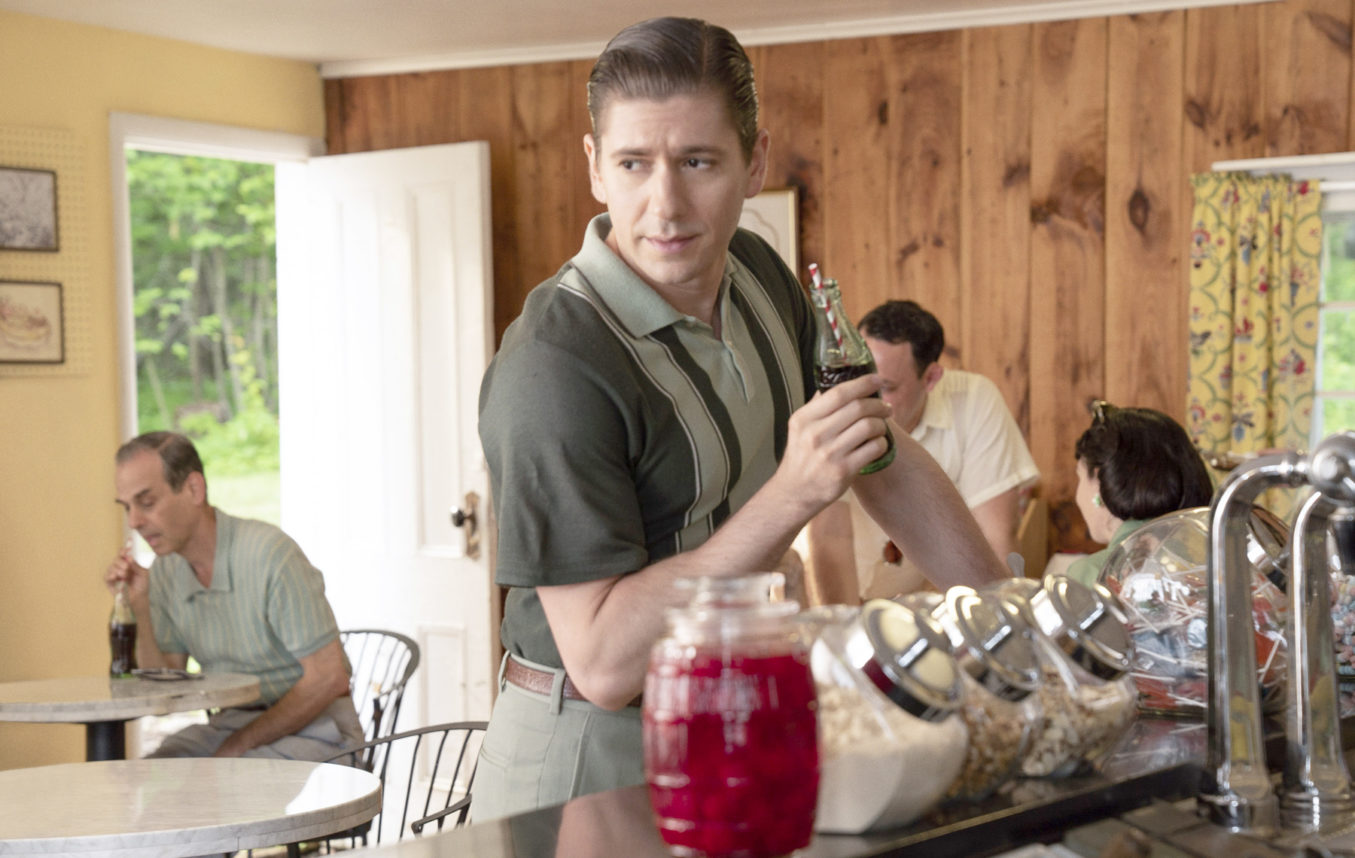
Michael Zegen has played good guys (“Rescue Me,” “Girls”), a gangster (“Boardwalk Empire”) and a zombie (“The Walking Dead”), but in “The Marvelous Mrs. Maisel,” he has his juiciest — and most personal — role to date.

In the Emmy-winning, 1950s-set series, now streaming its second season on Amazon Prime Video, Zegen plays Miriam “Midge” Maisel’s (Rachel Brosnahan) estranged husband, Joel, whose extramarital indiscretion fueled her quest for independence via a career in stand-up comedy. This season, audiences will see a newly assertive side of Joel as he takes charge of his family’s dress company and claps back at Catskills gossips.

“He’s trying to find his own career path because nothing else has worked out. He’s being a responsible adult. That’s where he’s headed. Hopefully, he keeps it up,” Zegen told the Journal. “I love the fact that he’s not just a one-note villain or antagonist. He’s got a lot of depth to him. He’s real and he’s funny. That’s why I love playing him. When I first read the script, I knew that it was something I had to do. I knew this guy and how to play him. And I’m really fortunate that they chose me to do it.”

The fact that the show reflects the Jewish experience was another lure. “It really hits home for me,” Zegen said. “Even though I’m not from the 1950s, I understood this world. I come from a family of Jews and Holocaust survivors and it’s important to tell these stories. The show is about a Jewish family, but it’s universal. The fact that so many people of different ethnicities have fallen in love with it is incredibly important to me.”

Several episodes are set in a summer resort in the Catskill Mountains, and while Zegen hadn’t been there previously, “my mother spent summers in the Catskills and told me about it,” he said. “We have home videos and it looks exactly like the place we filmed at.”

The series’ family dinner scenes and depictions of holiday traditions are quite familiar to Zegen, who grew up in a Conservative Jewish home in Ridgewood, N.J. 

As the grandson of Ukrainian and Polish Holocaust survivors on his mother’s side, Zegen “grew up learning about the Holocaust. My grandma told me many stories about escaping. It was ingrained in my head from a very early age never to let something like that happen again, and that it’s important to pass on our traditions,” he said. “Whether I go to temple or not, I still celebrate the holidays.” This year, he’ll be in Berlin for Hanukkah, as the “Mrs. Maisel” cast is in Europe on a promotional tour.

“The show is about a Jewish family, but it’s universal. The fact that so many people of different ethnicities have fallen in love with it is incredibly important to me.” ­ — Michael Zegen

This season, Joel and Midge navigate the parameters of their relationship as a separated couple and parents of two young children. “I think there’s a lot of love between them but I don’t quite know if they’re right for each other,” Zegen said. 

He’s surprised when fans tell him they want the Maisels to get back together. “[Joel] wronged her in a way that was incredibly hurtful and he never said, ‘I’m sorry.’ It’s up to her whether she forgives him or not,” Zegen said. “But I don’t think she should.” 

Complicating matters this season is a new love interest for Midge, a Jewish doctor named Ben [Zachary Levi]. “Once Joel finds out she’s dating somebody else, I don’t think he’s

going to be very happy about it. Despite the fact that he told her he can’t be with her, it’s still going to hurt,” Zegen said.

Zegen doesn’t worry about the new episodes after such a successful and acclaimed first season. “Of course, there was a little fear that there would be a sophomore slump but from the moment we got the first script for this season, we knew it would be awesome and we’re in good hands,” Zegen said. “I have so much faith and trust in Amy and Dan [Palladino], the creators. They know what they’re doing.”

He credited the writing, the “visually dazzling” sets and costumes and his fellow actors for making “Maisel” magical. “Everybody involved is exceptional,” he said. “We enjoy being around each other and hopefully you can see that when you’re watching the show.”

Despite a severe case of stage fright at his bar mitzvah, Zegen conquered his fears and began acting in school plays. Since launching his career in 2002 with multiple appearances on “The Late Show With David Letterman” as Dwight the Troubled Teen, he has appeared in the movies “Brooklyn,” “Frances Ha” and “The Seagull,” TV series “Girls” and “The Good Wife,” and “Bad Jews” off-Broadway.

“I’d love to do more theater but it’s such a huge commitment, so it has to be something really worthwhile,” he said. “And also, with the series, it’s very difficult to time it out right.” 

His wish list includes playing Groucho Marx and writing and producing his own projects. “I’ve been working on a script. Hopefully, one of these days, I’ll get something made,” he said. 

Zegen was eager to hear what audiences think of the new “Maisel” episodes. “I feel like this season is even better than the last,” he said. “And I hope that Season 3 will be as good or even better than Season 2.”


“The Marvelous Mrs. Maisel” is now streaming on Amazon Prime Video.

Michael Zegen’s Jewish World in ‘The Marvelous Mrs. Maisel’ Read More »

Weekly Parsha: Miketz

One verse, five voices. Edited by Salvador Litvak, Accidental Talmudist

Pharaoh said to Joseph, “I have dreamed a dream,
and there is no interpreter for it.” –
Genesis 41:15


Nili Isenberg
Pressman Academy

Sometimes, like Pharaoh, we feel so alone in our lives. We are beset by challenges that no one can understand, not even ourselves. In our dreams, we replay what has happened during the day, turning events into a jumbled nightmare of concerns and anxieties. They eat us up inside, ravaging our physical and mental states as we become like ugly, emaciated cows. And there is no interpreter for it.

There is no one to explain why these are the circumstances of our lives. Just this past month, we have all asked: Why Pittsburgh? Why Thousand Oaks? Why is our world figuratively and literally on fire?

Mei HaShiloach (Rabbi Mordechai Yosef Leiner, 1801-1854) took a mystical approach to our verse. He argued that “everything in this life is like a dream that needs interpreting,” in an active, engaged process.

When my son was diagnosed with Angelman Syndrome five years ago, we learned that he might never achieve the most basic functions in life, such as walking and talking. At the time, my husband and I felt like we had accidentally crossed into a delusional alternate reality, an inexplicable dream. We continue to struggle with this reality every day, looking for an explanation, while still holding in our hearts the faith that God’s world has a design and meaning. But faith is not an explanation.

For Pharaoh, his dream was finally explained by Joseph. How much longer will the rest of us have to continue our search for an explanation?


Rabbi Nolan Lebovitz
Adat Shalom, “My Daily Offering” podcast, “Roadmap Jerusalem” filmmaker

The Hebrew Bible loves the motif of foreshadowing dreams as a method of communication from the divine. Saying there is “no interpreter” for his dream is a reflection of Pharaoh’s negative outlook. Unlike this part of Pharaoh’s statement, the Jewish tradition believes in the power of possibility. There are always answers for those prepared to question, always new rewards for those willing to take risks, always interpreters for difficult dreams, even for Pharaoh. Pharaoh continues this same verse by saying, “but I have heard it said of you [Joseph] that for you to hear a dream is to tell its meaning.” 

In response, Joseph gives Pharaoh the key to all of our struggles: humility. Joseph attributes to God his amazing ability to interpret dreams. For when we maintain belief in God, answers seem more attainable, rewards seem more reachable, and dreams seem more interpretable.

With God’s help, there is nothing we can’t achieve. That is why President John F. Kennedy concluded his famous “moon speech” on Sept. 12, 1962, at Rice University by saying, “Well, space is there, and we’re going to climb it, and the moon and the planets are there, and new hopes for knowledge and peace are there. And, therefore, as we set sail, we ask God’s blessing on the most hazardous and dangerous and greatest adventure on which man has ever embarked.” 

May we all chase our dreams … with God’s help.


Peter Himmelman
Musician, author, CEO and Chief Dream Enabler of Big Muse

Pharaoh’s name translates as “Explosion.” He had an explosive personality with an explosive, childish temper. Pharaoh also possessed a spirituality so explosive that even Moses had been afraid to approach him. Spirituality, however, does not equate to holiness. 

Pharaoh’s worldview was one of extreme egoism and, as such, lacked all sensitivity toward God. Pharaoh famously said, “The Nile is mine and I created it.” And in the verse that immediately follows ours, Joseph states that, “Only God can interpret dreams.” Without a connection to God, Pharaoh and his advisers were powerless to correctly interpret his dreams. 

When we place ourselves at the center of the universe (and face it, at times we all do) we become locked in a kind of myopic mental cage. Our opinions, our beliefs, and our prejudices then start to comprise our micro-reality. When we cut ourselves off from the larger world and the larger community, not only are we diminished, we diminish those around us as well. 

It sounds paradoxical, but when you reflect on the times you were most joyful —perhaps it was when you held your child for the first time — it’s likely you felt very small. I don’t mean less important; I mean you became cognizant that you were merely an infinitesimal part of an infinite universe. 

Interpreting dreams is an expression of creativity at the highest level. Like Joseph, we, too, are at our most creative when we are most alive to our awareness of God — the constant Creator of everything. 


Rabbi Chaim Tureff
Temple Beth Am and director of STARS Addiction Recovery 

Pharaoh is confused and needs guidance. The sheer terror of not knowing what is going on next paralyzes him. He is confounded by his dreams. 

Pharaoh looks around and is told by his chamberlain of the cupbearers about a young Jew who can guide him. Pharaoh has hit bottom and has nowhere to turn except to Yosef. This is very similar to a sponsor/sponsee relationship in 12-step programs. 

The “dreams” are symbolic of the continual spiraling out that one experiences when they are in their active addiction. They look left, right, forward and behind but are unable to find solace. Nothing helps ease the addict’s “dream.” 

When they allow themselves to find their Yosef, and turn over their will to the guidance of someone more experienced in these issues, they find their interpreter. Instead of the responses to their “dreams” that many other people try to interpret, they find a true interpreter, a sponsor, someone who understands their “dream” and can interpret them and help them move forward in their life. 


Kylie Ora Lobell
Jewish Journal Contributing Writer

In this verse, the frightened Pharaoh is turning to Joseph to interpret his disturbing dreams about meager cows. Immediately, Joseph replies, “Not I; God will give an answer [that will bring] peace to Pharaoh.” Joseph is owning up to the fact that he cannot provide comfort — only God can. 

Any answers he gives are actually from God, since God created him. Too often, like Pharaoh, we seek answers to our problems from other human beings. We worship celebrities who supposedly show us how we should live. We follow leaders blindly. We poll our family members and friends for help. We rely on our therapists to solve our issues. But before long, we realize that we can find comfort and peace only by turning to HaShem. 

If Pharaoh had learned to pray, look inward and rely on God, perhaps he would have discovered his interpretations on his own. But because he wasn’t a believer, he had to rely on Joseph, who was. In our daily lives, we need to be like Joseph. We have to recognize that HaShem is in control, and that in the end, only he can help us solve our problems, show us the right path and enable us to lead productive, fulfilling lives, with many prosperous years ahead. 

Weekly Parsha: Miketz Read More »

‘Mrs. Maisel’ Creator Amy Sherman-Palladino to Receive PGA Honor

Amy Sherman-Palladino, the Emmy and Golden Globe-winning creator of “The Marvelous Mrs. Maisel,” will soon add another award to her collection next month. The Producers Guild of America will honor her with the 2019 Norman Lear Achievement Award in Television at the 30th Annual Producers Guild Awards on Jan. 19 at the Beverly Hilton Hotel.

“Amy Sherman-Palladino is everything you want a TV producer to be. She’s smart, she’s tenacious, she knows the story she wants to tell and how to put together the right team to tell it,” said PGA Presidents Gail Berman and Lucy Fisher. “Her characters and stories may span different eras, but her sensibility is unique and unmistakable.  Watch any episode from one of her series for just five minutes, and you’ll instantly understand why she’s built such a wide and passionate following.”

Sherman-Palladino, who also created “Gilmore Girls” and “Bunheads,” follows previous recipients Ryan Murphy, Shonda Rhimes, Mark Gordon, Chuck Lorre, J.J. Abrams, Dick Wolf, Jerry Bruckheimer, Lorne Michaels, David L. Wolper, Aaron Spelling, Carsey/Werner/Mandabach, Steven Bochco, David E. Kelley, Mark Burnett, and Lear, himself in receiving the prestigious honor.

‘Mrs. Maisel’ Creator Amy Sherman-Palladino to Receive PGA Honor Read More »

On 41, 43 and the Original George Bush

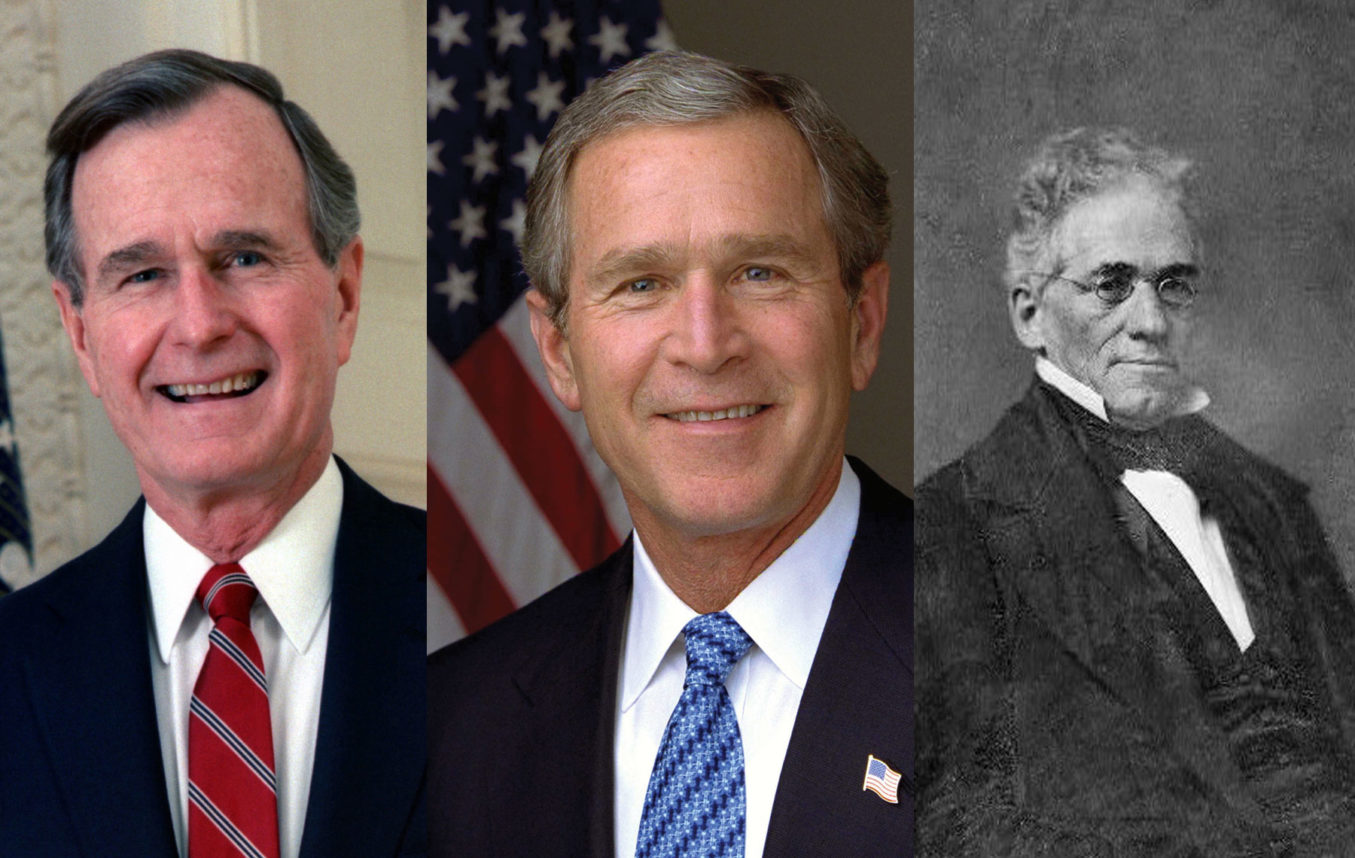
Little noted in the remem-brances of former President George H.W.  Bush, including his loving eldest son’s, former President George W. Bush, is their namesake ancestor, professor George Bush (1796-1859), the distinguished 19th-century pioneer of Christian Zionism.

The scholar said of the Jewish people: “The dispersed and downcast remnant shall, one after another, turn their faces to Zion … find their way to the land of their fathers. … This will not only benefit the Jews, but all mankind, forming a link of communication between humanity and God.”

Professor Bush asserted this vision long before the activities of the founder of the modern Zionist movement, Theodor Herzl, and before the rise of the Zionist movement among world Jewry.

Bush was an ordained Presbyterian minister who became a professor of Hebrew and Oriental literature at New York University. His biblical scholarship convinced him of the prophecies foretelling the people of Israel’s return to their land.

In 1844, the professor published his studies in a landmark book, “The Valley of Vision: or, The Dry Bones of Israel Revived,” rooted in the prophecies of Ezekiel in the Bible. “The Valley of Vision” sold more than 1 million copies, a publishing rarity before the Civil War. It turned Bush into a national voice calling for the restoration of the Jewish people to their historic homeland.

His writings had a deep impact in shaping the public’s views about the Jews and their ancestral homeland, including informing author Mark Twain and Presidents Abraham Lincoln, Woodrow Wilson and Theodore Roosevelt.

Bush and other courageous voices of Christian Zionism set the stage for America, a century later, to be the first country to recognize the reborn State of Israel and to remain its steadfast ally in the decades since.

Although President George H.W. Bush (41) and his advisers James Baker and Brent Scowcroft, particularly, had some rough moments vis-a-vis Israel, namely confronting the Israeli government and halting funding for refugee resettlement, Bush 41 went out of his way to assist in the liberation and rescue of Ethiopian Jewry. His advisers were deeply troubled by the Jewish left and the ideological partisanship of American Jewry. Though President Ronald Reagan had warm support in the American Jewish community, his successor did not.

However, by the time President George W. Bush (43) came into office, the son had a deeply pro-Israel perspective, famously underscored in his helicopter ride over the Israeli landscape, where he saw how tiny the waist of Israel was and how endangered it was by its enemies. He remarked, “We have driveways in Texas longer than Israel’s width.”

Bush 43’s grandfather, Connecticut Sen. Prescott Bush, like elder statesman Ambassador Joseph Kennedy in the 1930s, was closer to the German government and the Arab nations than to the victimized pre-Israel European Jewish community. But, like President John F. Kennedy and his brother Sen. Robert F. Kennedy, who was murdered by a Palestinian Arab in Los Angeles for being “too supportive of Israel,” President Bush 43 grew to respect Jewish history and to adopt the original and classic philo-semitism, restorationism and Christian Zionism of his namesake ancestor.

In the two-term presidency of George W. Bush, American Jews and Israelis alike came to admire his deeply affectionate moral commitment to the longstanding strategic alliance between the United States and the restored Jewish state.


Larry Greenfield is a fellow at the Claremont Institute for the Study of Statesmanship and Political Philosophy.

On 41, 43 and the Original George Bush Read More »

Poem: Got a Light?

1. This light’s for Hanukkah …
for a people who choose to begin
our best of days with light.
What special Jewish day
doesn’t start with an open flame?

2.  This light’s for the Dreidel…
for the great miracle that
happened there, unless
you happen to be there
where it’s changed to here
because we’re inclusive like that.

3. This light’s for latkes …
Potato pancakes
because everything good
begins and ends
with potatoes.

4. This light’s for Sufganiyot …
Jelly doughnuts. Not quite as popular
as latkes in all the official surveys
but, really, who can complain
when a doughnut comes along?

5. This light’s for oil …
Be careful, it’s flammable!
Bad for you in every way!
But fry anything in it and the
memory of that miracle
flies back into our hearts.

6. This light’s for Maccabees …
Judah and his whole crew.
When the not really elected leaders
started to pooh-pooh everything
they risked life and limb
for all these lights. Stand up
like a Judah, my friends.

7. This light’s for the shamash
Doesn’t take a night off.
Does the essential work that
lets the other eight shine.
Be the shamash you wish
to see in the world.

8. This light’s for miracles …
It doesn’t matter if a great miracle
happened here or there
just that you believe that one
could happen at all.
How many miracles are you missing?

Got a light?


God Wrestler: a poem for every Torah Portion by Rick LupertLos Angeles poet Rick Lupert created the Poetry Super Highway (an online publication and resource for poets), and hosted the Cobalt Cafe weekly poetry reading for almost 21 years. He’s authored 21 collections of poetry, including “God Wrestler: A Poem for Every Torah Portion“, “I’m a Jew, Are You” (Jewish themed poems) and “Feeding Holy Cats” (Poetry written while a staff member on the first Birthright Israel trip), and most recently “Donut Famine” (Rothco Press, December 2016) and edited the anthologies “Ekphrastia Gone Wild”, “A Poet’s Haggadah”, and “The Night Goes on All Night.” He writes the daily web comic “Cat and Banana” with fellow Los Angeles poet Brendan Constantine. He’s widely published and reads his poetry wherever they let him.

Poem: Got a Light? Read More »