fbpx

‘Avengers: Infinity War’ and the Power of Evil

[additional-authors]
May 9, 2018

One of the most endearing elements of superhero stories is that the good guy always wins, but in the real world, that’s not always the case.

SPOILERS AHEAD!

That’s why the ending of “Avengers: Infinity War” is so shocking, because Thanos — the bad guy — wins. I keep thinking about sweet Peter Parker, moody teen Groot, and all the other casualties of the Infinity Gauntlet. But most of all, I find myself thinking about how Thanos — the embodiment of evil — could win. There has to be a mechanism within the Marvel Cinematic Universe that explains this.

I think the answer is in the Torah in the story of Korah’s rebellion. Moses and Aaron led the Israelites from Egypt to the Holy Land. Moses was the de facto king and Aaron the high priest. Korah, a Levite, led a rebellion challenging the authority of his cousins Moses and Aaron to exclude him from the priesthood.

A contest of competing sacrificial fire pans determined the victor. The moment of truth arrives and God commands Moses and Aaron to separate from the group. Then, a Godly fire consumes Korah and his rebellion forces. Adding insult to injury, the ground opens and swallows them whole.

Reb Tzadok of Lublin (1823-1900) writes that God commanded Moses and Aaron to leave the area because the rebels had a special power that could have defeated them. Had they stayed with the group, they, too, would have been consumed by the fire. The good guys would have lost.

One who has pure intentions and is willing to give everything he or she  has to a holy cause — even a cause that is not correct — is given this superpower.

What were the rebels special powers? Reb Tzadok says it was their pure intentions and willingness to sacrifice everything for a holy cause. Incredibly, the rebels wielded this power even though they were wrong. One who has pure intentions and is willing to give everything he or she has to a holy cause — even a cause that is not correct — is given this superpower.

That explains Thanos. He had to exchange the life of a true love for the Soul Stone. His adopted/kidnapped daughter Gamora laughs when she hears this condition because she believes that Thanos is so evil that he has no true love. But Thanos begins to cry and it quickly dawns on Gamora that she is going to be the sacrifice. Thanos throws her into the abyss and the stone appears.

Thanos is not purely genocidal. He is a utilitarian fundamentalist. He truly believes that it is best for the universe that he erase half the population. We call this a holy cause.

Thanos was willing to sacrifice his true love for the sake of his holy cause. There’s great power in these things. Thanos completes the Infinity Gauntlet and with a snap of his finger uses his power to murder fifty percent of all living things, leaving us to marvel and mourn the loss of several beloved superheroes. Such is the power of giving everything we have to a holy cause.

Eli Fink is a rabbi, writer and managing supervisor at the Jewish Journal.

Did you enjoy this article?
You'll love our roundtable.

Post-Passover Pasta and Pizza

What carbs do you miss the most during Passover? Do you go for the sweet stuff, like cookies and cakes, or heartier items like breads and pasta?

Freedom, This Year

There is something deeply cyclical about Judaism and our holidays. We return to the same story—the same words, the same questions—but we are not the same people telling it. And that changes everything.

A Diary Amidst Division and the Fight for Freedom

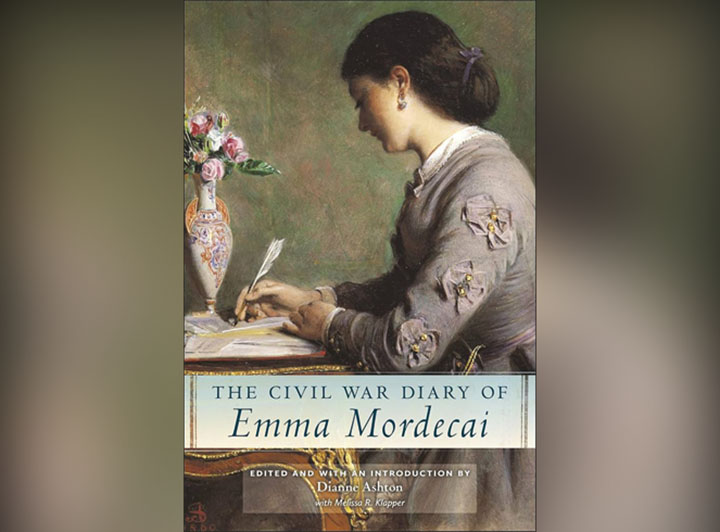
Emma’s diary represents testimony of an America, and an American Jewish community, torn asunder during America’s strenuous effort to manifest its founding ideal of the equality of all people who were created in the image of God.

More than Names

On Yom HaShoah, we speak of six million who were murdered. But I also remember the nine million who lived. Nine million Jews who got up every morning, took their children to school, and strove every day to survive, because they believed in life.

Gratitude

Gratitude is greatly emphasized in much of Jewish observance, from blessings before and after meals, the celebration of holidays such as Passover, a festival that celebrates liberation from slavery, and in the psalms.

Freedom’s Unfinished Journey

The seder table itself is a model of radical welcome: we are told explicitly to invite the stranger, to make room for those who ask questions and for those who do not yet know how to ask.

Thoughts on Security

For students at Jewish schools, armed guards, security gates, and ID checks are now woven into the rhythm of daily life.

Can Playgrounds Defeat Antisemitism?

The playground in Jerusalem didn’t stop antisemitism, and renovating playgrounds in New York City is not likely to stop it there, either — because antisemitism in America today is not rooted in a lack of slides or swings.

America First and Israel

As Donald Trump continues to struggle to explain his goals there, his backers have begun casting about for scapegoats to blame for the president’s decision to enter the war. Not surprisingly, a growing number of conservative fingers are now pointing at Benjamin Netanyahu.

Defending Israel in an Age of Madness

America’s national derangement poses myriad challenges to those not yet caught up in it. The anomie is daunting enough for the general public — if that term still makes sense in this fragmented age — and it is virtually insurmountable for the defenders of Israel.

By the Time You Read This … Who Knows?

You could despise Trump and believe he has bungled every aspect of this war and still recognize the immense value of degrading the threat of a genocidal regime that is rabidly anti-American.

Jewish Rapper Hosts a Seder on NYC Subway Car

The April 1 pop-up, coinciding with the first night of Passover, drew notable attendees including Princess Superstar, a Jewish rapper, singer and DJ; New York City-based Rabbi Arielle Stein; and Yiddish singer Riki Rose.

The Jewish Kingdom of Southern Arabia

The tale of Himyar reminds us of the ongoing Jewish presence in the Middle East, its important history, but also of the danger of religion interwoven with state politics.

How Do We Regain Our Mojo?

How a Mark Twain passage at our Passover seder led me to reflect on the themes of envy and Jewish self-esteem.

More news and opinions than at a Shabbat dinner, right in your inbox.