It’s common knowledge that “unscripted” “reality TV” is far from real. Ironically, modern scripted television is often critically acclaimed because of how real the shows feel — more real than any reality TV.
Indulging in entertainment through television and film can be a temporary escape from the struggles of our daily lives. Entertainment at its best, however, can provide commentary or insight into our struggles and the struggles of others. Fiction has the power to illuminate the darkness of our world, to see our concerns validated on a screen, to comfort us.
I was initially dismissive toward a show on Netflix, a remake of “One Day at a Time,” because I assumed it was just another sitcom with an overtly ethnic family scoring laughs by playing off stereotypical foibles and quirks in their culture.
But I was wrong.
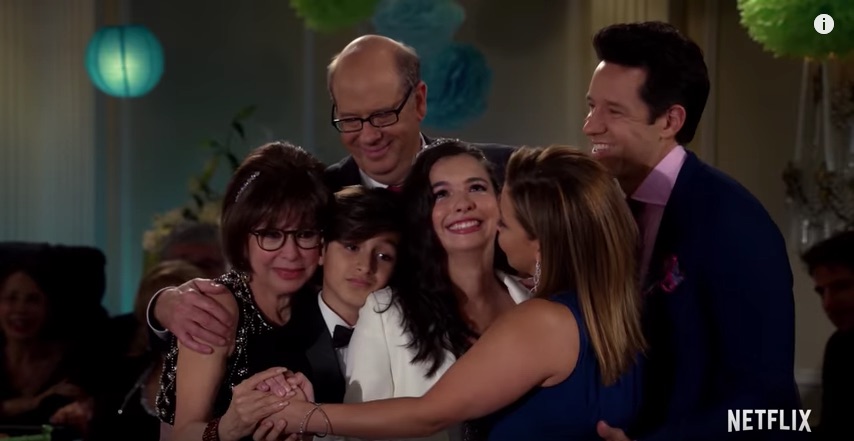
Norman Lear’s remake is one of the realest shows you can watch these days. Lear is legendary for his uncanny talent at weaving social and political issues into sitcoms. The “One Day at a Time” reboot is about a Cuban-American family — an immigrant grandmother played by Rita Moreno, an American-born daughter, her two teenage children, and a trust-fund man-child who manages their Los Angeles apartment building. The show is hilarious, but that’s not what makes it remarkable.
There are nearly as many arguments in a “One Day at a Time” episode as there are in a typical tractate of Talmud.
In addition to the episodic story arc, almost every episode in Season Two deals with a social issue. In the season premiere, some teenage bullies tease the 14-year-old boy with racial slurs, including a chant of “build the wall.” That episode deals poignantly with racism and xenophobia. Later in the season, the show tackles the importance of voting and the struggles of immigration, as well as PTSD and gun ownership.
Humor keeps it light, but the substantive material is heavy and deep. The deepest are two consecutive episodes in the middle of the season. The first is about homophobia and the struggle of families torn apart by the challenges of discovering one’s son or daughter is gay. The very next episode deals with mental health and the struggles of anxiety and depression.
“One Day at a Time” integrates social issues into its humor and drama beautifully — but the magic is that it does so without preaching or grandstanding. Divisive issues are written about with wit and empathy. Characters disagree and argue — a lot. But they know how to talk with one another and, more importantly, they know how to listen.
There are nearly as many arguments in a “One Day at a Time” episode as there are in a typical tractate of Talmud. Like the Talmud, the arguments can be heated and they are not always resolved with an agreement, but through the process of arguing with love, without hate or fear, nearly every argument ends with a closer relationship between the characters. The secret ingredient, of course, is empathy. Some of the best moments in the show are a variation of “I don’t necessarily agree with you, but I am here for you, and will always love you.”
It is too easy to divide America into groups of conformity and nonconformity, Black and white, religion, gender, politics, age or region. If we are honest, we acknowledge that we are divided, just like the characters in “One Day at a Time.” We disagree. We argue. We fight. But we are a family — and family is family — even when we are at each other’s throats. With family, it is empathetic disagreement.
America, at its best and highest and deepest, is family. This is not literally true, but it is the noble promise of our great country. When one of us falls, one of us should be there, just like family.
“One Day at a Time” is honest. It is honest about the ills and flaws of America today. It is honest about immigration, about LGBT issues, about multiculturalism, about aging, about privilege, about marriage. Its unabashed honesty makes “One Day at a Time” more real than reality TV.
But in its honesty, it also shows us a way forward — disagreement with empathy. In its entertaining way, it embodies a ray of hope in our dark winter of discontent. If we listen carefully, maybe can emulate the show, one day at a time.
Eli Fink is a rabbi, writer and managing supervisor at the Jewish Journal.