fbpx

February 14, 2018

17 Dead in Florida High School Shooting

At least 17 people have been confirmed dead from a shooting at a high school in Florida and 14 others were injured.

The suspect, identified as 19-year-old Nikolas Cruz, reportedly pulled the fire alarm at Marjory Stoneman Douglas High School in Parkland, FL at around 2:40 pm, the time that school gets out. Cruz allegedly opened fire both inside the campus and outside the campus; the campus was put onto a Code Red lockdown until the shooter was apprehended.

Twelve of the murdered victims were shot dead inside the school, two died outside the school and two others died in the hospital.

A number of harrowing accounts of what occurred at the school have been shared by various students. Freshman Jason Snytte told NBC News that he was in class when they heard gunshots blaring, prompting them to shut the door and gather in a corner until they were evacuated by police.

“We were all freaking out,” Snytte said. “Our hearts were racing.”

Another student, 14-year-old Hannah Siren, tearfully described to the Sun-Sentinel how 7-10 people were shot in the classroom next to hers.

“The people next door to us must have not locked their door,” Siren said. “They all got shot.

Students who were outside thinking that the fire alarm had gone off as part of a fire drill bolted as soon as they heard the gunshots; some had to jump the fence to escape.

“Everyone was kind of just standing there calm, and then we saw a bunch of teachers running down the stairway, and then everybody shifted and broke into a sprint,” junior Noah Parness told CBS News. “I hopped a fence.”

Devral Walton, mother of 15-year-old student Meghan Walton, told the Sun-Sentinel that she saw students “running out full of blood.”

“Kids were falling in the grass,” Walton said.

Here are a couple of videos from inside the school during the shooting:

https://twitter.com/Melody_Ball/status/963899789070028800

https://twitter.com/Breaking911/status/963892402560884742

Cruz had previously been expelled from the school; he reportedly threatened students and was eventually told that he could not return to the campus with a backpack. Some students who knew him had been predicting that he would eventually become a school shooter. Others described him as a loner who was not socially accepted by anyone in the school.

One student claimed that Cruz once wore a Trump hat and made derogatory comments about Islam.

Cruz’s social media accounts show multiple pictures of guns and knives; according to Fox News he had been “following resistance groups, like Syrian Resistance groups and fighter groups out of Iraq and, we should also note that a couple days ago, as far as a week ago, that he was involved in a YouTube chat room conversation about bombs or building bombs.”

The weapon that Cruz reportedly used was an AR-15 and he carried multiple magazines. The school itself is a gun-free zone.

President Trump tweeted his condolences:

17 Dead in Florida High School Shooting Read More »
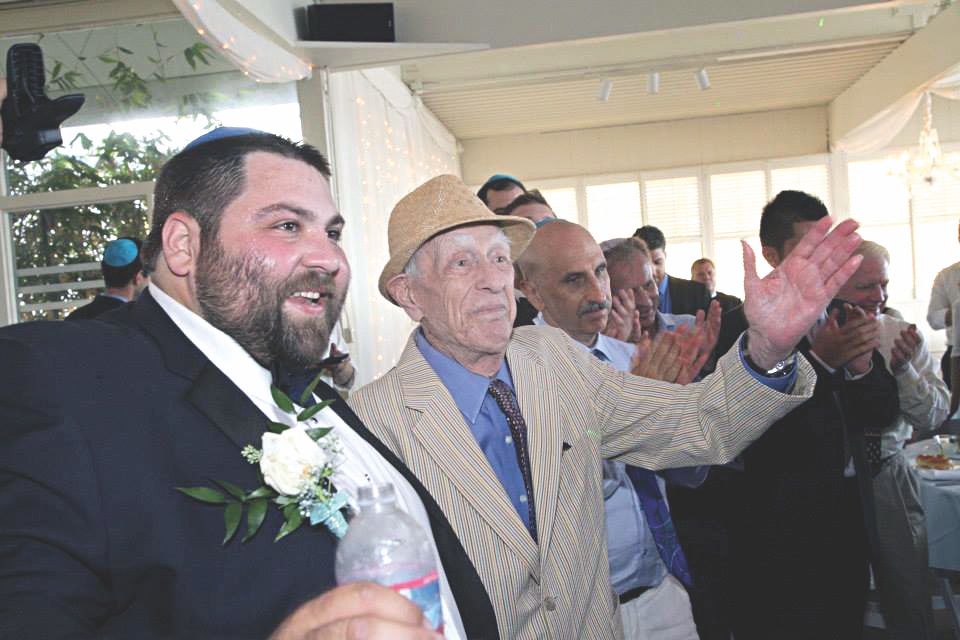
Remembering Shelley Berman

The music blared as friends and family gathered around to welcome my bride and me. As we walked from the yichud room to the social hall, someone joined my side: an old man. He was not my grandfather, as most of the guests thought. He was the legendary comedian Shelley Berman.

Although he was 90 years old, Berman was keeping up with everyone, dancing to the loud Israeli music with his cane up in the air, and smiling from ear to ear. He was the life of the party on the dance floor.

I first met Berman in 2014, when I was fortunate enough to have the opportunity to interview him on my podcast. After the interview, Berman and his wife, Sarah,  invited my wife and me to look at Berman’s impressive knife collection and have some tea. We talked about how Sarah converted to Judaism, and how my wife, Kylie Ora Lobell, was in the process of doing the same. It turned out, in fact, that we all had a lot in common, and an instant friendship was born.

As a new couple in Los Angeles looking for another couple to hang out with, we had finally found our match. It just so happened that they were a few years older than we were.

They told us to stay in touch and we did. We drove up to Shelley and Sarah Berman’s house a few more times for lunch and became a fixture at their holiday party every Hanukkah. When Kylie and I got married in the summer of 2015, Sarah and Shelley Berman were there with their daughter, Rachel, celebrating with us.

The following Rosh Hashanah, Shelley Berman came to our festive meal along with his daughter and two grandsons. He had us all laughing throughout the holiday. He showed us how he ate pomegranates by first rolling them against the table to loosen the skin and then just biting into them. He said that nothing made him happier than a good pomegranate on Rosh Hashanah.

In fact, Rosh Hashanah was one of Shelley’s favorite days of the year, so much so that he had written a poem about the sounding of the shofar is his book “To Laughter With Questions: Poetry by Shelley Berman.”

The next time I was to hear this poem was sadly at Berman’s funeral; he died in Southern California on Sept. 1, 2017, at 92. The Chabad rabbi presiding over the funeral read it aloud, because it had been a gift to him from Berman, and Rosh Hashanah was only a few weeks away.

On Jan. 30, 2018, droves of people, including Kylie and me, went to the Comedy & Magic Club in Hermosa Beach to celebrate Berman’s life and career with a memorial service. We heard from his contemporaries, friends and family, such as the host of the event, comedian Lewis Black, comedian George Carlin’s daughter, Kelly Carlin, producer and writer Alan Zweibel, and comedians Laraine Newman and Fred Willard, who brought down the house with a story about the two of them grand marshaling a Hollywood parade. In attendance were many of Berman’s co-stars, including actors Larry David and Cheryl Hines, and comedians who wanted to pay their respects. Sarah Berman closed the afternoon by talking about their loving 70-year relationship.

Most people will remember Shelley Berman for his work on the comedy series “Curb Your Enthusiasm,” on which he portrayed Larry David’s father, Nat David. Or perhaps the older generation will remember his many television performances and famous telephone routine. Maybe he will be remembered for being the first comedian to win a Grammy for a comedy album, his 1959 work “Inside Shelley Berman,” and for changing the face of stand-up comedy.

I will remember him for being a mensch and a great friend.


Danny Lobell is a stand-up comedian.

Remembering Shelley Berman Read More »

‘Lioness’ Details Golda Meir’s Fight

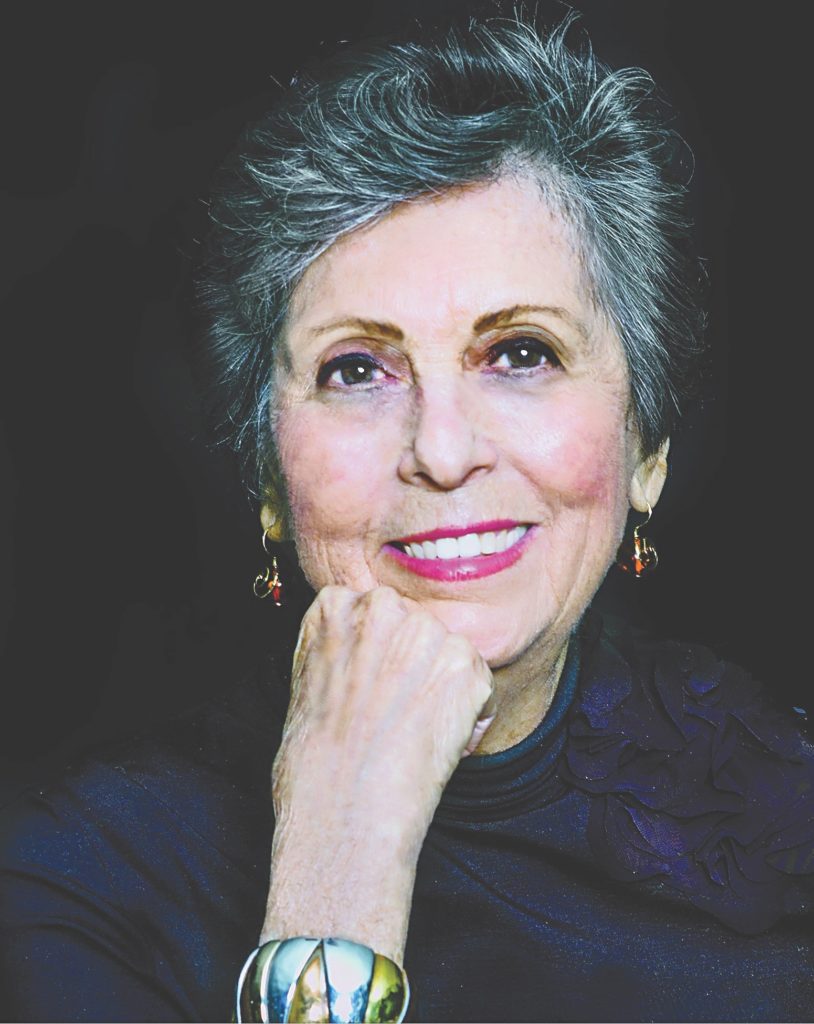
Francine Klagsbrun is a prolific author and columnist who has written more than a dozen books on topics ranging from Shabbat to marriage. Her most recent work, “Lioness: Golda Meir and the Nation of Israel,” is her most ambitious. The book’s 800-plus pages reflect the many years Klagsbrun spent researching the State of Israel’s first and only female prime minister, whom she depicts as both tough and tender. “She was unyielding in defending her nation, a formidable foe to anyone out to harm her people,” Klagsbrun writes. “She was also everyone’s loving grandmother.”

The book is an audacious attempt to reclaim Meir’s legacy from the stain of the Yom Kippur War and present her as one of Israel’s most accomplished and competent leaders. It was recently named Book of the Year at the National Jewish Book Awards.

Jewish Journal: Why did you choose “lioness” to describe Golda Meir?

Francine Klagsbrun: As a feminist, I don’t ordinarily use the diminutive, so I really struggled with that. But I think she’s so encapsulated by the idea of a female lion who protects her cubs. If anyone gets near her cubs and tries to hurt them, she’ll rip them to pieces. And that was Golda, protecting that country.

JJ: She remains the only female prime minister in Israel’s history. Do you attribute her emergence to that office to Israel’s progressivism or to her exceptional gifts?

FK: Israel was somewhat progressive, but not that much. Women served in the army, but many women felt and still feel that there is great sexism in the army. Women in the army did not get the positions men did. Golda made herself indispensable. She really worked her way up into the society of men. She was a smart woman and she was very competent. She would have gotten ahead no matter what.

JJ: And yet, she didn’t consider herself a feminist. In fact, she was quite dismissive of the feminist movement.

FK: Golda viewed everything within the socialist sphere — everything was “we.” She was not concerned about the individual or individual human rights, but for society as a whole. I think she saw feminism as another movement for an individual group when she was looking out for all of society.

JJ: You write about her very modest roots, having grown up the daughter of a carpenter. How did that early experience of penury shape her?

FK: Socialism was so much a part of her. She truly cared about the poorest people. And she never got corrupted. All those early Israeli leaders lived very modestly — Ben-Gurion, Levi Eshkol. They were not out to become rich. They were out to create a state that provided for everybody. A shop owner told me Golda once saw a red dress in the window, and she liked this red dress but she wouldn’t buy it unless he lowered the price. She believed in her parents’ values, which is that money is not what is important in life, it’s how you live and what you do.

JJ: Golda remains beloved by American Jews, but the Yom Kippur War really tarnished her legacy in Israel, since more soldiers were killed in that war than any other. How did she fail?

FK: Her failing was that she didn’t listen to her own instincts. She depended too much on her generals. Now the question would be, would any other leader have done differently? Would a male leader say, “To hell with my generals, I’m going to follow my instincts”? I doubt it.

JJ: Golda is often quoted for denying the existence of the Palestinians. Why would she have said that?

FK: At that time, there was no Palestinian national movement. When Golda and other Jews first came to Palestine, they were called Palestinians. Her passport called her Palestinian. That is how it was at the beginning. [The people we think of today as Palestinian], back then they called them Arabs.

JJ: How do you think she’d handle the conflict if she were alive today?

FK: It probably would have taken her some time, but I think she was pragmatic enough and understanding enough that she would have tried to make peace with the Palestinians. I don’t think she would approve of a lot of what [Israeli Prime Minister Benjamin] Netanyahu does.

JJ: What’s the biggest misconception about her?

FK: [laughs] That she was a man and not a woman. You know there’s that famous line that Ben-Gurion said: “She’s the only man in the cabinet.” And she was masculine in some ways, but she cared about feminine things. According to people I spoke with, she would do a lot of her best thinking as she brushed her hair.

JJ: Describe her relationship to Judaism.

FK: Golda was a secular Jew. She was not religious, but she was traditional. She was once asked, “Do you believe in God?” And she said, “I don’t believe in God — I believe in the people who believe in God.” She believed in the Jews. She loved the Jews.

‘Lioness’ Details Golda Meir’s Fight Read More »

The Magic of Empathy

It’s common knowledge that  “unscripted” “reality TV” is far from real. Ironically, modern scripted television is often critically acclaimed because of how real the shows feel — more real than any reality TV.

Indulging in entertainment through television and film can be a temporary escape from the struggles of our daily lives. Entertainment at its best, however, can provide commentary or insight into our struggles and the struggles of others. Fiction has the power to illuminate the darkness of our world, to see our concerns validated on a screen, to comfort us.

I was initially dismissive toward a show on Netflix, a remake of “One Day at a Time,” because I assumed it was just another sitcom with an overtly ethnic family scoring laughs by playing off stereotypical foibles and quirks in their culture.

But I was wrong.

Norman Lear’s remake is one of the realest shows you can watch these days. Lear is legendary for his uncanny talent at weaving social and political issues into sitcoms. The “One Day at a Time” reboot is about a Cuban-American family — an immigrant grandmother played by Rita Moreno, an American-born daughter, her two teenage children, and a trust-fund man-child who manages their Los Angeles apartment building. The show is hilarious, but that’s not what makes it remarkable.

There are nearly as many arguments in a “One Day at a Time” episode as there are in a typical tractate of Talmud.

In addition to the episodic story arc, almost every episode in Season Two deals with a social issue. In the season premiere, some teenage bullies tease the 14-year-old boy with racial slurs, including a chant of “build the wall.” That episode deals poignantly with racism and xenophobia. Later in the season, the show tackles the importance of voting and the struggles of immigration, as well as PTSD and gun ownership.

Humor keeps it light, but the substantive material is heavy and deep. The deepest are two consecutive episodes in the middle of the season. The first is about homophobia and the struggle of families torn apart by the challenges of discovering one’s son or daughter is gay. The very next episode deals with mental health and the struggles of anxiety and depression.

“One Day at a Time” integrates social issues into its humor and drama beautifully — but the magic is that it does so without preaching or grandstanding. Divisive issues are written about with wit and empathy. Characters disagree and argue — a lot. But they know how to talk with one another and, more importantly, they know how to listen.

There are nearly as many arguments in a “One Day at a Time” episode as there are in a typical tractate of Talmud. Like the Talmud, the arguments can be heated and they are not always resolved with an agreement, but through the process of arguing with love, without hate or fear, nearly every argument ends with a closer relationship between the characters. The secret ingredient, of course, is empathy. Some of the best moments in the show are a variation of “I don’t necessarily agree with you, but I am here for you, and will always love you.”

It is too easy to divide America into groups of conformity and nonconformity, Black and white, religion, gender, politics, age or region. If we are honest, we acknowledge that we are divided, just like the characters in “One Day at a Time.” We disagree. We argue. We fight. But we are a family — and family is family — even when we are at each other’s throats. With family, it is empathetic disagreement.

America, at its best and highest and deepest, is family. This is not literally true, but it is the noble promise of our great country. When one of us falls, one of us should be there, just like family.

“One Day at a Time” is honest. It is honest about the ills and flaws of America today. It is honest about immigration, about LGBT issues, about multiculturalism, about aging, about privilege, about marriage. Its unabashed honesty makes “One Day at a Time” more real than reality TV.

But in its honesty, it also shows us a way forward — disagreement with empathy. In its entertaining way, it embodies a ray of hope in our dark winter of discontent. If we listen carefully, maybe can emulate the show, one day at a time.


Eli Fink is a rabbi, writer and managing supervisor at the Jewish Journal.

The Magic of Empathy Read More »

A Fresh Look at Jewish Weddings

Before Anita Diamant wrote herself into Jewish literary stardom with her best-selling and much-loved novel “The Red Tent,” she was already an accomplished writer of both fiction and non-fiction. One of those books was “The New Jewish Wedding,” which has now been brought fully up to date and published as “The Jewish Wedding Now.” Her admiring readers will not be surprised to learn that Diamant has taken a fresh new look at the ancient traditions of Jewish marriage. After all, she did the same thing with the biblical story of Dinah in “The Red Tent.”

“When ‘The New Jewish Wedding’ was first published in 1985,” Diamant explains, “just the words Jewish wedding summoned up the vanished world of ‘Fiddler on the Roof’ or the extravagant excess of ‘Goodbye, Columbus.’ ” The newly published edition, however, reflects “a new appreciation for the rituals, cuisines, music, and customs of other Jewish communities,” including “Jews of color, LGBTQ Jews, and those with roots in other countries and cultures.”

Diamant is respectful of tradition but always is willing to entertain new ideas about what it means — and what it feels like — to be a Jewish bride and groom. “Under the huppah, time dissolves. All the lists and decisions about where, when, what to wear and whom to invite: it all recedes into a radical now,” she rhapsodizes. “Your wedding takes place in the same time zone as the first wedding, when God braided Eve’s hair and stood with Adam as a witness.”

Like every aspect of Judaism, much of what we understand to be authentic and essential is actually an accretion of observance and practice that has built up over centuries and millennia. A kosher wedding, she explains, really only requires that “the bride accept an object worth more than a dime from a groom; the groom recites a ritual formula to consecrate the transaction; these actions must be witnessed by two people who are not related to either bride or groom. That’s it.”

All the rest — even the breaking of a glass, the seven blessings and the presence of a rabbi — are customs (minhagim) that have come to be embraced by Jews over time. “The nostalgic fantasy that there was once a standard, universal, and correct way to do a Jewish wedding ignores the differences in everything from clothes to the fact that for centuries some Jews practiced polygamy,” she boldly points out.

While Diamant can appreciate the value of both nostalgia and fantasy, she is also willing to confront her readers with the realities of Jewish weddings in the 21st century. “How do we arrange the processional with two sets of divorced parents in the mix?” she wonders. Even more problematic are the challenges faced by wedding couples of the same gender or couples that include a Jew and a non-Jew. But she has practical solutions to every question she raises, and she insists that “[a] Jewish wedding connects every couple under every huppah to a language of holiness, to a living history, and to a diverse and vital culture.”

Indeed, Diamant overlooks no aspect of the wedding. For example, she provides suggested wording for the invitation and the ketubah (wedding contract), and she illustrates the book with examples of especially artful ketubot. Significantly, the sample ketubot include egalitarian, mystical and romantic variants of the document. She even acknowledges that some couples seek to avoid “gendered modes of dress,” and suggest that both can wear the short white robe called a kittel or drape themselves in prayer shawls.

“Your wedding takes place in the same time zone as the first wedding, when God braided Eve’s hair and stood with Adam as a witness.” — Anita Diamant

Mindful of the aphorism “Two Jews, three opinions,” Diamant offers solutions for problems that many readers will not even have considered. The two witnesses who must participate in a kosher Jewish wedding are meant to be observant Jews, but that’s a debatable point among Jews. “A person who is considered observant by some will be a heretic to others,” she writes, “so to avoid discord it became customary for the rabbi and the cantor or other community leader to serve as witnesses.” She also defers to the presiding rabbi on other points of potential friction. “No religious rule forbids photography or videography under the huppah, but this is something to clear with your rabbi.”

Not coincidentally, Diamant devotes a chapter to the traditional visit of the bride to the ritual bath called the mikveh. As it happens, she is the founding president of Mayyim Hayyim, a community mikveh in the Boston area where she lives. “For centuries, Jewish brides have immersed to prepare for their wedding nights, traditionally the beginning of sexual intimacy and also the start of monthly immersions following menstruation,” she writes. “Today, the pre-wedding mikveh has been embraced by the larger Jewish community that has recognized and reclaimed the beauty of the ritual.”

When she describes the wedding processional, she delicately refers to “the complexity of modern families,” that is, the divorced and remarried parents and children from previous or subsequent marriages whose presence requires “alternative choreography” when it comes to who will walk down the aisle with the bride and groom. Always practical and flexible, Diamant proposes that “[i]f there are too many competing claims, the couple can avoid conflict by entering side by side.”

Diamant describes the moment when we step under the huppah as “that crazy-sacred now at the heart of every wedding.” Clearly, the book is the single best gift that you could give to anyone contemplating or planning a Jewish wedding, far more practical and inspiring than a toaster oven. But the book is not just for the betrothed. “The Jewish Wedding Now” offers a surprising new look at an ancient rite for every curious reader.


Jonathan Kirsch, book editor of the Jewish journal, is the author of “The Harlot by the Side of the Road,” among other titles.

A Fresh Look at Jewish Weddings Read More »

Abrams Is ‘All In’ With Louisville Orchestra

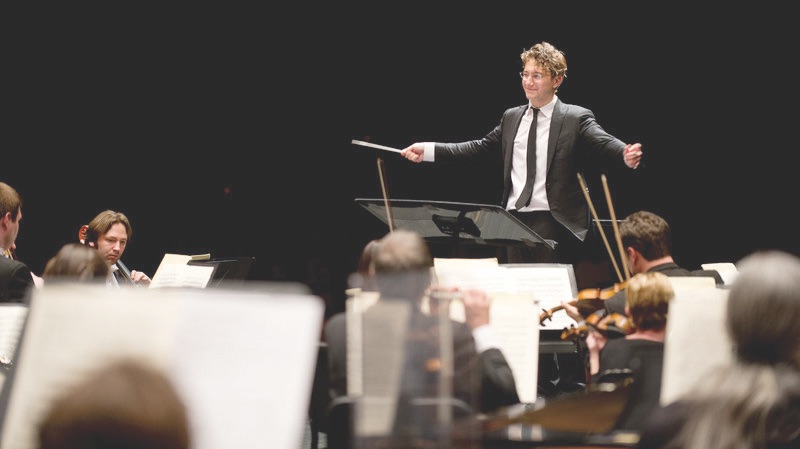
How does a nice Jewish boy from the San Francisco Bay Area end up in Louisville, Ky.? Just ask Teddy Abrams, the dynamic music director of the once-storied Louisville Orchestra who has an upcoming debut with the Los Angeles Philharmonic. When he took the orchestra’s reins in 2014, at the age of 27, the conductor-composer faced many challenges, including dealing with a dispirited organization that recently had emerged from bankruptcy and a long-fallow performance period.

Now, more than three years into his tenure, Abrams is seeing a turnaround in the orchestra and the Louisville community. The musicians have a new contract, ticket sales are up, and the subscriber and donor bases have doubled.

“It’s a different organization,” Abrams said by phone from his home in Louisville, adding he didn’t know much about the city, except that Jerry Abramson, a Jew, had served as mayor in the 1980s and ’90s.

“I knew bourbon came from here and the Kentucky Derby ran here,” he said. “It’s a tolerant, nonjudgmental place. There’s a beautifully ingrained Jewish population and identity, one of the oldest in America, and one that’s very involved in the arts and culture.”

Abrams’ career is poised to take a leap when he makes his debut with the L.A. Philharmonic at Walt Disney Concert Hall on March 2 and 3, conducting the U.S. premiere of Andrew Norman’s whimsical opera, “A Trip to the Moon,” directed by Yuval Sharon.

Simon Rattle led the Berlin Philharmonic in the work’s premiere last June, but Abrams said changes have been made since then. “The L.A. production has been trimmed, a few roles modified, and there are updates to the staging and integration of the children’s components,” Abrams said.

“Norman creates a hybrid art form — film, drama, highly original and creative music,” Abrams continued. “The opera’s almost like a Pixar animation film and should immediately appeal to all ages.”

For now, Abrams is heartened by the positive response the Louisville Orchestra’s recent Decca Gold album, “All In,” has received. The revitalized ensemble’s first recording in almost 30 years, it reached No. 1 on Billboard’s Traditional Classical chart. The album features two of Abrams’ works: a colorful orchestral piece, “Unified Field,” and “The Long Goodbye,” which is given a swing-era vibe by a Louisville favorite, chanteuse Storm Large.

“The kind of music I love takes many different forms,” Abrams said. “I prefer looking for the interconnections between various styles of music, which is what ‘Unified Field’ is all about.”

“You name a genre or venue, from a café to a homeless shelter, and I’ve been there.” — Teddy Abrams

The recording’s grand finale features Abrams as the soloist in Aaron Copland’s Clarinet Concerto, a 1948 score commissioned by Benny Goodman. Incidentally, Abrams, who also is a fine keyboard player, began studying the concerto when he was 12 with Michael Tilson Thomas, the San Francisco Symphony’s music director.

“We worked on the opening of the concerto — that slow part — worked on those first couple of measures over and over again,” Abrams recalled. “Michael took a very talmudic approach. It wasn’t about doing it ‘right,’ because there isn’t just one way. It was about having a relationship with the music.”

Abrams, who guest conducts the New World Symphony in Miami Beach and also is music director of the Britt Music & Arts Festival in Oregon, grew up performing klezmer music. He was 10 when he performed in an amateur klezmer musical based on the tragic 1911 Triangle Shirtwaist Factory fire in New York.

Just as unusual was Abrams’ first gig with his Sixth Floor Trio about nine years ago, which featured fellow graduates of the Curtis Institute of Music in Philadelphia. “We were playing klezmer music with Marvin Hamlisch for a temple fundraiser in the middle of North Carolina. You can’t make this stuff up.”

For Abrams, music is about being “all in” — as the album title aptly puts it — and thrives best as a communitywide endeavor.

“You name a genre or venue, from a café to a homeless shelter to the rock festival here, and I’ve been there,” he said, “dragging my keyboard and performing.”

Abrams Is ‘All In’ With Louisville Orchestra Read More »

The Joy of Neon

For many of us, Canter’s Deli stands as a cultural and gustatory icon, beckoning with its pastrami, its hefty helpings of nostalgia and its bustling feeling of being “back East.” For Los Angeles artist Dave Lefner, the deli was a magnet for an entirely different reason: all that neon.

Lefner creates beautiful, soft-hued prints of vintage neon signs, using a reduction linocut technique refined by Picasso. Canter’s was an early inspiration. “When I first started making art 25 years ago, I’d make pilgrimages to Canter’s,” he said. “It’s got everything you want. Great ’50s fonts, a cheerful neon chef. It’s basically a mecca for neon lovers.”

People may think of neon as a nighttime affair, but Lefner photographs signs at dawn and dusk, when shadows are longest. From these photos, he creates a charcoal drawing, which he then flips and rubs onto a block of linoleum to transfer the image.

To make the print, he carves into the linoleum using sharp metal cutters called gouges, rolls on oil-based ink, and prints onto paper using a press. He does a new set of cuts for each color. It’s a painstaking process, labor-intensive and risky; one slip of the linoleum knife and the pending image is ruined.

He discovered the possibilities of linoleum in a book of Picasso’s single-block linocuts from the 1950s. “This changed my world entirely,” he said. “Everyone is familiar with the one-color woodcut, but Picasso was doing these beautiful, complicated, multicolor images with linoleum.”

Lefner’s subject matter is different, but the process is basically the same. Los Angeles’ super sunny skies make the city ideal for scouting neon signs and long shadows. Los Angeles is also home to the nation’s first neon signs. After French chemist George Claude discovered the illuminating power of neon gas in glass in the early 1900s, he sold the first two neon signs in the United States to the L.A.-based Packard car dealership, in 1923.

“You put it on the wall, and people are forced to see the beauty, even of the rust.”— Dave Lefner

By the 1950s, neon signs glowed across the city. Lefner loves the popular typefaces of the ’50s and ’60s, their hope and exuberance. He’s done prints of the Palace Theatre and the Orpheum, both once vaudeville houses, but the majority of neon signs radiate humbler American dreams. “Of course we think of theaters, but mostly it’s these little mom-and-pop stores: liquor, lodging or dry cleaning that fascinates me,” Lefner said. “Neon is so bright. It’s alive. It’s a gas.”

At his living/work loft space in the Brewery Arts complex, one wall is covered with his work. There’s a pale-blue star with the words “Blue Skies” hanging near an aqua print reading “Liquid JOY,” the “Y” a martini glass containing a green olive. The word “DONUTS” is spelled out in one print, each letter in an image of a doughnut. There’s a red-and-white “Star Lite,” the “BEST BEER IN TOWN,” and, of course, the black, white and yellow “Canter’s.”

The work makes you take another look at the visual landscape you drive by — or sit in traffic next to — daily. As Lefner explained, “You put it on the wall, and people are forced to see the beauty, even of the rust.”

It’s also grounding to see someone care so much about hulking hunks of metal and glass that have been standing tall for half a century. In today’s instant-everything culture, many people have such low expectations for objects. People wear “fast fashion” clothes then toss them after three launderings. People adore their cellphones, yet shop for their replacements while still getting to know them. People live in an anxiety-making cycle of shopping and shucking that makes our relationship with personal objects short-lived and superficial. Lefner’s exacting craftsmanship is uplifting itself. He gives his delicate, refined works as long as necessary to get them right. You can see the results in the prints.

He’s currently working on a series about expressing the eternal “yes,” loosely based on an idea in E.M. Forster’s novel “A Room With a View.” He’s also still hunting for new signs and revisiting old ones such as Canter’s. “I have lots of pictures of the place, but I still haven’t captured it exactly the way I want. Maybe another trip — and another print — is needed.”

Skidmore Contemporary Art, Bergamot Station, 2525 Michigan Ave., No. B-4, Santa Monica. Brewery Spring Art Walk,  April 7-8. 


Wendy Paris is a writer living in Los Angeles and the  author of the book “Splitopia.”

The Joy of Neon Read More »

Using Comedy to Teach Kids Confidence

On a recent afternoon, just after dismissal at Valley Charter Middle School in Van Nuys, a small group of students, along with half a dozen professional comedians, walked around a classroom. Whenever they encountered another person, the rules directed, they had to make eye contact and a noise, seemingly the weirder the better. The other person had to repeat the noise and then come up with a new noise. And so it went for several minutes.

At a glance, it looked silly. But the exercise was about practicing how to make a connection, even while doing something else, according to instructor and Los Angeles-based comedian Michael Magid.

It was the second session of this once-a-week Stand Up With Comedy class. By week eight, the participating students will be prepared to each do their own three-minute set in a final performance.

“It’s about self-expression and self-confidence,” said Reg Tigerman, a local talent manager who started the 2-year-old nonprofit with his wife, Alison. “The first part is instilling in them that their ideas matter, then helping them pull out their thoughts and ideas and putting them onto the page, making them funny, and getting them to say it onstage.”

“Getting them comfortable enough to say that stuff in front of their peers is one of the hardest parts,” added Alison, the organization’s executive director.

“Getting them comfortable enough to say that stuff in front of their peers is one of the hardest parts.” — Alison Tigerman

The Sherman Oaks residents were inspired to launch Stand Up With Comedy after Reg Tigerman’s experience volunteering with Young Storytellers, an organization that teaches kids how to tell a story. Tigerman, a Los Angeles native whose family was active at Stephen S. Wise Temple and who works with many comedians in addition to being a longtime comedy enthusiast (at his request, his mom took him to a taping of “Seinfeld” at the ripe age of 9), wondered why something similar couldn’t be done with stand-up. Alison had recently received her master’s in social and community planning from USC.

“We decided to combine our interests,” said Tigerman, who teaches some of the classes.

They sought private donations and did a pilot program at the New Los Angeles Middle School near Culver City. Since then, they have offered classes — all free to participants — to some 300 kids at about 10 Los Angeles public schools. They also have done programs for homeless youth at PATH in Long Beach and Camp Harmony in Malibu. Many of the classes have been sponsored by companies or individuals. The Tigermans are just beginning to pursue grants to help fund the program. Their principal instructors receive a stipend. But most of the comedians, actors and writers who serve as in-class mentors are volunteers.

Not surprisingly, kids have fun in Stand Up With Comedy classes, playing interactive comedy games, watching age-appropriate clips of famous comedians, and hanging with their buddies. “My favorite part is when we get to stand up at the mic and tell jokes,” said Isaac Roscoe-Graff, a sixth-grader in the Valley Charter class. “It sometimes but very rarely has that classroom feel.” In fact, the classes follow a thoughtfully crafted, original curriculum that covers a lot of information students might never be exposed to otherwise, such as, what exactly a setup is and what are its three parts.

“The most satisfying thing is seeing how the students evolve over the eight weeks,” said Reg Tigerman, “whether it’s the class clown who focuses her energy into a hilarious stand-up set, or a shy student who finally comes out of his shell and shares something onstage that’s unique, incisive and funny.”

Using Comedy to Teach Kids Confidence Read More »

‘Speak Out’ Draws Jewish Women Artists

In the era of #MeToo, Black Lives Matter and the grass-roots power of social media, many who have historically felt voiceless are finally speaking truth to power. An art show, “Speak Out,” now at Jewish Women’s Theatre (JWT), presents work that puts the spotlight on those who previously have been silenced.

Work by Los Angeles artists Pat Berger, Jenny Rubin, Corrie Siegel and Alexandra Wiesenfeld will be on display until March 5, touching on issues including homelessness and discrimination.

JWT, now celebrating its 10th year, stages original dramatic shows and recently was voted “Best Live Theatre on the Westside” by The Argonaut weekly newspaper. The theater’s art space, The Gallery@The Braid, presents exhibitions curated with an eye to complementing some of the performances.

Berger’s paintings in “Speak Out” highlight the struggle of living on the margins of society. On display is her series from the 1980s, “No Place to Go: Homeless in America.” To create the work, she spent five years visiting the homeless on Skid Row and capturing their portraits. One of her subjects sits on a folding chair, looking at an array of donated shoes. Another shows a person hunched over on a park bench next to a disposable cup, and behind the person is a beach scene with cyclists riding by. Her realistic depictions highlight her subjects’ humanity without romanticizing or politicizing them.

“I thought, how poignant that these paintings that she did in the ’80s are still so relevant today, and that she was willing to give them face and form when everybody else was making them invisible,” guest curator Georgia Freedman-Harvey said.

“These women lived within oppressive systems that in some way determined the path of their lives. — Corrie Siegel

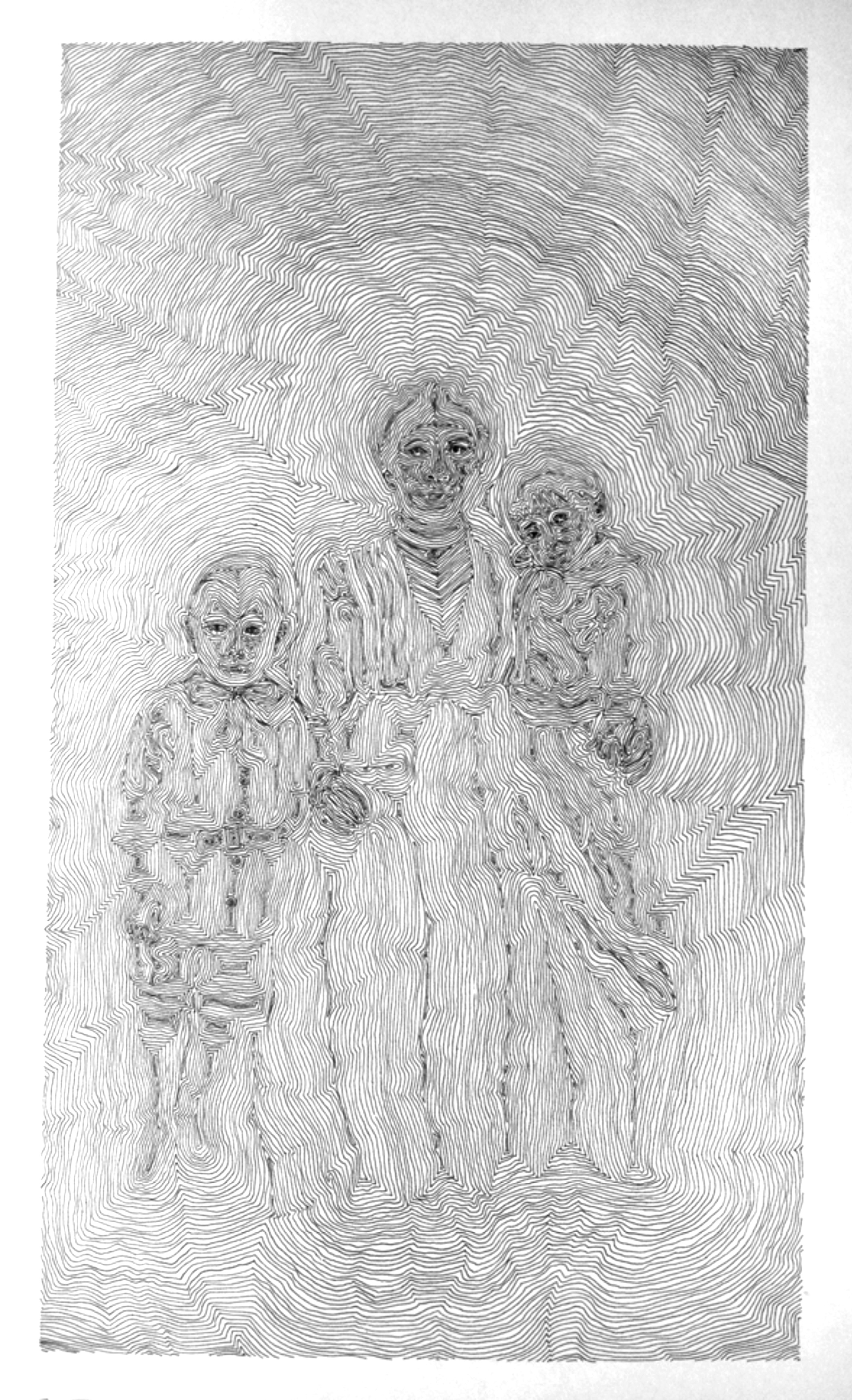
Siegel’s multimedia work draws on the ordeals of her distant relatives who lived under Russian Cossack oppression and the Nazi occupation. She based her ink drawings on old family photographs, repeatedly outlining her subjects’ silhouettes like ripples on a lake, tree rings or lines on a topographic map.

“The women in the images are relatives, most of whom I never met, but their lives have shaped me,” Siegel wrote in an email. “These women lived within oppressive systems that in some way determined the path of their lives. When I trace circles around them, it helps me to give a shape to what I have gained from and lost from history.

Alexandra Wiesenfeld, “Old Man”
Corrie Siegel, “Irving, Bertha and Ralph”
Pat Berger, “A World Apart”

“This somewhat obsessive approach to tracing the contours of my relatives is a way for me to reflect on my own fractured relationship to history as well as the way we are all implicated in the injustices of the present,” Siegel added.

Wiesenfeld’s mixed-media drawings on paper employ vivid colors, abstract shapes and a frantic energy to make statements both personal and universal. Inherent in the Munich-born, Los Angeles-based artist’s drawings are commentaries on aging and isolation, as well as the pitfalls of success. “You and You” shows two heads touching, but the only facial features
you can make out are a pair of smudged red lips.

Rubin is a fashion designer with a clothing and accessories line called “Jeri Malone” who also creates prints. In the exhibition, her two digital prints on silk display a 1960s-era pop sensibility. One shows a dove holding a playing card in its beak, the ace of hearts, surrounded on four sides by the words “Peace is no game.” The other, “Shot in the Heart,” shows a red heart with black and white flowers on it and what appear to be drops of blood falling from it.

“The four artists collectively touch on many of the topics that are often left unspoken or spoken only about in hushed tones,” Freedman-Harvey said. “Through their art, they give us permission to take a stand, speak up and be the voice for what we each believe needs to be discussed in today’s world, whether about something that impacts us personally or in the larger community.”

“Speak Out” will be on display at The Gallery@The Braid, home of Jewish Women’s Theatre, 2912 Colorado Ave., Suite 102, Santa Monica through March 5. For more information, visit jewishwomenstheatre.org.

‘Speak Out’ Draws Jewish Women Artists Read More »

Portugal Touts Its Jewish ‘Law of Return’

In December 2017, Portugal was officially recognized as the “World’s Leading Destination” by the World Travel Awards.

It’s also one of the most Jewish-friendly countries, according to Lisbon Jewish Community President Gabriel Steinhardt, who said the presence of hate groups and anti-Semitic rhetoric in Portugal is negligible compared with other Western European countries.

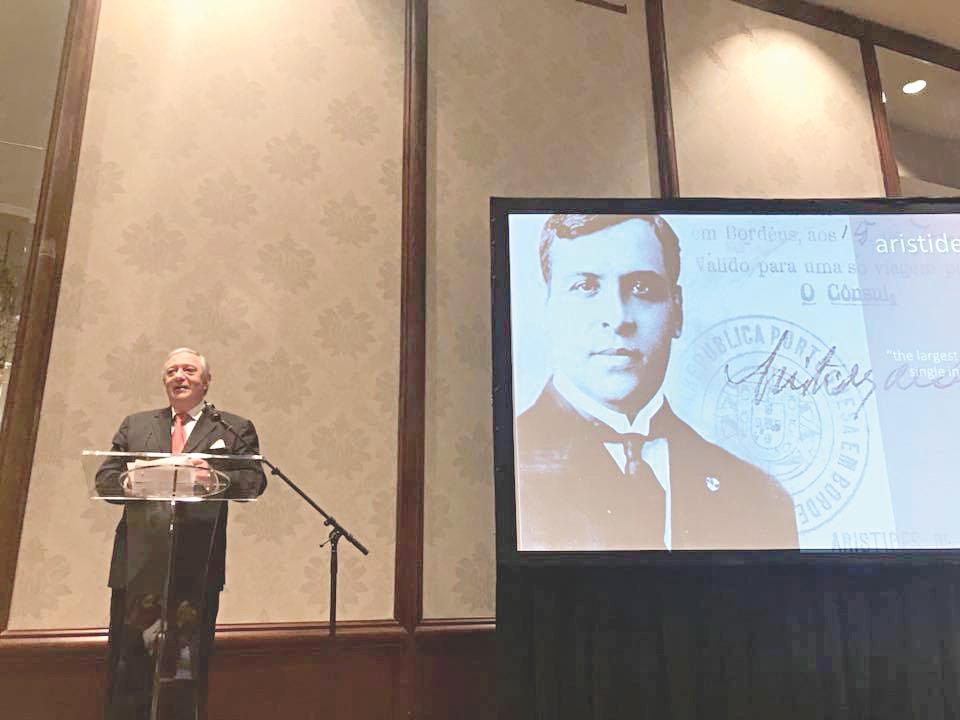
Steinhardt was one of several speakers, including Lisbon Chief Rabbi Natan Peres, Portuguese Secretary of Tourism Ana Mendes Godinho and Portuguese Consul General in San Francisco Maria João Lopes Cardoso at the Sephardic Temple Tifereth Israel on Feb 8. The delegation was on hand to discuss Portugal’s Jewish historic and cultural legacy, as well as the country’s bold “law of return” for Jews.

Steinhardt said Jewish interest in Portugal transcends monuments, cemeteries, ornate older synagogues and specialized Jewish museums, because prior to the Portuguese Inquisition in 1536, 20 percent of Portugal’s inhabitants were Jewish. This knowledge, he said, has led Jewish and non-Jewish Portuguese citizens and others of Portuguese descent to realize their family trees may have Jewish roots.

“The Jewish contribution to Portugal has existed from the fifth century forward.” — Maria João Lopes Cardoso

The Portuguese law of return was enacted in 2015 to encourage Jews with proven Portuguese ancestry to put down roots in Portugal. Lopes Cardoso said since the law’s inception, 12,000 people worldwide have applied for Portuguese citizenship and 2,000 have received it.

“Los Angeles is an important city, as the Sephardic community is one of the biggest in the States,” she said. “The Jewish contribution to Portugal has existed from the fifth century forward.” She added that despite the Inquisition, many Jews remained in Portugal as Crypto-Jews or converts in name only.

Lopes Cardoso also spoke about Jewish influences on Portugal’s culinary landscape, including kosher wine production in Belmonte and how Crypto-Jews tweaked their chorizo recipes by swapping out the pork for chicken in their sausages.

Mendes Godinho said she was personally excited about the uptick in interest among Jewish people coming to Portugal, which, she said, is due in part to Portugal receiving the World Travel Award.

“We are vested in turning [Portugal’s] past into its present and future by connecting other Jewish communities throughout the world, thereby making amends with the past,” she said.

You can learn more about the Portuguese Jewish law of return at sephardicjewsportugal.com.

Portugal Touts Its Jewish ‘Law of Return’ Read More »