fbpx

February 14, 2018

#MeToo, Tunisia, 1937

The #MeToo movement has jump-started crucial conversations about sexual harassment and sexual violence in the contemporary world — and in the Jewish community. Historical and literary perspectives help us make sense of the present moment. After all, Jewish girls and women — like any girls and women — have experienced sexual harassment and sexual violence through time, in all contexts that Jews called home, from Eastern Europe to North Africa.

Rape is a lived experience for the protagonist in “Ninette of Sin Street,” a novella originally written in French and published in Sfax, Tunisia, in 1937 and recently republished in English. The story is told in a series of monologues by Ninette, who describes her life frankly — although not without difficulty and shame — to the principal of her son’s school. Ninette, we learn, is an unwed mother who was born into a life of abjection: She grew up in the “ladies’ quarter” (or red-light district) in Sfax, where she lived in poverty, cleaned rooms and did laundry for a few coins, dreaming of “a little apartment on the Avenue (with) fine bed linens,
and gowns, and draperies.” Feisty and witty, she pulled herself up by her
proverbial bootstraps after a rough childhood during which she was thrust out
of the house, scarcely an adolescent and an orphan.

The first disaster came at the hands of someone she knew well, a sweet-talking musician. When Ninette tries to reconstruct the story, it is jumbled in her mind, like a shakshuka, the egg dish that is a staple of Tunisian cuisine.  She remembers being offered grilled meat and wine so sweet it seemed like miracle. She remembers finding herself in a hotel room, on a bed, her head so fuzzy she can’t find her way up and out. There is music playing, a man talking.  When Ninette wakes, her head throbs, her body is sore and blood coats her thighs. The man who took advantage of Ninette? “I’ll answer the way the rabbi taught me to,” she says, “may his name and memory be forgotten.” But she names him, too, in this early moment of #MeToo: “He was my uncle. And I was thirteen years old.” The rabbi called this Ninette’s “first sin.”

Ninette’s abuse comes in a most intimate form: She is betrayed by her own.

The second fall comes, indirectly, at the hands of a rabbi from the island of Djerba, the spiritual center of Tunisian Jewry about 180 miles south of Ninette’s home. Ninette had turned to the rabbi in desperation, with no money, no job prospects and not even her honor intact. (In addition to her “first sin,” Ninette was obliged to turn tricks to make ends meet.) The rabbi found her what seemed like a perfect job: Ninette was to keep house for a wealthy Jewish matron and her son. It was honorable work for “distinguished people,” pillars of the community, according to the rabbi. But the mother is often gone from the house and the son is bored. More to the point, the son can’t keep his hands off Ninette;
everywhere she turns, there he is: pinching, grabbing, wheedling … until she can resist no longer. Soon, she will be pregnant with his child, and out on the
street again.

Ninette’s abuse comes in a most intimate form: She is betrayed by her own — first by her lecherous uncle, a second time by the rabbi who delivers her into a wolf’s lair and then refuses to stand by her when she emerges, bitten, and a third and final time by her employer’s son. Adding insult to injury, the rabbi and the wealthy matron use Ninette’s sordid past against her, assassinating her character for having sex out of wedlock.

Today, we might read “Ninette of Sin Street” as an early version of a “victim impact statement” or as a form of therapy for a Jewish woman who was also a survivor.

Resilient to the blows that have rained upon her, Ninette narrates her own story, using words that make sense to her, relying on images and euphemism to convey things that are shameful, embarrassing, “bitter memories” that she turns over “all day, all night.”

“Ninette of Sin Street” was written by a Jewish author named Vitalis Danon, who was among the first of a wave of writers to produce French-language literature in Tunisia, when the country was as a protectorate of France. Danon hailed from the Ottoman Empire but came to Sfax as an employee of the Alliance Israélite Universelle, a Franco-Jewish philanthropic organization that created secular schools for Jewish boys and girls across the Middle East and North Africa.

We don’t know whether Ninette is Danon’s fictitious creation, a real woman who shared her tale of woe or a composite figure based on the many tales of poverty and abuse he heard from his students and their families. What’s striking is that Danon allowed a poor North African Jewish woman with a tainted past to tell her story and to name her persecutors.

Today, we might read “Ninette of Sin Street” as an early version of a “victim impact statement” or as a form of therapy for a Jewish woman who was also a survivor. As we embrace the bravery of today’s women who announce #MeToo — and if we strive to listen to their stories — let us listen to the world’s historic and literary Ninettes at the same time. n


Lia Brozgal is associate professor of French and Francophone Studies at UCLA, where she specializes in the literature and history of France and North Africa. 

Sarah Abrevaya Stein is a professor of history and Maurice Amado Chair in Sephardic Studies at UCLA.

#MeToo, Tunisia, 1937 Read More »

Why Jews Love Presidents (Most of the Time)

Most American Jews today love hating President Donald Trump. The hostility is so pure, so intense, so obsessive, it brooks no opposition, correction or nuance. The hatred is so great, even rabbis resist the ego-stroke of joining the ritualistic High Holy Days phone call with the president. The hatred feels so justified, that with each vulgar tweet, Trump’s actions, no matter how hateful, at least offer that guilty pleasure that comes from being right about someone you know is so despicably wrong. And the hatred is so powerful, it trumped the Jewish people’s historic love of Jerusalem as the the capital of Israel for nearly half of American Jewry.

Marking a sobering second Presidents Day in this Age of Trump, this moment’s historical incongruity is striking. The United States has blessed Jews with a parade of presidents who love Jews — including this one.

Most modern presidential campaigns pit two major party nominees competing to show who loves the Jews — and Israel — most. Today’s fury, therefore, is atypical. American Jews usually love to love their president — and love being loved right back.

The 1800s: Dear Jews, Welcome to America!

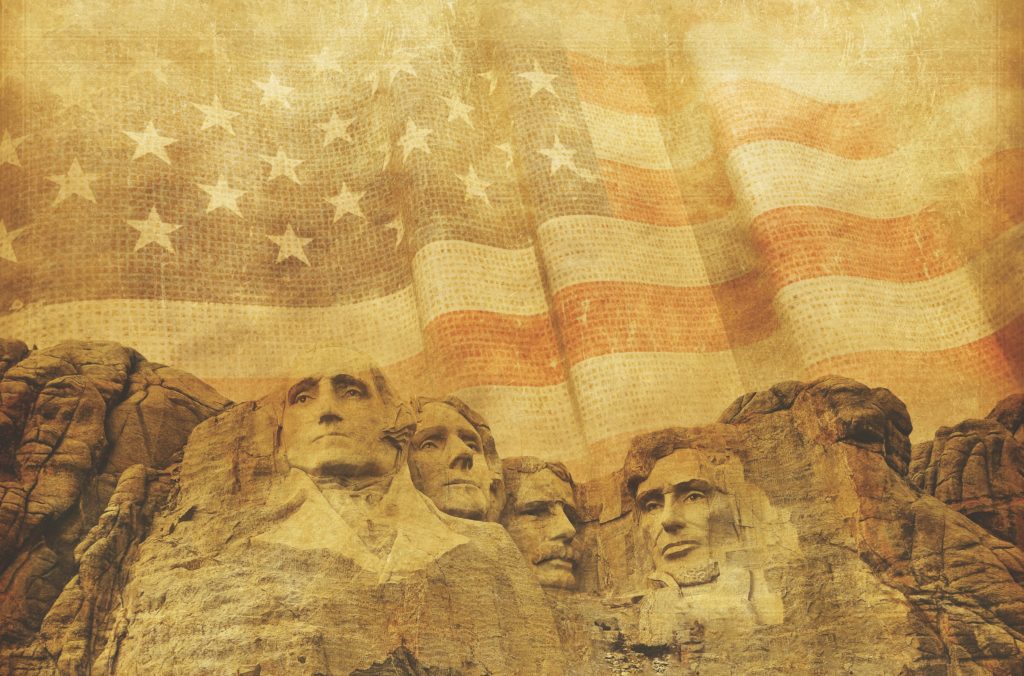
As with so much good in America, this love affair starts with George Washington. The most famous line from his 1790 letter to the Jews of Newport, R.I., affirms that “the Government of the United States gives to bigotry no sanction, to persecution no assistance.”

Washington’s most significant words, however, noted: “It is now no more that toleration is spoken of as if it were the indulgence of one class of people that another enjoyed the exercise of their inherent natural rights.” Instead, he insisted: “All possess alike liberty of conscience and immunities of citizenship.”

These words make America, America. The paternalist “tolerates,” “indulges”; partners share and bond. America changed history by including Jews in the American family. Washington echoed the Declaration of Independence’s recognition that every person enjoys inherent rights. Once rights are that fundamental, we protect one another — as fellow citizens defending shared privileges — sparking America’s real revolution.

Jews’ absorption into America doesn’t reflect Jewish power — just the power of the American idea.

Naturalizing every human’s rights created conditions of true acceptance, of Jews truly being at home. Defending Jews became the default position, for the first time ever outside the Land of Israel, because Jews were “us” not “them.” American Jews weren’t accepted contingent on their good behavior, a leader’s whims or the people’s will. Because this bond applied so broadly — although not at the time to Blacks or women — it penetrated so deeply it couldn’t be contained. That’s why it kept expanding until today it includes everyone.

In short, none of this was done because it was good for the Jews: it was just good. There were barely 2,500 Jews in the U.S. during the Revolution, maybe 15,000 in 1840. Jews’ absorption into America doesn’t reflect Jewish power — just the power of the American idea.

You didn’t have to be an American saint like George Washington to befriend the Jews. Even New York’s scrappy political operator, Martin Van Buren, defended Jews while advancing an even deeper value. In 1840, the United States was politically isolationist and physically isolated. Still, when Pasha Muhammed Ali, Syria’s overlord, kidnapped 63 Syrian Jewish kids and tortured 13 Jewish leaders during the Damascus Blood Libel, Van Buren acted. Expressing America’s “horror,” he explained that in America, we “place upon the same footing, the worshipers of God, of every faith and form.”

As president, Van Buren advanced human rights, not just Jewish rights. He considered the persecution of others, no matter how remote, America’s responsibility because liberty is indivisible and universal. Van Buren anticipated Franklin Roosevelt’s Four Freedoms (from want and from fear, to speak and to worship) — anywhere in the world — and the post-World War II charters defending basic rights for all, everywhere in the world.

Of course, America was a country, not paradise; anti-Semitism existed and persists. But expecting perfection is unfair and immature — the test is how a diverse democracy corrects itself when it sins,  or sinners sin. Historian Jonathan Sarna’s excellent book, “When General Grant Expelled the Jews,” shows how a low moment redeemed Abraham Lincoln, Ulysses S. Grant, the Jews and this country. In 1862, during the Civil War, Gen. Grant’s General Order No. 11 banned Jews “as a class violating every regulation of trade” from Tennessee, Kentucky and Mississippi. Black marketeering was rife, involving some Jews, among others. Still, Grant deemed “the Israelites” an “intolerable nuisance.”

European Jews and Jews from Muslim lands will scoff: How lucky that this obnoxious yet mild restriction ranks as one of America’s “worst” anti-Semitic acts — especially because President Abraham Lincoln rescinded it quickly. The popular story has it that one Prussian immigrant in Kentucky, Cesar Kaskel, lobbied Lincoln directly.

Lincoln responded grandly, biblically:  “And so the children of Israel were driven from the happy land of Canaan?”

Kaskel responded: “Yes, and that is why we have come unto Father Abraham’s bosom, asking protection.”

Father Abraham replied, “And this protection they shall have at once.”

After overruling Grant, Lincoln explained that “to condemn a class is, to say the least, to wrong the good with the bad.”

Grant quickly regretted what his own wife, Julia, called “that obnoxious order.” As president, Grant repented. He appointed Jews to public office. He attended Adas Israel’s three-hour dedication, becoming the first president to attend a synagogue service — perhaps the only one to stay till the end. Like Van Buren, Grant also defended oppressed Jews, this time in Russia and Romania. “Paradoxically,” Sarna argues, Grant’s “order expelling the Jews set the stage for their empowerment. … In America, hatred can be overcome.”

The 1900s: Welcome to American Leadership

If 19th-century America welcomed Jews to be invisible enough to fit in, 20th-century America empowered Jews to become visible and stand out.

Two classic Theodore Roosevelt tales define him — and those two phases of Jewish-American life. In 1895, a German rector, Hermann Ahlwardt, visited New York to, in Roosevelt’s words, “preach a crusade against the Jews.” Jews lobbied their police commissioner — Roosevelt — “to prevent him from speaking and not to give him police protection.” Roosevelt explained it “was impossible; and if possible would have been undesirable because it would have made him a martyr.”

Concluding his speaking tour, Ahlwardt thanked Commissioner Roosevelt, and the Aryan-looking police officers who had protected him — and illustrated his point. Roosevelt then introduced the racist preacher to the “Jew sergeant and a score or two of Jew policemen” Roosevelt had assigned to protect them. Roosevelt chuckled: “He made his harangue against the Jews under the active protection of some 40 policemen, every one of them a Jew!” Roosevelt made Ahlwardt look “ridiculous” to undermine Ahlwardt while teaching Americans “that there must be no division … of creed against creed, nationality against nationality, section against section.”

Inaugurating the 1900s, once president, Roosevelt appointed the first Jew to the Cabinet, designating Oscar Straus as Secretary of Commerce and Labor in 1906. To prove that any American could succeed, Roosevelt had to single out a Jew for the job. “I have a very high estimate of your character,” Roosevelt assured Straus. Then he explained his “further reason: I want to show Russia and some other countries what we think of Jews in this country.”

Perhaps the most heartbreaking presidential “incident” involves Franklin Roosevelt. He was so beloved by most Jews that he made most of them liberal Democrats. Jews joked about having three “velten” — Yiddish for worlds: this velt, the other velt — heaven — and Roo-se-velt. Yet FDR so took the Jewish vote for granted — winning 90 percent of some mostly Jewish precincts from Beverly Hills to Brooklyn — that when the Jews needed him to save European Jews, he could ignore them.

Jewish Trump-a-phobia confirms that Jews are now so comfortably American, that, while still loving to love most presidents, they can occasionally really love hating one, too.

Consider the lame letter Rabbi Stephen S. Wise wrote to his close friend, the president — when solid proof finally reached Wise in late 1942 that Nazis had already killed 2 million Jews. “Dear Boss,” Wise began, “I do not wish to add an atom to the burden you are bearing with magic and, as I believe, heaven-inspired strength, at this time.” FDR swatted away those concerns. No one who called him boss and could minimize such a monstrous problem would ever betray him.

Still, Roosevelt brought so many Jews to Washington that anti-Semites called Roosevelt’s New Deal the “Jew Deal.” Only surfacing later, these disappointments couldn’t extinguish the torch most Jews still carry for FDR, his Democratic Party and his liberal legacy.

That overlap between Jews and liberalism is one of those Jewish characteristics President Richard Nixon constantly condemned. When one of his daughters volunteered at a museum, Nixon fumed, “The arts — you know, they’re Jews, they’re left wing; in other words, stay away.” Another time, he deemed Jews a “very aggressive and abrasive and obnoxious personality,” believing: “Most Jews are disloyal.”

Nevertheless, Nixon hired many proud Jews, including Henry Kissinger, the first Jewish secretary of state. And Nixon supported Israel generously, mobilizing “every [plane] we have — everything that will fly” — to resupply Israel after the Arab surprise attack on Yom Kippur in 1973.

Jews as Mature Americans Today

Since Nixon, the Republican Party, once the “goyish,” even anti-Jewish party, has been pro-Israel and welcoming to a small, outspoken, band of conservative Jews. As my brother Tevi Troy wrote in Commentary in 2015: The rise of evangelical Zionism, the common front against totalitarianism in its communist and Islamist forms, and an approach emphasizing shared values and rewarding loyalty proved transformational. Just as “the world was learning to hate Israel, the Republican Party was learning to love it.”

Alas, amid today’s partisanship, Republican support for Israel risks giving the Jewish state a toxic embrace. Applying the transitive property beyond mathematics (if a=b and b=c, a=c), too many liberal Jews today believe that if they hate Trump and Trump loves Israel, they should hate Israel, too. (Of course, Israeli Prime Minister Benjamin Netanyahu’s alienation of American Jewry has only made things worse.)

In this age of partisan myopia, when conservatives see only liberals’ flaws and liberals see only conservatives’ flaws, many Jewish liberals ignore politically correct bigots and tell a different tale of anti-Semitism. They reduce American-Jewish history to three moments: Gen. Grant’s General Order No. 11 in 1862; the Nazis marching in Skokie, Ill., in 1978 — which never quite occurred — and the Neo-Nazis Marching in Charlottesville, Va., in 2017. Trump’s reprehensible moral failure to condemn these goons preyed on American-Jewish insecurity — although many, many Americans rose admirably to renounce these home-grown fascists.

A less neurotic look at history simply would exclaim, “God Bless America.” Today, we have a bipartisan tradition of a White House seder initiated by former President Barack Obama, beloved by most Jews yet sometimes unfairly caricatured as anti-Israel, and an annual White House Hanukkah Party initiated by another former president, George W. Bush, detested by most American Jews, yet beloved in Israel.

Today, our most Nixonian of presidents intensifies the Nixon conundrum.

Trump, like Nixon, is loathed by most Jews. Trump, like Nixon, relies on many Jewish advisers. Trump, like Nixon, outdoes his Democratic rivals in championing the Israeli government’s interests — and in being popular among Israeli Jews, not their American cousins. Yet Trump, unlike Nixon, has not been recorded cursing Jews, and Trump, not Nixon, is the first White House occupant with Jewish children and grandchildren.

This, then, is Donald Trump’s legacy to Jewish history and the Jewish community. His controversial, polarizing presidency triggers remarkable immaturity among slavish Republican supporters and fanatic Democratic opponents. Yet it may be remembered as another milestone in American Jewry’s maturation. Jewish Trump-a-phobia proves that Jews are not one-issue voters, always supporting the most pro-Israel candidate. Jewish Trump-a-phobia suggests that the ultimate power-play in the token Jew-hiring contest — having Jewish kids and grandkids — doesn’t work and can even infuriate. And Jewish Trump-a-phobia confirms that Jews are now so comfortably American, that, while still loving to love most presidents, they can occasionally really love hating one, too.


Gil Troy is the author of “The Age of Clinton: America in the 1990s” and the forthcoming book, “The Zionist Ideas,” to be published this spring. He is a Distinguished Scholar of North American History at McGill University in Montreal.


Why Jews Love Presidents (Most of the Time) Read More »

DOWN PAYMENT: An Israeli F-16 was downed, but the price was worth it

Israel demonstrated how serious it is about preventing the establishment of an Iranian stronghold in Syria

1982 was the last year an Israeli fighter jet was downed by Syrian forces. 1982 was the last year Israel launched a large-scale attack in an area under Syrian control. 1982 was a year of war — the first Lebanon war — in a Middle East that was much different than it is now. Syria was still a real country with a real government. Israel’s main enemy in the north was still the PLO — the forces of Yasser Arafat. Iran was engaged in a long and bloody war — with Iraq. The Soviet Union was engaged in a Cold War with the much stronger United States.

There is very little we can learn today about the state of affairs to Israel’s north from what happened in 1982. Still, people have short memories but militaries have long ones, and thus the ghosts of 1982 live in the minds of some of those engaged in the current battle for power. Syria, by taking down an Israeli F-16 on Feb. 10, celebrated a small victory over the air force that downed 88 of Syria’s fighter jets in 1982. The Russians had their own reason for a small celebration: The 19 ground-to-air systems destroyed in June 1982 during one of Israel’s most brilliant military operations were Russian (or Soviet, as it was called then). The missile downing the Israeli jet last weekend was Russian.

A phone call between Israeli Prime Minister Benjamin Netanyahu and Russian President Vladimir Putin put an end to Feb. 10’s large-scale Israeli attack in Syria.

Before diving into an analysis, let’s recap the events. On Feb. 10, Iran sent a drone into Israel. Israel was well prepared, and an air force helicopter downed the drone. Then Israel attacked and destroyed the control vehicle for the drone, placed in a Syrian base in southern Syria, far away from the Syria-Israeli border. Iranian soldiers were killed.

Syria responded with a barrage of anti-aircraft missiles and hit one Israeli fighter jet. Its crew ejected over Israel’s Galilee, and one of the pilots was seriously wounded and is still in the hospital. Israel expanded its counterattack, targeting about a dozen Syrian and Iranian military installations in Syria. An Israeli air force general called this “the most substantial attack since 1982.” Then came the phone call from Putin. Israel pulled back. The sirens were silenced. The north quieted yet remained tense. The next round — as the cliché goes — is “only a matter of time.”

It is a matter of time because the issue at hand is not yet settled. Syria, after many years of civil war, is barely an independent country. And as that war winds down, a new war has begun — the one over future arrangements in this area. Iran — the country without which Syrian President Bashar Assad could not survive — wants its reward. It wants to establish a stronghold in Syria, right on Israel’s border. Russia — the country that enabled Assad’s survival — keeps a watchful eye over Syria to serve its own interests. Hezbollah, whose takeover of Lebanon is a prototype and a warning of what might happen in Syria, is freer today than it was during the busy days of the civil war.

Miscalculation that leads to a war with Syria or Iran is one thing. Miscalculation that leads to a war with Russia, when the U.S. stays on the sidelines, is quite another.

Israel vowed to prevent such developments. It vowed to prevent Iran from establishing another stronghold to its north. It vowed to prevent Iran from building in Syria an infrastructure that could serve to threaten Israel. Obviously, vowing alone is not enough. In the Middle East, one has to back words with action, one has to use power to make a point. And when Iran provided a pretext for attack, by invading Israeli territory with its drone, Israel jumped at the opportunity.

This was not a minor incident. Israel and Iran had been having a proxy war for many years, but this time there were no proxies. It was an Iranian drone, these were Iranian soldiers, it was Iranian equipment that Israel attacked. True — the Israeli jet was downed by Syria (acting, according to some reports, under heavy pressure from Tehran). Still, the shadow war is no longer shadowy. It is out in the open, with both countries — Iran and Israel — having to ponder the impact of their clashes on the many other components of an unstable situation.

The impact is never quite known in advance; there are only probabilities and educated assessments. Israeli investigative journalist Ronen Bergman, in his newly released best-seller, “Rise and Kill First” — a detailed book about Israel’s expert trade of targeted killings — recounts a few instances of miscalculations, some concerning Israel’s war with Iran. When Tamir Pardo, the head of Israel’s spy agency, Mossad, returned from a trip to Washington,. D.C.,  in 2012, he “warned Netanyahu that continued pressure on the United States would lead to a dramatic measure, and likely not the one that Netanyahu hoped for,” Bergman writes. Pardo believed that Netanyahu’s implied threat to attack Iran pushed then-American President Barack Obama to sign a deal with Iran. “Obama, fearing Israeli action, agreed to an Iranian proposal to hold secret negotiations,” Bergman writes. He speculates that “if the talks had begun two years later, Iran would have come to them in a considerably weaker state.” That is to say: Bergman assumes that Israel miscalculated in applying too much pressure on the U.S. to tame the Iranian threat.

Bergman’s argument concerning this incident can be a matter for debate, mainly because it doesn’t fully take into account Obama’s great interest in having a “historic” breakthrough with Iran before leaving office. But Bergman’s overall theme still stands: Israel makes decisions and takes action without always being able to rightly asses the ultimate outcome of its decisions. The alternatives — never to take action or to make decisions only when the outcome is predetermined — is nonexistent. In the rough business of war, a measure of risk is a given. Israel’s willingness to take risks is one of the tools in its arsenal of deterrence. In such context, its attack last weekend should be seen as a down payment of seriousness. If anyone was hoping that Israel would not have the stomach to get into a fight and risk a full-scale war in the north, one has to recalculate.

Fragments of a Syrian anti-aircraft missile found in Alonei Abba, about 2 miles (3.2 km) from where the remains of a crashed F-16 Israeli war plane were found, at the village of Alonei Abba, Israel February 10, 2018. REUTERS/ Ronen Zvulun

The shadow war is no longer shadowy. It is out in the open, with both countries — Iran and Israel — having to ponder the impact of their clashes on the many other components of an unstable situation.

Israel miscalculated many times, but so did its enemies. Quite famously — and here’s just one example — when Hezbollah inadvertently prompted the second Lebanon war by abducting Israeli soldiers. Had it known in advance that war would be the result, Hezbollah’s leader admitted later, the soldiers would still be alive and well. That was more than a decade ago, and its impact on Israel’s rivals might have faded. An aggressive approach is thus essential not to ignite war but rather to prevent one — make Iran understand that this is where the current path leads, make it realize that it cannot count on Israeli laxity.

Russia is the other addressee of this message of seriousness. For the past couple of years, since the Russians decided to jump into the Syrian mess — a bet that thus far proved solid and worthy (Obama’s grave predictions of “Russia’s Vietnam” notwithstanding) — Israel and Moscow proved meticulous in coordinating their actions in the region and prevented misunderstanding or an unintended clash. This was complicated and sometimes restrictive but mostly tactical: Israel lost flexibility in prompting combat; Russia left enough maneuver room for Israel to take effective action.

Israeli Prime Minister Benjamin Netanyahu (C), Defense Minister Avigdor Lieberman (R), and Chief of Staff Lieutenant-General Gadi Eizenkot meet in Tel Aviv, Israel February 10, 2018 in this handout photo released by the Israel Defence Ministry. Israel Defence Ministry/Handout via REUTERS

This worked, awkwardly, when the Syrian civil war was still going on, the players in Syria were busy fighting one another. It is less clear how Russia and Israel can manage this situation when the civil war is (almost) over, and when the battle turns to become one of Israel against any attempt at Iranian expansion.

This calls for strategic understanding, not just the tactical prevention of unintended clashes. But can Israel and Russia reach an agreement on the future of Israel’s border with Syria? For Israel, the goal is clear: to have no Iranian forces, and no forces under Iran’s control, near its border; and to be able to tame any attempt by Iran to turn Syria into an active front against Israel, Lebanon-style. For Russia, the goals are always somewhat murky: It wants Assad to survive, it wants its military bases in Syria safe, it wants to keep the Iranians happy (but not too happy) and quiet. Russia probably doesn’t want to have to take responsibility for a war between Israel and Iran.

Russia also has to take the U.S. into account. But how worried is it, considering the realities of the past couple of years? Not that long ago, Israel rarely questioned the basic commitment of the U.S. to contain Russia in the Middle East. The arrangement was clear to everybody: When the need arises, Israel deals with neighborhood sharks — small sharks and sometimes even with midsize sharks such as Iran — as long as the U.S. makes sure that no big shark, no great white shark such as Russia, interferes to tip the balance against Israel. In 1973, Israel fought against Egypt and Syria, and the U.S. was ready to clash with the Soviet Union in case of intervention. Regional power against regional power — superpower against superpower.

Putin on the one side and American presidents Obama and Donald Trump on the other side proved this assumption to be risky, maybe invalid. In 2008, Russia invaded Georgia. In 2014, it invaded Crimea. In the summer of 2015, it sent its forces to Syria. Obama was ineffective in his response. Maybe he just didn’t care. In 2016, Trump was elected, communicating a mixed message of standoffishness and aggressiveness. Unlike Obama, Trump made good on his word and launched a Tomahawk missile attack in Syria when reports of the use of chemical weapons tested his resolve. Like Obama, Trump steered clear of getting involved in the managing of postwar Syria and seemed to accept the Russian-dominated status quo.

This leaves Israel confused and unsure. Miscalculation that leads to a war with Syria or Iran is one thing. Miscalculation that leads to a war with Russia, when the U.S. stays on the sidelines, is quite another. Bergman, on a tour of the United States to promote his book, told me on Feb. 13 that Israel “has pleaded the United States to exert its influence over Russia, which is the only country that can pressure Iran, to prevent the stationing of permanent Iranian forces in Syria and the establishment of an Iranian military seaport. All in vain.” It also failed to convince Russia directly to tame Iran. Putin, Bergman told me, “is not interested in entering into a dispute with the Iranians and he has not interfered with their deployment in Syria.”

So, Israel is left with no choice but to up the ante and signal to all parties involved that war is an option. It has no choice but to signal to all parties involved that dithering and allowing inertia is not an option. “After it failed to recruit the Trump administration to convince Putin, Israel feels that it has remained alone, and in this situation it will respond very aggressively,” Bergman told me from New York. It already has, and is ready to act again. Worst-case scenario: This leads to real, long and bloody war, involving Iran and Israel, Syria and possibly Russia — a war that Israel’s military already has a name for: the first northern war.

No doubt, this will be a costly enterprise for all sides involved, the result of which is unknown. No doubt, it is a war Israel would like to avoid. And indeed, this is the best-case scenario: Signaling seriousness and readiness to go to war, Israel hopes to prompt Russian and possibly American involvement in halting Iran’s advancement. Such a move is the only one that will make a first war of the north obsolete.


Shmuel Rosner is senior political editor. For more analysis of Israeli and international politics, visit Rosner’s Domain at jewishjournal.com/rosnersdomain.

DOWN PAYMENT: An Israeli F-16 was downed, but the price was worth it Read More »

Obama and #IranianWomenToo

The big news last week was the Iranian drone that entered Israeli air space and triggered a potential war between Iran and Israel. Israel shot down the drone and attacked Syria. Missiles were launched. An Israeli jet was shot down. Israel retaliated. A phone call from Putin to Bibi prevented an escalation. You can read all about it in our cover story by Shmuel Rosner.

But it’s not Iranian missiles or drones I want to talk about — those get enough media attention. What I want to talk about is Iranian women.

While the Iranian terror regime has been wreaking havoc throughout the Middle East, Iranian women have quietly suffered their own form of terror.

This oppression is not new. Two years ago, while the Persian mullahs were wooing the West for its nuclear deal, I wrote about Atena Farghadani, a 28-year-old Iranian artist who was sentenced to 12 years in an Iranian prison because she “insulted” members of Parliament with her art.

Last year, according to Human Rights Watch,  Narges Mohammadi, a prominent human rights defender, began serving a sentence of 10 years in prison on charges including “membership in the banned campaign of Step by Step to Stop the Death Penalty.”

While the Iranian terror regime has been wreaking havoc throughout the Middle East, Iranian women have quietly suffered their own form of terror.

And just last week, according to the Center for Human Rights in Iran (CHRI), Iranian-American art dealer Karan Vafadari and his Iranian wife, Afarin Neyssari, were sentenced to prison for being Zoroastrians, members of a pre-Islamic ancient religion. Vafadari was given a 27-year prison sentence and will receive 124 lashes. Neyssari was given 16 years.

These are hardly random events.

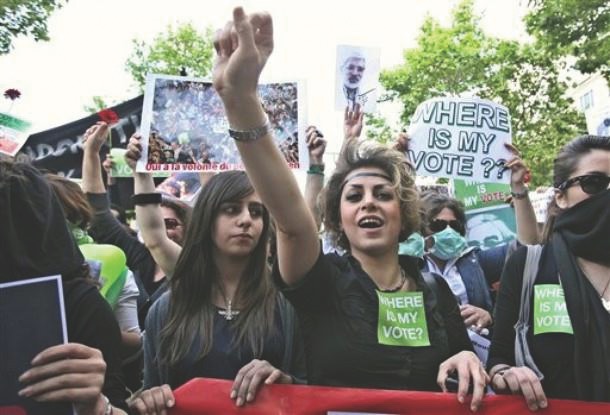
Remember the woman who was all over social media recently because she decided to take off her hijab during the demonstrations? Her name is Narges Hosseini, and she’s now sitting in jail, facing charges punishable by up to 10 years, including “encouraging immorality or prostitution.”

In case you haven’t heard, it is a criminal offense in Iran for women not to cover their hair and bodies in public.

Hosseini is valiantly trying to fight back, but it’s not easy when you’re up against an entrenched patriarchy that treats women like second-class objects.

For now, all Hosseini can do from her jail cell is refuse to say she’s sorry. That’s all she’s got left to maintain her dignity — a refusal to kowtow to her oppressors.

We fool ourselves when we see these cool images of  “women of the revolution” and think it makes a difference. The images we saw last month of Hosseini and others were just that — images that came and went. After the cameras leave, it is the jail cells that matter. In Iran, that is where “women of revolution” end up.

And if you believe the latest Human Rights Watch report from 2017, there is little likelihood of change.

All of this makes a mockery of the hopes and dreams of many supporters of the Iran nuclear deal that the $150 billion in sanctions relief and the welcoming of Iran into the family of nations would somehow “moderate” an evil and theocratic regime. It didn’t. It made it worse.

As a famous man once said: “You can judge a nation, and how successful it will be, based on how it treats its women and its girls.” That man was President Barack Obama in 2014, a year before he concluded a deal that empowered one of the worse oppressors of women.

When Obama made that statement, I’m sure he meant “successful” in a Western, democratic kind of way. But the definition of success varies by region and ideology. For the Persian regime, for whom success means dominating the region and cementing its theocratic power, oppressing women fits right in with its mission.

#MeToo also applies to women of the Third World who are jailed and stoned to death under brutal regimes. Let’s see a march devoted mostly to those women. And let’s see Obama lead that march.

So, if Obama is looking for a new cause to take advantage of his charisma and global notoriety, I can’t think of a better one than fighting for the oppressed women of the world, starting with Iran.

I know that in Donald Trump’s America, “women’s marches” are now all the rage. And I know that when I challenge my friends who march to stand up for the rights of Iranian women in jail who can’t march for themselves, they always tell me: “Yes, yes, we’re also marching for them!”

But here’s the problem — that’s not what comes across. As Time magazine reported, “The 2017 rally in Washington, D.C., and hundreds of similar marches created solidarity for those denouncing Trump’s views on abortion, immigration, LGBT rights and more.” And this year, the #MeToo movement gave the 2018 marches a new and justified injection of outrage.

But #MeToo also applies to women of the Third World who are jailed and stoned to death under brutal regimes. Let’s see a march devoted mostly to those women. And let’s see Obama lead that march.

Obama and #IranianWomenToo Read More »

Week of Feb. 16, 2018

Week of Feb. 16, 2018 Read More »

ADL Criticizes Three Congressional Democrats for Dining with Iranian President and Louis Farrakhan

Anti-Defamation League (ADL) CEO Jonathan Greenblatt issued a statement on Twitter denouncing three congressional Democrats for attending a dinner hosted by Iranian President Hassan Rouhani in 2013 that Louis Farrakhan was at.

Greenblatt called it “extremely disturbing” that the three members, Reps. Keith Ellison (D-MN), who is also the deputy chair of the Democratic National Committee (DNC), Gregory Meeks (D-NY) and Andre Carson (D-IN) dined with “hatemongers.”

“Yes, it may have been an ‘official’ event org by Iran govt,” Greenblatt tweeted. “However, this is one of the most repressive & aggressive regimes in world, a govt that specializes in state-sponsored #antisemitism, regularly commits #humanrights violations and actively engages in #terror.”

Greenblatt then lambasted Farrakhan for being “an unrepentant anti-Semite who has said Jews are Satanic & responsible for 9/11.”

“Some of those who attended have repudiated Farrakhan & his intolerance in the past. They should do so again,” Greenblatt wrote. “They owe it to their constituents + Jewish community to explain their rationale and remind the world that there is no statue [sic] of limitations on standing up to hate.”

A spokesperson for Ellison told National Journal editor Josh Kraushaar that Ellison and Farrakhan didn’t talk to each other at the event.

The reported 2013 dinner and 2016 visit with Farrakhan is the latest Farrakhan-related controversy for Ellison, who has been plagued with questions about his prior ties to Farrakhan’s Nation of Islam (NOI) ever since he first ran for Congress in 2006. Ellison has repudiated the organization on multiple occasions; his defense is that he was only involved with NOI for 18 months although there is evidence to suggest his involvement with NOI and ardent defense of Farrakhan lasted for 10 years.

“Which is the real Ellison: The one who drafts earnest letters of apology to Jewish groups? Or the one who, as recently as 2013, saw it fit to dine with Farrakhan under Iranian auspices?” Commentary’s Sohrab Ahmari wrote.

H/T: Daily Caller

ADL Criticizes Three Congressional Democrats for Dining with Iranian President and Louis Farrakhan Read More »

Behind the Scenes at “Semi[te] Sweet: On Jews and Chocolate – The Exhibition”

Jewish refugee and immigrant stories highlight chocolate as a migrant food in “Semi[te] Sweet: On Jews and Chocolate” currently on display at Temple Emanu-El’s Herbert and Eileen Bernard Museum of Judaica in New York City. Now in its 20th year, the mission of the Bernard Museum is to examine and engage with the intersections of Jewish history, culture, and identity.

The exhibit invites visitors to partake in this first-ever visual journey into the mysteries, opportunities, and resilience of the Jewish chocolate story. It focuses on the surprising chocolate businesses and skills of Jews that cross cultures, countries, and continents. Jews jumped onto the chocolate trail in the early phases of European interaction with the New World drink. Later, 20th-century Jewish emigrants transferred their businesses of eating chocolate to new locations.

Some books are optioned into films. My book, On the Chocolate Trail, developed into this museum exhibit. Truthfully, creating this exhibit was the fulfillment of a dream. As I had researched chocolate and religions for On the Chocolate Trail, I had come across many charming artifacts, unusual pieces of decorative arts, and elegant archival documents. Understandably, only a handful could be included in the publication. All the while, I mused about the many items that amplify the narratives and potentially could comprise a delightful display about the little- known history of Jews and chocolate.

“Semi[te] Sweet” started with a serendipitous encounter in 2016 when I randomly sat next to an Israeli colleague at a Women’s Rabbinic Network dinner in Jerusalem. She happened to work at Museum of the Jewish People or Beit Hatefuzot. The rabbi took a copy of On the Chocolate Trail at the end of the evening. Almost a year later, when Gady Levy, the director of Temple Emanu-El’s Streicker Center in New York, NY, met with her in Jerusalem, she handed him On the Chocolate Trail. Within weeks, Levy and I met with Warren Klein, the Bernard’s curator, in New York, and a year later we mounted the show.

Of course, I had no idea about the complexities of such an enterprise: locating and borrowing the articles, designing the space, coordinating the labels. The expertise, professionalism, and creativity of Klein, who has been the museum’s curator since 2013, and his team were essential. We often juggled wishes with availability, vision with budget, aesthetics with content. Some manuscripts could only be provided in facsimile since the originals were deemed too fragile to travel.

Using On the Chocolate Trail as a foundation, we sought relevant objects. We reached out to institutions that had supported my research such as The Jacob Rader Marcus Center of the American Jewish Archives, the American Jewish Historical Society, the Hebrew Union College-Jewish Institute of Religion Klau Library, and the Newport Historical Society.

When we decided to portray early chocolate usage, I turned to social media to locate pieces. As a result, eclectic loans included a family chocolate cup from Mexico lent by Reverend Susan Sica, whom I had met on an interfaith clergy trip to Israel. Michael Laiskonis, a chocolate expert at the Chocolate Lab at Institute of Culinary Education provided his metate stone for the grinding of chocolate by hand. A rabbinic colleague’s wife furnished a silver chocolate pot that had been in her family for three generations. The Leo Baeck Institute in New York City worked closely with Klein to bring Albert Einstein’s childhood chocolate cup back from loan in Germany. The Barton’s Bonbonniere founder’s son generously lent company memorabilia as did a member of the Barricini Family.

Although I could not imagine how it would all come together, Klein coordinated with a designer, a graphic artist, a painter, and an installer to be sure everything fit in a balanced confection of an installation. Its elegant and smart look entranced 800 attendees at the chocolate suffused opening and many more since. The evening happily coincided with the publication of the second edition of the book. On the Chocolate Trail then served as the catalog for the exhibit.

Guests from around the world – Argentina, Australia, Canada China, England, Israel, and Poland – have written sweet comments in the guest book. Tour groups have enjoyed specially themed Elite milk chocolate bars. Florence Fabricant in the New York Times noted that the exhibit demonstrates that “The connection between Jews and chocolate goes beyond Hanukkah ​gelt.” In response to inquiries from across the country, “Semi[te] Sweet” will be available to travel to museums and galleries beginning in April. After all, from generation to generation, l’dor vador, the Jewish love of chocolate should be shared.

“Semi[te] Sweet: On Jews and Chocolate” will be traveling around the country beginning in April, 2018. For further information, please contact me.

Cross posted from ReformJudaism.org.

Rabbi Deborah R. Prinz speaks about chocolate and Jews around the world. The newly released second edition of her book, On the Chocolate Trail: A Delicious Adventure Connecting Jews, Religions, History, Travel, Rituals and Recipes to the Magic of Cacao, (Jewish Lights) contains 25 historical and contemporary recipes. She is co-curator of the exhibit, “Semi[te] Sweet: On Jews and Chocolate” at Temple Emanu-El’s Herbert and Eileen Bernard Museum of Judaica, NYC, on display through February 25, 2018. She blogs at the Forward, onthechocolatetrail.org, and elsewhere. The book is used in adult study, classroom settings, book clubs and chocolate tastings.

Behind the Scenes at “Semi[te] Sweet: On Jews and Chocolate – The Exhibition” Read More »