
On the strength of her earlier novels, including “Harem,” “Courtesan,” “The Last Romanovs” and “Scent of Butterflies,” Dora Levy Mossanen has been hailed by Amy Ephron as “an Isabel Allende of Persia.” Born in Israel, raised in Iran, and a prominent figure in literary Los Angeles, she uses her superb skills as a storyteller to introduce us to believable and compelling men and women who happen to live in exotic times and places.
Iran is not a combat zone, but it is still a place where travel permits for Palestine, then a British mandate, are the currency of life and death for refugees from Eastern Europe who have managed to reach Tehran. And, then as now, the Jewish population is always at risk.
Her latest novel is “Love and War in the Jewish Quarter” (Post Hill Press), which leaves behind Tehran as we see it every night on CNN and carries us back to the place as it existed during the Second World War. Iran is not a combat zone, but a place where travel permits for Palestine, then a British mandate, are the currency of life and death for refugees from Eastern Europe who have managed to reach Tehran. And, then as now, the Jewish population is always at risk.
Here we meet a Jewish dentist named Soleiman Yaran, who makes his way through the Alley of Seven Synagogues in order to make a house call on his latest and most privileged patient — Fawzia, the Queen of Persia, a daughter of King Fuad of Egypt and wife of Shah Mohammad Reza Pahlavi. They speak to each other in French, the preferred language of the Persian royal court, but Soleiman is aware that his Jewishness renders him najes, ritually impure, under Islamic law. “May I have Your Majesty’s permission to check your teeth without gloves?” he asks.
Thus does the author allow us to glimpse the risks and stresses of a life lived between two worlds, the Jewish Quarter and the imperial palace. Propaganda leaflets, both Soviet and Nazi, and German radio broadcasts that call Hitler “the Shiite Messiah” are inescapable. The official residence of the governor general, where Soleiman makes another house call, includes two opium factories to process the harvest of his vast poppy fields and package it for export. Unlike the Queen, as Soleiman quickly discovers, the governor general is an uncompromising Jew-hater who seeks to convert him to Islam.
Indeed, the sheer abundance of observed detail, rich and strange, enlivens and enriches “Love and War in the Jewish Quarter.” Soleiman, for example, knows that an opium-user is at risk of death if treated with Novocaine and experiments on himself to come up with a safe alternative consisting of opium, lady slippers, oak bark, tea tree oil, wild indigo, extract of dates and molasses, “and the sweet stevia rebaudiana plant to eliminate the bitter taste.” And he uses the pain reliever in place of Novocaine to treat the governor general for a toothache.
His wife Ruby, by contrast, places her faith in Soleiman’s aunt, Shamsi the Midwife, who treats her for infertility with a concoction “made of a breed of half-fish, which cost its weight in gold, had to be dried in the sun, then pounded with a single pearl and two grams of pulverized turquoise to bribe Sheitan the devil into unlocking Ruby’s womb.” She rubs salt on Ruby’s belly to stave off the Angel of Death. And she expresses her own opinion of the hateful governor general in “a string of silent curses — black plagues, pus-filled boils and runny bowels.”
The heartbeat of Mossanen’s new novel is a deeply affecting tale of love and loss that cannot be neatly summarized in a book review without robbing the reader of the shocks and surprises to be found in the book. Suffice it to say that the story moves from Ruby to her ill-starred daughter, Neda, and then to a young woman named Velvet, whose misfortune it was to enter an arranged marriage with the governor general. Velvet regards her husband’s Jewish dentist as “a foreign dignitary from a mysterious world,” and Soleiman himself looks on Velvet as a “forbidden woman, the thought of whom has been stalking him.”
Perhaps the best way to hint at the feats of magic that Mossenen performs in “Love and War in the Jewish Quarter” is to pause on the remarkable character called Tulip, a eunuch on the household staff of the governor general. He is a figure out of a fairy tale, dressed in a turban, a red-and-gold kaftan, a bejeweled sash and a coat decorated with tiny bells, and yet Soleiman describes him as “the voice of reason in that dreary mansion.”
For reasons and in ways that will amaze, it is Tulip who plays a crucial role in the many and vexing affairs of the heart that will keep the reader from putting down the book until the very last sentence, where all is finally revealed.
Dora Levy Mossanen will discuss and sign copies of “Love and War in the Jewish Quarter” at Diesel bookstore in the Brentwood Country Mart, 225 26th Street, Suite #33, Santa Monica, CA 90402, at 3:00 p.m. on Sunday, November 13, 2022.
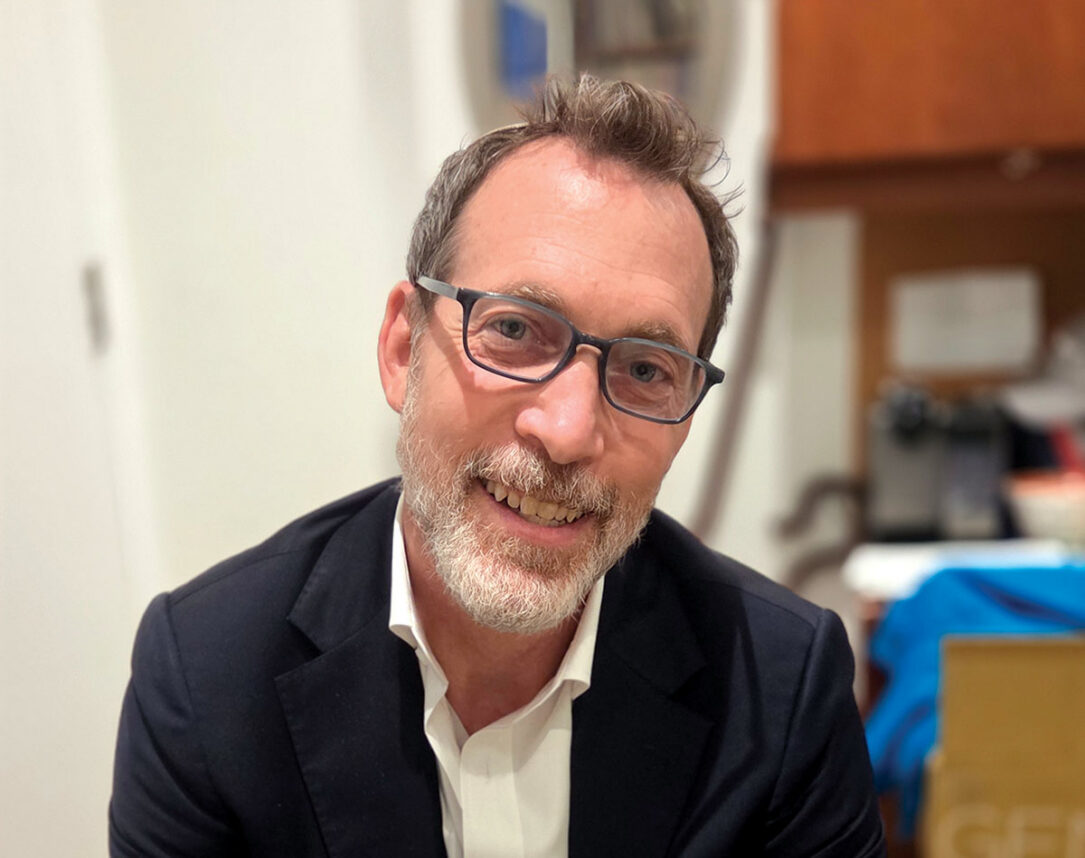
Jonathan Kirsch is book editor of the Jewish Journal, and author of, among other books, “The Harlot by the Side of the Road: Forbidden Tales of the Bible.”