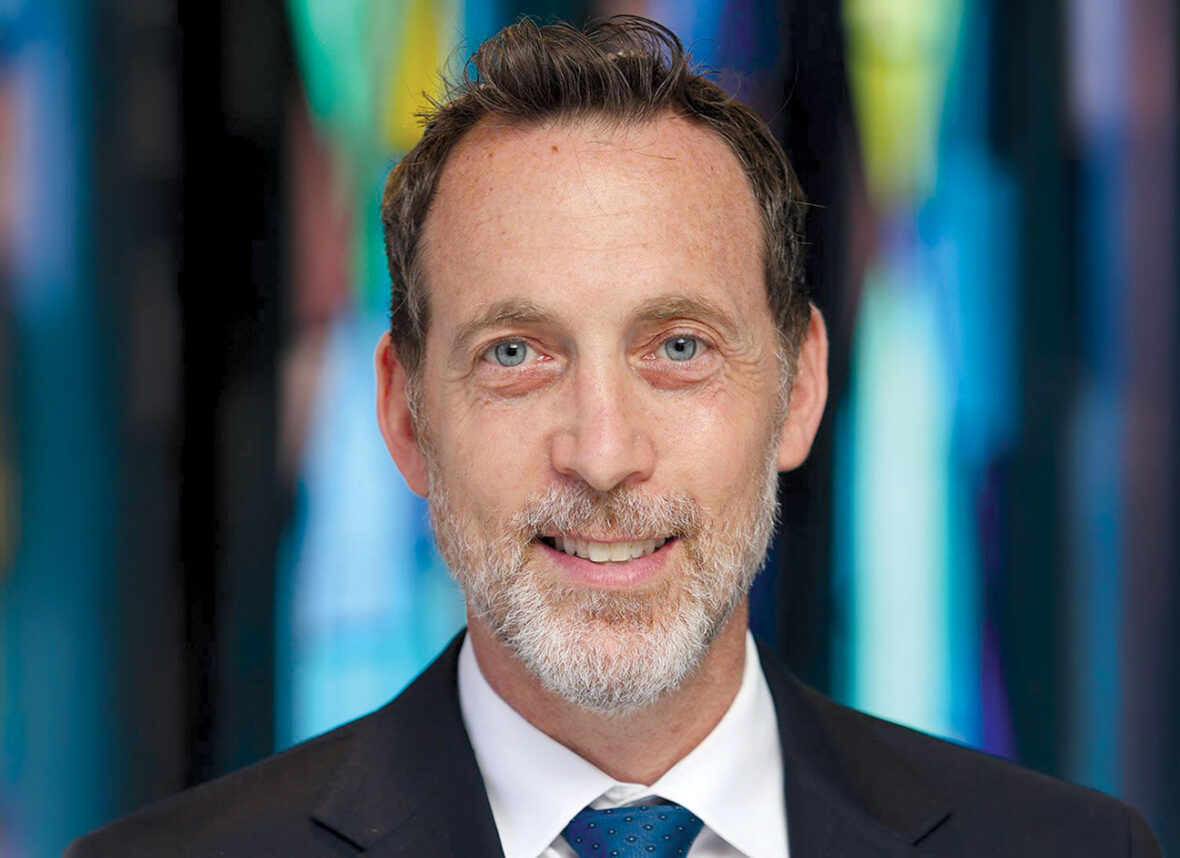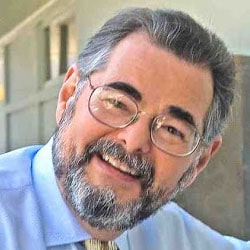
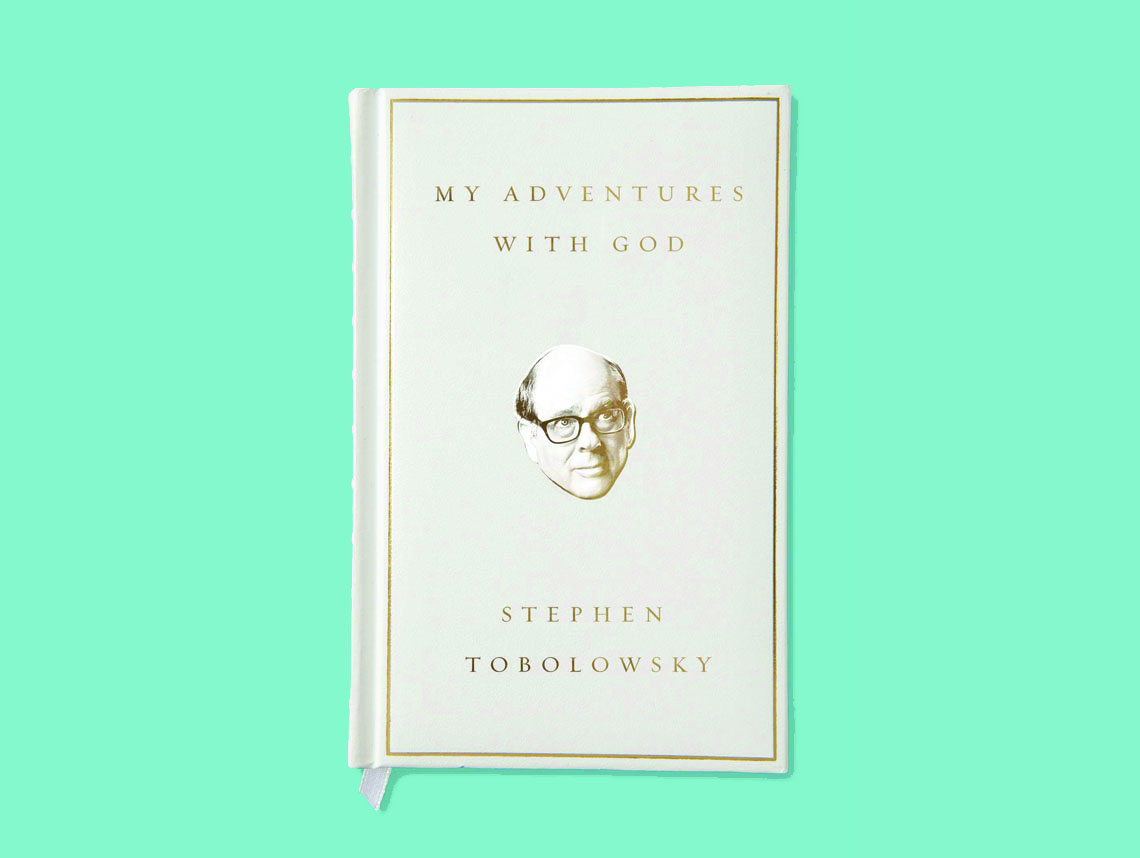
Stephen Tobolowsky is one of those gifted character actors, most often cast in comic roles, whose name may not be familiar to you but whose face is unforgettable. After all, you’ve seen him in more than 100 movies, including “Groundhog Day” and “Memento,” and 200 television shows. Now you can see that famous face on the cover of his book “My Adventures With God” (Simon & Schuster), which Tobolowsky describes as a collection of true stories from his own life that attempt to “map the unseen face,” that is, the face of God.
To be sure, God is a hovering presence throughout the book, but Tobolowsky’s book also is a memoir about his own efforts to find himself — and a measure of fame — in the entertainment industry. (“The first commandment for any pursuit in the arts is: Keep your day job,” he cautions.) His points of reference are dazzling in their variety, ranging from the Zohar to “Grimm’s Fairy Tales,” from the Torah and the Talmud to “2001: A Space Odyssey” and “Jaws.”
Along the way, he concedes that the earnest seeker can find himself on some strange byways.
“We seek transcendence through sex, drugs, payer, poetry, electric guitars, alcohol, pornography, superheroes, ballet, barbecue, zombies, trampolines, yoga, skydiving, Billie Holiday, Beethoven, Broadway musicals, running through forest fires on your way home from school, all-you-can-eat buffets, Santa Claus, and the lazy man’s form of transcendence, lying,” he writes.
For Tobolowsky, the journey began in his early childhood in Texas, which he recalls in colorful and charming detail. “In our home, we didn’t have Plato or Epicurus,” he writes. We had my mother. She was the spiritual center of our family, our philosopher in chief.”
As he shows us, she challenged her young son’s mind with her provocative adages. “One morning as I watched cartoons, Mom walked past me carrying a load of laundry. She stopped and said, ‘We should all be cats.’ Then she walked on.” For Tobolowsky, the words called him away from the TV set and started him thinking deep thoughts. “She was my Oracle at Delphi.”
But Tobolowsky also was compelled to confront the hard realities that he experienced as he grew up. A childhood friend was kidnapped and murdered; he experienced the tumult and heartbreak of the Kennedy assassination in the place where it happened; he heard from a teacher about how the man’s sister called on her 40th birthday and committed suicide while he was on the phone with her. He quickly learned that scary things were not confined to the pages of books or the movie screen. “All dreams end up with a silent partner, the real world,” he writes.
Tobolowsky describes his dues-paying years in Los Angeles in the mid-’70s. His girlfriend, who worked in a dog food plant by day and wrote at night, was Beth Henley, the future Pulitzer Prize-winning playwright. As her own career soared on the wings of “Crimes of the Heart,” Tobolowsky recalls, she was able to afford a house in the Hollywood Hills and a large staff. “I once joked that I had been demoted from sweetie to yard boy,” he writes.
His social encounters often were drug-enhanced, but he discovered that “cocaine was a substitute for having something worthwhile to say.” And the heights that he sought to ascend began to strike him as not only pointless but dangerous: “We were all lemmings looking for higher cliffs to jump off.”
What he really was seeking, Tobolowsky eventually discovered, was redemption — and not the kind that one achieves with green stamps, as he points out, jokingly. He found it at a little shul in the San Fernando Valley called Beth Meier, where his return to Jewish observance began in earnest. He is still on that path: “Language-wise I am still somewhere in the subbasement of the Tower of Babel,” he writes of his command of Hebrew. “At the rate I’m learning, I will be able to read fluently around the time our sun explodes.”
As he recounts in the book, when asked by an interviewer to describe his Jewishness, he says: “Judaism is not something I do. It is something I am.”
As I read “My Adventures With God,” I recalled a role that Tobolowsky played on “Seinfeld” — a holistic healer who tells Jerry: “You’re eating too much dairy.” It’s a sharp-edged parody of the religious improvisation that Tobolowsky encountered when he came to California in search of an acting career. I realize now that it was a role he was born to play, and his book will explain exactly why.
JONATHAN KIRSCH, author and publishing attorney, is the book editor of the Jewish Journal.