fbpx

May 18, 2017

Actor’s search for meaning leads to a small shul in the Valley

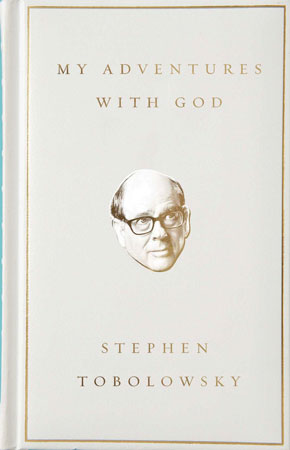
Stephen Tobolowsky is one of those gifted character actors, most often cast in comic roles, whose name may not be familiar to you but whose face is unforgettable. After all, you’ve seen him in more than 100 movies, including “Groundhog Day” and “Memento,” and 200 television shows. Now you can see that famous face on the cover of his book “My Adventures With God” (Simon & Schuster), which Tobolowsky describes as a collection of true stories from his own life that attempt to “map the unseen face,” that is, the face of God.

To be sure, God is a hovering presence throughout the book, but Tobolowsky’s book also is a memoir about his own efforts to find himself — and a measure of fame — in the entertainment industry.  (“The first commandment for any pursuit in the arts is: Keep your day job,” he cautions.) His points of reference are dazzling in their variety, ranging from the Zohar to “Grimm’s Fairy Tales,” from the Torah and the Talmud to “2001: A Space Odyssey” and “Jaws.”

Along the way, he concedes that the earnest seeker can find himself on some strange byways.

“We seek transcendence through sex, drugs, payer, poetry, electric guitars, alcohol, pornography, superheroes, ballet, barbecue, zombies, trampolines, yoga, skydiving, Billie Holiday, Beethoven, Broadway musicals, running through forest fires on your way home from school, all-you-can-eat buffets, Santa Claus, and the lazy man’s form of transcendence, lying,” he writes.

For Tobolowsky, the journey began in his early childhood in Texas, which he recalls in colorful and charming detail. “In our home, we didn’t have Plato or Epicurus,” he writes. We had my mother. She was the spiritual center of our family, our philosopher in chief.”

As he shows us, she challenged her young son’s mind with her provocative adages. “One morning as I watched cartoons, Mom walked past me carrying a load of laundry. She stopped and said, ‘We should all be cats.’ Then she walked on.” For Tobolowsky, the words called him away from the TV set and started him thinking deep thoughts. “She was my Oracle at Delphi.”

But Tobolowsky also was compelled to confront the hard realities that he experienced as he grew up. A childhood friend was kidnapped and murdered; he experienced the tumult and heartbreak of the Kennedy assassination in the place where it happened; he heard from a teacher about how the man’s sister called on her 40th birthday and committed suicide while he was on the phone with her. He quickly learned that scary things were not confined to the pages of books or the movie screen. “All dreams end up with a silent partner, the real world,” he writes.

Tobolowsky describes his dues-paying years in Los Angeles in the mid-’70s. His girlfriend, who worked in a dog food plant by day and wrote at night, was Beth Henley, the future Pulitzer Prize-winning playwright. As her own career soared on the wings of “Crimes of the Heart,” Tobolowsky recalls, she was able to afford a house in the Hollywood Hills and a large staff. “I once joked that I had been demoted from sweetie to yard boy,” he writes.

His social encounters often were drug-enhanced, but he discovered that “cocaine was a substitute for having something worthwhile to say.” And the heights that he sought to ascend began to strike him as not only pointless but dangerous: “We were all lemmings looking for higher cliffs to jump off.”

What he really was seeking, Tobolowsky eventually discovered, was redemption — and not the kind that one achieves with green stamps, as he points out, jokingly. He found it at a little shul in the San Fernando Valley called Beth Meier, where his return to Jewish observance began in earnest. He is still on that path: “Language-wise I am still somewhere in the subbasement of the Tower of Babel,” he writes of his command of Hebrew. “At the rate I’m learning, I will be able to read fluently around the time our sun explodes.” 

As he recounts in the book, when asked by an interviewer to describe his Jewishness, he says: “Judaism is not something I do. It is something I am.”

As I read “My Adventures With God,” I recalled a role that Tobolowsky played on “Seinfeld” — a holistic healer who tells Jerry: “You’re eating too much dairy.” It’s a sharp-edged parody of the religious improvisation that Tobolowsky encountered when he came to California in search of an acting career. I realize now that it was a role he was born to play, and his book will explain exactly why. 


JONATHAN KIRSCH, author and publishing attorney, is the book editor of the Jewish Journal.

Actor’s search for meaning leads to a small shul in the Valley Read More »

Two voices share transgender story in opera ‘As One’

Even the smallest of operas typically are not written for a single voice, much less for a bifurcated one. But there are quite a few elements of Laura Kaminsky’s new chamber opera, “As One,” that could be considered rule-defying.

Its subject, for a start. “As One,” produced by Long Beach Opera (LBO) in its Southern California premiere, focuses on the journey of a transgender person who transitions from man to woman. The two characters  — Hannah (Before) and Hannah (After) — are sung by a male baritone and a female mezzo-soprano. Composer Kaminsky, whose body of work primarily is not for vocal performance, developed the concept and created the piece with librettists Mark Campbell and Kimberly Reed, a transgender filmmaker whose life “As One” partially is based on .

The resources and production values also are decidedly nontraditional. Instead of a full orchestra, the 75-minute “As One” utilizes a string quartet and film footage. Hence, the production’s director, David Schweizer, believes “As One” has found the right home for its Southern California debut.

“Opera theaters are becoming more adventurous about programming new work,” said Schweizer, who has worked extensively at LBO. “There are certain trends which Long Beach Opera has been doing for decades — the idea of doing opera in alternate spaces and new works on more of a chamber opera scale so they’re not quite so expensive to produce. These are more intimate works that open up new opportunities for storytelling.”

“It’s been a transformative piece for me,” added the New York-based Kaminsky, who traveled to Long Beach to attend the work’s opening performance on May 13. “Working with Mark and Kim to create Hannah, we have touched not just people in the trans and LGBTQ community but general audiences, who have had to think about what does it mean to be a fully realized person. This has been a joyful experience for me and it has led to other opportunities.”

In the spirit of unconventional journeys, Kaminsky’s arrival at “As One” came through a couple of separate “aha!” moments.

Having married her wife in Canada before same-sex marriage became legal throughout the United States, Kaminsky tracked the issue in the news as state after state voted on whether to legalize same-sex marriage. As the New Jersey vote was approaching, a New York Times account of a New Jersey husband and wife with two teenage children caught Kaminsky’s attention. The father was transitioning to a woman and the family was planning to stay intact, even if the vote went the wrong way for them and the pair would no longer be considered a legal entity once his transition to being a woman was complete.

“I said, ‘Oh, my God, this is an opera,’ ” Kaminsky said. “You’re asking the question, Who are you at your core? Who are you if you are about to change to become more than who you are, and what does that do to your relationship? What does society and its rules and expectations and demands do to that transformation of a person?”

Kaminsky filed the idea away on her creative to-do list. A year later, she received a fellowship to travel to St. Petersburg, Russia, to seek out Soviet-era music that previously had not been heard in the United States. Among the music she brought back was a series of Yiddish propaganda songs for Lenin and Stalin, some jazz tracks and some newly discovered operatic arias that Dmitri Shostakovich had written to sing to soldiers on the front lines during the siege of Leningrad.

Kaminsky invited the husband-and-wife singers Kelly Markgraf and Sasha Cooke to perform the Shostakovich works. The experience was so fulfilling that Kaminsky returned to her idea for a transitioning-themed opera, envisioning the same character being played by a man and woman.

“That is not typically how operas happen,” she said. “There was a concept, but there was no story, no opera company, nothing. There was just this persistent idea that crystallized that they would be one person.”

After seeing “Portable Son,” Reed’s documentary about her return to her hometown as a transgender woman, Kaminsky knew she had found her collaborator. Reed and Campbell wrote the libretto and “As One” had its premiere in the fall of 2014 at the Brooklyn Academy of Music with Cooke and Markgraf singing the roles of Hannah.

Schweizer interviewed to direct that production, but the assignment went to a director the two singers had worked with previously. Eight productions later, when Long Beach Opera decided to stage the work, Schweizer was delighted to be asked to direct it. The LBO production features mezzo-soprano Danielle Marcelle Bond and baritone Lee Gregory, with the music conducted by LBO General and Artistic Director Andreas Mitisek.

Schweizer, who has a lengthy career working in both opera and live theater, calls “As One” “a very striking marriage of content and creative form.”

“Laura has done a remarkable job of both voicing the characters and sending out a musical message that also kind of transcends the situation,” Schweizer said. “There are very lyrical rapturous moments where the characters make certain discoveries along the way. There are very witty, eloquently scored exchanges where the character is undergoing awkward situations. The music for the piece has a flow and it feels like you can recognize her voice throughout.”

The daughter of a New York-raised father whose ancestry is Belarusian and a British mother, Kaminsky grew up in a liberal Jewish household on the Upper West Side of Manhattan. Her diverse career includes multiple academic appointments, artistic directorships and a stint as the associate director of humanities at the 92nd Street Y, where she coordinated the film and lecture series.

Jewish audiences have embraced “As One,” according to Kaminsky, who recently saw excerpts of the work performed at the Jewish Theological Seminary along with selections of Gerald Cohen’s Holocaust-themed opera, “Steal a Pencil for Me.”

“We performed it for the cantorial students and the general public,” Kaminsky said, “and entered into a conversation about spirit and meaning and a human message through music, all of the things that good art does.”

“As One” will be performed May 20 and 21 at the Beverly O’Neill Theater in Long Beach. For tickets and more information, visit this story at jewishjournal.com.

Two voices share transgender story in opera ‘As One’ Read More »

Jason Drucker takes ‘Wimpy Kid’ lead in stride

More than 2,000 boys competed for the starring role of Greg Heffley in the new film “Diary of a Wimpy Kid: The Long Haul.” Jason Drucker of Miami, 11, got the part.

“I was a huge fan of the series. I never thought I’d be in the movie,” Jason said by telephone.

Jason began acting in 2013 with a recurring role on the Nickelodeon series  “Every Witch Way.” He’s also been on the TV show “Chicago Fire” and played the lead in a short film called “Nightmarish.”

His role as Greg Heffley was his most challenging yet.

It was an incredible experience,” Jason said. “I never realized that being a lead in a film would be so demanding of my time. I realized I’m pretty good under pressure.”

“Diary of a Wimpy Kid: The Long Haul,” the fourth movie in the franchise, follows Greg as he and his brother Rodrick convince their parents to take a road trip to their grandmother’s house for her 90th birthday celebration. Their true motivation, however, is to go to a video game convention. Alicia Silverstone and Tom Everett Scott play the boys’ parents.

“It was pretty nerve-wracking, but it was exciting when I booked it,” he said of his audition. “That happened two weeks after the screen testing. Then the shoot was around 10 weeks long.”

In the film, the Heffley family owns a pet pig that was “a bunch of fun to shoot with,” Jason said. “I never would have thought I could shoot a movie with a pig. Her real name was Charlotte.”

Jason is balancing his sixth-grade studies and acting by taking classes online and working with on-set tutors. It was especially challenging while shooting “Diary of a Wimpy Kid.”

“It was a bit too difficult to work out regular school with my acting career,” he said. “On set, it’s always a bunch of fun because I’m doing what I love and I’m able to pursue it. When I had any free time on set, they would have me in school. My tutor was there in case I needed help. That was definitely a life saver.”

When Jason was filming in Atlanta, his parents and other members of his family would stay with him on set. He is the second of three brothers, just like Greg Heffley. Though his siblings tried acting a few years ago, Jason is the only one still pursuing it.

“My close friends and my whole family are really supportive, and maybe more excited about the movie than I am,” he said.

Though he hasn’t begun preparing for his bar mitzvah, Jason attends Sunday school every week at Temple Solel in Hollywood, Fla. “I go and learn about the Jewish culture and language,”  he said.

Jason and his family do not have plans to move to Los Angeles for his career, but he will be visiting the area to promote the movie.

“I don’t really prepare for the red carpet,” he said. “I get in my suit or whatever I’m wearing and I go out there with confidence and smile for the camera.”

“Diary of a Wimpy Kid: The Long Haul” opens in theaters May 19.

Jason Drucker takes ‘Wimpy Kid’ lead in stride Read More »

‘Wedding Plan’ a perfect match for Israeli actress

From her earliest memories while growing up in Petah Tikvah, Israeli actress Noa Koler dreamed of becoming a performer.

“I wanted to be on a stage, and I wanted everyone to know me and see me and be talking about me,” the exuberant Koler recalled, laughing, during a telephone interview from her home in Tel Aviv. She even used to pretend she was on the news. “I would interview myself,” she said with another laugh.

Now 36, Koler finally has arrived as an actress, having earned her first leading role in a film, Rama Burshtein’s “The Wedding Plan,” which has been well received in Israel and the United States and opens in Los Angeles on May 19. Koler’s first turn as a romantic lead earned her the best actress prize at the 2016 Ophir Awards, the Israeli version of the Oscars. Now, she’s also the star of an Israeli TV series, a thriller called “Diaries.”

But before Burshtein came calling a few years ago, stardom had proved elusive for Koler. After graduating from the Yoram Levinstein acting school in Tel Aviv, she became an ensemble member of the Gesher Theater group and performed on Israeli TV series such as “Srugim,” about singles in Jerusalem, and “You Can’t Choose Your Family,” the Israeli adaptation of “Everybody Loves Raymond.”

She said she always was typecast as a character actress, relegated to comic roles or to portraying wives and best friends until Burshtein entered the scene. The esteemed ultra-Orthodox filmmaker of 2012’s Ophir-winning “Fill the Void” was looking for a nuanced performer for her new film, “The Wedding Plan.”

Originally titled “Through the Wall,” the comedy-drama revolves around Michal, a single woman who had become religious in her 20s and, a decade later, finally is engaged to be married. When her fiancé (Erez Drigues) unexpectedly dumps her just a month before their scheduled nuptials, the determined Michal refuses to cancel her wedding plans. She buys a fancy white dress, rents a wedding hall and hopes God will somehow provide her with another groom.

After three auditions, Burshtein cast Koler as Michal; like her character, Koler also had a pipe dream —becoming a leading actress — that actually came true.

“[Noa’s] big break came at the age of 34, which is kind of a big deal for an actress,” Tammy Cohen, the film’s associate producer, said while helping to translate for Koler during the Journal interview.

Koler said she was drawn to her character, in part, because Michal “is strong and funny. … She’s afraid but nothing stops her. … She does things that I would never do … like getting married with no groom.”

Not that Koler didn’t ardently aspire to find a husband when she was single and in her 20s. In real life, she experienced a doomed romance with Drigues, her co-star in “The Wedding Plan,” who had been a fellow member of the Gesher troupe. After he broke up with her about 10 years ago, the former lovers wrote a play together, “One Plus One,” based on their romance and its dissolution, which was performed on the Gesher stage.

“It started out like therapy, to try to move on,” Koler said. “Now, we’re trying to make a TV show based on the same story.”

The pair appearing together in “The Wedding Plan” was an example of art imitating life.

“He broke up with me [in real life] and in the movie he breaks up with me again,” Koler said. But performing scenes opposite her ex wasn’t painful for the actress. “I was used to it,” she said. “It’s like I’d been there, done that.”

Some time after their parting, Koler wrote a letter to herself about what she hoped for in a future husband. “It was a story about a man who’s a carpenter and who cooks,” she said. Eventually, a friend introduced her to the man she would marry, who happened to enjoy carpentry as a hobby while also working as the owner of a hummus restaurant. They married when Koler was 27 and already pregnant with the first of their two children, now 6 and 1.

During one of her auditions for “The Wedding Plan,” Koler chose to wear a cheerful, flowery dress to reflect her sense of Michal as a basically happy person with just one thing missing from her life. “In Israel, usually when [filmmakers] do stuff about religious people, it’s much darker and serious,” Koler said.

Burstein liked her interpretation of the character and called back Koler for two more auditions. The third happened to be scheduled on the same day as her 99-year-old grandfather’s funeral about three years ago.

“But my father told me that I … didn’t have to come [to the funeral],” Koler recalled. “He said that my grandfather was thinking of me and asking me to stay with the audition. Afterward, I went to the cemetery, but [everyone had left] except my two brothers. The three of us just stood at the grave, and we spoke to him. … I said, ‘Saba, thank you. I auditioned and I think I got the part. Rest in peace.’ And it was a small, intimate moment for us.”

The secular Koler had numerous conversations with Burshtein in order to understand Michal and her faith; while she had previously looked down at the Orthodox matchmaking process, she came to appreciate that in the observant world “both people are set in the same direction, which is marriage and a life together, not just where they will end up that evening.”

But Koler disagrees with Burshtein’s belief, as conveyed in “Fill the Void” and “The Wedding Plan,” that a woman is incomplete without a husband. “It’s not about getting married; it’s about giving and receiving love,” she said. And [in that way] I think a woman can be complete.”

Yet something changed regarding Koler’s own faith after working on Burshtein’s movie. These days, she said, she addresses the Divine every night, “asking for help but also saying thank you.”

Her Ophir Award was grounds for giving thanks. When her name was called at the ceremony, “I was so nervous and happy, I lost my voice,” Koler recalled.

She made her Ophir acceptance speech “with a frog in my throat,” she added. “It was fun and funny and crazy, like a roller-coaster ride.”

“The Wedding Plan” opens in Los Angeles on May 19. 

‘Wedding Plan’ a perfect match for Israeli actress Read More »

Actor Stephen Tobolowsky’s search for meaning

To be sure, God is a hovering presence throughout the book, but Tobolowsky’s book also is a memoir about his own efforts to find himself — and a measure of fame — in the entertainment industry.  (“The first commandment for any pursuit in the arts is: Keep your day job,” he cautions.) His points of reference are dazzling in their variety, ranging from the Zohar to “Grimm’s Fairy Tales,” from the Torah and the Talmud to “2001: A Space Odyssey” and “Jaws.”

Along the way, he concedes that the earnest seeker can find himself on some strange byways.

“We seek transcendence through sex, drugs, payer, poetry, electric guitars, alcohol, pornography, superheroes, ballet, barbecue, zombies, trampolines, yoga, skydiving, Billie Holiday, Beethoven, Broadway musicals, running through forest fires on your way home from school, all-you-can-eat buffets, Santa Claus, and the lazy man’s form of transcendence, lying,” he writes.

For Tobolowsky, the journey began in his early childhood in Texas, which he recalls in colorful and charming detail. “In our home, we didn’t have Plato or Epicurus,” he writes. We had my mother. She was the spiritual center of our family, our philosopher in chief.”

As he shows us, she challenged her young son’s mind with her provocative adages. “One morning as I watched cartoons, Mom walked past me carrying a load of laundry. She stopped and said, ‘We should all be cats.’ Then she walked on.” For Tobolowsky, the words called him away from the TV set and started him thinking deep thoughts. “She was my Oracle at Delphi.”

But Tobolowsky also was compelled to confront the hard realities that he experienced as he grew up. A childhood friend was kidnapped and murdered; he experienced the tumult and heartbreak of the Kennedy assassination in the place where it happened; he heard from a teacher about how the man’s sister called on her 40th birthday and committed suicide while he was on the phone with her. He quickly learned that scary things were not confined to the pages of books or the movie screen. “All dreams end up with a silent partner, the real world,” he writes.

Tobolowsky describes his dues-paying years in Los Angeles in the mid-’70s. His girlfriend, who worked in a dog food plant by day and wrote at night, was Beth Henley, the future Pulitzer Prize-winning playwright. As her own career soared on the wings of “Crimes of the Heart,” Tobolowsky recalls, she was able to afford a house in the Hollywood Hills and a large staff. “I once joked that I had been demoted from sweetie to yard boy,” he writes.

His social encounters often were drug-enhanced, but he discovered that “cocaine was a substitute for having something worthwhile to say.” And the heights that he sought to ascend began to strike him as not only pointless but dangerous: “We were all lemmings looking for higher cliffs to jump off.”

What he really was seeking, Tobolowsky eventually discovered, was redemption — and not the kind that one achieves with green stamps, as he points out, jokingly. He found it at a little shul in the San Fernando Valley called Beth Meier, where his return to Jewish observance began in earnest. He is still on that path: “Language-wise I am still somewhere in the subbasement of the Tower of Babel,” he writes of his command of Hebrew. “At the rate I’m learning, I will be able to read fluently around the time our sun explodes.”

As he recounts in the book, when asked by an interviewer to describe his Jewishness, he says: “Judaism is not something I do. It is something I am.”

As I read “My Adventures With God,” I recalled a role that Tobolowsky played on “Seinfeld” — a holistic healer who tells Jerry: “You’re eating too much dairy.” It’s a sharp-edged parody of the religious improvisation that Tobolowsky encountered when he came to California in search of an acting career. I realize now that it was a role he was born to play, and his book will explain exactly why.

Actor Stephen Tobolowsky’s search for meaning Read More »

Two voices share transgender story in opera ‘As One’

Even the smallest of operas typically are not written for a single voice, much less for a bifurcated one. But there are quite a few elements of Laura Kaminsky’s new chamber opera, “As One,” that could be considered rule-defying.

Its subject, for a start. “As One,” produced by Long Beach Opera (LBO) in its Southern California premiere, focuses on the journey of a transgender person who transitions from man to woman. The two characters  — Hannah (Before) and Hannah (After) — are sung by a male baritone and a female mezzo-soprano. Composer Kaminsky, whose body of work primarily is not for vocal performance, developed the concept and created the piece with librettists Mark Campbell and Kimberly Reed, a transgender filmmaker whose life “As One” partially is based on .

The resources and production values also are decidedly nontraditional. Instead of a full orchestra, the 75-minute “As One” utilizes a string quartet and film footage. Hence, the production’s director, David Schweizer, believes “As One” has found the right home for its Southern California debut.

“Opera theaters are becoming more adventurous about programming new work,” said Schweizer, who has worked extensively at LBO. “There are certain trends which Long Beach Opera has been doing for decades — the idea of doing opera in alternate spaces and new works on more of a chamber opera scale so they’re not quite so expensive to produce. These are more intimate works that open up new opportunities for storytelling.”

“It’s been a transformative piece for me,” added the New York-based Kaminsky, who traveled to Long Beach to attend the work’s opening performance on May 13. “Working with Mark and Kim to create Hannah, we have touched not just people in the trans and LGBTQ community but general audiences, who have had to think about what does it mean to be a fully realized person. This has been a joyful experience for me and it has led to other opportunities.”

In the spirit of unconventional journeys, Kaminsky’s arrival at “As One” came through a couple of separate “aha!” moments.

Having married her wife in Canada before same-sex marriage became legal throughout the United States, Kaminsky tracked the issue in the news as state after state voted on whether to legalize same-sex marriage. As the New Jersey vote was approaching, a New York Times account of a New Jersey husband and wife with two teenage children caught Kaminsky’s attention. The father was transitioning to a woman and the family was planning to stay intact, even if the vote went the wrong way for them and the pair would no longer be considered a legal entity once his transition to being a woman was complete.

“I said, ‘Oh, my God, this is an opera,’ ” Kaminsky said. “You’re asking the question, Who are you at your core? Who are you if you are about to change to become more than who you are, and what does that do to your relationship? What does society and its rules and expectations and demands do to that transformation of a person?”

Kaminsky filed the idea away on her creative to-do list. A year later, she received a fellowship to travel to St. Petersburg, Russia, to seek out Soviet-era music that previously had not been heard in the United States. Among the music she brought back was a series of Yiddish propaganda songs for Lenin and Stalin, some jazz tracks and some newly discovered operatic arias that Dmitri Shostakovich had written to sing to soldiers on the front lines during the siege of Leningrad.

Kaminsky invited the husband-and-wife singers Kelly Markgraf and Sasha Cooke to perform the Shostakovich works. The experience was so fulfilling that Kaminsky returned to her idea for a transitioning-themed opera, envisioning the same character being played by a man and woman.

“That is not typically how operas happen,” she said. “There was a concept, but there was no story, no opera company, nothing. There was just this persistent idea that crystallized that they would be one person.”

After seeing “Portable Son,” Reed’s documentary about her return to her hometown as a transgender woman, Kaminsky knew she had found her collaborator. Reed and Campbell wrote the libretto and “As One” had its premiere in the fall of 2014 at the Brooklyn Academy of Music with Cooke and Markgraf singing the roles of Hannah.

Schweizer interviewed to direct that production, but the assignment went to a director the two singers had worked with previously. Eight productions later, when Long Beach Opera decided to stage the work, Schweizer was delighted to be asked to direct it. The LBO production features mezzo-soprano Danielle Marcelle Bond and baritone Lee Gregory, with the music conducted by LBO General and Artistic Director Andreas Mitisek.

Schweizer, who has a lengthy career working in both opera and live theater, calls “As One” “a very striking marriage of content and creative form.”

“Laura has done a remarkable job of both voicing the characters and sending out a musical message that also kind of transcends the situation,” Schweizer said. “There are very lyrical rapturous moments where the characters make certain discoveries along the way. There are very witty, eloquently scored exchanges where the character is undergoing awkward situations. The music for the piece has a flow and it feels like you can recognize her voice throughout.”

The daughter of a New York-raised father whose ancestry is Belarusian and a British mother, Kaminsky grew up in a liberal Jewish household on the Upper West Side of Manhattan. Her diverse career includes multiple academic appointments, artistic directorships and a stint as the associate director of humanities at the 92nd Street Y, where she coordinated the film and lecture series.

Jewish audiences have embraced “As One,” according to Kaminsky, who recently saw excerpts of the work performed at the Jewish Theological Seminary along with selections of Gerald Cohen’s Holocaust-themed opera, “Steal a Pencil for Me.”

“We performed it for the cantorial students and the general public,” Kaminsky said, “and entered into a conversation about spirit and meaning and a human message through music, all of the things that good art does.”

“As One” will be performed May 20 and 21 at 2:30 p.m. at the Beverly O’Neill  Theater, 300 E. Ocean Blvd., Long  Beach. For tickets and information, call (562) 470-7464 or longbeachopera.org/tickets.


Two voices share transgender story in opera ‘As One’ Read More »

Jason Drucker takes ‘Wimpy Kid’ lead in stride

Jason Drucker stars in the new film “Diary of a Wimpy Kid: The Long Haul.” Photo courtesy of Erica Tucker

More than 2,000 boys competed for the starring role of Greg Heffley in the new film “Diary of a Wimpy Kid: The Long Haul.” Jason Drucker of Miami, 11, got the part.

“I was a huge fan of the series. I never thought I’d be in the movie,” Jason said by telephone.

Jason began acting in 2013 with a recurring role on the Nickelodeon series  “Every Witch Way.” He’s also been on the TV show “Chicago Fire” and played the lead in a short film called “Nightmarish.”

His role as Greg Heffley was his most challenging yet.

“It was an incredible experience,” Jason said. “I never realized that being a lead in a film would be so demanding of my time. I realized I’m pretty good under pressure.”

“Diary of a Wimpy Kid: The Long Haul,” the fourth movie in the franchise, follows Greg as he and his brother Rodrick convince their parents to take a road trip to their grandmother’s house for her 90th birthday celebration. Their true motivation, however, is to go to a video game convention. Alicia Silverstone and Tom Everett Scott play the boys’ parents.

“It was pretty nerve-wracking, but it was exciting when I booked it,” he said of his audition. “That happened two weeks after the screen testing. Then the shoot was around 10 weeks long.”

In the film, the Heffley family owns a pet pig that was “a bunch of fun to shoot with,” Jason said. “I never would have thought I could shoot a movie with a pig. Her real name was Charlotte.”

Jason is balancing his sixth-grade studies and acting by taking classes online and working with on-set tutors. It was especially challenging while shooting “Diary of a Wimpy Kid.”

“It was a bit too difficult to work out regular school with my acting career,” he said. “On set, it’s always a bunch of fun because I’m doing what I love and I’m able to pursue it. When I had any free time on set, they would have me in school. My tutor was there in case I needed help. That was definitely a life saver.”

When Jason was filming in Atlanta, his parents and other members of his family would stay with him on set. He is the second of three brothers, just like Greg Heffley. Though his siblings tried acting a few years ago, Jason is the only one still pursuing it.

“My close friends and my whole family are really supportive, and maybe more excited about the movie than I am,” he said.

Though he hasn’t begun preparing for his bar mitzvah, Jason attends Sunday school every week at Temple Solel in Hollywood, Fla. “I go and learn about the Jewish culture and language,”  he said.

Jason and his family do not have plans to move to Los Angeles for his career, but he will be visiting the area to promote the movie.

“I don’t really prepare for the red carpet,” he said. “I get in my suit or whatever I’m wearing and I go out there with confidence and smile for the camera.”

“Diary of a Wimpy Kid: The Long Haul” opens in theaters May 19. 

Jason Drucker takes ‘Wimpy Kid’ lead in stride Read More »

‘Wedding Plan’ is a perfect match for Israeli actress

From her earliest memories while growing up in Petah Tikvah, Israeli actress Noa Koler dreamed of becoming a performer.

“I wanted to be on a stage, and I wanted everyone to know me and see me and be talking about me,” the exuberant Koler recalled, laughing, during a telephone interview from her home in Tel Aviv. She even used to pretend she was on the news. “I would interview myself,” she said with another laugh.

Now 36, Koler finally has arrived as an actress, having earned her first leading role in a film, Rama Burshtein’s “The Wedding Plan,” which has been well received in Israel and the United States and opens in Los Angeles on May 19. Koler’s first turn as a romantic lead earned her the best actress prize at the 2016 Ophir Awards, the Israeli version of the Oscars. Now, she’s also the star of an Israeli TV series, a thriller called “Diaries.”

But before Burshtein came calling a few years ago, stardom had proved elusive for Koler. After graduating from the Yoram Levinstein acting school in Tel Aviv, she became an ensemble member of the Gesher Theater group and performed on Israeli TV series such as “Srugim,” about singles in Jerusalem, and “You Can’t Choose Your Family,” the Israeli adaptation of “Everybody Loves Raymond.”

She said she always was typecast as a character actress, relegated to comic roles or to portraying wives and best friends until Burshtein entered the scene. The esteemed ultra-Orthodox filmmaker of 2012’s Ophir-winning “Fill the Void” was looking for a nuanced performer for her new film, “The Wedding Plan.”

Originally titled “Through the Wall,” the comedy-drama revolves around Michal, a single woman who had become religious in her 20s and, a decade later, finally is engaged to be married. When her fiancé (Erez Drigues) unexpectedly dumps her just a month before their scheduled nuptials, the determined Michal refuses to cancel her wedding plans. She buys a fancy white dress, rents a wedding hall and hopes God will somehow provide her with another groom.

After three auditions, Burshtein cast Koler as Michal; like her character, Koler also had a pipe dream —becoming a leading actress — that actually came true.

“[Noa’s] big break came at the age of 34, which is kind of a big deal for an actress,” Tammy Cohen, the film’s associate producer, said while helping to translate for Koler during the Journal interview.

Koler said she was drawn to her character, in part, because Michal “is strong and funny. … She’s afraid but nothing stops her. … She does things that I would never do … like getting married with no groom.”

Not that Koler didn’t ardently aspire to find a husband when she was single and in her 20s. In real life, she experienced a doomed romance with Drigues, her co-star in “The Wedding Plan,” who had been a fellow member of the Gesher troupe. After he broke up with her about 10 years ago, the former lovers wrote a play together, “One Plus One,” based on their romance and its dissolution, which was performed on the Gesher stage.

“It started out like therapy, to try to move on,” Koler said. “Now, we’re trying to make a TV show based on the same story.”

The pair appearing together in “The Wedding Plan” was an example of art imitating life.

“He broke up with me [in real life] and in the movie he breaks up with me again,” Koler said. But performing scenes opposite her ex wasn’t painful for the actress. “I was used to it,” she said. “It’s like I’d been there, done that.”

Some time after their parting, Koler wrote a letter to herself about what she hoped for in a future husband. “It was a story about a man who’s a carpenter and who cooks,” she said. Eventually, a friend introduced her to the man she would marry, who happened to enjoy carpentry as a hobby while also working as the owner of a hummus restaurant. They married when Koler was 27 and already pregnant with the first of their two children, now 6 and 1.

During one of her auditions for “The Wedding Plan,” Koler chose to wear a cheerful, flowery dress to reflect her sense of Michal as a basically happy person with just one thing missing from her life. “In Israel, usually when [filmmakers] do stuff about religious people, it’s much darker and serious,” Koler said.

Burstein liked her interpretation of the character and called back Koler for two more auditions. The third happened to be scheduled on the same day as her 99-year-old grandfather’s funeral about three years ago.

“But my father told me that I … didn’t have to come [to the funeral],” Koler recalled. “He said that my grandfather was thinking of me and asking me to stay with the audition. Afterward, I went to the cemetery, but [everyone had left] except my two brothers. The three of us just stood at the grave, and we spoke to him. … I said, ‘Saba, thank you. I auditioned and I think I got the part. Rest in peace.’ And it was a small, intimate moment for us.”

The secular Koler had numerous conversations with Burshtein in order to understand Michal and her faith; while she had previously looked down at the Orthodox matchmaking process, she came to appreciate that in the observant world “both people are set in the same direction, which is marriage and a life together, not just where they will end up that evening.”

But Koler disagrees with Burshtein’s belief, as conveyed in “Fill the Void” and “The Wedding Plan,” that a woman is incomplete without a husband. “It’s not about getting married; it’s about giving and receiving love,” she said. And [in that way] I think a woman can be complete.”

Yet something changed regarding Koler’s own faith after working on Burshtein’s movie. These days, she said, she addresses the Divine every night, “asking for help but also saying thank you.”

Her Ophir Award was grounds for giving thanks. When her name was called at the ceremony, “I was so nervous and happy, I lost my voice,” Koler recalled.

She made her Ophir acceptance speech “with a frog in my throat,” she added. “It was fun and funny and crazy, like a roller-coaster ride.”

“The Wedding Plan” opens in Los Angeles on May 19.

‘Wedding Plan’ is a perfect match for Israeli actress Read More »

HBO’s ‘Wizard of Lies’ finds the family drama in Madoff investment scandal

“Do you think I’m a sociopath?” Bernie Madoff, serving a 150-year prison sentence, asks visiting New York Times investigative reporter Diana B. Henriques in a scene from the HBO film “The Wizard of Lies.”

She doesn’t answer the question, but the title of the movie, which debuts on May 20 and is based on the book by Henriques, is enough to suggest her conclusion, practically defining a pathologically deceitful person.

Madoff, who marked his 79th birthday on April 29 at a federal prison in North Carolina, holds the dubious distinction of perpetrating the biggest financial fraud by an individual in American history. By the time of his arrest in 2008, Madoff had swindled his clients out of some $65 billion, mostly in fabricated gains, though “only” around $18 billion in actual losses.

According to reporting by The Wall Street Journal and the Los Angeles Times, among those left holding the bag locally were the Jewish Community Foundation of Los Angeles, to the tune of $18 million (which included $6.4 million lost by The Jewish Federation of Greater Los Angeles). Nationally, victims included the Hadassah women’s organization ($90 million), Yeshiva University ($140 million) and the Elie Wiesel Foundation for Humanity ($15.2 million).

In the years before his exposure, Madoff was hailed as a financial genius by the media and investors, and the famous and wealthy begged him to accept their million-dollar checks, no questions asked.

In reality, Madoff ran a giant Ponzi scheme, in which his clients earned dividends of 10 percent or higher like clockwork, year after year. This operation worked as long as a steady stream of new big-time investors channeled fresh funds to Madoff, allowing him to pay generous dividends to his old investors — and providing him with a billionaire lifestyle in Manhattan and Florida.

But in 2008, when the stock market plunged and large investors tried to pull their money from Madoff-controlled funds, the “financial genius” desperately scrambled for an infusion of new money. He failed and the Ponzi pyramid collapsed.

In a dramatic scene in “The Wizard of Lies,” Madoff confesses to having lived a lie to his immediate family members, who also pay heavily for his crimes. His wife, Ruth, is portrayed by Michelle Pfeiffer as a once reigning society hostess now shunned by all. In the privacy of their bedroom, she asks only one question: “Why, Bernie? Why?”

He replies, weakly, “I didn’t mean to harm anyone. I just couldn’t stop.”

Two years after Madoff’s arrest, his older son, Mark (Alessandro Nivola), committed suicide by hanging himself, leaving behind a bitter note blaming his father. Even that was not the end of the family’s misery, as younger son Andrew (Nathan Darrow) died of cancer at 48 in 2014.

For “The Wizard of Lies,” veteran director Barry Levinson, whose resume includes such classics as “Rain Man” and “Good Morning, Vietnam,” put major emphasis on the relationships within the Madoff clan.

His film follows ABC’s “Madoff,” a four-episode miniseries with Richard Dreyfuss in the title role and Blythe Danner as Ruth, which aired in 2016. It focused primarily on the mechanics of Madoff’s Ponzi scheme in particular and of Wall Street operations in general.

For the lead role in his film, Levinson chose Robert De Niro, not the first name that comes to mind to portray an aging, near-sighted Jewish swindler. But Levinson noted to the Journal that De Niro, with some minor hairstyling, looks a lot like Madoff.

More important, Henriques, who interviewed the real Madoff in his jail cell for her book and then De Niro in the film (where she appears as herself), told the director that the Italian-American actor uncannily “got” the persona of Madoff.

To the surprise of some worriers, the exposure of Madoff’s misdeed did not lead to any widespread anti-Semitic backlash, except among some fringe websites and bloggers. It probably helped that Madoff swindled Jews, Catholics, Protestants and agnostics with equal gusto and lack of remorse. The reaction against the Jewish community might have been a lot stronger if Madoff had targeted only gentiles, Levinson speculated.

Regarding Madoff’s clients, was it possible that they were, in effect, his accomplices by letting their greed overcome their normal skepticism about a deal that appeared too good to be true? Levinson answered by observing it was part of Madoff’s shrewdness that he didn’t overplay his hand. While some scammers might have promised investors returns of 40 to 50 percent, Madoff stuck to around 10 percent, thus passing as a relatively “conservative” money manager.

Possible investors also were disarmed by Madoff’s personality. “He was not flashy, not a big talker, not incredibly charming, but more of a quiet, reserved man — that was his con,” Levinson said.

In any case, the director doubts that Americans will absorb any permanent lesson from his film or from Madoff’s ultimate fate.

“After that scandal, we tightened some stock market regulations, but they are now being rolled back,” Levinson said. “We haven’t learned anything, so we will be screwed again. We’ll always have flimflam operators. … We now have a president who says things which are not true, but people believe him.”

“The Wizard of Lies” will debut May 20 at 8 p.m. on HBO. 

HBO’s ‘Wizard of Lies’ finds the family drama in Madoff investment scandal Read More »

There’s a $149 deal on flights to Israel? Don’t believe the hype.

Wow, what a deal! Or not?

The headlines screamed at me from every Israeli newspaper, in both English and Hebrew: only $149 for a flight from Ben Gurion International Airport in Tel Aviv to New York on WOW air.

The Iceland-based airline has plastered Israel with advertisements featuring its distinctive purplish logo for the new deal, and many Israelis are talking about it. Flights begin on Sept. 20.

Of course, the no-frills flight goes through Reykjavik, the capital of Iceland, but that is not much of a hardship — people travel through European capitals all the time in search of cheap flights between Israel and the United States.

However, the Israeli business daily Globes helped to put the $149 fare into perspective.

For starters, the $149 price is only for a one-way ticket, and there is no guarantee that you will get the same fare for a return trip. The cost of flying home on the airline is more likely to cost around $400, according to Globes.

In addition, one suitcase of 44 pounds or more costs $70 dollars, each way — though a personal item such as a purse or backpack is thankfully still free.

Choosing a seat costs another $10 each way, which is not necessary but comfortable, especially if you are not travelling alone or cannot live without an aisle seat.

As for food, don’t even think about free snacks on a no-frills flight like this one. You will be brown-bagging it, unless you want to buy very over-priced offerings once you’re in the air.

After adding all of those considerations together, a round trip between one of several major cities in the United States and Israel on WOW air would cost around $700 or $800.

To put this into perspective, El Al, Israel’s national carrier, has $665 mid-week one-way fares on a round-trip flight to New York in September, the round trip being some $1,170.

And for all of you who do not live in New York or one of the major cities served by WOW, you would need a separate flight to your final destination. WOW does not appear to have any add-on deals with any domestic U.S. airlines — so if I wanted to travel to visit my family in Cleveland, for example, I would have to pay hundreds of dollars more. My total with an add-on to Cleveland on El Al comes out to $1,400. A stand-alone New York to Cleveland round trip is about $400, bringing my bargain WOW total to $1,200.

WOW isn’t sounding so, well, WOW anymore. I’ll take one of the major airlines, please.

There’s a $149 deal on flights to Israel? Don’t believe the hype. Read More »