fbpx

Europe’s Tragic Melody

\"Gloomy Sunday\" is the English title for the more aptly named German-Hungarian film \"A Song of Love and Death,\" but under either label it is a movie of exceptional visual and dramatic beauty.\n\nOpening in the 1930s in Budapest, fabled in pre-war Europe for its handsome architecture and women, \"Gloomy Sunday\" starts as a good, old-fashioned love triangle, or rather a quadrangle.\n\n
[additional-authors]
November 6, 2003

“Gloomy Sunday” is the English title for the more aptly named German-Hungarian film “A Song of Love and Death,” but under either label it is a movie of exceptional visual and dramatic beauty.

Opening in the 1930s in Budapest, fabled in pre-war Europe for its handsome architecture and women, “Gloomy Sunday” starts as a good, old-fashioned love triangle, or rather a quadrangle.

Vying for the ravishing Ilona (Erika Marozsán) are Laszlo (Joachim Król), who employs Ilona in his cafe-restaurant; Andras (Stefano Dionisi), the cafe’s soulful pianist; and Hans (Ben Becker), a somewhat awkward German tourist.

For Ilona’s birthday, Andras composes “Gloomy Sunday,” a ghostly but fascinating melody, whose somber lyrics tell of a distraught lover contemplating suicide to rejoin his dead mistress.

The 1930s song became a phenomenal hit in its native Hungary, throughout Europe, and in America through Billie Holliday’s recorded version. To the horror of its creators, the song triggered a string of suicides by young romantics throughout the world.

Also affected is Hans, who tries to drown himself in the Danube after Ilona refuses to marry him. He is rescued by Laszlo, and the two men swear eternal friendship.

A few years later, Hans returns to Budapest in the uniform of an SS officer to assist Adolf Eichmann in the final solution of the Jewish problem. Hans has found a better way by demanding large bribes from wealthy Jews to spare them from deportation.

Caught in the Nazi net is Laszlo, an indifferent Jew (“If my parents had been Iroquois, I’d be an Iroquois,” he shrugs) but a Jew, nevertheless. Initially, Hans shields his old rescuer, but ultimately turns his back as Laszlo is pushed on the train to Auschwitz.

Some 45 years later, Hans comes back to Budapest, now a fabulously wealthy businessman and even hailed as the noble savior of Budapest Jews during the war. He returns to Laszlo’s old restaurant, orders the violinist to play “Gloomy Sunday” — and finally pays for his betrayals.

German director Rolf Schuebel masterfully underplays a story that could easily have descended into mere sentimentality, and we guarantee that all male viewers will fall in love with Ilona, and all the ladies with the pianist Andras.

“Gloomy Sunday,” in German with English subtitles, opensNov. 7 at three Laemmle theaters: the Music Hall in Beverly Hills, the Playhousein Pasadena and the Town Center in Encino. For more information, visit www.laemmle.com .

Did you enjoy this article?
You'll love our roundtable.

Editor's Picks

Latest Articles

You Heard It Here First, Folks!

For over half a decade, I had seen how the slow drip of antisemitism, carefully enveloped in the language of social justice and human rights, had steadily poisoned people whom I had previously considered perfectly reasonable.

Trump’s Critics Have a Lot Riding on the Iran Conflict

Their assumptions about the attack on Iran are based on a belief in the resilience of an evil terrorist regime, coupled with a conviction that Trump’s belief in the importance of the U.S.-Israel alliance is inherently wrong.

Me Llamo Miguel

With Purim having just passed, I’ve been thinking about how Jews have been disguising ourselves over the years.

The Hope of Return

This moment calls for moral imagination. For solidarity with the Iranian people demanding dignity. For sustained support of those who seek a freer future.

Stranded by War

We are struggling on two fronts: we worry about friends and family, and we are preoccupied with our own “survival” on a trip extended beyond our control.

Love Letters to Israel

Looking around at the tears, laughter, and joy after two years of hell, the show was able to not just touch but nourish our souls.

Neil Sedaka, Brooklyn-Born Hit-Maker, Dies at 86

Neil Sedaka was born March 13, 1939 in Brooklyn, New York, the son of Mac and Eleanor Sedaka. His father was Sephardic and his mother Ashkenazi; Sedaka was a transliteration of the Hebrew “tzedakah.”

Letter to the UC Board of Regents on Fighting Antisemitism

We write as current and former UC faculty, many of us in STEM fields and professional schools, in response to the release of When Faculty Take Sides: How Academic Infrastructure Drives Antisemitism at the University of California.

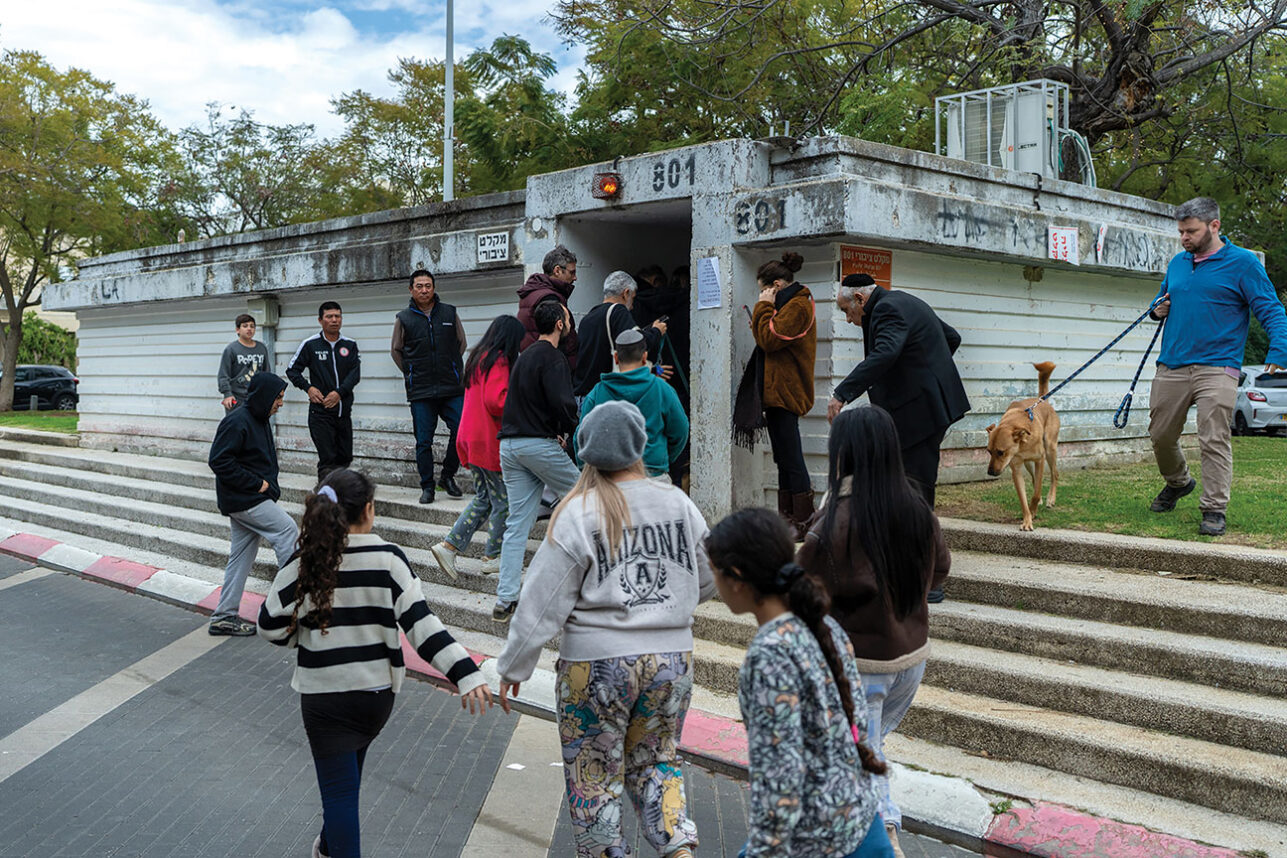
Shabbat in a Bunker

It turned out that this first round of sirens was a wake-up call, a warning that Israel and America were attacking – so we could expect a different day of rest than all of us had planned.

Community Reacts to U.S.-Israel Attack Against Iran

Though there was uncertainty about what would ensue in the days following, those interviewed by The Journal acknowledged the strikes against the Islamic Republic in Iran constituted a pivotal turning point in the history of the Middle East.

More news and opinions than at a Shabbat dinner, right in your inbox.