When T.R. Knight chants the Shema blindfolded and with a noose tightening around his neck in the role of Leo Frank, his character’s terror is palpable. The scene takes place as the inevitable tragic dénouement of the historical musical “Parade,” now playing at the Mark Taper Forum, the story of the anti-Semitic trial and lynching in 1915 of a pencil-factory manager accused of brutally murdering a 13-year-old girl. In this production, Frank lives again via this boyish, 36-year-old actor best known for his part in the original cast of “Grey’s Anatomy.”
“It’s immensely loaded, an immense responsibility,” Knight said of the role, “so I approached it with immense respect.”
Indeed, Knight, who is onstage almost nonstop throughout the show, is heartbreaking as the Brooklyn-bred Frank, a man convicted — many believe wrongfully — of the rape and murder of Mary Phagan, one of his employees. Frank was then kidnapped from prison in the middle of the night, driven in a seven-car motorcade to an oak grove across from Phagan’s childhood home and hanged. The story of Frank, a national sensation in his time, is also the subject of a new documentary that will air on KCET next month.
Knight, who is not Jewish, was not a complete stranger to Judaism or Jewish issues when he accepted the role; one of his first starring roles was the lead in Neil Simon’s New York Jewish family saga “Brighton Beach Memoirs.” “There has always been an interest on my part in Judaism,” he explained. “I grew up attending Catholic schools in Minneapolis, and it seemed odd to me that behavior was explained by rewards you would not see until you are dead. The Jewish idea of really concentrating on making this world better, for that reason alone, agreed more with my point of view.” He was in his late teens, and coming into his identity as a gay man and an artist, when he read texts such as “The Jewish Book of Why.” “I remember poring over those books and being comforted by them in a way.”
As he prepared to portray Frank, working with a vocal coach to perfect his Brooklyn accent and fitting himself with brown contact lenses to look more like Frank, he also focused on letters the incarcerated Frank wrote to his wife, Lucille — at first they were stilted and awkward, but as the ordeal continued, they became loving and at times even humorous. Knight also said he read pamphlets Frank wrote in his own defense, sensing in them “the fear, the panic, the kind of mad energy that comes from screaming to be heard.” And he read Los Angeles author Steve Oney’s history, “And the Dead Shall Rise: The Murder of Mary Phagan and the Lynching of Leo Frank” (Pantheon Books, 2003), which revealed more of Frank’s complex, prickly persona.
Speaking at a recent panel discussion before a performance of “Parade,” Oney acknowledged the challenges Knight faces in the role: “It must have been very hard for T.R. to grasp his character, because Frank remains an enigma as a person” (The Journal co-sponsored the event with the Anti-Defamation League). “Leo was cerebral and distant, an arrogant, Cornell-educated Brooklyn Jew who felt he would be acquitted simply because of who he was. And if character is fate, Frank’s steely remove did not help him at all.”
Oney, who spent 17 years researching and writing the book while also engaged in other projects, is also the chief consultant to the new documentary, “The People v. Leo Frank,” which will premiere on KCET on Nov. 8. The film includes interviews with descendants of Leo Frank and of his murderers, among others, and reveals many riveting lesser-known aspects of the case.
According to Oney, Phagan’s body was so bruised and covered with soot when discovered in the factory’s basement, police could not discern that she was Caucasian until they removed her stockings during the investigation.
In the film we learn that under her body were two notes, purportedly written by Phagan as she was molested, accusing a menial factory worker of the assault. Nevertheless, police became suspicious of Frank, who responded to the news with a twitchiness that actually offended one of the detectives, Oney says on camera. Frank’s nervousness was actually an intrinsic part of his nature: “He tended to be a terribly anxious guy with a heightened sense of dread,” Oney said.
Meanwhile, the factory’s African American custodian, Jim Conley, who is now believed by many to be the real murderer, used the police’s perception of himself as “an ignorant darkie” to his advantage in order to implicate Frank. Conley’s defense attorney, William M. Smith, had coached him for weeks on how to convincingly testify, having taken on the case due to his penchant for representing blacks he believed had been wrongfully accused because of racism. But after Frank’s death, Smith — a fascinating character who is not represented in “Parade” — began doubting Conley’s innocence. He studied the murder notes, compared them to every piece of writing he could find that Conley had authored, and concluded that his client in fact was the sole author of the notes. At great risk to himself, Smith made these incriminating findings public. “His life was threatened. He had to carry a gun,” Oney said.
Smith’s grandson recounted how the attorney was haunted by what he perceived as his part in Frank’s murder. On his deathbed, he struggled to scribble a last statement, while paralyzed by Lou Gehrig’s disease and unable to speak, proclaiming that Frank was innocent and of good character.
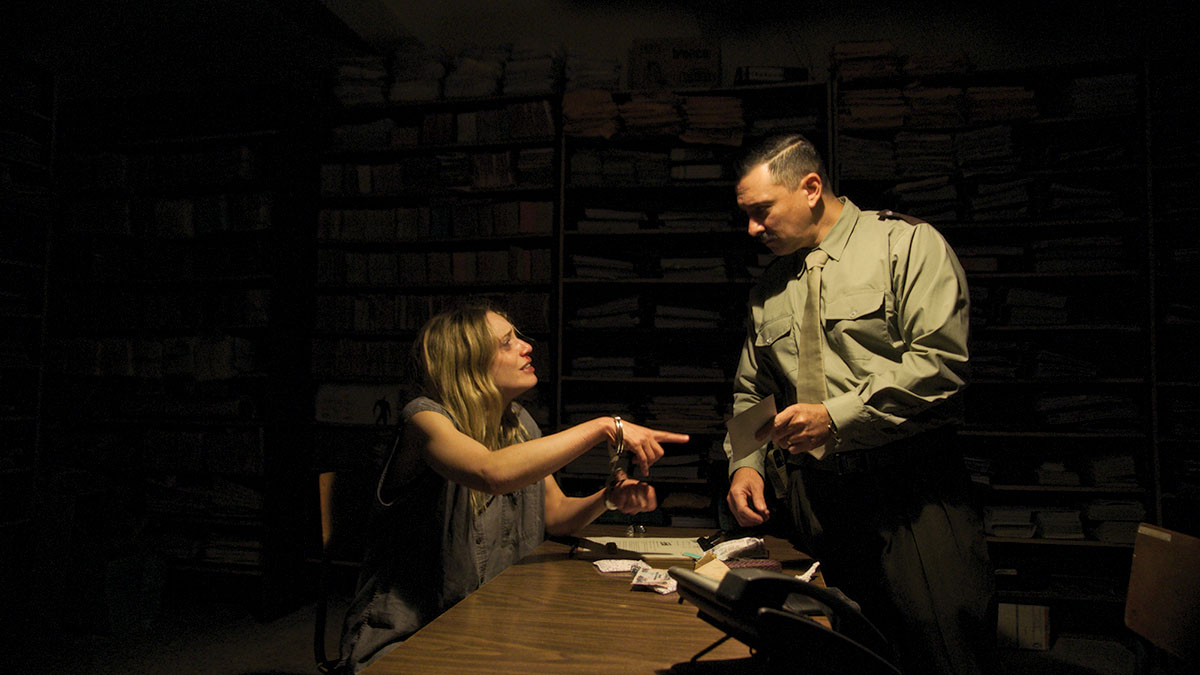
The note — which is crudely scrawled on a hospital prescription pad — appears in the documentary, as do photographs of Frank at his trial, with pursed lips and arms crossed — and of Frank hanging from a tree across from Phagan’s childhood home in Marietta, Ga.
Knight came out publicly as a gay man three years ago after a public dispute when “Grey’s Anatomy” co-star Isaiah Washington reportedly used an anti-gay slur against him. Last year, Knight performed an emotionally charged reading in Laramie, Wyo. on the anniversary of the death of Matthew Shepard, the young gay man left to die tied to a fence after being tortured. The parallel between this modern-day lynching and Frank’s story is only part of the reason he finds the role so compelling.
“I don’t want to single out any specific minority when it comes to hate crimes,” Knight said. “And even though we’re telling the story of Leo Frank in ‘Parade,’ it’s important to tell all the stories of prejudice and fear, because just being on this earth, we’re all in this together.”
For tickets and information about “Parade,” visit centertheatregroup. org.
For more information on the documentary, “The People v. Leo Frank,” visit leofrankfilm.com.