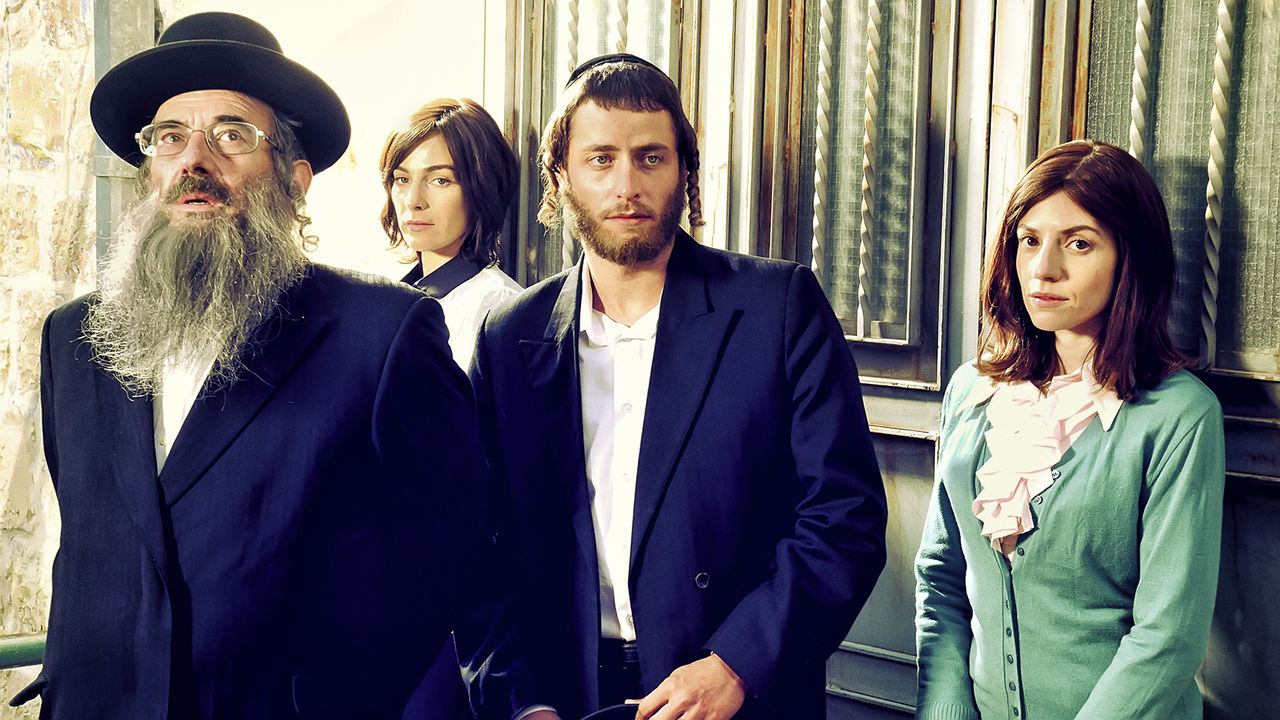
It’s been seven years since the first season of “Shtisel” aired, and award-winning writer and creator Ori Elon still can’t believe the phenomenal success in the U.S. of his hit Netflix series about an ultra-Orthodox Israeli family.
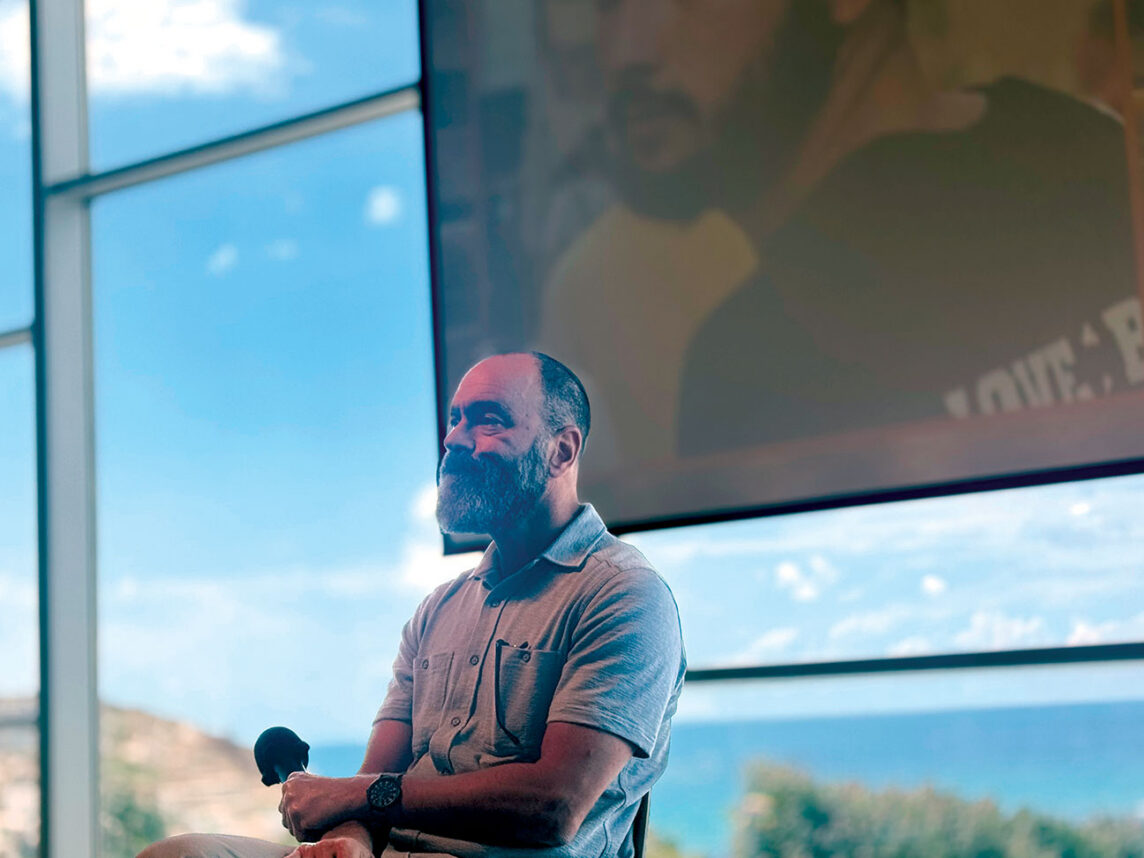
It’s just one of the things he and actress Ayelet Zurer (who plays Elisheva on the show), discussed during a July 23 Zoom event titled “Unveiling Shtisel,” hosted by American Jewish University President Jeffrey Herbst.
“I’m a believer in miracles,” Elon said of the two seasons of the show. “From the beginning, we really tried to portray Akiva (the titular character), with as much love and humble[ness], and again it’s a huge surprise for any viewer in the world that connects to this story. Still, in my heart, I think, ‘Really?’ ”
Zurer said “Shtisel” has been life-changing for her, and that Elon “writes the music” she gets to perform. She said she had been unable to find work in Israel for several years and had been living in Los Angeles when she was asked to read for the role of Elisheva. When she got the part, she received all 12 scripts for Season One, something that is rare for actors, and embraced the opportunity to read them all cover to cover.
“You immediately have a sense of what the show is about,” Zurer said. “One of the things I really found [is] that it touches that life with tremendous respect, humor and zero judgment. For me, it was just the connection I could have to a specific character in this world and finding it within me and the story of my life and connecting the dots.”
Elon and Zurer both said their overall goal was achieving authenticity. If they could convince the audience that they were really an Orthodox family living through joy and loss, it was a story worth telling.
“Yehonatan Indursky, my producer, my co-writer and co-creator … we all came with a lot of respect and a lot of pure love to this project and to the people. I think you can see that,” Elon said.
Elon and Zurer then broke down two scenes from Season One that sets up the relationship between Elisheva and Akiva (Michael Aloni). The first was the hotel date from Episode Two and the second was the final kitchen scene in Episode One.

Zurer said it was important that Elisheva and Akiva’s chemistry felt authentic at the start because she wanted the audience to “fall in love” with the characters in the same way she had. In the early days of shooting, she received a gift from Aloni she thought was his idea.
“In my mind I was already Elisheva, who in some ways was in love with Akiva and then I met Michael, who is a handsome man and very sweet, and we traveled and the first thing [he did was] give me a present — a mirror. I still have it, and it was wrapped in leather and it said, ‘Give it to Elisheva.’ I thought it was very sweet, but years later … I tell [Elon] that story and [he told me], ‘Actually we told him to give it to you.’ So this whole time I thought this sweet little moment between the two of us, was between you [Elon] and us.”
Elon said Akiva and Elisheva’s first date in the hotel also happened to be the first scene he saw in the editing room. He said he loved seeing the “mystery” between the two characters play out; teasing whether or not they’d end up together.
“Before we see a match on the screen, you never really know if it’s happening or not, almost like in real life,” Elon said. “It’s a mystery, maybe the greatest mystery.”
Zurer then took a moment to praise Elon, saying, “Each [character] sees the world in a completely different way. I wish we could do that in life — accept that others are different and not change them … we see that in your writing. You are nonjudgmental and you’re letting your character live their life.”
“The second season in Israel aired in 2015, so now it’s 2020 and …. It was a great question. ‘Should Akiva be married or not?’ I will not tell you if and how and with who. But it was a great, great question for us.” — Ori Elon
Zurer said she enjoyed “playing games” with Elisheva’s scenes and said she improvised moving from one chair to the other in the hotel scene because it helped tell the audience who Elisheva is. “It’s what happens when there is good writing,” she said, noting that she can go deeper with the role when there is a deep understanding coming from the writer. Elisheva isn’t just a “warm schnitzel,” Zurer said, she’s a woman who has loved and mourned many times.
When Herbst asked Zurer if playing Elisheva changed her in any way she replied, “I don’t know if roles change you but they impact you,” noting that playing Elisheva has helped her process her own grief.
Many of the 800 people who attended the Zoom call wanted to know about Season Three, which was announced in May. While the show had to halt production because of the coronavirus, it resumed in June with a release date set for some time in 2021. Behind-the-scenes photos may be available online but Elon won’t say much about what is to come for the beloved characters. He did say the show will pick up five years later.
“Let’s say five years passed by in real-life Israel from the time we shot,” Elon said. “The second season in Israel aired in 2015, so now it’s 2020 and …. It was a great question. ‘Should Akiva be married or not?’ I will not tell you if and how and with who. But it was a great, great question for us.”
When asked what the theme for this season would be, Elon said, “It’s actually pretty much the same theme. The balance between life and death; balance between the home and the outside. Between [the Hebrew phrase] ‘Don’t try to ignore the place you came from and don’t ignore the place you want to be.’ ”