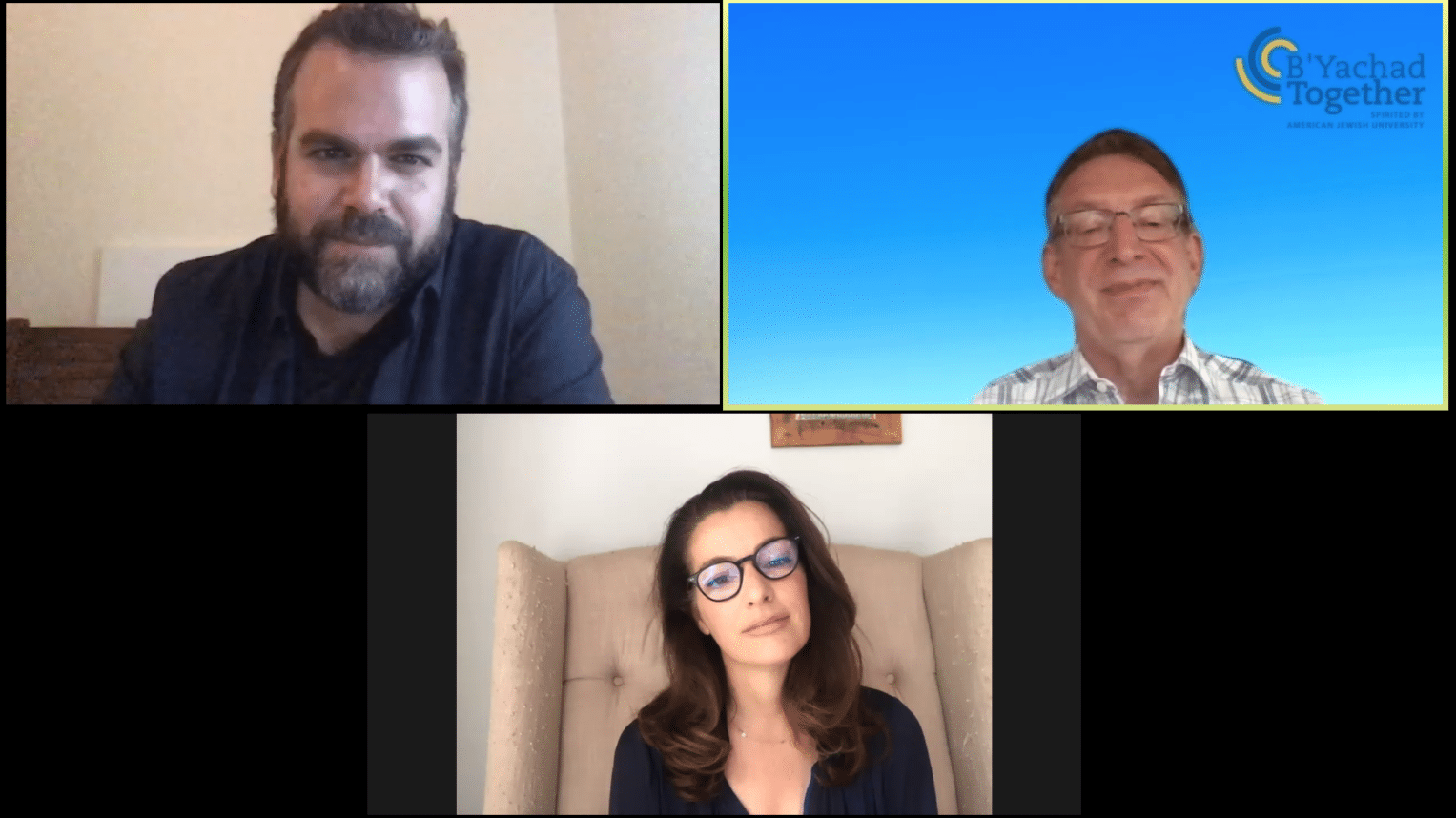
Gil Samsonov discusses the Israeli Likud princes and their clash with one of their own —Prime Minister Benjamin Netanyahu.
Gil Samsonov is a managing partner in one of the top advertising firms in Israel. He graduated from Tel-Aviv University, and received his PhD from King’s College London. Samsonov has led numerous national and local election and general campaigns in Israel. He is a senior political and marketing commentator on Israeli television, radio and print. His book, “The Israeli Princes” is available on Amazon.
It all started with debilitating body aches in the middle of the night. I figured I’d simply been on my feet too long — cooking and cleaning for days on end — since school shut down in March. But the next day, I felt fatigued and had lost my appetite, which, given how much I love food, is a warning sign. My doctor believed I had a virus and wouldn’t rule out COVID-19.
I thought I had followed the guidelines: I wore face masks, obsessively washed my hands, practiced social distancing and rubbed door handles with alcohol. But whatever sense of security I once felt behind my mask was shattered by the potential reality that I might have contracted the coronavirus.
What do you do if you think you have COVID-19? In my case, you get Shabbat dinner on the stove and run a load of laundry before dragging your tired body to get tested. That’s the thing about this pandemic. Life’s demands don’t stop to accommodate your affliction and those demands often include children and dirty laundry.
This experience has reminded me that I’m the consummate overachiever, and one who can’t ask for help. I can imagine future generations telling my story. “Back during the 2020 pandemic, Grandma Tabby managed to make a whole pot of beef shank stew before leaving the house and passing out in front of the testing center.”
That’s an exaggeration. I didn’t pass out in front of the Exer urgent care clinic on Westwood Boulevard. I just had to sit on the hot pavement because I was too weak to stand six feet from everyone else waiting to be tested. The line stretched halfway down the block.
The clinic was built on the former site of an Aaron Brothers picture framing store, which I’d visited for decades. I never imagined I’d one day return to the space to be tested for an infectious disease.
Waiting in line, I thought about my life and sobbed because I felt blessed that I might have COVID-19. In my mind, there are two ways you can be tested for this deadly virus: standing on your own two feet at a testing center or stretched out on a gurney. As far as I was concerned, the ability to be in line was worthy of gratitude.
Since March, the worst-case scenario of this pandemic has hovered over me like a black cloud because I have asthma and, in the past, infections often have compromised my breathing and left me gasping for air. They’ve also resulted in pneumonia. But there I stood, about to be swabbed for a virus that attacks the lungs, and I was breathing normally.
In a twisted, desperate way, I hoped I had the virus because then I might have a strain that didn’t affect my lungs.
My doctor had said COVID-19 causes different symptoms depending on the person. In a twisted, desperate way, I hoped I had the virus because then I might have a strain that didn’t affect my lungs. I’d spent four months living in fear and there was a part of me that just wished I’d caught the virus and had come out on the other side. In my delirium, I vowed to buy myself a cake if I tested positive without enduring a single cough. That’s how much I’ve feared my asthma. I never thought I’d feel so alive waiting to be tested for a deadly virus and I wanted to kiss the sky because my symptoms were manageable.
I thought about how I was someone’s daughter and sister; someone’s wife and friend. And someone’s mother — the kind of mother who feels the need to start Shabbat dinner before going to urgent care.
I haven’t received my results but I feel stronger and my symptoms are fewer. Admitting I might have the virus no doubt will deter some of my friends from going for a socially distanced walk with me. I can’t blame them.
When I returned from the clinic, my gratitude dissipated as I thought about everyone with whom I’d been in contact, mostly my husband and our young sons. For me and millions of others, there’s no end to the fear and anxiety this pandemic has caused.
Lying on our couch in the glow of the Shabbat candles, our 2-year-old jumped on my legs and I almost screamed in pain. But then I took several deep breaths and lifted him to me. He put his head on my shoulder and I buried my nose in the back of his warm neck. I inhaled his scent and realized what a gift it is to be able to hold him instead of being in a hospital bed attached to a ventilator. I wept and prayed for all those who are gasping for air, far from their loved ones. I inhaled another deep breath from the back of his neck and sang him “our” song — “Love Is Here to Stay,” by the Gershwin brothers.
As the days passed, I thought about buying myself that cake, but I couldn’t do it because it wouldn’t have been appropriate given the millions suffering physically, emotionally and financially from this pandemic. Still not knowing whether I had COVID-19, I settled for an Oreo cookie, took more pain killers and waited by my phone for the results.
Tabby Refael is a Los Angeles-based writer, speaker and activist.
JERUSALEM (JTA) — Those with the coronavirus should not fast on Tisha B’Av, the chief Ashkenazi rabbi of Israel has ruled.
The ruling applies even if the patient is feeling fine or is in the recovery period of the illness, Rabbi David Lau said in a statement. Those who have recovered from coronavirus and still feel weak also should not fast, he added.
Lau’s ruling also insisted that people should wash their hands well and use hand sanitizer, which is usually prohibited on Tisha B’Av. He also suggested that since most prayer services will be held outside due to the limit on numbers that can gather in a synagogue, most of the kinot — the sad poems read on the fast day — should be recited at home. Israel is in the midst of a harsh heatwave.
“To our sorrow, the plague is intensifying and we need heavenly mercy,” Lau said.
The fast of Tisha B’Av begins on Wednesday night and lasts for 25 hours.
Meanwhile, the number of worshippers who can pray at the Western Wall on the fast day that mourns the destruction of the Holy Temples in Jerusalem will be limited and prayers will take place in groups of 20 socially distanced people.
The Western Wall Heritage Foundation will livestream Tisha B’Av prayers from the Western Wall on Wednesday night, it announced on Facebook.
On Monday, the haredi Orthodox parties in Israel pressed Health Minister Yuli Edelstein to increase the number of worshippers allowed in synagogues for the fast.
It appears unlikely Edelstein will accede, the Kan public broadcaster reported, in part because the Muslim festival of Eid al-Adha begins on Thursday and the ministry would have to approve an increase in worshippers in mosques as well.
(JTA) — A meme that compares the requirement to wear masks during the coronavirus to the yellow Stars of David that Jews were forced to wear during the Holocaust appeared on the Facebook page of a Republican organization in Minnesota.
The Facebook page of the Republican Party of Wabasha County, where the meme was posted over the weekend, was removed by Monday evening, according to local reports. The organization told the state Republican Party that it had been hacked.
The meme shows an elderly man wearing a yellow Star of David badge pinned to his chest facing down a Nazi officer.
“Just put on the star and quit complaining, it’s really not that hard,” its caption said. “Just put on the mask and stop complaining.”
The state of Minnesota has a mandatory mask ordinance in effect. On Saturday, a couple protested the ordinance by wearing Nazi swastika masks in a Walmart in Marshall. They were removed from the store and banned from entering any other Walmart facility for a year.
In response to the meme, the Jewish Community Action organization tweeted a screenshot of the meme and added: “Given that Minnesota rabbis recently spoke out in favor of a mask mandate, comparing that mandate to the Holocaust feels especially disgusting. We ask the @MNGOP to tell Wabasha Republicans to stop using imagery like this. It betrays a total lack of both empathy and education.
Jennifer Carnahan, chairwoman of the Minnesota Republican Party, responded with a tweet on Monday night.
“This post was brought to @mngop’s attention today. Immediately we reached out to the Wabasha board. They believe this was a hack and are removing their FB page immediately. Our party does not support/condone divisive and harmful posts or language of this nature.”
She retweeted the screenshot with the message.
Last year, the Republican Party of Clay County, Minnesota, in a post on Facebook compared Jewish Sen. Bernie Sanders to Hitler. The party later apologized and deleted the post, explaining that it was posted by a volunteer. Sanders has spoken frequently about how much of his family was wiped out by Hitler and the Nazis.
Given that Minnesota rabbis recently spoke out in favor of a mask mandate, comparing that mandate to the Holocaust feels especially disgusting. We ask the @MNGOP to tell Wabasha Republicans to stop using imagery like this. It betrays a total lack of both empathy and education. pic.twitter.com/xGMT3cUvvo
“The Marvelous Mrs. Maisel” scored a whopping 20 Emmy nominations in performing and creative categories and for the series itself, and the cast and creators will have the chance to celebrate virtually with fans at the Paley Center for Media’s annual PaleyFest LA, which will be held online for the first time this year.
Actors Rachel Brosnahan, Alex Bornstein, Tony Shalhoub, Marin Hinkle, Michael Zegen, Kevin Pollak, Caroline Aaron, Jane Lynch, Luke Kirby, LeRoy McClain, Stephanie Hsu and executive producers Amy Sherman Palladino and Daniel Palladino will participate in a moderated discussion that will stream online beginning Aug. 7 for Paley members and Citi cardmembers and Aug. 10 for the general public.
“Because the two of us are pretty sick of looking at each other, we are thrilled with the invitation to jump online and talk to other people about comedy. Many thanks to PaleyFest for the opportunity,” Amy Palladino said.
Other programs participating in PaleyFest include “Outlander,” “Ozark,” “Queer Eye,” “Mrs. America,” “Late Night with Seth Meyers,” “One Day at a Time,” “Justin Bieber: Sessions,” and “Dolly Parton: Heartstrings.” A conversation with the cast and creative team from “Schitt’s Creek” will be available exclusively for Paley and Citi members.
A “possibly meaningful minority” of American Jews “is opposed to, or not strongly in favor, of a ‘Jewish’ Israel.” That’s one of the findings presented in a new study by the Jerusalem Center for Public Affairs. The center, a conservative think tank, concluded that attitudes of American Jews toward Israel “may be shifting.” Irwin Mansdorf conducted a two-year study of surveys and focus groups, including two in recent months. He stated the he finds the numbers relevant, valid and troubling.
The report notes that the findings seem to indicate “that while a general ‘pro-Israel’ description for Jewish Americans may be correct, we may now have to look at what ‘pro-Israel’ means for many of them.” For those who think this term lost its coherence long ago, this question seems long overdue. Defining someone as “pro-Israel” or pro-anything is supposed to simplify complicated questions. But as I wrote more than a decade ago, the problem is that along the way the term ‘pro-Israel’ “has been used so often to describe so many conflicting positionsthat it has become practically meaningless, more confusing than clarifying.”
This is certainly true when among liberal Jews in America, “the concept of Israel as having a primarily ‘Jewish’ identity” is supported without reservations by “less than 28%.” Twenty-two percent either do not agree or agree only a “little bit” that Israel ought to have a a primarily Jewish identity.
Is this becoming a real thing for a meaningful minority of American Jews? Mansdorf suspects that it is. Pondering the possibility of someone calling herself “pro-Israel” while not supporting a “Jewish Israel” would be absurd. No less absurd than someone saying he is pro-democracy but opposes free elections. No less absurd than someone saying she is pro-Jewish yet opposes the freedom to study Talmud.
Can one be supportive of Israel but consistently against its policies?
The waters become murkier when American Jewish support for certain policies and priorities is examined. Can one be supportive of Israel but consistently against its policies? This is a trickier question to answer, because many of Israel’s policies are aimed at keeping it a “primarily Jewish” state and are designed to keep Jews safe in a hostile world. The real question is whether one opposes the policies because he or she thinks they would not produce the desired outcome. In this case, the debate is tactical while the goal is shared. Or maybe one opposes the policies because he or she has priorities that take precedence over keeping Israel Jewish and safe. In this case, the debate is about much more than tactics and might preclude a shared goal that we can call “pro-Israel.”
The new study proclaims that “Israel-related issues are not a deciding or ‘make or break’ factor” for Jewish American voters. It’s not the first study to reach this conclusion. And yet, the new study tested this often-ignored fact in the most contemporary way possible. The researchers asked Jewish and liberal voters what they’d do if Congresswomen Rashida Tlaib (D-Mich.) or Ilhan Omar (D-Minn.) —highly visible critics of Israel — ran in their district? Would they vote for them, or would they prefer a more pro-Israel moderate Republican candidate?
About one-third said they’d vote for Tlaib and Omar. Another quarter said they’d vote for “the candidate with whom I agreed most despite Israel.” About 55% of the liberal Jewish vote went to Tlaib and Omar. Tlaib has a T-shirt that erases Israel from the map. Omar singles out her opponents’ Jewish donors. Only 14% said they would vote for the moderate Republican. Still others would sit it out, or do not yet know what they’d do.
Maybe this tells us something new about American Jews and Israel. But an even likelier conclusion is that it tells us something about the state of political warfare in America.
The California Democratic Party Executive Board passed two resolutions during its Zoom board meeting over the weekend condemning those blaming Israel for police brutality in the United States as well as opposing unilateral actions by both Israelis and Palestinians.
The first resolution, titled “Condemning Anti-Semitism and Deadly Exchange,” states that there are people who claim that Israel’s training with U.S. law enforcement has resulted in police brutality.
“While the effects of U.S. police militarization are dehumanizing, the U.S.-Israel Homeland Security program has a specific focus on anti-terrorist training where participants learn how Israeli law enforcement disrupts, and responds to terrorist attacks, explores the ideology of suicide bombers, mass shooters, and other attackers, and teaches best practices to de-escalate an ongoing incident — training which is clearly distinguishable from police militarization or arrest mechanics — and these trips are only for senior officers, not patrol officers on the street,” the resolution stated.
Additionally, the resolution argued that Israel has never taught the knee-to-neck technique that was used on George Floyd, who died while in police custody on May 25.
“Israel has never taught arrest mechanics or restraints in its training programs with senior law enforcement officers from other countries as confirmed by Minneapolis Police which stated that it authorized the technique years before any Israeli contacts,” the resolution stated.
It concluded “that the California Democratic Party condemns all forms of anti-Semitism, including the false allegations around the Homeland Security Program” and called to “end the scourge of police brutality, transforming racist oppressive institutions that disproportionately harm people of color, and effectively combating white supremacy.”
The second resolution, titled “Resolution affirming the need for Israeli and Palestinian leaders to return to direct mutual negotiations to discuss peace, refugee rights and final borders,” argues that any Israeli annexation of the West Bank would undermine efforts for a two-state solution. The resolution also argues that the Palestinian “Right of Return,” where descendants of displaced Palestinians during the 1948 War for Independence would be allowed to return to Israel, also would undermine a two-state solution.
“The California Democratic Party opposes unilateral annexation of territory on either side of the 1948 Israeli-Palestinian conflict and reiterates that any related rights of refugees should solely be determined through bilateral, direct negotiations between the parties that justly address compensation, rights of return and final borders in a manner that ensures the safety, security and dignity of the parties involved,” the resolution stated.
Both resolutions were passed unanimously.
“We are delighted to see the California Democratic Party reject anti-Semitic conspiracy theories and affirm its commitment to a two-state solution, achieved through fair and direct negotiations,” Progressive Zionists of California Executive Director Susan George said in a statement. “Progressive Zionists of California is grateful to our activist allies and supporters for their guidance and support. We will continue our work to encourage unity and solidarity within the Democratic Party by rooting out anti-Semitism that marginalizes Jews on the left.”
The StandWithUs (SWU) Center for Combating Anti-Semitism (CCA) in partnership with the Mizel Family Foundation has offered an unspecified monetary reward to whomever provided the information that led to the arrest of the alleged perpetrator behind the recent vandalism of two Florida synagogues.
The two synagogues, Temple Emanu-El and Temple Sinai, were vandalized on July 15 with swastikas and other unspecified anti-Semitic graffiti. Both synagogues are located in Sarasota, Fla. On July 24, Victor Martinez, 21, was arrested in connection to the vandalisms.
“If this man is convicted of these anti-Semitic hate crimes, it will be SWU and the Mizel Family Foundation’s pleasure to offer a monetary reward to the person who exhibited the courage and determination to come forward with information that was instrumental in allowing justice to be served here,” CCA Director Carly Gammill said in a statement. “It is our hope that if and when other anti-Semitic hate crimes occur, those who have helpful information will demonstrate the same fortitude and join us as we combat this societal disease.”
Martinez was arrested after video footage showed him using an ATM near one of the synagogues on the night the vandalisms occurred. He faces a up to five years in jail and a fine of $5,000.
Temple Sinai President Ellen Bender told the Sarasota Herald-Tribune that she was “shocked” at how young the alleged suspect is.
“I hope he has some sort of education about what it means to be Jewish,” Bender said. “What it means to be part of a community, an interfaith community. I have no understanding where this kind of hate comes from.”
It’s been seven years since the first season of “Shtisel” aired, and award-winning writer and creator Ori Elon still can’t believe the phenomenal success in the U.S.of his hit Netflix series about an ultra-Orthodox Israeli family.
It’s just one of the things he and actress Ayelet Zurer (who plays Elisheva on the show), discussed during a July 23 Zoom event titled “Unveiling Shtisel,” hosted by American Jewish University President Jeffrey Herbst.
“I’m a believer in miracles,” Elon said of the two seasons of the show. “From the beginning, we really tried to portray Akiva (the titular character), with as much love and humble[ness], and again it’s a huge surprise for any viewer in the world that connects to this story. Still, in my heart, I think, ‘Really?’ ”
Zurer said “Shtisel” has been life-changing for her, and that Elon “writes the music” she gets to perform. She said she had been unable to find work in Israel for several years and had been living in Los Angeles when she was asked to read for the role of Elisheva. When she got the part, she received all 12 scripts for Season One, something that is rare for actors, and embraced the opportunity to read them all cover to cover.
“You immediately have a sense of what the show is about,” Zurer said. “One of the things I really found [is] that it touches that life with tremendous respect, humor and zero judgment. For me, it was just the connection I could have to a specific character in this world and finding it within me and the story of my life and connecting the dots.”
Elon and Zurer both said their overall goal was achieving authenticity. If they could convince the audience that they were really an Orthodox family living through joy and loss, it was a story worth telling.
“Yehonatan Indursky, my producer, my co-writer and co-creator … we all came with a lot of respect and a lot of pure love to this project and to the people. I think you can see that,” Elon said.
Elon and Zurer then broke down two scenes from Season One that sets up the relationship between Elisheva and Akiva (Michael Aloni). The first was the hotel date from Episode Two and the second was the final kitchen scene in Episode One.
From left: “Shtisel” creator and writer Ori Elon, AJU President Jeffrey Herbst and actress Ayelet Zurer.
Zurer said it was important that Elisheva and Akiva’s chemistry felt authentic at the start because she wanted the audience to “fall in love” with the characters in the same way she had. In the early days of shooting, she received a gift from Aloni she thought was his idea.
“In my mind I was already Elisheva, who in some ways was in love with Akiva and then I met Michael, who is a handsome man and very sweet, and we traveled and the first thing [he did was] give me a present — a mirror. I still have it, and it was wrapped in leather and it said, ‘Give it to Elisheva.’ I thought it was very sweet, but years later … I tell [Elon] that story and [he told me], ‘Actually we told him to give it to you.’ So this whole time I thought this sweet little moment between the two of us, was between you [Elon] and us.”
Elon said Akiva and Elisheva’s first date in the hotel also happened to be the first scene he saw in the editing room. He said he loved seeing the “mystery” between the two characters play out; teasing whether or not they’d end up together.
“Before we see a match on the screen, you never really know if it’s happening or not, almost like in real life,” Elon said. “It’s a mystery, maybe the greatest mystery.”
Zurer then took a moment to praise Elon, saying, “Each [character] sees the world in a completely different way. I wish we could do that in life — accept that others are different and not change them … we see that in your writing. You are nonjudgmental and you’re letting your character live their life.”
“The second season in Israel aired in 2015, so now it’s 2020 and …. It was a great question. ‘Should Akiva be married or not?’ I will not tell you if and how and with who. But it was a great, great question for us.”— Ori Elon
Zurer said she enjoyed “playing games” with Elisheva’s scenes and said she improvised moving from one chair to the other in the hotel scene because it helped tell the audience who Elisheva is. “It’s what happens when there is good writing,” she said, noting that she can go deeper with the role when there is a deep understanding coming from the writer. Elisheva isn’t just a “warm schnitzel,” Zurer said, she’s a woman who has loved and mourned many times.
When Herbst asked Zurer if playing Elisheva changed her in any way she replied, “I don’t know if roles change you but they impact you,” noting that playing Elisheva has helped her process her own grief.
Many of the 800 people who attended the Zoom call wanted to know about Season Three, which was announced in May. While the show had to halt production because of the coronavirus, it resumed in June with a release date set for some time in 2021. Behind-the-scenes photos may be available online but Elon won’t say much about what is to come for the beloved characters. He did say the show will pick up five years later.
“Let’s say five years passed by in real-life Israel from the time we shot,” Elon said. “The second season in Israel aired in 2015, so now it’s 2020 and …. It was a great question. ‘Should Akiva be married or not?’ I will not tell you if and how and with who. But it was a great, great question for us.”
When asked what the theme for this season would be, Elon said, “It’s actually pretty much the same theme. The balance between life and death; balance between the home and the outside. Between [the Hebrew phrase] ‘Don’t try to ignore the place you came from and don’t ignore the place you want to be.’ ”
Together with her 17-year-old daughter, Sophie, and 14-year-old son, Sammy, Gerilyn Shorten has been hand-delivering freshly baked challot to locals in the West San Fernando Valley — specifically to those who are “ill, elderly, alone or [working],” Shorten told the Journal.
Making the most out of quarantine, the Shorten family turned to challah-baking near the start of the COVID-19 pandemic in April. To date, they have delivered over 50 loaves. They have dubbed their mitzvah project “Got Challah.”
After the Shorten children posted photos of their project on Facebook, more orders started coming in. With yeast and flour quickly vanishing from grocery stores, the family’s baking “became a hot commodity,” Shorten said.
“We know a lot of people who aren’t well, and this [is] one way we [are] able to support them,” said Sophie, a rising senior at de Toledo High School. “When we break a piece off the challah and we burn it, we can say a prayer for them.”
She added, “Sammy and I are at a place where we have such little control … but there is something so healing in the very specific measurements and our process: the mixing, the folding, the waiting, the prayers and the braiding. But why should we keep it all to ourselves? This became a gift we wanted to share.”
Sammy, a rising freshman at de Toledo, added that baking provides him with the ability to focus. “It gives me something to do,” he said.
“There is something so healing in the very specific measurements and our process: the mixing, the folding, the waiting, the prayers and the braiding. This became a gift we wanted to share.” — Sophie Shorten, 17
Shorten said she grew up in a home that never spent time baking challah, so she made it her mission to learn with her kids. She was finally able to get them on board by virtue of boredom getting the best of everyone. “I was always personally enthralled by [challah-making] from every angle, from the mitzvah to the praying to following it through Shabbat,” she said. “I really wanted to do that for my kids.”
The family has been working closely with lay leaders, including Brooklyn, N.Y.-based challah-baking expert rebbetzin Rochie Pinson, author of “Rising: The Book of Challah” and “The Rising Life: Challah Baking. Elevated.”
“Knowing that we have a very stable and strong community and network has really gotten us through [this time],” Shorten said. “We really have so much unwavering, unconditional support. Between that, leading by example and continuing to do [mitzvot], we have to give back — that is the only way to stay grounded. It’s the only way that I think you can effectively ground your kids.”
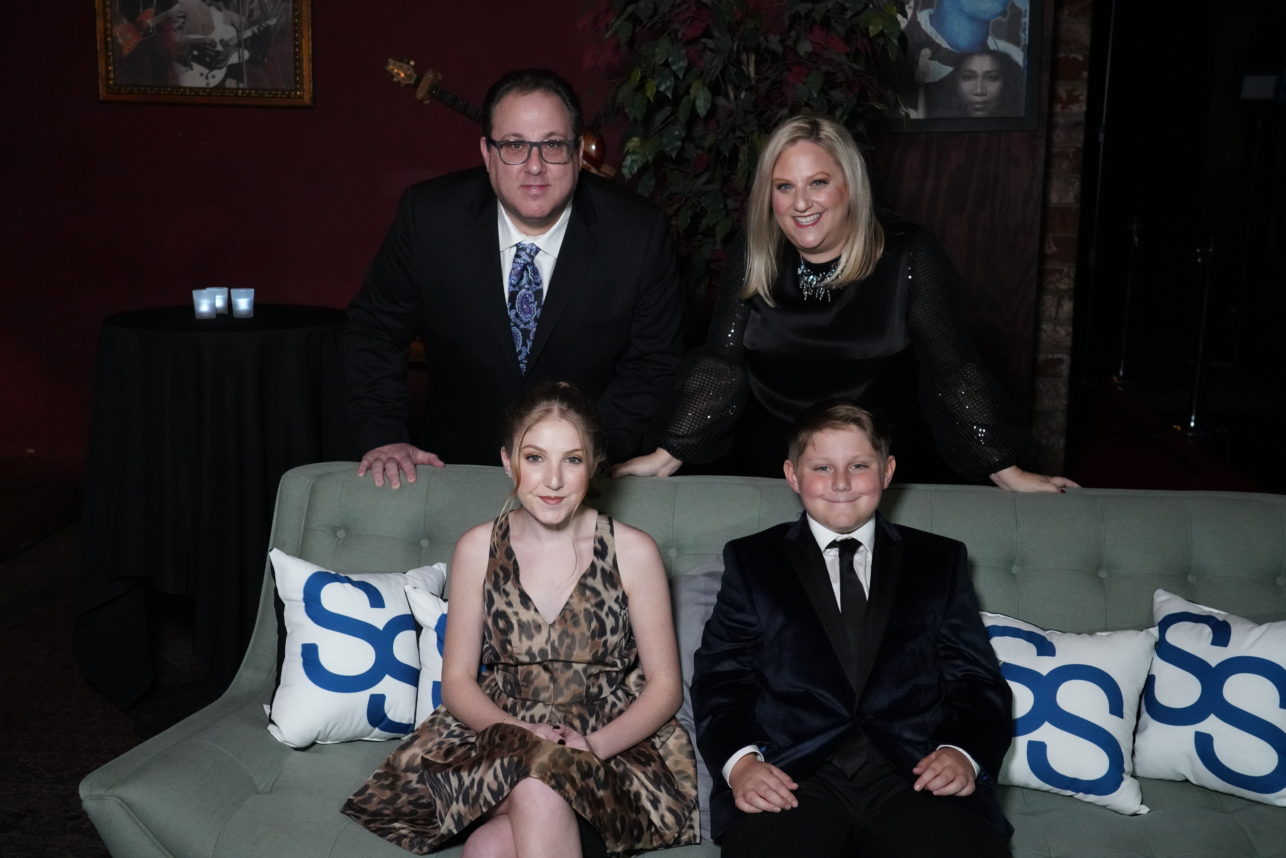
The Shorten family. From left: Evan, Gerilyn, Sophie, and Sammy.
Leading by example enabled the Shorten kids to come up with the idea of “100 Challahs for Summer,” whereby they hope to reach their goal of 100 deliveries by the time they resume school on Sept. 3.
Among those who have already received loaves thanks to Got Challah is a family whose toddler was hospitalized in the intensive care unit; families who have lost loved ones; and the elderly at high risk for contracting COVID-19. The Shortens hope to continue delivering challot when quarantine is over, even though it’s still not known when that will be.
“When we go in, we go all in,” Shorten said. “If it has legs, then absolutely, we will keep it running. I’m really, really proud of my kids. I’m so proud that they stepped in to work with me and really [took] initiative [to] just be together and focus when the world is spinning around us.”