In 1998, two robbers burst into the home of a Jewish family in Uruguay. They tied up the mother, daughter and a live-in maid, and the father was injured. The mother conversed with the robbers for 40 minutes, telling them that her expensive belongings were in a safe at the bank. The robbers left empty-handed.
The couple’s son, Marcos Cohen, was more than 6,000 miles away, settling into his new home in Los Angeles at the time of the incident. “My family and friends wanted to hide the news from me,” Cohen told the Journal. “I started to panic. I called my family. They had to tell me the truth. It was very emotional for me.”
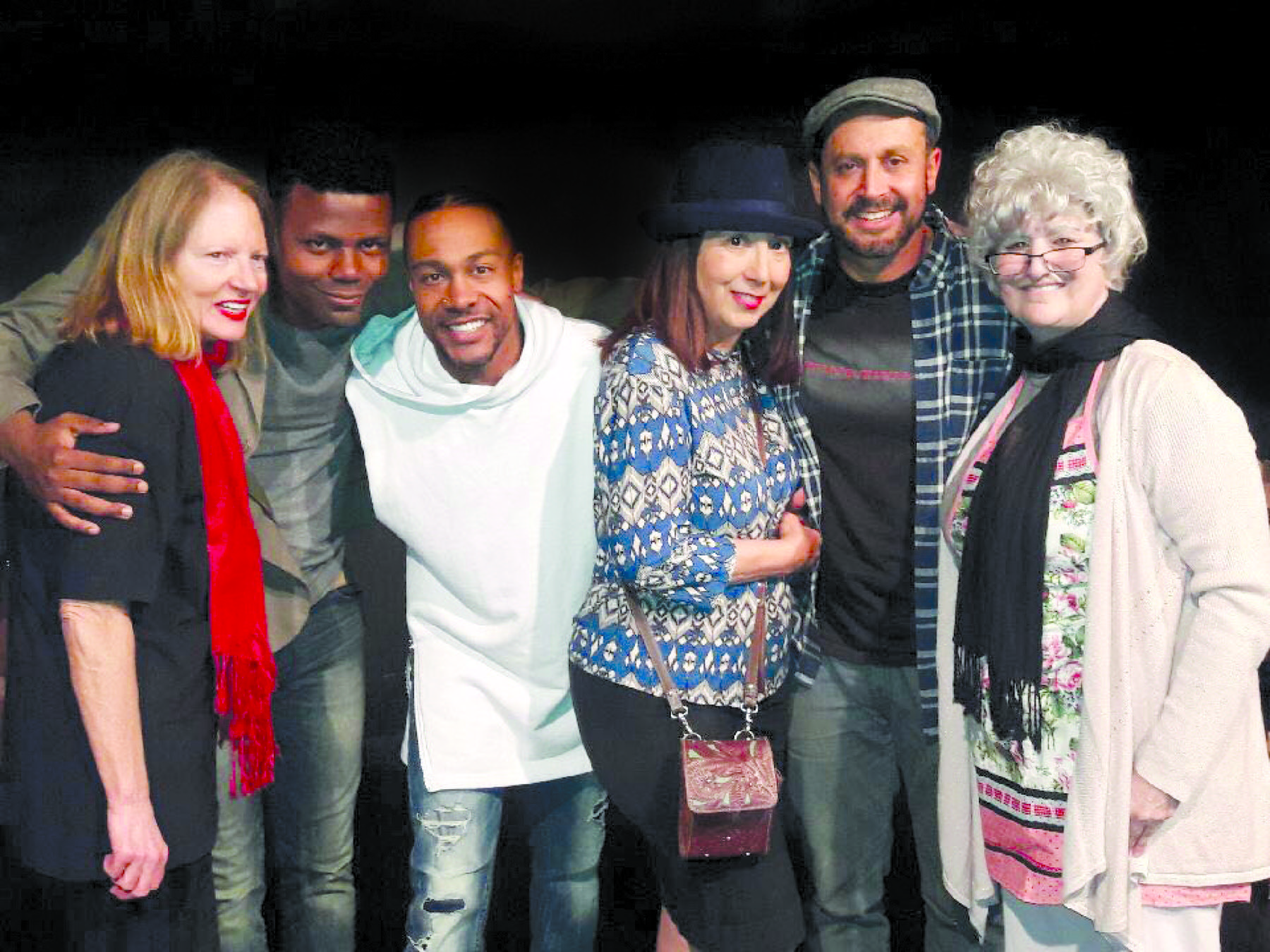
Now, 20 years later, Cohen has brought an adaption of his family’s experience to the stage at the Hollywood Fringe Festival, in a new play called “Trapped at Tea Time.”
The play tells the story of an 80-year-old Holocaust survivor whose building is held hostage by two brothers. One of the brothers, Omar, is tasked with robbing the survivor, Yolanda. At first, he yells at her, ordering her around while he attempts to find her valuables. The action then takes a turn as the characters begin talking about their backgrounds and finding common ground.
Throughout the show, the audience learns about Omar’s and Yolanda’s personal stories. Omar grew up in a group home, had no relationship with his mother and became addicted to drugs. Yolanda was persecuted during the Holocaust and tries to hide her Jewish identity.
“We take disenfranchised people and make them main characters and make their stories stand out.” — Linda Alznauer
There are no Holocaust survivors in Cohen’s real family. However, he said he wanted to give his family’s story more of a Jewish focus and message, so he chose to create the character of Yolanda. “There are some insights about this lady who is trying to deny her Jewish identity because of the Holocaust. A lot of things happen in the play that help her regain that pride and her identity.”
When Yolanda and Omar come together, they couldn’t be more different on the outside, but deep down, they both face the same battles.
“When they were trapped in this situation together and communicating about their own lives, they were able to find similarities and compassion for each other,” said Baila Romm, the producer of the play. “Yolanda believes in Omar and sees that he has a good heart. He tells her that that war is over, and [she’s] hiding [her] Jewish identity for no reason. [He tells her she] needs to be proud that [God] made her and that she can live proudly as a Jew.”
Director Linda Alznauer said the play shows characters that typically are not given a fair chance. “We take disenfranchised people and make them main characters and make their stories stand out. The interesting thing about Yolanda is she sees things in this
young man. Omar sees her as a clichéd old lady, and he is the clichéd robber. But Yolanda has so much to share. And these are people whose childhoods were taken away.”
In a time when there is so much division in the United States, and race and identity are hot topics, Romm said the play is “really right for this day and age to bring the message of unity. We’re all the same. We’re all people. And we all have our struggles.”
“Trapped at Tea Time” is playing at the Actor’s Company Let Live Theater in West Hollywood, June 10 at 3:30 p.m., June 17 at 6 p.m. and June 21 at 7 p.m.